Ateliê — Envio gratuito para todo o mundo — Entrega em 2–6 semanas
      Tom Krøjer, 1942 – 2015

      Tom Krøjer: As 2 pinturas mais conhecidas

      De todas as pinturas de Tom Krøjer, Fundamental Forms of the Bird's-Eye View (1976) é a mais famosa; está exposta no Statens Museum For Kunst, em Copenhague. Entre as 2 obras de Tom Krøjer em nosso catálogo, estas 2 são as mais celebradas, cada uma apresentada com a sua data, o seu museu e a sua história.

      Classificado de acordo com o nosso índice de popularidade, que combina buscas, visitas e pedidos de cada obra. Atualizado em Novembro 2026.

      Retrato de Tom Krøjer
      Tom Krøjer · 1942 – 2015
      Nascimento · falecimento
      1942 – 2015, Frederikssund
      Obras em nosso catálogo
      2
      As mais famosas
      Fundamental Forms of the Bird's-Eye View (1976)
      Mais obras em
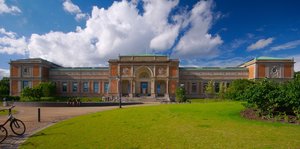
      Statens Museum For Kunst

      As 10 pinturas mais celebradas de Tom Krøjer

      Fundamental Forms of the Bird's-Eye View (1976) de Tom Krøjer
      1

      Fundamental Forms of the Bird's-Eye View

      1976 · Oil On Canvas · Statens Museum For Kunst, Copenhague

      The canvas pulses with an energetic, restless life, presenting a dense mosaic of interlocking shapes that refuse to settle. There is no single point for the eye to rest; instead, a non-hierarchical rhythm carries the gaze across the entire surface. Primary yellows, blues, and reds collide with secondary purples, oranges, and greens, creating a complex visual puzzle that feels as though it is constantly shifting. Sharp, defined edges of polygons…

      Onde as telas de Tom Krøjer estão expostas

      O museu que detém a maioria das pinturas desta página.

      Museus Cidade Obras de Tom Krøjer Pinturas desta lista
      Statens Museum For Kunst, CopenhagueStatens Museum For Kunst Copenhague 2 Fundamental Forms of the Bird's-Eye View, Jess. Reflected Image from Paris

      Ano após ano: as telas mais celebradas de Tom Krøjer

      De 1976 a 1980, um total de 5 anos, as telas datadas de Tom Krøjer contam uma breve história: aqui está, ano a ano.

      1. 1976
        Fundamental Forms of the Bird's-Eye View (1976) de Tom Krøjer
        1 de 2

        Fundamental Forms of the Bird's-Eye View

        Idade: 34 · Statens Museum For Kunst

        The canvas pulses with an energetic, restless life, presenting a dense mosaic of interlocking shapes that refuse to settle. There is no single point for the eye to…

      2. 1980

      As suas perguntas sobre as pinturas de Tom Krøjer, respondidas

      Qual é a pintura mais celebrada de Tom Krøjer?Leia a resposta

      Fundamental Forms of the Bird's-Eye View (1976)

      Qual era a idade de Tom Krøjer na época de Fundamental Forms of the Bird's-Eye View?Leia a resposta

      Tom Krøjer, nascido(a) em 1942, tinha 34 anos: Fundamental Forms of the Bird's-Eye View data de 1976.

      Quantas pinturas de Tom Krøjer são conhecidas?Leia a resposta

      2 obras de Tom Krøjer estão em nosso catálogo, datadas de 1976 a 1980.

      Em quais museus se encontram as telas mais conhecidas de Tom Krøjer?Leia a resposta

      Principalmente em Statens Museum For Kunst (Copenhague); a lista acima indica cada museu e as suas telas.

      Quais são a primeira e a última das telas famosas de Tom Krøjer?Leia a resposta

      A tela mais antiga aqui é de Fundamental Forms of the Bird's-Eye View (1976); a mais recente é de Jess. Reflected Image from Paris (1980).

      O que posso ver de Tom Krøjer no Statens Museum For Kunst?Leia a resposta

      O Statens Museum For Kunst, Copenhague detém 2 das obras desta página, entre elas Fundamental Forms of the Bird's-Eye View e Jess. Reflected Image from Paris.

      Tom Krøjer: a história do pintor

      The Evolution of Form and Color

      The trajectory of Tom Krøjer begins far from the canvas, rooted in the physical labor of a mason. This foundation of manual craft provides a silent backdrop to his formal artistic training. He moves from the practicalities of construction to the experimental atmosphere of Eks-skolen in Copenhagen, eventually finding his way to the Kungliga Konsthögskolan in Stockholm. Under the guidance of Carl-Fredrik Reutersvärd, the years leading up to his 1967 graduation shape a sensibility that refuses to settle into a single mode of expression.

      The 1960s are a period of restless experimentation. He moves through the realms of film and happenings, testing the boundaries of what art can be. During these years, he finds himself at Drakabygget in Skåne, staying with Jens Jørgen Thorsen. This era is defined by the influence of Fluxus and the burgeoning energy of American pop art, a period where the artist explores the edges of performance and the ephemeral.

      A Shift Toward the Plane

      By the 1980s, a distinct visual language emerges. The chaotic energy of his earlier experiments settles into a focused exploration of the plane. His work becomes characterized by a specific tension: the mixing of figurative and abstract elements. He utilizes a light-filled color scale to depict everyday scenes, yet these scenes are filtered through a fabulating breakdown of form. The colors are strong and clear, stripping away the unnecessary to focus on the essential geometry of the subject.

      This stylistic development marks a departure from the purely experimental toward a more structured, yet still playful, approach. His paintings and drawings from this period reflect the influence of both pop art and system art, where the logic of the composition meets a sense of spontaneous invention. He becomes a member of the Grønningen artist group in 1983, a recognition of his established place within the Danish art scene.

      Legacy and Recognition

      His career is marked by specific milestones of institutional validation. In 1971, he receives a three-year stipend from Statens Kunstfond, a significant nod to his developing practice. His work, ranging from crayon drawings to large-scale paintings, captures a specific moment in Danish modernism where the boundaries between the high art of the academy and the subversive energy of the avant-garde began to blur.

      The technical precision of his later work remains rooted in that early training, even as he pushes toward abstraction. He leaves behind a body of work that navigates the space between the recognizable world and the pure expression of color and form.