Ateliê — Envio gratuito para todo o mundo — Entrega em 2–6 semanas
      Annibale Carracci, 1560 – 1609

      As 100 pinturas mais famosas de Annibale Carracci

      The beaneater Sun é a pintura pela qual Annibale Carracci é mais lembrado; pertence ao Palazzo Colonna, Rome. The Choice of Heracles e A Escolha de Héracles (1596) completam o trio das telas mais amadas. O nosso catálogo conta com 282 obras de Annibale Carracci. Aqui estão as 100 mais famosas, com o ano, o museu e a história de cada tela.

      Classificado de acordo com o nosso índice de popularidade, que combina buscas, visitas e pedidos de cada obra. Atualizado em Outubro 2026. Cada pintura nesta página pode ser encomendada como uma reprodução a óleo pintada à mão sobre tela de linho, ou como uma impressão fine art, feita no tamanho que escolher.

      Retrato de Annibale Carracci
      Annibale Carracci · 1560 – 1609
      Nascimento · falecimento
      1560 – 1609, Bolonha
      Movimento
      Baroque drama
      Obras em nosso catálogo
      282
      Mais famosas
      The beaneater Sun
      Mais obras em
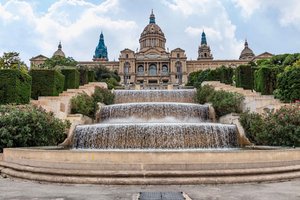
      Museu Nacional d'Art de Catalunya

      As dez pinturas mais amadas de Annibale Carracci

      The beaneater Sun de Annibale Carracci
      1

      The beaneater Sun

      Oil On Canvas · Palazzo Colonna, Rome

      The Beaneater unfolds in a quiet, dimly lit room where the air feels heavy with the scent of simple food. A man sits at a wooden table, his focus entirely consumed by the meal before him. He wears a straw hat that casts a soft shadow over his brow, and his hands move with a practiced, rhythmic grace. One hand grips a spoon, lifting a portion of beans toward his…

      The Choice of Heracles de Annibale Carracci
      2

      The Choice of Heracles

      Oil On Canvas · Museo di Capodimonte, Nápoles

      The Choice of Heracles emerges from the brush of Annibale Carracci as a profound mythological allegory. Created in 1596, this oil on canvas captures a moment of heavy deliberation. The hero finds himself caught in a spiritual crossroads, forced to weigh the heavy burden of virtue against the seductive, easy pull of vice. It is a scene where the weight of a single decision hangs in the air, suspended between…

      Paisagem fluvial (1589) de Annibale Carracci
      4

      Paisagem fluvial

      1589 · Óleo sobre tela · National Gallery of Art, Washington

      Uma Cena Cativante da Serenidade da Natureza Mergulhe em uma paisagem belamente detalhada que captura a essência tranquila do mundo natural. Esta obra de arte retrata um rio pacífico serpenteando por um ambiente exuberante e verdejante, convidando os espectadores a vivenciar um momento de reflexão silenciosa. A cena ganha vida com árvores texturizadas, águas que fluem suavemente e montanhas distantes, criando uma composição harmoniosa que celebra a beleza atemporal da…

      Mocking of Christ (1596) de Annibale Carracci
      5

      Mocking of Christ

      1596 · Oil On Canvas · Pinacoteca Nazionale, Bolonha

      Annibale Carracci's "Mocking of Christ," painted around 1596, isn’t merely a depiction of a biblical scene; it’s a visceral exploration of suffering, betrayal, and the agonizing weight of divine sacrifice. Created during a pivotal moment in the artist’s career – a period where he was actively reshaping the trajectory of Italian painting towards the burgeoning Baroque style – this oil on canvas transcends its religious subject matter to become a…

      Piedade (1599) de Annibale Carracci
      6

      Piedade

      1599 · Óleo sobre tela · Museo di Capodimonte, Nápoles

      A Pietà de Annibale Carracci, pintada em 1599, é uma imagem pungente da Lamentação do Cristo. A obra retrata Maria Mater Dolorosa carregando o corpo imóvel de Jesus após Sua crucificação, cercada por dois ângulos e outra figura provavelmente auxiliando nos preparativos para o sepulcro. A composição está cuidadosamente estruturada em torno de uma forma piramidal, com Maria no ápice, enfatizando seu papel central nessa cena de profunda tristeza. Carracci…

      The Galleria Farnese (1597) de Annibale Carracci
      7

      The Galleria Farnese

      1597 · Fresco · Palazzo Farnese, Roma

      To step into the Galleria Farnese within Rome’s Palazzo Farnese is to leave the terrestrial world behind and ascend into a realm of divine drama. Painted by the master Annibale Carracci between 1597 and 1602, this monumental ceiling fresco represents one of the most profound achievements of the Baroque era. It is not merely a decorative surface but an immersive architectural experience that blurs the line between the physical room…

      Venus, Adonis, and Cupid (1595) de Annibale Carracci
      8

      Venus, Adonis, and Cupid

      1595 · Oil On Canvas · Museu do Prado, Madrid

      In the grand tapestry of the late sixteenth century, few works capture the burgeoning drama of the Baroque era as intimately as Annibale Carracci’s Venus, Adonis, and Cupid. Painted around 1595, this oil on canvas masterpiece serves as a breathtaking window into the mythological realms of Ovid, where the boundaries between the divine and the mortal blur amidst lush, atmospheric detail. The painting is not merely a depiction of ancient…

      Assumption of Mary (1587) de Annibale Carracci
      9

      Assumption of Mary

      1587 · Oil · Staatliche Kunstsammlungen Dresden, Dresden

      The Assumption of Mary by the Italian Baroque artist Annibale Carracci captures a moment of celestial movement. Completed about 1587, the work centers on the religious and triumphal ascent of the Virgin. She rises through the air, leaving the heavy, terrestrial realm behind to enter a space of divine light. The subject matter focuses on this transition from the earthly to the heavenly.

      Venus with Two Frolicking Cupids (1584) de Annibale Carracci
      10

      Venus with Two Frolicking Cupids

      1584 · Oil On Canvas · Bavarian State Painting Collections, Munique

      In Annibale Carracci’s Venus with Two Frolicking Cupids, the arrangement of figures follows an asymmetrical logic. Venus sits on the left, her body turned toward the two Cupids who occupy the right side of the frame. This weight of presence on one side creates a quiet tension against the movement of the smaller figures. The eye moves from the goddess to the playful, naked forms of the Cupids through a…

      Annibale Carracci: telas de 11 a 100 do ranking

      Venus, Adonis, and Cupid (1590) de Annibale Carracci
      #11

      Venus, Adonis, and Cupid

      1590 · Kunsthistorisches Museum

      In the grand tapestry of the late sixteenth century, few works capture the burgeoning drama of the Baroque era as intimately as Annibale Carracci’s Venus, Adonis, and Cupid.…

      Encomende esta tela →
      Saint Sebastian (1583) de Annibale Carracci
      #12

      Saint Sebastian

      1583 · Staatliche Kunstsammlungen Dresden

      Annibale Carracci presents the martyrdom of Saint Sebastian in this work from about 1583. The subject was a captain in the Praetorian Guard serving under the Roman Emperor…

      Encomende esta tela →
      Polyphemus Attacking Acis and Galatea (1605) de Annibale Carracci
      #19

      Polyphemus Attacking Acis and Galatea

      1605

      The fresco depicts a moment of violent movement within a mythological landscape. A large, muscular figure, Polyphemus, occupies the upper portion of the composition. He is positioned atop…

      Hunting (1585) de Annibale Carracci
      #20

      Hunting

      1585 · Museu do Louvre

      In the grand tapestry of the late Renaissance, few works capture the raw, kinetic energy of life quite like Annibale Carracci’s Hunting. This monumental oil on canvas is…

      Leve esta luz para casa →
      Pietà (1610) de Annibale Carracci
      #22

      Pietà

      1610 · Reading Public Museum

      Annibale Carracci's 1610 *Pietà* stands as a pivotal work, not just within the artist’s oeuvre but also as a testament to the burgeoning artistic spirit of Bologna during…

      Leve esta luz para casa →
      Christ in Glory (1597) de Annibale Carracci
      #23

      Christ in Glory

      1597

      Annibale Carracci's Christ in Glory: A Baroque Masterpiece Subject: The painting depicts Jesus Christ at the apex of his divine power, presented in a moment of benediction and…

      Leve esta luz para casa →
      Pietà de Annibale Carracci
      #24

      Pietà

      Dulwich Picture Gallery

      The Pietà by Annibale Carracci is a Baroque painting that depicts the Lamentation of Christ. This work was commissioned by Odoardo Farnese and focuses on the religious subject…

      Encomende esta tela →
      The Cyclops Polyphemus (1595) de Annibale Carracci
      #26

      The Cyclops Polyphemus

      1595 · Palazzo Farnese

      Annibale Carracci’s *The Cyclops Polyphemus*, completed in 1605, stands as a cornerstone of Baroque art—a dramatic distillation of classical mythology infused with the fervor and theatricality characteristic of…

      Encomende esta tela →
      Triumph of Bacchus and Ariadne (1597) de Annibale Carracci
      #27

      Triumph of Bacchus and Ariadne

      1597 · Palazzo Farnese

      Annibale Carracci’s “Triumph of Bacchus and Ariadne,” painted in 1597 for the Palazzo Farnese in Rome, isn't merely a fresco; it’s an immersive theatrical experience captured on plaster.…

      Encomende esta tela →
      The Flight into Egypt (1603) de Annibale Carracci
      #28

      The Flight into Egypt

      1603 · Galleria Doria Pamphilj

      Annibale Carracci’s “The Flight into Egypt,” painted in 1603, is more than just a biblical narrative; it's a profound meditation on faith, family, and the enduring human struggle…

      Encomende esta tela →
      The Baptism of Christ (1603) de Annibale Carracci
      #31

      The Baptism of Christ

      1603 · Kunsthaus Zürich

      Annibale Carracci’s *Baptism of Christ*, completed around 1603, stands as a pivotal moment in the burgeoning Baroque style—yet simultaneously rooted in the humanist ideals championed by Correggio and…

      Encomende uma pintura feita à mão →
      Study of a Man's Head (1580) de Annibale Carracci
      #32

      Study of a Man's Head

      1580 · Slovak National Gallery

      A single man emerges from a void of deep black. His face, turned slightly, catches a sharp light from the upper left, carving his features out of the…

      Leve esta luz para casa →
      Martyrdom of Saint Andrew (1584) de Annibale Carracci
      #36

      Martyrdom of Saint Andrew

      1584 · Bavarian State Painting Collections

      The Martyrdom of Saint Andrew is a dramatic oil painting from 1584. The composition is vertical and dynamic, centered on the figure of Saint Andrew, who is tied…

      Encomende esta tela →
      Young Bacchante (1584) de Annibale Carracci
      #39

      Young Bacchante

      1584 · Bavarian State Painting Collections

      A monochromatic portrait of a young figure, likely a Bacchante, emerges from a deep, dark background. The composition utilizes a three-quarter view, with the subject’s gaze directed toward…

      Encomende esta tela →
      Male Portrait (1584) de Annibale Carracci
      #41

      Male Portrait

      1584 · Bavarian State Painting Collections

      The Male Portrait is a small-scale work by the Italian painter Annibale Carracci. Created around 1584, this piece captures a single male figure in a tight, bust-length view.…

      Encomende uma pintura feita à mão →
      Everlasting Father (1604) de Annibale Carracci
      #43

      Everlasting Father

      1604 · Museu Nacional d'Art de Catalunya

      The artwork titled Everlasting Father is a painting by the artist Annibale Carracci. This work was executed between 1604 and 1605. The subject matter of the piece is…

      Vision of Saint Francis (1598) de Annibale Carracci
      #45

      Vision of Saint Francis

      1598 · Detroit Institute of Arts

      In this oil on canvas, we find ourselves witnessing a profound spiritual intersection. The composition follows a pyramidal structure, centering on the interaction between the divine presence and…

      Leve esta luz para casa →
      Study for an ignudo (1599) de Annibale Carracci
      #47

      Study for an ignudo

      1599 · National Gallery of Victoria

      A Study in Light and Muscle: Annibale Carracci's Vision of Venus and Anchises This celebrated drawing by Annibale Carracci—a cornerstone of Baroque art—offers an unparalleled glimpse into the…

      Encomende uma pintura feita à mão →
      The Scholar Agucchi (1584) de Annibale Carracci
      #48

      The Scholar Agucchi

      1584 · Bavarian State Painting Collections

      The Scholar Agucchi by Annibale Carracci is a close-up bust-length portrait. The subject is positioned slightly off-center within the frame. While the body and head are oriented toward…

      Encomende uma pintura feita à mão →
      Love Scattering Flowers (1603) de Annibale Carracci
      #51

      Love Scattering Flowers

      1603 · Musée Condé

      The oil on canvas painting titled Love Scattering Flowers is an attribution of the workshop of Annibale Carracci. This work is associated with the Italian artist Annibale Carracci,…

      Leve esta luz para casa →
      Leto (1585) de Annibale Carracci
      #52

      Leto

      1585 · Slovak National Gallery

      In this oil on canvas from 1585, we find ourselves drawn into a tense, wooded landscape where the air feels heavy with sudden conflict. The scene captures Leto…

      Leve esta luz para casa →
      Domine quo vadis de Annibale Carracci
      #53

      Domine quo vadis

      The scene captures a profound moment from the apocryphal Acts of Peter, set along the ancient road outside Rome. As Saint Peter flees the city to escape crucifixion,…

      Encomende esta tela →
      Jupiter and Juno de Annibale Carracci
      #54

      Jupiter and Juno

      In the Farnese Gallery in Rome, a fragment of a much larger celestial narrative unfolds. This fresco, titled Jupiter and Juno by Annibale Carracci, captures a moment of…

      San Diego saves the boy asleep in the oven (1604) de Annibale Carracci
      #89

      San Diego saves the boy asleep in the oven

      1604 · Museu do Prado

      The composition unfolds within a structured, trapezoidal frame, suggesting the architectural constraints of a vaulted ceiling. In a moment of urgent movement, a figure in light, flowing monastic…

      St John the Baptist (1592) de Annibale Carracci
      #90

      St John the Baptist

      1592 · Statens Museum For Kunst

      A solitary figure of St John the Baptist occupies a vertical, centered position within an architectural niche. The figure is rendered in a monochromatic palette, utilizing a grayscale…

      Encomende esta tela →
      Venus and Adonis (1595) de Annibale Carracci
      #92

      Venus and Adonis

      1595 · Kunsthistorisches Museum

      In the grand tapestry of the late sixteenth century, few works capture the burgeoning drama of the transition from Renaissance grace to Baroque intensity as intimately as Annibale…

      Leve esta luz para casa →
      Sheet of caricatures (1595) de Annibale Carracci
      #97

      Sheet of caricatures

      1595 · British Museum

      Annibale Carracci's “Sheet of Caricatures,” painted in 1595, isn’t merely a drawing; it’s a concentrated burst of human observation, a fleeting moment captured with remarkable energy and immediacy.…

      Encomende esta tela →
      Rinaldo and Armida (1601) de Annibale Carracci
      #99

      Rinaldo and Armida

      1601 · Museo di Capodimonte

      Annibale Carracci’s “Rinaldo and Armida,” painted in 1601, isn't merely a depiction of a legendary tale; it’s a vibrant distillation of the late Renaissance’s fascination with classical mythology…

      Encomende esta tela →
      The Dead Christ (1585) de Annibale Carracci
      #100

      The Dead Christ

      1585

      To stand before Annibale Carracci's depiction of The Dead Christ is to confront art at its most visceral and deeply spiritual moment. This painting, executed in 1585, is…

      Leve esta luz para casa →

      As telas de Annibale Carracci, período por período

      O que Annibale Carracci mais pintou

      Os quatro temas que mais aparecem nestas telas, cada um com o seu exemplo mais amado.

      Onde as telas de Annibale Carracci estão expostas

      Os 8 museus que detêm a maioria das pinturas desta página.

      Museu Cidade Obras de Annibale Carracci Pinturas desta lista
      Museu Nacional d'Art de Catalunya, BarcelonaMuseu Nacional d'Art de Catalunya Barcelona 11 Everlasting Father, Saint Peter, Mural paintings from the Herrera Chapel
      Bavarian State Painting Collections, MuniqueBavarian State Painting Collections Munique 10 Venus with Two Frolicking Cupids, Martyrdom of Saint Andrew, Young Bacchante
      Museo di Capodimonte, NápolesMuseo di Capodimonte Nápoles 15 The Choice of Heracles, A Escolha de Héracles, Piedade
      Museu do Prado, MadridMuseu do Prado Madrid 12 Venus, Adonis, and Cupid, The Virgin and Child with the Infant Saint John the Baptist, Saint Didacus of Alcalá receiving the franciscan habit
      Staatliche Kunstsammlungen Dresden, DresdenStaatliche Kunstsammlungen Dresden Dresden 5 Assumption of Mary, Saint Sebastian, Christ Head
      Musée Condé, ChantillyMusée Condé Chantilly 5 Night Bearing Sleep and Death, The Angel Gabriel in a glory of musician angels and cherubim, Love Scattering Flowers
      Statens Museum For Kunst, CopenhagueStatens Museum For Kunst Copenhague 5 The Incredulity of St Thomas, The Baptism of Christ, The Deposition
      Palazzo Farnese, RomaPalazzo Farnese Roma 5 The Galleria Farnese, The Cyclops Polyphemus, Triumph of Bacchus and Ariadne

      A tela mais famosa de Annibale Carracci, década após década

      1. 1580s
        Paisagem fluvial (1589) de Annibale Carracci
        4 de 100

        Paisagem fluvial

        Idade 20 – 29 · National Gallery of Art

        Uma Cena Cativante da Serenidade da Natureza Mergulhe em uma paisagem belamente detalhada que captura a essência tranquila do mundo natural. Esta obra de arte retrata um rio…

      2. 1590s
        A Escolha de Héracles (1596) de Annibale Carracci
        Classificado em 3 de 100

        A Escolha de Héracles

        Idade 30 – 39 · Museo di Capodimonte

        , de Annibale Carracci, é uma obra-prima cativante que encapsula a grandiosidade e a profundidade emocional da arte barroca. Criada em 1596, esta pintura é um testemunho da…

      3. 1600s
        Pietà with St Francis and Mary Magdalene (1607) de Annibale Carracci
        13 de 100

        Pietà with St Francis and Mary Magdalene

        Idade 40 – 49 · Museu do Louvre

        Annibale Carracci's 1607 “Pietà with St Francis and Mary Magdalene” is not merely a depiction of grief; it’s an immersive experience, a profound meditation on loss, faith, and…

      As telas de Annibale Carracci, pergunta por pergunta

      Por qual tela Annibale Carracci é mais lembrado(a)?Leia a resposta

      The beaneater Sun, Palazzo Colonna, Rome. Seguidos por The Choice of Heracles e A Escolha de Héracles (1596).

      Quais são as dez telas mais famosas de Annibale Carracci?Leia a resposta

      The beaneater Sun, The Choice of Heracles, A Escolha de Héracles, Paisagem fluvial, Mocking of Christ, Piedade, The Galleria Farnese, Venus, Adonis, and Cupid, Assumption of Mary e Venus with Two Frolicking Cupids. Cada tela no ranking acima inclui o seu ano e o seu museu.

      Quantas pinturas Annibale Carracci criou?Leia a resposta

      282 obras de Annibale Carracci estão em nosso catálogo, datadas de 1580 a 1609.

      Onde estão expostas hoje as telas mais famosas de Annibale Carracci?Leia a resposta

      Principalmente em Museu Nacional d'Art de Catalunya (Barcelona), Bavarian State Painting Collections (Munique) e Museo di Capodimonte (Nápoles); a lista acima indica cada museu e as suas telas.

      Quando é que Annibale Carracci pintou as suas telas mais famosas?Leia a resposta

      Em 1600s, que compreende 36 das 100 obras desta página, Pietà with St Francis and Mary Magdalene entre elas.

      Qual tela famosa de Annibale Carracci veio primeiro e qual veio por último?Leia a resposta

      A tela mais antiga aqui é de Study of a Man's Head (1580); a mais recente é de Christ and the Woman of Samaria (1609).

      Quais temas Annibale Carracci mais pintou?Leia a resposta

      Man (21), Woman (14) e Drapery (11), entre as 100 obras nesta página.

      Qual técnica é mais presente nas pinturas de Annibale Carracci?Leia a resposta

      Oil On Canvas, utilizado em 36 das 100 obras nesta página.

      Com qual movimento Annibale Carracci está associado(a)?Leia a resposta

      Baroque drama, como mostram as telas nesta página.

      Quais pinturas de Annibale Carracci estão no Museu Nacional d'Art de Catalunya?Leia a resposta

      O Museu Nacional d'Art de Catalunya, Barcelona detém 10 das obras desta página, entre elas Everlasting Father, Saint Peter e Mural paintings from the Herrera Chapel.

      Onde posso comprar uma reprodução de uma pintura de Annibale Carracci?Leia a resposta

      Sim. Todas as pinturas desta página podem ser encomendadas a partir de sua própria página como uma reprodução a óleo pintada à mão, ou como uma impressão fine art, no tamanho de sua escolha.

      Conheça o pintor: Annibale Carracci

      Early Life and the Bolognese Roots

      Annibale Carracci, born in Bologna on November 3, 1560, emerged from a family deeply entrenched in artistic tradition. His initial training likely unfolded within the nurturing environment of his familial workshop, laying the foundation for a career that would profoundly reshape the landscape of Italian painting. Bologna at this time was a vibrant hub of intellectual and artistic ferment, yet it felt somewhat distant from the dominant currents emanating from Rome and Venice. This sense of provincialism fueled a desire among a group of young artists—Annibale, his brother Agostino, and cousin Ludovico—to forge a new path, one that would revitalize Italian art by looking to the masters of the High Renaissance while simultaneously embracing a more naturalistic approach.

      In 1582, this ambition materialized in the establishment of the *Accademia degli Incamminati*, initially known as the Academy of the Desiderosi. This wasn’t merely a studio; it was a crucible for artistic innovation, a space dedicated to rigorous life drawing, spirited debate, and a collective pursuit of artistic excellence. The academy's name itself—the “Progressives”—signified their intent: to move beyond the stylistic complexities of Mannerism and chart a new course toward a more grounded, emotionally resonant form of expression. The Incamminati became a model for art academies across Europe, emphasizing observation from life as the cornerstone of artistic training.

      A Synthesis of Styles and Influences

      Carracci’s artistic vision wasn't born in a vacuum; it was meticulously crafted through a deep engagement with the legacies of past masters. He possessed an extraordinary ability to synthesize diverse influences, creating a style that felt both deeply rooted in tradition and strikingly original. He admired the clarity of line and compositional balance found in the works of Raphael and Andrea del Sarto, seeking to emulate their grace and harmony. Yet, he also recognized the power of color and atmospheric effects championed by Venetian painters like Titian, infusing his own work with a vibrant luminosity and emotional depth.

      The influence of Correggio was particularly profound, evident in Carracci’s dynamic compositions and illusionistic techniques—especially those showcased in his frescoes. He wasn’t simply copying these masters; he was absorbing their strengths and forging them into something new. This eclectic blend became the hallmark of the Bolognese School, a significant branch of Baroque art that emphasized both classical ideals and naturalistic observation. Carracci’s genius lay in his ability to reconcile seemingly disparate elements, creating a harmonious whole that resonated with both intellectual rigor and emotional power.

      The Roman Triumph: Palazzo Farnese and Beyond

      The invitation to decorate the Palazzo Farnese in Rome marked a pivotal moment in Annibale Carracci’s career. This monumental commission—a vast fresco cycle depicting scenes from mythology—provided him with an unparalleled opportunity to showcase his artistic prowess and establish his reputation on a grand scale. The *Triumph of Bacchus and Ariadne*, arguably his masterpiece, is a breathtaking display of illusionistic technique, dynamic composition, and vibrant color. The frescoes seem to dissolve the boundaries between painting and reality, drawing the viewer into a world of mythic grandeur.

      Alongside the *Triumph*, Carracci also undertook *The Loves of the Gods* at Palazzo Farnese, further exploring themes of mythology and love with a blend of classical idealism and keen observation. These works weren’t merely decorative; they were statements about the power of art to elevate the human spirit and celebrate the beauty of the natural world. His success in Rome solidified his position as one of the leading artists of his time, attracting a stream of commissions and influencing generations of painters.

      Legacy and Historical Significance

      Annibale Carracci’s impact on art history is immeasurable. He played a crucial role in bridging the gap between the High Renaissance and the Baroque period, moving away from the stylized complexities of Mannerism toward a more dynamic, emotionally charged aesthetic. His emphasis on naturalism—on depicting figures with anatomical accuracy and psychological depth—paved the way for artists like Caravaggio, who would further revolutionize Italian painting with their dramatic use of light and shadow.

      The Accademia degli Incamminati, founded by Carracci and his associates, served as a model for art academies across Europe, promoting artistic training based on observation and classical principles. His frescoes at Palazzo Farnese remain iconic examples of Baroque illusionism and artistic grandeur, continuing to inspire awe and admiration centuries after their creation. The collective legacy of the Carracci family—Annibale, Agostino, and Ludovico—is one of profound innovation and enduring influence, establishing Bologna as a major center for artistic creativity.

      Carracci’s work wasn't simply about technical skill; it was about conveying emotion, telling stories, and celebrating the human experience. He sought to create art that was both beautiful and meaningful, capable of inspiring wonder and provoking thought. His legacy endures not only in his magnificent paintings but also in the enduring principles he championed: a commitment to observation, a reverence for tradition, and an unwavering belief in the power of art to transform the world.

      Todas as 282 obras de Annibale Carracci →