Ateliê — Envio gratuito para todo o mundo — Entrega em 2–6 semanas
      Edgar Degas, 1834 – 1917

      Edgar Degas's 100 Most Famous Paintings

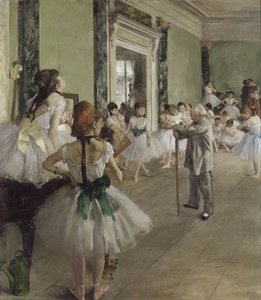
      O Absinthe Drinker (1876) is the painting Edgar Degas is best remembered for; it belongs to the Musée d'Orsay, Paris. Mulher Secando-se and A Classe de Dança (1873) complete the trio of best-loved canvases. Our catalogue counts 1,074 works by Edgar Degas. Here are the 100 most famous, with the year, the museum and the story of each canvas.

      Ranked by our popularity score, which combines the searches, visits and orders for each work. Updated Outubro 2026. Each painting on this page can be ordered as an oil reproduction painted by hand on linen canvas, or as a fine art print, made to the size you choose.

      Portrait of Edgar Degas
      Edgar Degas · 1834 – 1917
      Born · died
      1834 – 1917, Paris
      Movement
      Impressionismo
      Works in our catalogue
      1.074
      Most famous
      O Absinthe Drinker (1876)
      Most works at
      Metropolitan Museum of Art

      The ten best-loved paintings by Edgar Degas

      O Absinthe Drinker (1876) by Edgar Degas
      1

      O Absinthe Drinker

      1876 · Óleo sobre tela · Musée d'Orsay, Paris

      A obra "O Absinthe Drinker" (1876), de Edgar Degas, é um retrato pungente da cultura dos cafés parisienses, capturando a solidão e a introspecção da vida urbana no século XIX. Esta obra-prima convida o espectador para um momento de contemplação silenciosa, onde duas figuras sentam-se lado a lado, mas permanecem mundos à parte, cada uma absorta em seus próprios pensamentos.

      Mulher Secando-se by Edgar Degas
      2

      Mulher Secando-se

      Acrílico sobre tela · National Gallery, Londres

      Um Momento de Repouso Íntimo: Explorando “Mulher Secando-se” de Degas Edgar Degas's "Mulher Secando-se" é um cativante desenho a pastel que personifica o espírito do Impressionismo e, mais especificamente, do movimento *Intimista*. Esta obra não é meramente a representação de um nu; é uma exploração de momentos privados, da vulnerabilidade e da beleza silenciosa da vida cotidiana – temas centrais na visão artística de Degas. A obra convida-nos para um…

      A Classe de Dança (1873) by Edgar Degas
      3

      A Classe de Dança

      1873 · Óleo sobre tela · Musée d'Orsay, Paris

      Entrar em Edgar Degas e sua obra “A Classe de Dança” é transcender as fronteiras do tempo e entrar em um santuário de graça disciplinada. Pintada por volta de 1873, esta obra-prima não apresenta apenas uma cena de ensaio de ballet; ela oferece uma janela íntima, quase voyeurista, para a intensidade silenciosa do estúdio de dança. Ao contrário dos grandes espetáculos encenados frequentemente associados à ópera, Degas direciona nosso olhar…

      The Bellelli Family by Edgar Degas
      4

      The Bellelli Family

      Oil On Canvas · Musée d'Orsay, Paris

      In the quiet, shadowed corners of a Parisian room, Edgar Degas captures something far more profound than a mere family gathering. The Bellelli Family, painted between 1858 and 1867, stands as an exquisite masterwork that transcends the boundaries of traditional portraiture. It is not simply a record of faces, but a psychological landscape where every gaze and posture whispers of unspoken tensions and deep-seated emotions. As one gazes upon this…

      Interior (also known as The Rape) (1868) by Edgar Degas
      5

      Interior (also known as The Rape)

      1868 · Óleo sobre tela · Philadelphia Museum of Art, Filadélfia

      Edgar Degas’s “Interior,” often referred to as “The Rape,” is not merely a painting; it's an experience—a carefully constructed tableau of psychological tension and unspoken drama. Completed in 1868, this grisaille masterpiece resides within the Philadelphia Museum of Art, yet its power transcends its physical location, resonating with viewers long after they’ve turned away. It’s a work that invites speculation, prompting us to confront uncomfortable truths about human relationships and…

      Portraits in a New Orleans Cotton Office by Edgar Degas
      6

      Portraits in a New Orleans Cotton Office

      Portraits in a New Orleans Cotton Office Edgar Degas, one of the most celebrated artists of the Impressionist movement, gifted us Portraits in a New Orleans Cotton Office, an oil painting that encapsulates the very essence of his uncle’s cotton brokerage business during its calamitous bankruptcy. Completed in 1873, this masterpiece transcends mere visual representation; it stands as a testament to Degas' unparalleled skill and occupies a significant place within…

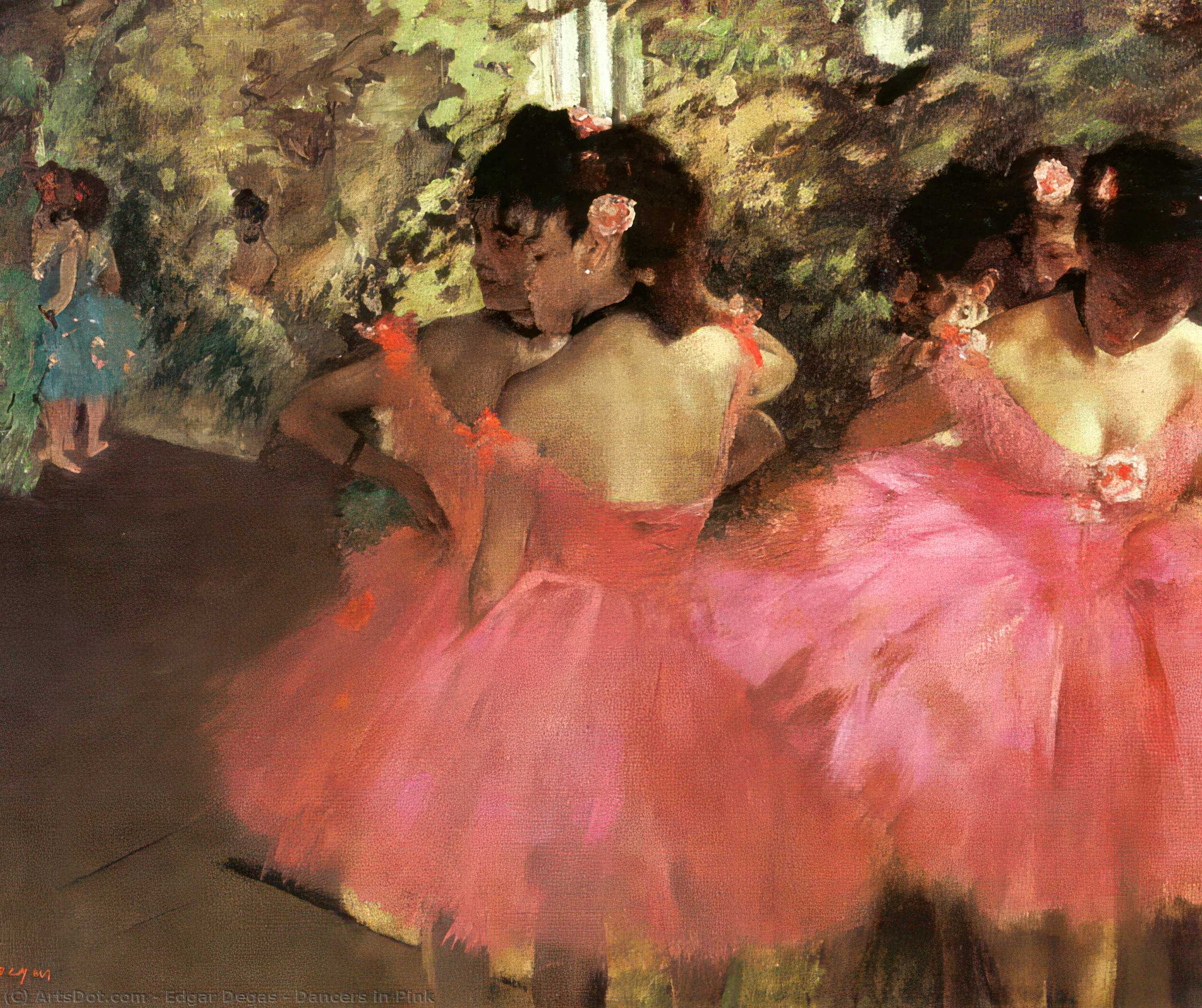
      Dançarinas em Rosa (1885) by Edgar Degas
      7

      Dançarinas em Rosa

      1885 · Óleo sobre tela · Hill-Stead Museum, Farmington

      A Graça e o Movimento do Ballet Capturados no Brilho Impressionista Dançarinas em Rosa, de Edgar Degas, é uma representação magistral do mundo do ballet, executada com o toque impressionista característico do artista. Esta obra cativante convida os espectadores para o reino dinâmico da dança, onde a graça, o movimento e a elegância convergem em perfeita harmonia. Uma Cena de Dança Vibrante A pintura retrata uma cena animada de bailarinas…

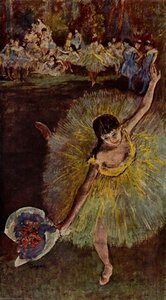
      Dançarina com um ramo de flores (A Estrela do balé) (1878) by Edgar Degas
      8

      Dançarina com um ramo de flores (A Estrela do balé)

      1878 · Acrílico sobre tela

      Edgar Degas’ “Dancer with a bouquet of flowers (The Star of the ballet)” transcends mere representation; it embodies an entire epoch—the Belle Époque—a period characterized by optimism, artistic experimentation, and a fascination with capturing fleeting moments. Painted in 1878 during his formative years as an Impressionist, this artwork stands apart from its contemporaries due to Degas’s unwavering commitment to realism, albeit infused with the expressive spirit of the movement.

      Miss Lola, ao Cirque Fernando (1879) by Edgar Degas
      9

      Miss Lola, ao Cirque Fernando

      1879 · Óleo sobre tela

      A obra "Miss Lola, au Cirque Fernando", de Edgar Degas, é uma representação magistral de uma acrobata de circo em pleno espetáculo. Esta obra vibrante captura a energia e a graça da acrobata, Miss Lola, enquanto ela atrai todos os olhares no ápice de sua performance. A composição dinâmica envolve o espectador na cena, criando uma experiência imersiva que realça a habilidade e a audácia da artista.

      Edgar Degas (1888) by Edgar Degas
      10

      Edgar Degas

      1888 · Óleo sobre tela · The Phillips Collection, Washington, D.C.

      A Graça Efémera do Movimento: "Bailarinas no Barre 1" de Edgar Degas Edgar Degas, um nome sinônimo da Impressionismo francês, embora ele próprio resistisse a essa categorização, presenteou o mundo com uma obra que transcende a mera representação visual. “Bailarinas no Barre 1”, pintada em 1888, não é apenas uma cena de ensaio; é um portal para a intimidade do universo da dança, capturando a disciplina, a beleza e a…

      Edgar Degas: canvases 11 to 100 of the ranking

      Mulher lavando no banho (1892) by Edgar Degas
      #12

      Mulher lavando no banho

      1892

      Uma Representação Íntima da Vida Cotidiana Esta obra primorosa captura um momento silencioso e privado de uma mulher dedicada à sua rotina diária — o banho. Através de…

      Order this canvas →
      Enfermeira (1873) by Edgar Degas
      #13

      Enfermeira

      1873

      Em 1873, Edgar Degas, um artista que desafiou rótulos e se recusou a ser definido como mero impressionista, presenteia-nos com uma obra singularmente poderosa: "The Nurse" (A Enfermeira).…

      Have it painted by hand →
      Em um Café, também chamado by Edgar Degas
      #14

      Em um Café, também chamado

      Grand Palais

      “Em um Café”, de Hilaire-Germain-Edgar Degas, pintado por volta de 1876, não é meramente uma representação de duas figuras desfrutando de uma noite parisiense; é um estudo meticulosamente…

      Bring this light home →
      Dançarinos (1898) by Edgar Degas
      #15

      Dançarinos

      1898

      A Glimpse Behind the Curtain: Edgar Degas’s “Dancers” (1898) This captivating pastel work by Edgar Degas offers a rare and intimate look beyond the dazzling spectacle of the…

      Have it painted by hand →
      A Aula de Dança (1874) by Edgar Degas
      #16

      A Aula de Dança

      1874 · Metropolitan Museum of Art

      A obra Edgar Degas "A Aula de Dança" (1874) captura um animado estúdio de ensaio de balé, mergulhando os espectadores no universo da dança. A composição é dividida…

      Order this canvas →
      Dançarina no Palco (1880) by Edgar Degas
      #18

      Dançarina no Palco

      1880 · Hamburger Kunsthalle

      Um Momento Fugaz de Graça: Explorando “Dançarina no Palco” de Degas Esta obra cativante em pastel de Edgar Degas transporta-nos para o coração do mundo do ballet parisiense…

      Order this canvas →
      A Estrela by Edgar Degas
      #20

      A Estrela

      Edgar Degas, um nome sinônimo do Impressionismo, possuía uma fascinação singular que transcendia a mera busca artística; ele estava completamente cativado pelo mundo do balé. Em sua extensa…

      Order this canvas →
      Head of a Woman (1874) by Edgar Degas
      #24

      Head of a Woman

      1874 · National Gallery

      Step closer, and you might find yourself caught in the stillness of this moment. There is no grand theatricality here, only the presence of an unknown woman, perhaps…

      Have it painted by hand →
      Two harlequins (1886) by Edgar Degas
      #25

      Two harlequins

      1886

      Edgar Degas, a titan of French Impressionism, stands apart from his peers not merely for stylistic innovation but also for an unyielding dedication to capturing the quiet dramas…

      Order this canvas →
      Mulher Sentada Pentear o Cabelo (1890) by Edgar Degas
      #27

      Mulher Sentada Pentear o Cabelo

      1890 · Musée d'Orsay

      “Mulher Sentada Pentando o Cabelo”, de Edgar Degas, concluída por volta de 1890, não é meramente uma representação de atividade doméstica; é uma exploração profunda da feminilidade, da…

      Order this canvas →
      Yellow Dancers (In the Wings) (1875) by Edgar Degas
      #28

      Yellow Dancers (In the Wings)

      1875 · Art Institute of Chicago

      Three female figures occupy the foreground, positioned in a diagonal arrangement that leads the eye from the upper middle toward the lower right. The composition focuses on a…

      Bring this light home →
      Café Singer (1879) by Edgar Degas
      #29

      Café Singer

      1879 · Art Institute of Chicago

      A female singer occupies the center of this oil on canvas composition, her upper torso and head captured in a tight crop. The figure is positioned against a…

      Bring this light home →
      The Milliners (1882) by Edgar Degas
      #30

      The Milliners

      1882 · J. Paul Getty Museum

      Two women sit at a worktable that cuts across the space at a sharp, unsettling angle. The room is crowded with the dark, rounded silhouettes of hat stands,…

      Bring this light home →
      Women Combing Their Hair (1876) by Edgar Degas
      #31

      Women Combing Their Hair

      1876 · The Phillips Collection

      Hilaire-Germain-Edgar Degas’s “Women Combing Their Hair,” painted circa 1876, is more than a simple depiction of domestic activity; it’s a profound meditation on movement, observation, and the fleeting…

      Have it painted by hand →
      Uma Mulher Mendiga Romana (1857) by Edgar Degas
      #33

      Uma Mulher Mendiga Romana

      1857 · Birmingham Museum and Art Gallery

      “A Roman Beggar Woman”, pintada em 1857, exemplifica essa filosofia artística. O quadro apresenta uma mulher sentada no chão diante de uma porta antiga, cuja postura transmite humildade…

      Have it painted by hand →
      The Blue Dancers by Edgar Degas
      #36

      The Blue Dancers

      A Glimpse Behind the Curtain: Degas’s “The Blue Dancers” Edgar Degas's “The Blue Dancers,” painted in 1897, is more than just a depiction of ballerinas; it’s an intimate…

      Order this canvas →
      Bailarina em seu camarim (1879) by Edgar Degas
      #38

      Bailarina em seu camarim

      1879 · Norton Simon Museum

      “Dançarina em Seu Camarim”, pintado por Edgar Degas em 1879, não é meramente uma representação de uma bailarina; é uma profunda meditação sobre a beleza fugaz, a solidão…

      Order this canvas →
      A Orquestra da Ópera (1869) by Edgar Degas
      #40

      A Orquestra da Ópera

      1869

      A pintura "Orchestra of the Opera" de Edgar Degas, pintada em 1869, não é meramente uma representação de músicos; é um retrato meticulosamente observado de um fragmento da…

      Order this canvas →
      The Bather (La Baigneuse) (1895) by Edgar Degas
      #41

      The Bather (La Baigneuse)

      1895 · Reading Public Museum

      The painting depicts a woman reclining on her side in a bathtub filled with water. She is positioned centrally within the frame, bathed in diffused natural light filtering…

      Have it painted by hand →
      Dançarinas Russas (1899) by Edgar Degas
      #42

      Dançarinas Russas

      1899

      Um Vislumbre de Movimento e Modernidade: Os Dançarinos Russos de Degas Edgar Degas, mestre em capturar momentos fugazes e a vida moderna, apresenta-nos com esta cena cativante nos…

      Bring this light home →
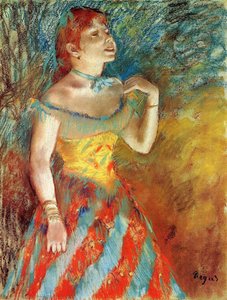
      Singer in Green (1884) by Edgar Degas
      #46

      Singer in Green

      1884 · Metropolitan Museum of Art

      In the heart of 1884 Paris, amidst the gaslit glow of cabarets and the rhythmic pulse of urban nightlife, Edgar Degas captured a moment that transcends time. Singer…

      Order this canvas →
      Mulher Pentando o Cabelo (1894) by Edgar Degas
      #48

      Mulher Pentando o Cabelo

      1894 · Metropolitan Museum of Art

      A Moment of Intimate Reflection: Degas’s *Woman Combing Her Hair* Edgar Degas's 1894 pastel, *Woman Combing Her Hair*, is a captivating study in quiet intimacy and the beauty…

      Bring this light home →
      Woman at a Window (1872) by Edgar Degas
      #51

      Woman at a Window

      1872 · Courtauld Gallery

      Edgar Degas's “Woman at a Window,” painted in 1872, is more than just a depiction of a figure observing the world outside; it’s a masterful exploration of light,…

      Order this canvas →
      Ballet Scene (1880) by Edgar Degas
      #52

      Ballet Scene

      1880 · Dixon Gallery and Gardens

      Ballet Scene is a painting by Edgar Degas. The composition focuses on a single female dancer positioned toward the front right of the stage. This figure is rendered…

      Order this canvas →
      Four Dancers (1902) by Edgar Degas
      #53

      Four Dancers

      1902

      To stand before Four Dancers is to step directly into a moment suspended in time—a breath held just before the music swells, or perhaps, the perfect echo after…

      Order this canvas →
      A Carriage at the Races (1872) by Edgar Degas
      #54

      A Carriage at the Races

      1872 · Museu de Belas Artes de Boston

      The painting depicts a horse-drawn carriage situated on a grassy field. Several horses are visible within the scene; some are positioned in the foreground while others are further…

      Have it painted by hand →
      Lady with a Parasol (1871) by Edgar Degas
      #55

      Lady with a Parasol

      1871 · Courtauld Gallery

      The scene unfolds through Lady with a Parasol, a work painted by Edgar Degas in 1871. This piece captures a fleeting moment of existence, frozen in time through…

      Order this canvas →
      Singer with a glove (1878) by Edgar Degas
      #57

      Singer with a glove

      1878

      To gaze upon Degas's depiction of "Singer with a glove" is to be instantly transported into the vibrant, yet fleeting, atmosphere of a Parisian cabaret in the late…

      Order this canvas →
      Mme Jacques Fourchy (1883) by Edgar Degas
      #58

      Mme Jacques Fourchy

      1883

      Edgar Degas's "Mme Jacques Fourchy," painted in 1883, isn’t merely a portrait; it’s a carefully constructed tableau vivant—a captured moment brimming with subtle observation and quiet intensity. This…

      Have it painted by hand →
      Field of Flax (1892) by Edgar Degas
      #59

      Field of Flax

      1892

      The artwork is a pastel depiction of a landscape featuring a field of flax. In the foreground, there are bright yellow flowers scattered throughout the scene. A diamond-shaped…

      Order this canvas →
      The Return of the Herd (1896) by Edgar Degas
      #60

      The Return of the Herd

      1896 · New Walk Museum - Art Gallery

      The painting depicts a rural scene featuring two horses positioned on a road in front of a house. One horse is situated toward the left side of the…

      Bring this light home →
      Group of Dancers (1905) by Edgar Degas
      #64

      Group of Dancers

      1905

      The painting Group of Dancers is an oil on canvas that captures three women dancing together within a room. The scene is characterized by a sense of energy…

      Order this canvas →
      Conversation (1895) by Edgar Degas
      #67

      Conversation

      1895 · Yale University Art Gallery

      Edgar Degas's "Conversation," housed within the hallowed halls of the Yale University Art Gallery, isn’t merely a painting; it’s a meticulously crafted snapshot of Parisian social life at…

      Bring this light home →
      Two Dancers (1898) by Edgar Degas
      #69

      Two Dancers

      1898 · Staatliche KunstSammlungen Dresden

      The scene unfolds through the delicate, layered application of pastel and charcoal, capturing a fleeting moment of grace. In this work, titled Two Dancers, the artist Edgar Degas…

      Have it painted by hand →
      Spanish dance (2018) by Edgar Degas
      #70

      Spanish dance

      2018 · Asociación Española de Pintores y Escultores

      In this sculpture, titled Spanish dance, we encounter the quiet intensity of Edgar Degas. Created in France during the 1880s, the work captures a specific, fleeting moment of…

      On the Stage (1880) by Edgar Degas
      #71

      On the Stage

      1880

      The stage lights seem to flicker even now as the eye wanders across the cream laid paper. A young woman holds the center of the frame, her body…

      Have it painted by hand →
      Horses and Jockeys (1886) by Edgar Degas
      #72

      Horses and Jockeys

      1886

      To gaze upon this depiction of horses and jockeys is to witness time itself captured in a fleeting, exhilarating instant. It is more than just a sporting scene;…

      Order this canvas →
      The Dancers (1885) by Edgar Degas
      #73

      The Dancers

      1885 · Metropolitan Museum of Art

      The air in the rehearsal space feels heavy with the scent of dust and tulle. In this 1885 pastel work, several ballerinas occupy a crowded, asymmetrical stage, caught…

      Bring this light home →
      Four dancers, ca National Galler (1899) by Edgar Degas
      #74

      Four dancers, ca National Galler

      1899 · National Gallery of Art

      To stand before this depiction of four dancers is to witness time suspended in a moment of pure, unbridled artistry. Hilaire-Germain-Edgar Degas captured not merely figures on pointe,…

      Order this canvas →
      Dancer Tilting (1883) by Edgar Degas
      #75

      Dancer Tilting

      1883

      Created in 1883, Dancer Tilting is a pastel drawing by Edgar Degas that captures a fleeting moment of movement. The composition centers on a young woman poised mid-leap,…

      Bring this light home →
      Ballet Scene by Edgar Degas
      #76

      Ballet Scene

      Dixon Gallery and Gardens

      In the quiet, focused moments before the curtain rises, there exists a unique tension—a blend of exhaustion and anticipation that Hilaire-Germain-Edgar Degas captured with unparalleled intimacy. Ballet Scene…

      Have it painted by hand →
      Melancolia (1874) by Edgar Degas
      #77

      Melancolia

      1874

      Edgar Degas, um nome sinônimo de Impressionismo, mas profundamente resistente à fácil categorização, oferece-nos em "Melancolia" (1874) uma obra que transcende a simples representação do retrato. Instalada na…

      Order this canvas →
      Dancer's Dressing Room (1878) by Edgar Degas
      #78

      Dancer's Dressing Room

      1878

      Edgar Degas’ “Dancer’s Dressing Room,” created in 1878, offers an intimate and captivating glimpse into the world of ballet. This pastel work exemplifies the Impressionist movement's focus on…

      Bring this light home →
      Dancers Practicing at the Barre (1877) by Edgar Degas
      #81

      Dancers Practicing at the Barre

      1877 · Metropolitan Museum of Art

      In the quiet, sun-drenched corners of a Parisian rehearsal studio, Edgar Degas captured something far more profound than a mere ballet rehearsal. “Dancers Practicing at the Barre,” painted…

      Order this canvas →
      Woman in a Café (1877) by Edgar Degas
      #82

      Woman in a Café

      1877

      In the heart of late 19th-century Paris, amidst the rhythmic pulse of urban life, Edgar Degas captured a scene that transcends the mere boundaries of a casual afternoon.…

      Order this canvas →
      Dancers (1895) by Edgar Degas
      #83

      Dancers

      1895

      Edgar Degas, a figure perpetually shadowed by the brilliance of Monet and Renoir yet undeniably pivotal to the Impressionist movement, possessed an artistic vision that defied easy categorization.…

      Bring this light home →
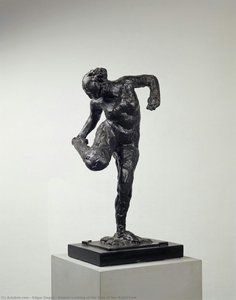
      Dancer Looking at the Sole of Her Right Foot (1921) by Edgar Degas
      #84

      Dancer Looking at the Sole of Her Right Foot

      1921 · Tel Aviv Museum of Art

      The quietude of a private moment settles over the bronze figure known as Dancer Looking at the Sole of Her Right Foot. Created by Edgar Degas, this work…

      Quatro Bailarinas (1900) by Edgar Degas
      #87

      Quatro Bailarinas

      1900 · National Gallery of Art

      Um Vislumbre do Movimento Fugaz: Decifrando as *Quatro Bailarinas* de Degas A obra *Quatro Bailarinas*, pintada por Edgar Degas em 1900, é muito mais do que uma simples…

      Order this canvas →
      A Banheira (1889) by Edgar Degas
      #88

      A Banheira

      1889

      A Vida Imersa em Movimento Edgar Degas (1834-1917) foi um artista de fascinantes contradições. Embora frequentemente agrupado com os Impressionistas – Monet, Renoir e outros que revolucionaram a…

      Order this canvas →
      Woman with a Bandage (1873) by Edgar Degas
      #91

      Woman with a Bandage

      1873 · Detroit Institute of Arts

      A Moment of Quietude: Exploring Degas’ *Woman with a Bandage* Edgar Degas' *Woman with a Bandage*, painted in 1873, is more than just a portrait; it’s an intimate…

      Bring this light home →
      Dancers (8) (1900) by Edgar Degas
      #92

      Dancers (8)

      1900

      To stand before this depiction of Dancers (8) is to step directly into the vibrant, breathless atmosphere backstage—a moment suspended between performance and memory. Hilaire-Germain-Edgar Degas captured not…

      Have it painted by hand →
      Cafe-Concert Singer (1878) by Edgar Degas
      #93

      Cafe-Concert Singer

      1878

      To gaze upon Degas's Cafe-Concert Singer is to step directly into the smoky, vibrant heart of late nineteenth-century Paris. This painting captures more than just a moment; it…

      Have it painted by hand →
      The Rehearsal (1878) by Edgar Degas
      #94

      The Rehearsal

      1878 · Dumbarton Oaks

      To gaze upon The Rehearsal is to step directly into a moment suspended in time—a breath held just before the curtain rises, or perhaps, just after the applause…

      Have it painted by hand →
      Russian Dancer (1895) by Edgar Degas
      #96

      Russian Dancer

      1895

      In the delicate dance between light and shadow, Edgar Degas captures a moment of pure, unadulterated vitality in Russian Dancer. Created in 1895, this masterpiece serves as a…

      Order this canvas →
      View of Saint-Valery-sur-Somme (1898) by Edgar Degas
      #98

      View of Saint-Valery-sur-Somme

      1898 · Metropolitan Museum of Art

      Edgar Degas, a renowned French Impressionist painter, captivated audiences with his evocative landscape View of Saint-Valéry-sur-Somme in 1898. Now residing within the esteemed collection at the Metropolitan Museum…

      Bring this light home →
      Leon Bonnat (1863) by Edgar Degas
      #99

      Leon Bonnat

      1863

      In 1863, Edgar Degas turns his gaze toward a man who shares his devotion to the craft of seeing. This half-length portrait captures Léon-Joseph-Florentin Bonnat, not as a…

      Bring this light home →

      Edgar Degas's canvases, period by period

      What Edgar Degas painted most

      The four subjects that return most often on these canvases, each with its best-loved example.

      Where Edgar Degas's canvases hang

      The 8 museums that hold the most of the paintings on this page.

      Museum City Works by Edgar Degas Paintings from this list
      Metropolitan Museum of Art, Nova YorkMetropolitan Museum of Art Nova York 52 A Aula de Dança, Fan Mount: Ballet Girls, Three Dancers Preparing for Class
      Musée d'Orsay, ParisMusée d'Orsay Paris 55 O Absinthe Drinker, A Classe de Dança, The Bellelli Family
      National Gallery, LondresNational Gallery Londres 18 Mulher Secando-se, Two Dancers in Their Dressing Room, Head of a Woman
      Norton Simon Museum, PasadenaNorton Simon Museum Pasadena 5 Bailarina em seu camarim, Rehearsal de Dança no Estúdio da Ópera, Mulher Pentando o Cabelo Diante de um Espelho
      National Gallery of Art, WashingtonNational Gallery of Art Washington 28 Four dancers, ca National Galler, Quatro Bailarinas
      Museu de Belas Artes de Boston, BostonMuseu de Belas Artes de Boston Boston 10 Cavalos de Corrida em Longchamp, A Carriage at the Races
      Art Institute of Chicago, ChicagoArt Institute of Chicago Chicago 8 Yellow Dancers (In the Wings), Café Singer
      Courtauld Gallery, LondresCourtauld Gallery Londres 7 Woman at a Window, Lady with a Parasol

      Edgar Degas's most famous canvas, decade after decade

      1. 1850s
        Uma Mulher Mendiga Romana (1857) by Edgar Degas
        Canvas 33 of 100

        Uma Mulher Mendiga Romana

        Age 16 – 25 · Birmingham Museum and Art Gallery

        “A Roman Beggar Woman”, pintada em 1857, exemplifica essa filosofia artística. O quadro apresenta uma mulher sentada no chão diante de uma porta antiga, cuja postura transmite humildade…

      2. 1860s
        Interior (also known as The Rape) (1868) by Edgar Degas
        Canvas 5 of 100

        Interior (also known as The Rape)

        Age 26 – 35 · Philadelphia Museum of Art

        Edgar Degas’s “Interior,” often referred to as “The Rape,” is not merely a painting; it's an experience—a carefully constructed tableau of psychological tension and unspoken drama. Completed in…

      3. 1870s
        O Absinthe Drinker (1876) by Edgar Degas
        Ranked 1 of 100

        O Absinthe Drinker

        Age 36 – 45 · Musée d'Orsay

        A obra "O Absinthe Drinker" (1876), de Edgar Degas, é um retrato pungente da cultura dos cafés parisienses, capturando a solidão e a introspecção da vida urbana no…

      4. 1880s
        Dançarinas em Rosa (1885) by Edgar Degas
        Canvas 7 of 100

        Dançarinas em Rosa

        Age 46 – 55 · Hill-Stead Museum

        A Graça e o Movimento do Ballet Capturados no Brilho Impressionista Dançarinas em Rosa, de Edgar Degas, é uma representação magistral do mundo do ballet, executada com o…

      5. 1890s
        Mulher lavando no banho (1892) by Edgar Degas
        12 of 100

        Mulher lavando no banho

        Age 56 – 65

        Uma Representação Íntima da Vida Cotidiana Esta obra primorosa captura um momento silencioso e privado de uma mulher dedicada à sua rotina diária — o banho. Através de…

      6. 1900s
        Três Bailarinas, Saias Azuis, Blusas Vermelhas (1903) by Edgar Degas
        Ranked 47 of 100

        Três Bailarinas, Saias Azuis, Blusas Vermelhas

        Age 66 – 75

        Três Bailarinas, Saias Azuis, Blusas Vermelhas O mundo da arte é repleto de obras-primas que continuam a nos inspirar e encantar. Uma dessas obras-primas é “Três Bailarinas, Saias…

      Edgar Degas's canvases, question by question

      Which canvas is Edgar Degas most remembered for?Read the answer

      O Absinthe Drinker (1876), Musée d'Orsay, Paris. Mulher Secando-se and A Classe de Dança (1873) follow.

      O Absinthe Drinker: how old was Edgar Degas when it was painted?Read the answer

      Edgar Degas, born in 1834, was 42 years old: O Absinthe Drinker dates from 1876.

      What are Edgar Degas's ten most famous canvases?Read the answer

      O Absinthe Drinker, Mulher Secando-se, A Classe de Dança, The Bellelli Family, Interior (also known as The Rape), Portraits in a New Orleans Cotton Office, Dançarinas em Rosa, Dançarina com um ramo de flores (A Estrela do balé), Miss Lola, ao Cirque Fernando and Edgar Degas. Each canvas in the ranking above comes with its year and its museum.

      How many paintings did Edgar Degas create?Read the answer

      1,074 works by Edgar Degas are in our catalogue, dated 1857 to 1905.

      Where do Edgar Degas's most famous canvases hang today?Read the answer

      Mostly in Metropolitan Museum of Art (Nova York), Musée d'Orsay (Paris) and National Gallery (Londres); the list above names each museum and its canvases.

      When did Edgar Degas paint the most famous canvases?Read the answer

      In 1870s, which gave 40 of the 100 works on this page, O Absinthe Drinker among them.

      Which famous Edgar Degas canvas came first, and which came last?Read the answer

      The earliest canvas here is Uma Mulher Mendiga Romana (1857); the latest is Group of Dancers (1905).

      Which subjects did Edgar Degas paint most?Read the answer

      Ballet (19), Dance (15) and Pastel (13), across the 100 works on this page.

      Which medium appears most in Edgar Degas's paintings?Read the answer

      Oil On Canvas, used in 26 of the 100 works on this page.

      Which movement is Edgar Degas associated with?Read the answer

      Impressionismo, as the canvases on this page show.

      Which paintings by Edgar Degas are held by the Metropolitan Museum of Art?Read the answer

      The Metropolitan Museum of Art, Nova York holds 9 of the works on this page, among them A Aula de Dança, Fan Mount: Ballet Girls and Three Dancers Preparing for Class.

      Where can I buy a reproduction of a Edgar Degas painting?Read the answer

      Yes. Every painting on this page can be ordered from its own page as an oil reproduction painted by hand, or as a fine art print, in the size you choose.

      Meet the painter: Edgar Degas

      A Vida de Edgar Degas

      Paris, 1834. Nasce em uma família de posses moderadas o filho de Hilaire-Germain-Edgar De Gas. O nome que ele viria a simplificar para Edgar Degas marca o início de uma existência definida pela tensão entre as expectativas sociais e a obsessão artística. Ele cresce imerso na atmosfera sofisticada da capital francesa, um cenário que servirá, mais tarde, como o pano de fundo para suas observações sobre a vida moderna.

      Os anos passam em um turbilhão de estudos e interesses mutáveis. Ele se afasta do ambiente estruturado de sua criação em direção à crueza dos espaços de trabalho da cidade. Não busca a luz solar do ar livre, preferindo a iluminação controlada e artificial do estúdio e do teatro. Seu olhar repousa sobre as bailarinas, as lavadeiras e os cavalos de corrida de Paris, capturando o desgaste físico do trabalho e os movimentos fugazes do palco. Ele permanece um homem de contradições, resistindo frequentemente aos rótulos que seus contemporâneos lhe impõem, insistindo, em vez disso, em sua identidade como um realista.

      O fim chega em Paris, em 27 de setembro de 1917. Ele deixa para trás um vasto corpo de obras que abrange muitas décadas, incluindo:

      Juventude, Família e Formação

      Paris, 1834. Filho de um banqueiro e de Célestine Musson De Gas, uma crioula de Nova Orleans, Louisiana, Hilaire-Germain-Edgar De Gas ingressa em um mundo de estabilidade burguesa. Aos onze anos, é matriculado no Lycée Louis-le-Grand. O caminho acadêmico parece traçado, mas o foco do jovem desvia-se para os corredores do Louvre. Em 1853, após graduar-se no Lycée com um baccalauréat em literatura, ele ignora as expectativas paternas de uma carreira jurídica. Em vez disso, registra-se como copista no Museu do Louvre, dedicando suas horas a traçar as linhas dos mestres.

      A formação intensifica-se na École des Beaux-Arts, em Paris. Ele atravessa o rigor da instrução clássica, aprimorando uma precisão que viria a definir sua obra posterior. Em 1855, ocorre um encontro que deixa uma marca permanente em seu desenvolvimento: ele conhece Jean-Auguste-Dominique Ingres. O encontro consolida um respeito pelo desenho e pela importância da linha, mesmo enquanto ele começa a se mover em direção aos temas modernos que, eventualmente, definiriam sua carreira.

      Técnica e Estilo Artístico

      Edgar Degas rejeita o rótulo de Impressionista. Ele prefere o termo "Realista", uma escolha que dita toda a sua abordagem em relação à tela. Ele evita a paisagem ao ar livre e as pinceladas soltas e cintilantes favorecidas por seus contemporâneos; em vez disso, ele se retira para o ambiente controlado do estúdio. É aqui que ele domina a forma humana através de um desenho rigoroso. Ele é um desenhista soberbo, possuindo um comando técnico específico sobre a representação do movimento. Ele não espera que o sol atinja um objeto; ele constrói suas cenas por meio de um estudo cuidadoso em lápis ou pastel. Essa preparação permite-lhe congelar um momento fugaz de movimento com precisão anatômica.

      A luz em uma composição de Degas raramente é natural. Ele utiliza a luz artificial para enfatizar as figuras, criando uma sensação de teatralidade e profundidade. Um método notável é o contre-jour, onde ele coloca seu tema em sombra enquanto o fundo permanece intensamente iluminado. Esta técnica isola a figura, projetando-a para a frente do ambiente. O resultado é uma tensão entre o sujeito e o espaço que ele habita, revelando frequentemente o esforço físico ou a realidade silenciosa e sem poses da vida moderna.

      Obras-Primas e Temáticas

      O palco e o estábulo dominam o seu universo visual. Mais da metade de sua produção concentra-se nas bailarinas, capturando-as tanto em momentos de ensaio quanto em plena performance. Ele transita com maestria entre a graça etérea de uma pirueta e o esforço físico exaustivo da aula de dança. Para além do teatro, Edgar Degas volta o seu olhar para a velocidade vertiginosa das pistas de corrida, documentando a força dos cavalos de raça e a determinação dos jóqueis que os conduzem. Estes temas não são meramente decorativos; são estudos profundos sobre a tensão e o movimento puro.

      A sua sensibilidade estende-se ao domínio do privado e do psicológico. Através de retratos que revelam uma vida interior complexa, o artista utiliza frequentemente ângulos não convencionais para isolar os seus sujeitos, conferindo-lhes uma aura de introspecção. Este foco na forma humana não se limita à pintura a óleo sobre tela; ele explora uma vasta gama de meios, incluindo gravuras, desenhos e esculturas em cera. A sua habilidade extraordinária em renderizar a figura humana é evidente nos seus inúmeros estudos de mulheres, focando-se, muitas vezes, no corpo em momentos de intimidade, desprovidos de qualquer observação pública.

      • A Aula de Dança, cerca de 1874
      • A Aula de Dança, 1874
      • A Classe de Ballet, 1874–1876
      • Interior, 1868–1869
      • Cena de Corrida de Obstáculos: O Jóquei Caído, 1866

      Legado e Impacto Duradouro

      A transição na arte do final do século XIX encontra uma figura central em Edgar Degas. Embora tenha resistido ao rótulo, sua presença ajudou a estabelecer os alicerces do Impressionismo. Ele afastou-se dos temas históricos e rígidos da academia, optando, em vez disso, por documentar a crueza e a graça da vida parisiense moderna. Esse distanciamento da tradição abriu caminho para que futuras gerações de artistas explorassem a realidade nua da condição humana.

      Sua influência estende-se muito além do círculo impressionista inicial. As inovações estruturais e as composições não convencionais que ele desenvolveu deixaram uma marca indelével na trajetória da arte moderna. Especificamente, sua abordagem à forma e ao movimento pode ser observada nas obras tardias de Pablo Picasso e Henri Matisse. Ele ensinou o mundo da arte a observar o mundo através de ângulos assimétricos e enquadramentos inesperados, transformando os momentos privados e fugazes de uma bailarina ou de uma lavadeira em estudos permanentes de movimento.

      • A Classe de Dança
      • A Classe de Ballet
      • Interior

      Onde Ver as Obras Hoje

      Os vestígios da observação de Edgar Degas permanecem espalhados por grandes instituições, preservados nos salões silenciosos de Paris e de outros lugares. Na França, o Musée d'Orsay abriga coleções significativas de sua obra, capturando o movimento que ele dedicou uma vida inteira a estudar. O Museu do Louvre também guarda sua arte, enquanto a Bibliothèque Nationale de France, em Paris, mantém seus trabalhos em seus arquivos. Essas coleções oferecem um olhar direto sobre a precisão técnica e o estudo da forma que definiram sua carreira.

      Através do Atlântico, o alcance de sua visão estende-se até os Estados Unidos. O Metropolitan Museum of Art, em Nova York, detém suas pinturas, proporcionando uma janela para a vida moderna que ele retratou com tanto escrutínio. Em Filadélfia, o Philadelphia Museum of Art contém suas obras, garantindo que sua influência permaneça acessível ao público internacional. Estes locais atuam como âncoras físicas para o seu legado, onde as linhas e a luz que ele dominou ainda são visíveis ao olhar moderno.

      All 1074 works by Edgar Degas →