Ateliê — Envio gratuito para todo o mundo — Entrega em 2–6 semanas
      Emanuel De Witte, 1617 – 1692

      Emanuel De Witte: As 99 pinturas mais conhecidas

      De todas as pinturas de Emanuel De Witte, Portrait of a Family in an Interior (detail) (1678) é a mais famosa; está exposta no Alte Pinakothek, em Munique. Logo atrás vêm The Interior of a Dutch Church (1680) e Interior of the Nieuwe Kerk in Delft (1664). Entre as 99 obras de Emanuel De Witte em nosso catálogo, estas 99 são as mais celebradas, cada uma apresentada com a sua data, o seu museu e a sua história.

      Classificado de acordo com o nosso índice de popularidade, que combina buscas, visitas e pedidos de cada obra. Atualizado em Outubro 2026. Cada pintura nesta página pode ser encomendada como uma reprodução a óleo pintada à mão sobre tela de linho, ou como uma impressão fine art, feita no tamanho que escolher.

      Retrato de Emanuel De Witte
      Emanuel De Witte · 1617 – 1692
      Nascimento · falecimento
      1617 – 1692, Alkmaar
      Movimento
      Dutch golden age
      Obras em nosso catálogo
      99
      Mais famosas
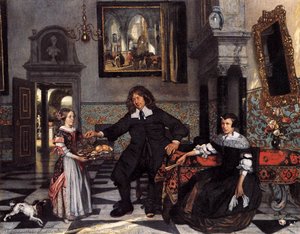
      Portrait of a Family in an Interior (detail) (1678)
      Mais obras em
      Museum Boijmans Van Beuningen

      As 10 pinturas mais celebradas de Emanuel De Witte

      Portrait of a Family in an Interior (detail) (1678) de Emanuel De Witte
      1

      Portrait of a Family in an Interior (detail)

      1678 · Oil On Canvas · Alte Pinakothek, Munique

      Emanuel de Witte's “Portrait of a Family in an Interior” (1678) isn’t merely a depiction of a wealthy household; it’s a carefully constructed tableau vivant, a frozen moment brimming with quiet dignity and subtle narrative. Painted during the height of the Dutch Golden Age, this oil on canvas offers a rare glimpse into the lives of a prosperous family within their richly appointed home—a space designed to project status, comfort,…

      Interior of the Nieuwe Kerk in Delft (1664) de Emanuel De Witte
      3

      Interior of the Nieuwe Kerk in Delft

      1664 · Oil On Canvas · Residenzgalerie, Salzburgo

      To stand before an interior scene like this depiction of the Nieuwe Kerk in Delft is to step across a threshold, leaving the clamor of the outside world behind. The artwork does not merely show us a church; it envelops us within its monumental silence. Emanuel de Witte masterfully captures that unique atmosphere found only in grand, aged sacred architecture—a place where history seems palpable in the very dust motes…

      The Interior of the Oude Kerk, Amsterdam, during a Sermon (1658) de Emanuel De Witte
      5

      The Interior of the Oude Kerk, Amsterdam, during a Sermon

      1658 · Oil On Canvas · National Gallery, Londres

      To stand before this depiction of The Interior of the Oude Kerk in Amsterdam is to step across the threshold of time itself. This painting, executed in 1658 by Emanuel de Witte, is far more than a mere record of an architectural space; it is a meticulously crafted meditation on faith, community, and the sublime interplay between human life and divine structure. The high-angle perspective immediately envelops the viewer, drawing…

      Portrait of a woman (1648) de Emanuel De Witte
      6

      Portrait of a woman

      1648 · Oil On Canvas · Museum Boijmans Van Beuningen, Roterdã

      A single female figure occupies the center of this oval vignette, presented in a bust-length view. She wears a dark garment, accented by a prominent white collar with scalloped edges and a small black bow. The composition draws the eye directly to her face, where a calm and composed expression suggests a dignified emotional tone. Light originates from the upper left, casting gentle shadows across the right side of her…

      Portrait of a man (1648) de Emanuel De Witte
      7

      Portrait of a man

      1648 · Oil · Museum Boijmans Van Beuningen, Roterdã

      is an oil painting by the Dutch artist Emanuel de Witte. Executed about 1648, the work represents a significant example of the artist's early engagement with portraiture before his later specialization in church interiors. The sitter is presented in a bust-length composition, positioned slightly off-center to create a sense of depth and presence.

      Interior of a Protestant Gothic Church (1669) de Emanuel De Witte
      8

      Interior of a Protestant Gothic Church

      1669 · Oil On Canvas · Rijksmuseum, Amsterdã

      Emanuel de Witte's "Interior of a Protestant Gothic Church," painted in 1669, isn’t merely a depiction of a sacred space; it’s an immersive experience. This remarkable work transcends the simple act of recording architecture, instead capturing the very *feeling* of being within a grand, dimly lit cathedral – a testament to de Witte's unique artistic vision. Unlike his contemporary Pieter Saenredam, who meticulously documented architectural details with photographic precision, de…

      Pinturas de Emanuel De Witte classificadas de 11 a 99

      Interior of the Oude Kerk, Delft (1650) de Emanuel De Witte
      #38

      Interior of the Oude Kerk, Delft

      1650 · Metropolitan Museum of Art

      Despite its profusion of realistic details, de Witte’s interior view of Delft’s Oude Kerk (Old Church) takes considerable liberties with the actual architecture of the church—omitting, for example,…

      Encomende esta tela →
      Interior of a Church (1674) de Emanuel De Witte
      #67

      Interior of a Church

      1674 · Museu Wallraf-Richartz

      In this work, titled Interior of a Church, we encounter a significant example of the Dutch Golden Age. Painted by Emanuel de Witte in 1660, the oil on…

      Leve esta luz para casa →
      Old Church in Delft (1642) de Emanuel De Witte
      #71

      Old Church in Delft

      1642 · Museu Hermitage

      In the quiet corners of the Dutch Golden Age, where light performs its most delicate dances, Emanuel de Witte captured something far more profound than mere architecture. His…

      Encomende esta tela →
      Interior of the Oude Kerk, Delft (1650) de Emanuel De Witte
      #73

      Interior of the Oude Kerk, Delft

      1650 · Metropolitan Museum of Art

      Emanuel de Witte's “Interior of the Oude Kerk, Delft” isn’t merely a depiction of a church; it’s an immersive experience. Painted in 1650, this remarkable work transports us…

      Encomende esta tela →
      Interior of a Gothic church de Emanuel De Witte
      #86

      Interior of a Gothic church

      Museum Boijmans Van Beuningen

      The scene unfolds within the quiet, soaring reaches of an Interior of a Gothic church. This work, painted by Emanuel de Witte, captures a moment of stillness amidst…

      Encomende esta tela →

      O que Emanuel De Witte mais pintou

      Os quatro temas que mais aparecem nestas telas, cada um com o seu exemplo mais amado.

      Onde as telas de Emanuel De Witte estão expostas

      Os 8 museus que detêm a maioria das pinturas desta página.

      Museu Cidade Obras de Emanuel De Witte Pinturas desta lista
      Museum Boijmans Van Beuningen, RoterdãMuseum Boijmans Van Beuningen Roterdã 11 Portrait of a woman, Portrait of a man, Vertumnus and Pomona
      Rijksmuseum, AmsterdãRijksmuseum Amsterdã 8 Interior of a Protestant Gothic Church, Interior of a Protestant Gothic Church, Interior of the Portuguese Synagogue in Amsterdam
      National Gallery, LondresNational Gallery Londres 4 The Interior of the Oude Kerk, Amsterdam, during a Sermon, The Interior of the Oude Kerk, Amsterdam, The Interior of the Oude Kerk, Amsterdam, during a Sermon
      Amsterdam Museum, AmsterdãoAmsterdam Museum Amsterdão 3 Interior of the Oude Kerk in Amsterdam, Interior of the Oude Kerk in Amsterdam, Interior of the Oude Kerk in Amsterdam
      Gemäldegalerie, BerlimGemäldegalerie Berlim 3 Interior View of a Synagogue, Interior of a Gothic Church, Interior of the Nieuwe Kerk in Amsterdam
      Museu Hermitage, São PetersburgoMuseu Hermitage São Petersburgo 3 Square in front of the Palace in an Italian Town, Old Church in Delft, Interior of a Church
      Metropolitan Museum of Art, Nova YorkMetropolitan Museum of Art Nova York 3 Interior of the Oude Kerk, Delft, Interior of the Oude Kerk, Delft (detail), Interior of the Oude Kerk, Delft
      Detroit Institute of Arts, DetroitDetroit Institute of Arts Detroit 3 The Nieuwe Kerk at Delft with the Tomb of Willem the Silent, Interior of a Protestant Church, Interior of the Oude Kerk in Amsterdam

      Década a década: a tela mais celebrada de Emanuel De Witte

      1. 1640s
        Portrait of a woman (1648) de Emanuel De Witte
        Tela 6 de 99

        Portrait of a woman

        Idade 23 – 32 · Museum Boijmans Van Beuningen

        A single female figure occupies the center of this oval vignette, presented in a bust-length view. She wears a dark garment, accented by a prominent white collar with…

      2. 1650s
        Rest During the Flight (1654) de Emanuel De Witte
        Tela 4 de 99

        Rest During the Flight

        Idade 33 – 42 · Bavarian State Painting Collections

        The oil painting titled Rest During the Flight by Emanuel de Witte depicts a specific narrative from religious history. Created about 1654, the work presents a scene likely…

      3. 1660s
        Interior of the Nieuwe Kerk in Delft (1664) de Emanuel De Witte
        3 de 99

        Interior of the Nieuwe Kerk in Delft

        Idade 43 – 52 · Residenzgalerie

        To stand before an interior scene like this depiction of the Nieuwe Kerk in Delft is to step across a threshold, leaving the clamor of the outside world…

      4. 1670s
        Portrait of a Family in an Interior (detail) (1678) de Emanuel De Witte
        Classificado em 1 de 99

        Portrait of a Family in an Interior (detail)

        Idade 53 – 62 · Alte Pinakothek

        Emanuel de Witte's “Portrait of a Family in an Interior” (1678) isn’t merely a depiction of a wealthy household; it’s a carefully constructed tableau vivant, a frozen moment…

      5. 1680s
        The Interior of a Dutch Church (1680) de Emanuel De Witte
        Tela 2 de 99

        The Interior of a Dutch Church

        Idade 63 – 72 · Scottish National Gallery

        The Interior of a Dutch Church is an oil on canvas by Emanuel de Witte. Created about 1680, the work reflects the artist's specialization in the architectural spaces…

      6. 1690s

      As suas perguntas sobre as pinturas de Emanuel De Witte, respondidas

      Qual é a pintura mais celebrada de Emanuel De Witte?Leia a resposta

      Portrait of a Family in an Interior (detail) (1678), Alte Pinakothek, Munique. Seguidos por The Interior of a Dutch Church (1680) e Interior of the Nieuwe Kerk in Delft (1664).

      Qual era a idade de Emanuel De Witte na época de Portrait of a Family in an Interior (detail)?Leia a resposta

      Emanuel De Witte, nascido(a) em 1617, tinha 61 anos: Portrait of a Family in an Interior (detail) data de 1678.

      Quais são as dez pinturas mais famosas de Emanuel De Witte?Leia a resposta

      Portrait of a Family in an Interior (detail), The Interior of a Dutch Church, Interior of the Nieuwe Kerk in Delft, Rest During the Flight, The Interior of the Oude Kerk, Amsterdam, during a Sermon, Portrait of a woman, Portrait of a man, Interior of a Protestant Gothic Church, Danaë and the Shower of Gold e Vertumnus and Pomona. Cada tela no ranking acima inclui o seu ano e o seu museu.

      Quantas pinturas de Emanuel De Witte são conhecidas?Leia a resposta

      99 obras de Emanuel De Witte estão em nosso catálogo, datadas de 1641 a 1692.

      Em quais museus se encontram as telas mais conhecidas de Emanuel De Witte?Leia a resposta

      Principalmente em Museum Boijmans Van Beuningen (Roterdã), Rijksmuseum (Amsterdã) e National Gallery (Londres); a lista acima indica cada museu e as suas telas.

      Em que anos Emanuel De Witte pintou as suas telas mais célebres?Leia a resposta

      Em 1650s, que compreende 27 das 99 obras desta página, Rest During the Flight entre elas.

      Quais são a primeira e a última das telas famosas de Emanuel De Witte?Leia a resposta

      A tela mais antiga aqui é de Danaë and the Shower of Gold (1641); a mais recente é de The Nieuwe Vismarkt (New Fish Market) in Amsterdam, Emanuel de Witte, 1655 - 1692 (1692).

      Quais temas aparecem com mais frequência nas pinturas de Emanuel De Witte?Leia a resposta

      Church interior (16), 17th century (10) e Architecture (10), entre as 99 obras nesta página.

      Com o que Emanuel De Witte costumava pintar?Leia a resposta

      Oil On Canvas, utilizado em 22 das 99 obras nesta página.

      A qual movimento artístico pertence Emanuel De Witte?Leia a resposta

      Dutch golden age e Baroque, como mostram as telas nesta página.

      O que posso ver de Emanuel De Witte no Museum Boijmans Van Beuningen?Leia a resposta

      O Museum Boijmans Van Beuningen, Roterdã detém 11 das obras desta página, entre elas Portrait of a woman, Portrait of a man e Vertumnus and Pomona.

      Posso encomendar uma cópia pintada à mão de uma obra de Emanuel De Witte?Leia a resposta

      Sim. Todas as pinturas desta página podem ser encomendadas a partir de sua própria página como uma reprodução a óleo pintada à mão, ou como uma impressão fine art, no tamanho de sua escolha.

      Emanuel De Witte: a história do pintor

      A Life in Perspective: The World of Emanuel de Witte

      Emanuel de Witte, um nome talvez menos imediatamente reconhecível do que alguns de seus contemporâneos da Era de Ouro Holandesa, ocupa, no entanto, um nicho significativo e fascinante dentro do panteão dos mestres do século XVII. Nascido em Alkmaar em 1617, a jornada artística de De Witte foi marcada por um talento notável e, ao mesmo tempo, por uma turbulência pessoal considerável – uma dualidade que parece sutilmente infundir-se na própria atmosfera de seus quadros. Ele não era impulsionado pela documentação arquitetônica meticulosa como Pieter Saenredam; em vez disso, buscava capturar a *sensação* do espaço, a qualidade da luz e o drama sutil se desenrolando dentro dos interiores sagrados. Suas telas não são meras representações de igrejas; são experiências imersivas, convidando os espectadores a entrar em um mundo de contemplação silenciosa e ressonância espiritual.

      De Delft para a Abraço de Amsterdã

      A vida inicial de De Witte forneceu uma base sólida para seus empreendimentos artísticos. Seu pai, um professor, inculcou nele um apreço pelo aprendizado e pela curiosidade intelectual – qualidades que se manifestariam posteriormente em sua cuidadosa observação da perspectiva e da luz. Ele ingressou formalmente no mundo da arte ao se juntar à Guilda de São Lucas em Alkmaar em 1636, mas foi seu subsequente aprendizado com Evert van Aelst em Delft que provou ser particularmente formativo. Van Aelst, um renomado pintor de naturezas mortas, transmitiu a De Witte um olhar aguçado para o detalhe e um domínio magistral da luz e da sombra – habilidades que se tornariam marcas registradas de seu estilo maduro. Inicialmente, De Witte explorou vários gêneros—retratos, cenas mitológicas, narrativas religiosas—mas foi somente ao se mudar para Amsterdã em 1651 que ele realmente encontrou sua vocação. A riqueza da cidade proporcionava uma fonte inexaurível de inspiração, e ele começou a se especializar na representação de seus deslumbrantes interiores.

      Mestre da Atmosfera e Espaços Imaginários

      Amsterdã provou ser crucial para o desenvolvimento artístico de De Witte. Ele não simplesmente replicava igrejas existentes; em vez disso, sintetizava habilmente elementos de diferentes edifícios, criando interiores idealizados que pareciam ao mesmo tempo familiares e sutilmente outros. A Oude Kerk em Amsterdã tornou-se um assunto frequente em seus quadros, aparecendo repetidamente em várias perspectivas. Mas estes não eram representações literais. De Witte manipulava a perspectiva, brincava com a luz e a sombra e povoava os espaços com figuras cuidadosamente dispostas para evocar uma sensação ou atmosfera específica. Como Walter Liedtke observou, seu principal interesse não era a arquitetura em si, mas sim “o espaço em si – sua luz, cor, extensão pura e humor”. Esta ênfase no efeito atmosférico o diferencia de pintores mais rigidamente topográficos da época. Ele não estava preocupado com a precisão; ele estava interessado em criar uma *sensação* de grandeza, reverência e profundidade espiritual.

      Uma Vida Marcada por Sombras

      Apesar do sucesso artístico, a vida pessoal de De Witte foi marcada por dificuldades. A morte de sua primeira esposa trouxe profunda tristeza, e problemas legais subsequentes envolvendo sua segunda esposa e filha lançaram uma longa sombra sobre seus anos posteriores. Dificuldades financeiras levaram-no à humilhante posição de servidão para o negociante de arte Joris de Wijs, uma situação que ele acabou por violar, levando a mais complicações. Relatos contemporâneos pintam um retrato de um temperamento volátil – um homem propenso a gritar com clientes e a se envolver em disputas. Essa turbulência interior pode ter contribuído para a irregularidade de seu trabalho posterior, mas também adiciona uma camada extra de complexidade à nossa compreensão do artista e de suas criações. Tragicamente, a vida de De Witte chegou a um fim devastador em 1692 quando se acredita que tentou cometer suicídio enforcando-se em uma ponte do canal; a corda se rompeu e ele afogou-se. Um final sombrio para um homem que dedicou sua vida a capturar a beleza e a serenidade dos espaços sagrados.

      Legado e Influência Duradoura

      Emanuel de Witte ocupa um lugar importante na última fase da pintura arquitetônica nos Países Baixos, conectando-se entre a documentação meticulosa e a interpretação atmosférica. Seu uso inovador da luz e da perspectiva influenciou gerações posteriores de artistas, e suas pinturas continuam a oferecer insights valiosos sobre a vida religiosa e social holandesa do século XVII. Hoje, as obras de De Witte são mantidas em coleções prestigiadas – no Metropolitan Museum of Art, na National Gallery of Art e no Rijksmuseum, entre outras—testemunhando seu legado duradouro como mestre da perspectiva, atmosfera e ressonância emocional. Ele nos lembra que a arte não é apenas o que vemos, mas como *sentimos* quando olhamos.

      Todas as 99 obras de Emanuel De Witte →
