Ateliê — Envio gratuito para todo o mundo — Entrega em 2–6 semanas
      Frédéric Bazille, 1841 – 1870

      As 88 pinturas mais famosas de Frédéric Bazille, classificadas

      A pintura mais amada de Frédéric Bazille é Banhistas (Cena Estival) (1869), que está exposta no Fogg Art Museum, Cambridge. Reunião Familiar (1867) e The Pink Dress (1864) vêm a seguir entre as telas que os leitores mais conhecem. O nosso catálogo contém 88 obras de Frédéric Bazille: aqui estão as 88 mais famosas, cada uma com o seu ano, o seu museu e o que a torna memorável.

      Classificado de acordo com o nosso índice de popularidade, que combina buscas, visitas e pedidos de cada obra. Atualizado em Outubro 2026. Cada pintura nesta página pode ser encomendada como uma reprodução a óleo pintada à mão sobre tela de linho, ou como uma impressão fine art, feita no tamanho que escolher.

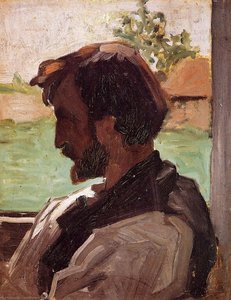
      Retrato de Frédéric Bazille
      Frédéric Bazille · 1841 – 1870
      Nascimento · falecimento
      1841 – 1870, Montpellier
      Movimento
      Impressionismo francês
      Obras em nosso catálogo
      88
      Mais famosas
      Banhistas (Cena Estival) (1869)
      Mais obras em
      Musée Fabre

      As 10 principais pinturas de Frédéric Bazille: as telas que todos conhecem

      Banhistas (Cena Estival) (1869) de Frédéric Bazille
      1

      Banhistas (Cena Estival)

      1869 · Óleo sobre tela · Fogg Art Museum, Cambridge

      Uma Celebração da Vitalidade Juvenil: Jean Frédéric Bazille e “Bathers (Summer Scene)” Jean Frédéric Bazille’s “Bathers (Summer Scene),” pintado em 1869, é uma obra que transcende a mera representação estética para se tornar um testemunho da alma do Impressionismo. Esta tela vibrante captura um momento fugaz de beleza e liberdade, transportando o espectador para uma piscina arborizada ensolarada onde jovens homens encontram alegria nas atividades cotidianas – nadar, disputar lutas…

      Reunião Familiar (1867) de Frédéric Bazille
      2

      Reunião Familiar

      1867 · Óleo sobre tela · Musée d'Orsay, Paris

      A obra "Reunião Familiar", de Jean Frédéric Bazille, é uma representação vibrante e detalhada de um encontro social em um cenário ao ar livre. Criada em 1867, esta peça captura uma cena animada sob a copa de uma grande árvore, onde um grupo de pessoas se dedica a conversas e atividades de lazer. A composição é rica em detalhes, apresentando padrões e texturas intrincidade que trazem vida à cena.

      The Pink Dress (1864) de Frédéric Bazille
      3

      The Pink Dress

      1864 · Acrylic On Canvas · Musée d'Orsay, Paris

      Marilyn Monroe’s “Pink Dress,” designed by William Travilla for Howard Hawks’ 1953 film *Gentlemen Prefer Blondes*, transcends mere costume; it embodies an enduring symbol of glamour, ambition, and the seductive allure of Hollywood. The dress itself—a shocking pink silk satin gown adorned with black satin lining and a large bow—represents more than just fabric and embellishments; it encapsulates a pivotal moment in cinematic history and continues to fascinate audiences today.

      La Toilette (1870) de Frédéric Bazille
      4

      La Toilette

      1870 · Acrylic On Canvas · Musée Fabre, Montpellier

      The Painting's Significance and Context La Toilette, an oil-on-canvas painting by Jean Frédéric Bazille, is a remarkable work of art that showcases the artist's skill in capturing intimate moments. Created in 1869-1870, this painting is one of Bazille's last works before his untimely death in the Franco-Prussian War. Composition and Symbolism The painting depicts three women in a room, with one woman lying on a bed while the other two…

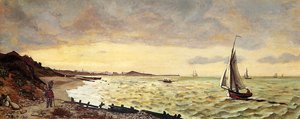
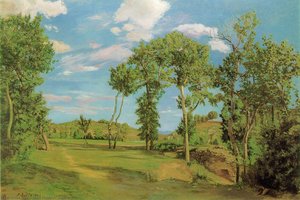
      Landscape on the Shore of Lez (1870) de Frédéric Bazille
      5

      Landscape on the Shore of Lez

      1870 · Oil

      Landscape on the Shore of Lez is a significant work by Frédéric Bazille, an artist whose life was marked by a brief but intense period of creativity. Born in 1841, Bazille’s career was tragically cut short when he died in 1870. This particular painting, completed in June 1870, represents one of his final artistic statements. It is a large landscape that the artist himself described as an eclogue, a term…

      The Family Gathering (1867) de Frédéric Bazille
      6

      The Family Gathering

      1867 · Oil On Canvas · Musée d'Orsay, Paris

      To stand before The Family Gathering is to step directly into a sun-dappled afternoon of pure, unscripted joy. This painting by Jean Frédéric Bazille captures more than just a social assembly; it arrests the very essence of conviviality. One feels the gentle warmth emanating from the canvas, as if the viewer has stumbled upon this private moment in time. The composition is masterfully arranged beneath the generous canopy of a…

      Portrait of an Unknown Sitter as a Troubadour (1875) de Frédéric Bazille
      10

      Portrait of an Unknown Sitter as a Troubadour

      1875 · Oil On Canvas · Dallas Museum of Art, Dallas

      In this intimate oil portrait, we find ourselves drawn into a quiet, private moment with a young man. The composition is a close-up, bust-length study that pushes the subject toward the viewer through a dramatic use of chiaroscuro. A deep, nearly black background provides a void from which the sitter emerges, illuminated by a highly directional light source. This light catches the contours of his face, leaving the other side…

      Mais telas de Frédéric Bazille, de 11 a 88

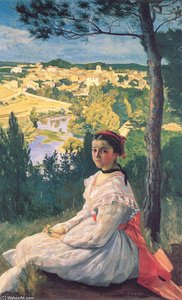
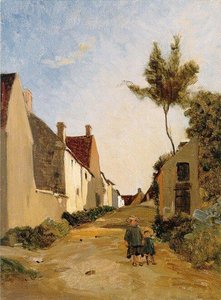
      View of the Village (1868) de Frédéric Bazille
      #18

      View of the Village

      1868 · Musée Fabre

      Jean Frédéric Bazille’s “View of the Village,” painted in 1868, stands as a quintessential example of the Impressionist spirit—a movement that sought to capture fleeting impressions of light…

      Encomende uma pintura feita à mão →
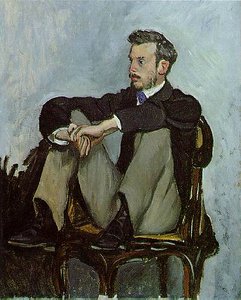
      Portrait of Renoir (1867) de Frédéric Bazille
      #20

      Portrait of Renoir

      1867 · Musée d'Orsay

      Jean Frédéric Bazille's “Portrait of Renoir” stands as a testament to the burgeoning Impressionist movement, capturing not merely an likeness but also a palpable sense of contemplative emotion.…

      Leve esta luz para casa →
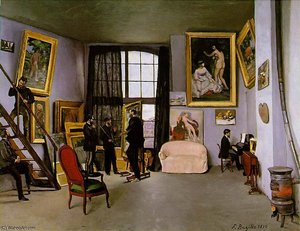
      The Studio on the Rue La Condamine (1870) de Frédéric Bazille
      #21

      The Studio on the Rue La Condamine

      1870 · Musée d'Orsay

      Jean Frédéric Bazille’s “The Studio on the Rue La Condamine” isn't merely a snapshot of a Parisian artist’s workspace; it’s a vibrant tableau brimming with intellectual energy, artistic…

      Encomende esta tela →
      Reclining Nude (1864) de Frédéric Bazille
      #23

      Reclining Nude

      1864 · Musée Fabre

      Jean Frédéric Bazille's 'Reclining Nude,' painted in 1864, is more than just a depiction of the human form; it’s a carefully constructed evocation of serenity and sensual grace,…

      Encomende esta tela →
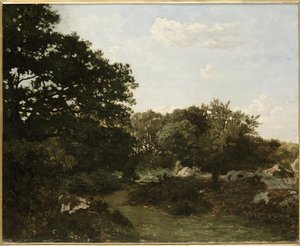
      Fontainebleau forest (1865) de Frédéric Bazille
      #24

      Fontainebleau forest

      1865 · Musée d'Orsay

      In this 1865 oil on canvas, we find ourselves standing at the edge of the Fontainebleau forest. The composition is asymmetrical, drawing the eye toward a dense, dark…

      Encomende esta tela →
      Portrait of Edouard Blau (1866) de Frédéric Bazille
      #25

      Portrait of Edouard Blau

      1866 · National Gallery of Art

      “Portrait of Édouard Blau,” painted by Jean Frédéric Bazille in 1866, stands as a testament to the burgeoning Impressionist movement's fascination with capturing fleeting moments of light and…

      Encomende esta tela →
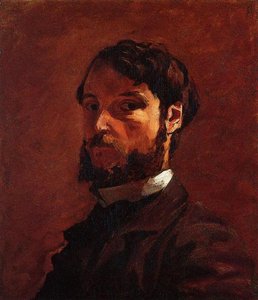
      Self Portrait (1870) de Frédéric Bazille
      #26

      Self Portrait

      1870

      In this poignant Self Portrait, painted in 1870, we encounter Frédéric Bazille not merely as a painter, but as a man caught in the delicate transition between youthful…

      Encomende esta tela →
      Self-Portrait (1867) de Frédéric Bazille
      #28

      Self-Portrait

      1867 · Minneapolis Institute of Art

      Self-Portrait is an oil on canvas painting by the artist Frédéric Bazille. Created in France, this work belongs to the Impressionism movement. The subject of the painting is…

      Encomende esta tela →
      Queens Gate at Aigues-Mortes (1867) de Frédéric Bazille
      #63

      Queens Gate at Aigues-Mortes

      1867 · Metropolitan Museum of Art

      Jean Frédéric Bazille's "Queens Gate at Aigues-Mortes," painted in 1867, isn’t merely a depiction of a medieval fortification; it’s an exquisite distillation of Impressionist philosophy and a poignant…

      Encomende esta tela →
      Landscape at Chailly (1865) de Frédéric Bazille
      #65

      Landscape at Chailly

      1865 · Art Institute of Chicago

      Jean Frédéric Bazille’s “Landscape at Chailly,” painted in 1865, isn't merely a depiction of a Swiss hillside; it’s a distilled essence of Impressionist philosophy—a fleeting capture of light,…

      Encomende uma pintura feita à mão →
      Toilet (1870) de Frédéric Bazille
      #70

      Toilet

      1870 · Musée Fabre

      Painted in 1870, tragically just months before Jean Frédéric Bazille's untimely death at the age of twenty-nine, *Toilet* (La Toilette) is a pivotal work within the burgeoning Impressionist…

      Encomende uma pintura feita à mão →
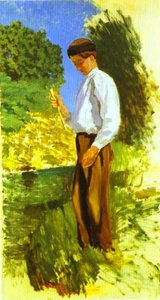
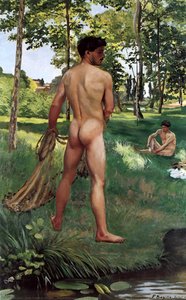
      The Fisherman with a Net (1868) de Frédéric Bazille
      #71

      The Fisherman with a Net

      1868 · Arp Museum Bahnhof Rolandseck

      The painting The Fisherman with a Net by Jean Frederic Bazille, created in 1868, is an exemplary work of the Impressionist movement. This oil on canvas piece showcases…

      Leve esta luz para casa →
      Summer Scene (Bathers) de Frédéric Bazille
      #72

      Summer Scene (Bathers)

      Fogg Museum

      Jean Frédéric Bazille's “Summer Scene (Bathers)” captures a quintessential moment of leisure and joy, transporting the viewer to the sun-drenched landscapes of Provence. Painted in 1873, just months…

      Leve esta luz para casa →
      Self Portrait with Palette (1865) de Frédéric Bazille
      #80

      Self Portrait with Palette

      1865 · Art Institute of Chicago

      Jean Frédéric Bazille's "Self Portrait with Palette," painted in 1865, is more than just a depiction of an artist; it’s a poignant snapshot of ambition, vulnerability, and the…

      Leve esta luz para casa →
      Edouard Blau (1869) de Frédéric Bazille
      #83

      Edouard Blau

      1869 · National Gallery of Art

      This oil on canvas work, titled Edouard Blau, was executed by the French artist Frédéric Bazille. It offers a quiet study of the sitter, a French dramatist, critic,…

      Encomende uma pintura feita à mão →
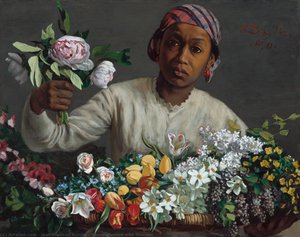
      Young Woman with Peonies (1870) de Frédéric Bazille
      #88

      Young Woman with Peonies

      1870 · National Gallery of Art

      Holding a bunch of peonies in one hand, a woman with brown skin leans forward, toward us from behind a large basket holding dozens of flowers in this…

      Encomende esta tela →

      As telas de Frédéric Bazille, período por período

      O que Frédéric Bazille mais pintou

      Os quatro temas que mais aparecem nestas telas, cada um com o seu exemplo mais amado.

      Onde as telas de Frédéric Bazille estão expostas

      Os 8 museus que detêm a maioria das pinturas desta página.

      Museu Cidade Obras de Frédéric Bazille Pinturas desta lista
      Musée Fabre, MontpellierMusée Fabre Montpellier 23 La Toilette, The Scoter, Petite Italienne chanteuse des rues
      Musée d'Orsay, ParisMusée d'Orsay Paris 8 Reunião Familiar, The Pink Dress, The Family Gathering
      National Gallery of Art, WashingtonNational Gallery of Art Washington 6 Portrait of Edmond Maitre, Portrait of Edouard Blau, Edmond Maître
      Minneapolis Institute of Art, MinneapolisMinneapolis Institute of Art Minneapolis 2 Self-Portrait, The Banks of the Lez
      Art Institute of Chicago, ChicagoArt Institute of Chicago Chicago 2 Landscape at Chailly, Self Portrait with Palette
      Fogg Art Museum, CambridgeFogg Art Museum Cambridge 1 Banhistas (Cena Estival)
      Museum of Fine Arts, HoustonMuseum of Fine Arts Houston 1 Le petit jardinier, ca Museum of Fine Arts,
      Dallas Museum of Art, DallasDallas Museum of Art Dallas 1 Portrait of an Unknown Sitter as a Troubadour

      A tela mais amada de cada década de Frédéric Bazille

      1. 1850s
      2. 1860s
        Banhistas (Cena Estival) (1869) de Frédéric Bazille
        1 de 88

        Banhistas (Cena Estival)

        Idade 19 – 28 · Fogg Art Museum

        Uma Celebração da Vitalidade Juvenil: Jean Frédéric Bazille e “Bathers (Summer Scene)” Jean Frédéric Bazille’s “Bathers (Summer Scene),” pintado em 1869, é uma obra que transcende a mera…

      3. 1870s
        La Toilette (1870) de Frédéric Bazille
        Tela 4 de 88

        La Toilette

        Idade 29 · Musée Fabre

        The Painting's Significance and Context La Toilette, an oil-on-canvas painting by Jean Frédéric Bazille, is a remarkable work of art that showcases the artist's skill in capturing intimate…

      Sobre as telas de Frédéric Bazille: suas perguntas respondidas

      Qual é a pintura mais conhecida de Frédéric Bazille?Leia a resposta

      Banhistas (Cena Estival) (1869), Fogg Art Museum, Cambridge. Seguidos por Reunião Familiar (1867) e The Pink Dress (1864).

      Qual era a idade de Frédéric Bazille quando Banhistas (Cena Estival) foi pintada?Leia a resposta

      Frédéric Bazille, nascido(a) em 1841, tinha 28 anos: Banhistas (Cena Estival) data de 1869.

      Quais são as 10 pinturas mais famosas de Frédéric Bazille?Leia a resposta

      Banhistas (Cena Estival), Reunião Familiar, The Pink Dress, La Toilette, Landscape on the Shore of Lez, The Family Gathering, The Scoter, Le petit jardinier, ca Museum of Fine Arts,, Saint-Saveur e Portrait of an Unknown Sitter as a Troubadour. Cada tela no ranking acima inclui o seu ano e o seu museu.

      Quantas obras Frédéric Bazille pintou ao todo?Leia a resposta

      88 obras de Frédéric Bazille estão em nosso catálogo, datadas de 1859 a 1870.

      Onde posso ver as telas mais famosas de Frédéric Bazille?Leia a resposta

      Principalmente em Musée Fabre (Montpellier), Musée d'Orsay (Paris) e National Gallery of Art (Washington); a lista acima indica cada museu e as suas telas.

      Quando é que Frédéric Bazille pintou as suas telas mais amadas?Leia a resposta

      Em 1860s, que compreende 54 das 88 obras desta página, Banhistas (Cena Estival) entre elas.

      Quais são as primeiras e as últimas telas famosas de Frédéric Bazille?Leia a resposta

      A tela mais antiga aqui é de Mystic marriage of Saint Catherine (1859); a mais recente é de La Toilette (1870).

      O que Frédéric Bazille mais pintou?Leia a resposta

      Portraits (6), Men (6) e French painting (5), entre as 88 obras nesta página.

      Com qual técnica Frédéric Bazille pintou com mais frequência?Leia a resposta

      Oil On Canvas, utilizado em 22 das 88 obras nesta página.

      A que movimento pertence a pintura de Frédéric Bazille?Leia a resposta

      Impressionismo francês, como mostram as telas nesta página.

      Quais telas de Frédéric Bazille estão expostas no Musée Fabre?Leia a resposta

      O Musée Fabre, Montpellier detém 23 das obras desta página, entre elas La Toilette, The Scoter e Petite Italienne chanteuse des rues.

      Posso comprar uma reprodução de uma tela de Frédéric Bazille?Leia a resposta

      Sim. Todas as pinturas desta página podem ser encomendadas a partir de sua própria página como uma reprodução a óleo pintada à mão, ou como uma impressão fine art, no tamanho de sua escolha.

      Frédéric Bazille: uma vida em pintura

      The Brief Radiance of Jean Frédéric Bazille

      Jean Frédéric Bazille’s story is one of immense promise tragically cut short, a fleeting yet significant contribution to the burgeoning Impressionist movement. Born in Montpellier, France, on December 6, 1841, into a prosperous Protestant family involved in wine production, Bazille initially seemed destined for a life far removed from the world of art. His parents, while supportive, insisted he pursue medical studies alongside his artistic inclinations – a compromise reflecting the societal expectations of the time and their desire for his financial security. This duality would shape his early years, dividing his attention between anatomical dissection and the captivating allure of color and light. However, it was within the vibrant atmosphere of Paris, where he relocated in 1862 to continue his medical training, that Bazille’s artistic path truly began to unfold.

      Forging a Path Amongst Giants

      Paris proved to be a crucible for young Bazille. He quickly fell in with a circle of artists who would become synonymous with Impressionism: Claude Monet, Pierre-Auguste Renoir, and Alfred Sisley. Studying under Charles Gleyre provided him with formal training, but it was the shared passion and radical ideas exchanged amongst these friends that truly ignited his artistic vision. Bazille’s financial stability – a fortunate contrast to the often precarious existence of his companions – allowed him to generously support them, offering studio space and materials. This generosity wasn't merely practical; it stemmed from a deep camaraderie and belief in their collective potential. He became a vital hub for this emerging group, fostering an environment of experimentation and mutual encouragement. His early works, like *The Pink Dress* (c. 1864), already demonstrate a keen eye for capturing fleeting moments and the effects of light – hallmarks that would define Impressionism. He wasn’t simply mimicking established styles; he was actively participating in the creation of something entirely new.

      A Style Defined by Light and Friendship

      Bazille's artistic style, though developing rapidly, possessed a unique character within the broader Impressionist aesthetic. While sharing their fascination with *plein air* painting – working outdoors to directly capture the nuances of natural light – his compositions often exhibited a more structured quality than Monet’s or Renoir’s. He frequently combined figure painting with landscape, placing his subjects thoughtfully within their environment, as seen in masterpieces like *Family Reunion* (1867-1868). This work is not merely a depiction of familial gathering; it's an exploration of light filtering through the trees, animating the scene and imbuing it with a sense of warmth and intimacy. His paintings weren’t just about *what* he saw, but *how* he saw it – the emotional resonance evoked by color, form, and light. He was deeply influenced by Eugène Delacroix, whose vibrant use of color resonated with his own artistic sensibilities, yet he moved beyond academic conventions to embrace a more modern sensibility.

      A Life Interrupted: Legacy and Remembrance

      The blossoming career of Jean Frédéric Bazille was brutally interrupted by the Franco-Prussian War in 1870. Driven by a sense of patriotic duty, he joined a Zouave regiment just months after the conflict erupted. Tragically, he was killed in action on November 28, 1870, at the young age of 28, near Beaune-la-Rolande. His death sent shockwaves through the artistic community, robbing them of a talented friend and generous benefactor. His premature demise meant his work remained relatively unknown for many years. However, in recent decades, Bazille’s contributions have been increasingly recognized and celebrated. Today, his paintings are held in prestigious museums like the Musée d'Orsay in Paris, and reproductions allow art lovers worldwide to experience the beauty and innovation of his vision. Bazille’s legacy extends beyond his artistic output; he embodies the spirit of youthful idealism, unwavering dedication, and the power of friendship that defined the early days of Impressionism. He remains a poignant reminder of the potential lost, yet also a testament to the enduring impact of a brief but brilliant career.

      The Family and Early Influences

      Born into a prominent Protestant family in Montpellier, Frédéric Bazille’s upbringing was steeped in both artistic appreciation and financial stability. His father, Jean François Gaston Bazille, was an agronomist and senator, while his mother, Camille Vialars, inherited wealth from her maternal lineage. This combination of privilege and cultural awareness provided him with a unique foundation for his artistic pursuits. The family’s connection to the wine trade instilled in him an appreciation for light, color, and the natural world – elements that would later become central to his work. His early years were marked by a balance between formal medical training and artistic exploration, a compromise driven by his parents' desire for his future security while acknowledging his innate talent. This duality shaped his perspective, allowing him to observe human behavior with both scientific detachment and empathetic understanding. The strong family ties and the vibrant social life of Montpellier undoubtedly contributed to his creative spirit, fostering a sense of community and belonging that would later inform his artistic vision.

      Key Works and Artistic Development

      Bazille’s artistic development can be traced through a series of key works that reveal his evolving style and thematic interests. *The Pink Dress* (1864), one of his earliest paintings, exemplifies his early fascination with capturing fleeting moments and the effects of light on everyday subjects. The painting's delicate palette and intimate composition demonstrate his growing mastery of color and form. *Family Reunion* (1867-1868) is arguably his most significant work, showcasing his ability to integrate figure painting with landscape in a harmonious and evocative manner. This painting, depicting a family gathering in a sunlit garden, captures the warmth and intimacy of domestic life while simultaneously exploring the interplay of light and shadow. Later works, such as *Studio in Rue de Furstenberg* (1869), demonstrate his continued experimentation with composition and perspective, reflecting his engagement with contemporary artistic trends. Throughout his career, Bazille consistently sought to capture not just the appearance of a scene but also its emotional essence, imbuing his paintings with a sense of atmosphere and feeling.

      A Tragic End and Lasting Impact

      The premature death of Frédéric Bazille in 1870 cut short a promising artistic career, leaving behind a legacy largely unknown for decades. His untimely demise during the Franco-Prussian War robbed the art world of a talented and generous artist. Despite his brief career, Bazille’s contributions to Impressionism are now widely recognized, and his paintings continue to inspire artists and viewers alike. His work stands as a testament to the power of friendship, dedication, and artistic vision – qualities that resonated deeply with his contemporaries and continue to captivate audiences today. His story serves as a poignant reminder of the fragility of life and the enduring impact of even the briefest of creative flames.

      Todas as 88 obras de Frédéric Bazille →