Ateliê — Envio gratuito para todo o mundo — Entrega em 2–6 semanas
      George Bellows, 1882 – 1925

      As 100 pinturas mais famosas de George Bellows

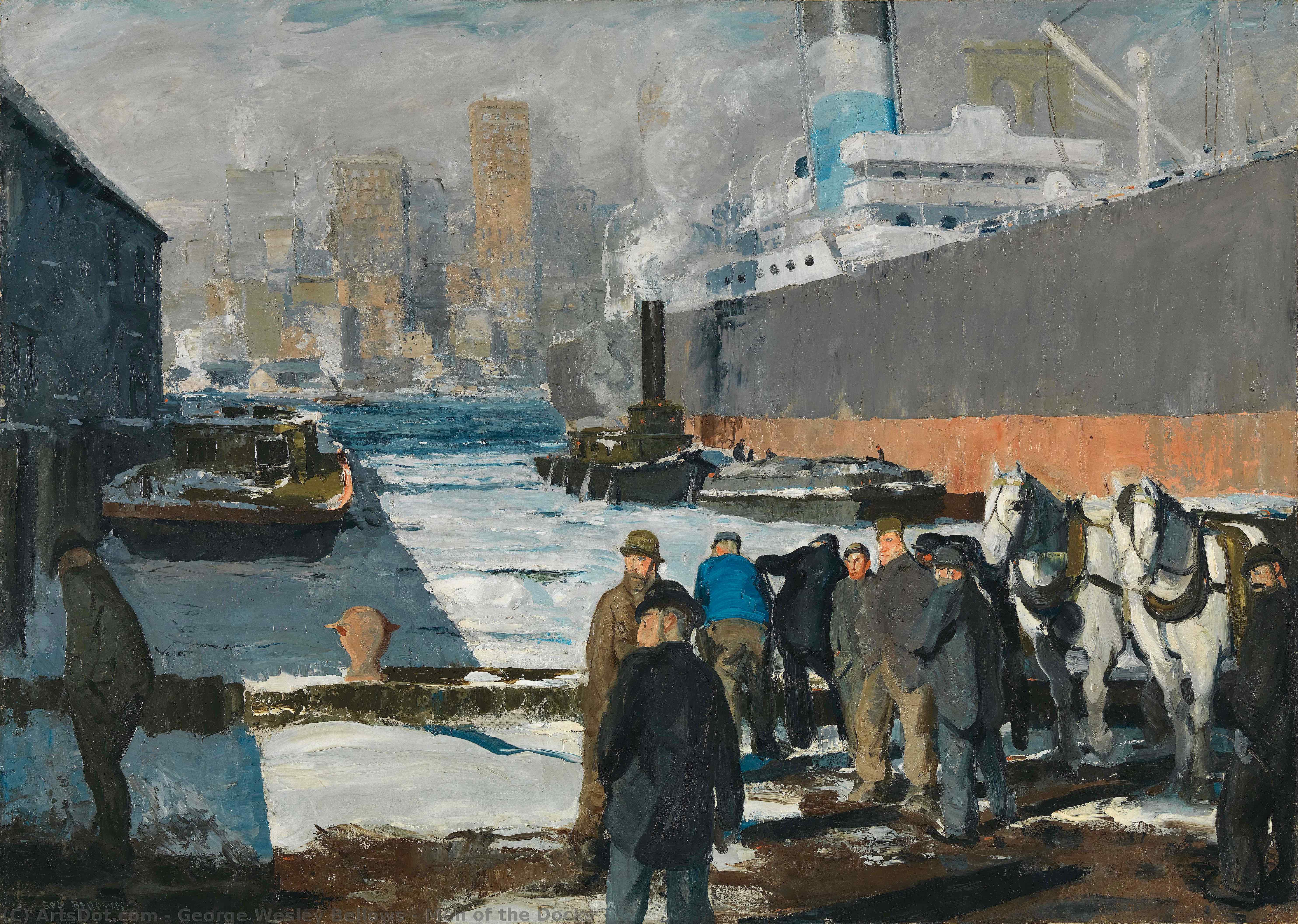
      Menos de um Dock (1912) é a pintura pela qual George Bellows é mais lembrado; pertence ao National Gallery, Londres. Ringside Seats (1924) e Forty-Two Kids (1907) completam o trio das telas mais amadas. O nosso catálogo conta com 318 obras de George Bellows. Aqui estão as 100 mais famosas, com o ano, o museu e a história de cada tela.

      Classificado de acordo com o nosso índice de popularidade, que combina buscas, visitas e pedidos de cada obra. Atualizado em Outubro 2026. Cada pintura nesta página pode ser encomendada como uma reprodução a óleo pintada à mão sobre tela de linho, ou como uma impressão fine art, feita no tamanho que escolher.

      Retrato de George Bellows
      George Bellows · 1882 – 1925
      Nascimento · falecimento
      1882 – 1925, Columbus
      Movimento
      Realism
      Obras em nosso catálogo
      318
      Mais famosas
      Menos de um Dock (1912)
      Mais obras em
      National Gallery of Art

      As dez pinturas mais amadas de George Bellows

      Menos de um Dock (1912) de George Bellows
      1

      Menos de um Dock

      1912 · Óleo sobre tela · National Gallery, Londres

      Uma Cena Marítima Captivante da Indústria Urbana Mergulhe em um retrato vívido da vida portuária do início do século XX, onde a atividade humana e o progresso industrial convergem de forma magistral. Esta cena dinâmica captura um porto movimentado, repleto de estivadores, navios e a paisagem urbana circundante, oferecendo um vislumbre envolvente da realidade crua do trabalho urbano. As figuras, vestidas em tons suaves, personificam a resiliência e o esforço…

      Ringside Seats (1924) de George Bellows
      2

      Ringside Seats

      1924 · Oil On Canvas

      In the heart of the early twentieth century, amidst the grit and burgeoning energy of New York City, George Wesley Bellows captured a moment of pure, unadulterated tension in his 1924 masterpiece, Ringside Seats. This dramatic oil painting serves as more than just a depiction of a boxing match; it is a visceral window into the soul of the Ashcan School. The composition pulls the viewer directly into the fray,…

      Forty-Two Kids (1907) de George Bellows
      3

      Forty-Two Kids

      1907 · Oil On Canvas · National Gallery of Art, Washington

      In the heart of 1907, George Wesley Bellows captured a fleeting moment of raw, uninhibited energy in his masterpiece, Forty-Two Kids. This large-scale oil on canvas serves as a breathtaking window into a bygone era of urban leisure, transporting the viewer to the edge of a dilapidated wharf jutting out over New York City’s East River. The scene is teeming with life, presenting a band of nude and partially clothed…

      Nude with Hexagonal Quilt (1924) de George Bellows
      4

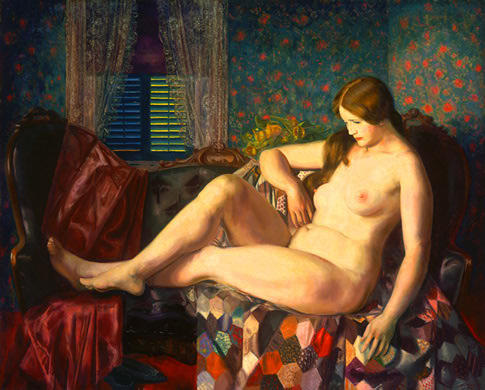
      Nude with Hexagonal Quilt

      1924 · Acrylic On Canvas · National Gallery of Art, Washington

      George Wesley Bellows’s “Nude with Hexagonal Quilt,” painted in 1924, is more than just a depiction of a reclining woman; it's a carefully constructed tableau that encapsulates the burgeoning complexities of American life at the cusp of the 20th century. Emerging from the heart of the Ashcan School movement, Bellows masterfully blends realism with a subtle undercurrent of social commentary and psychological depth, all within a remarkably intimate domestic setting.…

      The Germans Arrive (1918) de George Bellows
      5

      The Germans Arrive

      1918 · Acrylic On Canvas · National Gallery of Art, Washington

      The Raw Edge of War: Bellows’ “The Germans Arrive” George Wesley Bellows' "The Germans Arrive," painted in 1918, isn’t merely a depiction of a battlefield; it’s a visceral plunge into the heart of World War I’s brutal reality. Captured during a period of immense national upheaval and fueled by the anxieties of a rapidly changing world, the painting confronts viewers with an unsettling honesty rarely found in historical art. Bellows,…

      The Sea (1911) de George Bellows
      6

      The Sea

      1911 · Oil On Canvas · Hirshhorn Museum and Sculpture Garden, Washington, D.C.

      George Wesley Bellows’ “The Sea,” painted in 1911, isn't merely a depiction of an ocean scene; it’s a visceral experience. This oil on canvas, now residing within the Hirshhorn Museum and Sculpture Garden in Washington D.C., captures a pivotal moment – the raw, untamed power of nature colliding with the steadfast solidity of land. The painting immediately draws the viewer into a world of turbulent energy: colossal waves relentlessly assault…

      Pennsylvania Station Excavation (1909) de George Bellows
      7

      Pennsylvania Station Excavation

      1909 · Oil On Canvas · Brooklyn Museum, Nova Iorque

      George Wesley Bellows’ “Pennsylvania Station Excavation,” painted in 1909, is more than just a depiction of a landscape; it's a vibrant snapshot of America on the cusp of profound change. This large-scale oil on canvas captures a fleeting moment – a group of figures exploring an industrial site, a castle-like structure billowing with smoke, and a solitary horse adding an unexpected layer to the scene. Bellows, a key figure in…

      Little Girl in White (also known as Queenie Barnett) (1907) de George Bellows
      8

      Little Girl in White (also known as Queenie Barnett)

      1907 · Oil On Canvas · National Gallery of Art, Washington

      George Wesley Bellows' “Little Girl in White,” more commonly known as “Queenie Barnett,” is far more than a simple portrait of a young girl. Painted in 1907, this work stands as a poignant window into the realities of early 20th-century New York City – a city grappling with rapid industrialization and the struggles of its working class. Bellows, a pivotal figure in American realism, wasn’t interested in romanticizing poverty; instead,…

      Hudson at Saugerties (1920) de George Bellows
      9

      Hudson at Saugerties

      1920 · Oil On Canvas · Columbia Museum of Art, Columbus

      George Wesley Bellows' "Hudson at Saugerties," painted in 1920, isn't merely a depiction of a river landscape; it’s a carefully constructed tableau of light, atmosphere, and the quiet dignity of rural life. Housed originally within the Columbia Museum of Art in Columbus, Ohio, this oil on canvas transports the viewer to the heart of the Hudson River Valley, capturing a fleeting moment of tranquility amidst the burgeoning energy of early…

      Emma in the Black Print (1919) de George Bellows
      10

      Emma in the Black Print

      1919 · Oil On Canvas · Museu de Belas Artes de Boston, Boston

      Emma in the Black Print by George Wesley Bellows George Wesley Bellows’ “Emma in the Black Print,” completed in 1919, stands as a testament to his mastery of realist portraiture and his profound engagement with the spirit of American modernity. Housed at the Museum of Fine Arts, Boston, this oil-on-canvas painting transcends mere representation; it captures a moment frozen in time—a glimpse into the domestic life of Bellows’ wife, Emma…

      George Bellows: telas de 11 a 100 do ranking

      Katherine Rosen (1921) de George Bellows
      #13

      Katherine Rosen

      1921 · Yale University Art Gallery

      George Wesley Bellows' 1921 painting, "Katherine Rosen," residing within the hallowed halls of the Yale University Art Gallery, isn’t merely a portrait; it’s a carefully constructed tableau of…

      Encomende uma pintura feita à mão →
      Mrs. Chester Dale (1919) de George Bellows
      #17

      Mrs. Chester Dale

      1919 · Metropolitan Museum of Art

      The room falls into deep shadow, leaving only the figure of Mrs. Chester Dale to hold the light. She sits with a quiet, heavy dignity, her form emerging…

      Encomende esta tela →
      Love of Winter (1914) de George Bellows
      #18

      Love of Winter

      1914 · Art Institute of Chicago

      This evocative portrayal of winter’s delight stands as a cornerstone of American realist art, demonstrating Bellows' profound understanding of both visual artistry and human psychology. Its legacy continues…

      Encomende uma pintura feita à mão →
      Tennis Tournament (1920) de George Bellows
      #22

      Tennis Tournament

      1920 · National Gallery of Art

      A Masterpiece of Realism "CITE>George Wesley Bellows" was a prominent figure in the early 20th-century American art scene, known for his vivid depictions of everyday life and sports.…

      Leve esta luz para casa →
      Cross-Eyed Boy (1906) de George Bellows
      #23

      Cross-Eyed Boy

      1906

      To stand before George Wesley Bellows’ "Cross-Eyed Boy" is not merely to observe a painting; it is to be drawn into a moment of profound, unscripted encounter. Created…

      Leve esta luz para casa →
      The Newsboy (1908) de George Bellows
      #24

      The Newsboy

      1908 · Museu do Brooklyn

      The Newsboy is an oil on canvas painting created by the American artist George Bellows in 1908. The subject of this portrait is a working-class newsboy, identified in…

      Encomende esta tela →
      Nude with Red Hair (1920) de George Bellows
      #34

      Nude with Red Hair

      1920 · National Gallery of Art

      In this 1920 oil on canvas, we find a moment of profound stillness. The subject is a woman seated upon a bed, her form partially obscured by a…

      Encomende esta tela →
      The Circus (1912) de George Bellows
      #43

      The Circus

      1912 · Addison Gallery of American Art

      The Circus is a large oil on canvas painted by George Wesley Bellows in 1912. The scene depicts a circus performance occurring within a tent, characterized by a…

      Encomende uma pintura feita à mão →
      Waldo Peirce (1920) de George Bellows
      #44

      Waldo Peirce

      1920 · Fine Arts Museums of San Francisco

      George Bellows' 1920 oil painting, "Waldo Peirce," isn’t merely a likeness; it’s a carefully constructed tableau of late Edwardian masculinity – a study in weathered grace and understated…

      Encomende uma pintura feita à mão →
      Emma at the Piano (1914) de George Bellows
      #45

      Emma at the Piano

      1914

      To gaze upon George Wesley Bellows' masterpiece, Emma at the Piano, is to step directly into the intimate, warmly lit drawing-room of the early twentieth century. This painting,…

      Leve esta luz para casa →
      Iron Coast, Monhegan (1913) de George Bellows
      #46

      Iron Coast, Monhegan

      1913

      The Untamed Spirit of the Atlantic Coast In the heart of 1913, George Wesley Bellows captured a moment of profound elemental struggle in Iron Coast, Monhegan. This masterpiece…

      Leve esta luz para casa →
      Snow-Capped River (1911) de George Bellows
      #47

      Snow-Capped River

      1911

      George Wesley Bellows’ Snow-Capped River transports the viewer to a moment suspended in crystalline quietude. This painting, executed in 1911, is more than just a depiction of a…

      Encomende esta tela →
      The Teamster (1916) de George Bellows
      #49

      The Teamster

      1916

      To stand before George Wesley Bellows' magnificent canvas, The Teamster, is to be transported directly into the vibrant, sweat-and-steam heart of early twentieth-century America. This painting is far…

      Encomende uma pintura feita à mão →
      Vine Clad Shore - Monhegan Island (1913) de George Bellows
      #50

      Vine Clad Shore - Monhegan Island

      1913 · Smithsonian American Art Museum

      George Wesley Bellows’ "Vine Clad Shore - Monhegan Island" transports the viewer to a moment suspended in time—a breathtaking tableau of rugged coastline meeting tranquil water. This painting…

      Leve esta luz para casa →
      Pueblo Tesuque, No. 2 (1917) de George Bellows
      #52

      Pueblo Tesuque, No. 2

      1917 · Nelson-Atkins Museum of Art

      George Bellows captured the quiet rhythms of New Mexican life in Pueblo Tesuque, No. 2. Painted in October 1917, this oil on canvas work offers a glimpse into…

      Encomende esta tela →
      The Palisades (1909) de George Bellows
      #53

      The Palisades

      1909

      The landscape unfolds with a vast body of water dominating the foreground, set against the rising presence of the Palisades. A solitary man occupies the shore, his gaze…

      Leve esta luz para casa →
      Golf Course - California (1917) de George Bellows
      #55

      Golf Course - California

      1917 · Cincinnati Art Museum

      George Wesley Bellows’ "Golf Course - California" is more than just a depiction of a scenic outing; it is a vibrant meditation on leisure, the American landscape, and…

      Leve esta luz para casa →
      Shipyard Society (1916) de George Bellows
      #57

      Shipyard Society

      1916 · Virginia Museum of Fine Arts

      In the heart of George Wesley Bellows’ 1916 masterpiece, "Shipyard Society," lies a profound meditation on the pulse of early twentieth-century American life. This monumental oil on panel…

      Encomende uma pintura feita à mão →
      Rain on the River (1908) de George Bellows
      #58

      Rain on the River

      1908 · Rhode Island School of Design Museum of Art

      The painting Rain on the River by George Wesley Bellows is a beautiful representation of the landscape with a train traveling along the tracks near a body of…

      Leve esta luz para casa →
      The Big Dory de George Bellows
      #59

      The Big Dory

      New Britain Museum of American Art

      is a genre painting by George Wesley Bellows. Created in 1913, the work belongs to the American Realism movement. It captures a specific moment of physical labor as…

      Leve esta luz para casa →
      Monhegan Island (1913) de George Bellows
      #61

      Monhegan Island

      1913 · Worcester Art Museum

      A Storm’s Embrace: Bellows' Monhegan Island George Wesley Bellows’ “Monhegan Island,” painted in 1913, isn’t merely a depiction of a coastal scene; it’s a visceral embodiment of the…

      Encomende uma pintura feita à mão →
      The Village Houses (1920) de George Bellows
      #62

      The Village Houses

      1920 · Art Institute of Chicago

      is a painting by George Wesley Bellows. Also known by the alternative title Pigeon house, the work was created c. 1920. This piece belongs to the artist's body…

      Encomende esta tela →
      Blue Morning (1909) de George Bellows
      #64

      Blue Morning

      1909 · National Gallery of Art

      The morning light filters through a hazy atmosphere in Blue Morning, a work painted by George Bellows in 1909. This scene captures the massive construction site of the…

      Encomende uma pintura feita à mão →
      The Picnic (1924) de George Bellows
      #69

      The Picnic

      1924 · Baltimore Museum of Art

      In the golden light of 1924, George Wesley Bellows captured more than just a landscape; he froze a heartbeat of American life in his masterpiece, "The Picnic." This…

      Leve esta luz para casa →
      Snow Dumpers (1911) de George Bellows
      #70

      Snow Dumpers

      1911

      In the frost-bitten landscape of 1911, George Wesley Bellows captured a moment that transcends mere seasonal documentation, offering instead a visceral encounter with the raw energy of American…

      Encomende esta tela →
      Portrait of Anne (1915) de George Bellows
      #71

      Portrait of Anne

      1915 · High Museum of Art

      In the vast landscape of early 20th-century American realism, few works capture the intimate intersection of domestic peace and historical tension as poignantly as George Wesley Bellows’ “Portrait…

      Encomende esta tela →
      The White Horse (1922) de George Bellows
      #72

      The White Horse

      1922 · Worcester Art Museum

      George Wesley Bellows: A Vision of Grit and Grace George Wesley Bellows (August 12 or August 19, 1882 – January 8, 1925) stands as a monumental figure in…

      Encomende esta tela →

      As telas de George Bellows, período por período

      O que George Bellows mais pintou

      Os quatro temas que mais aparecem nestas telas, cada um com o seu exemplo mais amado.

      Onde as telas de George Bellows estão expostas

      Os 8 museus que detêm a maioria das pinturas desta página.

      Museu Cidade Obras de George Bellows Pinturas desta lista
      National Gallery of Art, WashingtonNational Gallery of Art Washington 21 Forty-Two Kids, Nude with Hexagonal Quilt, The Germans Arrive
      Metropolitan Museum of Art, Nova YorkMetropolitan Museum of Art Nova York 11 Mrs. Chester Dale, Padre, Samuel Knopf
      Museum of Fine Arts, HoustonMuseum of Fine Arts Houston 4 Haystacks and Barn, The Grove — Monhegan
      Yale University Art Gallery, HartfordYale University Art Gallery Hartford 3 Katherine Rosen, The Rope (also known as Builders of Ships)
      Art Institute of Chicago, ChicagoArt Institute of Chicago Chicago 3 Love of Winter, The Village Houses
      Rhode Island School of Design Museum of Art, ProvidenceRhode Island School of Design Museum of Art Providence 3 Portrait of Walter Littlefield, Rain on the River
      Brooklyn Museum, Nova IorqueBrooklyn Museum Nova Iorque 2 Pennsylvania Station Excavation, A Morning Snow - Hudson River
      Minneapolis Institute of Art, MinneapolisMinneapolis Institute of Art Minneapolis 2 Mrs. T. in Cream Silk, No.2, The Harbor, Monhegan Coast, Maine

      A tela mais famosa de George Bellows, década após década

      1. 1900s
        Forty-Two Kids (1907) de George Bellows
        Tela 3 de 100

        Forty-Two Kids

        Idade 18 – 27 · National Gallery of Art

        In the heart of 1907, George Wesley Bellows captured a fleeting moment of raw, uninhibited energy in his masterpiece, Forty-Two Kids. This large-scale oil on canvas serves as…

      2. 1910s
        Menos de um Dock (1912) de George Bellows
        Tela 1 de 100

        Menos de um Dock

        Idade 28 – 37 · National Gallery

        Uma Cena Marítima Captivante da Indústria Urbana Mergulhe em um retrato vívido da vida portuária do início do século XX, onde a atividade humana e o progresso industrial…

      3. 1920s
        Ringside Seats (1924) de George Bellows
        2 de 100

        Ringside Seats

        Idade 38 – 43

        In the heart of the early twentieth century, amidst the grit and burgeoning energy of New York City, George Wesley Bellows captured a moment of pure, unadulterated tension…

      As telas de George Bellows, pergunta por pergunta

      Por qual tela George Bellows é mais lembrado(a)?Leia a resposta

      Menos de um Dock (1912), National Gallery, Londres. Seguidos por Ringside Seats (1924) e Forty-Two Kids (1907).

      Menos de um Dock: que idade tinha George Bellows quando foi pintada?Leia a resposta

      George Bellows, nascido(a) em 1882, tinha 30 anos: Menos de um Dock data de 1912.

      Quais são as dez telas mais famosas de George Bellows?Leia a resposta

      Menos de um Dock, Ringside Seats, Forty-Two Kids, Nude with Hexagonal Quilt, The Germans Arrive, The Sea, Pennsylvania Station Excavation, Little Girl in White (also known as Queenie Barnett), Hudson at Saugerties e Emma in the Black Print. Cada tela no ranking acima inclui o seu ano e o seu museu.

      Quantas pinturas George Bellows criou?Leia a resposta

      318 obras de George Bellows estão em nosso catálogo, datadas de 1905 a 1924.

      Onde estão expostas hoje as telas mais famosas de George Bellows?Leia a resposta

      Principalmente em National Gallery of Art (Washington), Metropolitan Museum of Art (Nova York) e Museum of Fine Arts (Houston); a lista acima indica cada museu e as suas telas.

      Quando é que George Bellows pintou as suas telas mais famosas?Leia a resposta

      Em 1910s, que compreende 42 das 100 obras desta página, Menos de um Dock entre elas.

      Qual tela famosa de George Bellows veio primeiro e qual veio por último?Leia a resposta

      A tela mais antiga aqui é de Robin (also known as Portrait of Clifton Webb) (1905); a mais recente é de Ringside Seats (1924).

      Quais temas George Bellows mais pintou?Leia a resposta

      American art (14), Portrait (11) e People (9), entre as 100 obras nesta página.

      Qual técnica é mais presente nas pinturas de George Bellows?Leia a resposta

      Oil On Canvas, utilizado em 35 das 100 obras nesta página.

      Com qual movimento George Bellows está associado(a)?Leia a resposta

      Realism, como mostram as telas nesta página.

      Quais pinturas de George Bellows estão no National Gallery of Art?Leia a resposta

      O National Gallery of Art, Washington detém 8 das obras desta página, entre elas Forty-Two Kids, Nude with Hexagonal Quilt e The Germans Arrive.

      Onde posso comprar uma reprodução de uma pintura de George Bellows?Leia a resposta

      Sim. Todas as pinturas desta página podem ser encomendadas a partir de sua própria página como uma reprodução a óleo pintada à mão, ou como uma impressão fine art, no tamanho de sua escolha.

      Conheça o pintor: George Bellows

      A Bold Vision of American Life: The World of George Bellows

      George Wesley Bellows, um nome sinônimo da energia bruta e da modernidade em ascensão na América do início do século XX, emergiu como uma figura central na pintura realista. Nascido em Columbus, Ohio, em 12 ou 19 de agosto de 1882, sua jornada de promessa atlética a reconhecimento artístico é um testemunho do poder da paixão e da dedicação inabalável. Mesmo antes da educação formal, o jovem George demonstrava um talento inerente para desenho, preenchendo cadernos com esboços que prenunciavam o olhar atento e a habilidade em desenvolvimento dentro dele. Sua criação não se concentrava apenas na arte; ele se destacava nos esportes, jogando tanto baseball quanto basquete na Universidade Estadual de Ohio – uma dualidade que influenciaria profundamente sua perspectiva artística, imbuindo seu trabalho com um senso de movimento dinâmico e fisicalidade. Essa formação atlética lhe conferiu não apenas disciplina, mas também apreciação pela forma humana em ação, um tema que se tornaria central em seus quadros mais celebrados. Ele abandonou a universidade pouco antes de se formar, impulsionado por uma irresistível atração para Nova York e a promessa de treinamento artístico.

      Forjando um Caminho: A Escola Ashcan e Além

      Chegando a Nova York em 1904, Bellows encontrou mentoria com Robert Henri, uma figura proeminente da Escola Ashcan. Esse grupo de artistas – incluindo John Sloan, William Glackens e George Luks – deliberadamente se afastou das convenções acadêmicas, optando por retratar a realidade crua da vida urbana: cortiços lotados, ruas movimentadas e as lutas cotidianas dos trabalhadores. Bellows abraçou essa ética com entusiasmo, inicialmente refletindo o pincel solto e o compromisso com o realismo social de Henri. No entanto, ele não estava satisfeito em simplesmente replicar o estilo de seu mestre; possuía uma ambição de forjar sua própria voz artística distinta. Ele estabeleceu um estúdio com o colega artista Edward Keefe em 1906, marcando o início de um período prolífico de experimentação. Seus primeiros trabalhos, exibidos em 1908, foram recebidos com reações mistas – alguns críticos os consideraram grosseiros, enquanto outros reconheceram sua ousada audácia e espírito inovador. O assunto de seus quadros era frequentemente controverso para a época, desafiando as concepções prevalecentes sobre o que constituía “arte aceitável”. Ele não hesitou em retratar os aspectos menos glamourosos da vida urbana, capturando cenas de pobreza, trabalho e lazer com honestidade implacável.

      O Domínio da Arena: Boxe e Espectáculo Urbano

      Embora o conjunto de obras de Bellows abrangesse uma ampla gama de assuntos – retratos, paisagens, paisagens marítimas –, ele é talvez mais conhecido por suas representações poderosas de lutas de boxe. Esses não eram apenas eventos esportivos para ele; eram microcosmos de drama humano, encarnando temas de luta, resiliência e os instintos primais que impulsionam a competição. Ele frequentava clubes de boxe fumarentos, estudando meticulosamente os movimentos dos lutadores, o olhar intenso de seus olhos e a energia bruta da multidão. Quadros como *Both Members of This Club* (1909) e *Stag at Sharkey’s* (1909) são exemplos magistrais de sua capacidade de capturar essa atmosfera, utilizando iluminação dramática, composições dinâmicas e um senso palpável de tensão. As cenas de boxe não eram simplesmente sobre o esporte em si; elas eram metáforas para as batalhas da vida, refletindo o darwinismo social prevalecente na sociedade americana da época. Além do boxe, Bellows também encontrou inspiração em outros espectáculos de vida urbana – paradas, circos e ruas movimentadas – todos oferecendo oportunidades para explorar temas de movimento, energia e a experiência coletiva.

      Evolução do Estilo e Legado Duradouro

      À medida que Bellows amadurecia como artista, seu estilo passou por uma evolução sutil, mas significativa. Embora tenha mantido seu compromisso com o realismo, ele começou a se afastar da pincelada solta de seus primeiros anos, adotando uma estética mais estilizada caracterizada por curvas suaves, formas monumentais e um senso aumentado de drama. Essa mudança é evidente em obras posteriores como *Dempsey and Firpo* (1924), uma tela monumental que captura o momento climático de uma lendária luta de boxe com intensidade arrebatadora. Ele também experimentou com a litografia, produzindo uma série de impressões marcantes que demonstravam sua maestria na linha e no tom. Apesar de alcançar um sucesso considerável durante sua vida – incluindo a eleição para a Academia Nacional de Design em 1913 –, Bellows permaneceu comprometido em desafiar as fronteiras artísticas e as normas convencionais. Sua morte prematura em 1925, aos 42 anos, interrompeu uma carreira promissora, mas seu legado perdura como um dos pintores realistas mais importantes da América – um retrato poderoso e sem compromisso da vida americana no início do século XX – um mundo repleto de energia, conflito e o espírito duradouro da humanidade. Sua influência pode ser vista nas gerações posteriores de artistas que procuraram capturar a dinâmica e a complexidade da vida urbana moderna. George Bellows não pintava apenas quadros; ele documentava uma era.

      Principais Obras & Reconhecimento

      • *Both Members of This Club* (1909) – Uma obra seminal que captura a atmosfera de um clube de boxe.
      • *Stag at Sharkey’s* (1909) – Outro quadro icônico que retrata uma luta de boxe, conhecido por sua iluminação dramática e composição.
      • *Men of the Docks* (1912) – Uma representação poderosa dos trabalhadores da costa, mostrando a habilidade de Bellows em capturar fisicalidade e textura.
      • *The Germans Arrive* (1918) – Uma série de litografias que retratam as atrocidades cometidas durante a Primeira Guerra Mundial, demonstrando seu engajamento com questões sociais e políticas.
      • *Dempsey and Firpo* (1924) – Uma tela monumental que captura o momento climático de uma luta de boxe lendária, mostrando o estilo evoluído de Bellows e sua maestria na composição.
      A obra de Bellows é mantida em importantes coleções de museus nos Estados Unidos, incluindo o Museu MoMA (Nova York), a National Gallery of Art (Washington D.C.), o Smithsonian American Art Museum e o Whitney Museum of American Art. Seus quadros continuam sendo exibidos e estudados por historiadores da arte e entusiastas, consolidando seu lugar como um marco do patrimônio artístico americano.

      Todas as 318 obras de George Bellows →