Ateliê — Envio gratuito para todo o mundo — Entrega em 2–6 semanas
      Jan Steen, 1626 – 1679

      Jan Steen: As 100 pinturas mais conhecidas

      De todas as pinturas de Jan Steen, The Dissolute Household (1663) é a mais famosa; está exposta no Metropolitan Museum of Art, em Nova York. Logo atrás vêm The feast of Saint Nicholas (1670) e Merry Company on a Terrace (1670). Entre as 499 obras de Jan Steen em nosso catálogo, estas 100 são as mais celebradas, cada uma apresentada com a sua data, o seu museu e a sua história.

      Classificado de acordo com o nosso índice de popularidade, que combina buscas, visitas e pedidos de cada obra. Atualizado em Outubro 2026. Cada pintura nesta página pode ser encomendada como uma reprodução a óleo pintada à mão sobre tela de linho, ou como uma impressão fine art, feita no tamanho que escolher.

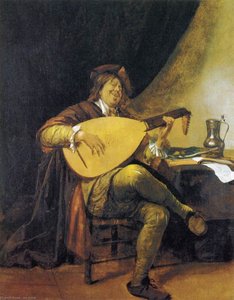
      Retrato de Jan Steen
      Jan Steen · 1626 – 1679
      Nascimento · falecimento
      1626 – 1679, Leida
      Movimento
      Baroque
      Obras em nosso catálogo
      499
      Mais famosas
      The Dissolute Household (1663)
      Mais obras em
      National Gallery

      As 10 pinturas mais celebradas de Jan Steen

      The Dissolute Household (1663) de Jan Steen
      1

      The Dissolute Household

      1663 · Oil On Canvas · Metropolitan Museum of Art, Nova York

      A Symphony of Chaos: Unveiling Jan Steen’s Masterpiece The Dissolute Household is not merely a painting; it is a theatrical performance frozen in time, a vibrant window into the boisterous and often unruly heart of the Dutch Golden Age. Created around 1663 by the incomparable Jan Havickszoon Steen, this work serves as a masterful exploration of human frailty, humor, and the delightful disorder of domestic life. As one gazes upon…

      The feast of Saint Nicholas (1670) de Jan Steen
      2

      The feast of Saint Nicholas

      1670 · Oil On Canvas · Museum Boijmans Van Beuningen, Roterdã

      Step into this room and you are immediately caught in the middle of a Dutch household in mid-December. The air feels heavy with the scent of citrus and spiced bread. We are witnessing the Feast of Saint Nicholas, a tradition where the boundaries between reward and punishment are laid bare. In the foreground, a young girl holds a tin bucket overflowing with treats, her expression one of quiet triumph. Contrast…

      Merry Company on a Terrace (1670) de Jan Steen
      3

      Merry Company on a Terrace

      1670 · Oil On Canvas · Metropolitan Museum of Art, Nova York

      In the heart of the seventeenth century, amidst the burgeoning prosperity of the Dutch Golden Age, Jan Havickszoon Steen captured a moment that transcends time. "Merry Company on a Terrace" is not merely a painting; it is a vibrant, breathing window into a world of conviviality and controlled chaos. As one gazes upon this monumental canvas, completed around 1670, the viewer is immediately swept into a bustling courtyard where the…

      The Dancing Couple (1663) de Jan Steen
      4

      The Dancing Couple

      1663 · Oil On Canvas · National Gallery of Art, Washington

      To gaze upon Jan Steen’s “The Dancing Couple” is to be instantly swept up in the boisterous, uninhibited spirit of a seventeenth-century Dutch kermis. Painted in 1663, this masterpiece serves as much more than a mere visual record of a village fair; it is an immersive sensory experience that captures the very heartbeat of the Dutch Golden Age. Steen, a master of the human comedy, avoids the stiff formality often…

      'As the Old Sing, so Pipe the Young' (1664) de Jan Steen
      5

      'As the Old Sing, so Pipe the Young'

      1664 · Oil On Canvas · Mauritshuis, Haia

      A boisterous domestic interior unfolds in a dense, multi-layered composition, capturing a moment of chaotic conviviality. The scene centers on a family gathering where the boundaries between celebration and disorder are blurred. At the heart of the room, a laughing man—often identified as a self-portrait of the artist—gestures toward the folly of the assembly, while an elderly woman in the foreground examines a sheet of music. This document contains the…

      Merry family (1668) de Jan Steen
      6

      Merry family

      1668 · Oil On Canvas

      The air in the room feels thick with the sudden, boisterous energy of the Merry family. Painted by Jan Steen in 1668, this scene captures a moment of unrestrained domestic life that seems to pulse with life even now. It is a genre painting, a window into the everyday realities of the Dutch Golden Age, where the boundaries between celebration and chaos blur. One can almost hear the sudden burst…

      Village school (1670) de Jan Steen
      7

      Village school

      1670 · Oil On Canvas

      In the heart of the seventeenth century, amidst the burgeoning prosperity of the Netherlands, Jan Steen captured a world that was as chaotic as it was charming. His masterpiece, Village School, painted around 1670, serves as a vibrant portal into the daily rhythms of rural life during the Dutch Golden Age. Unlike the grand, often stiff historical allegories favored by some of his contemporaries, Steen possessed a singular gift for…

      Dissolute Household (1664) de Jan Steen
      8

      Dissolute Household

      1664 · Oil On Canvas

      The air in the room feels heavy with the scent of spilled wine and the frantic energy of a household left to its own devices. At the center of this swirling commotion, a man sits with a sly smirk, his fingers entwined with those of a maid as she pours a generous serving of wine for his wife. The woman, seemingly oblivious to the flirtation unfolding beside her, remains focused…

      The Lovesick Maiden (1660) de Jan Steen
      9

      The Lovesick Maiden

      1660 · Oil On Canvas · Metropolitan Museum of Art, Nova York

      In the quiet, shadowed corners of seventeenth-century Dutch life, Jan Steen captured moments that whispered of much more than what met the eye. His masterpiece, The Lovesick Maiden, painted around 1660, is far more than a mere domestic scene; it is a profound psychological drama staged within the intimate confines of a bourgeois interior. At first glance, the viewer is drawn to the central figure—a young woman slumped in a…

      Revelry at an Inn (1674) de Jan Steen
      10

      Revelry at an Inn

      1674 · Oil On Canvas · Museu do Louvre, Paris

      In the heart of the Dutch Golden Age, few artists could capture the delightful disorder of human existence as masterfully as Jan Havickszoon Steen. His 1674 masterpiece, “Revelry at an Inn,” invites the viewer into a boisterous, sensory-rich world that feels remarkably alive even centuries after its creation. This is not a painting of quiet contemplation or distant myth; rather, it is a vivid snapshot of a bustling tavern, where…

      Pinturas de Jan Steen classificadas de 11 a 100

      In Luxury, Look Out (1663) de Jan Steen
      #11

      In Luxury, Look Out

      1663 · Kunsthistorisches Museum

      In the heart of the Dutch Golden Age, few artists possessed the wit and psychological depth of Jan Havickszoon Steen. His 1663 masterpiece, "In Luxury, Look Out" (also…

      Encomende esta tela →
      A Merry Party (detail) (1660) de Jan Steen
      #13

      A Merry Party (detail)

      1660 · Szépművészeti Múzeum

      In the heart of the Dutch Golden Age, few artists possessed the ability to capture the chaotic, beautiful, and often hilarious pulse of human existence quite like Jan…

      Encomende esta tela →
      Samson and Delilah (1668) de Jan Steen
      #14

      Samson and Delilah

      1668

      Samson and Delilah is an oil on canvas painting by Jan Steen, executed in 1668. Originating from Holland, this work belongs to the genre of religious art. It…

      Encomende esta tela →
      O Carnaval dos Camponeses (1670) de Jan Steen
      #16

      O Carnaval dos Camponeses

      1670 · Museu Frans Hals

      A Festa dos Camponeses de Jan Steen: Uma Jornada ao Coração da Vida Rural Holandesa Jan Havickszoon Steen (1626 – 1679) permanece singular entre seus contemporâneos da Era…

      Encomende esta tela →
      The Oyster-eater (1658) de Jan Steen
      #18

      The Oyster-eater

      1658 · Mauritshuis

      To gaze upon Jan Havickszoon Steen's The Oyster-eater is to be invited across the threshold of a warmly lit, bustling Dutch interior from the mid-seventeenth century. This painting…

      Leve esta luz para casa →
      The Scholar and Death (1660) de Jan Steen
      #20

      The Scholar and Death

      1660 · National Gallery Prague

      A single window on the left spills a pale, directional light across a room heavy with the scent of old parchment and dust. In the foreground, a scholar…

      Encomende esta tela →
      The Smoker (1660) de Jan Steen
      #21

      The Smoker

      1660 · Kröller-Müller Museum

      A solitary man sits within a deep, dark void. The light finds him suddenly, catching the edge of his profile and the upward tilt of his chin. He…

      Leve esta luz para casa →
      The Miser (1650) de Jan Steen
      #25

      The Miser

      1650 · Statens Museum For Kunst

      An elderly man hunches over a dark wooden table, his body a slumped silhouette against the shadows of a Dutch interior. He is consumed by a single coin,…

      Leve esta luz para casa →
      The Tempting Offer (1650) de Jan Steen
      #26

      The Tempting Offer

      1650 · Kunsthalle Bremen

      The Tempting Offer is a monochromatic, grayscale oil painting that captures an intimate, quiet scene between two figures in an outdoor or semi-outdoor setting. The composition is centered…

      Encomende esta tela →
      Singer with a Guitar (1660) de Jan Steen
      #35

      Singer with a Guitar

      1660 · Statens Museum For Kunst

      A single musician occupies the center of this monochromatic oil painting. The man is positioned behind a stone ledge or windowsill, his body angled toward the viewer. He…

      Encomende esta tela →
      The wedding party (1660) de Jan Steen
      #36

      The wedding party

      1660 · National Gallery of Victoria

      The artwork titled The wedding party was painted by Jan Steen in 1660. This oil on wood panel depicts a wedding celebration taking place within an inn. The…

      Leve esta luz para casa →
      Cat family de Jan Steen
      #38

      Cat family

      Szépművészeti Múzeum

      To gaze upon Jan Havickszoon Steen’s "Cat Family" is to step directly into the warm, convivial heart of 17th-century Dutch life. This Baroque masterpiece transcends a mere depiction…

      Encomende esta tela →
      The Fortune Teller (1650) de Jan Steen
      #40

      The Fortune Teller

      1650 · Philadelphia Museum of Art

      A gullible couple sits enthralled by a fortune teller, their attention fixed on the promises of the future. While the woman leans in, captivated by the reading, a…

      Leve esta luz para casa →
      Twelfth Night (1660) de Jan Steen
      #41

      Twelfth Night

      1660 · Museu de Arte do Condado de Los Angeles

      Step into this crowded room and you are immediately met with the chaotic energy of a Twelfth Night feast. The air feels thick with the sounds of music…

      Leve esta luz para casa →
      Jacob Confronting Laban (1676) de Jan Steen
      #44

      Jacob Confronting Laban

      1676 · Norton Simon Museum

      In this 1676 oil painting, Jan Steen captures a moment of sharp biblical friction. Jacob Confronting Laban unfolds within a crowded, dimly lit interior where the air feels…

      Leve esta luz para casa →
      Smoker (1650) de Jan Steen
      #45

      Smoker

      1650 · Museu Hermitage

      Step closer to the panel and notice how the light settles upon the central figure. We find ourselves in a dimly lit interior, a space defined by deep…

      Encomende uma pintura feita à mão →
      The Suitor (1664) de Jan Steen
      #46

      The Suitor

      1664 · Museum de Lakenhal

      The air in the room feels heavy with the unspoken. A woman sits in a moment of stillness, her figure providing a stable vertical anchor against the shifting…

      Leve esta luz para casa →
      The village wedding (1653) de Jan Steen
      #47

      The village wedding

      1653 · Museum Boijmans Van Beuningen

      is an oil on canvas work by the Dutch artist Jan Steen, executed in 1653. This piece represents a significant moment in the artist's early career, demonstrating his…

      Encomende esta tela →
      The Sense of Hearing (1661) de Jan Steen
      #49

      The Sense of Hearing

      1661 · Upton House

      The Sense of Hearing is an oil painting on panel, executed upon a surface of oak. This work, originating from Holland, carries the hand of Jan Steen. The…

      Encomende esta tela →
      The Sense of Taste (1661) de Jan Steen
      #50

      The Sense of Taste

      1661 · Upton House

      is a painting by Jan Steen, executed in 1661. The work captures a single figure immersed in the act of eating, focusing on a mundane, sensory moment of…

      Leve esta luz para casa →
      Bathsheba (1668) de Jan Steen
      #52

      Bathsheba

      1668 · Norton Simon Museum

      In this 1668 work, Jan Steen captures a moment of heavy, unspoken tension. The scene focuses on Bathsheba as she receives a letter from Joab, a message that…

      Encomende uma pintura feita à mão →
      The Village Alchemist (1664) de Jan Steen
      #53

      The Village Alchemist

      1664 · Wallace Collection

      The Village Alchemist is an oil painting by Jan Havickszoon Steen, dating from 1664. This work presents a lively scene set within a dimly lit interior, capturing a…

      Leve esta luz para casa →
      Merrymaking in a Tavern (1674) de Jan Steen
      #54

      Merrymaking in a Tavern

      1674 · Wallace Collection

      The composition presents a crowded tavern scene, characterized by a complex, multi-layered arrangement of figures. In the foreground, various individuals engage in disparate activities, creating a sense of…

      Encomende esta tela →
      Rape of the Sabine Women (1666) de Jan Steen
      #67

      Rape of the Sabine Women

      1666 · John and Mable Ringling Museum of Art

      The oil on canvas titled Rape of the Sabine Women captures a moment of profound upheaval. Jan Steen, an artist born in Leiden, Netherlands, in 1626, rendered this…

      Encomende esta tela →
      The Unruly Guest (1665) de Jan Steen
      #68

      The Unruly Guest

      1665 · Städel Museum

      The Unruly Guest by Jan Steen captures a moment of boisterous interaction within a Dutch Golden Age interior. Painted in 1665, this genre scene centers on the friction…

      Leve esta luz para casa →
      Interior (1660) de Jan Steen
      #69

      Interior

      1660 · National Gallery of Victoria

      The composition presents a crowded, boisterous interior scene filled with figures engaged in various activities. A pyramidal arrangement of bodies directs the eye through a series of overlapping…

      Encomende uma pintura feita à mão →
      Tric-Trac Players (1667) de Jan Steen
      #71

      Tric-Trac Players

      1667 · Museu Hermitage

      Jan Havickszoon Steen’s “Tric-Trac Players,” painted in 1667, isn't merely a depiction of a game; it’s a vibrant window into the social fabric and psychological landscape of 17th-century…

      Leve esta luz para casa →
      Twelfth-Night Feast (1666) de Jan Steen
      #72

      Twelfth-Night Feast

      1666 · Museus Reais de Belas Artes da Bélgica

      The artwork titled Twelfth-Night Feast is a painting by the artist Jan Steen. This work is executed in oil on canvas and dates to 1662. It depicts a…

      Encomende esta tela →
      The Bean Feast (1668) de Jan Steen
      #74

      The Bean Feast

      1668 · Staatliche Museen

      Jan Havickszoon Steen's "The Bean Feast," painted in 1668, is more than just a depiction of a communal meal; it’s a vibrant window into the everyday life and…

      Encomende esta tela →

      As telas de Jan Steen, período por período

      O que Jan Steen mais pintou

      Os quatro temas que mais aparecem nestas telas, cada um com o seu exemplo mais amado.

      Onde as telas de Jan Steen estão expostas

      Os 8 museus que detêm a maioria das pinturas desta página.

      Museu Cidade Obras de Jan Steen Pinturas desta lista
      National Gallery, LondresNational Gallery Londres 10 The Interior of an Inn, A Pedlar selling Spectacles outside a Cottage, An Interior with a Man offering an Oyster to a Woman
      Rijksmuseum, AmsterdãRijksmuseum Amsterdã 34 The Feast of St. Nicholas, Interior with a Woman Feeding a Parrot, Known as ‘The Parrot Cage’, Man with a fiddle in bad company, Jan Havicksz. Steen (copy after), 1670 - 1700
      Mauritshuis, HaiaMauritshuis Haia 16 'As the Old Sing, so Pipe the Young', The Oyster-eater, An Old Couple Making Caudle
      Museu Hermitage, São PetersburgoMuseu Hermitage São Petersburgo 9 Esther before Ahasuerus, Smoker, Tric-Trac Players
      Metropolitan Museum of Art, Nova YorkMetropolitan Museum of Art Nova York 7 The Dissolute Household, Merry Company on a Terrace, The Lovesick Maiden
      Museum Boijmans Van Beuningen, RoterdãMuseum Boijmans Van Beuningen Roterdã 7 The feast of Saint Nicholas, The village wedding, Cutting for the stone
      Szépművészeti Múzeum, BudapesteSzépművészeti Múzeum Budapeste 5 A Merry Party (detail), A Merry Party (detail), Cat family
      Statens Museum For Kunst, CopenhagueStatens Museum For Kunst Copenhague 5 The Miser, Singer with a Guitar, Couple at an Inn Table

      Década a década: a tela mais celebrada de Jan Steen

      1. 1640s
        Peasants merry-making outside an Inn (1647) de Jan Steen
        Tela 32 de 100

        Peasants merry-making outside an Inn

        Idade 14 – 23 · National Gallery

        The scene unfolds beneath a heavy, leafy canopy that forms a natural ceiling over a group of figures gathered outside an inn. On the left, a large, dark…

      2. 1650s
      3. 1660s
        The Dissolute Household (1663) de Jan Steen
        Classificado em 1 de 100

        The Dissolute Household

        Idade 34 – 43 · Metropolitan Museum of Art

        A Symphony of Chaos: Unveiling Jan Steen’s Masterpiece The Dissolute Household is not merely a painting; it is a theatrical performance frozen in time, a vibrant window into…

      4. 1670s
        The feast of Saint Nicholas (1670) de Jan Steen
        2 de 100

        The feast of Saint Nicholas

        Idade 44 – 53 · Museum Boijmans Van Beuningen

        Step into this room and you are immediately caught in the middle of a Dutch household in mid-December. The air feels heavy with the scent of citrus and…

      As suas perguntas sobre as pinturas de Jan Steen, respondidas

      Qual é a pintura mais celebrada de Jan Steen?Leia a resposta

      The Dissolute Household (1663), Metropolitan Museum of Art, Nova York. Seguidos por The feast of Saint Nicholas (1670) e Merry Company on a Terrace (1670).

      Qual era a idade de Jan Steen na época de The Dissolute Household?Leia a resposta

      Jan Steen, nascido(a) em 1626, tinha 37 anos: The Dissolute Household data de 1663.

      Quais são as dez pinturas mais famosas de Jan Steen?Leia a resposta

      The Dissolute Household, The feast of Saint Nicholas, Merry Company on a Terrace, The Dancing Couple, 'As the Old Sing, so Pipe the Young', Merry family, Village school, Dissolute Household, The Lovesick Maiden e Revelry at an Inn. Cada tela no ranking acima inclui o seu ano e o seu museu.

      Quantas pinturas de Jan Steen são conhecidas?Leia a resposta

      499 obras de Jan Steen estão em nosso catálogo, datadas de 1640 a 1676.

      Em quais museus se encontram as telas mais conhecidas de Jan Steen?Leia a resposta

      Principalmente em National Gallery (Londres), Rijksmuseum (Amsterdã) e Mauritshuis (Haia); a lista acima indica cada museu e as suas telas.

      Em que anos Jan Steen pintou as suas telas mais célebres?Leia a resposta

      Em 1660s, que compreende 59 das 100 obras desta página, The Dissolute Household entre elas.

      Quais são a primeira e a última das telas famosas de Jan Steen?Leia a resposta

      A tela mais antiga aqui é de Under the Influence outside Voorschoten (1640); a mais recente é de Jacob Confronting Laban (1676).

      Quais temas aparecem com mais frequência nas pinturas de Jan Steen?Leia a resposta

      Man (25), Woman (23) e People (21), entre as 100 obras nesta página.

      Com o que Jan Steen costumava pintar?Leia a resposta

      Oil On Canvas, utilizado em 42 das 100 obras nesta página.

      A qual movimento artístico pertence Jan Steen?Leia a resposta

      Baroque, como mostram as telas nesta página.

      O que posso ver de Jan Steen no National Gallery?Leia a resposta

      O National Gallery, Londres detém 6 das obras desta página, entre elas The Interior of an Inn, A Pedlar selling Spectacles outside a Cottage e An Interior with a Man offering an Oyster to a Woman.

      Posso encomendar uma cópia pintada à mão de uma obra de Jan Steen?Leia a resposta

      Sim. Todas as pinturas desta página podem ser encomendadas a partir de sua própria página como uma reprodução a óleo pintada à mão, ou como uma impressão fine art, no tamanho de sua escolha.

      Jan Steen: a história do pintor

      Vida Inicial, Família e Formação

      Jan Steen nasceu em Leiden, por volta de 1626, no seio de uma família que compreendia profundamente a dinâmica das reuniões sociais. Como o mais velho de pelo menos oito filhos, a sua criação foi moldada pelas realidades comerciais do seu pai, Havick Steen, um mercador de cereais e cervejeiro que geria a taverna Red Halbert. Este ambiente doméstico, enraizado na comunidade católica de Leiden, proporcionou-lhe uma visão direta das interações sociais exuberantes e, muitas vezes, caóticas que viriam a definir a sua produção profissional. Ele não era apenas um espectador desta vida; ele era um produto dela.

      A sua educação formal e o seu registo profissional revelam um homem que transitava pelos sistemas intelectuais e de guildas estruturados da República Holandesa. Steen foi matriculado na Universidade de Leiden em 1646 e, já em 1648, tinha alcançado o estatuto de mestre pintor através do seu registo na Guilda de São Lucas de Leiden. Esta transição de estudante a profissional reconhecido marca o início de uma carreira construída sobre a legitimidade técnica, e não apenas sobre a mera observação do quotidiano.

      Os detalhes específicos da sua formação inicial permanecem um campo de dedução histórica, em vez de uma certeza documentada. Embora não tenham sobrevivido registos oficiais de aprendizagem, a trajetória da sua destreza sugere que ele absorveu os métodos de várias figuras significativas. É provável que tenha extraído conhecimento técnico de Jan van Goyen, Nicolaus Knüpfer e Adriaen van Ostade. Estas influências forneceram a base para um estilo que acabaria por priorizar as nuances psicológicas do comportamento humano em detrimento das grandes alegorias preferidas pelos seus contemporâneos.

      Períodos de Atividade e Residência

      A carreira de Jan Steen foi definida por um movimento inquieto através dos centros urbanos da República Holandesa. Ele não permaneceu ancorado a um único local; em vez disso, foi deslocando sua residência à medida que sua vida profissional evoluía. Em 1649, casou-se com Margaretha van Goyen em Haia, uma união que o conectou aos influentes círculos artísticos da época. Este período de sua vida foi marcado por uma existência profissional nômade, transitando entre várias cidades para estabelecer sua reputação e navegar pelas demandas mutáveis do mercado de arte.

      Seus deslocamentos foram documentados com precisão em diversas regiões fundamentais. Entre 1656 e 1660, ele esteve ativo em Warmond. Seguiu-se a isso uma década passada em Haarlem, onde residiu de 1661 até 1670. Este período em Haarlem representa uma parte significativa de seus anos produtivos, durante os quais ele consolidou sua presença na cena artística holandesa. Eventualmente, ele retornou à sua cidade natal, vivendo em Leiden de 1670 até o seu falecimento.

      Essa mobilidade geográfica não era meramente uma questão de preferência pessoal, mas refletia as realidades práticas de um pintor em pleno exercício no século XVII. Sua capacidade de se adaptar a diferentes ambientes urbanos — desde a atmosfera especializada de Haarlem até as tradições estabelecidas de Leiden — permitiu-lhe manter uma produção constante, apesar de suas frequentes mudanças. Sua vida foi uma série de transições entre a indústria cervejeira e as estruturas das guildas profissionais das cidades que habitou.

      Técnica e Estilo Artístico

      A linguagem visual de Jan Steen baseia-se num sentido de humor aguçado e numa profunda perspicácia psicológica que atravessa a superfície das suas cenas. Ele não se limita a retratar pessoas; ele captura os impulsos humanos específicos e, muitas vezes, caóticos que as movem. As suas composições iniciais, datadas da década de 1640, inclinavam-se para o grotesco, utilizando figuras exageradas e distorcidas para impulsionar as suas narrativas. Esta abordagem crua, quase chocante, da caracterização, forneceu o alicerce para as observações sociais mais matizadas que viriam a definir a sua produção posterior.

      O uso da cor pelo artista é assertivo e abundante. Ele emprega uma paleta vasta para distinguir as texturas da vida doméstica e a energia caótica de uma sala repleta. À medida que a sua carreira progredia, a sua execução técnica sofria uma mudança clara. As caracterizações pesadas, por vezes grosseiras, da sua juventude deram lugar a uma estética mais refinada. As suas obras tardias apresentam figuras menos numerosas e mais individualizadas, afastando-se das composições aglomeradas e grotescas dos seus primeiros anos em direção a um estilo definido por maior equilíbrio e paletas de cores subtis.

      Esta evolução reflete uma transição da sátira direta da sua juventude para um método mais sofisticado de comentário social. Ao refinar a sua pincelada e focar-se nas especificidades da expressão individual, ele passou de uma representação de tipos para uma representação de pessoas. O resultado é um corpo de obra que equilibra o absurdo do comportamento humano com uma precisão técnica controlada e deliberada.

      Obras-Primas e Pinturas Notáveis

      A produção de Jan Steen permanece profundamente significativa porque ele ancorou as suas narrativas na realidade desordenada e sem filtros da vida no século XVII. Em The Doctor's Visit, ele transcende o simples retrato para criar uma cena dotada de profundidade psicológica e subtons morais. Esta capacidade de encontrar peso no quotidiano é evidente em The Oyster-eater, datada de cerca de 1658, que captura um momento específico e vibrante da interação social holandesa. Estas obras não dependem de grandes alegorias; elas sustentam-se na tensão entre as personagens e o seu ambiente imediato.

      O artista utilizava frequentemente o caos para evidenciar o erro humano. The Dissolute Household (1663) e The Merry Family (1668) funcionam como estudos visuais da desordem, utilizando cenários barulhentos para provocar a reflexão sobre as consequências do excesso. Mesmo em composições mais estruturadas, como The Dancing Couple de 1663, o foco permanece nos gestos específicos e fugazes dos sujeitos. A sua obra de meados da década de 1660, incluindo The Feast of St. Nicholas (cerca de 1665), demonstra um domínio sobre a cor e a luz que faz com que estas observações sociais perdurem através dos séculos.

      Entre os seus trabalhos mais emblemáticos, destacam-se:

      • The Oyster-eater (cerca de 1658)
      • The Dancing Couple (1663)
      • The Dissolute Household (1663)
      • The Feast of St. Nicholas (cerca de 1665)
      • The Merry Family (1668)

      Todas as 499 obras de Jan Steen →