Ateliê — Envio gratuito para todo o mundo — Entrega em 2–6 semanas
      Joaquín Sorolla, 1863 – 1923

      The 100 Most Famous Joaquín Sorolla Paintings, Ranked

      The best-loved painting by Joaquín Sorolla is Walk on the Beach (Paseo a orillas del mar) (1909), which hangs in the Museu Sorolla, Madrid. Valencia beach in the morning light (1908) and Yo soy el pan de la vida (also known as I am the Bread of Life) (1897) come next among the canvases readers know best. Our catalogue holds 969 works by Joaquín Sorolla: here are the 100 most famous, each with its year, its museum and what makes it memorable.

      Ranked by our popularity score, which combines the searches, visits and orders for each work. Updated Outubro 2026. Each painting on this page can be ordered as an oil reproduction painted by hand on linen canvas, or as a fine art print, made to the size you choose.

      Portrait of Joaquín Sorolla
      Joaquín Sorolla · 1863 – 1923
      Born · died
      1863 – 1923, Valência
      Movement
      Paisagem impressionista
      Works in our catalogue
      969
      Most famous
      Walk on the Beach (Paseo a orillas del mar) (1909)
      Most works at
      Hispanic Society Museum - Library

      Top 10 Joaquín Sorolla paintings: the canvases everyone knows

      Walk on the Beach (Paseo a orillas del mar) (1909) by Joaquín Sorolla
      1

      Walk on the Beach (Paseo a orillas del mar)

      1909 · Oil On Canvas · Museu Sorolla, Madrid

      A Sun-Drenched Moment: Joaquín Sorolla’s “Walk on the Beach” Joaquín Sorolla y Bastida, a name synonymous with the vibrant luminosity of Spanish light and life, gifted us with countless canvases brimming with joy and an almost palpable sense of summer. Among his most beloved works stands "Walk on the Beach" (Paseo a la orilla del mar), painted in 1909, a captivating tableau that transcends mere representation to become a profound…

      Valencia beach in the morning light (1908) by Joaquín Sorolla
      2

      Valencia beach in the morning light

      1908 · Oil On Canvas · Hispanic Society Museum - Library, Nova York

      In the soft, burgeoning glow of a Mediterranean dawn, Joaquín Sorolla y Bastida captures more than just a landscape; he captures the very breath of life. Valencia Beach in the Morning Light, completed in 1908, stands as a breathtaking testament to Spanish Impressionism, inviting the viewer to step into a world where the boundary between sea and sky dissolves into pure luminosity. As one gazes upon this masterpiece, there is…

      Yo soy el pan de la vida (also known as I am the Bread of Life) (1897) by Joaquín Sorolla
      3

      Yo soy el pan de la vida (also known as I am the Bread of Life)

      1897 · Oil On Canvas

      Joaquín Sorolla y Bastida's "Yo soy el pan de la vida," also known as "I am the Bread of Life," is a monumental oil on canvas painting completed in 1897. Measuring an impressive 415 x 533 cm, this artwork depicts a pivotal moment from the New Testament – Jesus Christ addressing a large crowd near the Sea of Galilee. The scene is dynamic and bustling, filled with numerous figures rendered…

      The Pink robe by Joaquín Sorolla
      4

      The Pink robe

      Oil On Canvas

      To step into the world of Joaquín Sorolla y Bastida is to step directly into the radiant warmth of a Mediterranean afternoon. His masterpiece, "The Pink Robe," transcends mere depiction; it embodies the very essence of Impressionism, capturing a moment suspended in time—a quiet dialogue between two women bathed in the golden glow of sunlight. Painted circa 1908-1909, this artwork offers an unparalleled glimpse into Sorolla's masterful vision, where light…

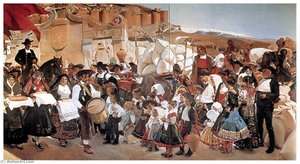
      Extremadura, The Market (1917) by Joaquín Sorolla
      5

      Extremadura, The Market

      1917 · Oil On Canvas · Hispanic Society Museum - Library, Nova York

      In the grand tapestry of Spanish Impressionism, few works capture the pulse of a nation as vibrantly as Joaquín Sorolla y Bastida’s “Extremadura, The Market.” Completed in 1917, this monumental oil on canvas is far more than a mere depiction of commerce; it is a breathtaking window into the soul of rural Spain. As part of his celebrated Vision of Spain series, Sorolla transcends the boundaries of traditional genre painting…

      Passeando pela Beira-mar (1909) by Joaquín Sorolla
      6

      Passeando pela Beira-mar

      1909 · Óleo sobre tela · Museu Sorolla, Madrid

      A obra "Passeio à Beira-Mar" de Joaquín Sorolla y Bastida, pintada em 1909, não é meramente uma representação de uma tarde de verão; é uma destilação requintada de luz, movimento e da beleza fugaz da vida cotidiana. Criada durante um período de imenso sucesso artístico para o pintor espanhol – após as suas célebres exposições na América – esta obra representa uma mudança fundamental no estilo de Sorolla, movendo-se em…

      The Smugglers (1919) by Joaquín Sorolla
      7

      The Smugglers

      1919 · Oil On Canvas

      To gaze upon Joaquín Sorolla y Bastida’s 1919 masterpiece, "The Smugglers," is to step directly into the radiant embrace of a Spanish summer. This expansive canvas, measuring an impressive 84 x 165 cm, does far more than merely depict a coastal scene; it serves as a profound sensory experience, capturing the very soul of the Mediterranean coast near Ibiza. Sorolla, often revered as the "Master of Light," utilizes the shimmering…

      Lighthouse walk at Biarritz (1906) by Joaquín Sorolla
      8

      Lighthouse walk at Biarritz

      1906 · Oil On Canvas · Museu de Belas Artes de Boston, Boston

      In the luminous masterpiece Lighthouse Walk at Biarritz, Joaquín Sorolla y Bastida invites us into a world where the boundaries between reality and impression dissolve into a golden haze. Completed in 1906, this breathtaking canvas is far more than a mere depiction of a seaside stroll; it is a profound celebration of the Spanish Belle Époque, captured with an unparalleled mastery of light. As we gaze upon the scene, we…

      Clotilde on the Beach (1904) by Joaquín Sorolla
      9

      Clotilde on the Beach

      1904 · Acrylic On Canvas · Museu Sorolla, Madrid

      Joaquín Sorolla’s “Clotilde on the Beach,” painted in 1904, isn't merely a depiction of a seaside scene; it’s an immersion into the heart of Spanish summer – a vibrant distillation of light, color, and the quiet joy of family life. Sorolla, a master of *plein air* painting, captures a fleeting moment with breathtaking immediacy, transporting the viewer to the warm sands of Valencia's Playa de El Cabanyal. The canvas breathes…

      Messalina in the Arms of the Gladiator (1886) by Joaquín Sorolla
      10

      Messalina in the Arms of the Gladiator

      1886 · Oil

      The ground is a bed of scattered flora and heavy silence. A woman lies motionless, her hair woven with blossoms that seem to hold the weight of her stillness. She is a pale shape against the earth, appearing either lost in a deep unconsciousness or surrendered to death. Above her, a man looms, his presence defined by the sharp edge of a knife held in his hand. The outdoor setting…

      More Joaquín Sorolla canvases, 11 to 100

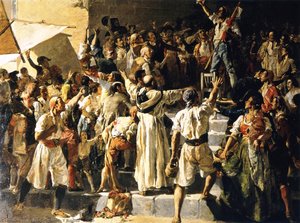
      The Cry of El Palleter (1884) by Joaquín Sorolla
      #12

      The Cry of El Palleter

      1884 · Palau de la Generalitat

      To step into the world of Joaquín Sorolla y Bastida is to surrender oneself to the radiant warmth of the Mediterranean sun. In his 1884 masterpiece, "The Cry…

      Order this canvas →
      Promenade by the Sea (1909) by Joaquín Sorolla
      #13

      Promenade by the Sea

      1909

      A Symphony of Light and Leisure: Exploring Joaquín Sorolla’s Promenade by the Sea Joaquín Sorolla y Bastida stands as one of Spain's most beloved Impressionist painters, celebrated for…

      Bring this light home →
      Self-portrait (1909) by Joaquín Sorolla
      #16

      Self-portrait

      1909 · Museu Sorolla

      Joaquín Sorolla y Bastida's 1909 self-portrait is more than just a likeness; it’s a potent distillation of the artist’s life, his spirit, and the very essence of Spain…

      Have it painted by hand →
      A Sesta (1911) by Joaquín Sorolla
      #20

      A Sesta

      1911 · Museu Sorolla

      Joaquín Sorolla y Bastida (1863 – 1923) posiciona-se como um dos impressionistas mais célebres da Espanha, um pintor cujas telas capturam a essência da vida mediterrânea com uma…

      Bring this light home →
      Rocks of the Cape, Javea (1905) by Joaquín Sorolla
      #23

      Rocks of the Cape, Javea

      1905 · Hispanic Society Museum - Library

      To gaze upon Joaquín Sorolla y Bastida’s 1905 masterpiece, "Rocks of the Cape, Javea," is to step directly into the radiant embrace of a Spanish summer. This oil…

      Bring this light home →
      Valencian Fisherwomen (1915) by Joaquín Sorolla
      #27

      Valencian Fisherwomen

      1915

      This oil on canvas painting by Joaquín Sorolla depicts a bustling scene on the coast, where a group of women stands in the water near several boats. The…

      Order this canvas →
      Swimmers, Javea (1905) by Joaquín Sorolla
      #32

      Swimmers, Javea

      1905

      The painting depicts two people swimming in the ocean. The first person is positioned on the left side of the canvas, while the second person is on the…

      Order this canvas →
      My Kids (1897) by Joaquín Sorolla
      #39

      My Kids

      1897

      Joaquín Sorolla y Bastida’s "My Kids" is not merely a depiction of three children; it is an effusion of pure, untainted joy captured on canvas. Completed in 1897,…

      Have it painted by hand →
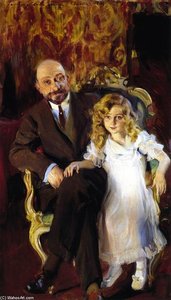
      Manuel B. Cossio (1908) by Joaquín Sorolla
      #40

      Manuel B. Cossio

      1908

      Subject and Composition The canvas presents a dignified figure, Manuel B. Cossio, rendered in a crisp suit and tie that speaks of early twentieth‑century Spanish professionalism. His stern…

      Have it painted by hand →
      Tipos de Salamanca (1912) by Joaquín Sorolla
      #41

      Tipos de Salamanca

      1912

      A Study in Spanish Identity Three figures are arranged within a shallow, formal space, dressed in traditional Spanish attire. The composition centers on these individuals, utilizing organic lines…

      Bring this light home →
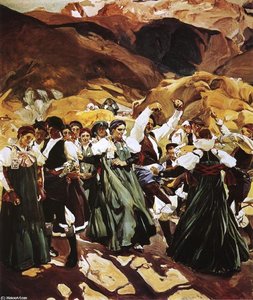
      The Jota (Aragon) (1914) by Joaquín Sorolla
      #43

      The Jota (Aragon)

      1914 · Hispanic Society Museum - Library

      A Symphony of Light and Spanish Spirit: Joaquín Sorolla’s “The Jota (Aragon)” Joaquín Sorolla y Bastida, a painter inextricably linked with the radiant heart of Spain, gifted us…

      Have it painted by hand →
      The Painter's Studio (1888) by Joaquín Sorolla
      #50

      The Painter's Studio

      1888

      To stand before Joaquín Sorolla y Bastida's The Painter's Studio is to step directly into a moment suspended in golden light, a breath held within the vibrant tapestry…

      Bring this light home →
      After a Bathe by Joaquín Sorolla
      #53

      After a Bathe

      Hispanic Society Museum - Library

      Joaquin Sorolla y Bastida stands as one of Spain’s most beloved painters, celebrated for his luminous canvases that effortlessly blend realism with an ethereal quality—a hallmark of his…

      Order this canvas →
      The Two Sisters (1909) by Joaquín Sorolla
      #54

      The Two Sisters

      1909 · Art Institute of Chicago

      In the luminous realm of Joaquín Sorolla y Bastida, light is not merely an element of the landscape; it is the very soul of the canvas. His 1909…

      Bring this light home →
      Fiesta Gallega by Joaquín Sorolla
      #57

      Fiesta Gallega

      Joaquín Sorolla y Bastida's *Fiesta Gallega* (1907) is more than just a depiction of a rural Spanish gathering; it’s an embodiment of the vibrant spirit of Spain itself.…

      Have it painted by hand →
      La bendicion de Isaac by Joaquín Sorolla
      #58

      La bendicion de Isaac

      In the profound stillness of La bendición de Isaac, Joaquín Sorolla y Bastida captures a pivotal moment from Hebrew tradition. The painting depicts the patriarch Isaac, now aged…

      Order this canvas →
      At the Pool in the Artist (1898) by Joaquín Sorolla
      #60

      At the Pool in the Artist

      1898 · Museo de Arte de Ponce

      Joaquín Sorolla y Bastida’s “At the Pool in the Artist’s Garden,” painted in 1898, isn’t merely a depiction of a summer afternoon; it’s an immersion into the very…

      Have it painted by hand →
      The Siesta (1911) by Joaquín Sorolla
      #62

      The Siesta

      1911

      Joaquin Sorolla y Bastida’s “The Siesta,” completed in 1911, transcends mere depiction; it embodies a philosophy – the deliberate embrace of stillness and beauty found within the simplest…

      Bring this light home →
      Maria la guapa (1914) by Joaquín Sorolla
      #64

      Maria la guapa

      1914

      Joaquín Sorolla's 1914 painting, *Maria la Guapa*, isn't merely a portrait; it’s an immersion into the heart of Spain’s golden age. This captivating work, depicting a young woman…

      Order this canvas →
      Sea Idyll (1908) by Joaquín Sorolla
      #65

      Sea Idyll

      1908 · Hispanic Society Museum - Library

      Joaquin Sorolla y Bastida, a pivotal figure in late 19th and early 20th century Spanish art, possessed an extraordinary gift for capturing the ephemeral beauty of light and…

      Order this canvas →
      The Kiss (1899) by Joaquín Sorolla
      #66

      The Kiss

      1899

      The Kiss by Joaquín Sorolla Y Bastida: A Moment of Spanish Light Subject Matter: Joaquin Sorolla’s “The Kiss” is an exquisite portrayal of intimacy and reverence, depicting a…

      Have it painted by hand →
      My Children (1904) by Joaquín Sorolla
      #67

      My Children

      1904 · Museo Sorolla

      Joaquín Sorolla’s “My Children,” painted in 1904, isn't merely a portrait; it’s an immersion into the heart of a sun-drenched Spanish afternoon. The scene unfolds within a modest…

      Have it painted by hand →
      Children on the Seashore (1903) by Joaquín Sorolla
      #68

      Children on the Seashore

      1903 · Philadelphia Museum of Art

      The Painting's Essence Joaquín Sorolla y Bastida's Children on the Seashore, created in 1903, is a beautiful depiction of children playing on the beach near the ocean. The…

      Have it painted by hand →
      Maria Planas de Gil (1906) by Joaquín Sorolla
      #69

      Maria Planas de Gil

      1906

      Joaquín Sorolla's ‘Maria Planas de Gil,’ painted in 1906, is more than simply a portrait; it’s an exquisite distillation of the Spanish light that defined his oeuvre and…

      Have it painted by hand →
      Ramón Pérez de Ayala (1920) by Joaquín Sorolla
      #71

      Ramón Pérez de Ayala

      1920 · Hispanic Society Museum - Library

      In the luminous realm of Spanish Impressionism, few works capture the intersection of human character and atmospheric brilliance as profoundly as Joaquín Sorolla y Bastida’s 1920 masterpiece, Ramón…

      Order this canvas →
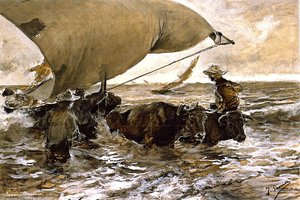
      The Return from the Fishing (1898) by Joaquín Sorolla
      #73

      The Return from the Fishing

      1898 · Museu Nacional de Belas Artes

      Joaquín Sorolla y Bastida's “The Return from the Fishing,” completed in 1898, isn’t merely a depiction of a seaside scene; it’s an embodiment of Impressionism at its finest—a…

      Have it painted by hand →
      Under the awning, Zarauz (1910) by Joaquín Sorolla
      #74

      Under the awning, Zarauz

      1910 · Saint Louis Art Museum

      Joaquin Sorolla y Bastida's "Under the Awnings, Zarauz," painted in 1910, is a captivating Impressionist work that transports viewers to a sun-drenched beach scene in Spain. Housed within…

      Have it painted by hand →
      Fisherwomen (1911) by Joaquín Sorolla
      #75

      Fisherwomen

      1911

      Introduction to the Artist and Painting Joaquín Sorolla y Bastida, a renowned Spanish painter, is celebrated for his vivid depictions of everyday life in Spain. One of his…

      Order this canvas →
      Penitents, Holy Week, Seville (1914) by Joaquín Sorolla
      #76

      Penitents, Holy Week, Seville

      1914 · Hispanic Society Museum - Library

      Joaquín Sorolla y Bastida's "Penitents, Holy Week, Seville," painted in 1914, is a captivating oil on canvas that transports viewers to the heart of Spain’s deeply rooted religious…

      Bring this light home →
      Swimmers, Jávea (1905) by Joaquín Sorolla
      #77

      Swimmers, Jávea

      1905 · Museu Sorolla

      Joaquin Sorolla y Bastida's "Swimmers, Jávea," painted in 1905, isn’t merely a depiction of two women enjoying the Mediterranean Sea; it’s an exquisite distillation of light, movement, and…

      Bring this light home →
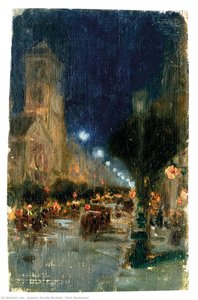
      Paris Boulevard (1885) by Joaquín Sorolla
      #79

      Paris Boulevard

      1885 · Museu Sorolla

      Joaquin Sorolla y Bastida’s “Paris Boulevard,” painted in 1885, isn’t merely a depiction of a city street at night; it’s an immersive experience. Captured during his formative years…

      Have it painted by hand →
      Joaquín (1917) by Joaquín Sorolla
      #80

      Joaquín

      1917 · Museu Sorolla

      Joaquín Sorolla’s 1917 painting, “Joaquín,” isn't merely a likeness; it’s a carefully constructed tableau vivant, capturing the essence of early 20th-century Spanish society and the burgeoning spirit of…

      Bring this light home →
      La siesta (1912) by Joaquín Sorolla
      #82

      La siesta

      1912

      Joaquín Sorolla’s “La Siesta,” painted in 1912, is more than just a depiction of women resting outdoors; it's an embodiment of the Spanish spirit – a celebration of…

      Have it painted by hand →
      Wounded foot (1909) by Joaquín Sorolla
      #84

      Wounded foot

      1909

      Joaquín Sorolla y Bastida's “Wounded Foot,” painted in 1909, transcends mere depiction; it embodies the very essence of Impressionism and offers a poignant glimpse into the spirit of…

      Order this canvas →
      Seville, the Bullfighters (1915) by Joaquín Sorolla
      #85

      Seville, the Bullfighters

      1915 · Hispanic Society Museum - Library

      Seville, the Bullfighters is a captivating oil on panel painting created in 1915 by the renowned Spanish artist Joaquín Sorolla y Bastida. Measuring an impressive 350 x 231…

      Order this canvas →
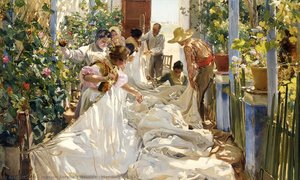
      Mending the Sail (1896) by Joaquín Sorolla
      #86

      Mending the Sail

      1896

      Joaquín Sorolla Y Bastida, a name synonymous with the radiant light and vibrant energy of Spain, was more than just a painter; he was a chronicler of his…

      Order this canvas →
      La vuelta de la pesca (1894) by Joaquín Sorolla
      #88

      La vuelta de la pesca

      1894

      Introduction Joaquín Sorolla y Bastida, a renowned Spanish painter, created the captivating oil on canvas painting titled La Vuelta de la Pesca. This artwork is a testament to…

      Have it painted by hand →
      Maria in a Red Blouse (1910) by Joaquín Sorolla
      #90

      Maria in a Red Blouse

      1910

      Joaquin Sorolla’s “Maria in a Red Blouse,” painted in 1910, is more than just a portrait; it's an exquisite distillation of light, emotion, and the Spanish spirit. This…

      Order this canvas →
      On the coast of Biarritz (1906) by Joaquín Sorolla
      #91

      On the coast of Biarritz

      1906

      The painting depicts a lively seaside scene, capturing the essence of leisure and summertime joy. At its core is a group of figures – three prominent individuals standing…

      Order this canvas →
      Beneath the Canopy by Joaquín Sorolla
      #93

      Beneath the Canopy

      Joaquín Sorolla y Bastida's "Beneath the Canopy" is more than just a depiction of a sun-drenched beach; it’s an embodiment of the Spanish spirit – vibrant, joyful, and…

      Order this canvas →
      untitled (2616) by Joaquín Sorolla
      #95

      untitled (2616)

      In this breathtaking untitled masterpiece by the legendary Spanish Impressionist Joaquín Sorolla y Bastida, the viewer is invited to step into a sun-drenched sanctuary where time seems to…

      Bring this light home →
      Running along the beach (1908) by Joaquín Sorolla
      #96

      Running along the beach

      1908

      Joaquín Sorolla y Bastida's "Running along the beach," painted in 1908, is more than just a picturesque depiction of seaside leisure; it’s a masterful distillation of light, movement,…

      Order this canvas →
      Don Rafael Altamira y Crevea (1913) by Joaquín Sorolla
      #97

      Don Rafael Altamira y Crevea

      1913 · Hispanic Society Museum - Library

      Don Rafael Altamira y Crevea sits in a centered, three-quarter length pose, his presence defined by a heavy, luminous red mozzetta that anchors the composition. The portrait captures…

      Have it painted by hand →
      On the Coast of Valencia (1898) by Joaquín Sorolla
      #99

      On the Coast of Valencia

      1898 · Museu Nacional de Belas Artes

      The painting On the Coast of Valencia by Joaquin Sorolla Y Bastida is a beautiful depiction of people on the beach with boats in the water. Created in…

      Bring this light home →
      The Alcazar at Seville by Joaquín Sorolla
      #100

      The Alcazar at Seville

      Joaquín Sorolla y Bastida's “The Alcazar at Seville” is more than just a depiction of a magnificent building; it’s an immersive experience, a palpable distillation of light and…

      Bring this light home →

      Joaquín Sorolla's canvases, period by period

      What Joaquín Sorolla painted most

      The four subjects that return most often on these canvases, each with its best-loved example.

      Where Joaquín Sorolla's canvases hang

      The 8 museums that hold the most of the paintings on this page.

      Museum City Works by Joaquín Sorolla Paintings from this list
      Hispanic Society Museum - Library, Nova YorkHispanic Society Museum - Library Nova York 113 Valencia beach in the morning light, Extremadura, The Market, Rocks of the Cape, Javea
      Museu Sorolla, MadridMuseu Sorolla Madrid 72 Walk on the Beach (Paseo a orillas del mar), Passeando pela Beira-mar, Clotilde on the Beach
      Museu Nacional de Belas Artes, Buenos AiresMuseu Nacional de Belas Artes Buenos Aires 8 The Return from the Fishing, On the Coast of Valencia
      Museu do Prado, MadridMuseu do Prado Madrid 10 Aureliano de Beruete y Moret, Jr.
      J. Paul Getty Museum, Los AngelesJ. Paul Getty Museum Los Angeles 6 Courtyard of the Dances, Alcazar of Sevilla
      Musée d'Orsay, ParisMusée d'Orsay Paris 4 The Return from Fishing: Hauling the Boat (study)
      Art Institute of Chicago, ChicagoArt Institute of Chicago Chicago 2 The Two Sisters
      Museu de Belas Artes de Boston, BostonMuseu de Belas Artes de Boston Boston 1 Lighthouse walk at Biarritz

      Joaquín Sorolla's best-loved canvas of each decade

      1. 1880s
        Messalina in the Arms of the Gladiator (1886) by Joaquín Sorolla
        Ranked 10 of 100

        Messalina in the Arms of the Gladiator

        Age 17 – 26

        The ground is a bed of scattered flora and heavy silence. A woman lies motionless, her hair woven with blossoms that seem to hold the weight of her…

      2. 1890s
      3. 1900s
        Walk on the Beach (Paseo a orillas del mar) (1909) by Joaquín Sorolla
        Canvas 1 of 100

        Walk on the Beach (Paseo a orillas del mar)

        Age 37 – 46 · Museu Sorolla

        A Sun-Drenched Moment: Joaquín Sorolla’s “Walk on the Beach” Joaquín Sorolla y Bastida, a name synonymous with the vibrant luminosity of Spanish light and life, gifted us with…

      4. 1910s
        Extremadura, The Market (1917) by Joaquín Sorolla
        Canvas 5 of 100

        Extremadura, The Market

        Age 47 – 56 · Hispanic Society Museum - Library

        In the grand tapestry of Spanish Impressionism, few works capture the pulse of a nation as vibrantly as Joaquín Sorolla y Bastida’s “Extremadura, The Market.” Completed in 1917,…

      5. 1920s
        Ramón Pérez de Ayala (1920) by Joaquín Sorolla
        71 of 100

        Ramón Pérez de Ayala

        Age 57 – 60 · Hispanic Society Museum - Library

        In the luminous realm of Spanish Impressionism, few works capture the intersection of human character and atmospheric brilliance as profoundly as Joaquín Sorolla y Bastida’s 1920 masterpiece, Ramón…

      About Joaquín Sorolla's canvases: your questions answered

      What is the best-known painting by Joaquín Sorolla?Read the answer

      Walk on the Beach (Paseo a orillas del mar) (1909), Museu Sorolla, Madrid. Valencia beach in the morning light (1908) and Yo soy el pan de la vida (also known as I am the Bread of Life) (1897) follow.

      What age was Joaquín Sorolla when Walk on the Beach (Paseo a orillas del mar) was painted?Read the answer

      Joaquín Sorolla, born in 1863, was 46 years old: Walk on the Beach (Paseo a orillas del mar) dates from 1909.

      What are the 10 most famous paintings by Joaquín Sorolla?Read the answer

      Walk on the Beach (Paseo a orillas del mar), Valencia beach in the morning light, Yo soy el pan de la vida (also known as I am the Bread of Life), The Pink robe, Extremadura, The Market, Passeando pela Beira-mar, The Smugglers, Lighthouse walk at Biarritz, Clotilde on the Beach and Messalina in the Arms of the Gladiator. Each canvas in the ranking above comes with its year and its museum.

      How many works did Joaquín Sorolla paint in all?Read the answer

      969 works by Joaquín Sorolla are in our catalogue, dated 1881 to 1920.

      Where can I see Joaquín Sorolla's most famous canvases?Read the answer

      Mostly in Hispanic Society Museum - Library (Nova York), Museu Sorolla (Madrid) and Museu Nacional de Belas Artes (Buenos Aires); the list above names each museum and its canvases.

      When did Joaquín Sorolla paint the best-loved canvases?Read the answer

      In 1910s, which gave 34 of the 100 works on this page, Extremadura, The Market among them.

      Which are Joaquín Sorolla's earliest and latest famous canvases?Read the answer

      The earliest canvas here is Seascape, Ships in the Port (1881); the latest is Ramón Pérez de Ayala (1920).

      What did Joaquín Sorolla paint most often?Read the answer

      Sunlight (18), Spain (17) and Beach scene (14), across the 100 works on this page.

      Which medium did Joaquín Sorolla paint in most often?Read the answer

      Oil On Canvas, used in 85 of the 100 works on this page.

      Which movement is Joaquín Sorolla's painting part of?Read the answer

      Paisagem impressionista, as the canvases on this page show.

      Which Joaquín Sorolla canvases hang at the Hispanic Society Museum - Library?Read the answer

      The Hispanic Society Museum - Library, Nova York holds 11 of the works on this page, among them Valencia beach in the morning light, Extremadura, The Market and Rocks of the Cape, Javea.

      Can I buy a reproduction of a Joaquín Sorolla canvas?Read the answer

      Yes. Every painting on this page can be ordered from its own page as an oil reproduction painted by hand, or as a fine art print, in the size you choose.

      Joaquín Sorolla: a life in paint

      Infância, Família e Formação

      Joaquín Sorolla Y Bastida chegou ao mundo em 27 de fevereiro de 1863, em Valência, Espanha. Ele era o filho mais velho de um artesão, Joaquín Sorolla, e de sua esposa, Concepción Bastida. A vida para o jovem menino foi marcada por um silêncio súbito e avassalador quando, em agosto de 1865, uma epidemia de cólera levou a vida de ambos os seus pais. Esta tragédia deixou Joaquín e sua irmã, Concha, órfãos. Eles foram acolhidos pela tia e pelo tio maternos, um chaveiro, que proporcionaram a estabilidade de que os irmãos precisavam para crescer.

      A centelha do talento manifestou-se precocemente durante sua juventude em Valência. Ele recebeu suas primeiras lições de arte em sua cidade natal, desenvolvendo uma aptidão natural que não poderia ser ignorada. Esta instrução inicial lançou as bases para uma educação formal sob a tutela de artistas estabelecidos, incluindo Cayetano Capuz e José Benlliure. Estes mentores ajudaram a moldar as habilidades técnicas que, eventualmente, permitiriam que ele transcendesse o cenário local em busca de horizontes mais amplos.

      Vida e Carreira em Madrid

      Em 1888, Joaquín Sorolla Y Bastida casou-se com Clotilde García del Castillo, uma mulher que ele conhecia desde a sua juventude, quando trabalhava no estúdio do pai dela. A vida do casal mudou-se para Madrid em 1890, uma transição que marcou um capítulo significativo no seu desenvolvimento pessoal e profissional. À medida que se estabeleciam na capital, a família crescia, com a chegada de Maria, Joaquín e Elena até 1895. Estes anos foram um período de construção, tanto de um lar como de uma reputação que, eventualmente, alcançaria fronteiras muito além de Espanha.

      Durante a década que se seguiu à sua mudança para Madrid, o foco de Sorolla deslocou-se para a criação de telas de grandes dimensões. Ele dedicou grande parte do seu tempo a temas monumentais, que iam desde cenas mitológicas e históricas até temas orientalistas e estudos sociais. A sua ambição refletia-se na escala da sua obra, à medida que procurava abordar narrativas complexas através do seu pincel. Este período de produção intensa viu a sua reputação expandir-se através de várias exposições internacionais. Ele apresentou o seu trabalho em salões por toda a Europa e nas Américas, incluindo cidades como Paris, Veneza, Munique, Berlim e Chicago.

      Obras-Primas e Grandes Conquistas

      Um ponto de viragem crucial em sua trajetória artística ocorreu com a criação de Sad Inheritance, em 1899. Esta tela de grandes dimensões, que retratava crianças banhando-se no mar, foi apresentada na Exposição Universal de Paris, alcançando um nível de reconhecimento que transformaria sua vida para sempre. O impacto da obra foi tal que, em 1900, ele foi nomeado Cavaleiro da Legião de Honra. No mesmo ano, o artista foi laureado com o Grand Prix e uma medalha de honra na exposição de Paris, consolidando sua entrada triunfal no cenário artístico internacional.

      O seu sucesso continuou a florescer durante os primeiros anos do novo século. Em 1901, foi condecorado com a medalha de honra na Exposição Nacional em Madrid. Estas distinções refletiam a sua extraordinária capacidade de transitar entre temas sociais densos e as cenas vibrantes e ensolaradas que, eventualmente, definiriam a sua reputação. O seu alcance estendeu-se muito além das fronteiras da Espanha, uma vez que a sua maestria em capturar a luz e a essência da vida lhe rendeu encomendas de importantes instituições internacionais.

      Um dos seus projetos mais ambiciosos foi o comissionamento para criar a série Vision of Spain para a Hispanic Society of America. Este conjunto de obras monumentais permitiu-lhe expressar a sua ligação profunda com a sua terra natal através de uma narrativa visual de escala épica. A sua carreira foi marcada por estes momentos de sublime realização, onde a sua destreza técnica se fundiu com um profundo sentido de propósito e identidade.

      • Sad Inheritance (1899)
      • Vision of Spain

      Técnica e Estilo Artístico

      Sorolla possuía uma forma de trabalhar que parecia tão inquieta e vibrante quanto o próprio Mediterrâneo. Ele era um pintor que preferia a vivacidade do ar livre, optando por pintar quase todas as suas obras en plein air. Esse compromisso com a pintura ao ar livre permitia-lhe confrontar os elementos mutáveis de frente. Ele não pretendia apenas registrar uma cena; buscava capturar a maneira como a luz interage com o mundo, particularmente o modo como ela dança sobre as águas ensolaradas e ilumina a pele de seus modelos. Sua pincelada era solta e enérgica, utilizando traços espessos e expressivos para traduzir o movimento efêmero da luz solar na tela.

      Seu foco técnico dividia-se, muitas vezes, entre o íntimo e o monumental. Ele demonstrava o mesmo domínio ao retratar um retrato silencioso quanto ao enfrentar temas sociais ou históricos de grande escala. Há uma certa destreza na forma como ele manipulava a paisagem, frequentemente situando pessoas sob um sol espanhol radiante que parece dissolver as fronteiras entre o mar e o céu. Essa abordagem transformava momentos comuns em algo que parecia imediato e pulsante. Ele concentrava-se nas texturas da vida cotidiana, utilizando a luz para definir as formas das pessoas e dos ambientes que elas habitavam.

      Anos Finais e Morte

      Os anos finais da vida de Joaquín Sorolla Y Bastida foram marcados por um empreendimento monumental que exigiu uma imensa resistência física e mental. Ele dedicou grande parte desse período à criação de seus murais monumentais, um projeto que demandou toda a sua atenção e vigor. Sorolla conseguiu concluir o último painel dessas obras de grande escala em julho de 1919, assinalando uma conclusão significativa de sua vasta produção criativa.

      Contudo, sua capacidade de continuar pintando foi brevemente interrompida por lutas contra a saúde. Em 1920, ele sofreu um derrame, um evento que limitou sua atividade pictórica e alterou o ritmo de sua existência. Este período de recuperação representou um afastamento silencioso das sessões enérgicas ao ar livre que haviam definido seus anos anteriores. Joaquín Sorolla Y Bastida faleceu em 10 de agosto de 1923. Ele foi sepultado no Cementeri de Valencia, na Espanha, retornando à região que sempre foi o coração pulsante de sua vida e de sua arte.

      Legado e Influência Duradoura

      O impacto de Joaquín Sorolla Y Bastida estendeu-se muito além das margens de sua Espanha natal. Sua presença na comunidade artística internacional foi consolidada através de sua filiação a diversas instituições prestigiadas, incluindo a Académie des Beaux-Arts em Paris, a Academia Nacional de Belas Artes em Lisboa e a Real Academia de Bellas Artes de San Carlos em Valência. Essas honrarias refletem uma carreira que conseguiu, com maestria, transpor a fronteira entre a identidade local e o reconhecimento global. Ele foi celebrado como o Filho Predileto de Valência, um título que evocava a conexão profunda entre o pintor e a luz singular de sua região de origem.

      Hoje, suas telas habitam coleções por toda a Espanha, Europa e Américas. Sua habilidade em traduzir o movimento do mar e o calor do sol para uma superfície plana garantiu que sua visão permanecesse viva no imaginário coletivo. Suas obras continuam a ser objeto de estudo e admiração nos principais museus, mantendo uma presença que atravessa continentes. A influência de Joaquín Sorolla Y Bastida é sentida na forma como ele capturou um senso específico de lugar e luminosidade, deixando para trás um corpo de trabalho que permanece como uma parte vital da paisagem artística mundial.

      • Sad Inheritance (1899)
      • Children on the Seashore (1903)
      • The Return from Fishing; Hauling the Boat (1894)

      Onde Ver as Obras Hoje

      Para aqueles que desejam percorrer os espaços que moldaram a sua existência, o Museo Sorolla, em Madrid, oferece um vislumbre raro do seu mundo privado. Este museu dedicado a um único artista está instalado na sua antiga residência e estúdio, preservando a atmosfera exata onde viveu e criou. Entre estas paredes, é possível encontrar peças íntimas como Meus Filhos, que oferecem um olhar sobre as suas conexões pessoais, distanciando-se das grandes encomendas que marcaram a sua carreira.

      A sua influência estende-se muito além das fronteiras da Espanha, alcançando as mais importantes coleções internacionais. Em Nova Iorque, a Hispanic Society Museum - Library abriga muitas das suas obras, preservando uma parte significativa da sua produção para aqueles que viajam até aos Estados Unidos. A sua presença na Europa é igualmente sentida, particularmente em Paris, onde o Musée d'Orsay mantém a obra O Regresso da Pesca; Puxando o Barco.

      • Meus Filhos, Museo Sorolla, Madrid
      • O Regresso da Pesca; Puxando o Barco, Musée d'Orsay, Paris

      All 969 works by Joaquín Sorolla →