Ateliê — Envio gratuito para todo o mundo — Entrega em 2–6 semanas
      Paul Klee, 1879 – 1940

      Paul Klee: The 100 Best-Known Paintings

      Of all Paul Klee's paintings, Novo Anjo (1920) is the most famous; it hangs in the Museu de Israel, Jerusalém. Close behind come Máquina Cantante 1 and To Parnassus - Para Parnassos (1932). Among the 669 works by Paul Klee in our catalogue, these 100 are the most celebrated, each shown with its date, its museum and its story.

      Ranked by our popularity score, which combines the searches, visits and orders for each work. Updated Outubro 2026. Each painting on this page can be ordered as an oil reproduction painted by hand on linen canvas, or as a fine art print, made to the size you choose.

      Portrait of Paul Klee
      Paul Klee · 1879 – 1940
      Born · died
      1879 – 1940, Münchenbuchsee
      Movement
      Expressionismo
      Works in our catalogue
      669
      Most famous
      Novo Anjo (1920)
      Most works at
      Metropolitan Museum of Art

      Paul Klee's 10 most celebrated paintings

      Novo Anjo (1920) by Paul Klee
      1

      Novo Anjo

      1920 · Monotipia · Museu de Israel, Jerusalém

      Criada em 1920, Novo Anjo de Paul Klee oferece um vislumbre da visão singular do artista. Esta obra é uma monotipia, uma escolha que reflete o interesse de Klee pelas qualidades únicas e irrepetíveis de uma impressão única. É uma peça silenciosa, que se apoia em uma austera paleta de preto e branco para estabelecer sua presença. A composição foca na cabeça de um pássaro, um motivo ao qual Klee…

      Máquina Cantante 1 by Paul Klee
      2

      Máquina Cantante 1

      Tinta sobre papel · MoMA - Museu de Arte Moderna, Nova York

      Created around 1922, this captivating artwork by Paul Klee embodies the spirit of early modernism, blending playful imagery with profound symbolic depth. Often referred to as “Twittering Machine,” it’s a seminal example of Klee's unique artistic language – one that bridges abstraction, expressionism, and a childlike sense of wonder.

      To Parnassus - Para Parnassos (1932) by Paul Klee
      3

      To Parnassus - Para Parnassos

      1932 · Acrílico sobre tela · Kunstmuseum Bern, Berna

      Tema Captivante e Simbolismo Esta obra de arte impactante apresenta uma paisagem vibrante e estratificada que convida os espectadores a um mundo de imaginação e contemplação. Central à composição, encontra-se um círculo laranja luminoso, que remete ao sol ou à lua, simbolizando energia, iluminação e a passagem do tempo. Sob este corpo celestial, uma forma triangular proeminente sugere uma montanha ou pirâmide, evocando estabilidade, aspiração e ascensão espiritual. A inclusão…

      Lenda do Nilo (1937) by Paul Klee
      4

      Lenda do Nilo

      1937 · Óleo sobre tela · Kunstmuseum Bern, Berna

      Explorando o Rico Tema e o Simbolismo Cultural Mergulhe em uma tapeçaria vibrante de narrativa cultural e simbolismo mítico com esta obra de arte cativante. Inspirada pelo lendário Nilo, a peça tece um relato de água, vida e espiritualidade através de motivos abstratos e formas simbólicas. A composição sugere temas do antigo Egito, com símbolos que remetem a hieróglifos, plantas estilizadas e criaturas aquáticas que evocam a conexão atemporal entre…

      Flora na areia (1927) by Paul Klee
      5

      Flora na areia

      1927 · Óleo sobre tela

      Flora on Sand: A Symphony of Color and Geometric Form Paul Klee, um pintor suíço-alemão renomado, era conhecido por sua combinação única de expressionismo, cubismo e surrealismo. Seu impacto na arte moderna é evidente em seus escritos teóricos, notavelmente em seus 'Cadernos de Paul Klee'. Uma de suas obras notáveis, *Flora on Sand*, criada em 1927, exemplifica seu estilo abstrato e demonstra sua fascinação pela arte infantil. Essa pintura não…

      Paisagem com Pássaros Amarelos (1923) by Paul Klee
      6

      Paisagem com Pássaros Amarelos

      1923 · Acrílico sobre tela

      Paisagem com Pássaros Amarelos A obra Paisagem com Pássaros Amarelos, de Paul Klee, é um exemplo quintessencial da fusão única entre o expressionismo e o surrealismo do artista. Pintada em 1923, esta peça revela a abordagem inovadora de Klee em relação à cor, à forma e à composição, transportando o espectador para um universo onde a realidade se transforma em poesia visual. O Contexto Artístico Paul Klee, artista alemão de…

      Fish Image (1925) by Paul Klee
      7

      Fish Image

      1925 · Acrílico sobre tela

      A World Suspended: Decoding Paul Klee’s *Fish Image* (1925) Paul Klee's *Fish Image*, created in 1925, is more than just a depiction of aquatic life; it’s a captivating exploration of movement, symbolism, and the liminal space between reality and dream. Measuring 40 x 61 cm, this delicate painting exemplifies Klee’s unique artistic voice – one deeply rooted in Expressionism yet subtly influenced by Cubism and Surrealism. It invites viewers into…

      With the eagle by Paul Klee
      8

      With the eagle

      Painting · Zentrum Paul Klee, Bern

      In the vast, kaleidoscopic landscape of twentieth-century modernism, few artists possess the ability to translate the invisible rhythms of the soul onto canvas as masterfully as Paul Klee. His work, With the Eagle, serves as a profound testament to this unique gift, acting not merely as a painting, but as a window into a psychological realm where color and form dance in a delicate, often mysterious, equilibrium. Created during the…

      In the Style of Kairouan (1914) by Paul Klee
      9

      In the Style of Kairouan

      1914

      In the annals of modern art, few moments are as transformative as Paul Klee’s 1914 masterpiece, "In the Style of Kairouan." This work serves as a profound declaration of independence from the constraints of representational art, marking Klee's pivotal transition toward an abstract expressionism that would redefine the twentieth century. The painting is not merely a composition of shapes; it is a visual manifestation of a spiritual and artistic epiphany.…

      Jardim de Rosas (1920) by Paul Klee
      10

      Jardim de Rosas

      1920 · Mixed Media · Lenbachhaus, Munique

      Nos cantos tranquilos do Lenbachhaus, em Munique, a obra “Rose Garden” (1920), de Paul Klee, aguarda o espectador, oferecendo uma experiência visual que transcende os limites da mera pintura. Contemplar esta obra-prima é entrar em um mundo onde o orgânico e o arquitetônico dançam em um uníssono perfeito e rítmico. Criada durante um momento crucial na vida de Klee — pouco após seu serviço na Primeira Guerra Mundial e por…

      Paul Klee paintings ranked 11 to 100

      Escolinha (1920) by Paul Klee
      #11

      Escolinha

      1920 · Art Institute of Chicago

      Aproxime-se e observe como o espaço parece se dobrar sobre si mesmo. Em Escolinha, encontramos um mundo que não segue as regras de perspectiva às quais estamos acostumados.…

      Order this canvas →
      Folheto dos Comediantes (1938) by Paul Klee
      #12

      Folheto dos Comediantes

      1938 · Metropolitan Museum of Art

      Introdução a Paul Klee e Comedians' Handbill Paul Klee, pintor alemão de origem suíça (1879-1940), foi celebrado por sua fusão única de expressionismo, cubismo e surrealismo. Mestre do…

      Have it painted by hand →
      May Picture (1925) by Paul Klee
      #13

      May Picture

      1925 · Metropolitan Museum of Art

      May Picture: A Fragmented Landscape of Color and Rhythm Paul Klee’s “May Picture,” painted in 1925, stands as a testament to the artist's unwavering commitment to abstraction while…

      Bring this light home →
      Orvalho Ártico (1920) by Paul Klee
      #16

      Orvalho Ártico

      1920 · Sezon Museum of Modern Art

      No reino etéreo de “Orvalho Ártico”, de Paul Klee, as fronteiras entre a realidade e a imaginação dissolvem-se numa dança luminosa de cor e ritmo. Criada em 1920,…

      Bring this light home →
      Untitled (1914) by Paul Klee
      #17

      Untitled

      1914 · Metropolitan Museum of Art

      There is a quiet, rhythmic pulse within this 1914 watercolor that suggests a world composed entirely of light and geometry. The piece presents an arrangement of overlapping rectangular…

      Bring this light home →
      Serpent (1926) by Paul Klee
      #18

      Serpent

      1926 · Museu de Belas Artes de Boston

      In the quiet, monochromatic realm of Paul Klee’s 1926 masterpiece, Serpent (also known as Schlangenbeute), a primal drama unfolds with breathtaking subtlety. This graphite drawing is far more…

      Bring this light home →
      Crepúsculo em fogo (1929) by Paul Klee
      #19

      Crepúsculo em fogo

      1929

      A obra "Crepúsculo em fogo", criada por Paul Klee em 1929, apresenta-se como um exemplo cativante da arte abstrata. Em vez de buscar a representação realista, a pintura…

      Order this canvas →
      The messenger of autumn (1922) by Paul Klee
      #20

      The messenger of autumn

      1922

      The Messenger of Autumn Paul Klee’s “The Messenger of Autumn” stands as an emblem of artistic innovation—a painting that transcends mere representation to embody a profound exploration of…

      Have it painted by hand →
      La Kash-Ne (1933) by Paul Klee
      #21

      La Kash-Ne

      1933 · Metropolitan Museum of Art

      Em 1933, um período marcado por profundas mudanças políticas e deslocamento pessoal, o artista produziu La Kash-Ne. Esta obra existe como um estudo em monocromia, onde a ausência…

      Have it painted by hand →
      Wallflower by Paul Klee
      #23

      Wallflower

      In the quiet, contemplative realm of Paul Klee’s 1938 masterpiece, 'Wallflower,' we encounter a work that transcends mere botanical depiction to become a profound meditation on existence. At…

      Order this canvas →
      Flora sobre rochas Sol (1940) by Paul Klee
      #24

      Flora sobre rochas Sol

      1940 · Kunstsammlung Nordrhein-Westfalen

      No crepúsculo de sua carreira extraordinária, Paul Klee presenteou o mundo da arte com 'Flora sobre rochas Sol', uma obra-prima de 1940 que serve como uma profunda meditação…

      Bring this light home →
      Teatro Botânico (1934) by Paul Klee
      #25

      Teatro Botânico

      1934 · Lenbachhaus

      Uma Paisagem Onírica de Flora e Forma No reino silencioso e evocativo de Botanical Theater, de Paul Klee, as fronteiras entre a realidade e a imaginação dissolvem-se numa…

      Bring this light home →
      Woman in Peasant Dress (1940) by Paul Klee
      #26

      Woman in Peasant Dress

      1940

      Paul Klee, a Swiss-born German painter whose legacy extends far beyond his artistic output, remains an enigma to many. Born December 18, 1879, he defied categorization, forging a…

      Bring this light home →
      Coleção de Estatuetas (1926) by Paul Klee
      #27

      Coleção de Estatuetas

      1926 · Metropolitan Museum of Art

      Introduction to Paul Klee and Expressionism Paul Klee, a Swiss-born German painter (1879-1940), was celebrated for his unique blend of expressionism, cubism, and surrealism. A master draftsman with…

      Have it painted by hand →
      Dancing Girl (1940) by Paul Klee
      #28

      Dancing Girl

      1940 · Art Institute of Chicago

      A single, dark figure moves across a textured field. This humanoid form, rendered with thick and gestural lines, suggests a skeletal grace. It is a stick-figure shape that…

      Have it painted by hand →
      Mulher Tricotando (1915) by Paul Klee
      #29

      Mulher Tricotando

      1915 · Boca Raton Museum of Art

      Mulher Tricotando – Um Fragmento de Harmonia Geométrica A obra “Mulher Tricotando”, de Paul Klee, apresenta-se como uma exploração enganosamente simples, porém profundamente ressonante, da domesticidade e da…

      Order this canvas →
      Black prince by Paul Klee
      #30

      Black prince

      A Fragmented Soul Emerging from the Void In the haunting depths of Paul Klee’s Black Prince, the viewer is not merely observing a portrait but witnessing a psychological…

      Order this canvas →
      Sonho Forte (1929) by Paul Klee
      #31

      Sonho Forte

      1929

      Uma Janela para o Subconsciente: Explorando “Sonho Forte” de Paul Klee "Sonho Forte", criado em 1929, é um exemplo cativante da arte moderna que mergulha profundamente no reino…

      Have it painted by hand →
      With the Egg (1917) by Paul Klee
      #32

      With the Egg

      1917

      Introduction to Paul Klee and His Artistic Style Paul Klee, a Swiss-born German painter (1879-1940), was celebrated for his unique blend of expressionism, cubism, and surrealism. A master…

      Have it painted by hand →
      Seventeen (1923) by Paul Klee
      #33

      Seventeen

      1923

      Paul Klee's “Seventeen,” created in 1927, stands as a cornerstone of Surrealist art—a testament to his singular ability to translate inner vision onto canvas. More than just an…

      Have it painted by hand →
      Mask of Fear by Paul Klee
      #35

      Mask of Fear

      MoMA - Museu de Arte Moderna

      Introduction to Paul Klee and Expressionism Paul Klee, a Swiss-born German painter (1879-1940), was celebrated for his unique blend of expressionism, cubism, and surrealism. A master draftsman with…

      Bring this light home →
      Hot Pursuit (1939) by Paul Klee
      #36

      Hot Pursuit

      1939 · Fogg Museum

      The canvas breathes with a primitive energy, as if we are witnessing a ritual frozen in a moment of frantic motion. Dark, heavy black lines slash across the…

      Order this canvas →
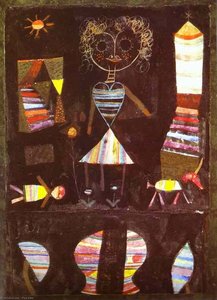
      Puppet theater (1923) by Paul Klee
      #37

      Puppet theater

      1923

      Puppet Theater: A Surrealist Dance of Forms by Paul Klee Paul Klee’s “Puppet Theater,” painted in 1923, isn't merely a depiction of theatrical imagery; it’s an embodiment of…

      Order this canvas →
      Temple Gardens (1920) by Paul Klee
      #38

      Temple Gardens

      1920 · Metropolitan Museum of Art

      Paul Klee's “Three Panels,” painted circa 1920, isn’t merely a collection of landscapes; it’s a carefully constructed meditation on perception, memory, and the fractured nature of experience. Emerging…

      Have it painted by hand →
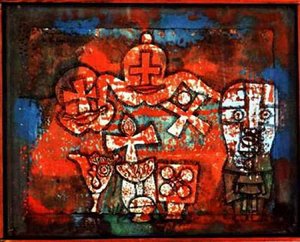
      Chinese porcelain (1940) by Paul Klee
      #39

      Chinese porcelain

      1940

      A Symphony of Geometric Abstraction In the twilight of his life, Paul Klee composed a visual masterpiece that transcends mere pigment on canvas. The Four Faces, painted in…

      Order this canvas →
      Exóticos (1939) by Paul Klee
      #40

      Exóticos

      1939 · Art Institute of Chicago

      O olhar vaga por uma paisagem de formas entrelaçadas, onde o terracota profundo e o sienna queimado colidem com manchas de azul ardósia e amarelo mostarda. Não há…

      Have it painted by hand →
      Remembrance of a Garden (1914) by Paul Klee
      #41

      Remembrance of a Garden

      1914

      A Visionary Landscape of MemoryIn Paul Klee’s 1914 masterpiece, Remembrance of a Garden, the viewer is not merely presented with a landscape, but invited into a profound meditation…

      Bring this light home →
      Olhar Estranho (1930) by Paul Klee
      #42

      Olhar Estranho

      1930 · Art Institute of Chicago

      Uma forma oval ocupa o centro de um campo escuro e texturizado, sugerindo um rosto através de uma geometria minimalista. A composição apoia-se em uma paleta sombria de…

      Have it painted by hand →
      Boy in Fancy Dress (1931) by Paul Klee
      #43

      Boy in Fancy Dress

      1931 · Metropolitan Museum of Art

      A single figure emerges from a dense, rhythmic grid of color, appearing less like a solid person and more like a delicate arrangement of tiny, rectangular patches. This…

      Bring this light home →
      The Pathos of Fertility (1921) by Paul Klee
      #44

      The Pathos of Fertility

      1921 · Metropolitan Museum of Art

      The artwork consists of a centered, seated humanoid figure rendered through delicate black outlines on paper. The figure possesses a large, rounded belly that is decorated with organic…

      Bring this light home →
      Violino Heroico by Paul Klee
      #45

      Violino Heroico

      MoMA - Museu de Arte Moderna

      Introdução: Paul Klee, pintor alemão de origem suíça (1879-1940), foi celebrado por sua mistura única de expressionismo, cubismo e surrealismo. Um mestre do desenho com uma compreensão profunda…

      Order this canvas →
      Arab Song (1932) by Paul Klee
      #46

      Arab Song

      1932 · The Phillips Collection

      In 1932, Paul Klee composed a visual arrangement that translates the atmosphere of North Africa into a simplified, rhythmic language. The work utilizes oil on burlap to create…

      Bring this light home →
      Flower Family V. (1922) by Paul Klee
      #48

      Flower Family V.

      1922 · Solomon R. Guggenheim Museum

      Three stylized figures, possessing qualities of both human forms and botanical life, occupy a dark, textured space. A larger figure with an orange-toned body and a circular white…

      Order this canvas →
      Forgetful angel by Paul Klee
      #49

      Forgetful angel

      Paul Klee's “Forgetful Angel,” painted in 1939 amidst the gathering storm clouds of war, is not merely a depiction of an angel; it’s a profound meditation on memory,…

      Have it painted by hand →
      Singer of the Comic Opera (1927) by Paul Klee
      #50

      Singer of the Comic Opera

      1927 · Bavarian State Painting Collections

      Step closer to observe the way the light seems to emerge from within the figure itself. In Singer of the Comic Opera, we encounter a form that feels…

      Bring this light home →
      A Couple of Gods (1924) by Paul Klee
      #51

      A Couple of Gods

      1924 · Scharf-Gerstenberg Collection

      Step closer to observe these two figures. They emerge from a dark, textured void, appearing less like painted subjects and more like relics unearthed from a forgotten era.…

      Have it painted by hand →
      Walpurgis Night (1935) by Paul Klee
      #53

      Walpurgis Night

      1935

      The surface of Walpurgis Night consists of gouache applied to fabric stretched over plywood. A monochromatic blue palette dominates the visual field, ranging from deep navy and near-black…

      Bring this light home →
      Static-Dynamic Gradation by Paul Klee
      #54

      Static-Dynamic Gradation

      Metropolitan Museum of Art

      # Introduction to Expressionism and Paul Klee Expressionism is an art movement that emerged in the early 20th century, characterized by its emphasis on emotional experience and individual…

      Bring this light home →
      Colorful Architecture (1917) by Paul Klee
      #55

      Colorful Architecture

      1917 · Metropolitan Museum of Art

      A City Born of Dreams: Unveiling Paul Klee’s “Colorful Architecture” Paul Klee's 1917 watercolor, “Colorful Architecture,” is not a rendering of any identifiable place, but rather an evocation—a…

      Have it painted by hand →
      Possibilities at Sea (1932) by Paul Klee
      #56

      Possibilities at Sea

      1932 · Norton Simon Museum

      A white-outlined diamond holds red grid lines against a dark grey background. On the right, this structure dominates the space. A single, bright white arrow points toward a…

      Have it painted by hand →
      Rose Wind by Paul Klee
      #57

      Rose Wind

      A Symphony in Color: Exploring Paul Klee’s Rose Wind The moment one encounters Rose Wind, there is an immediate sense of being swept into a rhythmic, breathing landscape…

      Bring this light home →
      Angel in the Making by Paul Klee
      #59

      Angel in the Making

      Paul Klee's ‘Angel in the Making’, painted around an unspecified date, is not merely a visual composition; it’s a whispered meditation on potentiality, a glimpse into the nascent…

      Order this canvas →
      Dying Down (1940) by Paul Klee
      #60

      Dying Down

      1940 · Scharf-Gerstenberg Collection

      The composition presents an arrangement of calligraphic, black lines that weave through patches of saturated color. These thick, fluid strokes intersect with deep crimson, burnt sienna, and ochre,…

      Bring this light home →
      Tighter rhythms and freer by Paul Klee
      #61

      Tighter rhythms and freer

      In the vibrant realm of Expressionist abstraction, Paul Klee’s Tighter rhythms and freer stands as a captivating exploration of color and structure. The painting presents an intricate composition…

      Bring this light home →
      The rumors (1939) by Paul Klee
      #62

      The rumors

      1939 · The Barnes Foundation

      In the quiet, evocative depths of Paul Klee’s 1939 watercolor masterpiece, "The Rumors," we encounter a visual language that speaks far more than words ever could. Created during…

      Bring this light home →
      Rose garden (1920) by Paul Klee
      #63

      Rose garden

      1920

      A Garden of Geometric Dreams: Unveiling Paul Klee’s ‘Rose Garden’ Paul Klee's *Rose Garden*, painted in 1920, is far more than a depiction of flowers; it’s a pivotal…

      Bring this light home →
      Ad marginem (1930) by Paul Klee
      #64

      Ad marginem

      1930 · Kunstmuseum Basel

      Step closer to observe the quiet tension held within this 1930 composition. At first glance, the eye is drawn to a central, deep terracotta red orb, a circular…

      Bring this light home →
      Untitled (Reconstruction) (1926) by Paul Klee
      #65

      Untitled (Reconstruction)

      1926 · KODE Art museums and composer homes

      A Labyrinth of Form Step closer to observe the density of this 1926 composition. There is no single point for the eye to rest; instead, one finds oneself…

      Have it painted by hand →
      Tree Nursery (1929) by Paul Klee
      #67

      Tree Nursery

      1929 · The Phillips Collection

      A rhythmic, horizontal composition defines this 1929 work, utilizing layered bands of pale blue, soft pink, light yellow, sage green, and earthy ochre. The surface is marked by…

      Order this canvas →
      Fire in the Evening (1929) by Paul Klee
      #68

      Fire in the Evening

      1929 · MoMA - Museu de Arte Moderna

      To look closely at this small work is to encounter a quiet, structured energy. Created in 1929, the piece presents itself through an arrangement of horizontal bands and…

      Bring this light home →
      The rumors (1939) by Paul Klee
      #69

      The rumors

      1939

      In the quiet, evocative depths of Paul Klee’s 1939 masterpiece, “The Rumors,” we encounter a visual language that speaks far more than words ever could. Created during one…

      Bring this light home →
      Cidade Castigada (1936) by Paul Klee
      #71

      Cidade Castigada

      1936 · Metropolitan Museum of Art

      A composição apresenta uma superfície abstrata e densamente texturizada que sugere um ambiente urbano fragmentado e esquelético. Uma grande e sólida seta preta desce do centro superior, direcionando…

      Order this canvas →
      Pintura Mural Popular (1922) by Paul Klee
      #72

      Pintura Mural Popular

      1922 · Metropolitan Museum of Art

      Uma figura única e alongada ocupa o centro do papel, sua presença é sentida através de um arranjo delicado de formas e linhas. Ela olha para o exterior…

      Have it painted by hand →
      Cores à Distância (1932) by Paul Klee
      #76

      Cores à Distância

      1932 · Museu de Israel

      A composição apresenta uma grade densa e não representativa de quadrados e retângulos sobrepostos. Uma rede de linhas finas e escuras atravessa a superfície, criando pequenas formas semelhantes…

      Bring this light home →
      View into the Fertile Country (1932) by Paul Klee
      #77

      View into the Fertile Country

      1932 · Städel Museum

      The Nile flows as a single, wavy line across the foreground. Behind this blue thread, geometric shapes rise like silent buildings. Rows of multicolored horizontal stripes stretch toward…

      Bring this light home →
      Polyphony (1932) by Paul Klee
      #78

      Polyphony

      1932 · Kunstmuseum Basel

      Small squares of deep blue, forest green, and ochre settle into a dense, rhythmic grid. Each rectangle rests against its neighbor like a note placed upon a staff.…

      Bring this light home →
      Bust of a Child by Paul Klee
      #80

      Bust of a Child

      Bust of a Child: An Expressionist Exploration by Paul Klee A Glimpse into Childhood Through Abstract Forms Paul Klee's "Bust of a Child" is a captivating artwork that…

      Order this canvas →
      The Lamb (1920) by Paul Klee
      #81

      The Lamb

      1920 · Städel Museum

      In the quiet, transformative landscape of early twentieth-century modernism, few works capture the intersection of spiritual devotion and geometric innovation as poignantly as Paul Klee’s “The Lamb,” completed…

      Bring this light home →
      Interior with the Clock (1913) by Paul Klee
      #82

      Interior with the Clock

      1913 · National Gallery of Art

      The paper holds a soft, ethereal world where shapes drift like clouds through an unseen room. Pale yellows and light blues mingle with lavender and dusty rose, creating…

      Have it painted by hand →
      Girl with Doll by Paul Klee
      #84

      Girl with Doll

      In the vast landscape of modern art, few works possess the intimate, rhythmic charm found in Paul Klee’s "Girl with Doll Carriage" (Mädchen mit Puppenwagen). Painted in 1923,…

      Bring this light home →
      Municipal Jewel (1917) by Paul Klee
      #85

      Municipal Jewel

      1917 · Metropolitan Museum of Art

      The painting Municipal Jewel presents an intricate cityscape composed of various shapes and colors. The palette features a vibrant mix of red, blue, yellow, green, and purple. Within…

      Have it painted by hand →
      Diana na Brisa Outonal (1934) by Paul Klee
      #87

      Diana na Brisa Outonal

      1934

      “Diana em o Vento Outonal” (1934) de Paul Klee é uma obra que transcende a mera representação visual, mergulhando o espectador em um universo de simbolismo e movimento.…

      Order this canvas →
      Fruits on Red (1930) by Paul Klee
      #88

      Fruits on Red

      1930 · Lenbachhaus

      The composition presents a delicate network of thin stems and rounded geometric forms set against a warm copper-red ground. Rather than a traditional arrangement of harvested produce, the…

      Bring this light home →
      Portal no Jardim (1926) by Paul Klee
      #89

      Portal no Jardim

      1926 · Kunstmuseum Bern

      Nas profundezas de uma atmosfera sombria e melancólica, uma dança rítmica de texturas começa a se desenrolar. O olhar é imediatamente atraído para o canto superior esquerdo, onde…

      Order this canvas →
      Captive (1940) by Paul Klee
      #91

      Captive

      1940

      A Portrait of Resilience: Paul Klee’s “Captive” Paul Klee's "Captive," painted in 1940 during the twilight years of his life and just months before his passing, is far…

      Bring this light home →
      Sunset (1930) by Paul Klee
      #92

      Sunset

      1930 · Art Institute of Chicago

      The oil on canvas, measuring 46.1 x 70.5 cm, presents an abstract arrangement of geometric and organic shapes. A neutral background is covered by a dense, layered pattern…

      Have it painted by hand →
      In Position (1939) by Paul Klee
      #93

      In Position

      1939

      Step closer to observe the delicate balance within this 1939 watercolor. There is a certain stillness here, an arrangement that feels both intentional and fragile. The composition rests…

      Order this canvas →
      Enclosure for Pachyderms (1940) by Paul Klee
      #94

      Enclosure for Pachyderms

      1940 · KODE Art museums and composer homes

      Created in 1940, this oil on canvas presents a structured network of thick, black, irregular lines that traverse the surface in a grid-like pattern. These dark strokes vary…

      Order this canvas →
      Crystal Gradation by Paul Klee
      #95

      Crystal Gradation

      Kunstmuseum Basel

      In the vast landscape of twentieth-century abstraction, few works possess the hypnotic, rhythmic quality found in Paul Klee’s "Crystal Gradation." Created during the artist's profound period in Murnau,…

      Order this canvas →
      El conquistador by Paul Klee
      #96

      El conquistador

      “The Great Bear,” painted in 1938 during Klee’s prolific period at Bauhaus Dessau, stands as a cornerstone of his artistic legacy. More than just a depiction of an…

      Order this canvas →
      Landscape with yellow church tower (1920) by Paul Klee
      #97

      Landscape with yellow church tower

      1920 · Bavarian State Painting Collections

      A complex, grid-like structure defines this 1920 landscape, utilizing a mosaic of geometric shapes to suggest a village setting. Horizontal lines traverse the canvas, establishing a rhythmic, layered…

      Have it painted by hand →
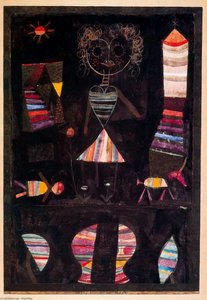
      Puppet Theatre by Paul Klee
      #98

      Puppet Theatre

      Paul Klee's "Puppet Theater" is far more than a mere depiction of figures; it serves as a profound invitation to delve into the realm of subconscious thought and…

      Have it painted by hand →

      Paul Klee's canvases, period by period

      What Paul Klee painted most

      The four subjects that return most often on these canvases, each with its best-loved example.

      Where Paul Klee's canvases hang

      The 8 museums that hold the most of the paintings on this page.

      Museum City Works by Paul Klee Paintings from this list
      Metropolitan Museum of Art, Nova YorkMetropolitan Museum of Art Nova York 56 Folheto dos Comediantes, May Picture, Untitled
      Art Institute of Chicago, ChicagoArt Institute of Chicago Chicago 10 Escolinha, Dancing Girl, Exóticos
      MoMA - Museu de Arte Moderna, Nova YorkMoMA - Museu de Arte Moderna Nova York 9 Máquina Cantante 1, Mask of Fear, Violino Heroico
      Kunstmuseum Basel, BasileiaKunstmuseum Basel Basileia 8 Ad marginem, Polyphony, Crystal Gradation
      Lenbachhaus, MuniqueLenbachhaus Munique 6 Jardim de Rosas, Teatro Botânico, Fruits on Red
      Bavarian State Painting Collections, MuniqueBavarian State Painting Collections Munique 20 Singer of the Comic Opera, Landscape with yellow church tower
      The Phillips Collection, Washington, D.C.The Phillips Collection Washington, D.C. 8 Arab Song, Tree Nursery
      Scharf-Gerstenberg Collection, BerlinScharf-Gerstenberg Collection Berlin 6 A Couple of Gods, Dying Down

      Decade by decade: Paul Klee's most celebrated canvas

      1. 1910s
        In the Style of Kairouan (1914) by Paul Klee
        9 of 100

        In the Style of Kairouan

        Age 31 – 40

        In the annals of modern art, few moments are as transformative as Paul Klee’s 1914 masterpiece, "In the Style of Kairouan." This work serves as a profound declaration…

      2. 1920s
        Novo Anjo (1920) by Paul Klee
        1 of 100

        Novo Anjo

        Age 41 – 50 · Museu de Israel

        Criada em 1920, Novo Anjo de Paul Klee oferece um vislumbre da visão singular do artista. Esta obra é uma monotipia, uma escolha que reflete o interesse de…

      3. 1930s
        To Parnassus - Para Parnassos (1932) by Paul Klee
        Ranked 3 of 100

        To Parnassus - Para Parnassos

        Age 51 – 60 · Kunstmuseum Bern

        Tema Captivante e Simbolismo Esta obra de arte impactante apresenta uma paisagem vibrante e estratificada que convida os espectadores a um mundo de imaginação e contemplação. Central à…

      4. 1940s
        Flora sobre rochas Sol (1940) by Paul Klee
        Ranked 24 of 100

        Flora sobre rochas Sol

        Age 61 · Kunstsammlung Nordrhein-Westfalen

        No crepúsculo de sua carreira extraordinária, Paul Klee presenteou o mundo da arte com 'Flora sobre rochas Sol', uma obra-prima de 1940 que serve como uma profunda meditação…

      Your questions on Paul Klee's paintings, answered

      Which is the most celebrated painting by Paul Klee?Read the answer

      Novo Anjo (1920), Museu de Israel, Jerusalém. Máquina Cantante 1 and To Parnassus - Para Parnassos (1932) follow.

      How old was Paul Klee at the time of Novo Anjo?Read the answer

      Paul Klee, born in 1879, was 41 years old: Novo Anjo dates from 1920.

      Which ten paintings is Paul Klee most famous for?Read the answer

      Novo Anjo, Máquina Cantante 1, To Parnassus - Para Parnassos, Lenda do Nilo, Flora na areia, Paisagem com Pássaros Amarelos, Fish Image, With the eagle, In the Style of Kairouan and Jardim de Rosas. Each canvas in the ranking above comes with its year and its museum.

      How many paintings by Paul Klee are known?Read the answer

      669 works by Paul Klee are in our catalogue, dated 1910 to 1940.

      Which museums hold Paul Klee's best-known canvases?Read the answer

      Mostly in Metropolitan Museum of Art (Nova York), Art Institute of Chicago (Chicago) and MoMA - Museu de Arte Moderna (Nova York); the list above names each museum and its canvases.

      In which years did Paul Klee paint the most celebrated canvases?Read the answer

      In 1920s, which gave 36 of the 100 works on this page, Novo Anjo among them.

      What are the first and the last of Paul Klee's famous canvases?Read the answer

      The earliest canvas here is Flower stand with watering can and bucket (1910); the latest is Flora sobre rochas Sol (1940).

      Which subjects return most often in Paul Klee's paintings?Read the answer

      Geometric shapes (43), Formas geométricas (14) and Color theory (12), across the 100 works on this page.

      What did Paul Klee usually paint with?Read the answer

      Watercolor, used in 20 of the 100 works on this page.

      To which art movement does Paul Klee belong?Read the answer

      Expressionismo, as the canvases on this page show.

      What can I see by Paul Klee at the Metropolitan Museum of Art?Read the answer

      The Metropolitan Museum of Art, Nova York holds 17 of the works on this page, among them Folheto dos Comediantes, May Picture and Untitled.

      Can I order a hand-painted copy of a painting by Paul Klee?Read the answer

      Yes. Every painting on this page can be ordered from its own page as an oil reproduction painted by hand, or as a fine art print, in the size you choose.

      Paul Klee: the painter's story

      A Infância de Paul Klee

      Nascido em 18 de dezembro de 1879, em Münchenbuchsee, perto de Berna, na Suíça, Paul Klee cresceu em um lar definido pela disciplina da música. Ele era o segundo filho de Hans Wilhelm Klee, um professor de música alemão, e Ida Marie Klee, uma cantora suíça. Os sons das profissões de seus pais provavelmente moldaram a atmosfera de sua infância, proporcionando uma base rítmica que o acompanharia por todos os seus anos de maturidade. Aos onze anos, Klee já demonstrava um talento significativo para o violino, conquistando o convite para tocar com a Associação Musical de Berna.

      Apesar de sua aptidão musical, um caminho diferente começou a chamá-lo à medida que envelhecia. Em 1898, ele mudou-se para Munique para iniciar seus estudos na Academia de Belas Artes. Entre 1898 e 1901, ele treinou sob a orientação de Heinrich Knirr e Franz von Stuck. Esses primeiros anos de estudo formal foram um período de intenso aprendizado e luta. Embora demonstrasse uma habilidade natural para o desenho, ele frequentemente encontrava no uso da cor um obstáculo difícil de superar durante aqueles primeiros invernos rigorosos em Munique.

      Uma Jornada em Direção à Abstração

      O caminho rumo a uma nova forma de enxergar não foi uma linha reta. Nos seus primeiros anos, Paul Klee viajou para a Itália, de outubro de 1901 a maio de 1902, acompanhado por Hermann Haller. Embora a experiência tenha sido significativa, ele observou mais tarde que a luta com a cor permanecia como um desafio difícil e de longo prazo. Ele se viu preso entre as tradições clássicas do passado e um desejo crescente de encontrar uma linguagem visual mais pessoal. Por muito tempo, sua obra manteve-se amplamente focada no desenho e em composições em preto e branco, frequentemente inclinando-se para o grotesco ou para o satírico.

      Uma mudança profunda ocorreu em 1914, durante uma viagem à Tunísia com August Macke e Louis Moilliet. A luz límpida do Norte da África mudou tudo para ele. Sob aquela luz solar intensa, ele começou a desvincular a cor de seu dever de descrever objetos físicos. Em vez de usar a cor para imitar o mundo, ele a utilizou como uma força independente. Essa percepção forneceu o impulso de que ele precisava para avançar em direção à abstração. Por volta de 1915, ele havia dado as costas à natureza e nunca mais pintou a partir de modelos, optando, em vez disso, por expressar o mundo através de seus próprios símbolos internos e de sua imaginação.

      • Hammamet com sua Mesquita (1914)

      Os Anos da Bauhaus e a Docência

      Em 1920, um novo capítulo de sua trajetória começou quando Walter Gropius convidou Paul Klee para integrar o corpo docente da Bauhaus. Ele dedicou a década seguinte à escola, trabalhando lado a lado com Wassily Kandinsky. Este período foi, talvez, o mais prolífico de sua carreira, visto que quase metade de toda a sua produção artística foi gestada ao longo desses dez anos. Sua passagem pela Bauhaus permitiu-lhe explorar a intrincada relação entre cor e forma com uma precisão quase científica, a qual ele documentou extensivamente em seus cadernos. Tais escritos tornaram-se fundamentais para qualquer um que busque compreender as engrenagens da composição moderna.

      Contudo, a estabilidade de sua carreira docente foi interrompida pelas convulsões políticas na Alemanha. Em 1933, Paul Klee foi destituído de seu cargo na Academia de Belas Artes de Düsseldorf devido à ascensão do regime Nacional-Socialista, que classificou sua obra como “degenerada”. Esse cenário forçou-o a deixar a academia e retornar à sua Berna natal. A mudança em seu entorno e o crescente turbilhão político começaram a alterar o tom de sua obra, afastando-a do lúdico de seus anos anteriores em direção a uma perspectiva mais sombria e densa.

      Técnica e Estilo Artístico

      Paul Klee era um desenhista nato, dotado de uma compreensão profunda e quase científica da teoria das cores. Sua abordagem à tela raramente se limitava à simples imitação da realidade; em vez disso, ele construía suas composições através de um estilo altamente individual, tecido pelas influências do expressionismo, cubismo e surrealismo. Frequentemente, trabalhava em pequena escala, utilizando meios delicados como a aquarela sobre gaze ou papel com base de giz. Essa experimentação permitia-lhe explorar a interação entre a luz e o pigmento de maneiras que a pintura a óleo tradicional não seria capaz de capturar. Além disso, revelou-se um gravador prolífico, utilizando águas-fortes em placas de zinco e litografias para expandir seu rico vocabulário visual.

      Havia uma certa ludicidade em sua imaginação que evocava, simultaneamente, o sofisticado e o simples. Ele costumava povoar suas obras com motivos recorrentes: pequenas figuras de palito, peixes suspensos e rostos lunares. Esses símbolos eram frequentemente organizados em grades ou padrões que ressoavam como música visual. Sua curiosidade técnica o levou até métodos pouco convencionais, como o uso de uma agulha para desenhar sobre vidro enegrecido, uma técnica que utilizou para criar cinquenta e sete obras distintas. Tal método exigia uma mão firme e uma compreensão precisa de como a luz incidiria sobre os sulcos deixados na superfície escura.

      Obras-Chave e Composições Notáveis

      A capacidade de Paul Klee de traduzir o invisível em algo visível é, talvez, mais evidente em suas obras de maturidade. Em 1915, ele pintou Woman Knitting, uma peça que captura uma sensação de movimento rítmico e silencioso. À medida que seu fascínio pela relação entre cor e forma se aprofundava, ele produziu Fish Magic em 1925, uma obra que demonstra sua habilidade de utilizar formas simples para sugerir algo muito mais complexo e misterioso. Suas composições frequentemente dependiam de um tipo específico de música visual, onde linhas e cores atuavam como notas em uma partitura.

      Já no final da década de 1920, seu trabalho assumiu uma qualidade mais estruturada, quase arquitetônica. Ships in the Dark, criada em 1927, revela sua destreza em equilibrar luz e sombra para criar uma sensação de profundidade espacial. Conforme o clima político na Europa tornava-se mais pesado, sua arte acompanhou esse movimento. O ludismo de seus anos iniciais começou a desvanecer, sendo substituído por um tom mais sombrio. Essa transição é visível em Comedians' Handbill, de 1938, onde as linhas tornam-se mais espessas e as formas mais generalizadas. Mesmo em seus anos finais, com o declínio de sua saúde, ele continuou a encontrar maneiras de expressar a gravidade de seu entorno, como se observa na obra de 1939, Angel Applicant.

      • Woman Knitting (1915)
      • Fish Magic (1925)
      • Ships in the Dark (1927)
      • Comedians' Handbill (1938)
      • Angel Applicant (1939)

      Anos Tardios e Morte

      O clima político na Europa começou a escurecer significativamente durante a década de 1930. Em 1933, os Nacional-Socialistas declararam sua arte como "degenerada", uma decisão que o forçou a deixar seu cargo de professor na Academia de Belas Artes de Düsseldorf. Essa demissão encerrou um período de relativa estabilidade e o enviou de volta à sua Berna natal. À medida que as sombras da guerra e o tumulto político cresciam, sua obra começou a se transformar. A leveza de seus anos anteriores desvaneceu-se, substituída por uma perspectiva mais sombria e melancólica. Suas linhas tornaram-se mais pesadas, transformando-se frequentemente em grossas barras pretas, e suas formas tornaram-se mais generalizadas e amplas.

      Essa mudança em sua pintura refletia a gravidade crescente do mundo ao seu redor. O lúdico que outrora definia suas composições deu lugar a um sentimento de peso e seriedade. Mesmo com o declínio de sua própria saúde, ele continuou a produzir obras que capturavam a tensão daquela era. Suas peças tardias frequentemente pareciam mais despojadas, utilizando cores mais simples e formas mais substanciais para expressar um senso de perda ou gravidade. Ele faleceu em 29 de junho de 1940, em Muralto, na Suíça.

      • Comedians' Handbill (1938)
      • Angel Applicant (1939)

      Onde Ver Suas Obras Hoje

      Para encontrar os vestígios de sua prolífica produção, pode-se viajar até Berna, na Suíça. O Zentrum Paul Klee detém uma presença significativa de sua obra, oferecendo um espaço para o encontro com a linguagem visual que ele desenvolveu ao longo de toda a sua vida. Próximo dali, o Kunstmuseum Bern também preserva fragmentos de sua história, incluindo obras como To Parnassus.

      Sua influência estende-se muito além das fronteiras da Suíça. Em Nova York, o Metropolitan Museum of Art mantém uma coleção substancial, incluindo noventa obras que foram doadas por Heinz Berggruen. Essas peças permitem ao espectador testemunhar a evolução de seu pensamento através de seu uso específico de cor e forma. Em Londres, a coleção da Tate abriga diversas de suas composições, como Walpurgis Night.

      • To Parnassus
      • Walpurgis Night

      All 669 works by Paul Klee →