Ateliê — Envio gratuito para todo o mundo — Entrega em 2–6 semanas
      Ticiano, 1490 – 1576

      The 100 Most Famous Ticiano Paintings, Ranked

      The best-loved painting by Ticiano is Venus de Urbino (1538), which hangs in the Galleria degli Uffizi, Florença. Assunção da Virgem (1516) and Amor Sagrado e Profano (1514) come next among the canvases readers know best. Our catalogue holds 953 works by Ticiano: here are the 100 most famous, each with its year, its museum and what makes it memorable.

      Ranked by our popularity score, which combines the searches, visits and orders for each work. Updated Outubro 2026. Each painting on this page can be ordered as an oil reproduction painted by hand on linen canvas, or as a fine art print, made to the size you choose.

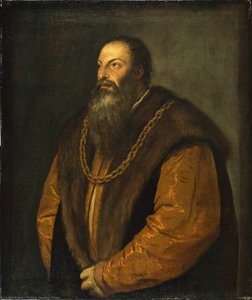
      Portrait of Ticiano
      Ticiano · 1490 – 1576
      Born · died
      1490 – 1576, Pieve di Cadore
      Movement
      Alto renascimento
      Works in our catalogue
      953
      Most famous
      Venus de Urbino (1538)
      Most works at
      Museu do Prado

      Top 10 Ticiano paintings: the canvases everyone knows

      Venus de Urbino (1538) by Ticiano
      1

      Venus de Urbino

      1538 · Óleo sobre tela · Galleria degli Uffizi, Florença

      Titian’s Venus of Urbino (1538) remains one of the most celebrated and influential paintings in Western art history. This iconic depiction of a reclining nude transcends mere portraiture, becoming a powerful statement on beauty, desire, and the female gaze within the context of the High Renaissance.

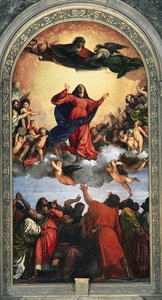
      Assunção da Virgem (1516) by Ticiano
      2

      Assunção da Virgem

      1516 · Óleo sobre painel · Basílica de Santa Maria Gloriosa dei Frari, Veneza

      Titian’s “Ascensão da Virgem” não é simplesmente um quadro; é uma explosão visceral de fé, cor e uma dinâmica composicional que desafia a própria noção de espaço. Originalmente concebida como o altar-mor da Basílica di Santa Maria Gloriosa dei Frari em Veneza – onde permanece até hoje –, esta obra monumental selou o destino de Titian como um dos maiores artistas da Itália durante o Renascimento, elevando-o a um patamar…

      Amor Sagrado e Profano (1514) by Ticiano
      3

      Amor Sagrado e Profano

      1514 · Óleo sobre tela · Galleria Borghese, Roma

      Na grandiosa tapeçaria da Renascença Veneziana, poucas obras capturam a delicada tensão entre o terreno e o divino de forma tão pungente quanto Ticiano em seu Amor Sagrado e Profano. Concluída por volta de 1514, esta deslumbrante óleo sobre tela é muito mais do que uma mera cena pastoral; é uma profunda meditação sobre a natureza dual da existência humana. Ao contemplar as duas mulheres sentadas junto ao antigo sarcófago…

      Bacchus e Ariadne (1523) by Ticiano
      4

      Bacchus e Ariadne

      1523 · Óleo sobre tela · National Gallery, Londres

      Painted in 1523 by Titian (Tiziano Vecellio), this monumental artwork captures a pivotal moment from classical mythology – the encounter between Bacchus, the god of wine and revelry, and Ariadne, abandoned on the island of Naxos. More than just an illustration of a myth, it’s a vibrant exploration of passion, divine intervention, and the intoxicating power of emotion.

      Abduction of Europa (1562) by Ticiano
      5

      Abduction of Europa

      1562 · Acrylic On Canvas · Isabella Stewart Gardner Museum, Boston

      Titian Ramsay Peale II's "Abduction of Europa," completed in 1562, is not merely a depiction of a classical myth; it’s a vibrant testament to the artist’s deep engagement with Renaissance aesthetics and his unique perspective as an American painter. This monumental canvas, measuring 185 x 205 cm, transports us to a sun-drenched coastal scene brimming with both earthly drama and celestial grace. Peale skillfully blends elements of Venetian colorism –…

      The Feast of the Gods (1529) by Ticiano
      6

      The Feast of the Gods

      1529 · Oil On Canvas · National Gallery of Art, Washington

      A Bacchanal of Divine Revelry: Titian’s “The Feast of the Gods” Subject Matter: "The Feast of the Gods," painted in 1529 by the Venetian master Titian, captures a pivotal moment of unrestrained joy and sensual abandon. It depicts a gathering of gods and mortals indulging in a lavish feast within a verdant forest setting – a scene directly inspired by classical mythology, specifically the Bacchanals, frenzied celebrations dedicated to Dionysus,…

      Portrait of Emperor Charles V at Muhlberg by Ticiano
      7

      Portrait of Emperor Charles V at Muhlberg

      Oil On Canvas · Museu do Prado, Madrid

      A Triumph of Color and Calm: Titian’s Portrait of Emperor Charles V at Muhlberg The Portrait of Emperor Charles V at Muhlberg, executed between April and September 1548 by the Venetian maestro Titian Vecellio, transcends mere portraiture; it embodies the spirit of Renaissance grandeur and offers a profound meditation on power, victory, and serene contemplation. Commissioned by Mary of Austria, Queen of Hungary, this monumental oil-on-canvas painting swiftly ascended to…

      Concerto Champetre by Ticiano
      8

      Concerto Champetre

      Óleo sobre tela

      Immerja-se na atmosfera serena e harmoniosa do “Concert Champetre” de Titian, uma obra-prima da pintura renascentista que captura a essência da vida campestre italiana. Esta cena bucólica, criada entre 1508 e 1509, exala uma beleza atemporal, combinando elementos da natureza com figuras humanas em um balé visual de tranquilidade e graça. A obra, atualmente no Museu do Louvre, é um testemunho da maestria de Titian na representação da luz, cor…

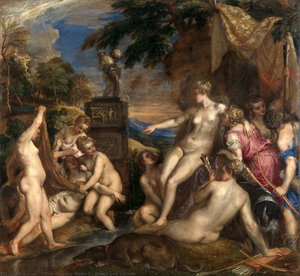
      Diana e Actaeon by Ticiano
      9

      Diana e Actaeon

      Óleo sobre tela

      Mergulhe no mundo dramático da mitologia do Renascimento italiano com esta representação cativante do encontro entre Diana e Actéon. Pintada por volta de 1556-1559 pelo mestre Tiziano Vecellio (Ticiano), esta obra é um testemunho de sua habilidade inigualável em capturar tanto a beleza física quanto uma profunda intensidade emocional.

      The flaying of marsyas, state museum kromeriz by Ticiano
      10

      The flaying of marsyas, state museum kromeriz

      In the profound and harrowing depths of Titian’s masterpiece, The Flaying of Marsyas, we are not merely observers of a scene, but witnesses to a divine punishment that transcends time. This work, housed in the State Museum Kromeriz, captures one of the most brutal episodes from classical mythology: the moment the satyr Marsyas meets his gruesome end at the hands of Apollo. The composition is a masterclass in tension, where…

      More Ticiano canvases, 11 to 100

      Pesaros Madonna (1526) by Ticiano
      #11

      Pesaros Madonna

      1526 · Basílica de Santa Maria Gloriosa dei Frari

      In the heart of Venice, within the hallowed walls of the Frari church, resides a masterpiece that does more than merely depict a religious event; it breathes with…

      Bring this light home →
      Vênus em Frente ao Espelho (1554) by Ticiano
      #12

      Vênus em Frente ao Espelho

      1554 · National Gallery of Art

      “Vênus em Frente ao Espelho”, de Titian Ramsay Peale II, concluída em 1554, transcende a mera representação visual; ela encarna o espírito do Alto Renascimento — um período…

      Bring this light home →
      Pietà (1576) by Ticiano
      #13

      Pietà

      1576 · Gallerie dell'Accademia di Venezia

      In the twilight of the Venetian Renaissance, Tiziano Vecellio, known eternally as Titian, reached a pinnacle of emotional expression that few artists in history have ever matched. His…

      Bring this light home →
      Flora (1515) by Ticiano
      #14

      Flora

      1515 · Galleria degli Uffizi

      A Renaissance Echo in American Canvas: Exploring Titian Ramsay Peale II’s Flora Titian Ramsay Peale II stands as a singular figure within the burgeoning artistic landscape of 19th-century…

      Bring this light home →
      O Bacanal dos Andréus (1524) by Ticiano
      #15

      O Bacanal dos Andréus

      1524 · Museu do Prado

      A obra “O Bacanal dos Andrianos”, de Titian Ramsay Peale II, concluída por volta de 1524, ergue-se como um testemunho da influência duradoura dos ideais do Alto Renascimento…

      Bring this light home →
      Mulher com um Espelho (1514) by Ticiano
      #17

      Mulher com um Espelho

      1514 · Museu do Louvre

      “Mulher com um Espelho”, de Titian, pintado em 1514, não é meramente um retrato; é um painel íntimo repleto de profundidade psicológica e execução magistral. Dentro dos sagrados…

      Bring this light home →
      Tarquin and Lucretia 1 by Ticiano
      #18

      Tarquin and Lucretia 1

      Fitzwilliam Museum

      The scene captures a visceral struggle within the shadowed confines of a bedroom. A man, driven by predatory intent, reaches over a woman reclining upon a bed. Her…

      Order this canvas →
      A Queda do Homem (1550) by Ticiano
      #21

      A Queda do Homem

      1550 · Museu do Prado

      A obra "A Queda do Homem" (1550), de Titian Ramsey Peale II, é uma interpretação poderosa e dramática de uma das narrativas mais fundamentais da arte e da…

      Have it painted by hand →
      The Tribute Money (1516) by Ticiano
      #22

      The Tribute Money

      1516 · Gemäldegalerie

      To stand before Titian’s The Tribute Money is to witness a pivotal moment where the earthly and the divine collide through the masterful application of color. Painted in…

      Order this canvas →
      The Beauty (1536) by Ticiano
      #23

      The Beauty

      1536 · Palazzo Pitti

      “The Beauty,” painted in 1536 by the remarkably prescient Titian Ramsay Peale II, is more than a portrait; it’s a carefully constructed echo of Venetian High Renaissance ideals…

      Bring this light home →
      Diana e Calisto (1559) by Ticiano
      #24

      Diana e Calisto

      1559 · Kunsthistorisches Museum

      Em última análise, “Diana e Calisto”, de Titian Ramsay Peale II, ergue-se como uma conquista extraordinária — um testemunho de sua devoção inabalável à arte clássica e de…

      Order this canvas →
      Homem com uma Luva (1520) by Ticiano
      #25

      Homem com uma Luva

      1520 · Museu do Louvre

      “Homem com uma Luva” de Titian Ramsay Peale II, pintado em 1520, não é meramente um retrato; é um enigma cativante envolto nas ricas textidades e na iluminação…

      Have it painted by hand →
      Assunção da Virgem (1516) by Ticiano
      #26

      Assunção da Virgem

      1516 · Basílica de Santa Maria Gloriosa dei Frari

      A “Assunção da Virgem”, concluída em 1516 por Ticiano para a Basílica de Santa Maria Gloriosa dei Frari em Veneza, permanece uma realização monumental do Alto Renascimento. Este…

      Order this canvas →
      Diana e Actéon (1559) by Ticiano
      #28

      Diana e Actéon

      1559 · National Gallery

      Na tela deslumbrante de Diana e Actéon, somos lançados em um momento crucial de tensão mitológica, onde o sagrado encontra o mortal com uma intensidade surpreendente. A pintura…

      Have it painted by hand →
      A Ceia em Emaús (1560) by Ticiano
      #29

      A Ceia em Emaús

      1560 · Museu do Louvre

      “A Ceia em Emaús” de Titian, uma pintura imersa no drama profundo dos Evangelhos, não é meramente uma representação de uma cena bíblica; é um convite a um…

      Order this canvas →
      Assumption of the Virgin (1518) by Ticiano
      #30

      Assumption of the Virgin

      1518 · Basílica de Santa Maria Gloriosa dei Frari

      Titian Ramsay Peale II's "Assumption of the Virgin," completed in 1818, is more than simply a depiction of a pivotal religious event; it’s a profound meditation on faith,…

      Have it painted by hand →
      Martyrdom of St Lawrence (1548) by Ticiano
      #31

      Martyrdom of St Lawrence

      1548 · Monastério de São Lourenço

      Tiziano Vecellio’s “Martyrdom of St. Lawrence,” painted in 1548, isn't merely a depiction of religious suffering; it’s a visceral experience. Commissioned by the powerful Emperor Charles V, this…

      Order this canvas →
      Sisyphus (1548) by Ticiano
      #32

      Sisyphus

      1548 · Museu do Prado

      In the grand tapestry of the Italian Renaissance, few images resonate with as much raw, visceral power as Tiziano Vecellio’s Sisyphus. Created around 1548, this oil on canvas…

      Have it painted by hand →
      Salome (1515) by Ticiano
      #33

      Salome

      1515

      Tiziano Vecellio’s “Salome,” painted in 1515, is more than just a portrait; it's an immersion into the heart of Renaissance Venice – a city pulsating with artistic innovation…

      Bring this light home →
      Cristo Carregando a Cruz (1565) by Ticiano
      #34

      Cristo Carregando a Cruz

      1565 · Museu do Prado

      A obra "Cristo Carregando a Cruz" de Tiziano Vecellio, pintada em 1565, não é meramente uma representação de uma cena bíblica; é uma experiência imersiva. Este monumental óleo…

      Bring this light home →
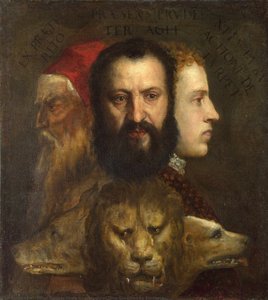
      Uma Alegoria da Prudência (1550) by Ticiano
      #35

      Uma Alegoria da Prudência

      1550 · National Gallery

      “An Allegory of Prudence,” pintada por Titian Ramsay Peale II em 1550, representa um testemunho notável da influência duradoura dos ideais renascentistas no cenário artístico emergente da América.…

      Have it painted by hand →
      Cabeça de um Homem (1509) by Ticiano
      #37

      Cabeça de um Homem

      1509 · Kelvingrove Art Gallery and Museum

      Os retratos de Titian são celebrados por suas representações idealizadas da alta aristocracia italiana, e a Cabeça de um Homem não é exceção, exibindo a maestria do artista…

      Order this canvas →
      Diana e Actaeon (1556) by Ticiano
      #38

      Diana e Actaeon

      1556 · National Gallery

      A obra Diana e Actaeon, de Titian Ramsey Peale II, ergue-se como um pilar fundamental da arte do Alto Renascimento — uma representação dramática da mitologia grega que…

      Bring this light home →
      Portrait of Benedetto Varchi (1540) by Ticiano
      #39

      Portrait of Benedetto Varchi

      1540 · Kunsthistorisches Museum

      Tiziano Vecellio's 1540 portrait of Benedetto Varchi is more than simply a likeness; it’s a carefully constructed window into the heart of the Italian Renaissance. This painting, currently…

      Bring this light home →
      St Mary Magdalene (1567) by Ticiano
      #41

      St Mary Magdalene

      1567 · Museo di Capodimonte

      Titian’s “St Mary Magdalene,” painted around 1567, is not merely a devotional image; it's a profound exploration of faith, repentance, and the enduring power of divine grace. This…

      Order this canvas →
      Woman in a Fur Coat (detail) (1536) by Ticiano
      #42

      Woman in a Fur Coat (detail)

      1536 · Kunsthistorisches Museum

      In the heart of the Venetian Renaissance, where the light of the Adriatic meets the opulence of merchant wealth, Tiziano Vecellio—known eternally as Titian—crafted a masterpiece that transcends…

      Order this canvas →
      O Tributo (1516) by Ticiano
      #43

      O Tributo

      1516 · Staatliche Kunstsammlungen

      Uma Sinfonia de Cor e Fé: Explorando “O Tributo” de Ticiano “O Tributo”, pintado por Tiziano Vecellio em 1516, transcende a mera representação; ele encarna o espírito da…

      Bring this light home →
      The Red Sultana (1550) by Ticiano
      #44

      The Red Sultana

      1550

      To gaze upon Titian’s “The Red Sultana” is to be transported directly into the heart of the High Renaissance, an era where the air in Venice seemed thick…

      Have it painted by hand →
      Spain Succouring Religion (1575) by Ticiano
      #45

      Spain Succouring Religion

      1575 · Museu do Prado

      In the twilight of his illustrious career, the Venetian master Tiziano Vecellio, known eternally as Titian, delivered one of his most profound allegorical statements: Spain Succouring Religion. Created…

      Have it painted by hand →
      Tityus (1548) by Ticiano
      #46

      Tityus

      1548 · Museu do Prado

      Tiziano Vecellio's "Tityus," painted in 1548, isn’t merely a depiction of a Greek myth; it’s a profound meditation on suffering, divine justice, and the inescapable consequences of arrogance.…

      Order this canvas →
      St Nicholas (1563) by Ticiano
      #47

      St Nicholas

      1563 · San Sebastiano

      In the hallowed atmosphere of the Cologne Cathedral, there exists a window into the late Renaissance—a moment where the spiritual and the earthly converge through the brush of…

      Have it painted by hand →
      Baco e Ariadne (detalhe) (1520) by Ticiano
      #48

      Baco e Ariadne (detalhe)

      1520 · National Gallery

      A obra "Baco e Ariadne", pintada por Ticiano em 1520, não é meramente uma representação de um mito clássico; é uma experiência imersiva — um testemunho vibrante da…

      Have it painted by hand →
      Crucifixion (1558) by Ticiano
      #49

      Crucifixion

      1558 · Museo Civico

      Tiziano Vecellio's "Crucifixion," completed in 1558 and currently residing within the sanctuary of San Domenico in Ancona, Italy, is not merely a depiction of a biblical event; it’s…

      Order this canvas →
      Sacred and Profane Love (detail) (1514) by Ticiano
      #50

      Sacred and Profane Love (detail)

      1514 · Galleria Borghese

      In the heart of the Venetian Renaissance, a period defined by an explosion of artistic brilliance, Tiziano Vecellio—known universally as Titian—crafted a masterpiece that transcends the boundaries of…

      Have it painted by hand →
      Retrato de Ariosto (1508) by Ticiano
      #51

      Retrato de Ariosto

      1508 · National Gallery

      Nos corredores silenciosos da National Gallery, em Londres, existe uma janela para a alma do Alto Renascimento: o Retrato de Ariosto, de Ticiano. Pintada por volta de 1508,…

      Order this canvas →
      Noli me Tangere (1514) by Ticiano
      #52

      Noli me Tangere

      1514 · National Gallery

      A obra “Noli Me Tangere” de Titian Ramsay Peale II, pintada em 1514, é muito mais do que uma simples representação religiosa; é uma meditação profunda sobre a…

      Have it painted by hand →
      Adão e Eva (1550) by Ticiano
      #54

      Adão e Eva

      1550 · Museu do Prado

      Nos corredores sagrados do Museo del Prado, existe uma tela que faz muito mais do que meramente retratar uma cena bíblica; ela respira com o próprio pulso da…

      Order this canvas →
      A Madona da Família Pesaro (1526) by Ticiano
      #55

      A Madona da Família Pesaro

      1526 · Basílica de Santa Maria Gloriosa dei Frari

      Uma escadaria diagonal projeta-se para o espaço do espectador, esculpida em pedra fria e pesada. No topo, encontra-se a Virgem Maria, sua forma ancorada pelo peso do Menino…

      Have it painted by hand →
      Retrato de Jacopo Strada (1568) by Ticiano
      #58

      Retrato de Jacopo Strada

      1568 · Kunsthistorisches Museum

      Portrait of Jacopo Strada A tela de 95 x 125 cm, assinada por Titian Ramsay Peale II, apresenta um retrato magistral que captura a essência da estética renascentista…

      Order this canvas →
      A Trindade na Glória (1552) by Ticiano
      #60

      A Trindade na Glória

      1552 · Museu do Prado

      Na grande tapeçaria do Renascimento Veneziano, poucas obras comandam a alma com um esplendor tão avassalador quanto "A Trindade na Glória" de Ticiano. Concluída em 1552, esta obra-prima…

      Bring this light home →
      Girl with a Fan (1556) by Ticiano
      #61

      Girl with a Fan

      1556 · Gemäldegalerie

      In the hallowed halls of the Gemäldegalerie Dresden, there exists a window into the soul of the High Renaissance, a luminous canvas that captures the very essence of…

      Order this canvas →
      Nicolò Zen (1515-1565) (1562) by Ticiano
      #66

      Nicolò Zen (1515-1565)

      1562 · Kingston Lacy

      In this three-quarter-length portrait, we encounter Nicolò Zen, a man whose very posture suggests the weight of his station. He is positioned slightly off-center, his gaze directed toward…

      Bring this light home →
      Autorretrato (detalhe) (1566) by Ticiano
      #67

      Autorretrato (detalhe)

      1566 · Museu do Prado

      Tiziano Vecellio, universalmente conhecido como Ticiano, possuía uma habilidade inigualável de capturar a essência de seus temas – um dom que ressoou ao longo de sua carreira extraordinariamente…

      Have it painted by hand →
      Retrato do Papa Júlio II (1546) by Ticiano
      #68

      Retrato do Papa Júlio II

      1546 · Palazzo Pitti

      O Retrato do Papa Júlio II ergue-se como um testemunho profundo do poder duradouro da retratística renascentista, capturando não apenas um homem, mas a própria essência da autoridade…

      Bring this light home →
      Flora (detalhe) (1515) by Ticiano
      #70

      Flora (detalhe)

      1515 · Galleria degli Uffizi

      A obra Flora (detalhe) de Ticiano, pintada em 1515 e atualmente pertencente às salas sagradas da Galleria degli Uffizi, é muito mais do que um simples retrato; é…

      Bring this light home →
      Ecce Homo (1547) by Ticiano
      #71

      Ecce Homo

      1547 · Musée Condé

      A single man occupies the center of this somber space, his body bathed in a directional light that emerges from the upper left. He is a muscular, bearded…

      Bring this light home →
      A Morte de Actaeon (1559) by Ticiano
      #77

      A Morte de Actaeon

      1559 · National Gallery

      A Renaissance Echo in the New World Titian Ramsay Peale II occupies a fascinating, often overlooked niche within the landscape of 19th-century American art. Born in Philadelphia in…

      Order this canvas →
      Madona Aldobrandini (1530) by Ticiano
      #78

      Madona Aldobrandini

      1530 · National Gallery

      Criada em 1530 pelo mestre Titian (Tiziano Vecellio), esta pintura icônica incorpora a graça e a profundidade emocional características do Alto Renascimento. Mais do que uma representação religiosa,…

      Have it painted by hand →
      Adoration of the Magi (1560) by Ticiano
      #79

      Adoration of the Magi

      1560 · Museu de Arte de Cleveland

      The scene unfolds in a divided world. On the left, a shadowed stable holds the Holy Family in an intimate, quiet darkness. The Virgin Mary sits draped in…

      Order this canvas →
      The Healing of the Wrathful Son (1511) by Ticiano
      #80

      The Healing of the Wrathful Son

      1511 · Scuola del Santo

      Titian's "The Healing of the Wrathful Son," painted in 1511, isn’t merely a depiction of a miraculous event; it’s a profound meditation on compassion, faith, and the transformative…

      The Music Lesson (1535) by Ticiano
      #81

      The Music Lesson

      1535 · National Gallery

      Five figures are gathered around a musical performance, their attention anchored by the shared focus of the melody. The composition is tightly cropped, pulling the viewer into an…

      Have it painted by hand →
      Danaë with a Nurse (1553) by Ticiano
      #82

      Danaë with a Nurse

      1553 · Museu do Prado

      In the hallowed corridors of the Museo del Prado, there exists a canvas that does more than merely depict a myth; it breathes with the warmth of life…

      Order this canvas →
      The Burial of Christ (1572) by Ticiano
      #84

      The Burial of Christ

      1572 · Museu do Prado

      A diagonal composition directs the eye from the pale, slumped figure of Christ in the lower left toward the expressive mourners on the right. The scene captures the…

      Have it painted by hand →
      Portrait of a Woman (1560) by Ticiano
      #85

      Portrait of a Woman

      1560 · Museu do Prado

      Step closer to observe the quiet dignity of this sitter. She sits before us in a three-quarter length pose, her gaze steady and direct, meeting yours with an…

      Order this canvas →
      King Philip II of Spain (1550) by Ticiano
      #88

      King Philip II of Spain

      1550 · Cincinnati Art Museum

      In this 1551 oil on canvas, Titian captures King Philip II of Spain seated in a moment of heavy stillness. The monarch, the son of Emperor Charles V,…

      Order this canvas →
      Venus Anadyomene (1520) by Ticiano
      #89

      Venus Anadyomene

      1520 · National Gallery of Scotland

      Titian’s “Venus Anadyomene,” painted around 1520, isn't merely a depiction of the goddess; it’s an embodiment of Renaissance ideals—a vibrant celebration of beauty, mythology, and the mastery of…

      Have it painted by hand →
      The Temptation of Christ (1520) by Ticiano
      #90

      The Temptation of Christ

      1520 · Minneapolis Institute of Art

      The air in the painting feels heavy, thick with the silence of the wilderness. A central figure, Christ, sits caught in a moment of profound internal weight. His…

      Have it painted by hand →
      Assunção da Virgem (detalhe) (1516) by Ticiano
      #91

      Assunção da Virgem (detalhe)

      1516 · Basílica de Santa Maria Gloriosa dei Frari

      Uma Ascensão Celestial: Examinando a Assunção da Virgem de Ticiano O Renascimento Veneziano floresceu sob o patrocínio de famílias abastadas, como os Doges, fomentando um ambiente onde a…

      Order this canvas →
      Vênus com um Espelho (1555) by Ticiano
      #94

      Vênus com um Espelho

      1555 · National Gallery of Art

      Um Vislum da Grandeza Veneziana: Explorando Vênus com um Espelho de Titian Titian Vecellio, universalmente reconhecido como o Titã Veneziano, não foi meramente um artista; ele foi uma…

      Bring this light home →
      Retrato do Doge Andrea Gritti (1544) by Ticiano
      #95

      Retrato do Doge Andrea Gritti

      1544 · National Gallery of Art

      Na grandiosa tapeçaria do Renascimento italiano, poucas imagens impõem tanta reverência imediata quanto o Retrato do Doge Andrea Gritti, de Ticiano. Esta obra monumental é muito mais do…

      Have it painted by hand →
      Saint John the Baptist (1550) by Ticiano
      #97

      Saint John the Baptist

      1550 · Museu do Prado

      A single male figure occupies the center of this vertical oil painting. He is positioned slightly off-center against a backdrop of rugged, rocky terrain. The man possesses an…

      Order this canvas →
      Salome (1550) by Ticiano
      #98

      Salome

      1550 · Norton Simon Museum

      The composition centers on the visceral proximity of two female figures, their forms emerging from a dark, atmospheric void. One figure, draped in crimson, holds the pale, severed…

      Bring this light home →
      Retrato do Doge Andrea Gritti (1545) by Ticiano
      #100

      Retrato do Doge Andrea Gritti

      1545 · National Gallery of Art

      No coração do Renascimento italiano, onde as águas cintilantes do Adriático encontravam o ápice da influência política, Ticiano capturou mais do que apenas uma semelhança; ele imortalizou uma…

      Have it painted by hand →

      Ticiano's canvases, period by period

      What Ticiano painted most

      The four subjects that return most often on these canvases, each with its best-loved example.

      Where Ticiano's canvases hang

      The 8 museums that hold the most of the paintings on this page.

      Museum City Works by Ticiano Paintings from this list
      Museu do Prado, MadridMuseu do Prado Madrid 68 Portrait of Emperor Charles V at Muhlberg, O Bacanal dos Andréus, A Queda do Homem
      National Gallery, LondresNational Gallery Londres 44 Bacchus e Ariadne, A Alegoria do Tempo Governada pela Prudência, Diana e Actéon
      Basílica de Santa Maria Gloriosa dei Frari, VenezaBasílica de Santa Maria Gloriosa dei Frari Veneza 16 Assunção da Virgem, Pesaros Madonna, Assunção da Virgem
      National Gallery of Art, WashingtonNational Gallery of Art Washington 22 The Feast of the Gods, Vênus em Frente ao Espelho, Vênus com um Espelho
      Kunsthistorisches Museum, VienaKunsthistorisches Museum Viena 41 Diana e Calisto, Portrait of Benedetto Varchi, Woman in a Fur Coat (detail)
      Museo di Capodimonte, NápolesMuseo di Capodimonte Nápoles 22 Portrait of Pope Paul III with His Grandsons, St Mary Magdalene, Papa Paulo III com seus netos Alessandro e Ottavio Farnese (detalhe)
      Museu do Louvre, ParisMuseu do Louvre Paris 19 Mulher com um Espelho, Homem com uma Luva, A Ceia em Emaús
      Galleria degli Uffizi, FlorençaGalleria degli Uffizi Florença 22 Venus de Urbino, Flora, Flora (detalhe)

      Ticiano's best-loved canvas of each decade

      1. 1500s
        Cabeça de um Homem (1509) by Ticiano
        37 of 100

        Cabeça de um Homem

        Age 10 – 19 · Kelvingrove Art Gallery and Museum

        Os retratos de Titian são celebrados por suas representações idealizadas da alta aristocracia italiana, e a Cabeça de um Homem não é exceção, exibindo a maestria do artista…

      2. 1510s
        Assunção da Virgem (1516) by Ticiano
        Canvas 2 of 100

        Assunção da Virgem

        Age 20 – 29 · Basílica de Santa Maria Gloriosa dei Frari

        Titian’s “Ascensão da Virgem” não é simplesmente um quadro; é uma explosão visceral de fé, cor e uma dinâmica composicional que desafia a própria noção de espaço. Originalmente…

      3. 1520s
        Bacchus e Ariadne (1523) by Ticiano
        Canvas 4 of 100

        Bacchus e Ariadne

        Age 30 – 39 · National Gallery

        Painted in 1523 by Titian (Tiziano Vecellio), this monumental artwork captures a pivotal moment from classical mythology – the encounter between Bacchus, the god of wine and revelry,…

      4. 1530s
        Venus de Urbino (1538) by Ticiano
        Ranked 1 of 100

        Venus de Urbino

        Age 40 – 49 · Galleria degli Uffizi

        Titian’s Venus of Urbino (1538) remains one of the most celebrated and influential paintings in Western art history. This iconic depiction of a reclining nude transcends mere portraiture,…

      5. 1540s
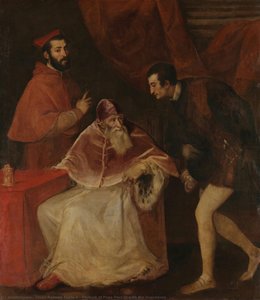
        Portrait of Pope Paul III with His Grandsons (1545) by Ticiano
        Canvas 19 of 100

        Portrait of Pope Paul III with His Grandsons

        Age 50 – 59 · Museo di Capodimonte

        Titian Ramsay Peale II's “Portrait of Pope Paul III with His Grandsons,” though conceived in the mid-16th century by the master Venetian painter Titian, offers a captivating glimpse…

      6. 1550s
        Vênus em Frente ao Espelho (1554) by Ticiano
        Ranked 12 of 100

        Vênus em Frente ao Espelho

        Age 60 – 69 · National Gallery of Art

        “Vênus em Frente ao Espelho”, de Titian Ramsay Peale II, concluída em 1554, transcende a mera representação visual; ela encarna o espírito do Alto Renascimento — um período…

      7. 1560s
        Abduction of Europa (1562) by Ticiano
        5 of 100

        Abduction of Europa

        Age 70 – 79 · Isabella Stewart Gardner Museum

        Titian Ramsay Peale II's "Abduction of Europa," completed in 1562, is not merely a depiction of a classical myth; it’s a vibrant testament to the artist’s deep engagement…

      8. 1570s
        Pietà (1576) by Ticiano
        Ranked 13 of 100

        Pietà

        Age 80 – 86 · Gallerie dell'Accademia di Venezia

        In the twilight of the Venetian Renaissance, Tiziano Vecellio, known eternally as Titian, reached a pinnacle of emotional expression that few artists in history have ever matched. His…

      About Ticiano's canvases: your questions answered

      What is the best-known painting by Ticiano?Read the answer

      Venus de Urbino (1538), Galleria degli Uffizi, Florença. Assunção da Virgem (1516) and Amor Sagrado e Profano (1514) follow.

      What age was Ticiano when Venus de Urbino was painted?Read the answer

      Ticiano, born in 1490, was 48 years old: Venus de Urbino dates from 1538.

      What are the 10 most famous paintings by Ticiano?Read the answer

      Venus de Urbino, Assunção da Virgem, Amor Sagrado e Profano, Bacchus e Ariadne, Abduction of Europa, The Feast of the Gods, Portrait of Emperor Charles V at Muhlberg, Concerto Champetre, Diana e Actaeon and The flaying of marsyas, state museum kromeriz. Each canvas in the ranking above comes with its year and its museum.

      How many works did Ticiano paint in all?Read the answer

      953 works by Ticiano are in our catalogue, dated 1508 to 1576.

      Where can I see Ticiano's most famous canvases?Read the answer

      Mostly in Museu do Prado (Madrid), National Gallery (Londres) and Basílica de Santa Maria Gloriosa dei Frari (Veneza); the list above names each museum and its canvases.

      When did Ticiano paint the best-loved canvases?Read the answer

      In 1510s, which gave 19 of the 100 works on this page, Assunção da Virgem among them.

      Which are Ticiano's earliest and latest famous canvases?Read the answer

      The earliest canvas here is Retrato de Ariosto (1508); the latest is Pietà (1576).

      What did Ticiano paint most often?Read the answer

      Renaissance (25), Mythology (12) and Titian (10), across the 100 works on this page.

      Which medium did Ticiano paint in most often?Read the answer

      Oil On Canvas, used in 45 of the 100 works on this page.

      Which movement is Ticiano's painting part of?Read the answer

      Alto renascimento, as the canvases on this page show.

      Which Ticiano canvases hang at the Museu do Prado?Read the answer

      The Museu do Prado, Madrid holds 19 of the works on this page, among them Portrait of Emperor Charles V at Muhlberg, O Bacanal dos Andréus and A Queda do Homem.

      Can I buy a reproduction of a Ticiano canvas?Read the answer

      Yes. Every painting on this page can be ordered from its own page as an oil reproduction painted by hand, or as a fine art print, in the size you choose.

      Ticiano: a life in paint

      O Pintor da Luz e da Sombra

      Nos alcances escarpados e montanhosos de Pieve di Cadore, um menino chamado Tiziano Vecellio iniciou uma vida que, eventualmente, remodelaria a própria linguagem do óleo sobre tela. Nascido por volta de 1490, ele era filho de Gregorio Vecellio, um homem do meio militar, e de uma mulher chamada Lucia. A família vivia em uma região onde os picos dramáticos dos Alpes Venezianos projetavam sombras longas e mutáveis sobre a terra, uma paisagem que, talvez, sussurrasse os segredos da luz a uma mente jovem. Reconhecendo a centelha de talento em seus filhos, a família voltou-se para a grande cidade de Veneza, organizando para que o jovem Tiziano e seu irmão Francesco entrassem nos ateliês dos mestres. Essa mudança das montanhas silenciosas para os canais movimentados e com aroma de sal de Veneza mudou tudo.

      Seus primeiros anos foram dedicados a absorver a atmosfera de uma cidade que pulsava com comércio e cor. Ele aprendeu seu ofício inicialmente com Sebastiano Zuccato, um mosaicista, antes de ingressar nos círculos de Gentile Bellini e de seu próprio irmão, Giovanni. No entanto, foi o tempo passado ao lado de Giorgione que verdadeiramente definiu seu caminho. Juntos, eles trabalharam nos afrescos externos para o Fondaco dei Tedeschi, um movimentado entreposto comercial para mercadores alemães. Naqueles dias iniciais, seu pincel buscava um certo lirismo, uma forma de capturar o próprio ar através de tons sutis e um toque suave e poético.

      A Evolução de um Estilo Veneziano

      Com o passar dos anos, as qualidades suaves e etéreas de sua juventude deram lugar a algo muito mais musculoso e dramático. Ele afastou-se da quietude de seu treinamento inicial para abraçar uma abordagem mais ousada da cor. Sua pincelada tornou-se uma ferramenta de imenso poder, transitando de superfícies lisas e mescladas para marcas soltas e expressivas que pareciam pulsar com vida. Ele aprendeu a sobrepor finas camadas de pigmento sobre as pinturas de base, uma técnica que lhe permitiu alcançar uma luminosidade que poucos poderiam replicar. Não se tratava apenas de retratar um assunto, mas de capturar o peso do veludo, o brilho da pele e a própria atmosfera que envolve uma figura.

      Seus temas eram tão variados quanto as pessoas que caminhavam pelas ruas de Veneza. Ele tornou-se um mestre do retrato, capturando a profundidade psicológica de seus modelos, desde a semelhança física de um homem até o caráter oculto em seu interior. Suas cenas mitológicas e composições religiosas eram imbuídas de uma sensualidade e de uma tensão que atraíam os espectadores. Em obras como Vênus de Urbino, ele redefiniu a forma como a figura humana era apresentada, usando a cor para criar uma sensação de presença que parecia quase tátil. Ele era um homem que compreendia que a luz não apenas incide sobre um objeto; ela interage com ele, criando um drama de sombra e brilho.

      Uma Vida de Grandeza e Influência

      A fama de Tiziano Vecellio acabou alcançando as mais altas cortes da Europa. Ele tornou-se o favorito de homens poderosos, servindo como pintor do Imperador Carlos V, do Rei Filipe II da Espanha e do Papa Paulo III. Esse patrocínio de alto nível permitiu-lhe trabalhar em escala monumental, criando telas massivas que preenchiam os salões de palácios e os altares de grandes igrejas. Ele possuía uma rara finesse diplomática, adaptando seu estilo para atender aos gostos de diferentes cortes reais, sem nunca perder a voz distintiva que o tornou um titã de sua era.

      Quando faleceu em Veneza, em 1576, deixou um legado que ecoaria através dos séculos. Sua influência foi sentida por aqueles que o sucederam, desde a pincelada densa de Rubens até a luz dramática de Rembrandt e os traços audaciosos de Delacroix. Ele atuou como uma ponte entre o Alto Renascimento e a era Barroca que se aproximava, provando que a cor poderia ser tão expressiva quanto a linha. Suas pinturas permanecem nas grandes coleções do mundo, do Prado em Madri à National Gallery em Londres, servindo como um registro permanente de um homem que dominou a arte de ver.

      All 953 works by Ticiano →