Ateliê — Envio gratuito para todo o mundo — Entrega em 2–6 semanas
      Zanobi Strozzi, 1412 – 1468

      As 25 pinturas mais famosas de Zanobi Strozzi, classificadas

      A pintura mais amada de Zanobi Strozzi é Madonna and Child with Angels (1434), que está exposta no Convento de San Marco, Florença. Camaldolese Friars in Choir (1450) e The Annunciation (1442) vêm a seguir entre as telas que os leitores mais conhecem. O nosso catálogo contém 26 obras de Zanobi Strozzi: aqui estão as 25 mais famosas, cada uma com o seu ano, o seu museu e o que a torna memorável.

      Classificado de acordo com o nosso índice de popularidade, que combina buscas, visitas e pedidos de cada obra. Atualizado em Novembro 2026. Cada pintura nesta página pode ser encomendada como uma reprodução a óleo pintada à mão sobre tela de linho, ou como uma impressão fine art, feita no tamanho que escolher.

      Retrato de Zanobi Strozzi
      Zanobi Strozzi · 1412 – 1468
      Nascimento · falecimento
      1412 – 1468, Florença
      Movimento
      Early renaissance
      Obras em nosso catálogo
      26
      As mais famosas
      Madonna and Child with Angels (1434)
      Mais obras em
      National Gallery

      As 10 principais pinturas de Zanobi Strozzi: as telas que todos conhecem

      Madonna and Child with Angels (1434) de Zanobi Strozzi
      1

      Madonna and Child with Angels

      1434 · Oil On Canvas · Convento de San Marco, Florença

      A Vision of Divine Grace: Zanobi Strozzi's Madonna and Child with Angels To gaze upon this masterpiece by Zanobi Strozzi is to step directly into the luminous heart of the Early Renaissance. The scene unfolds with an almost palpable sense of sacred tranquility, centering on the Virgin Mary cradling the divine presence of the Christ Child. It is more than a mere portrait; it is a profound meditation on motherhood,…

      Reprodução em óleo pintada à mão de $195 30 × 34 cm Mesmo tamanho da original $730 127 × 138 cm Encomendar no tamanho original →
      Camaldolese Friars in Choir (1450) de Zanobi Strozzi
      2

      Camaldolese Friars in Choir

      1450 · Tempera On Panel

      In this 1450 composition, we find ourselves drawn into a quiet, sacred space where time seems to have slowed. A group of Camaldolese friars is gathered in a choir, their figures arranged with a sense of rhythmic unity. Some monks stand at the forefront, while others recede into the background, creating a subtle depth within the square format. They are dressed in heavy robes that signal their religious devotion, their…

      Reprodução em óleo pintada à mão de $195 32 × 32 cm
      The Annunciation (1442) de Zanobi Strozzi
      3

      The Annunciation

      1442 · Tempera On Panel · National Gallery, Londres

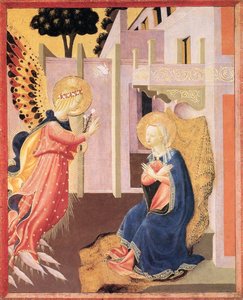
      The Annunciation by Zanobi Strozzi captures a suspended moment of divine interruption. Created about 1440-5, the painting depicts the Archangel Gabriel arriving to deliver a celestial message to the Virgin Mary. A single dove, representing the Holy Ghost, descends with a gilded halo above the angel's head. The scene is framed by the quiet weight of classical columns, separating the celestial messenger from the woman receiving the news.

      Reprodução em óleo pintada à mão de $220 37 × 27 cm Mesmo tamanho da original $668 142 × 105 cm Encomendar no tamanho original →
      Virgin and Child with Four Angels and the Redeemer (1450) de Zanobi Strozzi
      4

      Virgin and Child with Four Angels and the Redeemer

      1450 · Tempera On Panel · Brooklyn Museum, Brooklyn

      The air within the sacred space feels heavy with the scent of old wood and the silent weight of devotion. At the center of this celestial assembly, the Virgin Mary sits with a quiet, solemn grace, her presence anchoring the entire composition. She holds the Christ Child, whose small form is framed by the deep, ultramarine blue of her mantle and the rich crimson of her tunic. Around them, four…

      Reprodução em óleo pintada à mão de $345 25 × 40 cm Mesmo tamanho da original $445 51 × 79 cm Encomendar no tamanho original →
      Scenes from the Story of Susanna: Susanna and the Elders (1450) de Zanobi Strozzi
      5

      Scenes from the Story of Susanna: Susanna and the Elders

      1450 · Tempera On Panel · Musée du Petit Palais, Avignon

      The panel stretches wide, a long horizontal sequence of moments captured in tempera. It unfolds like a silent play, divided into three distinct stages of a biblical drama. On the far left, the heavy lines of an interior architectural setting frame the beginning of the tension. The center shifts to an outdoor garden, where a circular structure anchors the composition. Finally, the eye moves to the right, toward a landscape…

      Reprodução em óleo pintada à mão de $770 55 × 18 cm Mesmo tamanho da original $976 170 × 43 cm Encomendar no tamanho original →
      Saints Zenobius, Francis and Anthony of Padua (1450) de Zanobi Strozzi
      6

      Saints Zenobius, Francis and Anthony of Padua

      1450 · Tempera On Panel · Yale University Art Gallery, New Haven

      This Renaissance-era religious panel painting presents three saints arranged side-by-side in a vertical, frontal composition. The figures occupy a shallow space against a background of patterned gold leaf, which creates a flat, celestial setting. On the left, a figure is dressed in episcopal regalia, including a mitre, and holds a book. The central figure is depicted in a brown monastic habit with hands clasped in prayer. To the right, the…

      Reprodução em óleo pintada à mão de $245 25 × 40 cm Mesmo tamanho da original $330 47 × 77 cm Encomendar no tamanho original →
      Altarpiece of Saint Jerome (1460) de Zanobi Strozzi
      7

      Altarpiece of Saint Jerome

      1460 · Tempera On Panel · Musée du Petit Palais, Avignon

      The Altarpiece of Saint Jerome is a significant work by the Florentine painter Zanobi Strozzi. Created about 1460, this large-scale panel was originally commissioned for the convent of San Girolamo in Fiesole. The commission for this religious work was awarded by the Medici, reflecting the close ties between the artist and the influential family during the Quattrocento.

      Reprodução em óleo pintada à mão de $520 34 × 29 cm Mesmo tamanho da original $1576 217 × 156 cm Encomendar no tamanho original →
      The Last Judgement (1456) de Zanobi Strozzi
      8

      The Last Judgement

      1456 · Tempera On Panel · Gemäldegalerie, Berlim

      The Last Judgement, also known as Das Jüngste Gericht, is a work by Zanobi Strozzi. Created in 1456, the painting emerged from the hands of Zanobi di Benedetto di Caroccio degli Strozzi. This Florentine artist, born in Florence, Italy, brought a specific precision to the panel. The wood of the support is poplar.

      Reprodução em óleo pintada à mão de $1520 37 × 27 cm
      The Annunciation (1453) de Zanobi Strozzi
      9

      The Annunciation

      1453 · Tempera On Panel · Philadelphia Museum of Art, Filadélfia

      The artwork depicts the Annunciation scene, a sacred moment of divine communication. The composition centers on two figures: an angel presenting lilies to Mary, who is seated in a state of prayer and sudden awareness. The angel's pink gown features the gold-lettered greeting "Ave Maria" within its folds. Mary is characterized by the deep blue of her mantle and a posture of stillness. A single dove, representing the Holy Spirit,…

      Reprodução em óleo pintada à mão de $220 28 × 35 cm Mesmo tamanho da original $224 30 × 37 cm Encomendar no tamanho original →

      Mais telas de Zanobi Strozzi, de 11 a 25

      St Agnes (1448) de Zanobi Strozzi
      #17

      St Agnes

      1448 · Convento de San Marco

      The tempera panel painting, “St Agnes,” attributed to Zanobi Strozzi and completed in 1448, is more than simply a depiction of a saint; it's a meticulously crafted window…

      Leve esta luz para casa a partir de $195 →
      The Nativity (1433) de Zanobi Strozzi
      #22

      The Nativity

      1433 · Metropolitan Museum of Art

      The Nativity is a painting by Zanobi Strozzi. This work, also identified by the alternative title Adoration of the Child, captures a quiet moment of devotion. The artist…

      Encomende esta tela a partir de $195 →

      As telas de Zanobi Strozzi, período por período

      O que Zanobi Strozzi mais pintou

      Os quatro temas que mais aparecem nestas telas, cada um com o seu exemplo mais amado.

      Onde as telas de Zanobi Strozzi estão expostas

      Os 8 museus que detêm a maioria das pinturas desta página.

      Museus Cidade Obras de Zanobi Strozzi Pinturas desta lista
      National Gallery, LondresNational Gallery Londres 3 The Annunciation, The Adoration of the Magi, The Abduction of Helen
      Metropolitan Museum of Art, Nova YorkMetropolitan Museum of Art Nova York 3 The Nativity, Initial B with David in Prayer, The Nativity
      Convento de San Marco, FlorençaConvento de San Marco Florença 2 Madonna and Child with Angels, St Agnes
      Musée du Petit Palais, AvignonMusée du Petit Palais Avignon 2 Scenes from the Story of Susanna: Susanna and the Elders, Altarpiece of Saint Jerome
      Walters Art Museum, BaltimoreWalters Art Museum Baltimore 2 Book of Hours for the Use of Rome (Folios 169v-170r), Book of Hours for the Use of Rome (Folios 14v-15r)
      Brooklyn Museum, BrooklynBrooklyn Museum Brooklyn 1 Virgin and Child with Four Angels and the Redeemer
      Yale University Art Gallery, New HavenYale University Art Gallery New Haven 1 Saints Zenobius, Francis and Anthony of Padua
      Gemäldegalerie, BerlimGemäldegalerie Berlim 1 The Last Judgement

      A tela mais amada de cada década de Zanobi Strozzi

      1. 1430s
        Madonna and Child with Angels (1434) de Zanobi Strozzi
        Classificado em 1 de 25

        Madonna and Child with Angels

        Idade 18 – 27 · Convento de San Marco

        A Vision of Divine Grace: Zanobi Strozzi's Madonna and Child with Angels To gaze upon this masterpiece by Zanobi Strozzi is to step directly into the luminous heart…

      2. 1440s
        The Annunciation (1442) de Zanobi Strozzi
        Classificado em 3 de 25

        The Annunciation

        Idade 28 – 37 · National Gallery

        The Annunciation by Zanobi Strozzi captures a suspended moment of divine interruption. Created about 1440-5, the painting depicts the Archangel Gabriel arriving to deliver a celestial message to…

      3. 1450s
        Camaldolese Friars in Choir (1450) de Zanobi Strozzi
        Tela 2 de 25

        Camaldolese Friars in Choir

        Idade 38 – 47

        In this 1450 composition, we find ourselves drawn into a quiet, sacred space where time seems to have slowed. A group of Camaldolese friars is gathered in a…

      4. 1460s
        Altarpiece of Saint Jerome (1460) de Zanobi Strozzi
        Classificado em 7 de 25

        Altarpiece of Saint Jerome

        Idade 48 – 56 · Musée du Petit Palais

        The Altarpiece of Saint Jerome is a significant work by the Florentine painter Zanobi Strozzi. Created about 1460, this large-scale panel was originally commissioned for the convent of…

      Sobre as telas de Zanobi Strozzi: suas perguntas respondidas

      Qual é a pintura mais conhecida de Zanobi Strozzi?Leia a resposta

      Madonna and Child with Angels (1434), Convento de San Marco, Florença. Seguidos por Camaldolese Friars in Choir (1450) e The Annunciation (1442).

      Qual era a idade de Zanobi Strozzi quando Madonna and Child with Angels foi pintada?Leia a resposta

      Zanobi Strozzi, nascido(a) em 1412, tinha 22 anos: Madonna and Child with Angels data de 1434.

      Quais são as 10 pinturas mais famosas de Zanobi Strozzi?Leia a resposta

      Madonna and Child with Angels, Camaldolese Friars in Choir, The Annunciation, Virgin and Child with Four Angels and the Redeemer, Scenes from the Story of Susanna: Susanna and the Elders, Saints Zenobius, Francis and Anthony of Padua, Altarpiece of Saint Jerome, The Last Judgement, The Annunciation e The Nativity. Cada tela no ranking acima inclui o seu ano e o seu museu.

      Quantas obras Zanobi Strozzi pintou ao todo?Leia a resposta

      26 obras de Zanobi Strozzi estão em nosso catálogo, datadas de 1433 a 1463.

      Onde posso ver as telas mais famosas de Zanobi Strozzi?Leia a resposta

      Principalmente em National Gallery (Londres), Metropolitan Museum of Art (Nova York) e Convento de San Marco (Florença); a lista acima indica cada museu e as suas telas.

      Quando é que Zanobi Strozzi pintou as suas telas mais amadas?Leia a resposta

      Em 1450s, que compreende 9 das 25 obras desta página, Camaldolese Friars in Choir entre elas.

      Quais são as primeiras e as últimas telas famosas de Zanobi Strozzi?Leia a resposta

      A tela mais antiga aqui é de The Nativity (1433); a mais recente é de Book of Hours for the Use of Rome (1463).

      O que Zanobi Strozzi mais pintou?Leia a resposta

      Woman (10), People (7) e Angels (6), entre as 25 obras nesta página.

      Com qual técnica Zanobi Strozzi pintou com mais frequência?Leia a resposta

      Tempera On Panel, utilizado em 19 das 25 obras nesta página.

      A que movimento pertence a pintura de Zanobi Strozzi?Leia a resposta

      Early renaissance, como mostram as telas nesta página.

      Quais telas de Zanobi Strozzi estão expostas no National Gallery?Leia a resposta

      O National Gallery, Londres detém 3 das obras desta página, entre elas The Annunciation, The Adoration of the Magi e The Abduction of Helen.

      Posso comprar uma reprodução de uma tela de Zanobi Strozzi?Leia a resposta

      Sim. Todas as pinturas desta página podem ser encomendadas a partir de sua própria página como uma reprodução a óleo pintada à mão, ou como uma impressão fine art, no tamanho de sua escolha.

      Zanobi Strozzi: uma vida em pintura

      O Visionário Florentino: A Vida e o Legado de Zanobi Strozzi

      Na era dourada do Renascimento Florentino, onde a luz e a sombra começaram a dançar com uma nova profundidade humanística, o nome Zanobi Strozzi emergiu como um fio vital na tapeçaria artística da cidade. Nascido em 1412 na ilustre família Strozzi, a vida de Zanobi foi moldada pelas profundas mudanças políticas de Florença. Embora sua linhagem o conectasse à nobreza, a morte prematura de seu pai, quando Zanobi tinha apenas quinze anos, impulsionou-o em direção a um destino diferente. Este período de perda pessoal conduziu-o ao abraço transformador de um aprendizado sob a tutela de Battista di Biло Biagio Sanguigni, uma mentoria que eventualmente refinaria sua mão e instilaria nele a precisão técnica necessária para dominar a delicada arte da iluminação de manuscritos e da pintura em painel.

      A evolução artística de Strozzi estava profundamente entrelaçada com as correntes espirituais e estéticas de seu tempo. Sua conexão mais significativa, no entanto, foi sua associação com o reverenciado Fra Angelico. Como um pupilo dentro deste círculo influente, Strozzi não apenas imitou o mestre; ele absorveu um profundo senso de devoção e uma abordagem luminosa da cor que se tornariam marcas registradas de seu próprio estilo. Este relacionamento permitiu uma bela convergência estilística, onde a luz etérea e divina característica de Fra Angelico encontrou a atenção meticulosa de Strozzi aos detalhes. Sua obra frequentemente preenchia a lacuna entre os mundos íntimos e em miniatura dos manuscritos iluminados e a presença grandiosa e emotiva dos retábulos religiosos.

      Maestria do Detalhe e Beleza Devocional

      A amplitude do talento de Strozzi é mais evidente em sua habilidade de navegar por diversos meios com igual graça. Ele foi um mestre da têmpera sobre painel, um meio que exigia imensa paciência e uma mão firme para alcançar os tons vibrantes e semelhantes a joias vistos em suas obras religiosas. Seu repertório incluía vários retábulos significativos e representações comoventes da Virgem e o Menino, peças projetadas para evocar uma profunda reflexão espiritual no espectador. Nestas obras, Strozzi utilizou o estilo do início do Renascimento Florentino para tecer narrativas de fé, usando transições suaves e padrões intrincados para dar vida a figuras sagradas.

      Além dos painéis maiores, Strozzi alcançou o status lendário através de suas contribuições para a iluminação de manuscritos. Sua capacidade de comandar pequenos espaços permitiu-lhe criar mundos em miniatura de uma complexidade de tirar o fôlego. Algumas de suas conquistas artísticas mais notáveis incluem:

      • São Cosme e São Damião Salvos do Afogamento: Uma obra-prima de 1435 que captura um momento pungente de intervenção divina, demonstrando sua habilidade em retratar a fé comunitária e o movimento dramático.
      • Santa Inês: Criada em 1448, esta obra exemplifica sua capacidade de renderizar retratos serenos de perfil, inseridos em padrões decorativos e fluidos que destacam a elegância do período.
      • Livro de Horas para o Uso de Roma: Um testemunho de sua proeza como iluminador, onde cada folha serve como uma janela para o artesanato meticuloso do scriptorium florentino.

      Uma Impressão Duradoura no Renascimento

      A importância histórica de Zanobi Strozzi reside em seu papel como uma ponte entre a tradição medieval da iluminação decorativa e o florescente foco renascentista na emoção humana e no naturalismo. Embora grande parte de seu trabalho fosse destinado à devoção privada nas grandiosas residências de Florença, sua influência reverberou pelas oficinas da cidade. Ele ajudou a disseminar um tipo específico de beleza florentina — uma que era ao mesmo tempo intelectualmente rigorosa e emocionalmente acessível. Através de suas mãos, as histórias sagradas dos santos e da Virgem foram renderizadas com uma clareza e vivacidade que capturaram a própria essência do espírito do Quattrocento.

      Embora tenha falecido em 1468, deixando para trás um legado gravado em folha de ouro e têmpera, Strozzi permanece como um símbolo da capacidade do artista de encontrar um significado profundo no que é minúsculo. Sua vida, marcada pela transição de um órfão nobre a um mestre celebrado, espelha a própria transformação de Florença: uma jornada das tradições estruturadas do passado em direção ao brilho luminoso e centrado no humano do Renascimento.