Atelier — Livrare gratuită în întreaga lume — Livrare în 2–6 săptămâni
      Eduard von Steinle, 1810 – 1886

      Cele mai celebre 21 picturi ale lui Eduard von Steinle

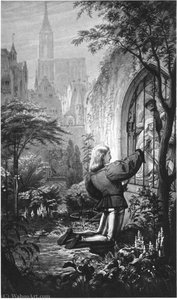
      Violinist in the Belfry Window (1858) este pictura pentru care Eduard von Steinle este cel mai cunoscut; aceasta face parte din colecția Städel Museum, Frankfurt pe Main. Madonna del Campidoglio (1841) și Saint Luke painting the Madonna (1842) completează trioul celor mai iubite picturi. Catalogul nostru cuprinde 21 lucrări ale lui Eduard von Steinle. Iată cele 21 cele mai faimate, însoțite de anul realizării, muzeul și povestea fiecărei pânze.

      Clasate în funcție de scorul nostru de popularitate, care combină numărul de căutări, vizitele și comenzile pentru fiecare operă. Actualizat Octombrie 2026. Fiecare pictură de pe această pagină poate fi comandată sub formă de reproducere pictată manual în ulei pe pânză de in, sau ca print de artă, realizat la dimensiunea aleasă de dumneavoastră.

      Portretul lui Eduard von Steinle
      Eduard von Steinle · 1810 – 1886
      Născut · Decedat
      1810 – 1886, Vienna
      Lucrări din catalogul nostru
      21
      Cele mai celebre
      Violinist in the Belfry Window (1858)
      Cele mai multe lucrări în
      Colecțiile Statale de Pictură din Bavaria

      Cele mai iubite cele zece picturi ale lui Eduard von Steinle

      Violinist in the Belfry Window (1858) de Eduard von Steinle
      1

      Violinist in the Belfry Window

      1858 · Oil · Städel Museum, Frankfurt pe Main

      There is a profound sense of isolation in this 1858 oil painting, a quietude that seems to emanate from the very stone of the belfry. We find ourselves looking upward, toward an elevated window where a young man sits, lost in the act of playing his violin. The composition is defined by a strong verticality, drawing the eye from the heavy, weathered masonry of the tower up to the slender,…

      Reproducere pictată manual în ulei de la $178 23 × 43 cm Aceeași dimensiune ca originalul $384 64 × 121 cm Comandă în dimensiunea originală →
      Madonna del Campidoglio (1841) de Eduard von Steinle
      2

      Madonna del Campidoglio

      1841 · Oil On Canvas · Colecțiile Statale de Pictură din Bavaria, Munchen

      The Madonna del Campidoglio is a work of profound stillness by the German painter Eduard Jakob von Steinle. Created in 1841, the painting emerges from the Nazareno movement, a style defined by its pursuit of spiritual purity and sincere devotion. Steinle brings a quiet, disciplined hand to this composition, focusing on the sacred presence of the Virgin and Child within a landscape of ancient stone.

      Reproducere pictată manual în ulei de la $228 32 × 32 cm Aceeași dimensiune ca originalul $719 131 × 131 cm Comandă în dimensiunea originală →

      Eduard von Steinle: pântecele 11 - 21 din clasament

      Unde sunt expuse picturile lui Eduard von Steinle

      Cele 5 muzee care dețin cele mai multe dintre picturile de pe această pagină.

      Muzee Oraș Lucrări lui Eduard von Steinle Picturi din această listă
      Colecțiile Statale de Pictură din Bavaria, MunchenColecțiile Statale de Pictură din Bavaria Munchen 5 Madonna del Campidoglio, The Loreley (Draft), Adam and Eve
      Sammlung Schack, MunichSammlung Schack Munich 3 The Tower Watchman, The Lorelei (detail), The Lorelei
      Städel Museum, Frankfurt pe MainStädel Museum Frankfurt pe Main 2 Violinist in the Belfry Window, Portrait of Agnes von Steinle the Artist’s Daughter
      Staatliche Kunsthalle Karlsruhe, KarlsruheStaatliche Kunsthalle Karlsruhe Karlsruhe 1 Saint Luke painting the Madonna
      Colecția Regală, LondraColecția Regală Londra 1 Saint Luke painting the Virgin

      Cea mai celebră pânză a lui Eduard von Steinle, deceniu după deceniu

      1. 1840s
        Madonna del Campidoglio (1841) de Eduard von Steinle
        Poziția 2 din 21

        Madonna del Campidoglio

        Vârsta 30 – 39 · Colecțiile Statale de Pictură din Bavaria

        The Madonna del Campidoglio is a work of profound stillness by the German painter Eduard Jakob von Steinle. Created in 1841, the painting emerges from the Nazareno movement,…

      2. 1850s
        Violinist in the Belfry Window (1858) de Eduard von Steinle
        Pânză 1 din 21

        Violinist in the Belfry Window

        Vârsta 40 – 49 · Städel Museum

        There is a profound sense of isolation in this 1858 oil painting, a quietude that seems to emanate from the very stone of the belfry. We find ourselves…

      3. 1860s
        The Loreley (Draft) (1863) de Eduard von Steinle
        Pânză 6 din 21

        The Loreley (Draft)

        Vârsta 50 – 59 · Colecțiile Statale de Pictură din Bavaria
      4. 1880s

      Pânzele lui Eduard von Steinle, întrebare cu întrebare

      Pentru care pictură este cel mai cunoscut Eduard von Steinle?Citește răspunsul

      Violinist in the Belfry Window (1858), Städel Museum, Frankfurt pe Main. Urmează Madonna del Campidoglio (1841) și Saint Luke painting the Madonna (1842).

      Violinist in the Belfry Window: ce vârstă avea Eduard von Steinle când a fost pictată?Citește răspunsul

      Eduard von Steinle, născut în 1810, avea 48 de ani: Violinist in the Belfry Window datează din 1858.

      Care sunt cele mai celebre zece picturi ale lui Eduard von Steinle?Citește răspunsul

      Violinist in the Belfry Window, Madonna del Campidoglio, Saint Luke painting the Madonna, Holy Family with Christ Child John, Saint Luke painting the Virgin, The Loreley (Draft), Adam and Eve, Self-Portrait, The Tower Watchman și The Lorelei (detail). Fiecare pictură din clasamentul de mai sus este însoțită de anul creării și de muzeul în care este expusă.

      Câte picturi a creat Eduard von Steinle?Citește răspunsul

      În catalogul nostru sunt 21 lucrări ale lui Eduard von Steinle, datate între 1841 și 1883.

      Unde sunt expuse astăzi cele mai celebrele picturi ale lui Eduard von Steinle?Citește răspunsul

      În principal în Colecțiile Statale de Pictură din Bavaria (Munchen), Sammlung Schack (Munich) și Städel Museum (Frankfurt pe Main); lista de mai sus enumeră fiecare muzeu și picturile sale.

      Când a pictat Eduard von Steinle cele mai celebre picturi?Citește răspunsul

      În 1850s, care a inclus 4 dintre cele 21 lucrări de pe această pagină, Violinist in the Belfry Window printre acestea.

      Care a fost prima și care a fost ultima pictură a celebrului Eduard von Steinle?Citește răspunsul

      Cea mai veche pânză de aici datează din Madonna del Campidoglio (1841), iar cea mai recentă este din Self-Portrait (1883).

      Ce picturi ale lui Eduard von Steinle sunt păstrate la Colecțiile Statale de Pictură din Bavaria?Citește răspunsul

      Colecțiile Statale de Pictură din Bavaria, Munchen deține 5 dintre lucrările de pe această pagină, printre care se numără Madonna del Campidoglio, The Loreley (Draft) și Adam and Eve.

      Unde pot cumpăra o reproducere a unei picturi a lui Eduard von Steinle?Citește răspunsul

      Da. Orice pictură de pe această pagină poate fi comandată de pe pagina sa dedicată, sub formă de reproducere pictată manual în ulei sau ca print de artă, în dimensiunea aleasă de dumneavoastră.

      Făcând cunoștință cu pictorul: Eduard von Steinle

      A Visionary of the Nazarene Spirit

      Born in Vienna, Austria, Edward Jakob von Steinle emerged as a profound voice within the nineteenth-century art world, weaving together the spiritual depth of the Nazarene movement with a masterful command of both painting and printmaking. His artistic journey was deeply shaped by his formative years spent in Rome between 1828 and 1833, where he immersed himself among the leading figures of the Nazarene school. This period of intense study allowed him to absorb a philosophy that sought to revive sincerity and spiritual purity in Christian art, an influence that would remain the heartbeat of his creative output for decades to come.

      As his career progressed, Steinle’s presence expanded far beyond the borders of his birthplace. While his roots remained firmly planted in the traditions of Vienna, he eventually settled in Frankfurt, Germany, where he became a central pillar of the German Romantic and Nazarene traditions. His ability to translate complex theological and literary themes into visual narratives made him a sought-after master for monumental commissions. From the delicate precision of his drawings to the grand scale of his frescoes, Steinle’s work often bridged the gap between the earthly and the divine.

      Mastery of Sacred and Secular Narratives

      The breadth of Steinle's talent is perhaps most evident in his ability to navigate both the sacred and the secular with equal grace. He was a master of monumental fresco and religious panel painting, leaving an indelible mark on the architectural landscape of Europe. His hands touched some of the most significant religious sites of his era, including:

      • The Cologne Cathedral, where his contributions helped sustain the grandeur of Gothic tradition.
      • The Strasbourg Minster, serving as a testament to his skill in large-scale ecclesiastical art.
      • The chapel of Castle Rheineck, where his frescoes brought biblical stories to life through light and color.
      • The Hall of the Emperors (Kaisersaal) in Frankfurt, showcasing his prowess in historical painting.

      Beyond these grand religious cycles, Steinle also excelled in creating works that drew from the rich tapestry of literature and folklore. His depictions, such as those found in his interpretations of The Lorelei, demonstrate a captivating ability to capture the ethereal and the mysterious. Whether working with graphite, brush, and gray wash or executing intricate stained glass cartoons, his technique always served a higher purpose: to evoke emotion and invite contemplation.

      Legacy and Artistic Significance

      Steinle’s historical significance lies in his role as a bridge between eras. By championing the Nazarene ideals of spiritual revival, he helped maintain a sense of moral and aesthetic integrity during a period of rapid industrial and social change. His influence even extended to the next generation of great painters; notably, the renowned Frederic Leighton studied under him, carrying forward the lessons of classical form and expressive depth that Steinle had perfected.

      Though his life concluded in Frankfurt, his artistic legacy remains etched in the very fabric of European cathedrals and museum collections. Through his dedication to the beauty of the sacred and the nuance of the human experience, Edward Jakob von Steinle ensured that the spirit of the Nazarene movement would endure as a vital chapter in the history of Western art.