

Shown: · With its frame:
 Previzualizare
 Trimite prin felicitare
 Distribuie
 Detalii despre lucrare
 Ghid
Ghid

 Descarcă imaginea
 Produse similare
 Radiografie
 Galerie foto
 Q&A
Q&A Statistici
- 20.0 x 27.0 cm


lei 1869
Reproducere pictată manual în ulei
Pictură în ulei pe pânză, pictată manual de artiștii noștri la dimensiunea și ramele dorite de dumneavoastră, pe comandă. ( Comută pe versiunea Print Comută pe Imagine Digitală)
Size
·Standard
personalizat
CM
INCH
Alegeți dintre dimensiunile noastre prestabilite, care respectă proporțiile originale ale operei de artă.
Loading sizes...

lățime
înălțime
Introduceți lățimea și înălțimea necesare pentru a se potrivi ramei sau peretelui dumneavoastră. Această lucrare este pictată manual, așa că, pentru o dimensiune cu o formă diferită, artistul poate picta puțin mai mult în jurul imaginii sau poate tăia puțin din margini — dumneavoastră decideți. Vă vom trimite o simulare digitală pentru aprobare înainte de a începe pictarea. Imaginea afișată pe această pagină nu reprezintă rezultatul real — doar simularea este reprezentativă.
 Citește mai mult
Finish
·
White lei1

Blurside lei1

Extended lei1

P118B lei10

P118H lei10

P118W lei10

P438Z lei10

P508JH lei12

P508YH lei12

P805H lei10

P805Z lei10

P919BZ lei10

P919G lei10

P919XJ lei10

P959ZH lei10

P968JZ lei12

W106C lei8

W218G lei10

W218JH lei8

W218Y lei10

W307PJ lei10

W316G lei10

W316PJ lei8

W316Y lei10

W398PJ lei8

W4111J lei10

W500HY lei15

W500JH lei15

W692G lei12

W849H lei8

W940BG lei15

W953PJ lei8

H24-GOLD lei30

H24-SILVER lei30

H36-GOLD lei45

H36-SILVER lei45
Shipped in a protective tube, ready for your own framer.
Above 105 cm the frame is shipped as a kit for a professional framer — read the details.
Extras
optionalWhat do the extras include?
Examples of what can be changed: Replace face with customer photo; Add pet (e.g., replace cat with dog); Include hidden message in background; Change background landscape or elements.
After order, TopImpressionists.com team will email client for instructions and provide a mockup preview
After order, TopImpressionists.com team will email client for instructions and provide a mockup preview
Livrare în întreaga lume () în 3-4 săptămâni, în loc de cele 5 săptămâni standard. (2 Noiembrie). Fără compromisuri în ceea ce privește calitatea.
Lac de protecție
Etichetă de prezentare
Detalii plăcuță din bronz gravat
This elegant plaque features the artist's name and the title of the artwork, finely engraved for a timeless presentation.
It is made from bronze with a refined, elegant finish. The text is precisely laser-engraved for a sharp and permanent result. Measuring 9x2 cm, the plaque is compact yet easy to read. It's built to be durable and scratch-resistant, offering a professional, museum-quality look. Mounting is simple thanks to the included adhesive backing.
Detalii plăcuță din acril transparent
The plaque includes essential engraved details such as the artist's name, the title of the artwork, the date it was created, the type of media used-like oil on canvas or watercolor-a brief description of the piece, and a QR code that links to the complete artwork information.
It is crafted from clear acrylic, offering a sleek, modern appearance. The text is UV-engraved in black to ensure strong visual contrast. With a size of 10x15 cm, it ensures optimal readability. It comes equipped with two metal hooks for secure wall mounting. The plaque is designed to be weather-resistant, making it suitable for various environments, and it includes interactive features that work seamlessly with smartphone scanning.
Detalii placă din acril negru
This elegant plaque includes engraved information such as the artist's name, the title of the artwork, the date it was created, the type of media used (like oil on canvas or watercolor), a short description of the artwork, and a QR code for quick access to more information.
The plaque itself is made from refined black acrylic with a premium finish. The text is laser-engraved in white for high contrast and readability. Its size is 10x15 cm, designed to be easy to read. It comes with two metal hooks for professional mounting. The design is sleek and fits any interior style. It is also weather-resistant and durable, with built-in digital integration for mobile compatibility.
Opțiunea cu sticlă este disponibilă doar pentru dimensiuni de sub 110 cm
 Opțiunea cu sticlă este disponibilă doar pentru dimensiuni de sub 110 cm
- Livrare expres gratuită la nivel mondial
- Pânză de in de înaltă calitate
- Asigurare completă pentru transport
- Garanție de rambursare a taxelor vamale
- Garanția fidelității culorilor
- Politica de retur în 100 de zile (doar pentru defecte de fabricație)
- Garanție de rambursare 100%
- Ofertă pentru comenzi multiple


Descriere obiect de colecție
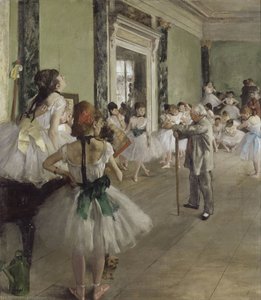
Descoperă "La Classe Où Dansent", pictată de Edgar Degas în 1870! O capodopera impresionistă realistă ce surprinde atmosfera unei repetiții de balet.
Biografie artist
Edgar Degas: Artist impresionist revoluționar, cunoscut pentru dansatoarele de balet și scenele pariziene inovatoare – un maestru al artei moderne cu o abordare unică a reprezentării lumii.
About the painting
The Dancing Class: A Glimpse into Parisian Ballet Life
Edgar Degas's "The Dancing Class," painted around 1870, offers an intimate and captivating portrayal of ballet practice in Paris. This early work, predating the artist’s access to backstage areas at the Opéra, depicts dancers posing within his studio. It stands as a foundational piece in Degas’s extensive exploration of the ballet world, a theme that would dominate much of his career. The painting's significance lies not only in its artistic merit but also in its historical context – capturing a moment of transition and burgeoning modernity in Parisian society.
Subject Matter and Composition
The scene unfolds within a modestly furnished ballet studio, filled with the everyday objects that define such a space: chairs, tables, a mirror, and a hatbox. A piano sits prominently, suggesting the presence of an accompanist, though they are not depicted. Approximately two dozen ballerinas populate the room, engaged in various activities – tying their shoes, stretching, practicing their steps, or simply observing. Degas masterfully captures a sense of dynamic movement and candid observation. The composition isn't staged; it feels like a snapshot of real life, reflecting the Impressionist desire to portray fleeting moments.
Impressionistic Technique and Style
“The Dancing Class” exemplifies Degas’s evolving style, foreshadowing his later mastery of pastels while still rooted in oil painting on canvas. The color palette is dominated by warm browns and ochres, creating a muted, nostalgic atmosphere that evokes the dim lighting of a rehearsal room. Visible brushstrokes add texture and contribute to the overall impressionistic feel. Degas’s use of lines defines forms without rigid precision, allowing for a sense of spontaneity and movement. While perspective isn't meticulously rendered, layering and tonal variations create depth, drawing the viewer into the scene. The painting showcases a departure from traditional academic art, embracing a more modern approach to capturing reality.
Historical Context and Symbolism
Painted in 1870, "The Dancing Class" reflects a period of significant social change in Paris. Ballet was experiencing a resurgence in popularity, becoming both a source of entertainment and a symbol of Parisian elegance. Degas’s choice to depict this world—not the glamorous performances but the rigorous training behind them—was innovative for his time. The painting subtly explores themes of dedication, discipline, and the pursuit of artistic excellence. It also offers a glimpse into the lives of young women striving for success in a demanding profession. Degas himself later expressed a degree of ambivalence about his ballet paintings, noting that he had painted so many without direct backstage access that he felt "a little ashamed of it," highlighting his commitment to capturing authentic moments even under challenging circumstances.
Emotional Impact and Legacy
“The Dancing Class” evokes a sense of quiet intimacy and nostalgic charm. The muted colors, the candid poses of the dancers, and the glimpse into their everyday lives create an emotional resonance that transcends mere representation. It’s a painting that invites contemplation on themes of perseverance, beauty, and the dedication required to achieve artistic mastery. As one of Degas's earliest depictions of ballet, "The Dancing Class" laid the groundwork for his extensive body of work exploring this captivating subject, solidifying his place as a pivotal figure in Impressionist art.
Întrebări și răspunsuri
Unde pot găsi opere de artă similare cu "La Classe Où Dansent" de Hilaire-Germain-Edgar Degas?
Descoperă lucrări similare cu „La Classe Où Dansent” în pagina Lucrări similare a operei de artă.
Ce origine națională stă la baza Impressionism-ului din "La Classe Où Dansent"?
"La Classe Où Dansent" a fost creat de Hilaire-Germain-Edgar Degas, născut în Franța, în cadrul mișcării Impressionism. Originea artistului leagă această operă de Impressionism, așa cum este practicat de artiștii din Franța.
Ce amplasare se potrivește formatului lucrării "La Classe Où Dansent" de Hilaire-Germain-Edgar Degas?
Formatul Format peisaj al operei "La Classe Où Dansent" de Hilaire-Germain-Edgar Degas este recomandat pentru o Living Room. Formatul și spațiul împreună ghidează amplasarea unei reproduceri.
Quick facts and art quiz
About Hilaire-Germain-Edgar Degas

Hilaire-Germain-Edgar Degas
1834 - 1917, Franța
Biografie artist
A Life Immersed in Movement
Edgar Degas, născut Hilaire-Germain-Edgar De Gas în Paris, pe 19 iulie 1834, a fost un artist cu o complexitate fascinantă. Adesea grupat alături de impresioniști – Monet, Renoir și alții care au revoluționat pictura la sfârșitul secolului al XIX-lea – el s-a opus activ acestei etichete, identificându-se mai degrabă ca realist. Această devotare provine din observația minuțioasă a lumii din jurul său și dintr-o dedicare neclintită la reprezentarea ei cu onestitate deplină. Viața timpurie a lui Degas era confortabilă, burgheză; tatăl său era un bancher, iar mama sa provenea dintr-o familie creolă din New Orleans. Acest context i-a oferit acces la educație și formare artistică, deși adesea s-a simțit constrâns de restricțiile academice. Inițial, s-a înscris la Lycée Louis-le-Grand, dar educația sa adevărată a început atunci când a început să copieze opere în Louvre, perfecționându-și abilitățile și aprinzând o pasiune de durată pentru arta clasică. Cu toate acestea, calea lui Degas nu a fost una de aderare strictă la tradiție; a fost marcată de o întrebare constantă și de o reevaluare a normelor artistice. Spiritul său independent l-a definit pe tot parcursul carierei sale.Dincolo de Impressionism: O Viziune Artistică Unică
În timp ce contemporanii săi, precum Monet, urmau efectele fugace ale luminii în aer liber, Degas lucra în mare parte din interiorul atelierului său, construind scene meticulos din observație și memorie. Subiectele sale erau cu siguranță moderne – o abatere de la temele istorice sau mitologice preferate de mulți pictori academici. A găsit inspirație în viața de zi cu zi a parizienilor: spălătoare de rufe, cântărețe de cabaret, coapsele și, cel mai celebru, dansatoarele. Această fascinație pentru balet definește o mare parte din operele sale. Degas nu a pictat doar balerine frumoase; el a surprins realitatea grea a profesiei lor – repetițiile interminabile, efortul fizic, momentele fugare de grație în mijlocul unei lumi de muncă asiduă. Compozițiile sale sunt adesea neconvenționale, croind figuri într-un mod surprinzător și utilizând aranjamente asimetrice care creează un sentiment de dinamism și imediatitate. Era un maestru în captarea mișcării, nu prin linii estompate sau efecte încețoșate, ci prin observație atentă și reprezentare precisă a formei. Dancer, A Group of Dancers și Women Combing Their Hair sunt exemple de această dedicare la reprezentarea figurii umane în mișcare și la dezvăluirea complexităților vieții moderne. Nu era interesat de frumusețea superficială; căuta adevărul sub suprafață.Influențe și Dezvoltare Artistică
Călătoria artistică a lui Degas a fost modelată de o varietate de influențe. Formarea sa timpurie a pus accent pe principii clasice, în special munca lui Jean-Auguste-Dominique Ingres, care sublinia draftsmanship-ul și reprezentarea precisă, lăsând o amprentă durabilă. Cu toate acestea, Degas a admirat și Realiștii, precum Gustave Courbet, care au provocat convențiile academice și au pledat pentru reprezentarea vieții cotidiene. Un moment crucial în dezvoltarea sa a venit prin asocierea cu Camille Pissarro, un impresionist de rang înalt care i-a introdus pe alți artiști și l-a încurajat să experimenteze noi tehnici. A fost captivat de gravurile japoneze – Ukiyo-e – care au influențat utilizarea sa de aranjamente asimetrice, perspective aplatizate și modele îndrăznețe. De asemenea, a îmbrățișat fotografia, recunoscând-o ca pe un instrument pentru studiul mișcării și capturarea momentelor fugare în timp. Această disponibilitate de a integra influențe diverse în opera sa este ceea ce îl diferențiază și contribuie la caracterul unic al operei sale. Nu a avut teamă să împrumute din diferite surse, sintetizându-le într-un ceva cu totul nou.Realismul și Observația Directă
În ciuda asociării sale cu impresionismul, Degas s-a distins prin angajamentul său față de realism. Spre deosebire de mulți impresioniști care căutau să captureze efectele luminii în aer liber, Degas a preferat să lucreze din atelier, construind scenele sale din observație și memorie. A petrecut mult timp la teatru, observând actori și decoruri, ceea ce a influențat stilul său de compoziție și atenția la detalii. A fost un maestru în captarea mișcării umane, nu doar prin reprezentarea statică a formelor, ci și prin surprinderea dinamicii și a ritmului vieții cotidiene. Lucrările sale, cum ar fi Dancer at the Opera (1875), sunt caracterizate de o atenție remarcabilă la detalii, de o compoziție neconvențională și de o perspectivă care sugerează mișcare și spontaneitate. A fost un observator perspicace al lumii din jurul său, captând cu precizie și autenticitate momentele și scenele vieții pariziene.Moștenirea și Impactul Durabil
Edgar Degas a murit în Paris în 1917, lăsând în urmă o operă de artă care captivează și inspiră publicul și astăzi. Abordarea sa inovatoare a compoziției, draftsmanship-ul său remarcabil și reprezentarea neînfricată a vieții moderne au avut un impact profund asupra cursului istoriei artei. A deschis drumul pentru generațiile viitoare de artiști care au căutat să se elibereze de convențiile tradiționale și să exploreze noi modalități de reprezentare a lumii din jurul lor. Influența sa poate fi văzută în munca lui Pablo Picasso și Henri Matisse, printre alții. Muzee din întreaga lume – inclusiv Musée d'Orsay și Musée de l’Orangerie din Paris – găzduiesc colecții semnificative ale picturilor sale, pasteluri, sculpturi și gravuri, asigurând că moștenirea sa va rezista pentru generațiile viitoare. Degas nu a fost doar un pictor de balerine sau cai; a fost un observator perspicace al naturii umane, un maestru al formei și al mișcării și un inovator adevărat care a redefinit posibilitățile artei.Quick facts about Hilaire-Germain-Edgar Degas
- Artistic Movement Or Style: Impressionism, Realism
- Artists Or Movements Influenced By This Artist:
- Picasso
- Matisse
- Artists Who Influenced This Artist:
- Ingres
- Courbet
- Pissarro
- Date Of Birth: 1834
- Full Name: Hilaire-Germain Edgar De Gas
- Nationality: Francez
- Notable Artworks:
- Dancer și Tamburină
- Baletul la Opera Parisului
- Degas în jachetă verde
- Colecționarul
- Place Of Birth: Paris, Franța
Opere similare



Explorați opere de artă organizate pe teme, stiluri și caracteristici.


Hilaire-Germain-Edgar Degas
La Classe Où Dansent
() ·
With its frame: · Hand-painted in oil on linen
Total