Atelier — Livrare gratuită în întreaga lume — Livrare în 2–6 săptămâni
      Edwin Willard Deming, 1860 – 1942

      Cele mai 8 celebre picturi ale lui Edwin Willard Deming, clasificate

      Cea mai iubită pictură a lui Edwin Willard Deming este The Mourning Brave (1892), expusă în Smithsonian American Art Museum, Washington, D.C.. The Indian Horse Race (1900) și Indian Procession urmează în lista celor mai cunoscute picturi de către cititori. Catalogul nostru cuprinde 10 lucrări ale lui Edwin Willard Deming: iată cele 8 cele mai faimoase, fiecare cu anul creării, muzeul de păstrare și elementul care o face memorabilă.

      Clasate în funcție de scorul nostru de popularitate, care combină numărul de căutări, vizitele și comenzile pentru fiecare operă. Actualizat Noiembrie 2026. Fiecare pictură de pe această pagină poate fi comandată sub formă de reproducere pictată manual în ulei pe pânză de in, sau ca print de artă, realizat la dimensiunea aleasă de dumneavoastră.

      Portretul lui Edwin Willard Deming
      Edwin Willard Deming · 1860 – 1942
      Născut · Decedat
      1860 – 1942, Ashland
      Lucrări din catalogul nostru
      10
      Cele mai celebre
      The Mourning Brave (1892)
      Cele mai multe lucrări în
      Smithsonian American Art Museum

      Top 10 picturi Edwin Willard Deming: tablourile pe care toată lumea le cunoaște

      Cele mai picturate opere ale lui Edwin Willard Deming

      Cele patru teme care apar cel mai des pe aceste pânze, fiecare cu cel mai apreciat exemplu al său.

      Unde sunt expuse picturile lui Edwin Willard Deming

      Muzeul care deține cele mai multe dintre picturile prezentate pe această pagină.

      Muzee Oraș Lucrări lui Edwin Willard Deming Picturi din această listă
      Smithsonian American Art Museum, Washington, D.C.Smithsonian American Art Museum Washington, D.C. 2 The Mourning Brave, Blackfoot Camp Scene

      Cele mai iubite picturi ale lui Edwin Willard Deming, an de an

      Un deceniu de pictură, de la 1892 la 1900, este rechemat în peisajul pictural al lui Edwin Willard Deming pe această pagină: parcurge-le an de an.

      1. 1892
      2. 1900

      Despre picturile lui Edwin Willard Deming: răspunsuri la întrebările tale

      Care este cea mai cunoscută pictură a lui Edwin Willard Deming?Citește răspunsul

      The Mourning Brave (1892), Smithsonian American Art Museum, Washington, D.C.. Urmează The Indian Horse Race (1900) și Indian Procession.

      Ce vârstă avea Edwin Willard Deming când a fost pictată opera The Mourning Brave?Citește răspunsul

      Edwin Willard Deming, născut în 1860, avea 32 de ani: The Mourning Brave datează din 1892.

      Câte lucrări a pictat Edwin Willard Deming în total?Citește răspunsul

      În catalogul nostru sunt 10 lucrări ale lui Edwin Willard Deming, datate între 1892 și 1900.

      Unde pot vedea cele mai faimoase picturi ale lui Edwin Willard Deming?Citește răspunsul

      În principal în Smithsonian American Art Museum (Washington, D.C.); lista de mai sus enumeră fiecare muzeu și picturile sale.

      Care sunt cele mai vechi și cele mai recente picturi celebre ale lui Edwin Willard Deming?Citește răspunsul

      Cea mai veche pânză de aici datează din The Mourning Brave (1892), iar cea mai recentă este din The Indian Horse Race (1900).

      Ce picturi cu Edwin Willard Deming sunt expuse la Smithsonian American Art Museum?Citește răspunsul

      Smithsonian American Art Museum, Washington, D.C. deține 2 dintre lucrările de pe această pagină, printre care se numără The Mourning Brave și Blackfoot Camp Scene.

      Pot cumpăra o reproducere a unei picturi cu Edwin Willard Deming?Citește răspunsul

      Da. Orice pictură de pe această pagină poate fi comandată de pe pagina sa dedicată, sub formă de reproducere pictată manual în ulei sau ca print de artă, în dimensiunea aleasă de dumneavoastră.

      Edwin Willard Deming: o viață în pictură

      The Soul of the American West: The Life and Legacy of Edwin Willard Deming

      Edwin Willard Deming was far more than a mere chronicler of the American frontier; he was a poet of the canvas, a man who breathed life into the fading echoes of a vanishing era. Born on August 26, 1860, in the quiet landscape of Ashland, Ohio, Deming’s early years were steeped in a profound connection to the natural world. This foundational intimacy with nature would later become the heartbeat of his work, manifesting as an unwavering devotion to detail and an almost spiritual reverence for the subjects he portrayed. Though his journey took him far from the Ohio homestead, the observant eye nurtured in his youth remained his most vital tool, allowing him to capture the subtle textures of fur, the heavy atmosphere of a storm, and the dignified sorrow in a human gaze. As he ventured toward the vibrant artistic hubs of the East, specifically New York City in 1886, Deming began to weave together a complex tapestry of influences. He was not content with simple imitation; instead, he sought a synthesis of styles that could convey the profound emotional truths he perceived in life. His work became a sophisticated dialogue between Realism and Symbolism. Drawing inspiration from the delicate compositions of Japanese prints—a movement known as Japonisme—and the haunting, emotive depths of Symbolist masters like Gustave Moreau, Deming developed what many now call "Romantic Realism." He possessed a rare ability to render the physical world with meticulous accuracy while simultaneously imbuing his subjects with a sense of mythic importance and melancholic beauty.

      A Visionary of Indigenous Culture and Wild Majesty

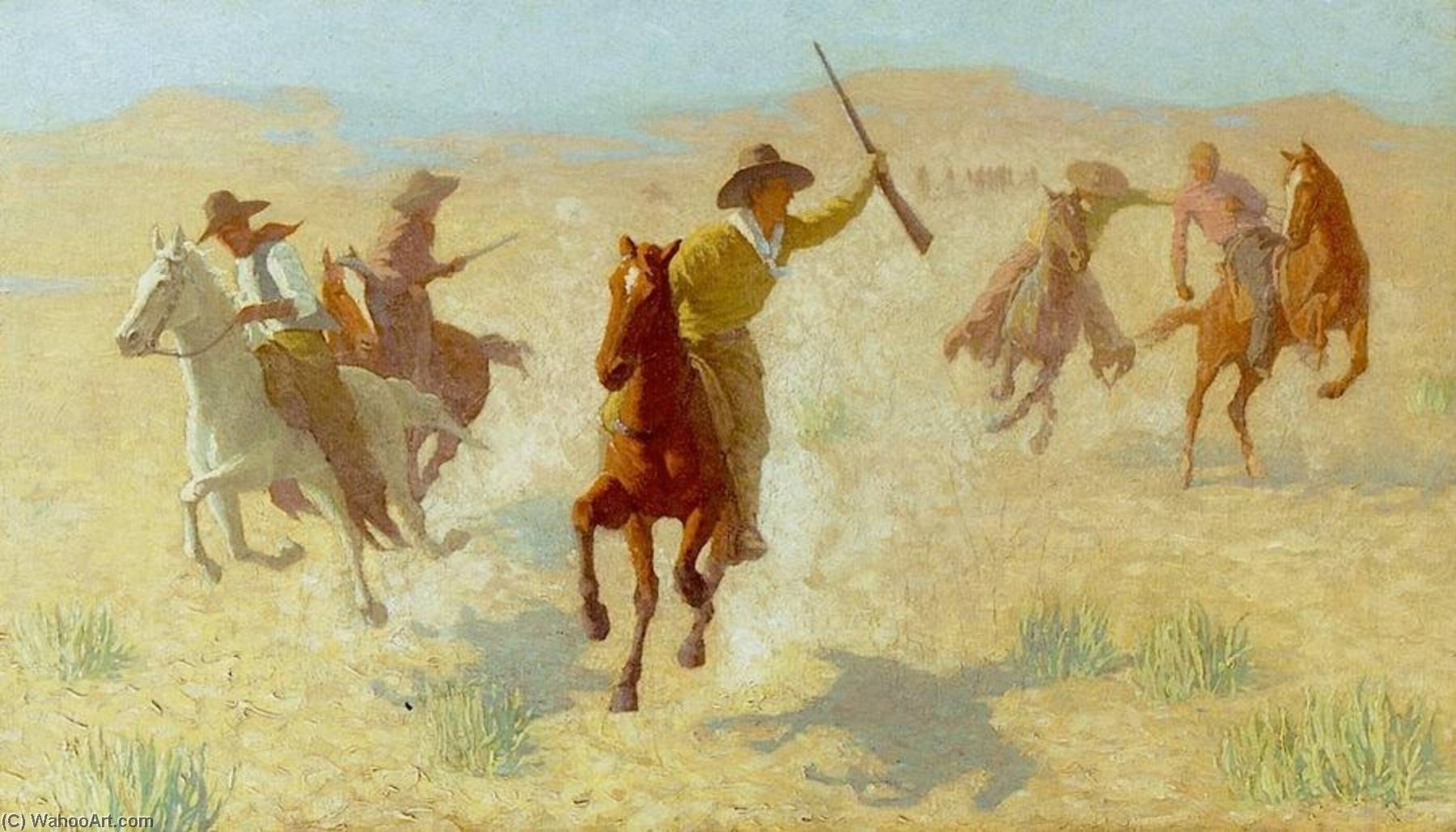
      The true essence of Deming’s genius emerged through his profound engagement with the indigenous tribes of the American West, most notably the Blackfeet. Rather than presenting mere ethnographic studies, he approached his subjects with a deep-seated respect that transcended the colonial gaze of his time. His paintings, such as the evocative Dog Travois Blackfoot Camp or the sweeping Indian Procession, are masterclasses in narrative tension and atmospheric depth. He captured the dignity of tribal life, the strength of the warriors, and the quiet, poignant moments of communal existence, often imbuing these scenes with a sense of timelessness that suggests a world existing both within and beyond the reach of modern industry. This mastery extended to his portrayals of wild animals, where he utilized his technical prowess to capture the raw, untamed spirit of the wilderness. Whether depicting a dynamic cavalry scene in The Indian Horse Race or the somber, heavy emotions found in The Mourning Brave, Deming’s brushwork served a higher purpose: to evoke the spiritual resonance of the land itself. His ability to balance tonal harmony with expressive, textured strokes allowed him to create landscapes that felt less like static images and more like living, breathing entities, often characterized by a certain haunting, solitary beauty.

      Artistic Versatility and Lasting Significance

      Deming’s creative output was remarkably diverse, reflecting an artist who refused to be confined by a single medium or discipline. While he is most celebrated for his oil paintings, his talents as a sculptor, illustrator, and muralist allowed him to leave a multifaceted mark on American art history. His skill as an illustrator brought fine art to a broader audience, and his monumental murals even reached the heights of national recognition when one of his designs was adapted for use on United States postage. This versatility ensured that his vision of the American spirit permeated both the galleries of the elite and the everyday lives of the public. The historical significance of Edwin Willard Deming lies in his role as a bridge between eras. He stood at the intersection of the 19th-century tradition of meticulous observation and the 20th-century movement toward psychological and symbolic expression. Through his work, the legends of the American West were preserved not just as historical facts, but as enduring symbols of human resilience and natural majesty. Today, his legacy continues to captivate, offering a window into a period of profound transformation through an artistic lens that remains as evocative and emotionally resonant as ever.