Atelier — Livrare gratuită în întreaga lume — Livrare în 2–6 săptămâni
      Robert Brough, 1872 – 1905

      Cele mai celebre 33 picturi ale lui Robert Brough

      The Artist at Seventeen Years of Age (1889) este pictura pentru care Robert Brough este cel mai cunoscut. Monsignor Charles Tochetti (1897) și Sir James Murray (1850–1933) (1903) completează trioul celor mai iubite picturi. Catalogul nostru cuprinde 44 lucrări ale lui Robert Brough. Iată cele 33 cele mai faimate, însoțite de anul realizării, muzeul și povestea fiecărei pânze.

      Clasate în funcție de scorul nostru de popularitate, care combină numărul de căutări, vizitele și comenzile pentru fiecare operă. Actualizat Noiembrie 2026. Fiecare pictură de pe această pagină poate fi comandată sub formă de reproducere pictată manual în ulei pe pânză de in, sau ca print de artă, realizat la dimensiunea aleasă de dumneavoastră.

      Portretul lui Robert Brough
      Robert Brough · 1872 – 1905
      Născut · Decedat
      1872 – 1905, Invergordon
      Lucrări din catalogul nostru
      44
      Cele mai celebre
      The Artist at Seventeen Years of Age (1889)
      Cele mai multe lucrări în
      Edinburgh College of Art

      Cele mai iubite cele zece picturi ale lui Robert Brough

      The Artist at Seventeen Years of Age (1889) de Robert Brough
      1

      The Artist at Seventeen Years of Age

      1889 · Oil On Canvas

      In this 1889 oil on canvas, we find a young Robert Brough looking back at himself. It is a close-up, bust-length portrait that captures the artist at seventeen, a period of profound transition. The grayscale tones and muted palette lend the work a certain melancholy, as if we are witnessing a private thought caught in mid-air. There is a stillness here, a sense of a soul contemplating its own direction…

      Reproducere pictată manual în ulei de la $178 28 × 36 cm
      Monsignor Charles Tochetti (1897) de Robert Brough
      2

      Monsignor Charles Tochetti

      1897 · Oil On Canvas

      In this 1897 portrait, we find ourselves in a quiet, intimate encounter with Monsignor Charles Tochetti. The subject is presented in a close-up, three-quarter view, his presence filling the frame with a sense of settled dignity. There is a profound stillness here, a moment captured where the light catches the deep lines of a life lived with purpose. The background remains dark and indistinct, a deliberate choice that pushes the…

      Reproducere pictată manual în ulei de la $178 28 × 36 cm Aceeași dimensiune ca originalul $303 63 × 81 cm Comandă în dimensiunea originală →
      Sir James Murray (1850–1933) (1903) de Robert Brough
      3

      Sir James Murray (1850–1933)

      1903 · Oil On Canvas

      The portrait of Sir James Murray, executed in 1903, presents a formal study of the subject in a monochromatic palette. He is positioned slightly to the left of the center, facing forward with a direct gaze directed toward the viewer. The figure is dressed in a dark suit, which provides a solid, structured silhouette against the background. A doorway is visible behind him on the right, creating a receding plane…

      Reproducere pictată manual în ulei de la $178 24 × 41 cm Aceeași dimensiune ca originalul $525 86 × 145 cm Comandă în dimensiunea originală →
      Mrs Nicol of Roscobie (1905) de Robert Brough
      4

      Mrs Nicol of Roscobie

      1905 · Oil On Canvas

      A seated woman occupies the center of this 1897 oil on canvas, her gaze directed toward the viewer from a position of relaxed formality. She sits within an indistinct interior, the background rendered in soft, blended brushstrokes that lack sharp definition. The composition is anchored by the subject's upper body, while elements of her immediate surroundings provide subtle narrative cues:

      Reproducere pictată manual în ulei de la $178 35 × 28 cm Aceeași dimensiune ca originalul $212 51 × 41 cm Comandă în dimensiunea originală →

      Robert Brough: pântecele 11 - 33 din clasament

      Cele mai picturate opere ale lui Robert Brough

      Cele patru teme care apar cel mai des pe aceste pânze, fiecare cu cel mai apreciat exemplu al său.

      Unde sunt expuse picturile lui Robert Brough

      Cele 7 muzee care dețin cele mai multe dintre picturile de pe această pagină.

      Muzee Oraș Lucrări lui Robert Brough Picturi din această listă
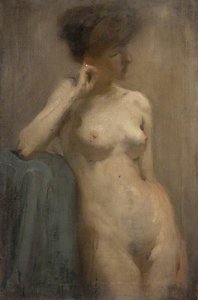
      Edinburgh College of Art, EdinburghEdinburgh College of Art Edinburgh 2 Female Nude with Brass Urn, Nude Study Female
      University of Aberdeen, AmsterdamUniversity of Aberdeen Amsterdam 1 John Thomson
      Scottish National Gallery, EdinburghScottish National Gallery Edinburgh 1 William Dallas Ross (d.1931)
      West Lothian Council, LivingstonWest Lothian Council Livingston 1 John Adrian Louis (1860–1908), 7th Earl of Hopetoun and 1st Marquis of Linlithgow
      Mintlaw Discovery Centre, PeterheadMintlaw Discovery Centre Peterhead 1 Reverend Dr James Stewart (1830–1917), Minister of Peterhead (1864–1917) (unfinished)
      Dundee Art Gallery And Museum, DundeeDundee Art Gallery And Museum Dundee 1 Mary Dallas Ross
      The Fleming Collection, LondonThe Fleming Collection London 1 Fieldworkers

      Cea mai celebră pânză a lui Robert Brough, deceniu după deceniu

      1. 1880s
        The Artist at Seventeen Years of Age (1889) de Robert Brough
        1 din 33

        The Artist at Seventeen Years of Age

        Vârsta 8 – 17

        In this 1889 oil on canvas, we find a young Robert Brough looking back at himself. It is a close-up, bust-length portrait that captures the artist at seventeen,…

      2. 1890s
        Monsignor Charles Tochetti (1897) de Robert Brough
        2 din 33

        Monsignor Charles Tochetti

        Vârsta 18 – 27

        In this 1897 portrait, we find ourselves in a quiet, intimate encounter with Monsignor Charles Tochetti. The subject is presented in a close-up, three-quarter view, his presence filling…

      3. 1900s
        Sir James Murray (1850–1933) (1903) de Robert Brough
        3 din 33

        Sir James Murray (1850–1933)

        Vârsta 28 – 33

        The portrait of Sir James Murray, executed in 1903, presents a formal study of the subject in a monochromatic palette. He is positioned slightly to the left of…

      Pânzele lui Robert Brough, întrebare cu întrebare

      Pentru care pictură este cel mai cunoscut Robert Brough?Citește răspunsul

      The Artist at Seventeen Years of Age (1889), urmat de Monsignor Charles Tochetti (1897) și Sir James Murray (1850–1933) (1903).

      The Artist at Seventeen Years of Age: ce vârstă avea Robert Brough când a fost pictată?Citește răspunsul

      Robert Brough, născut în 1872, avea 17 de ani: The Artist at Seventeen Years of Age datează din 1889.

      Care sunt cele mai celebre zece picturi ale lui Robert Brough?Citește răspunsul

      The Artist at Seventeen Years of Age, Monsignor Charles Tochetti, Sir James Murray (1850–1933), Mrs Nicol of Roscobie, John Hay, Untitled, Dolce pomum, Mary Dallas Ross (c.1881–1936), Female Nude with Brass Urn și View of Elgin, Moray. Fiecare pictură din clasamentul de mai sus este însoțită de anul creării și de muzeul în care este expusă.

      Câte picturi a creat Robert Brough?Citește răspunsul

      În catalogul nostru sunt 44 lucrări ale lui Robert Brough, datate între 1889 și 1905.

      Unde sunt expuse astăzi cele mai celebrele picturi ale lui Robert Brough?Citește răspunsul

      În principal în Edinburgh College of Art (Edinburgh), University of Aberdeen (Amsterdam) și Scottish National Gallery (Edinburgh); lista de mai sus enumeră fiecare muzeu și picturile sale.

      Când a pictat Robert Brough cele mai celebre picturi?Citește răspunsul

      În 1890s, care a inclus 17 dintre cele 33 lucrări de pe această pagină, Monsignor Charles Tochetti printre acestea.

      Care a fost prima și care a fost ultima pictură a celebrului Robert Brough?Citește răspunsul

      Cea mai veche pânză de aici datează din The Artist at Seventeen Years of Age (1889), iar cea mai recentă este din Mrs Nicol of Roscobie (1905).

      Ce subiecte a pictat cel mai des Robert Brough?Citește răspunsul

      Man (2) și Portrait (2), din cele 33 lucrări de pe această pagină.

      Care este tehnica cea mai prezentă în picturile lui Robert Brough?Citește răspunsul

      Oil On Canvas, utilizat în 4 dintre cele 33 lucrări de pe această pagină.

      Ce picturi ale lui Robert Brough sunt păstrate la Edinburgh College of Art?Citește răspunsul

      Edinburgh College of Art, Edinburgh deține 2 dintre lucrările de pe această pagină, printre care se numără Female Nude with Brass Urn și Nude Study Female.

      Unde pot cumpăra o reproducere a unei picturi a lui Robert Brough?Citește răspunsul

      Da. Orice pictură de pe această pagină poate fi comandată de pe pagina sa dedicată, sub formă de reproducere pictată manual în ulei sau ca print de artă, în dimensiunea aleasă de dumneavoastră.

      Făcând cunoștință cu pictorul: Robert Brough

      The Luminous Legacy of Robert Brough

      In the annals of Scottish art history, few names evoke such a poignant sense of fleeting brilliance as Robert Brough. A painter whose life was tragically brief, spanning only from 1872 to 1905, Brough managed to capture the very essence of Victorian Aberdeen with a sensitivity that transcended the rigid academicism of his era. Born near Invergordon in the rugged beauty of Ross and Cromarty, he carried within him a vision that sought to bridge the gap between the venerable traditions of his homeland and the burgeoning modernism sweeping through Europe. His work remains a testament to a soul caught between the structured dignity of the past and the vibrant, emotive possibilities of the future.

      Brough’s artistic journey was deeply rooted in the soil of Scottish tradition, yet it was never confined by it. His formal training at the Glasgow School of Art provided him with a formidable technical foundation, most notably through his studies under the influence of the legendary portraitist Henry Raeburn. From this encounter, Brough inherited a profound respect for the psychological depth of his subjects and a mastery of capturing authentic human emotion. However, where his predecessors might have sought a static perfection, Brough pursued something far more elusive: the atmospheric mood. He looked toward the Parisian avant-garde, absorbing the light-drenched lessons of Impressionism and the dreamlike enigmas of Symbolism, weaving these international influences into the fabric of his Scottish sensibilities.

      A Symphony of Color and Emotion

      As Brough established himself within the artistic circles of Aberdeen, his style underwent a remarkable evolution, moving away from mere representation toward a more expressive, visceral language. He became a master of color, utilizing a palette that could shift from somber, muted tones to sudden, breathtaking bursts of luminosity. His canvases were not merely depictions of people or scenes; they were vessels for feeling. In his portraits, one finds an intimate connection with the sitter, achieved through delicate brushstrokes and a sophisticated use of light that seems to pulse with life.

      This mastery is perhaps most evident in his celebrated works, where the boundaries between reality and imagination begin to blur:

      • Dolly Crombie (1896): A stunning oil on canvas that exemplifies his ability to create intimacy. Through a careful arrangement of flowers and soft light, Brough captures a moment of quiet reflection, drawing the viewer into a private, serene world.
      • Fantaisie en Folie (1897): A piece that showcases his imaginative depth, where symbolism and composition invite the observer to ponder the deeper, perhaps more whimsical, meanings hidden within the domestic scene.
      • John Hay (1871): A poignant study of age and character, demonstrating his skill in using expressive realism to convey the dignity of the human experience.

      Historical Significance and Enduring Spirit

      Though his career was cut short by his untimely death at the age of thirty-two, Robert Brough left behind an oeuvre that continues to resonate with a singular, haunting beauty. He was an artist who refused to be stagnant, constantly experimenting with the interplay of light and shadow to express the inner complexities of his subjects. His ability to blend the formal requirements of portraiture with the emotive freedom of modern movement allowed him to document Victorian society not just as it appeared, but as it felt.

      Today, Brough is remembered not merely as a regional painter, but as a visionary Scot who dared to infuse traditional subjects with a modern, luminous spirit. His works, held in prestigious collections such as Tate Britain, serve as vital links to a transformative period in art history. To look upon a Brough painting is to witness the struggle and the triumph of an artist striving to capture the ephemeral—the fleeting light, the passing emotion, and the enduring soul of a changing world.