Atelier — Livrare gratuită în întreaga lume — Livrare în 2–6 săptămâni
      André Derain, 1880 – 1954

      André Derain: The 100 Best-Known Paintings

      Of all André Derain's paintings, bathers (1907) is the most famous. Close behind come London Bridge (1906) and Charing Cross from sw (1906). Among the 354 works by André Derain in our catalogue, these 100 are the most celebrated, each shown with its date, its museum and its story.

      Clasate în funcție de scorul nostru de popularitate, care combină numărul de căutări, vizite și comenzi pentru fiecare operă. Actualizat Octombrie 2026. Each painting on this page can be ordered as an oil reproduction painted by hand on linen canvas, or as a fine art print, made to the size you choose.

      Portretul lui André Derain
      André Derain · 1880 – 1954
      Născut · Decedat
      1880 – 1954, Chatou
      Mișcare
      Fauvist expressionism
      Lucrări din catalogul nostru
      354
      Cele mai celebre
      bathers (1907)
      Cele mai multe lucrări la
      Statens Museum For Kunst

      André Derain's 10 most celebrated paintings

      bathers (1907) de André Derain
      1

      bathers

      1907 · Oil On Canvas

      To stand before André Derain's Bathers is to step directly into the exhilarating heart of the early twentieth century art revolution. This painting, executed in 1907, is not merely a depiction of figures by water; it is a pure explosion of color and emotion rendered through the lens of Fauvism. The very air around the canvas seems charged with the energy of bold pigment. Derain, a key figure alongside Henri…

      London Bridge (1906) de André Derain
      2

      London Bridge

      1906 · Oil On Canvas · MoMA - Museum of Modern Art, New York City

      In the heart of 1906, a revolution was unfolding on canvas, and André Derain was one of its most daring architects. His masterpiece, London Bridge, is far more than a mere architectural study; it is a visceral explosion of emotion captured through the lens of Fauvism. While the London fog is traditionally associated with muted greys and somber tones, Derain defies the atmospheric reality of the Thames to present a…

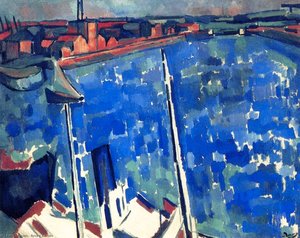
      Charing Cross from sw (1906) de André Derain
      3

      Charing Cross from sw

      1906 · Oil On Canvas · National Gallery of Art, Washington

      Charing Cross from SW: A Fauvist Symphony of London André Derain’s “Charing Cross from SW” isn't merely a depiction of a London landmark; it’s an explosion of feeling, a vibrant declaration of the Fauvist movement at its peak. Painted in 1906, this artwork captures a bustling scene along the Thames, dominated by the iconic Charing Cross bridge, yet rendered through a lens entirely unique to Derain's revolutionary approach to color…

      Landscape at L'Estaque (1906) de André Derain
      4

      Landscape at L'Estaque

      1906 · Oil On Canvas

      To stand before André Derain’s Landscape at L'Estaque is not merely to observe a scene; it is to be enveloped by a burst of pure, unadulterated chromatic energy. Painted in 1906, this oil on canvas stands as a vibrant manifesto of the Fauvist movement—a style that dared to liberate color from the shackles of mere description. Here, the natural world of L'Estaque is rendered not with photographic accuracy, but with…

      Hyde Park (1906) de André Derain
      5

      Hyde Park

      1906 · Oil On Panel · Musee d'Art Moderne de Troyes, Troyes

      To gaze upon André Derain's Hyde Park is to step directly into the effervescent heart of early 20th-century Parisian life. This painting, executed in 1906, is far more than a mere depiction of an afternoon stroll; it is a vibrant celebration of modern leisure captured through the revolutionary lens of Fauvism. The scene unfolds with an almost palpable energy—a tapestry woven from bold color and dynamic movement. We see figures…

      Cypresses (1907) de André Derain
      7

      Cypresses

      1907 · Oil On Panel

      To stand before André Derain’s "Cypresses" is to step directly into the vibrant heart of early twentieth-century French modernism. This captivating oil-on-panel, dating from 1907, is far more than a mere depiction of a landscape; it is an explosion of color and emotion captured by an artist at the zenith of his revolutionary period. The scene unfolds with a profound sense of natural grandeur: a field dotted with resilient pine…

      Portrait of Madame Paul Guillaume with a large hat (1928) de André Derain
      8

      Portrait of Madame Paul Guillaume with a large hat

      1928 · Oil On Canvas

      To stand before André Derain’s Portrait of Madame Paul Guillaume with a large hat is to step directly into the vibrant, charged atmosphere of an early twentieth-century artist's studio. This painting is far more than a mere likeness; it is a meditation on creativity itself. The subject, seated amidst the beautiful chaos of artistic tools—canvases leaning against unseen supports, palettes bearing the ghosts of color—commands our attention with a serene…

      Drying the Sails (1905) de André Derain
      9

      Drying the Sails

      1905 · Oil On Canvas · Muzeul de Artă Fine Pushkin, Moscova

      André Derain’s “Drying the Sails,” painted in 1905, isn't merely a depiction of a harbor scene; it’s an explosion of color and emotion—a quintessential embodiment of the Fauvist movement. Born from a confluence of artistic influences and a desire to break free from traditional representation, this painting captures a fleeting moment on the French coast, imbued with a raw energy that continues to resonate with viewers today. Derain, alongside Henri…

      Mountains at Collioure de André Derain
      10

      Mountains at Collioure

      Oil On Canvas

      In the annals of modern art, few moments capture the raw, unbridled energy of a revolution quite like André Derain’s Mountains at Collioure. Painted during the feverish summer of 1905, this masterpiece serves as a vibrant manifesto of the Fauvist movement, a period when color was liberated from the shackles of reality to serve the needs of pure emotion. As one gazes upon this canvas, the eye is immediately swept…

      André Derain paintings ranked 11 to 100

      Harbour of Collioure (1905) de André Derain
      #13

      Harbour of Collioure

      1905 · Staatsgalerie Stuttgart

      In this oil on canvas, André Derain presents Harbour of Collioure, a work from 1905. The painting captures a Mediterranean port, focusing on the specific light and atmosphere…

      Have it painted by hand →
      Black Scarf (1935) de André Derain
      #14

      Black Scarf

      1935

      To stand before André Derain's "Black Scarf" is to step directly into the effervescent, color-drenched heart of early 20th-century Paris. Painted in 1935, this oil on canvas transcends…

      Order this canvas →
      Landscape (Blue) (1906) de André Derain
      #16

      Landscape (Blue)

      1906

      To stand before André Derain’s Landscape (Blue) is to step directly into the exhilarating heart of early twentieth-century modernism. This painting, executed in 1906, is not merely a…

      Have it painted by hand →
      Landscape near Chatou (1904) de André Derain
      #17

      Landscape near Chatou

      1904

      In the annals of early twentieth-century modernism, few moments capture the raw, unbridled energy of artistic revolution quite like André Derain’s Landscape near Chatou. Painted in 1904, this…

      Have it painted by hand →
      Landscape at Collioure (1905) de André Derain
      #18

      Landscape at Collioure

      1905

      To stand before André Derain’s Landscape at Collioure is to witness the moment when the traditional boundaries of nature were dissolved by a sudden, brilliant explosion of light…

      Bring this light home →
      The Dance (1906) de André Derain
      #19

      The Dance

      1906

      In the annals of modern art, few moments capture the raw, unbridled spirit of rebellion quite like the emergence of Fauvism, and few works embody this revolution as…

      Have it painted by hand →
      Still Life cu fructe (1940) de André Derain
      #20

      Still Life cu fructe

      1940 · Harris Museum - Art Gallery

      André Derain și Natura Vibrantă în „Still Life cu Fructe” În anul 1940, André Derain a creat „Still Life cu Fructe”, o operă emblematică a lui Fauvismul francez…

      Have it painted by hand →
      Cassis de André Derain
      #21

      Cassis

      The artwork titled Cassis, also known as Landscape at Cassis, is an oil on canvas painting. This work was executed by the French artist André Derain in 1907.…

      Bring this light home →
      Music (1904) de André Derain
      #23

      Music

      1904

      The early 20th century was a transformative period for modern art, with the emergence of various movements that challenged traditional techniques and aesthetics. One such movement was Fauvism,…

      Order this canvas →
      Head of a Young Woman (1923) de André Derain
      #25

      Head of a Young Woman

      1923 · Statens Museum For Kunst

      A soulful portrait emerges from a palette of ochre, sienna, and cream. The subject is positioned in a close-up, centered composition that forces an intimate encounter between the…

      Bring this light home →
      Sorrowful Landscape (1946) de André Derain
      #26

      Sorrowful Landscape

      1946

      The Sorrowful Landscape by André Derain is a masterpiece that embodies the essence of Expressionism, a style characterized by its emphasis on conveying intense emotions and inner experiences.…

      Order this canvas →
      Collioure (1905) de André Derain
      #28

      Collioure

      1905

      The early 20th century was a transformative period for modern art, with the emergence of various movements that challenged traditional techniques and aesthetics. One such movement was Fauvism,…

      Bring this light home →
      Martigues (1908) de André Derain
      #30

      Martigues

      1908

      The painting Martigues by André Derain is a quintessential example of the Fauvist art movement. Created in 1908, this oil on canvas work embodies the essence of Fauvism,…

      Bring this light home →
      Harlequin (1923) de André Derain
      #31

      Harlequin

      1923 · Statens Museum For Kunst

      This 1923 oil painting on canvas presents a solitary figure dressed as a Harlequin, captured in a moment of quiet introspection. The subject is seated and holds a…

      Have it painted by hand →
      Boy's Head (1914) de André Derain
      #33

      Boy's Head

      1914 · Statens Museum For Kunst

      In Boy's Head by André Derain, the composition centers on a close-up study of a single human figure. The subject's face is positioned slightly turned to the left,…

      Bring this light home →
      The beautiful model (1923) de André Derain
      #37

      The beautiful model

      1923

      The painting The Beautiful Model by André Derain is a stunning example of Fauvism, a style characterized by vivid colors and emotive brushstrokes. Created in 1923, this oil…

      Order this canvas →
      Fishing Boats, Colioure (1905) de André Derain
      #38

      Fishing Boats, Colioure

      1905 · Metropolitan Museum of Art

      Introduction to the Painting Fishing Boats, Colioure, painted in 1905 by André Derain, is a quintessential example of the Fauvist art movement. This vibrant oil on canvas painting…

      Order this canvas →
      Boats at Colliure de André Derain
      #41

      Boats at Colliure

      André Derain, a French artist and co-founder of the Fauvist movement, created a captivating piece titled Boats at Colliure. This painting is a quintessential representation of the Fauvist…

      Bring this light home →
      The Lighthouse at Collioure (1905) de André Derain
      #42

      The Lighthouse at Collioure

      1905 · Musée d’Art Moderne de la Ville de Paris

      André Derain’s “The Lighthouse at Collioure,” painted in 1905, isn't merely a depiction of a coastal scene; it’s an immersive experience—a vibrant explosion of color and movement that…

      Bring this light home →
      Nude with Folded Arms (1924) de André Derain
      #43

      Nude with Folded Arms

      1924 · Statens Museum For Kunst

      The oil on canvas work titled Nude with Folded Arms was executed by the artist André Derain. This specific painting dates to 1924. It is currently held within…

      Have it painted by hand →
      Golden age (1940) de André Derain
      #44

      Golden age

      1940

      In the sweeping expanse of André Derain’s "Golden Age," viewers are transported into a primordial realm where the boundaries between humanity and nature dissolve into a dramatic, cinematic…

      Bring this light home →
      Fishing Boats, Collioure (1905) de André Derain
      #56

      Fishing Boats, Collioure

      1905 · MoMA - Museum of Modern Art

      Introduction to the Painting Fishing Boats, Collioure, painted in 1905 by André Derain, is a quintessential example of Fauvism, an art movement characterized by bold and vivid colors.…

      Have it painted by hand →
      Landscape (1907) de André Derain
      #57

      Landscape

      1907

      In this mesmerizing 1907 masterpiece, titled Landscape, André Derain invites the viewer into a world where reality is reimagined through the fractured lens of early modernism. The canvas…

      Have it painted by hand →
      Still Life with Pipe (1911) de André Derain
      #58

      Still Life with Pipe

      1911 · Statens Museum For Kunst

      In the 1911 work Still Life with Pipe by André Derain, the composition is centered on a wooden table or ledge. The arrangement consists of a tall reddish-brown…

      Bring this light home →
      Pinewood near Sausset-les-Pins (1913) de André Derain
      #59

      Pinewood near Sausset-les-Pins

      1913 · Statens Museum For Kunst

      The landscape unfolds through a series of leaning, organic forms that define a grove of pine trees. Thick, sweeping brushstrokes trace the bark of the trunks, creating a…

      Order this canvas →
      Le Phare de Collioure de André Derain
      #60

      Le Phare de Collioure

      In the annals of modern art history, few movements captured the raw, unbridled energy of light and emotion quite like Fauvism. At the heart of this revolution stands…

      Order this canvas →
      The Last Supper (1911) de André Derain
      #61

      The Last Supper

      1911 · Art Institute of Chicago

      A Moment of Sacred Tension The air in the room feels heavy, thick with the weight of a final meal. In this 1911 oil on canvas, the scene…

      Order this canvas →
      The road (1932) de André Derain
      #65

      The road

      1932

      To gaze upon André Derain’s The Road is to step into a moment suspended in the golden haze of memory. This oil on canvas, dating from 1932, captures…

      Bring this light home →
      Bacchus dance (1906) de André Derain
      #66

      Bacchus dance

      1906

      Bacchus Dance: A Fauvist Celebration of Movement The early 20th century witnessed a seismic shift in art, marked by movements that boldly challenged established norms. Among these was…

      Have it painted by hand →
      L'Estaque (1906) de André Derain
      #72

      L'Estaque

      1906

      The painting L'Estaque by André Derain is a quintessential example of Fauvism, a style characterized by the use of bold, vibrant colors and energetic brushstrokes. Created in 1906,…

      Bring this light home →
      Boats at Collioure (1905) de André Derain
      #73

      Boats at Collioure

      1905

      Gazing upon André Derain's "Boats at Collioure," one is immediately transported to the sun-drenched shores of the French Riviera. This painting captures more than just a seascape; it…

      Order this canvas →
      Harlequin și Pierrot (1924) de André Derain
      #75

      Harlequin și Pierrot

      1924 · Musée de l'Orangerie

      Harlequin and Pierrot – André Derain: A Fauvist Echo of Melancholy André Derain’s “Harlequin and Pierrot” stands as an arresting testament to the fervor of Fauvism, a movement…

      Bring this light home →
      Portrait of Alice Derain (1921) de André Derain
      #78

      Portrait of Alice Derain

      1921

      To gaze upon André Derain’s Portrait of Alice Derain is to step through a painted portal into a moment suspended in time—a quiet afternoon imbued with the warmth…

      Order this canvas →

      André Derain's canvases, period by period

      What André Derain painted most

      The four subjects that return most often on these canvases, each with its best-loved example.

      Where André Derain's canvases hang

      Cele 8 muzee care dețin cele mai multe dintre picturile de pe această pagină.

      Muzeu Oraș Lucrări lui André Derain Picturi din această listă
      Statens Museum For Kunst, CopenhagaStatens Museum For Kunst Copenhaga 17 Head of a Young Woman, Harlequin, Sitting Female Model, Semi-Nude
      Metropolitan Museum of Art, New YorkMetropolitan Museum of Art New York 4 Houses of Parliament at Night, London, Fishing Boats, Colioure, Lucien Gilbert
      Musée d’Art Moderne de la Ville de Paris, ParisMusée d’Art Moderne de la Ville de Paris Paris 7 The Lighthouse at Collioure, The Gypsy
      MoMA - Museum of Modern Art, New York CityMoMA - Museum of Modern Art New York City 4 London Bridge, Fishing Boats, Collioure
      Art Institute of Chicago, ChicagoArt Institute of Chicago Chicago 3 The Last Supper, Cagnes
      National Gallery of Art, WashingtonNational Gallery of Art Washington 2 Charing Cross from sw
      Musee d'Art Moderne de Troyes, TroyesMusee d'Art Moderne de Troyes Troyes 2 Hyde Park
      Muzeul de Artă Fine Pushkin, MoscovaMuzeul de Artă Fine Pushkin Moscova 2 Drying the Sails

      Decade by decade: André Derain's most celebrated canvas

      1. 1890s
        Funeral (1899) de André Derain
        85 of 100

        Funeral

        Vârsta 10 – 19
      2. 1900s
        bathers (1907) de André Derain
        Canvas 1 of 100

        bathers

        Vârsta 20 – 29

        To stand before André Derain's Bathers is to step directly into the exhilarating heart of the early twentieth century art revolution. This painting, executed in 1907, is not…

      3. 1910s
      4. 1920s
        Portrait of Madame Paul Guillaume with a large hat (1928) de André Derain
        Ranked 8 of 100

        Portrait of Madame Paul Guillaume with a large hat

        Vârsta 40 – 49

        To stand before André Derain’s Portrait of Madame Paul Guillaume with a large hat is to step directly into the vibrant, charged atmosphere of an early twentieth-century artist's…

      5. 1930s
        Black Scarf (1935) de André Derain
        14 of 100

        Black Scarf

        Vârsta 50 – 59

        To stand before André Derain's "Black Scarf" is to step directly into the effervescent, color-drenched heart of early 20th-century Paris. Painted in 1935, this oil on canvas transcends…

      6. 1940s
        Still Life cu fructe (1940) de André Derain
        Canvas 20 of 100

        Still Life cu fructe

        Vârsta 60 – 69 · Harris Museum - Art Gallery

        André Derain și Natura Vibrantă în „Still Life cu Fructe” În anul 1940, André Derain a creat „Still Life cu Fructe”, o operă emblematică a lui Fauvismul francez…

      Your questions on André Derain's paintings, answered

      Which is the most celebrated painting by André Derain?Read the answer

      bathers (1907), followed by London Bridge (1906) and Charing Cross from sw (1906).

      How old was André Derain at the time of bathers?Read the answer

      André Derain, born in 1880, was 27 years old: bathers dates from 1907.

      Which ten paintings is André Derain most famous for?Read the answer

      bathers, London Bridge, Charing Cross from sw, Landscape at L'Estaque, Hyde Park, The Turning Road, L'Estaque - (129.5x195), Cypresses, Portrait of Madame Paul Guillaume with a large hat, Drying the Sails și Mountains at Collioure. Each canvas in the ranking above comes with its year and its museum.

      How many paintings by André Derain are known?Read the answer

      354 works by André Derain are in our catalogue, dated 1899 to 1946.

      Which museums hold André Derain's best-known canvases?Read the answer

      Mostly in Statens Museum For Kunst (Copenhaga), Metropolitan Museum of Art (New York) și Musée d’Art Moderne de la Ville de Paris (Paris); the list above names each museum and its canvases.

      In which years did André Derain paint the most celebrated canvases?Read the answer

      In 1900s, which gave 45 of the 100 works on this page, bathers among them.

      What are the first and the last of André Derain's famous canvases?Read the answer

      The earliest canvas here is Funeral (1899); the latest is Sorrowful Landscape (1946).

      Which subjects return most often in André Derain's paintings?Read the answer

      Landscape (17), Trees (12) și Boats (10), across the 100 works on this page.

      What did André Derain usually paint with?Read the answer

      Oil On Canvas, used in 46 of the 100 works on this page.

      To which art movement does André Derain belong?Read the answer

      Fauvist expressionism, as the canvases on this page show.

      What can I see by André Derain at the Statens Museum For Kunst?Read the answer

      The Statens Museum For Kunst, Copenhaga holds 10 of the works on this page, among them Head of a Young Woman, Harlequin și Sitting Female Model, Semi-Nude.

      Can I order a hand-painted copy of a painting by André Derain?Read the answer

      Yes. Every painting on this page can be ordered from its own page as an oil reproduction painted by hand, or as a fine art print, in the size you choose.

      André Derain: the painter's story

      Tinerețe, Familie și Formare

      În anul 1880, André Derain a păşit pe lume în Chatou, un orășel pitoresc situat în regiunea Yvelines, din Franța. Primii săi ani au fost modelați de peisajele liniștite din Île-de-France, unde o curiozitate naturală pentru mediul înconjurător a început să prindă rădăcini. Până în 1895, acesta începuse deja să studieze pe cont propriu, căutând să înțeleagă lumea vizuală prin propriile sale ochi, mai degrabă decât prin instruirea formală. Această perioadă de explorare autodidactă i-a permis să își dezvolte un mod personal de a vedea, înainte ca rigoarea unei academii să îi poată impune propria voință.

      Calea pictorului nu era singura sa perspectivă asupra vieții. În 1898, a căutat o educație mai structurată, studiind pentru scurt timp pentru a deveni inginer la Académie Camillo. Tocmai în aceste săli academice, viața sa a luat o întorsătură decisivă; a participat la cursuri de pictură sub îndrumarea lui Eugène Carrière și acolo l-a întâlnit pe Henri Matisse. Această întâlnire avea să îi schimbe cursul vieții, îndepărtându-l de precizia ingineriei și îndreptându-l spre posibilitățile expresive ale pânzei. Ambițiile sale erau puternice, însă progresul său a fost întrerupt de datoriile cetățenești. Din septembrie 1901 până în 1904, și-a îndeplinit serviciul militar la Commercy, o perioadă de separare care i-a amânat dezvoltarea artistică în plin început.

      Revoluția Fauvistă și Collioure

      Vara anului 1905 a adus o schimbare bruscă și luminoasă în viețile lui André Derain și Henri Matisse. Aceștia au călătorit împreună în orășelul de pescuit Collioure, un loc în care lumina părea să exijeze o nouă modalitate de a vedea. În acest cadru côtier, artistul a început să se îndepărteze de regulile tradiționale de reprezentare. Opera sa din perioada 1905-1906 a fost definită de un colorism tulburător, care a șocat pe cei obițnuiți cu nuanțe mult mai subtile. A utilizat desene simplificate și o aplicare exagerată a culorii pentru a surprinde esența peisajului, preferând nuanțe intense, neamestecate, în locul paletelor naturaliste ale lumii reale.

      Această abordare radicală a picturii a stârnit o reacție feroce din partea publicului și a presei. Artiștii au fost întâmpinați cu o uimire atât de mare, încât au fost boteziți Les Fauves, sau „bestiile sălbatice”. Acest nume, deși intenționat ca o ironie la adresa lipsei lor de disciplină percepute, a fost adoptat cu entuziasm de către grup. Peisajele lui André Derain din acei ani nu căutau să replice decorul așa cum ar face o fotografie, ci foloseau, în schimb, culoarea ca pe o expresie directă a sentimentului. Traseul pensulei era îndrăzneț, iar paletele de culori erau uimitoare, marcând o ruptură față de tot ceea ce se pictase până atunci.

      Picturile din Londra și Comenzi

      În martie 1906, dealerul de artă Ambroise Vollard a perceput o nouă direcție pentru artist și l-a trimis la Londra. Aceasta nu a fost o simplă excursie, ci o comandă deliberată de a surprinde esența unui oraș care fusese de mult subiectul multor pictori. André Derain a ajuns în capitala britanică și a început să privească peisajul urban printr-o lentilă de culoare intensă, îndepărtându-se de liniștea câmpiei franceze. El a căutat să traducă energia metropolei într-o experiență simțită, nu doar vizualizată.

      Artistul a realizat o serie de treizeci de picturi în această perioadă, îndreptându-și atenția către Tamisă și către arhitectura impunătoare a orașului. Nu a încercat să replice cețelele gri adesea asociate râului; dimpotrivă, a folosit nuanțe îndrăznețe pentru a depinde mișcarea apei și siluetele podurilor. Viziunea sa asupra orașului a reprezentat o ruptură radicală față de studiile atmosferice ale celor care îi precedaseră. El s-a concentrat pe greutatea structurală a monumentelor și pe lumina mutante a mediului urban.

      Aceste lucrări au rămas printre cele mai populare creații ale sale, oferind o perspectivă proaspătă asupra unui decor consacrat. Concentrându-se pe Tamisă și pe Tower Bridge, el a capturat un sentiment de modernitate și de mișcare neîncetată. Aplicarea densă a vopselei și paleta neconvențională i-au permis să portretizeze orașul ca pe o entitate vie, care respiră prin jocuri de lumină și umbră.

      Evoluția către Clasicism și Stilul Gotic

      Pe măsură ce anii treceau, impulsurile mai sălbatice ale tinereții sale au început să se liniștească. În jurul anului 1907, o schimbare profundă i-a cuprins mâna și privirea, iar opera sa a căpătat o notă mai austeră. Culorile neîncetuite care îi definiseră odinioară pânzele au cedat locul unei abordări mai disciplinate. Această tranziție nu a fost o ruptură bruscă, ci mai degrabă o mișcare graduală către structură și formă. André Derain a căutat o altă fel de adevăr, unul descoperit în forța liniștită a compoziției, rather decât în șocul provocat de culoare.

      În perioada dintre anii 1911 și 1914, artistul a intrat într-o etapă pe care mulți au numit-o perioada sa gotică. În această vreme, interesul său pentru Maștrii Vechi și pentru formele clasice a devenit mult mai pronunțat. El s-a îndepărtat de pigmenții stridenti și neamestecați ai primilor ani, căutând în schimb o modalitate de a vedea mai controlată și intelectual riguroasă. A fost o perioadă de căutare, în care a privit înapoi către fundamentele artei pentru a găsi o nouă cale de a merge înainte.

      Primul Război Mondial a schimbat din nou peisajul vieții sale și al artei sale. În urma conflictului, André Derain a apărut ca un lider al unei mișcări cunoscute sub numele de „Returul la ordine”. Acest nou clasicism căuta stabilitatea și claritatea într-o eră a schimbărilor profunde. El a devenit o figură centrală în această renaștere, ajutând la ghidarea direcției artei către o estetică mai structurată și tradițională. Opera sa a reflectat această dorință de ordine, îmbrățișând un sentiment de permanență care lipsise în anii săi de experimentare.

      Anii de la sfârșit și moartea

      Pe măsură ce anii treceau, pasiunile artistului s-au extins dincolo de suprafața pânzii, pătrundând în sfera teatrală. În anul 1919, André Derain și-a îndreptat privirea creativă către scenă, proiectând decorurile pentru baletul La Boutique Fantasque pentru celebra companie Ballets Russes. Această incursione în designul scenografic și al costumelor a dezvăluit un simț al ritmului și al spectacolului care completa perfect estetica sa în continuă evoluție. Capacitatea sa de a captiva atenția prin formă și culoare a continuat să fie recunoscută de către contemporanii săi, fapt care i-a adus distincția de laureat al Premiului Carnegie în 1928.

      Deceniile de la sfârșitul viei sale au fost marcate de o căutare constantă a unui nou clasicism, o detașare de impulsurile sălbatice ale tinereții. André Derain a rămas o figură activă în lumea artei, chiar și în contextul în care peisajul politic al Europei se transforma radical în jurul său. În cele din urmă, acesta a plecat dintre noi pe 8 septembrie 1954, lăsând în urmă o moștenire artistică vastă, care a parcurs și a explorat numeroase moduri de exprimare.

      Moștenire și Influență

      Răscâncirile mișcării Fauviste, pe care André Derain a ajutat să o stabilească alături de Henri Matisse, au ajuns mult dincolo de șocul inițial provocat de alegerile lor cromatice. Prin ruperea legăturilor tradiționale dintre culoare și lumea fizică, el a ajutat la deschiderea drumului către inovațiile structurale ale Cubismului și către intensitatea emoțională întâlnită în expresionismul modern. Căutarea sa neîncetată a unui nou limbaj vizual a făcut ca lecțiile învățate în peisajele însorite ale Collioure să călătorească, în cele din urmă, spre nord, influențând dezvoltarea Expresionismului German. El nu a pictat pur și simplu; el a ajutat la redefinirea însăși scopului gestului pictural.

      Influența sa a rămas o prezență constantă pentru generațiile ulterioare de artiști care au căutat să echilibreze energia brută a primilor sale ani cu disciplina structurată a lucrărilor sale tardive. Chiar și atunci când propriul său stil s-a îndreptat către o abordare mai austeră și clasică, spiritul radical al tinereții sale a continuat să rezoneze. El a demonstrat că un artist poate oscila între nuanțele sălbatice, neamestecate, ale tinereții și o rigoare intelectuală mai controlată, fără a-și pierde adevărul creativ. Această adaptabilitate a asigurat faptul că prezența sa în istoria artei moderne a rămas incontestabilă, chiar și pe măsură ce mișcările pe care le-a ajutat să le dea naștere evoluau în forme de ansamblu complet noi.

      • Charing Cross Bridge, London
      • Harlequin and Pierrot
      • The Last Supper of Jesus

      Toate cele 354 de lucrări ale lui André Derain →