Atelier — Livrare gratuită în întreaga lume — Livrare în 2–6 săptămâni
      Donatelo, 1386 – 1466

      Donatelo: Cele 100 cele mai cunoscute picturi

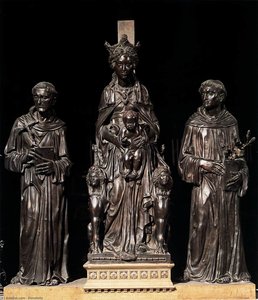
      Dintre toate picturile lui Donatelo, Madonna and Child between St Francis and St Anthony (1448) este cea mai celebră; aceasta este expusă în Basilica Sant'Antonio din Padua, Padova. Imediat după ei urmează Cantoria (1439) și Entombment (1447). Dintre cele 148 opere ale lui Donatelo din catalogul nostru, acestea 100 sunt cele mai celebre, fiecare fiind prezentată cu data creării, muzeul de păstrare și povestea sa.

      Clasate în funcție de scorul nostru de popularitate, care combină numărul de căutări, vizite și comenzi pentru fiecare operă. Actualizat Octombrie 2026. Fiecare pictură de pe această pagină poate fi comandată sub formă de reproducere pictată manual în ulei pe pânză de in, sau ca print de artă, realizat la dimensiunea aleasă de dumneavoastră.

      Portretul lui Donatelo
      Donatelo · 1386 – 1466
      Născut · Decedat
      1386 – 1466, Florența
      Mișcare
      Renașterea timpurie
      Lucrări din catalogul nostru
      148
      Cele mai celebre
      Madonna and Child between St Francis and St Anthony (1448)
      Cele mai multe lucrări la
      Museo dell'Opera del Duomo

      Cele mai celebre 10 picturi ale lui Donatelo

      Madonna and Child between St Francis and St Anthony (1448) de Donatelo
      1

      Madonna and Child between St Francis and St Anthony

      1448 · Bronze · Basilica Sant'Antonio din Padua, Padova

      In the heart of the Italian Renaissance, where the shadows of antiquity met the burgeoning light of humanism, Donatello breathed life into metal with his masterpiece, Madonna and Child between St Francis and St Anthony. Created around 1448, this profound bronze sculpture serves as a window into a period of unparalleled spiritual and artistic transformation. The composition is a masterclass in symmetrical grace; at its center, the Virgin Mary cradles…

      Cantoria (1439) de Donatelo
      2

      Cantoria

      1439 · Marble · Museo dell'Opera del Duomo, Florența

      To stand before Donatello’s Cantoria is to witness the very moment the Renaissance found its pulse. Completed around 1439 for the Cathedral of Santa Maria del Fiore in Florence, this monumental marble relief is far more than a functional singers' gallery; it is a breathtaking explosion of movement and spiritual ecstasy. While much of the era’s sculpture remained tethered to the static, formal traditions of the Byzantine style, Donatello broke…

      Entombment (1447) de Donatelo
      3

      Entombment

      1447 · Oil On Canvas · Basilica Sant'Antonio din Padua, Padova

      To stand before Donatello's depiction of the Entombment is to be enveloped in an atmosphere so thick with grief, it feels almost palpable. This scene transcends mere narrative illustration; it is a profound meditation on loss, sacrifice, and the solemn weight of human devotion. The composition draws the viewer into the immediate aftermath of unimaginable tragedy. Jesus Christ lies within the tomb, not merely as a subject, but as the…

      Miracle of the Repentant Son (1447) de Donatelo
      4

      Miracle of the Repentant Son

      1447 · Acrylic · Basilica Sant'Antonio din Padua, Padova

      Donatello’s bronze sculpture, "Miracle of the Repentant Son," transcends mere representation; it's a profound meditation on faith, remorse, and divine grace. Created in 1447 during the apex of his artistic maturity, this work embodies the burgeoning humanism and emotional depth that defined the Early Renaissance in Florence. More than just a depiction of a biblical miracle – the restoration of a severed limb by St. Anthony – it’s a study…

      Crucifix (1412) de Donatelo
      5

      Crucifix

      1412 · Acrylic On Canvas · Basilica di Santa Croce, Florentina

      Donatello's 1412 Crucifix, housed within the Basilica of Santa Croce in Florence, isn’t merely a depiction of Christ on the cross; it’s a visceral experience. This early Renaissance masterpiece transcends simple representation, plunging the viewer into the heart of Christian theology and embodying the profound tension between suffering and redemption. Crafted from richly-toned pearwood, the sculpture immediately commands attention with its remarkably realistic portrayal of the human form – a…

      Annunciation (1435) de Donatelo
      6

      Annunciation

      1435 · Acrylic On Canvas · Basilica di Santa Croce, Florentina

      Donatello’s 1435 Annunciation, housed within the Basilica di Santa Croce in Florence, isn’t merely a depiction of a biblical moment; it’s a profound meditation on grace, humility, and the transformative power of faith. Commissioned during a pivotal period of artistic innovation – bridging the Gothic and Renaissance eras – this sculpture embodies Donatello's revolutionary approach to humanism and his masterful command of classical forms. The scene unfolds with an arresting…

      St George (detail) (1416) de Donatelo
      7

      St George (detail)

      1416 · Marble · Museo Nazionale del Bargello, Florența

      The marble figure of St. George, sculpted by Donatello around 1416, stands as more than just a depiction of a saint; it's a pivotal moment in the evolution of Renaissance sculpture – a testament to the artist’s innovative spirit and his profound understanding of human form and narrative. Originally gracing the north wall of Orsanmichele, Florence’s imposing guildhall, this statue immediately captivated viewers with its dynamic energy and strikingly realistic…

      Herod's Banquet (1427) de Donatelo
      8

      Herod's Banquet

      1427 · Bronze · Baptisterul din Siena, Siena

      Donatello's Herod’s Banquet, crafted around 1427 for the baptismal font of Siena’s San Giovanni Baptistery, isn’t merely a depiction of a biblical episode; it’s a profound meditation on power, betrayal, and the chilling consequences of unchecked ambition. Commissioned amidst the competitive fervor of Renaissance Florence and Siena, this bronze relief stands as a testament to Donatello's burgeoning mastery – a pivotal work that showcases his innovative approach to sculpture and…

      Bearded Prophet (1418) de Donatelo
      9

      Bearded Prophet

      1418 · Bronze · Museo dell'Opera del Duomo, Florența

      In the heart of the Florentine Renaissance, where the shadows of antiquity began to dance with the light of new humanism, Donatello breathed life into bronze with his Bearded Prophet. Created around 1418, this monumental figure is far more than a mere sculpture; it is a profound meditation on the weight of divine knowledge and the solemnity of faith. As one gazes upon the weathered surface of the bronze, there…

      St. John the Evangelist (1415) de Donatelo
      10

      St. John the Evangelist

      1415 · Marble

      St. John the Evangelist is a marble sculpture created by the artist Donatello. Dated 1410, this work depicts one of the twelve apostles of Jesus. The subject is rendered as an elderly man, presented with a face etched with lines and a gaze that suggests a state of contemplation and wisdom. This choice of representation presents the figure as a philosopher-like individual.

      Picturile lui Donatelo clasate de la 11 la 100

      St Mark (1411) de Donatelo
      #11

      St Mark

      1411 · Orsanmichele

      Within the echoing halls of Orsanmichele in Florence, stands Donatello's sculpture of St. Mark – more than just a depiction of a biblical figure; it is a profound…

      Prophet with Scroll (detail) (1418) de Donatelo
      #12

      Prophet with Scroll (detail)

      1418 · Museo dell'Opera del Duomo

      To stand before this detail of a prophet is to encounter a moment suspended in time—a profound echo from the heart of the Italian Renaissance. The marble itself,…

      St John on Patmos (1428) de Donatelo
      #13

      St John on Patmos

      1428

      The St John on Patmos painting, created by the renowned artist Donatello in 1428, is a stunning example of Renaissance art. This masterpiece is a testament to Donatello's…

      David (detail) (1409) de Donatelo
      #14

      David (detail)

      1409 · Museo Nazionale del Bargello

      To stand before this detail of Donatello's David is to encounter not merely a sculpture, but a profound meditation on nascent heroism. The marble seems to breathe with…

      Pietà (1447) de Donatelo
      #15

      Pietà

      1447 · Basilica Sant'Antonio din Padua

      In the quiet sanctity of the Basilica di Sant’Antonio in Padua, there exists a moment frozen in bronze, a profound intersection of divine tragedy and human vulnerability. Donatello’s…

      Pulpit (on the right) (1465) de Donatelo
      #16

      Pulpit (on the right)

      1465 · Basilica di San Lorenzo

      In the hallowed, sun-drenched silence of the Basilica of San Lorenzo in Florence, there exists a sculptural marvel that captures the very essence of a soul nearing its…

      Prophet Jeremiah (1423) de Donatelo
      #17

      Prophet Jeremiah

      1423 · Museo dell'Opera del Duomo

      To stand before Donatello’s Prophet Jeremiah is to encounter not merely carved stone, but the very weight of human contemplation. This marble masterpiece transports us into a moment…

      Prophet Habakkuk (1427) de Donatelo
      #18

      Prophet Habakkuk

      1427 · Museo dell'Opera del Duomo

      In the heart of Florence, within the hallowed halls of the Museo dell'Opera del Duomo, stands a figure that seems to breathe with the weight of centuries. Donatello’s…

      Pulpit (1438) de Donatelo
      #19

      Pulpit

      1438 · Museum of the Cathedral

      The Pulpit by Donatello emerged from the stone and the shared vision of a workshop. In 1438, the artist completed this marble structure, working alongside collaborators Michelozzo and…

      Miracle of the New-born Child (detail) (1447) de Donatelo
      #20

      Miracle of the New-born Child (detail)

      1447 · Basilica Sant'Antonio din Padua

      This bronze detail captures an aged figure rendered with profound realism. The sculpture focuses on the upper torso and head, where deep wrinkles and facial contours convey experience…

      Miracle of the Ass (1447) de Donatelo
      #21

      Miracle of the Ass

      1447 · Basilica Sant'Antonio din Padua

      In the heart of the Italian Renaissance, amidst the burgeoning humanism of Florence, Donatello breathed life into metal with his 1447 masterpiece, The Miracle of the Ass. This…

      Cantoria (detail) (1439) de Donatelo
      #22

      Cantoria (detail)

      1439 · Museo dell'Opera del Duomo

      The “Cantoria,” or Singing Gallery, crafted by the towering figure of Donatello between 1439 and 1440, isn't merely a decorative element within Florence’s Duomo; it’s an immersive experience,…

      Evangelist Luke (1428) de Donatelo
      #23

      Evangelist Luke

      1428

      The "Evangelist Luke" is a remarkable painting created by the renowned artist Donatello in 1428. This stunning work of art, crafted from stucco and measuring 215 x 215…

      Comandă această pânză →
      Pulpit (detail) (1438) de Donatelo
      #24

      Pulpit (detail)

      1438 · Museo dell'Opera del Duomo

      To look closely at this detail from the pulpit is to witness a quiet revolution in stone. The marble figures emerge from their setting with a sense of…

      Christ before Pilate and Caiaphas (1460) de Donatelo
      #25

      Christ before Pilate and Caiaphas

      1460 · Basilica di San Lorenzo

      Donatello's 1460 bronze sculpture, “Christ Before Pilate and Caiaphas,” stands as a monumental achievement within the burgeoning artistic landscape of the Italian Renaissance. Housed in the San Lorenzo…

      David (1409) de Donatelo
      #26

      David

      1409 · Museo Nazionale del Bargello

      To stand before Donatello’s David is not merely to observe a sculpture; it is to witness a suspended moment of profound human potential. Carved from luminous marble, this…

      St George and the Dragon (1416) de Donatelo
      #27

      St George and the Dragon

      1416 · Museo Nazionale del Bargello

      Gazing upon this marble bust is to confront a moment frozen in time—a powerful confluence of classical revivalism and raw human emotion. The subject, rendered with breathtaking verisimilitude,…

      Saint George (1417) de Donatelo
      #28

      Saint George

      1417 · Museo Nazionale del Bargello

      In the heart of Florence, where the echoes of the Quattrocento still resonate through the cobblestone streets, stands a figure of unparalleled poise and quiet strength. Donatello’s Saint…

      St John the Evangelist (detail) (1410) de Donatelo
      #29

      St John the Evangelist (detail)

      1410 · Museo dell'Opera del Duomo

      Donatello's “St John the Evangelist (detail),” a remarkably preserved marble sculpture created around 1410-1411, stands as a pivotal work in the transition from the late Gothic to the…

      St John the Evangelist (1410) de Donatelo
      #30

      St John the Evangelist

      1410 · Museo dell'Opera del Duomo

      St John the Evangelist is a marble sculpture created by the artist Donatello. The work is dated 1410. It depicts one of the twelve apostles of Jesus, specifically…

      North pulpit (1460) de Donatelo
      #33

      North pulpit

      1460 · Basilica di San Lorenzo

      To stand before the North Pulpit is to witness a profound moment in the evolution of Western art, where the rigid structures of the Middle Ages began to…

      David (1430) de Donatelo
      #35

      David

      1430 · Museo Nazionale del Bargello

      Michelangelo’s “David,” a colossal marble sculpture residing within the Galleria dell’Accademia in Florence, isn't merely a depiction of a biblical hero; it’s an embodiment of human potential, a…

      Adu această lumină acasă →
      Miracle of the Avaricious Man's Heart (1447) de Donatelo
      #37

      Miracle of the Avaricious Man's Heart

      1447 · Basilica Sant'Antonio din Padua

      Within the hallowed, sun-drenched walls of the Basilica di Sant’Antonio in Padua, there exists a moment frozen in time, a bronze whisper of the divine captured by the…

      Allegoric Figure of a Boy (Atys), rear view (1430) de Donatelo
      #38

      Allegoric Figure of a Boy (Atys), rear view

      1430 · Museo Nazionale del Bargello

      To stand before an image evoking this bronze figure is to feel the very breath of the Renaissance wind against one's skin. This depiction, titled Allegoric Figure of…

      St George (detail) (1416) de Donatelo
      #39

      St George (detail)

      1416 · Museo Nazionale del Bargello

      In the heart of Florence, within the hallowed halls of the Museo Nazionale del Bargello, resides a fragment of eternal courage. Donatello’s St. George, specifically captured in this…

      Cantoria (detail) (1439) de Donatelo
      #40

      Cantoria (detail)

      1439 · Museo dell'Opera del Duomo

      In the heart of Florence, within the hallowed halls of the Museo dell’Opera del Duomo, lies a fragment of divine ecstasy known as the Cantoria. Created by the…

      Marzocco (1419) de Donatelo
      #43

      Marzocco

      1419 · Museo Nazionale del Bargello

      In the heart of the Renaissance, amidst the political tremors and cultural rebirth of 15th-century Florence, Donatello breathed life into stone to create one of the city's most…

      Prophet Jeremiah (detail) (1423) de Donatelo
      #44

      Prophet Jeremiah (detail)

      1423 · Museo dell'Opera del Duomo

      Donatello's “Prophet Jeremiah (detail),” a poignant study carved from pristine white marble around 1423-1427, transcends mere portraiture to become a profound meditation on faith, suffering, and the weight…

      Comandă această pânză →
      Cantoria (detail) (1439) de Donatelo
      #45

      Cantoria (detail)

      1439 · Museo dell'Opera del Duomo

      Donatello's "Cantoria," a breathtaking detail from the larger marble relief adorning the south sacristy doors of the Duomo in Florence, isn’t merely a sculpture; it’s a vibrant snapshot…

      Comandă această pânză →
      Herod's Banquet (detail) (1427) de Donatelo
      #46

      Herod's Banquet (detail)

      1427 · Baptisterul din Siena

      In the hallowed, quiet corridors of the Siena Baptistery, there exists a moment frozen in time, captured not in paint, but in the enduring strength of bronze. Donatello’s…

      Miracle of the Avaricious Man's Heart (detail) (1447) de Donatelo
      #47

      Miracle of the Avaricious Man's Heart (detail)

      1447 · Basilica Sant'Antonio din Padua

      The Miracle of the Avaricious Man's Heart is a remarkable bronze relief created by the renowned Italian artist Donatello in 1447. This stunning work of art is located…

      Bearded Prophet (detail) (1418) de Donatelo
      #48

      Bearded Prophet (detail)

      1418 · Museo dell'Opera del Duomo

      Donatello's "Bearded Prophet" – often referred to as “Pensieroso,” meaning “the Thinker” – stands not merely as a sculpture, but as a profound meditation on humanity’s relationship with…

      Cantoria (detail) (1439) de Donatelo
      #49

      Cantoria (detail)

      1439 · Museo dell'Opera del Duomo

      Donatello's Cantoria, a breathtaking marble relief sculpture from the Duomo di Firenze (Florence Cathedral), isn’t merely a decorative element; it’s a vibrant snapshot of Renaissance ambition and artistic…

      Comandă pictură realizată manual →
      Prophet Jeremiah (1423) de Donatelo
      #50

      Prophet Jeremiah

      1423 · Museo dell'Opera del Duomo

      Prophet Jeremiah is a marble sculpture created by the artist Donatello. Dated 1423, the work represents a significant religious subject through the depiction of the biblical prophet. The…

      South pulpit (1460) de Donatelo
      #51

      South pulpit

      1460 · Basilica di San Lorenzo

      Donatello’s Passion Pulpit, a monumental bronze ensemble housed within the Basilica of San Lorenzo in Florence, isn’t merely a religious depiction; it’s a visceral embodiment of the artist’s…

      Comandă această pânză →
      Deposition (1465) de Donatelo
      #52

      Deposition

      1465 · Basilica di San Lorenzo

      Donatello's Deposition, completed in 1465, isn’t merely a sculpture; it’s a profound meditation on loss, faith, and the raw vulnerability of humanity. Carved from rich, burnished bronze –…

      St George (1416) de Donatelo
      #53

      St George

      1416 · Museo Nazionale del Bargello

      Donatello’s “St. George,” sculpted in 1416 for the Museo Nazionale del Bargello in Florence, isn’t merely a depiction of a biblical hero; it’s a potent distillation of Renaissance…

      Cantoria (1439) de Donatelo
      #54

      Cantoria

      1439 · Museo dell'Opera del Duomo

      Within the hallowed halls of the Museo dell'Opera del Duomo in Florence resides a sculpture that transcends mere stone and marble – it is an embodiment of Renaissance…

      Faith (1427) de Donatelo
      #55

      Faith

      1427 · Baptisterul din Siena

      Donatello's "Faith," crafted in bronze around 1427-1429 for the baptismal font within Siena Cathedral, stands as a pivotal work bridging the late Gothic and burgeoning Early Renaissance styles.…

      Old Sacristy (1428) de Donatelo
      #56

      Old Sacristy

      1428 · Basilica di San Lorenzo

      To step into the Old Sacristy within the Basilica of San Lorenzo is to leave the chaotic bustle of Florence behind and enter a realm of profound mathematical…

      Annunciation (detail) (1435) de Donatelo
      #57

      Annunciation (detail)

      1435 · Basilica di Santa Croce

      Donatello's "Annunciation," specifically this exquisite detail from the relief adorning the Cavalcanti Chapel in Santa Croce, Florence, stands as a pivotal moment in the burgeoning Renaissance. Crafted around…

      Comandă această pânză →
      Pulpit (on the left) (1465) de Donatelo
      #58

      Pulpit (on the left)

      1465 · Basilica di San Lorenzo

      Within the serene confines of San Lorenzo church in Florence resides a sculpture that transcends mere marble; it is a profound meditation on faith, humanity, and the very…

      Comandă această pânză →
      Prophet with Scroll (1418) de Donatelo
      #59

      Prophet with Scroll

      1418 · Museo dell'Opera del Duomo

      Donatello’s “Prophet with Scroll,” crafted between 1415 and 1418, stands as a pivotal work in the burgeoning Early Renaissance of Florence. More than simply a depiction of biblical…

      St John the Evangelist (1410) de Donatelo
      #60

      St John the Evangelist

      1410 · Museo dell'Opera del Duomo

      Donatello’s “St John the Evangelist,” completed between 1410 and 1411, isn't merely a sculpture; it’s an invitation into a realm of contemplative grace. Carved from pristine white marble,…

      Adu această lumină acasă →
      Prophet Habakkuk (1427) de Donatelo
      #61

      Prophet Habakkuk

      1427 · Museo dell'Opera del Duomo

      In the hallowed, sun-drenched halls of the Museo dell'Opera del Duomo in Florence, there exists a figure that seems to breathe with the heavy weight of centuries. Donatello’s…

      Entombment (1465) de Donatelo
      #62

      Entombment

      1465 · Basilica di San Lorenzo

      Donatello's “Entombment,” completed around 1465 in Florence, stands as a monumental achievement within the Early Renaissance—a sculpture that transcends mere representation to embody profound human emotion and theological…

      Cantoria (9) (1439) de Donatelo
      #63

      Cantoria (9)

      1439 · Museo dell'Opera del Duomo

      Donatello's "Cantoria," completed in 1439 for the Duomo of Florence, isn’t merely a decorative element; it’s a vibrant embodiment of Renaissance ideals – a testament to human ingenuity,…

      Adu această lumină acasă →
      Lamentation over the Dead Christ de Donatelo
      #64

      Lamentation over the Dead Christ

      Victoria and Albert Museum

      Donatello, one of the most influential artists of the Italian Renaissance, created the Lamentation Over The Dead Christ around 1455-1460. This remarkable bronze relief is currently housed in…

      St George (1416) de Donatelo
      #65

      St George

      1416 · Museo Nazionale del Bargello

      Donatello's *Saint George*, sculpted in 1416 during the nascent Renaissance, is more than just a marble statue; it’s a potent distillation of classical ideals interwoven with burgeoning humanist…

      St John the Baptist (1438) de Donatelo
      #66

      St John the Baptist

      1438 · Basilica di Santa Maria Gloriosa dei Frari

      Donatello’s “St. John the Baptist,” sculpted around 1438 in Carrara marble and now residing within the serene Chapel of St. John the Baptist at Santa Maria Gloriosa dei…

      Comandă această pânză →
      Chellini Madonna, verso de Donatelo
      #68

      Chellini Madonna, verso

      Victoria and Albert Museum

      Donatello's "Chellini Madonna," a bronze relief cast in the mid-15th century, stands as a remarkably intimate and profoundly moving work within the artist’s oeuvre. More than simply a…

      St Cosmas and St Damian (1428) de Donatelo
      #69

      St Cosmas and St Damian

      1428

      Two figures emerge from an ornate stone backdrop, their presence defined by a quiet, shared intensity. These men, identified as the twin saints Cosmas and Damian, are positioned…

      St Mary Magdalen (1457) de Donatelo
      #70

      St Mary Magdalen

      1457 · Museo dell'Opera del Duomo

      St Mary Magdalen is a sculptural work created by the Italian Renaissance sculptor Donatello. This figure is slightly larger than life size and was originally made for the…

      Bust of Niccolo da Uzzano (1430) de Donatelo
      #71

      Bust of Niccolo da Uzzano

      1430 · Museo Nazionale del Bargello

      Donatello's 1430s marble bust of Niccolò da Uzzano is more than just a sculpted likeness; it’s a profound meditation on leadership, duty, and the quiet strength required to…

      Crucifixion (1465) de Donatelo
      #72

      Crucifixion

      1465 · Museo Nazionale del Bargello

      A Moment Frozen in Time: Donatello’s Crucifixion The bronze sculpture “Crucifixion” by Donatello stands as an enduring testament to the artistic fervor of the Florentine Renaissance, capturing not…

      Prophet Habbakuk (1426) de Donatelo
      #74

      Prophet Habbakuk

      1426

      To stand before this marble figure is to encounter a man caught in a moment of profound spiritual tension. Created between 1423 and 1426, this sculpture of the…

      The Feast of Herod (1427) de Donatelo
      #75

      The Feast of Herod

      1427

      The air in the room feels heavy, thick with the tension of a moment that refuses to pass. Around a central banquet table, figures are caught in a…

      St Stephen and St Lawrence (1428) de Donatelo
      #76

      St Stephen and St Lawrence

      1428

      The artwork presents two figures positioned within a recessed, arched niche. These figures are rendered in a relief sculpture technique, where the forms emerge from a flat plane…

      Evangelist Mark (1428) de Donatelo
      #77

      Evangelist Mark

      1428

      This high-relief marble sculpture captures a moment of quiet scholarly devotion. Within an oval frame, the figure of the Evangelist is seated at a writing desk, his attention…

      Pulpit (1438) de Donatelo
      #79

      Pulpit

      1438 · Cathedral

      A Masterpiece of Renaissance Sculpture: Donatello's Marble Pulpit Donatello’s marble pulpit, created in 1438 for the Church of San Lorenzo in Florence, stands as a pivotal work within…

      Comandă pictură realizată manual →
      Funeral Monument to John XXIII (detail) (1435) de Donatelo
      #81

      Funeral Monument to John XXIII (detail)

      1435 · Battistero di San Giovanni

      The Funeral Monument to John XXIII (detail) is a work by the sculptor Donatello. This specific fragment captures a moment of stillness within a larger funerary structure. It…

      Chellini Madonna, recto de Donatelo
      #82

      Chellini Madonna, recto

      Victoria and Albert Museum

      To gaze upon the Chellini Madonna is to step into the very heart of the Florentine Renaissance, where the divine and the human intersect through the masterful hands…

      Hope (1427) de Donatelo
      #83

      Hope

      1427 · Baptisterul din Siena

      Within the quiet, hallowed space of the Baptistery of San Giovanni in the Siena Cathedral, a figure emerges from the shadows of a shallow marble niche. This is…

      St Mark (1411) de Donatelo
      #84

      St Mark

      1411 · Orsanmichele

      In the Orsanmichele of Florence, a marble figure of St Mark emerges from its Gothic niche, marking a departure from the rigid traditions of the Middle Ages. Created…

      St Rossore (1425) de Donatelo
      #86

      St Rossore

      1425 · Museo Nazionale di San Matteo

      In the quiet presence of Donatello’s St Rossore, one does not merely observe a sculpture; one encounters a profound dialogue between the earthly and the divine. Created around…

      Musician Angels (1447) de Donatelo
      #90

      Musician Angels

      1447 · Basilica Sant'Antonio din Padua

      In the hallowed stillness of the Basilica of Saint Anthony in Padua, there exists a moment where time seems to suspend itself, captured forever in the shimmering bronze…

      Pânzele lui Donatelo, perioadă cu perioadă

      Cele mai picturate opere ale lui Donatelo

      Cele patru teme care apar cel mai des pe aceste pânze, fiecare cu cel mai apreciat exemplu al său.

      Unde sunt expuse picturile lui Donatelo

      Cele 8 muzee care dețin cele mai multe dintre picturile de pe această pagină.

      Muzeu Oraș Lucrări lui Donatelo Picturi din această listă
      Museo dell'Opera del Duomo, FlorențaMuseo dell'Opera del Duomo Florența 22 Cantoria, Bearded Prophet, Prophet with Scroll (detail)
      Museo Nazionale del Bargello, FlorențaMuseo Nazionale del Bargello Florența 13 St George (detail), David (detail), David
      Basilica Sant'Antonio din Padua, PadovaBasilica Sant'Antonio din Padua Padova 12 Madonna and Child between St Francis and St Anthony, Entombment, Miracle of the Repentant Son
      Basilica di San Lorenzo, FlorentinaBasilica di San Lorenzo Florentina 12 Pulpit (on the right), Christ before Pilate and Caiaphas, Deposition (detail)
      Piazza del Santo, PadovaPiazza del Santo Padova 6 Equestrian Statue of Gattamelata (8), Statuia ecvestră Gattamelatei lui Donatello, Equestrian Statue of Gattamelata
      Baptisterul din Siena, SienaBaptisterul din Siena Siena 4 Herod's Banquet, Herod's Banquet (detail), Faith
      Battistero di San Giovanni, FlorentinaBattistero di San Giovanni Florentina 4 Funeral Monument to John XXIII (detail), Funeral Monument to John XXIII (detail), Funeral Monument to John XXIII (detail)
      Basilica di Santa Croce, FlorentinaBasilica di Santa Croce Florentina 3 Crucifix, Annunciation, Annunciation (detail)

      Deceniu cu deceniu: cea mai celebrată pânză a lui Donatelo

      1. 1400s
        David (detail) (1409) de Donatelo
        14 din 100

        David (detail)

        Vârsta 14 – 23 · Museo Nazionale del Bargello

        To stand before this detail of Donatello's David is to encounter not merely a sculpture, but a profound meditation on nascent heroism. The marble seems to breathe with…

      2. 1410s
        Crucifix (1412) de Donatelo
        Pânză 5 din 100

        Crucifix

        Vârsta 24 – 33 · Basilica di Santa Croce

        Donatello's 1412 Crucifix, housed within the Basilica of Santa Croce in Florence, isn’t merely a depiction of Christ on the cross; it’s a visceral experience. This early Renaissance…

      3. 1420s
        Herod's Banquet (1427) de Donatelo
        8 din 100

        Herod's Banquet

        Vârsta 34 – 43 · Baptisterul din Siena

        Donatello's Herod’s Banquet, crafted around 1427 for the baptismal font of Siena’s San Giovanni Baptistery, isn’t merely a depiction of a biblical episode; it’s a profound meditation on…

      4. 1430s
        Cantoria (1439) de Donatelo
        Poziția 2 din 100

        Cantoria

        Vârsta 44 – 53 · Museo dell'Opera del Duomo

        To stand before Donatello’s Cantoria is to witness the very moment the Renaissance found its pulse. Completed around 1439 for the Cathedral of Santa Maria del Fiore in…

      5. 1440s
        Madonna and Child between St Francis and St Anthony (1448) de Donatelo
        1 din 100

        Madonna and Child between St Francis and St Anthony

        Vârsta 54 – 63 · Basilica Sant'Antonio din Padua

        In the heart of the Italian Renaissance, where the shadows of antiquity met the burgeoning light of humanism, Donatello breathed life into metal with his masterpiece, Madonna and…

      6. 1450s
        St Mary Magdalen (1457) de Donatelo
        70 din 100

        St Mary Magdalen

        Vârsta 64 – 73 · Museo dell'Opera del Duomo

        St Mary Magdalen is a sculptural work created by the Italian Renaissance sculptor Donatello. This figure is slightly larger than life size and was originally made for the…

      7. 1460s
        Pulpit (on the right) (1465) de Donatelo
        Pânză 16 din 100

        Pulpit (on the right)

        Vârsta 74 – 80 · Basilica di San Lorenzo

        In the hallowed, sun-drenched silence of the Basilica of San Lorenzo in Florence, there exists a sculptural marvel that captures the very essence of a soul nearing its…

      Întrebările dumneavoastră despre picturile lui Donatelo, răspunsuri

      Care este cea mai celebră pictură a lui Donatelo?Citește răspunsul

      Madonna and Child between St Francis and St Anthony (1448), Basilica Sant'Antonio din Padua, Padova. Urmează Cantoria (1439) și Entombment (1447).

      Ce vârstă avea Donatelo la momentul creării Madonna and Child between St Francis and St Anthony?Citește răspunsul

      Donatelo, născut în 1386, avea 62 de ani: Madonna and Child between St Francis and St Anthony datează din 1448.

      Pentru care zece picturi este cel mai cunoscut Donatelo?Citește răspunsul

      Madonna and Child between St Francis and St Anthony, Cantoria, Entombment, Miracle of the Repentant Son, Crucifix, Annunciation, St George (detail), Herod's Banquet, Bearded Prophet și St. John the Evangelist. Fiecare pictură din clasamentul de mai sus este însoțită de anul creării și de muzeul în care este expusă.

      Câte picturi ale lui Donatelo sunt cunoscute?Citește răspunsul

      În catalogul nostru sunt 148 lucrări ale lui Donatelo, datate între 1406 și 1465.

      În ce muzee se află cele mai cunoscute picturi ale lui Donatelo?Citește răspunsul

      În principal în Museo dell'Opera del Duomo (Florența), Museo Nazionale del Bargello (Florența) și Basilica Sant'Antonio din Padua (Padova); lista de mai sus enumeră fiecare muzeu și picturile sale.

      În ce ani a pictat Donatelo cele mai celebre picturi?Citește răspunsul

      În 1430s, care a inclus 22 dintre cele 100 lucrări de pe această pagină, Cantoria printre acestea.

      Care sunt prima și ultima pictură celebră a lui Donatelo?Citește răspunsul

      Cea mai veche pânză de aici datează din Prophet (left of the Porta della Mandorla) (1406), iar cea mai recentă este din Pulpit (on the right) (1465).

      Ce teme apar cel mai des în picturile lui Donatelo?Citește răspunsul

      Renaissance (46), Donatello (36) și Sculpture (35), din cele 100 lucrări de pe această pagină.

      Cu ce picta de obicei Donatelo?Citește răspunsul

      Marble, utilizat în 30 dintre cele 100 lucrări de pe această pagină.

      Din ce mișcare artistică face parte Donatelo?Citește răspunsul

      Renașterea timpurie, așa cum demonstrează picturile de pe această pagină.

      Ce pot vedea de la Donatelo la Museo dell'Opera del Duomo?Citește răspunsul

      Museo dell'Opera del Duomo, Florența deține 21 dintre lucrările de pe această pagină, printre care se numără Cantoria, Bearded Prophet și Prophet with Scroll (detail).

      Pot comanda o copie pictată manual a unei picturi a lui Donatelo?Citește răspunsul

      Da. Orice pictură de pe această pagină poate fi comandată de pe pagina sa dedicată, sub formă de reproducere pictată manual în ulei sau ca print de artă, în dimensiunea aleasă de dumneavoastră.

      Donatelo: povestea pictorului

      Viața și Identitatea lui Donatelo

      Născut sub numele de Donato di Niccolò di Betto Bardi, omul cunoscut de istorie sub numele de Donatelo și-a petrecut întreaga existență înconjurat de zidurile Florenței, din Italia. A venit pe lume în jurul anului 1386, într-o epocă în care orașul începea să-și rescrie propria imagine prin piatră și bronz. Prezența sa în peisajul florentin a fost constantă, fiind marcată de o mână sigură și de o atenție profundă pentru realitatea fizică a subiectelor sale. A fost un sculptor al Renașterii italiene care înțelegea cu perfecție greutatea materialelor pe care le manipula, de la duritatea marmurii până la fluiditatea cearii.

      Opera sa nu a fost o căutare solitară a perfecțiunii, ci mai degrabă un șir de răspunsuri la nevoile timpului său. El a pășit prin străzile Florenței, lucrând în diverse mediumuri și lăsând în urmă o serie de figuri care capturau o prezență umană specifică și vibrantă. Deși era cunoscut ca fiind un om amabil și apreciat de cei din jur, s-a confruntat cu dificultățile practice ale gestionării unei ateliere. Adesea, își asuma mai multe proiecte decât mâinile sale puteau finaliza într-un timp rezonabil, lăsând uneori ultimele detalii în seama altora sau livrând lucrările mai târziu decât se aștepta. Această tendință spre supraîncărcare sugerează un om mai preocupat de actul creației în sine decât de administrarea unui atelier de sculptură.

      Donatelo a murit la Florența pe 13 decembrie 1466, lăsând în urmă o moștenire artistică ce a schimbat radical modul în care sculptorii abordau forma umană, îndepărtându-se de tradițiile rigide ale trecutului către ceva mult mai ancorat în realitate și plin de expresivitate. Viața sa a fost indisolubil legată de oraș, iar identitatea sa rămâne, până astăzi, inseparabilă de solul florentin pe care a trăit și a creat.

      Tinerețea și formarea artistică

      Născut în Florența, Italia, Donatelo a crescut într-un oraș care a servit drept epicentru principal pentru Renașterea în plină expansiune. Acest mediu i-a oferit energia culturală esențială pentru dezvoltarea sa, petrecându-și primii ani fiind imersat în atmosfera locală, unde îndepărtarea de tradițiile rigide medievale începea deja să prindă contur. Legătura sa cu peisajul florentin a fost profundă, valorile în continuă evoluție ale orașului modelându-i abordarea incipientă asupra formei și a figurii umane.

      Formarea sa a implicat o studiere atentă a sculpturii clasice, iar această focalizare pe antichitate l-a ajutat să evolueze spre un stil nou, care prioritiza realismul și umanismul. Înainte de a-și găsi propria voce, el a învățat stilul Gotic Internațional de la Lorenzo Ghiberti. Această perioadă de învățare i-a permis să stăpânească abilitățile tehnice ale meseriei sale înainte de a începe să devieze de la acele tradiții consacrate. El a lucrat cu o varietate de materiale, inclusiv piatră, bronz, lemn, argilă, stucco și ceară, utilizând adesea sticla în moduri inventive pentru a obține efecte vizuale specifice.

      Patronaj, Atelier și Comenzi

      Mâinile lui Donatelo erau adesea ocupate de o activitate neîntreruptă. Avea obiceiul de a accepta mai multă treabă decât îi permitea programul, o tendință care, uneori, însemna că proiectele erau finalizate cu întârziere sau trecute în mâinile altora pentru a fi completate. Această încărcătură de lucru intensă necesita o prezență constantă în atelierul său, unde lucra alături de mai mulți asistenți. Un grup de patru persoane reprezenta numărul tipic pentru studioul său, ajutându-l să gestioneze cerințele fizice impuse de prelucrarea pietrei, a bronzului și a argilei.

      Familia Medici i-a oferit un sprijin constant, asigurându-i tipul de patronaj care i-a permis să își desfășoare creația pe parcursul diferitelor etape ale vieții sale. Amprenta sa artistică s-a întins mult dincolo de străzile Florenței; el a călătorit pentru a lucra la comenzi în Roma, Padua și Siena. Această mișcare continuă între orașe însemna că practica sa nu a fost niciodată limitată la un singur loc, deoarece își purta metodele și asistenții în diverse centre de activitate.

      Tehnici Inovatoare și Stil Artistic

      Abordarea lui Donatelo față de sculptură a marcat o detașare profundă de tradițiile rigide ale stilului Gotic Internațional, deschizând calea către o nouă eră a expresivității. El a pus bazele stilului Renașterii timpurii, promovând un tip de realism revoluționar, care se sprijina pe o înțelegere viscerală a formei umane și pe modul în care lumina interacționează cu suprafața materialului. Talenul său nu a fost limitat de un singur medium; din schimb, el a explorat cu pasiune piatra, bronzul, lemnul, argila, stucul și ceara, găsind chiar și modalități inventive de a utiliza sticla pentru a adăuga detalii fascinante figurilor sale.

      Una dintre cele mai semnificative contribuții sale tehnice a fost dezvoltarea tehnicii rilievo stiacciato. Aceasta reprezintă un tip de bas-relief extrem de superficial, unde sculptura este atât de subtilă, încât creează o iluzie a adâncimii prin variații imperceptibile de grosime. Prin utilizarea acestei metode, Donatelo reușea să sugereze perspectiva și distanța pe o suprafață aproape plată, oferind o profunzime psihologică și spațială neobișnuită pentru epoca sa. Opera sa emană adesea o tensiune poetică între greutatea fizică a materialului și mișcarea expresivă a subiectului, reușind să transforme marmura în ceva la fel de moale ca pielea sau să infuzeze bronzului o energie musculară, densă și plină de viață.

      • David (bronz)
      • Monumentul Ecvestru al lui Gattamelata
      • Sfântul Gheorghe (marmură)

      Capodopere Sculpturale Cheie

      În anul 1416, Donatelo a finalizat sculptura Sfântul Gheorghe, o figură din marmură care reușește să surprindă o senzație de curaj neclintit. Sculptura îl înfățișează pe cavalerul în armură, echilibrat pe cătoe, renunțând la postura tradițională de contrapposto în favoarea unei dinamice subtile. Se poate simți, aproape palpabil, efortul corpului muscular care pulsează sub suprafața rece a pietrei. Această operă a fost una dintre cele multe comenzi primite de la gildele din Florența, menite să decoreze nișele exterioare ale bisericii Orsanmichele.

      Bronzul său, David, rămâne un punct de cotitură esențial în istoria sculpturii, fiind prima sculptură masculină nudă, liberă, realizată de la antichitate încoace. Figura este surprinsă cu un zâmbet enigmatic, cu un picior sprijinit pe capul decapitat al lui Goliat. Dacă versiunea din marmură a acestui subiect a fost o comandă timpurie, varianta din bronz este remarcabilă prin fizicul său delicat, androgin, și prin modul în care folosește nuditatea tânărului pentru a crea un contrast puternic cu sabia grea din mână.

      Pe parcursul carierei sale, artistul a explorat materiale și dimensiuni complet diferite. Monumentul Ecvestru al lui Gattamelata, creat în 1453, este o lucrare masivă din bronz situată în Padua. În jurul anului 1440, el a realizat-o pe Magdala Pocnită, o sculptură din lemn de plop alb. Această figură este emaciata și zveltă, îndepărtându-se de reprezentările tipice ale unei tinere frumoase. Textura sculpturii este aspră și extrem de detaliată, revelând o latură diferită a măiestriei sale tehnice.

      • Sfântul Gheorghe, 1416
      • David (bronz), c. 1440
      • Magdala Pocnită, c. 1440
      • Monumentul Ecvestru al lui Gattamelata, 1453

      Moștenire și influență artistică

      Abordarea lui Donatelo față de formă nu a găsit o acceptare imediată în cadrul comunității sale. Opera sa a parcurs etape distincte, evoluând de la o focalizare pe monumentalitatea clasică spre un simț tot mai accentuat al expresivității. Pe măsură ce cariera sa avansa, acest stil a căpătat teren, devenind în cele din urmă cea mai populară metodă de creație în regiune. Influența sa a depășit cu mult granițele Florenței, răspândindu-se în alte curți italiene și afectându-i pe artiștii din întreaga Europă.

      Modul în care a manipulat materialele i-a permis să atingă o gamă vastă de profunzimi emoționale. A trecut de la prezența grea și solidă a primelor sale figuri din marmură, la lucrări mult mai aspre, chiar brutale, în ultimii săi ani. Această tranziție a demonstrat o dorință profundă de a explora condiția umană prin texturi variate, de la suprafețele netede ale pietrei până la lemnul texturat și emaciat al sculpturilor sale religioase tardive. Capacitatea sa de a surprinde senzația de mișcare și greutatea psihologică a schimbat radical modul în care sculptorii abordau figura umană.

      • David (bronz)
      • Statuia ecvestră a lui Gattamelata
      • Sfântul Gheorghe
      • Magdala Pocăința

      Toate cele 148 de lucrări ale lui Donatelo →