Atelier — Livrare gratuită în întreaga lume — Livrare în 2–6 săptămâni
      Edgar Degas, 1834 – 1917

      Edgar Degas's 100 Most Famous Paintings

      Dans un Café (1876) is the painting Edgar Degas is best remembered for; it belongs to the Musée d'Orsay, Paris. Femeia uscându-se and The Dance Class (1873) complete the trio of best-loved canvases. Our catalogue counts 1,074 works by Edgar Degas. Here are the 100 most famous, with the year, the museum and the story of each canvas.

      Clasate în funcție de scorul nostru de popularitate, care combină numărul de căutări, vizite și comenzi pentru fiecare operă. Actualizat Octombrie 2026. Each painting on this page can be ordered as an oil reproduction painted by hand on linen canvas, or as a fine art print, made to the size you choose.

      Portretul lui Edgar Degas
      Edgar Degas · 1834 – 1917
      Născut · Decedat
      1834 – 1917, Paris
      Mișcare
      Impresionism
      Lucrări din catalogul nostru
      1.074
      Cele mai celebre
      Dans un Café (1876)
      Cele mai multe lucrări la
      Metropolitan Museum of Art

      The ten best-loved paintings by Edgar Degas

      Dans un Café (1876) de Edgar Degas
      1

      Dans un Café

      1876 · Ulei pe pânză · Musée d'Orsay, Paris

      Piesa „Dans un Café” (1876) a lui Edgar Degas este o reprezentare poignantă a culturii cafenelelor pariziene, capturând singurătatea și introspecția vieții urbane din secolul al XIX-lea. Această capodoperă îi invită pe spectatori într-un moment de contemplare liniștită, unde două figuri stau una lângă alta, dar rămân în lumi complet diferite, fiecare fiind absorbită în propriile gânduri.

      Femeia uscându-se de Edgar Degas
      2

      Femeia uscându-se

      Acrilic pe pânză întinsă · National Gallery, Londra

      Un Moment de Repos Intim: Explorând „Femeia uscându-se” de Degas Edgar Degas și piesa sa „Femeia uscându-se” reprezintă un desen pastel captivant, care întrupește spiritul Impressionismului și, mai specific, al mișcării *Intimiste*. Această operă nu este doar o simplă reprezentare a unei nude, ci o explorare a momentelor de intimitate, a vulnerabilității și a frumuseții liniștite a vieții de zi cu zi – teme centrale în viziunea artistică a lui…

      The Dance Class (1873) de Edgar Degas
      3

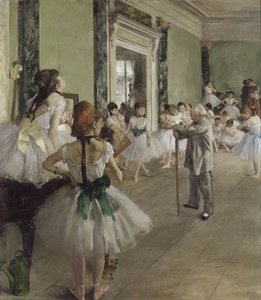
      The Dance Class

      1873 · Oil On Canvas · Musée d'Orsay, Paris

      To step into Edgar Degas’s “The Dance Class” is to transcend the boundaries of time and enter a sanctuary of disciplined grace. Painted around 1873, this masterpiece does not merely present a scene of balletic rehearsal; it offers an intimate, almost voyeuristic window into the quiet intensity of the dance studio. Unlike the grand, staged spectacles often associated with the opera, Degas directs our gaze toward the unvarnished reality of…

      The Bellelli Family de Edgar Degas
      4

      The Bellelli Family

      Oil On Canvas · Musée d'Orsay, Paris

      In the quiet, shadowed corners of a Parisian room, Edgar Degas captures something far more profound than a mere family gathering. The Bellelli Family, painted between 1858 and 1867, stands as an exquisite masterwork that transcends the boundaries of traditional portraiture. It is not simply a record of faces, but a psychological landscape where every gaze and posture whispers of unspoken tensions and deep-seated emotions. As one gazes upon this…

      Interior (also known as The Rape) (1868) de Edgar Degas
      5

      Interior (also known as The Rape)

      1868 · Ulei pe pânză · Philadelphia Museum of Art, Philadelphia

      Edgar Degas’s “Interior,” often referred to as “The Rape,” is not merely a painting; it's an experience—a carefully constructed tableau of psychological tension and unspoken drama. Completed in 1868, this grisaille masterpiece resides within the Philadelphia Museum of Art, yet its power transcends its physical location, resonating with viewers long after they’ve turned away. It’s a work that invites speculation, prompting us to confront uncomfortable truths about human relationships and…

      Portraits in a New Orleans Cotton Office de Edgar Degas
      6

      Portraits in a New Orleans Cotton Office

      Portraits in a New Orleans Cotton Office Edgar Degas, one of the most celebrated artists of the Impressionist movement, gifted us Portraits in a New Orleans Cotton Office, an oil painting that encapsulates the very essence of his uncle’s cotton brokerage business during its calamitous bankruptcy. Completed in 1873, this masterpiece transcends mere visual representation; it stands as a testament to Degas' unparalleled skill and occupies a significant place within…

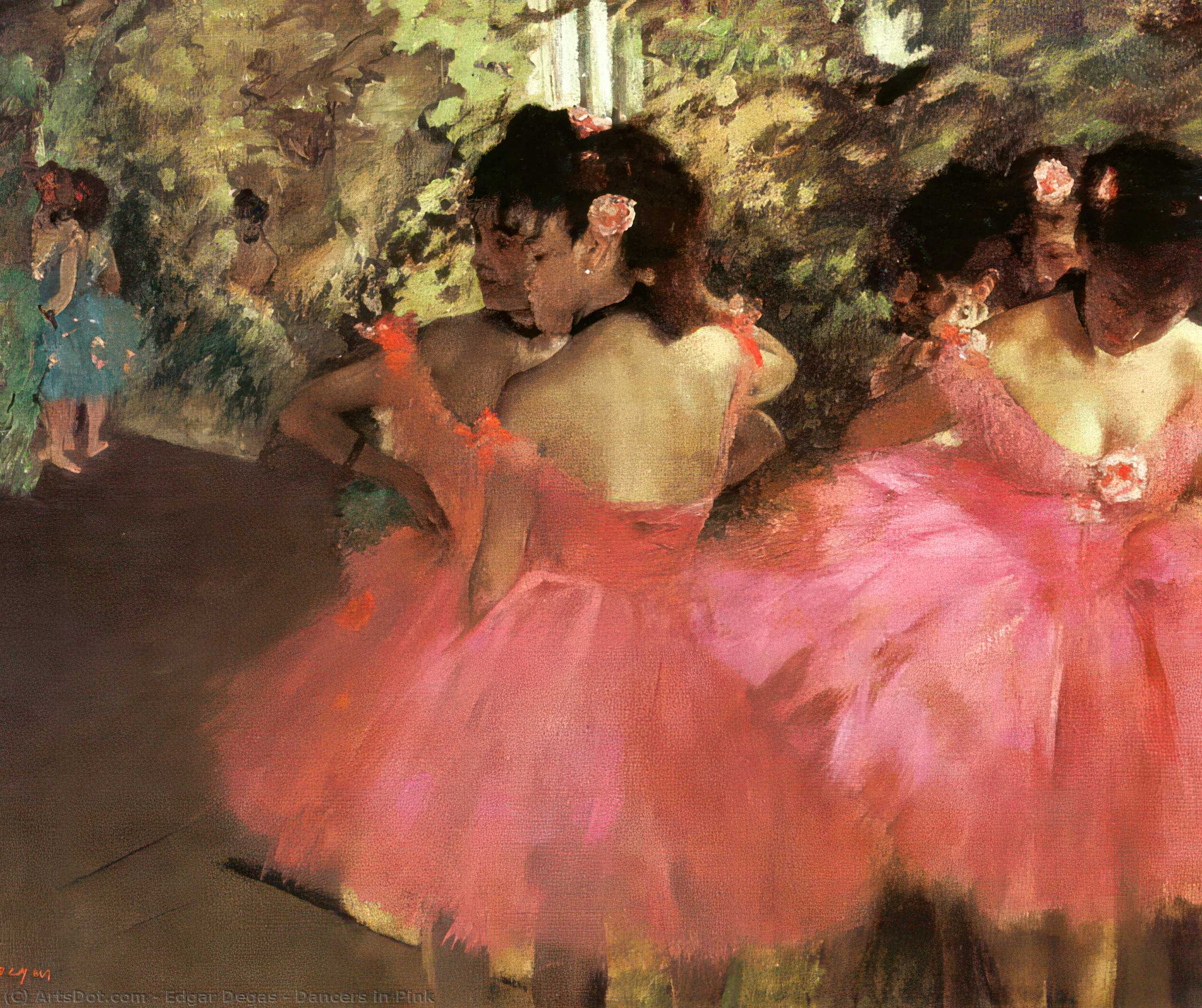
      Dansatoare în roz (1885) de Edgar Degas
      7

      Dansatoare în roz

      1885 · Ulei pe pânză · Hill-Stead Museum, Farmington

      Edgar Degas, un artist paradoxal și profund fascinant, ne oferă cu "Dancers in Pink" (1885) o fereastră spre lumea vibrantă și efemeră a baletului parizian. Deși adesea asociat cu mișcările impresioniste, Degas respingea această etichetă, preferând să se definească ca un realist meticulos, capturând viața așa cum o vedea cu o acuratețe remarcabilă. Această lucrare nu este doar o reprezentare a unei scene de balet; este o meditație asupra frumuseții,…

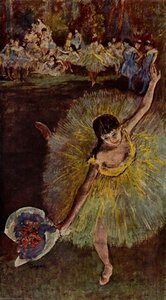
      Dansatoare cu buchet de flori (Steaua baletului) (1878) de Edgar Degas
      8

      Dansatoare cu buchet de flori (Steaua baletului)

      1878 · Acrilic pe pânză întinsă

      „Dancer cu Buchet de Flori” (The Star of the Ballet), pictată de Edgar Degas în 1878, nu este doar o reprezentare a unei balerine; este o captură efemeră, un moment suspendat în timp – o respirație reținută între efort și grație. Această operă emblematică din colecția Musée d'Orsay ne invită într-o lume vibrantă, dar intimă, a teatrului de balet parizian, nu prin spectacolul grandios, ci prin observație atentă și profundă.…

      "Miss Lola, au Cirque Fernando, NG L" translates to "Mila Lola, la Cirque Fernando, NG L" in Romanian. (1879) de Edgar Degas
      9

      "Miss Lola, au Cirque Fernando, NG L" translates to "Mila Lola, la Cirque Fernando, NG L" in Romanian.

      1879 · Ulei pe pânză

      În inima vibrantă a Parisului epocii Belle Époque, unde teatrele și circurile dominau peisajul urban, s-a născut o operă de artă care transcende limitele genurilor: "Miss Lola, au Cirque Fernando" de Edgar Degas. Această pictură, realizată în 1879, nu este doar o reprezentare a unei acrobatice, ci o fereastră către un univers al frumuseții efemere, al ambiției și al măreției spectacolelor din secolul al XIX-lea. Degas, un artist cu o…

      Dansatori la bară 1 (1888) de Edgar Degas
      10

      Dansatori la bară 1

      1888 · Ulei pe pânză · The Phillips Collection, Washington, D.C.

      „Dancers at the Barre 1” nu este doar o pictură; este o fereastră către un univers intim, un moment capturat din viața vibrantă a Parisului la sfârșitul secolului al XIX-lea. Edgar Degas, un artist cu o viziune complexă și adesea contradictorie – considerat de el însuși realist, dar adesea asociat cu impresionismul – ne oferă aici o perspectivă profundă asupra lumii balerinii, o lume de disciplină, frumusețe efemeră și o…

      Edgar Degas: canvases 11 to 100 of the ranking

      Femeie spălând în baie (1892) de Edgar Degas
      #12

      Femeie spălând în baie

      1892

      O Reprezentare Intimă a Vieții Cotidiene Această operă de artă excepțională surprinde un moment liniștit și privat al unei femei absorbite în rutina sa zilnică — spălarea în…

      Order this canvas →
      Infirmiera (1873) de Edgar Degas
      #13

      Infirmiera

      1873

      În inima artei moderne se află o lucrare care transcende simpla reprezentare vizuală, devenind un portal către emoții și reflecții profunde: “Infirmiera” (The Nurse), pictată de Edgar Degas…

      Have it painted by hand →
      Într-un Cafe, și numit de Edgar Degas
      #14

      Într-un Cafe, și numit

      Grand Palais

      „În Cafea”, pictată de Hilaire-Germain-Edgar Degas în jurul anului 1876, nu este doar o simplă reprezentare a două figuri care savurează o seară parisiană; este un studiu meticulos…

      Bring this light home →
      Dancers (1898) de Edgar Degas
      #15

      Dancers

      1898

      A Glimpse Behind the Curtain: Edgar Degas’s “Dancers” (1898) This captivating pastel work by Edgar Degas offers a rare and intimate look beyond the dazzling spectacle of the…

      Have it painted by hand →
      Clasa de Dans (1874) de Edgar Degas
      #16

      Clasa de Dans

      1874 · Metropolitan Museum of Art

      Edgar Degas’s “Clasa de Dans” (1874) este mai mult decât o simplă pictură; este o fereastră deschisă către lumea fascinantă și riguroasă a baletului la Parisul sfârșitului de…

      Order this canvas →
      Caii de curse la Longchamp (1874) de Edgar Degas
      #17

      Caii de curse la Longchamp

      1874 · Muzeul de Artă Plastică din Boston

      O privire asupra timpului liber parizian: Descifrarea operei *Race Horses at Longchamp* de Degas Obra lui Edgar Degas, *Race Horses at Longchamp* (1874), nu este doar o simplă…

      Bring this light home →
      Dansatoare pe scenă (1880) de Edgar Degas
      #18

      Dansatoare pe scenă

      1880 · Hamburger Kunsthalle

      O clipă trecătoare de grație: Explorarea operei „Dansatoare pe scenă” de Degas Această lucrare captivantă în pastel, realizată de Edgar Degas, ne transportă în inima lumii baletului parizian…

      Order this canvas →
      The Star de Edgar Degas
      #20

      The Star

      Edgar Degas, a name synonymous with Impressionism, possessed a singular fascination that transcended mere artistic pursuit; he was utterly captivated by the world of ballet. Within his extensive…

      Order this canvas →
      Head of a Woman (1874) de Edgar Degas
      #24

      Head of a Woman

      1874 · National Gallery

      Step closer, and you might find yourself caught in the stillness of this moment. There is no grand theatricality here, only the presence of an unknown woman, perhaps…

      Have it painted by hand →
      Two harlequins (1886) de Edgar Degas
      #25

      Two harlequins

      1886

      Edgar Degas, a titan of French Impressionism, stands apart from his peers not merely for stylistic innovation but also for an unyielding dedication to capturing the quiet dramas…

      Order this canvas →
      Yellow Dancers (In the Wings) (1875) de Edgar Degas
      #28

      Yellow Dancers (In the Wings)

      1875 · Art Institute of Chicago

      Three female figures occupy the foreground, positioned in a diagonal arrangement that leads the eye from the upper middle toward the lower right. The composition focuses on a…

      Bring this light home →
      Café Singer (1879) de Edgar Degas
      #29

      Café Singer

      1879 · Art Institute of Chicago

      A female singer occupies the center of this oil on canvas composition, her upper torso and head captured in a tight crop. The figure is positioned against a…

      Bring this light home →
      The Milliners (1882) de Edgar Degas
      #30

      The Milliners

      1882 · J. Paul Getty Museum

      Two women sit at a worktable that cuts across the space at a sharp, unsettling angle. The room is crowded with the dark, rounded silhouettes of hat stands,…

      Bring this light home →
      Women Combing Their Hair (1876) de Edgar Degas
      #31

      Women Combing Their Hair

      1876 · The Phillips Collection

      Hilaire-Germain-Edgar Degas’s “Women Combing Their Hair,” painted circa 1876, is more than a simple depiction of domestic activity; it’s a profound meditation on movement, observation, and the fleeting…

      Have it painted by hand →
      A Roman Beggar Woman (1857) de Edgar Degas
      #33

      A Roman Beggar Woman

      1857 · Birmingham Museum and Art Gallery

      The artist’s brushstrokes are visible yet controlled, contributing to the painting's tactile quality—a characteristic that distinguishes Realism from Impressionism’s emphasis on optical illusion. Notably, Degas employed impasto—thickly applied…

      Have it painted by hand →
      At the Ballet (1881) de Edgar Degas
      #34

      At the Ballet

      1881

      A Glimpse Behind the Curtain: Decoding Degas’s “At the Ballet” Edgar Degas's 1881 pastel work, *At the Ballet*, offers a captivating and unusually intimate view into the world…

      Have it painted by hand →
      The Blue Dancers de Edgar Degas
      #36

      The Blue Dancers

      A Glimpse Behind the Curtain: Degas’s “The Blue Dancers” Edgar Degas's “The Blue Dancers,” painted in 1897, is more than just a depiction of ballerinas; it’s an intimate…

      Order this canvas →
      Orchestra of the Opera (1869) de Edgar Degas
      #40

      Orchestra of the Opera

      1869

      Edgar Degas' "Orchestra of the Opera," painted in 1869, isn’t merely a depiction of musicians; it’s a meticulously observed slice of Parisian life, a backstage tableau brimming with…

      Order this canvas →
      The Bather (La Baigneuse) (1895) de Edgar Degas
      #41

      The Bather (La Baigneuse)

      1895 · Reading Public Museum

      The painting depicts a woman reclining on her side in a bathtub filled with water. She is positioned centrally within the frame, bathed in diffused natural light filtering…

      Have it painted by hand →
      Russian Dancers (1899) de Edgar Degas
      #42

      Russian Dancers

      1899

      A Glimpse into Movement and Modernity: Degas’s “Russian Dancers” Edgar Degas, a master of capturing fleeting moments and modern life, presents us with a captivating scene in “Russian…

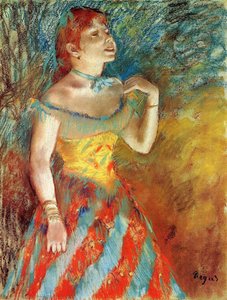
      Bring this light home →
      Singer in Green (1884) de Edgar Degas
      #46

      Singer in Green

      1884 · Metropolitan Museum of Art

      In the heart of 1884 Paris, amidst the gaslit glow of cabarets and the rhythmic pulse of urban nightlife, Edgar Degas captured a moment that transcends time. Singer…

      Order this canvas →
      Woman Combing Her Hair (1894) de Edgar Degas
      #48

      Woman Combing Her Hair

      1894 · Metropolitan Museum of Art

      A Moment of Intimate Reflection: Degas’s *Woman Combing Her Hair* Edgar Degas's 1894 pastel, *Woman Combing Her Hair*, is a captivating study in quiet intimacy and the beauty…

      Bring this light home →
      Woman at a Window (1872) de Edgar Degas
      #51

      Woman at a Window

      1872 · Courtauld Gallery

      Edgar Degas's “Woman at a Window,” painted in 1872, is more than just a depiction of a figure observing the world outside; it’s a masterful exploration of light,…

      Order this canvas →
      Ballet Scene (1880) de Edgar Degas
      #52

      Ballet Scene

      1880 · Dixon Gallery and Gardens

      Ballet Scene is a painting by Edgar Degas. The composition focuses on a single female dancer positioned toward the front right of the stage. This figure is rendered…

      Order this canvas →
      Four Dancers (1902) de Edgar Degas
      #53

      Four Dancers

      1902

      To stand before Four Dancers is to step directly into a moment suspended in time—a breath held just before the music swells, or perhaps, the perfect echo after…

      Order this canvas →
      A Carriage at the Races (1872) de Edgar Degas
      #54

      A Carriage at the Races

      1872 · Muzeul de Artă Plastică din Boston

      The painting depicts a horse-drawn carriage situated on a grassy field. Several horses are visible within the scene; some are positioned in the foreground while others are further…

      Have it painted by hand →
      Lady with a Parasol (1871) de Edgar Degas
      #55

      Lady with a Parasol

      1871 · Courtauld Gallery

      The scene unfolds through Lady with a Parasol, a work painted by Edgar Degas in 1871. This piece captures a fleeting moment of existence, frozen in time through…

      Order this canvas →
      Singer with a glove (1878) de Edgar Degas
      #57

      Singer with a glove

      1878

      To gaze upon Degas's depiction of "Singer with a glove" is to be instantly transported into the vibrant, yet fleeting, atmosphere of a Parisian cabaret in the late…

      Order this canvas →
      Mme Jacques Fourchy (1883) de Edgar Degas
      #58

      Mme Jacques Fourchy

      1883

      Edgar Degas's "Mme Jacques Fourchy," painted in 1883, isn’t merely a portrait; it’s a carefully constructed tableau vivant—a captured moment brimming with subtle observation and quiet intensity. This…

      Have it painted by hand →
      Field of Flax (1892) de Edgar Degas
      #59

      Field of Flax

      1892

      The artwork is a pastel depiction of a landscape featuring a field of flax. In the foreground, there are bright yellow flowers scattered throughout the scene. A diamond-shaped…

      Order this canvas →
      The Return of the Herd (1896) de Edgar Degas
      #60

      The Return of the Herd

      1896 · New Walk Museum - Art Gallery

      The painting depicts a rural scene featuring two horses positioned on a road in front of a house. One horse is situated toward the left side of the…

      Bring this light home →
      Dansul În Studioul Operei (1895) de Edgar Degas
      #62

      Dansul În Studioul Operei

      1895 · Muzeul Norton Simon

      A Glimpse Behind the Curtain: Degas’s “Dance Rehearsal” “Dance Rehearsal in the Studio of the Opera,” painted in 1895 by Edgar Degas, transcends mere depiction; it's a profound…

      Have it painted by hand →
      Group of Dancers (1905) de Edgar Degas
      #64

      Group of Dancers

      1905

      The painting Group of Dancers is an oil on canvas that captures three women dancing together within a room. The scene is characterized by a sense of energy…

      Order this canvas →
      Conversation (1895) de Edgar Degas
      #67

      Conversation

      1895 · Yale University Art Gallery

      Edgar Degas's "Conversation," housed within the hallowed halls of the Yale University Art Gallery, isn’t merely a painting; it’s a meticulously crafted snapshot of Parisian social life at…

      Bring this light home →
      Two Dancers (1898) de Edgar Degas
      #69

      Two Dancers

      1898 · Staatliche KunstSammlungen Dresden

      The scene unfolds through the delicate, layered application of pastel and charcoal, capturing a fleeting moment of grace. In this work, titled Two Dancers, the artist Edgar Degas…

      Have it painted by hand →
      Spanish dance (2018) de Edgar Degas
      #70

      Spanish dance

      2018 · Asociación Española de Pintores y Escultores

      In this sculpture, titled Spanish dance, we encounter the quiet intensity of Edgar Degas. Created in France during the 1880s, the work captures a specific, fleeting moment of…

      On the Stage (1880) de Edgar Degas
      #71

      On the Stage

      1880

      The stage lights seem to flicker even now as the eye wanders across the cream laid paper. A young woman holds the center of the frame, her body…

      Have it painted by hand →
      Horses and Jockeys (1886) de Edgar Degas
      #72

      Horses and Jockeys

      1886

      To gaze upon this depiction of horses and jockeys is to witness time itself captured in a fleeting, exhilarating instant. It is more than just a sporting scene;…

      Order this canvas →
      The Dancers (1885) de Edgar Degas
      #73

      The Dancers

      1885 · Metropolitan Museum of Art

      The air in the rehearsal space feels heavy with the scent of dust and tulle. In this 1885 pastel work, several ballerinas occupy a crowded, asymmetrical stage, caught…

      Bring this light home →
      Four dancers, ca National Galler (1899) de Edgar Degas
      #74

      Four dancers, ca National Galler

      1899 · National Gallery of Art

      To stand before this depiction of four dancers is to witness time suspended in a moment of pure, unbridled artistry. Hilaire-Germain-Edgar Degas captured not merely figures on pointe,…

      Order this canvas →
      Dancer Tilting (1883) de Edgar Degas
      #75

      Dancer Tilting

      1883

      Created in 1883, Dancer Tilting is a pastel drawing by Edgar Degas that captures a fleeting moment of movement. The composition centers on a young woman poised mid-leap,…

      Bring this light home →
      Ballet Scene de Edgar Degas
      #76

      Ballet Scene

      Dixon Gallery and Gardens

      In the quiet, focused moments before the curtain rises, there exists a unique tension—a blend of exhaustion and anticipation that Hilaire-Germain-Edgar Degas captured with unparalleled intimacy. Ballet Scene…

      Have it painted by hand →
      Melancholy (1874) de Edgar Degas
      #77

      Melancholy

      1874

      Edgar Degas, a name synonymous with Impressionism yet profoundly resistant to easy categorization, offers us in "Melancholy" (1874) a work that transcends simple portraiture. Housed within the esteemed…

      Order this canvas →
      Dancer's Dressing Room (1878) de Edgar Degas
      #78

      Dancer's Dressing Room

      1878

      Edgar Degas’ “Dancer’s Dressing Room,” created in 1878, offers an intimate and captivating glimpse into the world of ballet. This pastel work exemplifies the Impressionist movement's focus on…

      Bring this light home →
      Dancers Practicing at the Barre (1877) de Edgar Degas
      #81

      Dancers Practicing at the Barre

      1877 · Metropolitan Museum of Art

      In the quiet, sun-drenched corners of a Parisian rehearsal studio, Edgar Degas captured something far more profound than a mere ballet rehearsal. “Dancers Practicing at the Barre,” painted…

      Order this canvas →
      Woman in a Café (1877) de Edgar Degas
      #82

      Woman in a Café

      1877

      In the heart of late 19th-century Paris, amidst the rhythmic pulse of urban life, Edgar Degas captured a scene that transcends the mere boundaries of a casual afternoon.…

      Order this canvas →
      Dancers (1895) de Edgar Degas
      #83

      Dancers

      1895

      Edgar Degas, a figure perpetually shadowed by the brilliance of Monet and Renoir yet undeniably pivotal to the Impressionist movement, possessed an artistic vision that defied easy categorization.…

      Bring this light home →
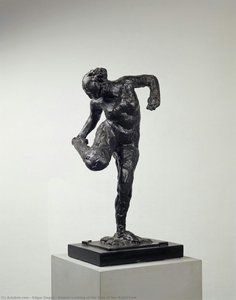
      Dancer Looking at the Sole of Her Right Foot (1921) de Edgar Degas
      #84

      Dancer Looking at the Sole of Her Right Foot

      1921 · Muzeul de Artă din Tel Aviv

      The quietude of a private moment settles over the bronze figure known as Dancer Looking at the Sole of Her Right Foot. Created by Edgar Degas, this work…

      Patru Dansatoare (1900) de Edgar Degas
      #87

      Patru Dansatoare

      1900 · National Gallery of Art

      O privire asupra mișcării efemere: Decodificarea operei „Patru Dansatoare” de Degas Pictura „Patru Dansatoare” de Edgar Degas, realizată în anul 1900, este mult mai mult decât o simplă…

      Order this canvas →
      La Bărbăta (1889) de Edgar Degas
      #88

      La Bărbăta

      1889

      Edgar Degas’ “The Ballet Class,” completed around 1874-1876, stands as a cornerstone of Impressionist art and a poignant glimpse into the world of ballet during its formative years.…

      Order this canvas →
      Woman with a Bandage (1873) de Edgar Degas
      #91

      Woman with a Bandage

      1873 · Detroit Institute of Arts

      A Moment of Quietude: Exploring Degas’ *Woman with a Bandage* Edgar Degas' *Woman with a Bandage*, painted in 1873, is more than just a portrait; it’s an intimate…

      Bring this light home →
      Dancers (8) (1900) de Edgar Degas
      #92

      Dancers (8)

      1900

      To stand before this depiction of Dancers (8) is to step directly into the vibrant, breathless atmosphere backstage—a moment suspended between performance and memory. Hilaire-Germain-Edgar Degas captured not…

      Have it painted by hand →
      Cafe-Concert Singer (1878) de Edgar Degas
      #93

      Cafe-Concert Singer

      1878

      To gaze upon Degas's Cafe-Concert Singer is to step directly into the smoky, vibrant heart of late nineteenth-century Paris. This painting captures more than just a moment; it…

      Have it painted by hand →
      The Rehearsal (1878) de Edgar Degas
      #94

      The Rehearsal

      1878 · Dumbarton Oaks

      To gaze upon The Rehearsal is to step directly into a moment suspended in time—a breath held just before the curtain rises, or perhaps, just after the applause…

      Have it painted by hand →
      Russian Dancer (1895) de Edgar Degas
      #96

      Russian Dancer

      1895

      In the delicate dance between light and shadow, Edgar Degas captures a moment of pure, unadulterated vitality in Russian Dancer. Created in 1895, this masterpiece serves as a…

      Order this canvas →
      View of Saint-Valery-sur-Somme (1898) de Edgar Degas
      #98

      View of Saint-Valery-sur-Somme

      1898 · Metropolitan Museum of Art

      Edgar Degas, a renowned French Impressionist painter, captivated audiences with his evocative landscape View of Saint-Valéry-sur-Somme in 1898. Now residing within the esteemed collection at the Metropolitan Museum…

      Bring this light home →
      Leon Bonnat (1863) de Edgar Degas
      #99

      Leon Bonnat

      1863

      In 1863, Edgar Degas turns his gaze toward a man who shares his devotion to the craft of seeing. This half-length portrait captures Léon-Joseph-Florentin Bonnat, not as a…

      Bring this light home →

      Edgar Degas's canvases, period by period

      What Edgar Degas painted most

      The four subjects that return most often on these canvases, each with its best-loved example.

      Where Edgar Degas's canvases hang

      Cele 8 muzee care dețin cele mai multe dintre picturile de pe această pagină.

      Muzeu Oraș Lucrări lui Edgar Degas Picturi din această listă
      Metropolitan Museum of Art, New YorkMetropolitan Museum of Art New York 52 Clasa de Dans, Fan Mount: Ballet Girls, Three Dancers Preparing for Class
      Musée d'Orsay, ParisMusée d'Orsay Paris 55 Dans un Café, The Dance Class, The Bellelli Family
      National Gallery, LondraNational Gallery Londra 18 Femeia uscându-se, Two Dancers in Their Dressing Room, Head of a Woman
      Muzeul Norton Simon, PasadenaMuzeul Norton Simon Pasadena 5 Dansatoare în cameră de machiaj, Dansul În Studioul Operei, Woman Combing Her Hair before a Mirror
      National Gallery of Art, WashingtonNational Gallery of Art Washington 28 Four dancers, ca National Galler, Patru Dansatoare
      Muzeul de Artă Plastică din Boston, BostonMuzeul de Artă Plastică din Boston Boston 10 Caii de curse la Longchamp, A Carriage at the Races
      Art Institute of Chicago, ChicagoArt Institute of Chicago Chicago 8 Yellow Dancers (In the Wings), Café Singer
      Courtauld Gallery, LondraCourtauld Gallery Londra 7 Woman at a Window, Lady with a Parasol

      Edgar Degas's most famous canvas, decade after decade

      1. 1850s
        A Roman Beggar Woman (1857) de Edgar Degas
        Canvas 33 of 100

        A Roman Beggar Woman

        Vârsta 16 – 25 · Birmingham Museum and Art Gallery

        The artist’s brushstrokes are visible yet controlled, contributing to the painting's tactile quality—a characteristic that distinguishes Realism from Impressionism’s emphasis on optical illusion. Notably, Degas employed impasto—thickly applied…

      2. 1860s
        Interior (also known as The Rape) (1868) de Edgar Degas
        Canvas 5 of 100

        Interior (also known as The Rape)

        Vârsta 26 – 35 · Philadelphia Museum of Art

        Edgar Degas’s “Interior,” often referred to as “The Rape,” is not merely a painting; it's an experience—a carefully constructed tableau of psychological tension and unspoken drama. Completed in…

      3. 1870s
        Dans un Café (1876) de Edgar Degas
        Ranked 1 of 100

        Dans un Café

        Vârsta 36 – 45 · Musée d'Orsay

        Piesa „Dans un Café” (1876) a lui Edgar Degas este o reprezentare poignantă a culturii cafenelelor pariziene, capturând singurătatea și introspecția vieții urbane din secolul al XIX-lea. Această…

      4. 1880s
        Dansatoare în roz (1885) de Edgar Degas
        Canvas 7 of 100

        Dansatoare în roz

        Vârsta 46 – 55 · Hill-Stead Museum

        Edgar Degas, un artist paradoxal și profund fascinant, ne oferă cu "Dancers in Pink" (1885) o fereastră spre lumea vibrantă și efemeră a baletului parizian. Deși adesea asociat…

      5. 1890s
        Femeie spălând în baie (1892) de Edgar Degas
        12 of 100

        Femeie spălând în baie

        Vârsta 56 – 65

        O Reprezentare Intimă a Vieții Cotidiene Această operă de artă excepțională surprinde un moment liniștit și privat al unei femei absorbite în rutina sa zilnică — spălarea în…

      6. 1900s
        Three Dancers, Blue Skirts, Red Blouses (1903) de Edgar Degas
        Ranked 47 of 100

        Three Dancers, Blue Skirts, Red Blouses

        Vârsta 66 – 75

        Three Dancers, Blue Skirts, Red Blouses The world of art is replete with masterpieces that continue to inspire and awe us. One such masterpiece is Three Dancers, Blue…

      Edgar Degas's canvases, question by question

      Which canvas is Edgar Degas most remembered for?Read the answer

      Dans un Café (1876), Musée d'Orsay, Paris. Femeia uscându-se and The Dance Class (1873) follow.

      Dans un Café: how old was Edgar Degas when it was painted?Read the answer

      Edgar Degas, born in 1834, was 42 years old: Dans un Café dates from 1876.

      What are Edgar Degas's ten most famous canvases?Read the answer

      Dans un Café, Femeia uscându-se, The Dance Class, The Bellelli Family, Interior (also known as The Rape), Portraits in a New Orleans Cotton Office, Dansatoare în roz, Dansatoare cu buchet de flori (Steaua baletului), "Miss Lola, au Cirque Fernando, NG L" translates to "Mila Lola, la Cirque Fernando, NG L" in Romanian. și Dansatori la bară 1. Each canvas in the ranking above comes with its year and its museum.

      How many paintings did Edgar Degas create?Read the answer

      1,074 works by Edgar Degas are in our catalogue, dated 1857 to 1905.

      Where do Edgar Degas's most famous canvases hang today?Read the answer

      Mostly in Metropolitan Museum of Art (New York), Musée d'Orsay (Paris) și National Gallery (Londra); the list above names each museum and its canvases.

      When did Edgar Degas paint the most famous canvases?Read the answer

      In 1870s, which gave 40 of the 100 works on this page, Dans un Café among them.

      Which famous Edgar Degas canvas came first, and which came last?Read the answer

      The earliest canvas here is A Roman Beggar Woman (1857); the latest is Group of Dancers (1905).

      Which subjects did Edgar Degas paint most?Read the answer

      Ballet (19), Dance (13) și Dancers (12), across the 100 works on this page.

      Which medium appears most in Edgar Degas's paintings?Read the answer

      Oil On Canvas, used in 27 of the 100 works on this page.

      Which movement is Edgar Degas associated with?Read the answer

      Impresionism, as the canvases on this page show.

      Which paintings by Edgar Degas are held by the Metropolitan Museum of Art?Read the answer

      The Metropolitan Museum of Art, New York holds 9 of the works on this page, among them Clasa de Dans, Fan Mount: Ballet Girls și Three Dancers Preparing for Class.

      Where can I buy a reproduction of a Edgar Degas painting?Read the answer

      Yes. Every painting on this page can be ordered from its own page as an oil reproduction painted by hand, or as a fine art print, in the size you choose.

      Meet the painter: Edgar Degas

      Viața lui Edgar Degas

      Paris, 1834. Un copil se naște într-o familie de o bunăstare moderată, fiind fiul lui Hilaire-Germain-Edgar De Gas. Numele pe care îl va simplifica ulterior în Edgar Degas marchează începutul unei vieți definite de tensiunea dintre așteptările sociale și obsesia artistică. El crește în atmosfera sofisticată a capitalei franceze, un decor care va servi ulterior ca fundal pentru observațiile sale asupra vieții moderne.

      Anii trec într-un vârtej de studii și interese schimbătoare. El se îndepărtează de mediul structurat al educației sale pentru a descoperi realitatea aspră a spațiilor de lucru ale orașului. Nu caută lumina naturală a exteriorului, preferând lumina controlată, artificială, a atelierului și a teatrului. Privirea sa se fixează pe dansatoare, pe spălătoarele de rufe și pe cai de curse din Paris, capturând efortul fizic al muncii și mișcările efemere de pe scenă. Rămâne un om al contradicțiilor, rezistând adesea etichetelor pe care contemporanii îi atribuie, insistând în schimb pe identitatea sa de realist.

      Finalul survine în Paris, pe 27 septembrie 1917. El lasă în urmă o vastă creație artistică ce se întinde pe mai multe decenii, printre care se numără:

      Tinerețe, Familie și Formare

      Paris, 1834. Fiul unui bancar și al Célestine Musson De Gas, o femeie creolă originară din New Orleans, Louisiana, Hilaire-Germain-Edgar De Gas pășește într-o lume a stabilității burgheze. La vârsta de elf ani, acesta este înscris la Lycée Louis-le-Grand. Deși parcursul academic pare deja stabilit, atenția băiatului începe să plămăduască alte destine, fiind atras de sălile magistrale ale Louvre-ului. Până în 1853, după ce își termină studiile la Lycée cu un bacalaureat în literatură, el decide să ignore așteptările tatălui său de a urma o carieră în domeniul dreptului. În schimb, se înscrie ca copist la Muzeul Louvre, petrecându-și orele prețioase conturând liniile magistrale ale marilor maeștri.

      Formarea sa artistică devine tot mai intensă la École des Beaux-Arts din Paris. El trece prin rigoarea instruirii clasice, perfecționând o precizie care va deveni semnătura lucrărilor sale ulterioare. În anul 1855, are loc o întâlnire care va lăsa o amprentă permanentă asupra dezvoltării sale: îl întâlnește pe Jean-Auguste-Dominique Ingres. Această confruntare îi consolidează respectul pentru desen și pentru importanța liniei, chiar în momentul în care începe să se îndrepte spre subiectele moderne care, în cele din urmă, îi vor defini întreaga carieră.

      Tehnică și Stil Artistic

      Edgar Degas respinge eticheta de impresionist. El preferă termenul de „realist”, o alegere care îi dictează întreaga abordare asupra pânzei. El evită peisajul în aer liber și brushstroke-urile libere, tremurânde, preferate de contemporanii săi. În schimb, se retrage în mediul controlat al atelierului. Aici, el stăpânește forma umană prin desenul riguros. Este un desenator superb, posedând o comandă tehnică specifică asupra reprezentării mișcării. El nu așteaptă ca soarele să atingă subiectul; își construiește scenele printr-o studiere atentă cu creionul sau pastelul. Această pregătire îi permite să înghețe o clipă fugace de mișcare cu o precizie anatomică uluitoare.

      Lumina într-o compoziție a lui Edgar Degas este rareori naturală. El utilizează lumina artificială pentru a evidenția figurile, creând un sentiment de teatralitate și adâncime. O metodă remarcabilă este contre-jour, prin care își plasează subiectul în umbră, în timp ce fundalul rămâne puternic iluminat. Această tehnică izolează figura, trăgând-o în prim-plan față de mediul înconjurător. Rezultatul este o tensiune între subiect și spațiul pe care îl ocupă, dezvăluind adesea efortul fizic sau realitatea liniștită și nepozată a vieții moderne.

      Opere Cheie și Subiecte

      Scena teatrală și grația hipnică a cabalinelor domină întregul său univers vizual. Peste jumătate din producția sa artistică se concentrează pe balet, capturând dansatoarele în acele momente fragile de repetiție sau de spectacol pur. Edgar Degas oscilează magistral între eleganța unei piruete și efortul fizic crunt din cadrul unei clase de dans. Dincolo de barierele teatrelor, privirea sa se îndreaptă spre dinamismul hipnotic al hipodromelor, documentând cu precizie atât cârligii de curse, cât și jocheii care îi guvernează. Aceste subiecte nu sunt simple elemente decorative, ci adevărate studii despre tensiune și mișcare pură.

      Viziunea sa artistică pătrunde adânc în sfera privată și a psihicului uman. El a creat portrete care dezvăluie o lume interioară complexă, utilizând adesea unghiuri neconvenționale pentru a izola subiectele sale și a le surprinde esența. Această obsesie pentru forma umană nu se limitează doar la pictura în ulei pe pânză; artistul a explorat o varietate de tehnici, de la gravuri și desen, până la sculpturi din ceară. Capacitatea sa extraordinară de a rendereda figura umană este evidentă în numeroasele sale studii ale femeilor, concentrându-se adesea pe corpul uman în momente de intimitate, departe de privirile curioase ale lumii.

      • Clasa de dans, circa 1874
      • Clasa de dans, 1874
      • Clasa de balet, 1874–1876
      • Interior, 1868–1869
      • Scenă din cursa de obstacole: Jocelul căzut, 1866

      Moștenirea și Impactul Durabil

      Transformarea profundă a artei de la sfârșitul secolului al XIX-lea găsește o figură centrală în opera lui Edgar Degas. Deși a rezistat cu încăpățărânare etichetei de impresionist, prezența sa a ajutat la consolidarea fundamentelor acestui curent revoluționar. Alegând să se îndepărteze de subiectele istorice și rigide ale academismului, artistul a preferat să documenteze cu o onestitate rară asprimea și grația vieții pariziene moderne. Această abatere de la tradiție a deschis calea generațiilor viitoare de artiști, oferindu-le permisiunea de a explora realitatea neschimbată și brută a condiției umane.

      Influența sa se extinde mult dincolo de cercul inițial al impresionismului. Inovațiile structurale și compozițiile neconvenționale pe care le-a dezvoltat au lăsat o amprentă indelibilă pe traiectoria artei moderne. În mod specific, abordarea sa asupra formei și a mișcării poate fi observată în lucrările ulterioare ale lui Pablo Picasso și Henri Matisse. El a învățat lumea artei să privească realitatea prin unghiuri asimetrice și cadre neașteptate, transformând momentele private și efemere ale unei dansețelor sau ale unei spălătorești în studii permanente ale mișcării.

      • The Dance Class
      • The Ballet Class
      • Interior

      Unde pot fi admirate astăzi operele sale

      Amprenta observării meticuloase a lui Edgar Degas rămâne împrăștiată printre marile instituții de artă, păstrată în liniștea sălilor de la Paris și de peste granițe. În Franța, Musée d'Orsay găzduiește colecții semnificative ale lucrărilor sale, capturând acea mișcare pe care artistul a dedicat o întreagă viață studiind-o. Muzeul Louvre de asemenea adăpostește artă sa, în timp ce Bibliothèque Nationale de France din Paris își păstrează operele în arhivele sale. Aceste colecții oferă o privire directă asupra preciziei tehnice și a studiului formei care i-au definit cariera.

      Dincolo de Oceanul Atlantic, viziunea sa se extinde până în Statele Unite. Metropolitan Museum of Art din New York deține picturi realizate de el, oferind o fereastră către viața modernă pe care a pictat-o cu o asemenea atenție la detalii. În Filadelfia, Philadelphia Museum of Art cuprinde operele sale, asigurându-se că influența sa rămâne accesibilă publicului internațional. Aceste locații acționează ca ancoraje fizice pentru moștenirea sa, unde liniile și lumina pe care le-a stăpânit sunt încă vizibile pentru ochiul modern.

      Toate cele 1074 de lucrări ale lui Edgar Degas →