Atelier — Livrare gratuită în întreaga lume — Livrare în 2–6 săptămâni
      Emanuel De Witte, 1617 – 1692

      Emanuel De Witte: The 99 Best-Known Paintings

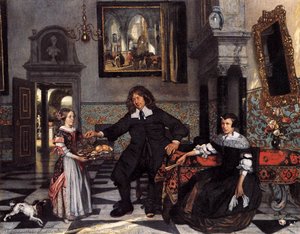
      Of all Emanuel De Witte's paintings, Portrait of a Family in an Interior (detail) (1678) is the most famous; it hangs in the Alte Pinakothek, Munchen. Close behind come The Interior of a Dutch Church (1680) and Interior of the Nieuwe Kerk in Delft (1664). Among the 99 works by Emanuel De Witte in our catalogue, these 99 are the most celebrated, each shown with its date, its museum and its story.

      Clasate în funcție de scorul nostru de popularitate, care combină numărul de căutări, vizite și comenzi pentru fiecare operă. Actualizat Octombrie 2026. Each painting on this page can be ordered as an oil reproduction painted by hand on linen canvas, or as a fine art print, made to the size you choose.

      Portretul lui Emanuel De Witte
      Emanuel De Witte · 1617 – 1692
      Născut · Decedat
      1617 – 1692, Alkmaar
      Mișcare
      Dutch golden age
      Lucrări din catalogul nostru
      99
      Cele mai celebre
      Portrait of a Family in an Interior (detail) (1678)
      Cele mai multe lucrări la
      Museum Boijmans Van Beuningen

      Emanuel De Witte's 10 most celebrated paintings

      Portrait of a Family in an Interior (detail) (1678) de Emanuel De Witte
      1

      Portrait of a Family in an Interior (detail)

      1678 · Oil On Canvas · Alte Pinakothek, Munchen

      Emanuel de Witte's “Portrait of a Family in an Interior” (1678) isn’t merely a depiction of a wealthy household; it’s a carefully constructed tableau vivant, a frozen moment brimming with quiet dignity and subtle narrative. Painted during the height of the Dutch Golden Age, this oil on canvas offers a rare glimpse into the lives of a prosperous family within their richly appointed home—a space designed to project status, comfort,…

      Interior of the Nieuwe Kerk in Delft (1664) de Emanuel De Witte
      3

      Interior of the Nieuwe Kerk in Delft

      1664 · Oil On Canvas · Residenzgalerie, Salzburg

      To stand before an interior scene like this depiction of the Nieuwe Kerk in Delft is to step across a threshold, leaving the clamor of the outside world behind. The artwork does not merely show us a church; it envelops us within its monumental silence. Emanuel de Witte masterfully captures that unique atmosphere found only in grand, aged sacred architecture—a place where history seems palpable in the very dust motes…

      The Interior of the Oude Kerk, Amsterdam, during a Sermon (1658) de Emanuel De Witte
      5

      The Interior of the Oude Kerk, Amsterdam, during a Sermon

      1658 · Oil On Canvas · National Gallery, Londra

      To stand before this depiction of The Interior of the Oude Kerk in Amsterdam is to step across the threshold of time itself. This painting, executed in 1658 by Emanuel de Witte, is far more than a mere record of an architectural space; it is a meticulously crafted meditation on faith, community, and the sublime interplay between human life and divine structure. The high-angle perspective immediately envelops the viewer, drawing…

      Portrait of a woman (1648) de Emanuel De Witte
      6

      Portrait of a woman

      1648 · Oil On Canvas · Museum Boijmans Van Beuningen, Rotterdam

      A single female figure occupies the center of this oval vignette, presented in a bust-length view. She wears a dark garment, accented by a prominent white collar with scalloped edges and a small black bow. The composition draws the eye directly to her face, where a calm and composed expression suggests a dignified emotional tone. Light originates from the upper left, casting gentle shadows across the right side of her…

      Portrait of a man (1648) de Emanuel De Witte
      7

      Portrait of a man

      1648 · Oil · Museum Boijmans Van Beuningen, Rotterdam

      is an oil painting by the Dutch artist Emanuel de Witte. Executed about 1648, the work represents a significant example of the artist's early engagement with portraiture before his later specialization in church interiors. The sitter is presented in a bust-length composition, positioned slightly off-center to create a sense of depth and presence.

      Interior of a Protestant Gothic Church (1669) de Emanuel De Witte
      8

      Interior of a Protestant Gothic Church

      1669 · Oil On Canvas · Rijksmuseum, Amsterdam

      Emanuel de Witte's "Interior of a Protestant Gothic Church," painted in 1669, isn’t merely a depiction of a sacred space; it’s an immersive experience. This remarkable work transcends the simple act of recording architecture, instead capturing the very *feeling* of being within a grand, dimly lit cathedral – a testament to de Witte's unique artistic vision. Unlike his contemporary Pieter Saenredam, who meticulously documented architectural details with photographic precision, de…

      Emanuel De Witte paintings ranked 11 to 99

      Interior of the Oude Kerk, Delft (1650) de Emanuel De Witte
      #38

      Interior of the Oude Kerk, Delft

      1650 · Metropolitan Museum of Art

      Despite its profusion of realistic details, de Witte’s interior view of Delft’s Oude Kerk (Old Church) takes considerable liberties with the actual architecture of the church—omitting, for example,…

      Order this canvas →
      Interior of a Church (1674) de Emanuel De Witte
      #67

      Interior of a Church

      1674 · Muzeul Wallraf-Richartz

      In this work, titled Interior of a Church, we encounter a significant example of the Dutch Golden Age. Painted by Emanuel de Witte in 1660, the oil on…

      Bring this light home →
      Old Church in Delft (1642) de Emanuel De Witte
      #71

      Old Church in Delft

      1642 · Muzeul Ermitaj

      In the quiet corners of the Dutch Golden Age, where light performs its most delicate dances, Emanuel de Witte captured something far more profound than mere architecture. His…

      Order this canvas →
      Interior of the Oude Kerk, Delft (1650) de Emanuel De Witte
      #73

      Interior of the Oude Kerk, Delft

      1650 · Metropolitan Museum of Art

      Emanuel de Witte's “Interior of the Oude Kerk, Delft” isn’t merely a depiction of a church; it’s an immersive experience. Painted in 1650, this remarkable work transports us…

      Order this canvas →
      Interior of a Baroque Church (1660) de Emanuel De Witte
      #74

      Interior of a Baroque Church

      1660 · Muzeele Statale din Berlin

      To step into Emanuel de Witte’s Interior of a Baroque Church is to leave the clamor of the physical world behind and enter a realm of profound, whispered…

      Order this canvas →
      Interior of a Church (1660) de Emanuel De Witte
      #81

      Interior of a Church

      1660 · Muzeul Ermitaj

      Emanuel de Witte's "Interior of a Church," painted around 1669, isn’t merely a depiction of a sacred space; it’s an immersive experience, a carefully constructed invitation to contemplate…

      Have it painted by hand →
      Interior of a Gothic church de Emanuel De Witte
      #86

      Interior of a Gothic church

      Museum Boijmans Van Beuningen

      The scene unfolds within the quiet, soaring reaches of an Interior of a Gothic church. This work, painted by Emanuel de Witte, captures a moment of stillness amidst…

      Order this canvas →

      What Emanuel De Witte painted most

      The four subjects that return most often on these canvases, each with its best-loved example.

      Where Emanuel De Witte's canvases hang

      Cele 8 muzee care dețin cele mai multe dintre picturile de pe această pagină.

      Muzeu Oraș Lucrări lui Emanuel De Witte Picturi din această listă
      Museum Boijmans Van Beuningen, RotterdamMuseum Boijmans Van Beuningen Rotterdam 11 Portrait of a woman, Portrait of a man, Vertumnus and Pomona
      Rijksmuseum, AmsterdamRijksmuseum Amsterdam 8 Interior of a Protestant Gothic Church, Interior of a Protestant Gothic Church, Interior of the Portuguese Synagogue in Amsterdam
      National Gallery, LondraNational Gallery Londra 4 The Interior of the Oude Kerk, Amsterdam, during a Sermon, The Interior of the Oude Kerk, Amsterdam, The Interior of the Oude Kerk, Amsterdam, during a Sermon
      Amsterdam Museum, AmsterdamAmsterdam Museum Amsterdam 3 Interior of the Oude Kerk in Amsterdam, Interior of the Oude Kerk in Amsterdam, Interior of the Oude Kerk in Amsterdam
      Gemäldegalerie, BerlinGemäldegalerie Berlin 3 Interior View of a Synagogue, Interior of a Gothic Church, Interior of the Nieuwe Kerk in Amsterdam
      Muzeul Ermitaj, Sankt PetersburgMuzeul Ermitaj Sankt Petersburg 3 Square in front of the Palace in an Italian Town, Old Church in Delft, Interior of a Church
      Metropolitan Museum of Art, New YorkMetropolitan Museum of Art New York 3 Interior of the Oude Kerk, Delft, Interior of the Oude Kerk, Delft (detail), Interior of the Oude Kerk, Delft
      Detroit Institute of Arts, DetroitDetroit Institute of Arts Detroit 3 The Nieuwe Kerk at Delft with the Tomb of Willem the Silent, Interior of a Protestant Church, Interior of the Oude Kerk in Amsterdam

      Decade by decade: Emanuel De Witte's most celebrated canvas

      1. 1640s
        Portrait of a woman (1648) de Emanuel De Witte
        Canvas 6 of 99

        Portrait of a woman

        Vârsta 23 – 32 · Museum Boijmans Van Beuningen

        A single female figure occupies the center of this oval vignette, presented in a bust-length view. She wears a dark garment, accented by a prominent white collar with…

      2. 1650s
        Rest During the Flight (1654) de Emanuel De Witte
        Canvas 4 of 99

        Rest During the Flight

        Vârsta 33 – 42 · Colecțiile Statale de Pictură din Bavaria

        The oil painting titled Rest During the Flight by Emanuel de Witte depicts a specific narrative from religious history. Created about 1654, the work presents a scene likely…

      3. 1660s
        Interior of the Nieuwe Kerk in Delft (1664) de Emanuel De Witte
        3 of 99

        Interior of the Nieuwe Kerk in Delft

        Vârsta 43 – 52 · Residenzgalerie

        To stand before an interior scene like this depiction of the Nieuwe Kerk in Delft is to step across a threshold, leaving the clamor of the outside world…

      4. 1670s
        Portrait of a Family in an Interior (detail) (1678) de Emanuel De Witte
        Ranked 1 of 99

        Portrait of a Family in an Interior (detail)

        Vârsta 53 – 62 · Alte Pinakothek

        Emanuel de Witte's “Portrait of a Family in an Interior” (1678) isn’t merely a depiction of a wealthy household; it’s a carefully constructed tableau vivant, a frozen moment…

      5. 1680s
        The Interior of a Dutch Church (1680) de Emanuel De Witte
        Canvas 2 of 99

        The Interior of a Dutch Church

        Vârsta 63 – 72 · Scottish National Gallery

        The Interior of a Dutch Church is an oil on canvas by Emanuel de Witte. Created about 1680, the work reflects the artist's specialization in the architectural spaces…

      6. 1690s

      Your questions on Emanuel De Witte's paintings, answered

      Which is the most celebrated painting by Emanuel De Witte?Read the answer

      Portrait of a Family in an Interior (detail) (1678), Alte Pinakothek, Munchen. The Interior of a Dutch Church (1680) and Interior of the Nieuwe Kerk in Delft (1664) follow.

      How old was Emanuel De Witte at the time of Portrait of a Family in an Interior (detail)?Read the answer

      Emanuel De Witte, born in 1617, was 61 years old: Portrait of a Family in an Interior (detail) dates from 1678.

      Which ten paintings is Emanuel De Witte most famous for?Read the answer

      Portrait of a Family in an Interior (detail), The Interior of a Dutch Church, Interior of the Nieuwe Kerk in Delft, Rest During the Flight, The Interior of the Oude Kerk, Amsterdam, during a Sermon, Portrait of a woman, Portrait of a man, Interior of a Protestant Gothic Church, Danaë and the Shower of Gold și Vertumnus and Pomona. Each canvas in the ranking above comes with its year and its museum.

      How many paintings by Emanuel De Witte are known?Read the answer

      99 works by Emanuel De Witte are in our catalogue, dated 1641 to 1692.

      Which museums hold Emanuel De Witte's best-known canvases?Read the answer

      Mostly in Museum Boijmans Van Beuningen (Rotterdam), Rijksmuseum (Amsterdam) și National Gallery (Londra); the list above names each museum and its canvases.

      In which years did Emanuel De Witte paint the most celebrated canvases?Read the answer

      In 1650s, which gave 27 of the 99 works on this page, Rest During the Flight among them.

      What are the first and the last of Emanuel De Witte's famous canvases?Read the answer

      The earliest canvas here is Danaë and the Shower of Gold (1641); the latest is The Nieuwe Vismarkt (New Fish Market) in Amsterdam, Emanuel de Witte, 1655 - 1692 (1692).

      Which subjects return most often in Emanuel De Witte's paintings?Read the answer

      Church interior (16), 17th century (10) și Architecture (10), across the 99 works on this page.

      What did Emanuel De Witte usually paint with?Read the answer

      Oil On Canvas, used in 22 of the 99 works on this page.

      To which art movement does Emanuel De Witte belong?Read the answer

      Dutch golden age și Baroque, as the canvases on this page show.

      What can I see by Emanuel De Witte at the Museum Boijmans Van Beuningen?Read the answer

      The Museum Boijmans Van Beuningen, Rotterdam holds 11 of the works on this page, among them Portrait of a woman, Portrait of a man și Vertumnus and Pomona.

      Can I order a hand-painted copy of a painting by Emanuel De Witte?Read the answer

      Yes. Every painting on this page can be ordered from its own page as an oil reproduction painted by hand, or as a fine art print, in the size you choose.

      Emanuel De Witte: the painter's story

      A Life in Perspective: The World of Emanuel de Witte

      Emanuel de Witte, un nume poate mai puțin imediat recunoscut decât al unor contemporani olandezi din Epoca de Aur, ocupă totuși un loc semnificativ și fascinant în pantheonul maeștrilor secolului XVII. Născut în Alkmaar în 1617, călătoria artistică a lui De Witte a fost una marcată atât de talent remarcabil, cât și de dificultăți personale profunde – o dualitate care pare să se infuzeze subtil în atmosfera însăși a picturilor sale. Nu a fost motivat de documentarea arhitecturală minuțioasă precum Pieter Saenredam; mai degrabă, a căutat să capteze *sentimentul* spațiului, calitatea luminii și drama subtilă desfășurându-se în interiorurile sacre. Pânzele sale nu sunt simple reprezentări ale bisericilor; ele sunt experiențe immersive, invitând privitorii într-o lume de contemplare tăcută și rezonanță spirituală.

      De Delft Training to Amsterdam's Embrace

      Viața timpurie a lui De Witte a oferit o bază solidă pentru aspirațiile sale artistice. Tatăl său, un școlar, l-a învățat să aprecieze învățământul și curiozitatea intelectuală – calități care s-au manifestat mai târziu în observația sa atentă a perspectivei și a luminii. A intrat formal în lumea artei prin aderarea la Gilda Sfântului Luca din Alkmaar în 1636, dar ucenicia sa ulterioară cu Evert van Aelst în Delft s-a dovedit a fi deosebit de formativă. Van Aelst, un pictor renumit de scene cu obiecte statuare, i-a insuflat lui De Witte ochi perspicace pentru detaliu și o comandă magistrală a luminii și umbrei – abilități care au devenit reperele stilului său matur. Inițial, De Witte a explorat diverse genuri – portrete, scene mitologice, narative religioase – dar numai după mutarea în Amsterdam în 1651 a găsit cu adevărat chemarea sa. Orașul, cu bogăția sa de biserici uimitoare, a furnizat o sursă nesfârșită de inspirație, iar el a început să se specializeze în reprezentarea interioarelor lor impresionante.

      Master of Atmosphere and Imaginary Spaces

      Amsterdam s-a dovedit a fi decisiv pentru dezvoltarea artistică a lui De Witte. Nu a replicat pur și simplu spațiile existente ale bisericilor; mai degrabă, a sintetizat cu pricepere elemente din diferite clădiri, creând interioare idealizate care păreau atât familiare, cât și subtil neliniștitoare. Oude Kerk din Amsterdam a devenit un subiect frecvent al picturilor sale, apărând în mod repetat pe pânze de la diverse perspective. Dar acestea nu erau reprezentări simple. De Witte a manipulat perspectiva, a jucat cu lumina și umbra și a populat spațiile cu figuri aranjate cu grijă pentru a evoca o anumită atmosferă sau stare de spirit. Walter Liedtke a observat că interesul său principal nu consta în arhitectura însăși, ci în „spațiul însuși – lumina sa, culoarea, extinderea sa și starea de spirit”. Această accentuare pe efectul atmosferic îl diferențiază de pictorii mai riguroși din punct de vedere topografic ai vremii. Nu era preocupat de acuratețe; era interesat să creeze un *sentiment* de măreție, sfințire și profunzime spirituală.

      A Life Marked by Shadows

      În ciuda succesului său artistic, viața personală a lui De Witte a fost marcată de dificultăți. Moartea primei sale soții a adus o durere profundă, iar problemele legale ulterioare legate de a doua sa soție și fiică au aruncat o umbră lungă asupra anilor săi târziu. Dificultățile financiare l-au condus la poziția jenantă de servitor pentru un negustor de țesături, Joris de Wijs, o situație pe care, în cele din urmă, a încălcat-o, ducând la complicații suplimentare. Conturile contemporane pictează un tablou al unei temperamente volatile – un om predispus la strigăte la clienți și la implicarea în dispute. Această tulburare interioară s-a putea să contribuie la inegalitatea ulterioară a lucrărilor sale, dar adaugă, de asemenea, o altă dimensiune de complexitate înțelegerii noastre despre artist și creațiile sale. Tristfort, viața lui De Witte s-a încheiat într-un mod devastator în 1692 când s-a presupune că s-a dezechilibrat și s-a legat de un pod canal; frângerea funiei a dus la înec. A fost o finalitate sumbră pentru un om care s-a dedicat cu totul capturării frumuseții și seninătății spațiilor sacre.

      Legacy and Enduring Influence

      Emanuel de Witte se află într-o poziție importantă în ultima fază a picturii arhitecturale din Olanda, conectând întreaga documentare minuțioasă și interpretarea atmosferică. Utilizarea sa inovatoare a perspectivei și a luminii a influențat generațiile ulterioare de artiști, iar picturile sale continuă să ofere informații valoroase despre viața religioasă și obiceiurile sociale din secolul XVII. Astăzi, operele lui De Witte sunt deținute în colecții prestigioase din întreaga lume – la Metropolitan Museum of Art, la National Gallery of Art și la Rijksmuseum, printre altele – atestând moștenirea sa durabilă ca maestru al perspectivei, atmosferei și a rezonanței emoționale. El ne amintește că arta nu este doar ceea ce vedem, ci modul în care *simțim* atunci când o privim.

      Toate cele 99 de lucrări ale lui Emanuel De Witte →
