Atelier — Livrare gratuită în întreaga lume — Livrare în 2–6 săptămâni
      Filippo Lippi, 1406 – 1469

      Cele mai 100 celebre picturi ale lui Filippo Lippi, clasificate

      Cea mai iubită pictură a lui Filippo Lippi este Madonna with Child and Angels (1460). Adoration of the Magi (1445) și The Annunciation (1435) urmează în lista celor mai cunoscute picturi de către cititori. Catalogul nostru cuprinde 277 lucrări ale lui Filippo Lippi: iată cele 100 cele mai faimoase, fiecare cu anul creării, muzeul de păstrare și elementul care o face memorabilă.

      Clasate în funcție de scorul nostru de popularitate, care combină numărul de căutări, vizite și comenzi pentru fiecare operă. Actualizat Octombrie 2026. Fiecare pictură de pe această pagină poate fi comandată sub formă de reproducere pictată manual în ulei pe pânză de in, sau ca print de artă, realizat la dimensiunea aleasă de dumneavoastră.

      Portretul lui Filippo Lippi
      Filippo Lippi · 1406 – 1469
      Născut · Decedat
      1406 – 1469, Florența
      Mișcare
      Renașterea timpurie
      Lucrări din catalogul nostru
      277
      Cele mai celebre
      Madonna with Child and Angels (1460)
      Cele mai multe lucrări la
      Duomo

      Top 10 picturi Filippo Lippi: tablourile pe care toată lumea le cunoaște

      Madonna with Child and Angels (1460) de Filippo Lippi
      1

      Madonna with Child and Angels

      1460 · Oil

      The Madonna with Child and Angels is a stunning painting created by the renowned Italian artist Fra Filippo Lippi in 1460. This beautiful artwork is a testament to the artist's skill and mastery of the early Renaissance style. The painting depicts the Virgin Mary holding her child, surrounded by two angels, creating a serene and peaceful atmosphere. The Artist and His Style Fra Filippo Lippi was a Carmelite priest and…

      Adoration of the Magi (1445) de Filippo Lippi
      2

      Adoration of the Magi

      1445 · Tempera On Panel · National Gallery of Art, Washington

      In the heart of the Florentine Renaissance, a masterpiece emerged that would bridge the gap between the ethereal spirituality of the Middle Ages and the burgeoning humanism of a new era. The Adoration of the Magi is not merely a painting; it is a breathtaking visual symphony, a circular tondo that captures the very moment the divine intersects with the earthly. As your eyes wander through this complex composition, you…

      The Annunciation (1435) de Filippo Lippi
      3

      The Annunciation

      1435 · Oil · National Gallery of Art, Washington

      Fra Filippo Lippi's 1435 tempera painting, “The Annunciation,” is more than just a depiction of a pivotal biblical moment; it’s a profound exploration of faith, humility, and the burgeoning humanism of the early Renaissance. Housed within the National Gallery of Art in Washington D.C., this work transcends its historical context to resonate with viewers centuries later, offering a glimpse into the artist's exceptional skill and deeply considered vision.

      The Annunciation - tempera on wood - (1440) de Filippo Lippi
      4

      The Annunciation - tempera on wood -

      1440 · Tempera

      The Divine Encounter: An Exploration of Lippi's Annunciation To stand before The Annunciation by Fra Filippo Lippi is to step across the threshold of time and into a moment suspended between the earthly and the divine. This exquisite work, executed in 1440 using the delicate medium of tempera on wood, captures the pivotal instant when the Archangel Gabriel announces to Mary that she shall conceive the Son of God. It…

      Madonna and Child Enthroned with Saints (detail) (1430) de Filippo Lippi
      5

      Madonna and Child Enthroned with Saints (detail)

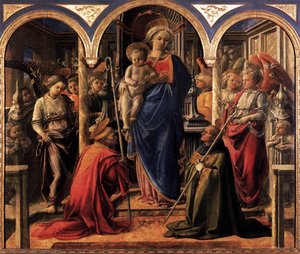
      1430 · Oil On Canvas · Museo della Collegiata, Empoli

      To gaze upon this detail from Filippo di Tommaso Lippi’s Madonna and Child Enthroned with Saints is to step directly into the luminous heart of the early Renaissance. The scene unfolds with an almost palpable sense of reverence, drawing the viewer into a sacred moment captured in oil paint. At the core, the Virgin Mary presides with serene majesty, her presence anchoring the entire composition. Before her kneels a figure,…

      Madonna della Cintola (detail) (1455) de Filippo Lippi
      6

      Madonna della Cintola (detail)

      1455 · Oil On Panel · Museo Civico, Prato

      To stand before a detail from Filippo di Tommaso Lippi’s Madonna della Cintola is to step directly into the luminous, deeply spiritual atmosphere of the early Italian Renaissance. This painting, executed around 1455, is not merely a depiction of sacred figures; it is a profound meditation on faith, lineage, and divine grace. The composition immediately draws the eye to the central grouping—the venerable male figure holding his staff, flanked by…

      Coronation of the Virgin (detail) (18) (1467) de Filippo Lippi
      7

      Coronation of the Virgin (detail) (18)

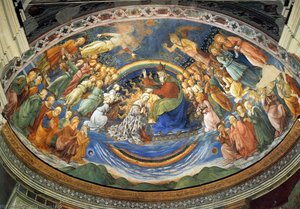
      1467 · Acrylic On Canvas · Duomo, Spoleto

      Filippo di Tommaso Lippi's “Coronation of the Virgin,” painted in 1467, isn’t merely a depiction of a religious scene; it’s an immersive experience, a window into the heart of Renaissance Florence and the fervent spirituality of its artists. This exquisite fresco, currently housed within the Uffizi Gallery in Florence, captures a pivotal moment – Mary's divine coronation – with a breathtaking blend of realism, symbolic richness, and masterful technique. Lippi,…

      Coronation of the Virgin (detail) (1441) de Filippo Lippi
      8

      Coronation of the Virgin (detail)

      1441 · Tempera On Panel · Galleria degli Uffizi, Florența

      The Coronation of the Virgin is a renowned painting by the Italian artist Fra Filippo Lippi, created in 1441. This tempera on panel artwork is housed at the Galleria degli Uffizi in Florence, Italy, and is considered one of the most significant works of the Early Renaissance. The Painting's Composition and Style The painting depicts a religious scene with a group of figures dressed in medieval clothing, including angels, saints,…

      Funeral of St Jerome (1460) de Filippo Lippi
      9

      Funeral of St Jerome

      1460 · Tempera · Duomo, Prato

      To stand before Fra Filippo Lippi’s Funeral of St. Jerome is to step across the threshold of time and into a moment suspended by profound reverence. This monumental canvas, executed in 1460, does more than merely depict a funeral; it captures the very essence of spiritual transition—the solemn passage from earthly life to eternal rest. The scene unfolds with an almost palpable weight, drawing the viewer into the hushed gathering…

      Madonna Enthroned with Saints (detail) (1445) de Filippo Lippi
      10

      Madonna Enthroned with Saints (detail)

      1445 · Tempera On Panel · Galleria degli Uffizi, Florența

      In this detail from the 1445 panel, the Virgin Mary occupies the central space, seated upon a monumental throne. Her face is rendered with a soft, rounded form, and she holds the infant Jesus against her chest. Behind her, two men are positioned in a vertical arrangement. One figure stands closely behind the throne, while another man appears further back, creating a sense of layered depth within the religious scene.…

      Mai multe picturi cu Filippo Lippi, de la 11 la 100

      Annunciation (detail) (1443) de Filippo Lippi
      #12

      Annunciation (detail)

      1443 · Alte Pinakothek

      To gaze upon this detail from Fra Filippo Lippi’s Annunciation (1443) is to step directly into the luminous, contemplative heart of the Early Renaissance. It is not merely…

      Comandă această pânză →
      The Beheading of John the Baptist (1452) de Filippo Lippi
      #13

      The Beheading of John the Baptist

      1452 · Duomo

      Executed in 1452, this fresco utilizes pigment applied directly to wet plaster to capture a pivotal biblical moment within the Duomo of Prato, Italy. The technique lends a…

      Madonna Enthroned (1437) de Filippo Lippi
      #17

      Madonna Enthroned

      1437 · Galleria Nazionale d'Arte Antica

      To gaze upon Fra Filippo Lippi's Madonna Enthroned is to step directly into the luminous heart of the early Italian Renaissance. This masterpiece, painted in 1437, transcends mere…

      Comandă pictură realizată manual →
      St Michael (detail) (1456) de Filippo Lippi
      #18

      St Michael (detail)

      1456 · Cleveland Museum of Art

      This detail from a 1456 tempera on panel painting focuses on the face and upper torso of St Michael. The figure is depicted with an intense expression, eyes…

      Comandă această pânză →
      Coronation of the Virgin (detail) (15) (1441) de Filippo Lippi
      #19

      Coronation of the Virgin (detail) (15)

      1441 · Galleria degli Uffizi

      In the delicate fragment of Filippo di Tommaso Lippi’s Coronation of the Virgin, we are invited to step through a portal into the heart of the Italian Renaissance.…

      Annunciation (1445) de Filippo Lippi
      #20

      Annunciation

      1445 · Basilica di San Lorenzo

      In the quiet, hallowed atmosphere of the Quattrocento, few moments capture the intersection of the celestial and the earthly as poignantly as Filippo di Tommaso Lippi’s Annunciation. This…

      Coronarea Virginiei (1467) de Filippo Lippi
      #24

      Coronarea Virginiei

      1467 · Duomo

      In the heart of the Italian Renaissance, few works capture the ethereal intersection of human devotion and divine majesty as profoundly as Fra Filippo Lippi’s Coronation of the…

      Coronation of the Virgin (detail) (17) (1467) de Filippo Lippi
      #28

      Coronation of the Virgin (detail) (17)

      1467 · Duomo

      In the heart of the Italian Renaissance, few works capture the ethereal intersection of human devotion and divine majesty as profoundly as Filippo di Tommaso Lippi’s Coronation of…

      Annunciation (detail) (14) (1443) de Filippo Lippi
      #29

      Annunciation (detail) (14)

      1443 · Alte Pinakothek

      In the quiet, hallowed corridors of the Alte Pinakothek in Munich, there exists a moment frozen in time, a fragment of celestial grace captured by the hand of…

      Annunciation (detail) (18) (1445) de Filippo Lippi
      #30

      Annunciation (detail) (18)

      1445 · Basilica di San Lorenzo

      In the quiet corridors of art history, few moments capture the intersection of the divine and the earthly as tenderly as Fra Filippo Lippi’s Annunciation. This exquisite detail,…

      Comandă această pânză →
      Annunciation (1445) de Filippo Lippi
      #31

      Annunciation

      1445 · Basilica di San Lorenzo

      Filippo Lippi’s “Annunciation,” painted around 1445 during his formative years in Florence, is more than just a depiction of a pivotal biblical moment; it's a profound meditation on…

      Adu această lumină acasă →
      Madonna and Child (1440) de Filippo Lippi
      #33

      Madonna and Child

      1440 · National Gallery of Art

      A Vision of Devotion: Exploring Filippo Lippi’s Madonna and Child The painting “Madonna and Child,” attributed to Filippo di Tommaso Lippi, stands as a testament to the artistic…

      Comandă această pânză →
      Death of the Virgin (1467) de Filippo Lippi
      #34

      Death of the Virgin

      1467 · Duomo

      Fra Filippo Lippi's “Death of the Virgin,” painted in 1467 and housed within the majestic Duomo of Spoleto, Italy, isn’t merely a depiction of mortality; it’s a profound…

      Adu această lumină acasă →
      Spoleto-Coronation of the Virgin (1469) de Filippo Lippi
      #36

      Spoleto-Coronation of the Virgin

      1469

      The Spoleto-Coronation of the Virgin is a significant fresco by the Florentine painter Filippo Lippi. It forms a central part of the larger Life of the Virgin fresco…

      Herod's Banquet (1452) de Filippo Lippi
      #38

      Herod's Banquet

      1452 · Duomo

      The air in the banquet hall feels heavy with the scent of roasted meats and the tension of an unspoken command. Within this ornate room, light pours through…

      Female Figure (Prophetess.) (1430) de Filippo Lippi
      #43

      Female Figure (Prophetess.)

      1430 · Muzeul de Artă Harvard

      Filippo di Tommaso Lippi's "Female Figure (Prophetess.)," painted around 1430, isn’t merely a portrait; it’s a carefully constructed meditation on faith, prophecy, and the enigmatic power of womanhood…

      Adu această lumină acasă →
      Death of the Virgin (detail) (1467) de Filippo Lippi
      #46

      Death of the Virgin (detail)

      1467 · Duomo

      The "Death of the Virgin (detail)" by Filippo Lippi captures a moment of profound stillness. Created around 1467, this work resides within the Duomo in Spoleto. It focuses…

      Saint James the Less (1460) de Filippo Lippi
      #50

      Saint James the Less

      1460 · Courtauld Gallery

      The portrait presents Saint James the Less, a single male figure captured in a moment of quietude. This depiction by Filippo Lippi focuses entirely on the presence of…

      Comandă această pânză →
      Saint Peter (1460) de Filippo Lippi
      #51

      Saint Peter

      1460 · Courtauld Gallery

      This vertical portrait depicts an elderly man, identified as Saint Peter, positioned within a narrow, arched architectural niche. The figure is shown from the waist up, facing forward…

      Adu această lumină acasă →
      Disputation in the Synagogue (detail) (1452) de Filippo Lippi
      #57

      Disputation in the Synagogue (detail)

      1452 · Duomo

      We are looking at a detail from Disputation in the Synagogue, a work by the Florentine painter Filippo Lippi. This specific fragment offers a closer view of a…

      The Funeral of St Stephen (1460) de Filippo Lippi
      #58

      The Funeral of St Stephen

      1460 · Duomo

      The air in the hall feels heavy, thick with the scent of damp stone and extinguished candles. A body lies draped in cloth, a pale shape amidst the…

      The Funeral of St Stephen (detail) (1460) de Filippo Lippi
      #61

      The Funeral of St Stephen (detail)

      1460 · Duomo

      To gaze upon this detail from The Funeral of St Stephen is to step directly into the profound, hushed atmosphere of late Quattrocento Florence. Filippo di Tommaso Lippi,…

      Annunciation (detail) (17) (1445) de Filippo Lippi
      #66

      Annunciation (detail) (17)

      1445 · Basilica di San Lorenzo

      Filippo Lippi’s “Annunciation,” executed around 1450 in Florence, is more than just a depiction of a pivotal biblical moment; it's a vibrant testament to the burgeoning Renaissance spirit.…

      Adu această lumină acasă →
      Disputation in the Synagogue (detail) (8) (1452) de Filippo Lippi
      #72

      Disputation in the Synagogue (detail) (8)

      1452 · Duomo

      In the delicate detail of Disputation in the Synagogue, we are invited into a world where the boundaries between the divine and the everyday blur with exquisite grace.…

      Herod's Banquet (detail) (1452) de Filippo Lippi
      #75

      Herod's Banquet (detail)

      1452 · Duomo

      In this 1452 fresco detail, we find ourselves amidst a lively social assembly, a moment frozen in the quiet tension of a banquet. The scene unfolds around a…

      Figure study (1452) de Filippo Lippi
      #76

      Figure study

      1452 · Galleria degli Uffizi

      A Study in Contemplation: Filippo Lippi’s Figure Drawing The artwork presented here—a meticulously rendered pen drawing titled “Figure study”—offers a glimpse into the artistic sensibilities of Filippo di…

      Comandă pictură realizată manual →
      The Funeral of St Stephen (detail) (9) (1460) de Filippo Lippi
      #87

      The Funeral of St Stephen (detail) (9)

      1460 · Duomo

      In this fresco detail, we find ourselves amidst a solemn procession, a fragment of a larger narrative cycle. The scene captures a group of figures gathered in grief,…

      Pânzele lui Filippo Lippi, perioadă cu perioadă

      Cele mai picturate opere ale lui Filippo Lippi

      Cele patru teme care apar cel mai des pe aceste pânze, fiecare cu cel mai apreciat exemplu al său.

      Unde sunt expuse picturile lui Filippo Lippi

      Cele 8 muzee care dețin cele mai multe dintre picturile de pe această pagină.

      Muzeu Oraș Lucrări lui Filippo Lippi Picturi din această listă
      Duomo, PratoDuomo Prato 35 Funeral of St Jerome, The Beheading of John the Baptist, Herod's Banquet
      Galleria degli Uffizi, FlorențaGalleria degli Uffizi Florența 19 Coronation of the Virgin (detail), Madonna Enthroned with Saints (detail), Madonna Enthroned with Saints (detail)
      National Gallery of Art, WashingtonNational Gallery of Art Washington 9 Adoration of the Magi, The Annunciation, Adoration of the Magi (detail)
      Duomo, SpoletoDuomo Spoleto 8 Coronation of the Virgin (detail) (18), Coronarea Virginiei, Coronation of the Virgin (detail) (17)
      Basilica di San Lorenzo, FlorentinaBasilica di San Lorenzo Florentina 5 Annunciation, Annunciation (detail) (18), Annunciation
      Courtauld Gallery, LondraCourtauld Gallery Londra 4 Female Saint with a Flail (Saint Walburga?), Saint Dominic, Saint James the Less
      Museo Civico, PratoMuseo Civico Prato 7 Madonna della Cintola (detail), Madonna della Cintola (detail), Madonna della Cintola (detail)
      Cleveland Museum of Art, ClevelandCleveland Museum of Art Cleveland 5 St Michael (detail), Virgin and Child with Angels, Panel from a Triptych: St. Anthony Abbot

      Cele mai iubite picturi ale lui Filippo Lippi din fiecare deceniu

      1. 1430s
        The Annunciation (1435) de Filippo Lippi
        Poziția 3 din 100

        The Annunciation

        Vârsta 24 – 33 · National Gallery of Art

        Fra Filippo Lippi's 1435 tempera painting, “The Annunciation,” is more than just a depiction of a pivotal biblical moment; it’s a profound exploration of faith, humility, and the…

      2. 1440s
        Adoration of the Magi (1445) de Filippo Lippi
        Pânză 2 din 100

        Adoration of the Magi

        Vârsta 34 – 43 · National Gallery of Art

        In the heart of the Florentine Renaissance, a masterpiece emerged that would bridge the gap between the ethereal spirituality of the Middle Ages and the burgeoning humanism of…

      3. 1450s
        Madonna della Cintola (detail) (1455) de Filippo Lippi
        Poziția 6 din 100

        Madonna della Cintola (detail)

        Vârsta 44 – 53 · Museo Civico

        To stand before a detail from Filippo di Tommaso Lippi’s Madonna della Cintola is to step directly into the luminous, deeply spiritual atmosphere of the early Italian Renaissance.…

      4. 1460s
        Madonna with Child and Angels (1460) de Filippo Lippi
        Poziția 1 din 100

        Madonna with Child and Angels

        Vârsta 54 – 63

        The Madonna with Child and Angels is a stunning painting created by the renowned Italian artist Fra Filippo Lippi in 1460. This beautiful artwork is a testament to…

      Despre picturile lui Filippo Lippi: răspunsuri la întrebările tale

      Care este cea mai cunoscută pictură a lui Filippo Lippi?Citește răspunsul

      Madonna with Child and Angels (1460), urmat de Adoration of the Magi (1445) și The Annunciation (1435).

      Ce vârstă avea Filippo Lippi când a fost pictată opera Madonna with Child and Angels?Citește răspunsul

      Filippo Lippi, născut în 1406, avea 54 de ani: Madonna with Child and Angels datează din 1460.

      Care sunt cele mai 10 picturi celebre ale lui Filippo Lippi?Citește răspunsul

      Madonna with Child and Angels, Adoration of the Magi, The Annunciation, The Annunciation - tempera on wood -, Madonna and Child Enthroned with Saints (detail), Madonna della Cintola (detail), Coronation of the Virgin (detail) (18), Coronation of the Virgin (detail), Funeral of St Jerome și Madonna Enthroned with Saints (detail). Fiecare pictură din clasamentul de mai sus este însoțită de anul creării și de muzeul în care este expusă.

      Câte lucrări a pictat Filippo Lippi în total?Citește răspunsul

      În catalogul nostru sunt 277 lucrări ale lui Filippo Lippi, datate între 1430 și 1469.

      Unde pot vedea cele mai faimoase picturi ale lui Filippo Lippi?Citește răspunsul

      În principal în Duomo (Prato), Galleria degli Uffizi (Florența) și National Gallery of Art (Washington); lista de mai sus enumeră fiecare muzeu și picturile sale.

      Când a pictat Filippo Lippi cele mai iubite picturi?Citește răspunsul

      În 1460s, care a inclus 33 dintre cele 100 lucrări de pe această pagină, Madonna with Child and Angels printre acestea.

      Care sunt cele mai vechi și cele mai recente picturi celebre ale lui Filippo Lippi?Citește răspunsul

      Cea mai veche pânză de aici datează din Madonna and Child Enthroned with Saints (detail) (1430), iar cea mai recentă este din Spoleto-Coronation of the Virgin (1469).

      Ce a pictat cel mai des Filippo Lippi?Citește răspunsul

      Virgin mary (23), Renaissance (22) și Renaissance art (16), din cele 100 lucrări de pe această pagină.

      În ce tehnică a pictat cel mai des Filippo Lippi?Citește răspunsul

      Tempera On Panel, utilizat în 28 dintre cele 100 lucrări de pe această pagină.

      Din ce mișcare artistică face parte pictura lui Filippo Lippi?Citește răspunsul

      Renașterea timpurie, așa cum demonstrează picturile de pe această pagină.

      Ce picturi cu Filippo Lippi sunt expuse la Duomo?Citește răspunsul

      Duomo, Prato deține 16 dintre lucrările de pe această pagină, printre care se numără Funeral of St Jerome, The Beheading of John the Baptist și Herod's Banquet.

      Pot cumpăra o reproducere a unei picturi cu Filippo Lippi?Citește răspunsul

      Da. Orice pictură de pe această pagină poate fi comandată de pe pagina sa dedicată, sub formă de reproducere pictată manual în ulei sau ca print de artă, în dimensiunea aleasă de dumneavoastră.

      Filippo Lippi: o viață în pictură

      A Florentine Rebel: The Life and Art of Filippo Lippi

      Filippo di Tommaso Lippi, cunoscut pe nume Fra Filippo Lippi, a fost o figură atât binecuvântată de geniu artistic, cât și umbrită de o viață plină de scandaluri și alegeri neconvenționale. Născut în Florența în 1406, din familia unui brutar, primele sale experiențe au fost marcate de pierdere: orfanat la doar doi ani, a fost plasat sub tutela surorii sale, Mona Lapaccia. Această situație l-a dus, la vârsta de opt ani, în mănăstirea Carmelitilor – o cale care nu numai că a modelat dezvoltarea sa artistică, ci și a definit complexitățile personalității sale. În acele ziduri claustrofobice, tânărul Filippo a început educația sa formală și, mai presus de toate, a descoperit pasiunea pentru pictură. Influența acestui mediu este palpabilă în multe dintre operele sale – un echilibru delicat între devoțiunea spirituală și o sensibilitate tot mai umanistă.

      De Vows Religioase la Inovație Artistică

      Intrarea lui Lippi în Ordinul Carmelitilor în 1420 nu a fost doar o consecință a circumstanțelor, ci părea să aprindă în el un impuls artistic fervent. A luat asupra sa angajamentele religioase la vârsta de șaisprezece ani și a fost tuns preot în jurul anului 1425, rămânând în prioria până în 1432. Este în această perioadă că artistorul Giorgio Vasari relatează cum Lippi a fost captivat de frescele revoluționare ale lui Masaccio în Capela Brancacci – o întâlnire care s-a dovedit crucială. Impactul naturalismului și utilizarea inovatoare a luminii a lui Masaccio sunt vizibile clar în primele lucrări ale lui Lippi, cum ar fi *Tarquinia Madonna*, unde o realism nou apare. Cu toate acestea, Lippi nu a fost doar un imitator; el a dezvoltat rapid propriul său stil distinctiv, caracterizat de grație lirică, culoare delicată și o profunzime emoțională subtilă care îl diferenția de contemporanii săi. A început să infuzeze scenele religioase cu un sentiment de intimitate și conexiune umană, îndepărtându-se de formalismul mai rigid al artei devotamentale anterioare.

      Un Maestru al Compoziției și al Controversei

      Cariera artistică a lui Lippi a prosperat în Florența, atrăgând comenzi de la familii proeminente precum familia Medici. Lucrări precum *Anunțarea și cei Șapte Sfinți* demonstrează capacitatea sa de a crea compoziții complexe pline de semnificație simbolică și detalii elegante. *Coronarea Virginiei*, finalizată în 1441 pentru surorile din Sant'Ambrogio, este deosebit de notabilă; prezintă o figură jumătate-lungime care mulți o consideră un autoritativ portret al lui Lippi însuși – o aserțiune îndrăzneață a identității artistice într-un context religios. Dar viața sa nu a fost liniștită. A fost adesea implicat în dificultăți financiare, dispute legale și acuzații de falsificare. Cel mai scandalos episod a fost abducția lui Lucrezia Buti, o călugăriță din Prato, cu care a avut o relație îndelungată și, în cele din urmă, s-a căsătorit după ani de scandal și controversă. Acest act, deși șocant pentru acea vreme, vorbește despre spiritul rebel al lui Lippi și despre dorința sa de a sfida normele societății în urmărirea fericirii personale.

      Moștenire și Influență

      În ciuda turbulențelor vieții sale, Filippo Lippi a lăsat o amprentă indelebilă asupra artei renascentiste. A fost un pictor solicitat de mulți, iar atelierul său a devenit un teren fertil pentru viitorii maeștri. Printre elevii săi cei mai distinși s-au numărat Sandro Botticelli și Francesco di Pesello (Pesellino), ambii dintre care au ajuns să obțină recunoaștere semnificativă în propriile lor drepturi. Influența lui Lippi poate fi văzută în frumusețea lirică și expresivitatea emoțională care caracterizează multe dintre picturile florentine din sfr. XIV-XV sec. A pus capăt lacunelor dintre naturalismul timpurii renascentiste al lui Masaccio și estetica mai rafinată a Renașterii înalte, deschizând calea pentru o nouă generație de artiști să exploreze posibilitățile formei umane și ale emoției. Abilitatea sa de a combina credința religioasă cu realismul lumii, combinată cu compozițiile sale inovatoare și tehnica excepțională, i-a consolidat locul ca una dintre cele mai importante și captivante figuri ale Renașterii italiene. A murit în Spoleto în 1469, lăsând în urmă o moștenire care continuă să inspire uimire și admirație secole după secol. Arta sa rămâne un testament al puterii creativității umane și al farmecului etern al frumuseții.

      Influente

      Lippi a fost influențat de Masaccio, în special prin utilizarea luminii și a perspectivei. De asemenea, a fost influențat de tradițiile pictorilor florentini din secolul XIV, precum Donatello.

      Toate cele 277 de lucrări ale lui Filippo Lippi →