Atelier — Livrare gratuită în întreaga lume — Livrare în 2–6 săptămâni
      Frédéric Bazille, 1841 – 1870

      Cele mai 88 celebre picturi ale lui Frédéric Bazille, clasificate

      Cea mai iubită pictură a lui Frédéric Bazille este Bathers (Summer Scene) (1869), expusă în Fogg Art Museum, Cambridge. Reuniunea Familiei (1867) și The Pink Dress (1864) urmează în lista celor mai cunoscute picturi de către cititori. Catalogul nostru cuprinde 88 lucrări ale lui Frédéric Bazille: iată cele 88 cele mai faimoase, fiecare cu anul creării, muzeul de păstrare și elementul care o face memorabilă.

      Clasate în funcție de scorul nostru de popularitate, care combină numărul de căutări, vizite și comenzi pentru fiecare operă. Actualizat Octombrie 2026. Fiecare pictură de pe această pagină poate fi comandată sub formă de reproducere pictată manual în ulei pe pânză de in, sau ca print de artă, realizat la dimensiunea aleasă de dumneavoastră.

      Portretul lui Frédéric Bazille
      Frédéric Bazille · 1841 – 1870
      Născut · Decedat
      1841 – 1870, Montpellier
      Mișcare
      Impressionist landscape
      Lucrări din catalogul nostru
      88
      Cele mai celebre
      Bathers (Summer Scene) (1869)
      Cele mai multe lucrări la
      Musée Fabre

      Top 10 picturi Frédéric Bazille: tablourile pe care toată lumea le cunoaște

      Bathers (Summer Scene) (1869) de Frédéric Bazille
      1

      Bathers (Summer Scene)

      1869 · Ulei pe pânză · Fogg Art Museum, Cambridge

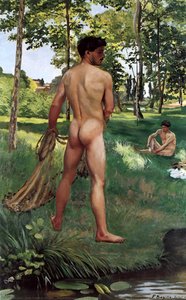
      Jean Frédéric Bazille și „Bathers (Summer Scene)” – O Explozie de Vitalitate În Culori Fugitive „Bathers (Summer Scene),” pictată în anul 1869 de Jean Frédéric Bazille, este mai mult decât o simplă reprezentare a unei scene estivale; ea este o declarație artistică îndrăzneață și o celebrare autentică a frumuseții naturii și a adolescenței exuberante. Această operă impresionistă fascinantă ne transportează într-o pădure însorită, unde un grup de tineri își petrece…

      Reuniunea Familiei (1867) de Frédéric Bazille
      2

      Reuniunea Familiei

      1867 · Ulei pe pânză · Musée d'Orsay, Paris

      „Reuniunea Familiei”, pictată de Jean Frédéric Bazille în 1867, nu este doar o imagine; este o fereastră către un moment specific din viața franceză a secolului al XIX-lea. Această operă impresionantă, acum disponibilă ca reproducere artistică de înaltă calitate pe wahooart.com, ne invită să contemplăm o scenă vibrantă și plină de viață într-un cadru natural idilic. Bazille, un artist cu un talent evident pentru detaliu și o sensibilitate profundă față…

      The Pink Dress (1864) de Frédéric Bazille
      3

      The Pink Dress

      1864 · Acrylic On Canvas · Musée d'Orsay, Paris

      Marilyn Monroe’s “Pink Dress,” designed by William Travilla for Howard Hawks’ 1953 film *Gentlemen Prefer Blondes*, transcends mere costume; it embodies an enduring symbol of glamour, ambition, and the seductive allure of Hollywood. The dress itself—a shocking pink silk satin gown adorned with black satin lining and a large bow—represents more than just fabric and embellishments; it encapsulates a pivotal moment in cinematic history and continues to fascinate audiences today.

      La Toilette (1870) de Frédéric Bazille
      4

      La Toilette

      1870 · Acrylic On Canvas · Musée Fabre, Montpellier

      The Painting's Significance and Context La Toilette, an oil-on-canvas painting by Jean Frédéric Bazille, is a remarkable work of art that showcases the artist's skill in capturing intimate moments. Created in 1869-1870, this painting is one of Bazille's last works before his untimely death in the Franco-Prussian War. Composition and Symbolism The painting depicts three women in a room, with one woman lying on a bed while the other two…

      Landscape on the Shore of Lez (1870) de Frédéric Bazille
      5

      Landscape on the Shore of Lez

      1870 · Oil

      Landscape on the Shore of Lez is a significant work by Frédéric Bazille, an artist whose life was marked by a brief but intense period of creativity. Born in 1841, Bazille’s career was tragically cut short when he died in 1870. This particular painting, completed in June 1870, represents one of his final artistic statements. It is a large landscape that the artist himself described as an eclogue, a term…

      The Family Gathering (1867) de Frédéric Bazille
      6

      The Family Gathering

      1867 · Oil On Canvas · Musée d'Orsay, Paris

      To stand before The Family Gathering is to step directly into a sun-dappled afternoon of pure, unscripted joy. This painting by Jean Frédéric Bazille captures more than just a social assembly; it arrests the very essence of conviviality. One feels the gentle warmth emanating from the canvas, as if the viewer has stumbled upon this private moment in time. The composition is masterfully arranged beneath the generous canopy of a…

      Portrait of an Unknown Sitter as a Troubadour (1875) de Frédéric Bazille
      10

      Portrait of an Unknown Sitter as a Troubadour

      1875 · Oil On Canvas · Muzeul de Artă Dallas, Dallas

      In this intimate oil portrait, we find ourselves drawn into a quiet, private moment with a young man. The composition is a close-up, bust-length study that pushes the subject toward the viewer through a dramatic use of chiaroscuro. A deep, nearly black background provides a void from which the sitter emerges, illuminated by a highly directional light source. This light catches the contours of his face, leaving the other side…

      Mai multe picturi cu Frédéric Bazille, de la 11 la 88

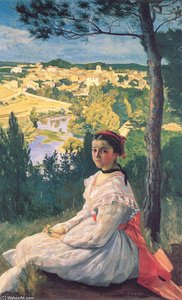
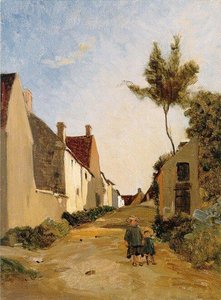
      View of the Village (1868) de Frédéric Bazille
      #18

      View of the Village

      1868 · Musée Fabre

      Jean Frédéric Bazille’s “View of the Village,” painted in 1868, stands as a quintessential example of the Impressionist spirit—a movement that sought to capture fleeting impressions of light…

      Comandă pictură realizată manual →
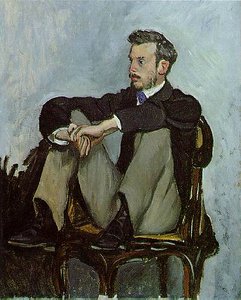
      Portrait of Renoir (1867) de Frédéric Bazille
      #20

      Portrait of Renoir

      1867 · Musée d'Orsay

      Jean Frédéric Bazille's “Portrait of Renoir” stands as a testament to the burgeoning Impressionist movement, capturing not merely an likeness but also a palpable sense of contemplative emotion.…

      Adu această lumină acasă →
      Reclining Nude (1864) de Frédéric Bazille
      #23

      Reclining Nude

      1864 · Musée Fabre

      Jean Frédéric Bazille's 'Reclining Nude,' painted in 1864, is more than just a depiction of the human form; it’s a carefully constructed evocation of serenity and sensual grace,…

      Comandă această pânză →
      Fontainebleau forest (1865) de Frédéric Bazille
      #24

      Fontainebleau forest

      1865 · Musée d'Orsay

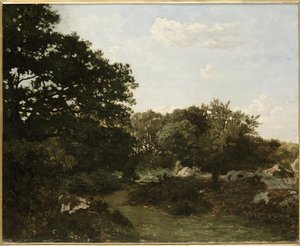
      In this 1865 oil on canvas, we find ourselves standing at the edge of the Fontainebleau forest. The composition is asymmetrical, drawing the eye toward a dense, dark…

      Comandă această pânză →
      Portrait of Edouard Blau (1866) de Frédéric Bazille
      #25

      Portrait of Edouard Blau

      1866 · National Gallery of Art

      “Portrait of Édouard Blau,” painted by Jean Frédéric Bazille in 1866, stands as a testament to the burgeoning Impressionist movement's fascination with capturing fleeting moments of light and…

      Comandă această pânză →
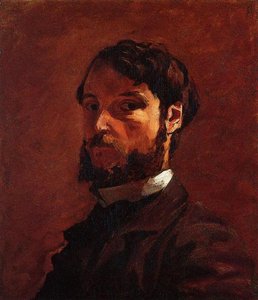
      Self Portrait (1870) de Frédéric Bazille
      #26

      Self Portrait

      1870

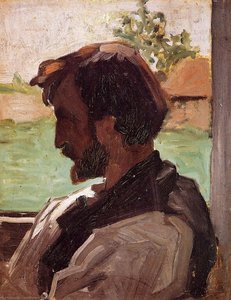
      In this poignant Self Portrait, painted in 1870, we encounter Frédéric Bazille not merely as a painter, but as a man caught in the delicate transition between youthful…

      Comandă această pânză →
      Self-Portrait (1867) de Frédéric Bazille
      #28

      Self-Portrait

      1867 · Minneapolis Institute of Art

      Self-Portrait is an oil on canvas painting by the artist Frédéric Bazille. Created in France, this work belongs to the Impressionism movement. The subject of the painting is…

      Comandă această pânză →
      Queens Gate at Aigues-Mortes (1867) de Frédéric Bazille
      #63

      Queens Gate at Aigues-Mortes

      1867 · Metropolitan Museum of Art

      Jean Frédéric Bazille's "Queens Gate at Aigues-Mortes," painted in 1867, isn’t merely a depiction of a medieval fortification; it’s an exquisite distillation of Impressionist philosophy and a poignant…

      Comandă această pânză →
      Landscape at Chailly (1865) de Frédéric Bazille
      #65

      Landscape at Chailly

      1865 · Art Institute of Chicago

      Jean Frédéric Bazille’s “Landscape at Chailly,” painted in 1865, isn't merely a depiction of a Swiss hillside; it’s a distilled essence of Impressionist philosophy—a fleeting capture of light,…

      Comandă pictură realizată manual →
      Toilet (1870) de Frédéric Bazille
      #70

      Toilet

      1870 · Musée Fabre

      Painted in 1870, tragically just months before Jean Frédéric Bazille's untimely death at the age of twenty-nine, *Toilet* (La Toilette) is a pivotal work within the burgeoning Impressionist…

      Comandă pictură realizată manual →
      Summer Scene (Bathers) de Frédéric Bazille
      #72

      Summer Scene (Bathers)

      Fogg Museum

      Jean Frédéric Bazille's “Summer Scene (Bathers)” captures a quintessential moment of leisure and joy, transporting the viewer to the sun-drenched landscapes of Provence. Painted in 1873, just months…

      Adu această lumină acasă →
      Edouard Blau (1869) de Frédéric Bazille
      #83

      Edouard Blau

      1869 · National Gallery of Art

      This oil on canvas work, titled Edouard Blau, was executed by the French artist Frédéric Bazille. It offers a quiet study of the sitter, a French dramatist, critic,…

      Comandă pictură realizată manual →

      Pânzele lui Frédéric Bazille, perioadă cu perioadă

      Cele mai picturate opere ale lui Frédéric Bazille

      Cele patru teme care apar cel mai des pe aceste pânze, fiecare cu cel mai apreciat exemplu al său.

      Unde sunt expuse picturile lui Frédéric Bazille

      Cele 8 muzee care dețin cele mai multe dintre picturile de pe această pagină.

      Muzeu Oraș Lucrări lui Frédéric Bazille Picturi din această listă
      Musée Fabre, MontpellierMusée Fabre Montpellier 23 La Toilette, The Scoter, Petite Italienne chanteuse des rues
      Musée d'Orsay, ParisMusée d'Orsay Paris 8 Reuniunea Familiei, The Pink Dress, The Family Gathering
      National Gallery of Art, WashingtonNational Gallery of Art Washington 6 Portrait of Edmond Maitre, Portrait of Edouard Blau, Edmond Maître
      Minneapolis Institute of Art, MinneapolisMinneapolis Institute of Art Minneapolis 2 Self-Portrait, The Banks of the Lez
      Art Institute of Chicago, ChicagoArt Institute of Chicago Chicago 2 Landscape at Chailly, Self Portrait with Palette
      Fogg Art Museum, CambridgeFogg Art Museum Cambridge 1 Bathers (Summer Scene)
      Museum of Fine Arts, HoustonMuseum of Fine Arts Houston 1 Le petit jardinier, ca Museum of Fine Arts,
      Muzeul de Artă Dallas, DallasMuzeul de Artă Dallas Dallas 1 Portrait of an Unknown Sitter as a Troubadour

      Cele mai iubite picturi ale lui Frédéric Bazille din fiecare deceniu

      1. 1850s
      2. 1860s
        Bathers (Summer Scene) (1869) de Frédéric Bazille
        1 din 88

        Bathers (Summer Scene)

        Vârsta 19 – 28 · Fogg Art Museum

        Jean Frédéric Bazille și „Bathers (Summer Scene)” – O Explozie de Vitalitate În Culori Fugitive „Bathers (Summer Scene),” pictată în anul 1869 de Jean Frédéric Bazille, este mai…

      3. 1870s
        La Toilette (1870) de Frédéric Bazille
        Pânză 4 din 88

        La Toilette

        Vârsta 29 · Musée Fabre

        The Painting's Significance and Context La Toilette, an oil-on-canvas painting by Jean Frédéric Bazille, is a remarkable work of art that showcases the artist's skill in capturing intimate…

      Despre picturile lui Frédéric Bazille: răspunsuri la întrebările tale

      Care este cea mai cunoscută pictură a lui Frédéric Bazille?Citește răspunsul

      Bathers (Summer Scene) (1869), Fogg Art Museum, Cambridge. Urmează Reuniunea Familiei (1867) și The Pink Dress (1864).

      Ce vârstă avea Frédéric Bazille când a fost pictată opera Bathers (Summer Scene)?Citește răspunsul

      Frédéric Bazille, născut în 1841, avea 28 de ani: Bathers (Summer Scene) datează din 1869.

      Care sunt cele mai 10 picturi celebre ale lui Frédéric Bazille?Citește răspunsul

      Bathers (Summer Scene), Reuniunea Familiei, The Pink Dress, La Toilette, Landscape on the Shore of Lez, The Family Gathering, The Scoter, Le petit jardinier, ca Museum of Fine Arts,, Saint-Saveur și Portrait of an Unknown Sitter as a Troubadour. Fiecare pictură din clasamentul de mai sus este însoțită de anul creării și de muzeul în care este expusă.

      Câte lucrări a pictat Frédéric Bazille în total?Citește răspunsul

      În catalogul nostru sunt 88 lucrări ale lui Frédéric Bazille, datate între 1859 și 1870.

      Unde pot vedea cele mai faimoase picturi ale lui Frédéric Bazille?Citește răspunsul

      În principal în Musée Fabre (Montpellier), Musée d'Orsay (Paris) și National Gallery of Art (Washington); lista de mai sus enumeră fiecare muzeu și picturile sale.

      Când a pictat Frédéric Bazille cele mai iubite picturi?Citește răspunsul

      În 1860s, care a inclus 54 dintre cele 88 lucrări de pe această pagină, Bathers (Summer Scene) printre acestea.

      Care sunt cele mai vechi și cele mai recente picturi celebre ale lui Frédéric Bazille?Citește răspunsul

      Cea mai veche pânză de aici datează din Mystic marriage of Saint Catherine (1859), iar cea mai recentă este din La Toilette (1870).

      Ce a pictat cel mai des Frédéric Bazille?Citește răspunsul

      Portraits (6), Men (6) și Man (5), din cele 88 lucrări de pe această pagină.

      În ce tehnică a pictat cel mai des Frédéric Bazille?Citește răspunsul

      Oil On Canvas, utilizat în 22 dintre cele 88 lucrări de pe această pagină.

      Din ce mișcare artistică face parte pictura lui Frédéric Bazille?Citește răspunsul

      Impressionist landscape, așa cum demonstrează picturile de pe această pagină.

      Ce picturi cu Frédéric Bazille sunt expuse la Musée Fabre?Citește răspunsul

      Musée Fabre, Montpellier deține 23 dintre lucrările de pe această pagină, printre care se numără La Toilette, The Scoter și Petite Italienne chanteuse des rues.

      Pot cumpăra o reproducere a unei picturi cu Frédéric Bazille?Citește răspunsul

      Da. Orice pictură de pe această pagină poate fi comandată de pe pagina sa dedicată, sub formă de reproducere pictată manual în ulei sau ca print de artă, în dimensiunea aleasă de dumneavoastră.

      Frédéric Bazille: o viață în pictură

      The Brief Radiance of Jean Frédéric Bazille

      Jean Frédéric Bazille’s story is one of immense promise tragically cut short, a fleeting yet significant contribution to the burgeoning Impressionist movement. Born in Montpellier, France, on December 6, 1841, into a prosperous Protestant family involved in wine production, Bazille initially seemed destined for a life far removed from the world of art. His parents, while supportive, insisted he pursue medical studies alongside his artistic inclinations – a compromise reflecting the societal expectations of the time and their desire for his financial security. This duality would shape his early years, dividing his attention between anatomical dissection and the captivating allure of color and light. However, it was within the vibrant atmosphere of Paris, where he relocated in 1862 to continue his medical training, that Bazille’s artistic path truly began to unfold.

      Forging a Path Amongst Giants

      Paris proved to be a crucible for young Bazille. He quickly fell in with a circle of artists who would become synonymous with Impressionism: Claude Monet, Pierre-Auguste Renoir, and Alfred Sisley. Studying under Charles Gleyre provided him with formal training, but it was the shared passion and radical ideas exchanged amongst these friends that truly ignited his artistic vision. Bazille’s financial stability – a fortunate contrast to the often precarious existence of his companions – allowed him to generously support them, offering studio space and materials. This generosity wasn't merely practical; it stemmed from a deep camaraderie and belief in their collective potential. He became a vital hub for this emerging group, fostering an environment of experimentation and mutual encouragement. His early works, like *The Pink Dress* (c. 1864), already demonstrate a keen eye for capturing fleeting moments and the effects of light – hallmarks that would define Impressionism. He wasn’t simply mimicking established styles; he was actively participating in the creation of something entirely new. The influence of Eugène Delacroix, with his dramatic use of color and dynamic compositions, is subtly present in Bazille's early work, yet he quickly moved beyond academic conventions to embrace a more modern sensibility.

      A Style Defined by Light and Friendship

      Bazille’s artistic style, though developing rapidly, possessed a unique character within the broader Impressionist aesthetic. While sharing their fascination with *plein air* painting – working outdoors to directly capture the nuances of natural light – his compositions often exhibited a more structured quality than Monet’s or Renoir’s. He frequently combined figure painting with landscape, placing his subjects thoughtfully within their environment, as seen in masterpieces like *Family Reunion* (1867-1868). This work is not merely a depiction of familial gathering; it's an exploration of light filtering through the trees, animating the scene and imbuing it with a sense of warmth and intimacy. His paintings weren’t just about *what* he saw, but *how* he saw it – the emotional resonance evoked by color, form, and light. He was deeply influenced by Eugène Delacroix, whose vibrant use of color resonated with his own artistic sensibilities, yet he moved beyond academic conventions to embrace a more modern sensibility. Bazille’s palette often leaned towards darker tones than many of his Impressionist colleagues, reflecting the Languedoc's dramatic contrasts and creating a sense of depth and atmosphere.

      A Life Interrupted: Legacy and Remembrance

      The blossoming career of Jean Frédéric Bazille was brutally interrupted by the Franco-Prussian War in 1870. Driven by a sense of patriotic duty, he joined a Zouave regiment just months after the conflict erupted. Tragically, he was killed in action on November 28, 1870, at the young age of 28, near Beaune-la-Rolande. His death sent shockwaves through the artistic community, robbing them of a talented friend and generous benefactor. His premature demise meant his work remained relatively unknown for many years. However, in recent decades, Bazille’s contributions have been increasingly recognized and celebrated. Today, his paintings are held in prestigious museums like the Musée d'Orsay in Paris, and reproductions allow art lovers worldwide to experience the beauty and innovation of his vision. Bazille’s legacy extends beyond his artistic output; he embodies the spirit of youthful idealism, unwavering dedication, and the power of friendship that defined the early days of Impressionism. He remains a poignant reminder of the potential lost, yet also a testament to the enduring impact of a brief but brilliant career. His work serves as a vital link between the Realist traditions of artists like Courbet and the revolutionary innovations of Monet, Renoir, and Sisley, demonstrating a unique synthesis of observation, emotion, and light.
      • Key Influences: Eugène Delacroix, Realism (Courbet), Impressionism (Monet, Renoir, Sisley)
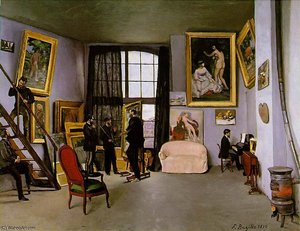
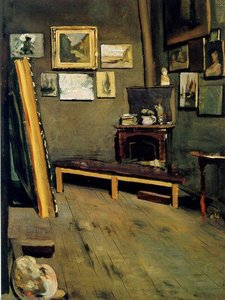
      • Notable Works: *The Pink Dress*, *Family Reunion*, *Studio in Rue de Furstenberg*, *Bathers (Summer Scene)*
      • Technique: *Plein air* painting, careful observation of light and color, integration of figure and landscape.

      Toate cele 88 de lucrări ale lui Frédéric Bazille →