Atelier — Livrare gratuită în întreaga lume — Livrare în 2–6 săptămâni
      Goya, 1746 – 1828

      The 100 Most Famous Goya Paintings, Ranked

      The best-loved painting by Goya is Saturn devorându-și fiul (1823), which hangs in the Muzeul Prado, Madrid. 3 mai 1808 (Execuția apărătorilor din Madrid) (1814) and La Maja Desnuda (1798) come next among the canvases readers know best. Our catalogue holds 1,429 works by Goya: here are the 100 most famous, each with its year, its museum and what makes it memorable.

      Clasate în funcție de scorul nostru de popularitate, care combină numărul de căutări, vizite și comenzi pentru fiecare operă. Actualizat Octombrie 2026. Each painting on this page can be ordered as an oil reproduction painted by hand on linen canvas, or as a fine art print, made to the size you choose.

      Portretul lui Goya
      Goya · 1746 – 1828
      Născut · Decedat
      1746 – 1828, Fuendetodos
      Mișcare
      Romantic baroque
      Lucrări din catalogul nostru
      1.429
      Cele mai celebre
      Saturn devorându-și fiul (1823)
      Cele mai multe lucrări la
      Muzeul Prado

      Top 10 Goya paintings: the canvases everyone knows

      Saturn devorându-și fiul (1823) de Goya
      1

      Saturn devorându-și fiul

      1823 · Ulei pe pânză · Muzeul Prado, Madrid

      „Saturn Devorându-și Fiul”, una dintre cele mai tulburătoare și puternic emoționale lucrări din istoria artei occidentale, transcende simpla reprezentare pentru a deveni o întruchipare viscerală a fricii, tiraniei și trecerii implacabile a timpului. Această imagine fantomatică, parte a faimoasei serii „Picturile Negre”, nu doar descrie un mit, ci explorează adâncurile psihicului uman și reflectă o perioadă de tumult personal și politic pentru artistul spaniol Francisco Goya.

      3 mai 1808 (Execuția apărătorilor din Madrid) (1814) de Goya
      2

      3 mai 1808 (Execuția apărătorilor din Madrid)

      1814 · Ulei pe pânză · Muzeul Prado, Madrid

      O Cronică a Rezistenței: Descoperind Capodopera lui Goya Francisco Goya nu a fost doar un pictor; a fost un seismograf al sufletului uman, capabil să surprindă cu o acuratețe tulburătoare frumusețea și cruzimea existenței. Tabloul său din 1814, ”Al Treilea Mai 1808 (Execuția Apărătorilor din Madrid)", nu este doar o reprezentare a unui eveniment istoric, ci un strigăt visceral împotriva ororilor războiului și o mărturie puternică a spiritului uman în…

      La Maja Desnuda (1798) de Goya
      3

      La Maja Desnuda

      1798 · Ulei pe pânză · Muzeul Prado, Madrid

      Această pictură excepțională în ulei surprinde o femeie nudă, întinsă într-o postură relaxată, forma sa fiind redată cu un realism uimitor și o atenție delicată la detalii. Poziția relaxată a subiectului, cu brațele sprijinite în spatele capului, emană încredere și naturalețe, invitând privitorul într-un moment intim de frumusețe pură. Privirea sa confruntă direct spectatorul, creând o conexiune puternică ce sfidează noțiunile tradiționale de modestie și invită la contemplarea autonomiei și…

      Carol al IV-lea al Spaniei și familia sa (1800) de Goya
      4

      Carol al IV-lea al Spaniei și familia sa

      1800 · Ulei pe pânză

      Tabloul „Carol al IV-lea al Spaniei și familia sa” de Francisco de Goya a fost creat în anul 1800, un moment de cotitură în istoria Spaniei. Goya fusese numit recent în funcția de Prim Pictor al Curții, o poziție de un prestigiu imens care îi oferea acces la familia regală și un patronaj semnificativ. Această comandă a apărut într-o perioadă în care Spania navigava prin peisaje politice complexe, incluzând consecințele…

      The Second of May, 1808 at the Puerta del Sol de Goya
      5

      The Second of May, 1808 at the Puerta del Sol

      Oil

      A Chronicle of Rebellion: Goya’s “The Second of May, 1808” Francisco de Goya's "The Second of May, 1808" isn’t merely a painting; it’s a visceral scream frozen in time. Completed in 1814, this monumental oil on canvas transports us directly into the heart of the Dos de Mayo Uprising – a pivotal moment in Spanish history and a searing indictment of war's brutal realities. The scene unfolds within the Calle…

      Câine (1820) de Goya
      6

      Câine

      1820 · Ulei pe pânză · Muzeul Prado, Madrid

      Subiectul picturii surprinde o temă simplă, dar puternic evocatoare – un câine care se odihnește pe un versant muntean, sub un peisaj montan melancolic și tulburător. Această alegere deliberată subliniază fascinația lui Goya pentru capturarea esenței vieții de zi cu zi, elevând-o la rang de simbol al contemplării și al rezilienței.

      Maja îmbrăcată (1800) de Goya
      7

      Maja îmbrăcată

      1800 · Ulei pe pânză · Muzeul Prado, Madrid

      În colțurile liniștite și umbrite ale istoriei artei, puține portrete domină spațiul cu aceeași autoritate tăcută ca Francisco Goya-lui Maja îmbrăcată. Pictată în anul 1800, această operă este mult mai mult decât o simplă reprezentare a unei nobil de rang înalt; este o explorare profundă a feminității, a statutului social și a adâncimii psihologice a spiritului uman. Figura centrală, identificată ca fiind María del Pilar Teresa Cayetana de Silva y…

      Satul de vrăjitoare (1821) de Goya
      8

      Satul de vrăjitoare

      1821 · Ulei pe pânză · Muzeul Prado, Madrid

      O Adunărare Întunecată: O Viziune Misterioasă și Înspăimântătoare Francisco de Goya’s “Witches’ Sabbath” este o capodoperă tulburătoare, care aruncă privitorii într-o lume a intrigilor supranaturale și a frumuseții sinistre. Această operă captivantă, creată în 1821, prezintă o scenă haotică plină de figuri implicate într-un ce pare a fi o adunare ritualică. Figura centrală, îmbrăcată în robe negre, atrage imediat atenția, sugerând teme de putere, mister și ocultism. Această pictură nu…

      Sărbătoarea Vrăjitoarelor 1 de Goya
      9

      Sărbătoarea Vrăjitoarelor 1

      Acrilic pe pânză întinsă

      Sărbătoarea Vrăjitoarelor 1: O viziune gotică a fricii de Inquisitorie 'Sărbătoarea Vrăjitoarelor 1' de Francisco de Goya se ridică ca o mărturie tulburătoare a anxietăților Romantismului și ca o acuzație aprinsă împotriva persecuției religioase din Spania. Pictată în anul 1798 folosind ulei pe pânză, această operă monumentală transcende simpla reprezentare vizuală; ea scufundă privitorii într-un tărâm al unui simbolism neliniștor și al unei profunzimii psihologice remarcabile. Paleta întunecată a picturii…

      El Coloso (1812) de Goya
      10

      El Coloso

      1812 · Ulei pe pânză · Muzeul Prado, Madrid

      “El Coloso,” también conocido como “El Gigante” y “La Tormenta”, es una obra maestra pintada por Francisco José de Goya y Lucientes en 1812, justo en el corazón de la Guerra Peninsular española. Esta pintura no solo captura un momento histórico crítico sino que también ofrece una profunda reflexión sobre temas universales como el poder divino, la vulnerabilidad humana y la resistencia ante la adversidad – valores centrales del movimiento…

      More Goya canvases, 11 to 100

      Fight With Cudgels (1823) de Goya
      #11

      Fight With Cudgels

      1823 · Muzeul Prado

      In the heart of a desolate, barren field, a primal confrontation unfolds in Francisco Goya’s 1823 masterpiece, Fight With Cudgels. This work, a striking component of his Black…

      Bring this light home →
      Flight of the witches de Goya
      #12

      Flight of the witches

      Muzeul Prado

      Flight of the Witches Francisco de Goya’s Flight of the Witches is a captivating oil on canvas painting that embodies the essence of Romanticism. Created in the late…

      Order this canvas →
      Atropos (The Fates) (1823) de Goya
      #13

      Atropos (The Fates)

      1823 · Muzeul Prado

      To stand before Francisco José de Goya y Lucientes’ Atropos is not merely to observe a painting, but to confront the raw, untamed depths of the human psyche.…

      Order this canvas →
      The Parasol (1777) de Goya
      #14

      The Parasol

      1777 · Museo Nacional Centro de Arte Reina Sofía

      A Moment of Courtship: Unveiling Goya’s *The Parasol* (1777) The Parasol, painted in 1777 by the masterful Francisco de Goya, is more than just a depiction of a…

      Order this canvas →
      Judith and Holovernes (1823) de Goya
      #15

      Judith and Holovernes

      1823 · Muzeul Prado

      In the heavy, shadow-drenched atmosphere of this Spanish school work, a biblical narrative unfolds with sudden, violent urgency. Judith and Holofernes, painted by Francisco Goya between 1818 and…

      Have it painted by hand →
      Asmodea (1823) de Goya
      #17

      Asmodea

      1823 · Muzeul Prado

      „Asmodea”, parte din faimoasa serie a Picturilor Negre ale lui Francisco Goya, este mai mult decât o simplă pictură; este o fereastră deschisă spre tumultul interior al unui…

      Bring this light home →
      The Pilgrimage of San Isidro (1823) de Goya
      #19

      The Pilgrimage of San Isidro

      1823 · Muzeul Prado

      A Pilgrimage Steeped in Shadow: Unveiling Goya’s ‘The Pilgrimage of San Isidro’ Francisco de Goya's *The Pilgrimage of San Isidro*, painted in 1823, is not merely a depiction…

      Bring this light home →
      The vendor comedians de Goya
      #20

      The vendor comedians

      Academia Regal de Bellas Artes de San Fernando

      A Carnival of Shadows: Decoding Goya’s ‘The Vendor Comedians’ This captivating, yet unsettling work by Francisco de Goya is a masterclass in Romantic-era social commentary. While seemingly depicting…

      Bring this light home →
      Leocadia (1823) de Goya
      #21

      Leocadia

      1823 · Muzeul Prado

      The painting is a portrait of a woman with long hair sitting on a rock. She appears to be wearing a black dress and has her hands covering…

      Order this canvas →
      The Madhouse de Goya
      #22

      The Madhouse

      Francisco de Goya’s “The Madhouse” isn't merely a depiction of an asylum; it is a visceral plunge into the darkest corners of the human psyche and a searing…

      Have it painted by hand →
      La maja desnuda (1797) de Goya
      #25

      La maja desnuda

      1797

      Capodopera iconică a lui Francisco de Goya, La maja desnuda, surprinde esența Romantismului spaniol, depășind în același timp limitele convențiilor artistice ale epocii. Această pictură captivantă înfățișează o…

      Have it painted by hand →
      Nude Maja (1800) de Goya
      #26

      Nude Maja

      1800 · Muzeul Prado

      Francisco de Goya's *Nude Maja*, painted in 1800, is not merely a depiction of a nude woman; it’s a seismic event in the history of art. This oil…

      Have it painted by hand →
      Charles IV and His Family de Goya
      #27

      Charles IV and His Family

      Muzeul Prado

      Francisco de Goya's "Charles IV and His Family," completed in 1800, stands as a pivotal work within the artist’s oeuvre. Created during a period of significant political upheaval…

      Order this canvas →
      Timp și Femeile Vârstnice (1810) de Goya
      #30

      Timp și Femeile Vârstnice

      1810 · Palais des Beaux-Arts

      Time and the Old Women – Unveiling Goya’s Profound Reflection Francisco de Goya’s “Time and the Old Women” is far more than just a portrait; it's a deeply…

      Order this canvas →
      El Lazarillo de Tormes (1819) de Goya
      #32

      El Lazarillo de Tormes

      1819

      El Lazarillo de Tormes: A Romantic Echo of Poverty and Resilience Francisco De Goya’s El Lazarillo de Tormes stands as a poignant emblem of Romanticism—a movement defined by…

      Order this canvas →
      The Witches' Sabbath (1797) de Goya
      #34

      The Witches' Sabbath

      1797

      Francisco de Goya’s The Witches’ Sabbath, painted in 1798, isn’t merely a depiction of a nocturnal gathering; it's a visceral plunge into the anxieties and superstitions that gripped…

      Bring this light home →
      Fire at Night (1794) de Goya
      #35

      Fire at Night

      1794

      To stand before Goya’s depiction of Fire at Night is not merely to observe a scene; it is to be plunged into the very heart of human panic.…

      Order this canvas →
      the colossus (1812) de Goya
      #36

      the colossus

      1812

      Francisco de Goya’s “The Colossus,” painted in 1812, isn't merely a depiction of a towering figure; it’s a profound meditation on human vulnerability against the overwhelming forces of…

      Bring this light home →
      The Annunciation (1785) de Goya
      #38

      The Annunciation

      1785

      Francisco de Goya’s “The Annunciation,” painted in 1785, is more than just a depiction of a pivotal biblical moment; it's a profound exploration of faith, humility, and the…

      Order this canvas →
      Judith and Holofernes de Goya
      #39

      Judith and Holofernes

      Francisco Goya's "Judith and Holofernes" isn’t merely a depiction of a biblical narrative; it’s a visceral plunge into the heart of human drama, a testament to courage born…

      Order this canvas →
      The Devil's Lamp (1797) de Goya
      #40

      The Devil's Lamp

      1797 · National Gallery

      Francisco José de Goya y Lucientes, a titan of Spanish art, possessed an unparalleled ability to capture the anxieties and mysteries of his time. Within his vast oeuvre,…

      Have it painted by hand →
      The dance (1784) de Goya
      #41

      The dance

      1784 · Palácio Nacional da Ajuda

      Francisco José de Goya y Lucientes (1746 – 1828), a figure as luminous as it is shadowed, stands apart from many of his contemporaries. He wasn't merely replicating…

      Have it painted by hand →
      Satul Vrăjitoarelor de Goya
      #43

      Satul Vrăjitoarelor

      O Viziune Întunecată din Inima Evului: „Sabbatul Vrăjitoarelor” de Francisco Goya „Sabbatul Vrăjitoarelor”, pictat în 1798 de Francisco José de Goya y Lucientes, nu este doar o operă…

      Order this canvas →
      Returning from the hunt (1784) de Goya
      #45

      Returning from the hunt

      1784 · Palácio Nacional da Ajuda

      Francisco José de Goya y Lucientes' "Returning from the Hunt" isn’t merely a depiction of a sporting event; it’s a profound meditation on human endeavor, the weight of…

      Bring this light home →
      The Second of May 1808 (1814) de Goya
      #46

      The Second of May 1808

      1814

      Francisco de Goya’s “The Second of May 1808,” also known as “The Charge of the Mamelukes,” stands as a monumental achievement in Romantic painting, capturing not merely an…

      Order this canvas →
      Squealers. (1799) de Goya
      #47

      Squealers.

      1799

      The scene unfolds within a vertical rectangle, dominated by a colossal demonic figure looming high above a kneeling supplicant. Diagonal lines surge across the composition, creating an immediate…

      Have it painted by hand →
      Poor Folly (1819) de Goya
      #50

      Poor Folly

      1819

      The artwork is a monochromatic etching that presents a chaotic and emotionally charged scene. The composition is tightly packed with figures, creating a sense of claustrophobia and urgency.…

      Bring this light home →
      There it goes (1799) de Goya
      #53

      There it goes

      1799

      Francisco de Goya's "There it goes," etched in 1799, is not merely a depiction of two figures suspended in the air; it’s a haunting meditation on desire, escape,…

      Have it painted by hand →
      Spanish Entertainment (1825) de Goya
      #54

      Spanish Entertainment

      1825

      Spanish Entertainment: A Dramatic Echo of Goya’s Vision Francisco José de Goya y Lucientes, a titan amongst Romantic artists, bequeathed to us not merely images but profound meditations…

      Have it painted by hand →
      Love and Death (1799) de Goya
      #55

      Love and Death

      1799

      A man and a woman are locked in a desperate, passionate embrace, their bodies entwined in a moment that feels both intimate and final. They exist in a…

      Order this canvas →
      The dog - - (1823) de Goya
      #56

      The dog - -

      1823

      Francisco de Goya's "The Dog," painted between 1819 and 1823, is not merely a depiction of an animal; it’s a profound meditation on loneliness, mortality, and the unsettling…

      Have it painted by hand →
      Strolling Players (1793) de Goya
      #57

      Strolling Players

      1793

      Francisco José de Goya’s “Strolling Players,” painted in 1793, isn't merely a depiction of a theatrical performance; it’s a carefully constructed tableau brimming with social commentary and the…

      Order this canvas →
      The Duchess of Alba, Sketch (1796) de Goya
      #58

      The Duchess of Alba, Sketch

      1796 · Hispanic Society Museum - Library

      The Duchess of Alba, Sketch is a portrait by Francisco Goya. The subject is Doña María de Pilar Teresa Cayetana de Silva Álvarez de Toledo, who held the…

      Bring this light home →
      Bartholomew Suerda (1806) de Goya
      #59

      Bartholomew Suerda

      1806

      Francisco de Goya’s “Bartolomé Suerda” – painted in 1806 during a pivotal period of his artistic evolution – is more than just a portrait; it's a carefully constructed…

      Have it painted by hand →
      The Holy Family (1787) de Goya
      #61

      The Holy Family

      1787 · Muzeul Prado

      In the corner of an austere carpentry shop, wood shavings lie scattered across the floor. The air feels heavy with the scent of cedar and dust. Within this…

      Have it painted by hand →
      The Arrest of Christ (1788) de Goya
      #62

      The Arrest of Christ

      1788 · Catedrala din Toledo

      The painting immediately draws the viewer into a darkened landscape dominated by an oppressive atmosphere. Goya employs chiaroscuro—the dramatic interplay between light and shadow—to heighten the emotional intensity.…

      Order this canvas →
      They who Cannot (1799) de Goya
      #65

      They who Cannot

      1799

      Francisco José de Goya y Lucientes’ “They Who Cannot,” etched in 1799, isn't merely a depiction of a scene; it’s an excavation into the very soul of human…

      Have it painted by hand →
      What Will he Die. (1799) de Goya
      #66

      What Will he Die.

      1799

      Introduction Francisco de Goya, a master painter from Spain, is renowned for his powerful and thought-provoking works. Among them, the painting 'What Will He Die Of?' (181 x…

      Bring this light home →
      Saint Lucy (1799) de Goya
      #68

      Saint Lucy

      1799 · Colecțiile Statale de Pictură din Bavaria

      In the portrait Saint Lucy by Francisco Goya, the composition is a close-up that focuses on the head and shoulders of the subject. The single female figure is…

      Bring this light home →
      She prays for her (1799) de Goya
      #70

      She prays for her

      1799

      Francisco José de Goya y Lucientes, the Spanish Romantic master, possessed an unparalleled ability to distill human experience – its beauty, its horror, and its profound contradictions –…

      Order this canvas →
      Bravissimo (1799) de Goya
      #71

      Bravissimo

      1799

      The etching titled Bravissimo emerged from the hand of Francisco José de Goya y Lucientes in 1799. It belongs to the celebrated series known as Los Caprichos. This…

      Have it painted by hand →
      Neither more nor less (1799) de Goya
      #76

      Neither more nor less

      1799

      This monochromatic artwork is an etching or engraving that presents an unusual and allegorical scene. The composition is asymmetrical, featuring a large dog that dominates the left side…

      Order this canvas →
      El comercio de Goya
      #77

      El comercio

      A Glimpse into Enlightenment: Unveiling Goya’s *El Comercio* Francisco de Goya's *El comercio* (“The Commerce”) offers a captivating window into the intellectual life of late 18th-century Spain, subtly…

      Bring this light home →
      Why hide them. (1799) de Goya
      #78

      Why hide them.

      1799

      The etching titled Why Hide Them? (Porque esconderlos?) is a work by the Spanish artist Francisco José de Goya y Lucientes. It exists as Plate 30 within his…

      Bring this light home →
      Poor little girls! (1799) de Goya
      #80

      Poor little girls!

      1799

      Francisco José de Goya y Lucientes's "Poor Little Girls!" (Pobrecitas!), painted in 1799, isn’t merely a depiction of poverty; it’s a visceral scream against injustice and the brutal…

      Order this canvas →
      They spin finely (1799) de Goya
      #81

      They spin finely

      1799

      Francisco José de Goya y Lucientes, a titan of Romantic art, confronts us with "They Spin Finely," a haunting etching from his seminal series, Los Caprichos. Completed in…

      Bring this light home →
      They have flown (1799) de Goya
      #83

      They have flown

      1799

      Francisco José de Goya y Lucientes's etching, "They Have Flown," Plate 61 from Los Caprices (Caprices), stands as a haunting emblem of Romantic disillusionment and a masterful demonstration…

      Have it painted by hand →
      They Sing for the Composer (1797) de Goya
      #84

      They Sing for the Composer

      1797

      A Scene of Domestic Discord: Unveiling Goya’s “They Sing for the Composer” Subject & Narrative: Francisco de Goya's 1797 lithograph, “They Sing for the Composer,” presents a deeply…

      Order this canvas →
      Queen María Luisa (1789) de Goya
      #85

      Queen María Luisa

      1789

      The portrait of Queen María Luisa, executed by Francisco Goya, depicts María Luisa of Parma. Created in 1789, the oil on canvas work portrays the Queen Consort of…

      Have it painted by hand →
      War scene (1812) de Goya
      #86

      War scene

      1812

      A Glimpse into Turmoil: Francisco Goya’s ‘War Scene’ (1812) “War Scene,” created in 1812 by the Spanish master Francisco Goya, is a powerfully evocative ink painting that encapsulates…

      Bring this light home →
      Till death (1799) de Goya
      #87

      Till death

      1799

      Francisco de Goya's "Till Death," etched in 1799, isn’t merely a depiction of mourning; it’s a profound and unsettling exploration of mortality, vanity, and the precariousness of human…

      Order this canvas →
      All will fall (1799) de Goya
      #88

      All will fall

      1799

      In this 1799 etching, we find ourselves observing a scene of profound stillness and quiet apprehension. A group of figures huddles beneath the protective canopy of an ancient…

      Order this canvas →
      Witches Sabbath (1789) de Goya
      #89

      Witches Sabbath

      1789

      To stand before Francisco José de Goya y Lucientes’ depiction of the Witches Sabbath is not merely to observe a painting; it is to be drawn into a…

      Bring this light home →
      The Countess of Chinchón de Goya
      #90

      The Countess of Chinchón

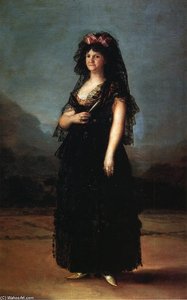
      Francisco de Goya’s “The Countess of Chinchón” (circa 1800) is more than just a portrait; it's a carefully constructed tableau vivant, a window into the opulent world of…

      Order this canvas →
      Little goblins (1799) de Goya
      #91

      Little goblins

      1799

      A Glimpse into a Darkened Innocence: Francisco Goya’s ‘Little Goblins’ Francisco Goya's 1799 etching, *Los Niños* (often referred to as 'Little Goblins'), is not a charming depiction of…

      Have it painted by hand →
      The Water Carrier ( (1812) de Goya
      #92

      The Water Carrier (

      1812 · Muzeul de Artă Fine din Budapesta

      In the annals of Spanish art history, few names command as much reverence and intrigue as Francisco José de Goya y Lucientes. His masterpiece, The Water Carrier, painted…

      Order this canvas →
      Portrait of Ferdinand VII of Spain (1808) de Goya
      #93

      Portrait of Ferdinand VII of Spain

      1808 · Muzeul de Artă din São Paulo Assis Chateaubriand (MASP)

      The artwork is the Portrait of Ferdinand VII of Spain by Francisco Goya. This oil on canvas depicts Ferdinand VII, a member of the Spanish royalty. The subject…

      Bring this light home →
      Self-Portrait (1799) de Goya
      #94

      Self-Portrait

      1799

      In the vast annals of art history, few images possess the raw, psychological intimacy found in Francisco José de Goya y Lucientes’ Self-Portrait. This rare and profound depiction…

      Bring this light home →
      Fight with Clubs de Goya
      #95

      Fight with Clubs

      A Brutal Encounter: Decoding Goya’s *Fight with Clubs* Francisco Goya's *Fight with Clubs*, a chilling masterpiece from his Black Paintings series (circa 1820-1823), is far more than a…

      Have it painted by hand →
      Subir y bajar de Goya
      #97

      Subir y bajar

      Francisco José de Goya y Lucientes, a titan of Spanish art, possessed an unparalleled ability to capture the complexities of human experience – its triumphs, anxieties, and darkest…

      Have it painted by hand →
      The Giant de Goya
      #98

      The Giant

      Introduction Francisco de Goya, a renowned Spanish artist from the late 18th and early 19th centuries, created numerous masterpieces that continue to captivate audiences today. Among his most…

      Have it painted by hand →
      the colossus de Goya
      #99

      the colossus

      A Titan of Turmoil: Unveiling Goya’s ‘The Colossus’ Francisco de Goya's ‘The Colossus’ (El Coloso) is a monumental work embodying the spirit of Romanticism, a painting that doesn’t…

      Have it painted by hand →
      Compartir la vieja (1810) de Goya
      #100

      Compartir la vieja

      1810

      The Spanish Soul: A Life Forged in Shadow and Light Francisco José de Goya y Lucientes (1746–1828), a name that resonates through the halls of art history, embodies…

      Have it painted by hand →

      Goya's canvases, period by period

      What Goya painted most

      The four subjects that return most often on these canvases, each with its best-loved example.

      Where Goya's canvases hang

      Cele 8 muzee care dețin cele mai multe dintre picturile de pe această pagină.

      Muzeu Oraș Lucrări lui Goya Picturi din această listă
      Muzeul Prado, MadridMuzeul Prado Madrid 135 Saturn devorându-și fiul, 3 mai 1808 (Execuția apărătorilor din Madrid), La Maja Desnuda
      Palácio Nacional da Ajuda, LisbonaPalácio Nacional da Ajuda Lisbona 10 The dance, Returning from the hunt
      Colecțiile Statale de Pictură din Bavaria, MunchenColecțiile Statale de Pictură din Bavaria Munchen 13 Saint Lucy
      Academia Regal de Bellas Artes de San Fernando, MadridAcademia Regal de Bellas Artes de San Fernando Madrid 11 The vendor comedians
      Hispanic Society Museum - Library, New YorkHispanic Society Museum - Library New York 7 The Duchess of Alba, Sketch
      National Gallery, LondraNational Gallery Londra 6 The Devil's Lamp
      Muzeul de Artă Fine din Budapesta, BudapestaMuzeul de Artă Fine din Budapesta Budapesta 6 The Water Carrier (
      Muzeul de Artă din São Paulo Assis Chateaubriand (MASP), São PauloMuzeul de Artă din São Paulo Assis Chateaubriand (MASP) São Paulo 4 Portrait of Ferdinand VII of Spain

      Goya's best-loved canvas of each decade

      1. 1770s
        The Parasol (1777) de Goya
        14 of 100

        The Parasol

        Vârsta 24 – 33 · Museo Nacional Centro de Arte Reina Sofía

        A Moment of Courtship: Unveiling Goya’s *The Parasol* (1777) The Parasol, painted in 1777 by the masterful Francisco de Goya, is more than just a depiction of a…

      2. 1780s
        The Annunciation (1785) de Goya
        38 of 100

        The Annunciation

        Vârsta 34 – 43

        Francisco de Goya’s “The Annunciation,” painted in 1785, is more than just a depiction of a pivotal biblical moment; it's a profound exploration of faith, humility, and the…

      3. 1790s
        La Maja Desnuda (1798) de Goya
        3 of 100

        La Maja Desnuda

        Vârsta 44 – 53 · Muzeul Prado

        Această pictură excepțională în ulei surprinde o femeie nudă, întinsă într-o postură relaxată, forma sa fiind redată cu un realism uimitor și o atenție delicată la detalii. Poziția…

      4. 1800s
        Carol al IV-lea al Spaniei și familia sa (1800) de Goya
        4 of 100

        Carol al IV-lea al Spaniei și familia sa

        Vârsta 54 – 63

        Tabloul „Carol al IV-lea al Spaniei și familia sa” de Francisco de Goya a fost creat în anul 1800, un moment de cotitură în istoria Spaniei. Goya fusese…

      5. 1810s
        3 mai 1808 (Execuția apărătorilor din Madrid) (1814) de Goya
        2 of 100

        3 mai 1808 (Execuția apărătorilor din Madrid)

        Vârsta 64 – 73 · Muzeul Prado

        O Cronică a Rezistenței: Descoperind Capodopera lui Goya Francisco Goya nu a fost doar un pictor; a fost un seismograf al sufletului uman, capabil să surprindă cu o…

      6. 1820s
        Saturn devorându-și fiul (1823) de Goya
        1 of 100

        Saturn devorându-și fiul

        Vârsta 74 – 82 · Muzeul Prado

        „Saturn Devorându-și Fiul”, una dintre cele mai tulburătoare și puternic emoționale lucrări din istoria artei occidentale, transcende simpla reprezentare pentru a deveni o întruchipare viscerală a fricii, tiraniei…

      About Goya's canvases: your questions answered

      What is the best-known painting by Goya?Read the answer

      Saturn devorându-și fiul (1823), Muzeul Prado, Madrid. 3 mai 1808 (Execuția apărătorilor din Madrid) (1814) and La Maja Desnuda (1798) follow.

      What age was Goya when Saturn devorându-și fiul was painted?Read the answer

      Goya, born in 1746, was 77 years old: Saturn devorându-și fiul dates from 1823.

      What are the 10 most famous paintings by Goya?Read the answer

      Saturn devorându-și fiul, 3 mai 1808 (Execuția apărătorilor din Madrid), La Maja Desnuda, Carol al IV-lea al Spaniei și familia sa, The Second of May, 1808 at the Puerta del Sol, Câine, Maja îmbrăcată, Satul de vrăjitoare, Sărbătoarea Vrăjitoarelor 1 și El Coloso. Each canvas in the ranking above comes with its year and its museum.

      How many works did Goya paint in all?Read the answer

      1,429 works by Goya are in our catalogue, dated 1777 to 1825.

      Where can I see Goya's most famous canvases?Read the answer

      Mostly in Muzeul Prado (Madrid), Palácio Nacional da Ajuda (Lisbona) și Colecțiile Statale de Pictură din Bavaria (Munchen); the list above names each museum and its canvases.

      When did Goya paint the best-loved canvases?Read the answer

      In 1790s, which gave 35 of the 100 works on this page, La Maja Desnuda among them.

      Which are Goya's earliest and latest famous canvases?Read the answer

      The earliest canvas here is The Parasol (1777); the latest is Spanish Entertainment (1825).

      What did Goya paint most often?Read the answer

      Darkness (18), Spain (13) și Spanish art (11), across the 100 works on this page.

      Which medium did Goya paint in most often?Read the answer

      Oil On Canvas, used in 27 of the 100 works on this page.

      Which movement is Goya's painting part of?Read the answer

      Romantic baroque, as the canvases on this page show.

      Which Goya canvases hang at the Muzeul Prado?Read the answer

      The Muzeul Prado, Madrid holds 21 of the works on this page, among them Saturn devorându-și fiul, 3 mai 1808 (Execuția apărătorilor din Madrid) și La Maja Desnuda.

      Can I buy a reproduction of a Goya canvas?Read the answer

      Yes. Every painting on this page can be ordered from its own page as an oil reproduction painted by hand, or as a fine art print, in the size you choose.

      Goya: a life in paint

      Tinerețea, Familia și Formarea

      Francisco José de Goya y Lucientes s-a născut pe 30 martie 1746 în Fuendetodos, Aragon. A crescut într-un cămin de clasa de mijloc, alături de frații săi: Rita, Tomás, Jacinta, Mariano și Camilo. Tatăl său, José Benito de Goya y Franque, lucra ca auriu, un meșteșug care cerea o mână sigură și un ochi atent la detalii. Acest cadru domestic a oferit fundalul liniștit al unei vieți care, în cele din urmă, s-ar fi deplasat mult dincolo de granițele provinciale ale locului nașterii sale.

      La vârsta de paisprezece ani, a început formarea sa oficială. A studiat sub îndrumarea lui José Luzán y Martínez, învățând mecanicile fundamentale ale artei sale. Acești ani de început au fost dedicați absorbției cerințelor tehnice ale mediului artistic, înainte de a se muta la Madrid. În capitală, educația sa a continuat sub îndrumarea lui Anton Raphael Mengs, o figură semnificativă în cercurile artistice de la acea vreme. Această tranziție de la instruirea provincială a tinereții sale către mediul formal din Madrid i-a modelat precizia tehnică pe care o va purta în anii de đâu.

      Patroni, Atelierul și Comenziile

      Ascensiunea sa constantă prin ierarhiile curții spaniole a început în anul 1786, moment în care a fost numit pictor al Camerei Regale. Până în 1790, poziția sa se consolidase deja ca prim pictor al curții. Opera sa a fost strâns legată de destinul mutabil al monarhiei, servind ca pictor pentru Carol al IV-lea și, ulterior, pentru Ferdinand al VII-lea. Aceste roluri l-au adus într-un contact permanent cu aristocrația, impunându-i o mână sigură pentru portretele și pentru bunul de legătură cu sarcinile oficiale așteptate de Coroană.

      Între anii 1775 și 1792, o mare parte din activitatea sa s-a concentrat pe Fabrica Regală de Tapiserii de la Santa Barbara, situată în apropierea Madridului. El a creat proiectele preliminare pentru aceste lucrări, surprinzând adesea scene din viața cotidiană și peisaje rurale. Aceste comenzi necesitau un tip de precizie minuțioasă, pentru a se asigura că imaginile se traduce perfect de pe pânză pe fir de ață. Atelierul său a fost un spațiu al producției neîncetate, evoluând de la aceste designuri decorative către studiile psihologice mai formale ale familiei regale.

      Lucrări Cheie și Perioade Artistice

      Transformarea profundă a creației sale a devenit vizibilă pe măsură ce lumea sa devenea tot mai liniștită. În anul 1799, Francisco De Goya a realizat Los Caprichos, o serie de optzeci de gravuri. Aceste printuri au utilizat tehnica aquatintă pentru a analiza nebuniile și superstițiile societății spaniole, populând paginile cu vrăjitoare și monștri. Această perioadă de observație intensă a continuat prin anii de conflict din Spania. Între 1810 și 1820, el a creat Disasterele Războiului, o serie de gravuri care au înregistrat brutalitatea și foametea din timpul Războiului Peninsular. Aceste opere nu caută eroismul; ele se concentrează pe suferința brută a poporului.

      Până în 1814, el finalizase 3 Mai 1808, o pictură care surprinde execuția apărătorilor în Madrid. Pe măsură ce avansa în anii de maturitate, atenția sa s-a mutat spre pereții casei sale, Quinta del Sordo. Între 1819 și 1823, el a pictat „Picturile Negre” direct pe tencuială. Aceste fresce, printre care se numără Saturn Devorând Fiuul și Asmodea, tratează tema nebuniei și a teroarei existențiale. Ele sunt grele, întunecate și lipsite de temele mai luminoase ale primilor sale ani de carieră.

      În ultimii săi ani petrecuți la Bordeaux, și-a îndreptat privirea către spectacolul din arena de corida. Acest lucru a dat naștere seriei La Tauromaquia, care a explorat violența din luptele de corida. Producția sa artistică a rămas constantă până la moartea sa, evoluind de la criticile sociale ale tinereții către umbrele profunde și private ale vieții sale de maturitate.

      • 3 Mai 1808 (1814)
      • Los Caprichos (1799)
      • Disasterele Războiului (1810–1820)
      • Picturile Negre (1819–1823)
      • La Tauromaquia (fără dată)

      Tehnică și Stil

      Mâinile sale au explorat o gamă vastă de texturi și metode, demonstrând o versatilitate remarcabilă. În domeniul gravurii, Francisco De Goya a utilizat tehnica aquatint pentru a confera o profunzime tonală fascinantă, experimentând totodată cu litografia în ultimii săi ani. Aceste alegeri tehnice i-au permis să oscileze între liniile ascuțite și acide ale satirei și calitățile mai moi, aproape atmosferice, ale desenelor sale. Opera sa a fost extrem de diversificată, evoluind de la criticile sociale profunde din Los Caprichos până la reprezentările vizcerale și grele din Disasters of War. Totodată, și-a îndreptat atenția către spectacolul brutal al torei în seria sa La Tauromaquia.

      Modul în care aplica vopseaua s-a transformat pe măsură ce viața sa devenea tot mai izolată. Pentru celebrele Black Paintings, el a renunțat la suprafața tradițională a pânzăi, preferând să aplice vopseaua de ulei direct pe pereții de tencuială ai casei sale. Această metodă a generat o calitate densă și sumbră, care a capturat o greutate psihologică aproape palpabilă. Întregul său parcurs artistic a migrat de la scenele mai luminoase și decorative ale primilor ani de carieră, către un stil care prioritiza libertatea expresivă. Această schimbare este vizibilă în modul în care a manipulat lumina și umbra, utilizându-le pentru a dezvălui esența caracterului uman, nu doar o simplă asemănare fizică.

      • Saturn Devouring His Son
      • The Nude Maja (La Maja Desnuda)
      • The Third of May, 1808

      Anii de la sfârșit și moartea

      Până în 1819, Francisco De Goya ajunsese la mijlocul vârstei de șaptezeci de ani, perioadă în care s-a retras la Quinta del Sordo, o casă de la periferia Madridului. Pereții acestei locuințe au devenit o pânză pentru cele mai intense și private viziuni ale sale, transformându-se într-un spațiu în care a aplicat vopseaua de ulei direct pe tencuială pentru a da viață celor numite „Picturi Negre”. Aceste opere, printre care se numără Saturn Devorând Fiuul și Asmodea, au pris naștere dintr-o perioadă de izolare profundă, continuând explorarea celor mai întunecate și tulburătoare uncorneri ale psihicului uman în acei ani de singurătate.

      Agitația politică din Spania a determinat, în cele din urmă, o schimbare radicală în mediul său de existență. În 1824, a căutat refugiu în exil la Bordeaux, Franța. A rămas acolo, continuându-și activitatea artistică cu un accent deosebit pe gravură, până la moartea sa, survenită pe 16 aprilie 1828. Ultimele sale ani petrecuți în Bordeaux au fost marcați de o reîncepută pasiune pentru spectacolul din arena de corida, temă explorată cu intensitate în seria sa La Tauromaquia.

      • Saturn Devorând Fiuul
      • Asmodea
      • La Tauromaquia

      Moștenire și Influență

      Greutatea operei sale se regăsește suspendată între două ere, marcând o tranziție profundă în istoria artei. Francisco De Goya este adesea numit ultimul dintre Marii Meșteri și primul dintre moderni, o poziție care simbolizează trecerea de la tradițiile structurate ale trecutului la libertatea expresivă a noului stil. În calitate de lider al mișcării romantice, el s-a îndepărtat de suprafețele lucrate și de eleganța anilor de curte, îndreptându-se spre un stil care prioritiza realitatea brută a condiției umane. Capacitatea sa de a surprinde adevărul psihologic al unui subiect, chiar și în cele mai tulburătoare sau întunecate compoziții, a revoluționat modul în care artiștii au mai întâi abordat pânza de pictură.

      Această schimbare către o perspectivă mai subiectivă și mai intensă a lăsat o amprentă indelibilă asupra generațiilor care i-au urmat. Influența sa traversează deceniile, rezonând în lucrările lui Édouard Manet și Pablo Picasso. Mai târziu, energia viscerală și distorsionată pe care o regăsim în picturile lui Francis Bacon pare să poarte ecouri ale întunericului explorat de Francisco De Goya. El rămâne cel mai important artist spaniol al sfârșitului secolului al XVIII-lea și începutului secolului al XIX-lea, reușind să parcurgă podul dintre cerințele formale ale Coroanei Spaniole și explorările interioare, adesea turbulente, ale spiritului individual.

      • The Third of May, 1808
      • Saturn Devouring His Son
      • La maja desnuda

      Toate cele 1429 de lucrări ale lui Goya →