Atelier — Livrare gratuită în întreaga lume — Livrare în 2–6 săptămâni
      Jan Steen, 1626 – 1679

      Jan Steen: The 100 Best-Known Paintings

      Of all Jan Steen's paintings, The Dissolute Household (1663) is the most famous; it hangs in the Metropolitan Museum of Art, New York. Close behind come The feast of Saint Nicholas (1670) and Merry Company on a Terrace (1670). Among the 499 works by Jan Steen in our catalogue, these 100 are the most celebrated, each shown with its date, its museum and its story.

      Clasate în funcție de scorul nostru de popularitate, care combină numărul de căutări, vizite și comenzi pentru fiecare operă. Actualizat Octombrie 2026. Each painting on this page can be ordered as an oil reproduction painted by hand on linen canvas, or as a fine art print, made to the size you choose.

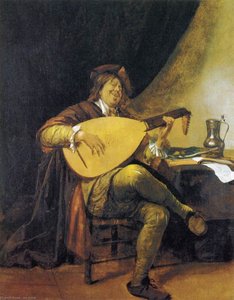
      Portretul lui Jan Steen
      Jan Steen · 1626 – 1679
      Născut · Decedat
      1626 – 1679, Leiden
      Mișcare
      Baroque realism
      Lucrări din catalogul nostru
      499
      Cele mai celebre
      The Dissolute Household (1663)
      Cele mai multe lucrări la
      National Gallery

      Jan Steen's 10 most celebrated paintings

      The Dissolute Household (1663) de Jan Steen
      1

      The Dissolute Household

      1663 · Oil On Canvas · Metropolitan Museum of Art, New York

      A Symphony of Chaos: Unveiling Jan Steen’s Masterpiece The Dissolute Household is not merely a painting; it is a theatrical performance frozen in time, a vibrant window into the boisterous and often unruly heart of the Dutch Golden Age. Created around 1663 by the incomparable Jan Havickszoon Steen, this work serves as a masterful exploration of human frailty, humor, and the delightful disorder of domestic life. As one gazes upon…

      The feast of Saint Nicholas (1670) de Jan Steen
      2

      The feast of Saint Nicholas

      1670 · Oil On Canvas · Museum Boijmans Van Beuningen, Rotterdam

      Step into this room and you are immediately caught in the middle of a Dutch household in mid-December. The air feels heavy with the scent of citrus and spiced bread. We are witnessing the Feast of Saint Nicholas, a tradition where the boundaries between reward and punishment are laid bare. In the foreground, a young girl holds a tin bucket overflowing with treats, her expression one of quiet triumph. Contrast…

      Merry Company on a Terrace (1670) de Jan Steen
      3

      Merry Company on a Terrace

      1670 · Oil On Canvas · Metropolitan Museum of Art, New York

      In the heart of the seventeenth century, amidst the burgeoning prosperity of the Dutch Golden Age, Jan Havickszoon Steen captured a moment that transcends time. "Merry Company on a Terrace" is not merely a painting; it is a vibrant, breathing window into a world of conviviality and controlled chaos. As one gazes upon this monumental canvas, completed around 1670, the viewer is immediately swept into a bustling courtyard where the…

      The Dancing Couple (1663) de Jan Steen
      4

      The Dancing Couple

      1663 · Oil On Canvas · National Gallery of Art, Washington

      To gaze upon Jan Steen’s “The Dancing Couple” is to be instantly swept up in the boisterous, uninhibited spirit of a seventeenth-century Dutch kermis. Painted in 1663, this masterpiece serves as much more than a mere visual record of a village fair; it is an immersive sensory experience that captures the very heartbeat of the Dutch Golden Age. Steen, a master of the human comedy, avoids the stiff formality often…

      'As the Old Sing, so Pipe the Young' (1664) de Jan Steen
      5

      'As the Old Sing, so Pipe the Young'

      1664 · Oil On Canvas · Mauritshuis, Haag

      A boisterous domestic interior unfolds in a dense, multi-layered composition, capturing a moment of chaotic conviviality. The scene centers on a family gathering where the boundaries between celebration and disorder are blurred. At the heart of the room, a laughing man—often identified as a self-portrait of the artist—gestures toward the folly of the assembly, while an elderly woman in the foreground examines a sheet of music. This document contains the…

      Merry family (1668) de Jan Steen
      6

      Merry family

      1668 · Oil On Canvas

      The air in the room feels thick with the sudden, boisterous energy of the Merry family. Painted by Jan Steen in 1668, this scene captures a moment of unrestrained domestic life that seems to pulse with life even now. It is a genre painting, a window into the everyday realities of the Dutch Golden Age, where the boundaries between celebration and chaos blur. One can almost hear the sudden burst…

      Village school (1670) de Jan Steen
      7

      Village school

      1670 · Oil On Canvas

      In the heart of the seventeenth century, amidst the burgeoning prosperity of the Netherlands, Jan Steen captured a world that was as chaotic as it was charming. His masterpiece, Village School, painted around 1670, serves as a vibrant portal into the daily rhythms of rural life during the Dutch Golden Age. Unlike the grand, often stiff historical allegories favored by some of his contemporaries, Steen possessed a singular gift for…

      Dissolute Household (1664) de Jan Steen
      8

      Dissolute Household

      1664 · Oil On Canvas

      The air in the room feels heavy with the scent of spilled wine and the frantic energy of a household left to its own devices. At the center of this swirling commotion, a man sits with a sly smirk, his fingers entwined with those of a maid as she pours a generous serving of wine for his wife. The woman, seemingly oblivious to the flirtation unfolding beside her, remains focused…

      The Lovesick Maiden (1660) de Jan Steen
      9

      The Lovesick Maiden

      1660 · Oil On Canvas · Metropolitan Museum of Art, New York

      In the quiet, shadowed corners of seventeenth-century Dutch life, Jan Steen captured moments that whispered of much more than what met the eye. His masterpiece, The Lovesick Maiden, painted around 1660, is far more than a mere domestic scene; it is a profound psychological drama staged within the intimate confines of a bourgeois interior. At first glance, the viewer is drawn to the central figure—a young woman slumped in a…

      Revelry at an Inn (1674) de Jan Steen
      10

      Revelry at an Inn

      1674 · Oil On Canvas · Muzeul Luvru, Paris

      In the heart of the Dutch Golden Age, few artists could capture the delightful disorder of human existence as masterfully as Jan Havickszoon Steen. His 1674 masterpiece, “Revelry at an Inn,” invites the viewer into a boisterous, sensory-rich world that feels remarkably alive even centuries after its creation. This is not a painting of quiet contemplation or distant myth; rather, it is a vivid snapshot of a bustling tavern, where…

      Jan Steen paintings ranked 11 to 100

      In Luxury, Look Out (1663) de Jan Steen
      #11

      In Luxury, Look Out

      1663 · Muzeul Kunsthistorisches din Viena

      In the heart of the Dutch Golden Age, few artists possessed the wit and psychological depth of Jan Havickszoon Steen. His 1663 masterpiece, "In Luxury, Look Out" (also…

      Order this canvas →
      A Merry Party (detail) (1660) de Jan Steen
      #13

      A Merry Party (detail)

      1660 · Muzeul de Artă Fine din Budapesta

      In the heart of the Dutch Golden Age, few artists possessed the ability to capture the chaotic, beautiful, and often hilarious pulse of human existence quite like Jan…

      Order this canvas →
      Samson and Delilah (1668) de Jan Steen
      #14

      Samson and Delilah

      1668

      Samson and Delilah is an oil on canvas painting by Jan Steen, executed in 1668. Originating from Holland, this work belongs to the genre of religious art. It…

      Order this canvas →
      Boerenkermis (1670) de Jan Steen
      #16

      Boerenkermis

      1670 · Muzeul Frans Hals

      Jan Steen’s “The Peasant Carnival”: A Snapshot of Dutch Baroque Excess Jan Steen (1626 – 1679) stands apart from his contemporaries in the Dutch Golden Age as a…

      Order this canvas →
      The Oyster-eater (1658) de Jan Steen
      #18

      The Oyster-eater

      1658 · Mauritshuis

      To gaze upon Jan Havickszoon Steen's The Oyster-eater is to be invited across the threshold of a warmly lit, bustling Dutch interior from the mid-seventeenth century. This painting…

      Bring this light home →
      A Merry Party (detail) (1660) de Jan Steen
      #19

      A Merry Party (detail)

      1660 · Muzeul de Artă Fine din Budapesta

      The painting A Merry Party by the renowned Dutch artist Jan Steen is a masterpiece that embodies the spirit of joy and revelry. Created in 1660, this oil…

      Have it painted by hand →
      The Scholar and Death (1660) de Jan Steen
      #20

      The Scholar and Death

      1660 · National Gallery Prague

      A single window on the left spills a pale, directional light across a room heavy with the scent of old parchment and dust. In the foreground, a scholar…

      Order this canvas →
      The Smoker (1660) de Jan Steen
      #21

      The Smoker

      1660 · Kröller-Müller Museum

      A solitary man sits within a deep, dark void. The light finds him suddenly, catching the edge of his profile and the upward tilt of his chin. He…

      Bring this light home →
      The Miser (1650) de Jan Steen
      #25

      The Miser

      1650 · Statens Museum For Kunst

      An elderly man hunches over a dark wooden table, his body a slumped silhouette against the shadows of a Dutch interior. He is consumed by a single coin,…

      Bring this light home →
      The Tempting Offer (1650) de Jan Steen
      #26

      The Tempting Offer

      1650 · Kunsthalle Bremen

      The Tempting Offer is a monochromatic, grayscale oil painting that captures an intimate, quiet scene between two figures in an outdoor or semi-outdoor setting. The composition is centered…

      Order this canvas →
      Esther before Ahasuerus (1660) de Jan Steen
      #28

      Esther before Ahasuerus

      1660 · Muzeul Ermitaj

      The composition centers on two primary figures positioned within a dark, interior palace setting. Queen Esther, dressed in luminous white and blue garments, faces King Ahasuerus. The king…

      Have it painted by hand →
      A Children's Festival (1660) de Jan Steen
      #29

      A Children's Festival

      1660 · Musei di Strada Nuova

      A young girl stands at the center of a crowded room, her small hands gripping a tiny chalice. Around her, the air feels thick with the warmth of…

      Bring this light home →
      The Christening Feast (1660) de Jan Steen
      #34

      The Christening Feast

      1660 · Finnish National Gallery

      The air in the room feels heavy with the scent of roasted meats and spilled ale. Light spills from an unseen window, cutting through the dim, rustic interior…

      Have it painted by hand →
      Singer with a Guitar (1660) de Jan Steen
      #35

      Singer with a Guitar

      1660 · Statens Museum For Kunst

      A single musician occupies the center of this monochromatic oil painting. The man is positioned behind a stone ledge or windowsill, his body angled toward the viewer. He…

      Order this canvas →
      The wedding party (1660) de Jan Steen
      #36

      The wedding party

      1660 · National Gallery of Victoria

      The artwork titled The wedding party was painted by Jan Steen in 1660. This oil on wood panel depicts a wedding celebration taking place within an inn. The…

      Bring this light home →
      Cat family de Jan Steen
      #38

      Cat family

      Muzeul de Artă Fine din Budapesta

      To gaze upon Jan Havickszoon Steen’s "Cat Family" is to step directly into the warm, convivial heart of 17th-century Dutch life. This Baroque masterpiece transcends a mere depiction…

      Order this canvas →
      The Fortune Teller (1650) de Jan Steen
      #40

      The Fortune Teller

      1650 · Philadelphia Museum of Art

      A gullible couple sits enthralled by a fortune teller, their attention fixed on the promises of the future. While the woman leans in, captivated by the reading, a…

      Bring this light home →
      Twelfth Night (1660) de Jan Steen
      #41

      Twelfth Night

      1660 · Los Angeles County Museum of Art

      Step into this crowded room and you are immediately met with the chaotic energy of a Twelfth Night feast. The air feels thick with the sounds of music…

      Bring this light home →
      Jacob Confronting Laban (1676) de Jan Steen
      #44

      Jacob Confronting Laban

      1676 · Muzeul Norton Simon

      In this 1676 oil painting, Jan Steen captures a moment of sharp biblical friction. Jacob Confronting Laban unfolds within a crowded, dimly lit interior where the air feels…

      Bring this light home →
      Smoker (1650) de Jan Steen
      #45

      Smoker

      1650 · Muzeul Ermitaj

      Step closer to the panel and notice how the light settles upon the central figure. We find ourselves in a dimly lit interior, a space defined by deep…

      Have it painted by hand →
      The Suitor (1664) de Jan Steen
      #46

      The Suitor

      1664 · Museum de Lakenhal

      The air in the room feels heavy with the unspoken. A woman sits in a moment of stillness, her figure providing a stable vertical anchor against the shifting…

      Bring this light home →
      The village wedding (1653) de Jan Steen
      #47

      The village wedding

      1653 · Museum Boijmans Van Beuningen

      is an oil on canvas work by the Dutch artist Jan Steen, executed in 1653. This piece represents a significant moment in the artist's early career, demonstrating his…

      Order this canvas →
      The Sense of Hearing (1661) de Jan Steen
      #49

      The Sense of Hearing

      1661 · Upton House

      The Sense of Hearing is an oil painting on panel, executed upon a surface of oak. This work, originating from Holland, carries the hand of Jan Steen. The…

      Order this canvas →
      The Sense of Taste (1661) de Jan Steen
      #50

      The Sense of Taste

      1661 · Upton House

      is a painting by Jan Steen, executed in 1661. The work captures a single figure immersed in the act of eating, focusing on a mundane, sensory moment of…

      Bring this light home →
      Bathsheba (1668) de Jan Steen
      #52

      Bathsheba

      1668 · Muzeul Norton Simon

      In this 1668 work, Jan Steen captures a moment of heavy, unspoken tension. The scene focuses on Bathsheba as she receives a letter from Joab, a message that…

      Have it painted by hand →
      The Village Alchemist (1664) de Jan Steen
      #53

      The Village Alchemist

      1664 · Wallace Collection

      The Village Alchemist is an oil painting by Jan Havickszoon Steen, dating from 1664. This work presents a lively scene set within a dimly lit interior, capturing a…

      Bring this light home →
      Merrymaking in a Tavern (1674) de Jan Steen
      #54

      Merrymaking in a Tavern

      1674 · Wallace Collection

      The composition presents a crowded tavern scene, characterized by a complex, multi-layered arrangement of figures. In the foreground, various individuals engage in disparate activities, creating a sense of…

      Order this canvas →
      Itinerant Musicians (1659) de Jan Steen
      #55

      Itinerant Musicians

      1659 · Ascott House

      Jan Steen, born in Leiden around 1626, executed Itinerant Musicians in 1659. The work is signed and dated on the base of a column in the lower left.…

      Bring this light home →
      Cutting for the stone (1909) de Jan Steen
      #57

      Cutting for the stone

      1909 · Museum Boijmans Van Beuningen

      A single, sharp light cuts through the gloom of a dimly lit interior, striking the pale skin of a man in the center. He sits, gripped by a…

      Bring this light home →
      Couple reading the Bible (1658) de Jan Steen
      #63

      Couple reading the Bible

      1658 · Museum de Lakenhal

      is an oil on panel by the Dutch artist Jan Steen. This work of religious art captures a quiet, domestic moment of devotion. It is also known by…

      Order this canvas →
      Couple at an Inn Table (1660) de Jan Steen
      #66

      Couple at an Inn Table

      1660 · Statens Museum For Kunst

      Jan Havickszoon Steen produced Couple at an Inn Table in 1660. This oil on panel work captures a specific moment of social interaction within a Dutch interior. The…

      Have it painted by hand →
      Rape of the Sabine Women (1666) de Jan Steen
      #67

      Rape of the Sabine Women

      1666 · Muzeul John și Mable Ringling

      The oil on canvas titled Rape of the Sabine Women captures a moment of profound upheaval. Jan Steen, an artist born in Leiden, Netherlands, in 1626, rendered this…

      Order this canvas →
      The Unruly Guest (1665) de Jan Steen
      #68

      The Unruly Guest

      1665 · Städel Museum

      The Unruly Guest by Jan Steen captures a moment of boisterous interaction within a Dutch Golden Age interior. Painted in 1665, this genre scene centers on the friction…

      Bring this light home →
      Interior (1660) de Jan Steen
      #69

      Interior

      1660 · National Gallery of Victoria

      The composition presents a crowded, boisterous interior scene filled with figures engaged in various activities. A pyramidal arrangement of bodies directs the eye through a series of overlapping…

      Have it painted by hand →
      Tric-Trac Players (1667) de Jan Steen
      #71

      Tric-Trac Players

      1667 · Muzeul Ermitaj

      Jan Havickszoon Steen’s “Tric-Trac Players,” painted in 1667, isn't merely a depiction of a game; it’s a vibrant window into the social fabric and psychological landscape of 17th-century…

      Bring this light home →
      Twelfth-Night Feast (1666) de Jan Steen
      #72

      Twelfth-Night Feast

      1666 · Muzeele Regale de Arte Frumoase din Belgia

      The artwork titled Twelfth-Night Feast is a painting by the artist Jan Steen. This work is executed in oil on canvas and dates to 1662. It depicts a…

      Order this canvas →
      The Bean Feast (1668) de Jan Steen
      #74

      The Bean Feast

      1668 · Muzeele Statale din Kassel

      Jan Havickszoon Steen's "The Bean Feast," painted in 1668, is more than just a depiction of a communal meal; it’s a vibrant window into the everyday life and…

      Order this canvas →
      The Doctor's Visit (1661) de Jan Steen
      #75

      The Doctor's Visit

      1661 · Victoria and Albert Museum

      To stand before a work by Jan Havickszoon Steen is to step unceremoniously into the heart of 17th-century Dutch life. This painting, The Doctor's Visit, is not merely…

      Have it painted by hand →

      Jan Steen's canvases, period by period

      What Jan Steen painted most

      The four subjects that return most often on these canvases, each with its best-loved example.

      Where Jan Steen's canvases hang

      Cele 8 muzee care dețin cele mai multe dintre picturile de pe această pagină.

      Muzeu Oraș Lucrări lui Jan Steen Picturi din această listă
      National Gallery, LondraNational Gallery Londra 10 The Interior of an Inn, A Pedlar selling Spectacles outside a Cottage, An Interior with a Man offering an Oyster to a Woman
      Rijksmuseum, AmsterdamRijksmuseum Amsterdam 34 The Feast of St. Nicholas, Interior with a Woman Feeding a Parrot, Known as ‘The Parrot Cage’, Man with a fiddle in bad company, Jan Havicksz. Steen (copy after), 1670 - 1700
      Mauritshuis, HaagMauritshuis Haag 16 'As the Old Sing, so Pipe the Young', The Oyster-eater, An Old Couple Making Caudle
      Muzeul Ermitaj, Sankt PetersburgMuzeul Ermitaj Sankt Petersburg 9 Esther before Ahasuerus, Smoker, Tric-Trac Players
      Metropolitan Museum of Art, New YorkMetropolitan Museum of Art New York 7 The Dissolute Household, Merry Company on a Terrace, The Lovesick Maiden
      Museum Boijmans Van Beuningen, RotterdamMuseum Boijmans Van Beuningen Rotterdam 7 The feast of Saint Nicholas, The village wedding, Cutting for the stone
      Muzeul de Artă Fine din Budapesta, BudapestaMuzeul de Artă Fine din Budapesta Budapesta 5 A Merry Party (detail), A Merry Party (detail), Cat family
      Statens Museum For Kunst, CopenhagaStatens Museum For Kunst Copenhaga 5 The Miser, Singer with a Guitar, Couple at an Inn Table

      Decade by decade: Jan Steen's most celebrated canvas

      1. 1640s
        Peasants merry-making outside an Inn (1647) de Jan Steen
        Canvas 32 of 100

        Peasants merry-making outside an Inn

        Vârsta 14 – 23 · National Gallery

        The scene unfolds beneath a heavy, leafy canopy that forms a natural ceiling over a group of figures gathered outside an inn. On the left, a large, dark…

      2. 1650s
      3. 1660s
        The Dissolute Household (1663) de Jan Steen
        Ranked 1 of 100

        The Dissolute Household

        Vârsta 34 – 43 · Metropolitan Museum of Art

        A Symphony of Chaos: Unveiling Jan Steen’s Masterpiece The Dissolute Household is not merely a painting; it is a theatrical performance frozen in time, a vibrant window into…

      4. 1670s
        The feast of Saint Nicholas (1670) de Jan Steen
        2 of 100

        The feast of Saint Nicholas

        Vârsta 44 – 53 · Museum Boijmans Van Beuningen

        Step into this room and you are immediately caught in the middle of a Dutch household in mid-December. The air feels heavy with the scent of citrus and…

      Your questions on Jan Steen's paintings, answered

      Which is the most celebrated painting by Jan Steen?Read the answer

      The Dissolute Household (1663), Metropolitan Museum of Art, New York. The feast of Saint Nicholas (1670) and Merry Company on a Terrace (1670) follow.

      How old was Jan Steen at the time of The Dissolute Household?Read the answer

      Jan Steen, born in 1626, was 37 years old: The Dissolute Household dates from 1663.

      Which ten paintings is Jan Steen most famous for?Read the answer

      The Dissolute Household, The feast of Saint Nicholas, Merry Company on a Terrace, The Dancing Couple, 'As the Old Sing, so Pipe the Young', Merry family, Village school, Dissolute Household, The Lovesick Maiden și Revelry at an Inn. Each canvas in the ranking above comes with its year and its museum.

      How many paintings by Jan Steen are known?Read the answer

      499 works by Jan Steen are in our catalogue, dated 1640 to 1676.

      Which museums hold Jan Steen's best-known canvases?Read the answer

      Mostly in National Gallery (Londra), Rijksmuseum (Amsterdam) și Mauritshuis (Haag); the list above names each museum and its canvases.

      In which years did Jan Steen paint the most celebrated canvases?Read the answer

      In 1660s, which gave 59 of the 100 works on this page, The Dissolute Household among them.

      What are the first and the last of Jan Steen's famous canvases?Read the answer

      The earliest canvas here is Under the Influence outside Voorschoten (1640); the latest is Jacob Confronting Laban (1676).

      Which subjects return most often in Jan Steen's paintings?Read the answer

      Man (25), Woman (23) și People (21), across the 100 works on this page.

      What did Jan Steen usually paint with?Read the answer

      Oil On Canvas, used in 42 of the 100 works on this page.

      To which art movement does Jan Steen belong?Read the answer

      Baroque realism, as the canvases on this page show.

      What can I see by Jan Steen at the National Gallery?Read the answer

      The National Gallery, Londra holds 6 of the works on this page, among them The Interior of an Inn, A Pedlar selling Spectacles outside a Cottage și An Interior with a Man offering an Oyster to a Woman.

      Can I order a hand-painted copy of a painting by Jan Steen?Read the answer

      Yes. Every painting on this page can be ordered from its own page as an oil reproduction painted by hand, or as a fine art print, in the size you choose.

      Jan Steen: the painter's story

      Tinerețe, Familie și Formare

      Jan Steen s-a născut în Leiden, în jurul anului 1626, într-o familie care înțelegea perfect mecanismul interacțiunilor sociale. Fiind cel mai mare dintre cel puțin opt copii, educația sa a fost modelată de realitățile comerciale ale tatălui său, Havick Steen. Acesta era un comerciant de cereale și producător de bere, care gestiona hanul Red Halbert. Acest mediu domestic, profund înrădăcinat în comunitatea catolică din Leiden, i-a oferit o perspectivă directă asupra interacțiunilor sociale vesele și adesea haotice, care ar fi definit ulterior întreaga sa producție profesională. El nu a fost doar un simplu spectator al acestei vieți; el a fost, în esență, un produs al ei.

      Educația sa formală și înregistrarea sa profesională dezvăluie un om care a navigat prin sistemele intelectuale și de guilzi structurate ale Republicii Olandeze. În 1646, Steen a fost înregistrat la Universitatea din Leiden, iar până în 1648, își obținuse statutul de maestru pictor prin înregistrarea în Ghilda Sfântului Luca din Leiden. Această tranziție de la statutul de ucenic la cel de profesionist recunoscut marchează începutul unei cariere construite pe legitimitate tehnică, nu doar pe simpla observație vizuală.

      Detaliile specifice ale primei sale perioade de instruire rămân, în prezent, o chestiune de deducție istorică, mai degrabă decât o certitudine documentată. Deși nu au supraviețuit registre oficiale de ucenicie, traiectoria abilităților sale sugerează că a absorbit metodele câtorva figuri semnificative. Este probabil că a extras cunoștințe tehnice de la Jan van Goyen, Nicolaus Knüpfer și Adriaen van Ostade. Aceste influențe au pus bazele unui stil care, în cele din urmă, va prioritiza nuanțele psihologice ale comportamentului uman în detrimentul marilor alegorii preferate de contemporanii săi.

      Perioade de activitate și rezidență

      Cariera lui Jan Steen a fost definită de o mișcare neîntreruptă prin centrele urbane ale Republicii Olandeze. Nu a rămas ancorat într-o singură locație, ci și-a schimbat rezidența pe măsură ce viața sa profesională evolua. În 1649, s-a căsătorit cu Margaretha van Goyen la Haga, o conexiune care l-a legat de cercurile artistice influente ale epocii. Această perioadă a vieții sale a fost marcată de o existență profesională nomadă, deplasându-se între diverse orașe pentru a-și stabili reputația și pentru a naviga printre cerințele schimbătoare ale pieței de artă.

      Deplasările sale au fost documentate cu precizie în mai multe regiuni cheie. Între 1656 și 1660, a fost activ în Warmond. Aceasta a fost urmată de o decadă petrecută în Haarlem, unde a locuit din 1661 până în 1670. Această perioadă de zece ani în Haarlem reprezintă o parte semnificativă a anilor săi productivi, perioadă în care și-a consolidat prezența în peisajul artistic olandez. În cele din urmă, s-a întors în locul nașterii, locuind în Leiden din 1670 până la moartea sa.

      Această mobilitate geografică nu a fost doar o chestiune de preferință personală, ci a reflectat realitățile practice ale unui pictor activ în secolul al XVII-lea. Capacitatea sa de a se adapta la diferite medii urbane — de la atmosfera specializată a orașului Haarlem, până la tradițiile bine stabilite ale orașului Leiden — i-a permis să mențină o producție constantă, în ciuda relocărilor frecvente. Viața sa a fost o serie de tranziții între industria berii și structurile de guilduuri profesionale ale orașelor pe care le-a locuit.

      Tehnică și Stil Artistic

      Limbajul vizual al lui Jan Steen se sprijină pe un simț al umorului extrem de ascuțit și pe o perspectivă psihologică profundă, care străpunge suprafața scenelor sale. El nu se limitează doar la a picta oameni; el captează impulsurile specifice, adesea haotice, care îi guvernează pe aceștia. Primele sale compoziții din anii 1640 tindeau spre grotesc, utilizând figuri exagerate și distorsionate pentru a-și propulsa narațiunile. Această abordare brută, aproape tulburătoare, a caracterizării, i-a oferit temelia pentru observațiile sociale mai nuanțate care vor defini producția sa ulterioară.

      Utilizarea culorii de către artist este asertivă și abundentă. El apelează la o paletă vastă pentru a diferenția texturile vieții domestice de energia haotică a unei încăperi aglomerate. Pe măsură ce cariera sa a progresat, execuția sa tehnică a suferit o schimbare clară. Caracterizările dense și uneori grosiere ale tinereții au cedat loc unei estetici mult mai rafinate. Lucrurile sale ulterioare prezintă un număr mai redus de figuri, mai individualizate, îndepărtându-se de compozițiile aglomerate și grotesque ale primilor ani, în favoarea unui stil definit de o mai mare eleganță și de palete de culori subtile.

      Această evoluție reflectă o tranziție de la satira directă a tinereții către o metodă de comentariu social mult mai sofisticată. Rafinându-și brushwork-ul și concentrându-se pe specificitățile expresiei individuale, el a trecut de la reprezentarea unor tipare umane la reprezentarea propriu-zisă a oamenilor. Rezultatul este un corpus de opere care echilibrează absurdul comportamentului uman cu o precizie tehnică controlată și deliberată.

      Opere Cheie și Picturi Remarcabile

      Opera lui Jan Steen rămâne de o importanță fundamentală deoarece și-a ancorat narațiunile în realitatea dezordonată și neîmprospătată a vieții din secolul al XVII-lea. În Vizita Medicului, artistul trece dincolo de simplul portret pentru a crea o scenă dotată cu o profunzime psihologică și nuanțe morale subtile. Această capacitate de a găsi esența în mediul domestic este evidentă în Mâncătorul de strigole, datată în jurul anului 1658, care surprinde un moment specific și plin de viață al interacțiunii sociale olandeze. Aceste lucrări nu se sprijină pe alegorii grandioase, ci pe tensiunea dintre personaje și mediul lor imediat.

      Artistul a utilizat frecvent haosul pentru a evidenția eroarea umană. Căminul Dezordonat (1663) și Familia Veselă (1668) funcționează ca studii vizuale ale dezordinii, utilizând decoruri zgomotoase pentru a provoca reflecția asupra consecințelor excesului. Chiar și în compoziții mai structurate, precum Cuplul care Dansează din 1663, accentul rămâne pe gesturile specifice și trecătoare ale subiecților. Lucrările sale din mijlocul anilor 1660, inclusiv Sărbătoarea Sfântului Nicolae (aproximativ 1665), demonstrează o stăpânire a culorii și a luminii care face ca aceste observații sociale să rămână memorabile în timp.

      • Mâncătorul de strigole (aproximativ 1658)
      • Cuplul care Dansează (1663)
      • Căminul Dezordonat (1663)
      • Sărbătoarea Sfântului Nicolae (aproximativ 1665)
      • The Familia Veselă (1668)
      Toate cele 499 de lucrări ale lui Jan Steen →
