Atelier — Livrare gratuită în întreaga lume — Livrare în 2–6 săptămâni
      Joaquín Sorolla, 1863 – 1923

      The 100 Most Famous Joaquín Sorolla Paintings, Ranked

      The best-loved painting by Joaquín Sorolla is Walk on the Beach (Paseo a orillas del mar) (1909), which hangs in the Muzeul Sorolla, Madrid. Valencia beach in the morning light (1908) and Yo soy el pan de la vida (also known as I am the Bread of Life) (1897) come next among the canvases readers know best. Our catalogue holds 969 works by Joaquín Sorolla: here are the 100 most famous, each with its year, its museum and what makes it memorable.

      Clasate în funcție de scorul nostru de popularitate, care combină numărul de căutări, vizite și comenzi pentru fiecare operă. Actualizat Octombrie 2026. Each painting on this page can be ordered as an oil reproduction painted by hand on linen canvas, or as a fine art print, made to the size you choose.

      Portretul lui Joaquín Sorolla
      Joaquín Sorolla · 1863 – 1923
      Născut · Decedat
      1863 – 1923, Valencia
      Mișcare
      Peisaj impresionist
      Lucrări din catalogul nostru
      969
      Cele mai celebre
      Walk on the Beach (Paseo a orillas del mar) (1909)
      Cele mai multe lucrări la
      Hispanic Society Museum - Library

      Top 10 Joaquín Sorolla paintings: the canvases everyone knows

      Walk on the Beach (Paseo a orillas del mar) (1909) de Joaquín Sorolla
      1

      Walk on the Beach (Paseo a orillas del mar)

      1909 · Oil On Canvas · Muzeul Sorolla, Madrid

      A Sun-Drenched Moment: Joaquín Sorolla’s “Walk on the Beach” Joaquín Sorolla y Bastida, a name synonymous with the vibrant luminosity of Spanish light and life, gifted us with countless canvases brimming with joy and an almost palpable sense of summer. Among his most beloved works stands "Walk on the Beach" (Paseo a la orilla del mar), painted in 1909, a captivating tableau that transcends mere representation to become a profound…

      Valencia beach in the morning light (1908) de Joaquín Sorolla
      2

      Valencia beach in the morning light

      1908 · Oil On Canvas · Hispanic Society Museum - Library, New York

      In the soft, burgeoning glow of a Mediterranean dawn, Joaquín Sorolla y Bastida captures more than just a landscape; he captures the very breath of life. Valencia Beach in the Morning Light, completed in 1908, stands as a breathtaking testament to Spanish Impressionism, inviting the viewer to step into a world where the boundary between sea and sky dissolves into pure luminosity. As one gazes upon this masterpiece, there is…

      Yo soy el pan de la vida (also known as I am the Bread of Life) (1897) de Joaquín Sorolla
      3

      Yo soy el pan de la vida (also known as I am the Bread of Life)

      1897 · Oil On Canvas

      Joaquín Sorolla y Bastida's "Yo soy el pan de la vida," also known as "I am the Bread of Life," is a monumental oil on canvas painting completed in 1897. Measuring an impressive 415 x 533 cm, this artwork depicts a pivotal moment from the New Testament – Jesus Christ addressing a large crowd near the Sea of Galilee. The scene is dynamic and bustling, filled with numerous figures rendered…

      The Pink robe de Joaquín Sorolla
      4

      The Pink robe

      Oil On Canvas

      To step into the world of Joaquín Sorolla y Bastida is to step directly into the radiant warmth of a Mediterranean afternoon. His masterpiece, "The Pink Robe," transcends mere depiction; it embodies the very essence of Impressionism, capturing a moment suspended in time—a quiet dialogue between two women bathed in the golden glow of sunlight. Painted circa 1908-1909, this artwork offers an unparalleled glimpse into Sorolla's masterful vision, where light…

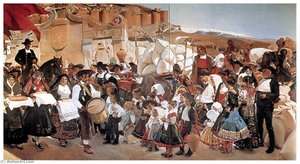
      Extremadura, The Market (1917) de Joaquín Sorolla
      5

      Extremadura, The Market

      1917 · Oil On Canvas · Hispanic Society Museum - Library, New York

      In the grand tapestry of Spanish Impressionism, few works capture the pulse of a nation as vibrantly as Joaquín Sorolla y Bastida’s “Extremadura, The Market.” Completed in 1917, this monumental oil on canvas is far more than a mere depiction of commerce; it is a breathtaking window into the soul of rural Spain. As part of his celebrated Vision of Spain series, Sorolla transcends the boundaries of traditional genre painting…

      Plimbare pe malul mării (1909) de Joaquín Sorolla
      6

      Plimbare pe malul mării

      1909 · Ulei pe pânză · Muzeul Sorolla, Madrid

      Tabloul „Plimbare pe malul mării” de Joaquín Sorolla y Bastida, pictat în 1909, nu este doar o simplă reprezentare a unei după-amiezi de vară; este o destilare exquisită a luminii, a mișcării și a frumuseții efemere a vieții de zi cu zi. Creat în timpul unei perioade de imens succes artistic pentru pictorul spaniol – în urma expozițiilor sale celebre în America – acest lucru reprezintă o schimbare pivotantă în…

      The Smugglers (1919) de Joaquín Sorolla
      7

      The Smugglers

      1919 · Oil On Canvas

      To gaze upon Joaquín Sorolla y Bastida’s 1919 masterpiece, "The Smugglers," is to step directly into the radiant embrace of a Spanish summer. This expansive canvas, measuring an impressive 84 x 165 cm, does far more than merely depict a coastal scene; it serves as a profound sensory experience, capturing the very soul of the Mediterranean coast near Ibiza. Sorolla, often revered as the "Master of Light," utilizes the shimmering…

      Lighthouse walk at Biarritz (1906) de Joaquín Sorolla
      8

      Lighthouse walk at Biarritz

      1906 · Oil On Canvas · Muzeul de Artă Plastică din Boston, Boston

      In the luminous masterpiece Lighthouse Walk at Biarritz, Joaquín Sorolla y Bastida invites us into a world where the boundaries between reality and impression dissolve into a golden haze. Completed in 1906, this breathtaking canvas is far more than a mere depiction of a seaside stroll; it is a profound celebration of the Spanish Belle Époque, captured with an unparalleled mastery of light. As we gaze upon the scene, we…

      Clotilde on the Beach (1904) de Joaquín Sorolla
      9

      Clotilde on the Beach

      1904 · Acrylic On Canvas · Muzeul Sorolla, Madrid

      Joaquín Sorolla’s “Clotilde on the Beach,” painted in 1904, isn't merely a depiction of a seaside scene; it’s an immersion into the heart of Spanish summer – a vibrant distillation of light, color, and the quiet joy of family life. Sorolla, a master of *plein air* painting, captures a fleeting moment with breathtaking immediacy, transporting the viewer to the warm sands of Valencia's Playa de El Cabanyal. The canvas breathes…

      Messalina in the Arms of the Gladiator (1886) de Joaquín Sorolla
      10

      Messalina in the Arms of the Gladiator

      1886 · Oil

      The ground is a bed of scattered flora and heavy silence. A woman lies motionless, her hair woven with blossoms that seem to hold the weight of her stillness. She is a pale shape against the earth, appearing either lost in a deep unconsciousness or surrendered to death. Above her, a man looms, his presence defined by the sharp edge of a knife held in his hand. The outdoor setting…

      More Joaquín Sorolla canvases, 11 to 100

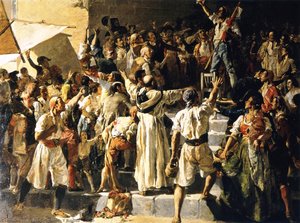
      The Cry of El Palleter (1884) de Joaquín Sorolla
      #12

      The Cry of El Palleter

      1884 · Palau de la Generalitat

      To step into the world of Joaquín Sorolla y Bastida is to surrender oneself to the radiant warmth of the Mediterranean sun. In his 1884 masterpiece, "The Cry…

      Order this canvas →
      Promenade by the Sea (1909) de Joaquín Sorolla
      #13

      Promenade by the Sea

      1909

      A Symphony of Light and Leisure: Exploring Joaquín Sorolla’s Promenade by the Sea Joaquín Sorolla y Bastida stands as one of Spain's most beloved Impressionist painters, celebrated for…

      Bring this light home →
      Self-portrait (1909) de Joaquín Sorolla
      #16

      Self-portrait

      1909 · Muzeul Sorolla

      Joaquín Sorolla y Bastida's 1909 self-portrait is more than just a likeness; it’s a potent distillation of the artist’s life, his spirit, and the very essence of Spain…

      Have it painted by hand →
      La Siesta (1911) de Joaquín Sorolla
      #20

      La Siesta

      1911 · Muzeul Sorolla

      Joaquín Sorolla y Bastida (1863 – 1923) se impune ca unul dintre cei mai celebra impresioniști ai Spaniei, un pictor ale cărui pânze surprind esența vieții mediteraneene cu…

      Bring this light home →
      Rocks of the Cape, Javea (1905) de Joaquín Sorolla
      #23

      Rocks of the Cape, Javea

      1905 · Hispanic Society Museum - Library

      To gaze upon Joaquín Sorolla y Bastida’s 1905 masterpiece, "Rocks of the Cape, Javea," is to step directly into the radiant embrace of a Spanish summer. This oil…

      Bring this light home →
      Valencian Fisherwomen (1915) de Joaquín Sorolla
      #27

      Valencian Fisherwomen

      1915

      This oil on canvas painting by Joaquín Sorolla depicts a bustling scene on the coast, where a group of women stands in the water near several boats. The…

      Order this canvas →
      Rețele de pescuit (1893) de Joaquín Sorolla
      #28

      Rețele de pescuit

      1893

      Joaquín Sorolla y Bastida, un nume sinonim cu lumina vibrantă și energică a Spaniei, nu era doar un pictor; era un înregistrator meticulos al sufletului națiunii sale. Născut…

      Have it painted by hand →
      Swimmers, Javea (1905) de Joaquín Sorolla
      #32

      Swimmers, Javea

      1905

      The painting depicts two people swimming in the ocean. The first person is positioned on the left side of the canvas, while the second person is on the…

      Order this canvas →
      My Kids (1897) de Joaquín Sorolla
      #39

      My Kids

      1897

      Joaquín Sorolla y Bastida’s "My Kids" is not merely a depiction of three children; it is an effusion of pure, untainted joy captured on canvas. Completed in 1897,…

      Have it painted by hand →
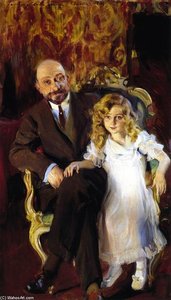
      Manuel B. Cossio (1908) de Joaquín Sorolla
      #40

      Manuel B. Cossio

      1908

      Subject and Composition The canvas presents a dignified figure, Manuel B. Cossio, rendered in a crisp suit and tie that speaks of early twentieth‑century Spanish professionalism. His stern…

      Have it painted by hand →
      Tipos de Salamanca (1912) de Joaquín Sorolla
      #41

      Tipos de Salamanca

      1912

      A Study in Spanish Identity Three figures are arranged within a shallow, formal space, dressed in traditional Spanish attire. The composition centers on these individuals, utilizing organic lines…

      Bring this light home →
      Pescador Valencià (1916) de Joaquín Sorolla
      #42

      Pescador Valencià

      1916

      „Pescarul Valencian” al lui Joaquín Sorolla nu este doar o reprezentare a unei scene; este o imersiune în inima autentică a luminii și vieții spaniole. Pictată în 1895,…

      Have it painted by hand →
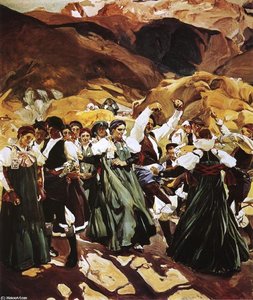
      The Jota (Aragon) (1914) de Joaquín Sorolla
      #43

      The Jota (Aragon)

      1914 · Hispanic Society Museum - Library

      A Symphony of Light and Spanish Spirit: Joaquín Sorolla’s “The Jota (Aragon)” Joaquín Sorolla y Bastida, a painter inextricably linked with the radiant heart of Spain, gifted us…

      Have it painted by hand →
      The Painter's Studio (1888) de Joaquín Sorolla
      #50

      The Painter's Studio

      1888

      To stand before Joaquín Sorolla y Bastida's The Painter's Studio is to step directly into a moment suspended in golden light, a breath held within the vibrant tapestry…

      Bring this light home →
      After a Bathe de Joaquín Sorolla
      #53

      After a Bathe

      Hispanic Society Museum - Library

      Joaquin Sorolla y Bastida stands as one of Spain’s most beloved painters, celebrated for his luminous canvases that effortlessly blend realism with an ethereal quality—a hallmark of his…

      Order this canvas →
      The Two Sisters (1909) de Joaquín Sorolla
      #54

      The Two Sisters

      1909 · Art Institute of Chicago

      In the luminous realm of Joaquín Sorolla y Bastida, light is not merely an element of the landscape; it is the very soul of the canvas. His 1909…

      Bring this light home →
      Fiesta Gallega de Joaquín Sorolla
      #57

      Fiesta Gallega

      Joaquín Sorolla y Bastida's *Fiesta Gallega* (1907) is more than just a depiction of a rural Spanish gathering; it’s an embodiment of the vibrant spirit of Spain itself.…

      Have it painted by hand →
      La bendicion de Isaac de Joaquín Sorolla
      #58

      La bendicion de Isaac

      In the profound stillness of La bendición de Isaac, Joaquín Sorolla y Bastida captures a pivotal moment from Hebrew tradition. The painting depicts the patriarch Isaac, now aged…

      Order this canvas →
      At the Pool in the Artist (1898) de Joaquín Sorolla
      #60

      At the Pool in the Artist

      1898 · Museo de Arte de Ponce

      Joaquín Sorolla y Bastida’s “At the Pool in the Artist’s Garden,” painted in 1898, isn’t merely a depiction of a summer afternoon; it’s an immersion into the very…

      Have it painted by hand →
      The Siesta (1911) de Joaquín Sorolla
      #62

      The Siesta

      1911

      Joaquin Sorolla y Bastida’s “The Siesta,” completed in 1911, transcends mere depiction; it embodies a philosophy – the deliberate embrace of stillness and beauty found within the simplest…

      Bring this light home →
      Maria la guapa (1914) de Joaquín Sorolla
      #64

      Maria la guapa

      1914

      Joaquín Sorolla's 1914 painting, *Maria la Guapa*, isn't merely a portrait; it’s an immersion into the heart of Spain’s golden age. This captivating work, depicting a young woman…

      Order this canvas →
      Sea Idyll (1908) de Joaquín Sorolla
      #65

      Sea Idyll

      1908 · Hispanic Society Museum - Library

      Joaquin Sorolla y Bastida, a pivotal figure in late 19th and early 20th century Spanish art, possessed an extraordinary gift for capturing the ephemeral beauty of light and…

      Order this canvas →
      The Kiss (1899) de Joaquín Sorolla
      #66

      The Kiss

      1899

      The Kiss by Joaquín Sorolla Y Bastida: A Moment of Spanish Light Subject Matter: Joaquin Sorolla’s “The Kiss” is an exquisite portrayal of intimacy and reverence, depicting a…

      Have it painted by hand →
      My Children (1904) de Joaquín Sorolla
      #67

      My Children

      1904 · Museo Sorolla

      Joaquín Sorolla’s “My Children,” painted in 1904, isn't merely a portrait; it’s an immersion into the heart of a sun-drenched Spanish afternoon. The scene unfolds within a modest…

      Have it painted by hand →
      Children on the Seashore (1903) de Joaquín Sorolla
      #68

      Children on the Seashore

      1903 · Philadelphia Museum of Art

      The Painting's Essence Joaquín Sorolla y Bastida's Children on the Seashore, created in 1903, is a beautiful depiction of children playing on the beach near the ocean. The…

      Have it painted by hand →
      Maria Planas de Gil (1906) de Joaquín Sorolla
      #69

      Maria Planas de Gil

      1906

      Joaquín Sorolla's ‘Maria Planas de Gil,’ painted in 1906, is more than simply a portrait; it’s an exquisite distillation of the Spanish light that defined his oeuvre and…

      Have it painted by hand →
      Ramón Pérez de Ayala (1920) de Joaquín Sorolla
      #71

      Ramón Pérez de Ayala

      1920 · Hispanic Society Museum - Library

      In the luminous realm of Spanish Impressionism, few works capture the intersection of human character and atmospheric brilliance as profoundly as Joaquín Sorolla y Bastida’s 1920 masterpiece, Ramón…

      Order this canvas →
      The Return from the Fishing (1898) de Joaquín Sorolla
      #73

      The Return from the Fishing

      1898 · Muzeul Național de Arte Fine din Buenos Aires

      Joaquín Sorolla y Bastida's “The Return from the Fishing,” completed in 1898, isn’t merely a depiction of a seaside scene; it’s an embodiment of Impressionism at its finest—a…

      Have it painted by hand →
      Under the awning, Zarauz (1910) de Joaquín Sorolla
      #74

      Under the awning, Zarauz

      1910 · Saint Louis Art Museum

      Joaquin Sorolla y Bastida's "Under the Awnings, Zarauz," painted in 1910, is a captivating Impressionist work that transports viewers to a sun-drenched beach scene in Spain. Housed within…

      Have it painted by hand →
      Fisherwomen (1911) de Joaquín Sorolla
      #75

      Fisherwomen

      1911

      Introduction to the Artist and Painting Joaquín Sorolla y Bastida, a renowned Spanish painter, is celebrated for his vivid depictions of everyday life in Spain. One of his…

      Order this canvas →
      Penitents, Holy Week, Seville (1914) de Joaquín Sorolla
      #76

      Penitents, Holy Week, Seville

      1914 · Hispanic Society Museum - Library

      Joaquín Sorolla y Bastida's "Penitents, Holy Week, Seville," painted in 1914, is a captivating oil on canvas that transports viewers to the heart of Spain’s deeply rooted religious…

      Bring this light home →
      Swimmers, Jávea (1905) de Joaquín Sorolla
      #77

      Swimmers, Jávea

      1905 · Muzeul Sorolla

      Joaquin Sorolla y Bastida's "Swimmers, Jávea," painted in 1905, isn’t merely a depiction of two women enjoying the Mediterranean Sea; it’s an exquisite distillation of light, movement, and…

      Bring this light home →
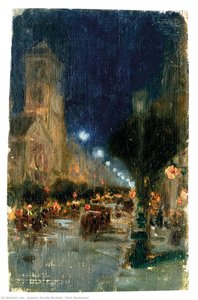
      Paris Boulevard (1885) de Joaquín Sorolla
      #79

      Paris Boulevard

      1885 · Muzeul Sorolla

      Joaquin Sorolla y Bastida’s “Paris Boulevard,” painted in 1885, isn’t merely a depiction of a city street at night; it’s an immersive experience. Captured during his formative years…

      Have it painted by hand →
      Joaquín (1917) de Joaquín Sorolla
      #80

      Joaquín

      1917 · Muzeul Sorolla

      Joaquín Sorolla’s 1917 painting, “Joaquín,” isn't merely a likeness; it’s a carefully constructed tableau vivant, capturing the essence of early 20th-century Spanish society and the burgeoning spirit of…

      Bring this light home →
      La siesta (1912) de Joaquín Sorolla
      #82

      La siesta

      1912

      Joaquín Sorolla’s “La Siesta,” painted in 1912, is more than just a depiction of women resting outdoors; it's an embodiment of the Spanish spirit – a celebration of…

      Have it painted by hand →
      Wounded foot (1909) de Joaquín Sorolla
      #84

      Wounded foot

      1909

      Joaquín Sorolla y Bastida's “Wounded Foot,” painted in 1909, transcends mere depiction; it embodies the very essence of Impressionism and offers a poignant glimpse into the spirit of…

      Order this canvas →
      Seville, the Bullfighters (1915) de Joaquín Sorolla
      #85

      Seville, the Bullfighters

      1915 · Hispanic Society Museum - Library

      Seville, the Bullfighters is a captivating oil on panel painting created in 1915 by the renowned Spanish artist Joaquín Sorolla y Bastida. Measuring an impressive 350 x 231…

      Order this canvas →
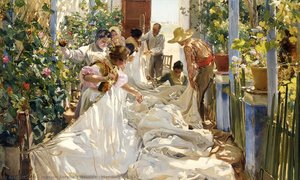
      Mending the Sail (1896) de Joaquín Sorolla
      #86

      Mending the Sail

      1896

      Joaquín Sorolla Y Bastida, a name synonymous with the radiant light and vibrant energy of Spain, was more than just a painter; he was a chronicler of his…

      Order this canvas →
      La vuelta de la pesca (1894) de Joaquín Sorolla
      #88

      La vuelta de la pesca

      1894

      Introduction Joaquín Sorolla y Bastida, a renowned Spanish painter, created the captivating oil on canvas painting titled La Vuelta de la Pesca. This artwork is a testament to…

      Have it painted by hand →
      Maria in a Red Blouse (1910) de Joaquín Sorolla
      #90

      Maria in a Red Blouse

      1910

      Joaquin Sorolla’s “Maria in a Red Blouse,” painted in 1910, is more than just a portrait; it's an exquisite distillation of light, emotion, and the Spanish spirit. This…

      Order this canvas →
      On the coast of Biarritz (1906) de Joaquín Sorolla
      #91

      On the coast of Biarritz

      1906

      The painting depicts a lively seaside scene, capturing the essence of leisure and summertime joy. At its core is a group of figures – three prominent individuals standing…

      Order this canvas →
      Beneath the Canopy de Joaquín Sorolla
      #93

      Beneath the Canopy

      Joaquín Sorolla y Bastida's "Beneath the Canopy" is more than just a depiction of a sun-drenched beach; it’s an embodiment of the Spanish spirit – vibrant, joyful, and…

      Order this canvas →
      untitled (2616) de Joaquín Sorolla
      #95

      untitled (2616)

      In this breathtaking untitled masterpiece by the legendary Spanish Impressionist Joaquín Sorolla y Bastida, the viewer is invited to step into a sun-drenched sanctuary where time seems to…

      Bring this light home →
      Running along the beach (1908) de Joaquín Sorolla
      #96

      Running along the beach

      1908

      Joaquín Sorolla y Bastida's "Running along the beach," painted in 1908, is more than just a picturesque depiction of seaside leisure; it’s a masterful distillation of light, movement,…

      Order this canvas →
      Don Rafael Altamira y Crevea (1913) de Joaquín Sorolla
      #97

      Don Rafael Altamira y Crevea

      1913 · Hispanic Society Museum - Library

      Don Rafael Altamira y Crevea sits in a centered, three-quarter length pose, his presence defined by a heavy, luminous red mozzetta that anchors the composition. The portrait captures…

      Have it painted by hand →
      On the Coast of Valencia (1898) de Joaquín Sorolla
      #99

      On the Coast of Valencia

      1898 · Muzeul Național de Arte Fine din Buenos Aires

      The painting On the Coast of Valencia by Joaquin Sorolla Y Bastida is a beautiful depiction of people on the beach with boats in the water. Created in…

      Bring this light home →
      The Alcazar at Seville de Joaquín Sorolla
      #100

      The Alcazar at Seville

      Joaquín Sorolla y Bastida's “The Alcazar at Seville” is more than just a depiction of a magnificent building; it’s an immersive experience, a palpable distillation of light and…

      Bring this light home →

      Joaquín Sorolla's canvases, period by period

      What Joaquín Sorolla painted most

      The four subjects that return most often on these canvases, each with its best-loved example.

      Where Joaquín Sorolla's canvases hang

      Cele 8 muzee care dețin cele mai multe dintre picturile de pe această pagină.

      Muzeu Oraș Lucrări lui Joaquín Sorolla Picturi din această listă
      Hispanic Society Museum - Library, New YorkHispanic Society Museum - Library New York 113 Valencia beach in the morning light, Extremadura, The Market, Rocks of the Cape, Javea
      Muzeul Sorolla, MadridMuzeul Sorolla Madrid 72 Walk on the Beach (Paseo a orillas del mar), Plimbare pe malul mării, Clotilde on the Beach
      Muzeul Național de Arte Fine din Buenos Aires, Buenos AiresMuzeul Național de Arte Fine din Buenos Aires Buenos Aires 8 The Return from the Fishing, On the Coast of Valencia
      Muzeul Prado, MadridMuzeul Prado Madrid 10 Aureliano de Beruete y Moret, Jr.
      J. Paul Getty Museum, Los AngelesJ. Paul Getty Museum Los Angeles 6 Courtyard of the Dances, Alcazar of Sevilla
      Musée d'Orsay, ParisMusée d'Orsay Paris 4 The Return from Fishing: Hauling the Boat (study)
      Art Institute of Chicago, ChicagoArt Institute of Chicago Chicago 2 The Two Sisters
      Muzeul de Artă Plastică din Boston, BostonMuzeul de Artă Plastică din Boston Boston 1 Lighthouse walk at Biarritz

      Joaquín Sorolla's best-loved canvas of each decade

      1. 1880s
        Messalina in the Arms of the Gladiator (1886) de Joaquín Sorolla
        Ranked 10 of 100

        Messalina in the Arms of the Gladiator

        Vârsta 17 – 26

        The ground is a bed of scattered flora and heavy silence. A woman lies motionless, her hair woven with blossoms that seem to hold the weight of her…

      2. 1890s
      3. 1900s
        Walk on the Beach (Paseo a orillas del mar) (1909) de Joaquín Sorolla
        Canvas 1 of 100

        Walk on the Beach (Paseo a orillas del mar)

        Vârsta 37 – 46 · Muzeul Sorolla

        A Sun-Drenched Moment: Joaquín Sorolla’s “Walk on the Beach” Joaquín Sorolla y Bastida, a name synonymous with the vibrant luminosity of Spanish light and life, gifted us with…

      4. 1910s
        Extremadura, The Market (1917) de Joaquín Sorolla
        Canvas 5 of 100

        Extremadura, The Market

        Vârsta 47 – 56 · Hispanic Society Museum - Library

        In the grand tapestry of Spanish Impressionism, few works capture the pulse of a nation as vibrantly as Joaquín Sorolla y Bastida’s “Extremadura, The Market.” Completed in 1917,…

      5. 1920s
        Ramón Pérez de Ayala (1920) de Joaquín Sorolla
        71 of 100

        Ramón Pérez de Ayala

        Vârsta 57 – 60 · Hispanic Society Museum - Library

        In the luminous realm of Spanish Impressionism, few works capture the intersection of human character and atmospheric brilliance as profoundly as Joaquín Sorolla y Bastida’s 1920 masterpiece, Ramón…

      About Joaquín Sorolla's canvases: your questions answered

      What is the best-known painting by Joaquín Sorolla?Read the answer

      Walk on the Beach (Paseo a orillas del mar) (1909), Muzeul Sorolla, Madrid. Valencia beach in the morning light (1908) and Yo soy el pan de la vida (also known as I am the Bread of Life) (1897) follow.

      What age was Joaquín Sorolla when Walk on the Beach (Paseo a orillas del mar) was painted?Read the answer

      Joaquín Sorolla, born in 1863, was 46 years old: Walk on the Beach (Paseo a orillas del mar) dates from 1909.

      What are the 10 most famous paintings by Joaquín Sorolla?Read the answer

      Walk on the Beach (Paseo a orillas del mar), Valencia beach in the morning light, Yo soy el pan de la vida (also known as I am the Bread of Life), The Pink robe, Extremadura, The Market, Plimbare pe malul mării, The Smugglers, Lighthouse walk at Biarritz, Clotilde on the Beach și Messalina in the Arms of the Gladiator. Each canvas in the ranking above comes with its year and its museum.

      How many works did Joaquín Sorolla paint in all?Read the answer

      969 works by Joaquín Sorolla are in our catalogue, dated 1881 to 1920.

      Where can I see Joaquín Sorolla's most famous canvases?Read the answer

      Mostly in Hispanic Society Museum - Library (New York), Muzeul Sorolla (Madrid) și Muzeul Național de Arte Fine din Buenos Aires (Buenos Aires); the list above names each museum and its canvases.

      When did Joaquín Sorolla paint the best-loved canvases?Read the answer

      In 1910s, which gave 34 of the 100 works on this page, Extremadura, The Market among them.

      Which are Joaquín Sorolla's earliest and latest famous canvases?Read the answer

      The earliest canvas here is Seascape, Ships in the Port (1881); the latest is Ramón Pérez de Ayala (1920).

      What did Joaquín Sorolla paint most often?Read the answer

      Sunlight (18), Spain (17) și Beach scene (14), across the 100 works on this page.

      Which medium did Joaquín Sorolla paint in most often?Read the answer

      Oil On Canvas, used in 85 of the 100 works on this page.

      Which movement is Joaquín Sorolla's painting part of?Read the answer

      Peisaj impresionist, as the canvases on this page show.

      Which Joaquín Sorolla canvases hang at the Hispanic Society Museum - Library?Read the answer

      The Hispanic Society Museum - Library, New York holds 11 of the works on this page, among them Valencia beach in the morning light, Extremadura, The Market și Rocks of the Cape, Javea.

      Can I buy a reproduction of a Joaquín Sorolla canvas?Read the answer

      Yes. Every painting on this page can be ordered from its own page as an oil reproduction painted by hand, or as a fine art print, in the size you choose.

      Joaquín Sorolla: a life in paint

      Tinerețe, Familie și Formare

      Joaquín Sorolla Y Bastida a venit pe lume pe 27 februarie 1863, în Valencia, Spania. Fiul cel mare al unui meser, Joaquín Sorolla, și al soției sale, Concepción Bastida, a avut o copilărie marcată de o tăcere bruscă și apăsătoare, atunci când, în august 1865, o epidemie de holeră i-a iei pe ambii părinți. Această tragedie i-a lăsat pe Joaquín și pe sora sa, Concha, orfani, fiind primiți în grija mătușii și a unchiului lor, un fierar, care le-au oferit stabilitatea de care frații aveau nevoie pentru a crește.

      Scânteia talentului a apărut încă din tinerețea sa în Valencia. Primele sale lecții de artă au avut loc chiar în orașul natal, dezvoltând o aptitudine naturală care nu putea fi ignorată. Această instruire timpurie a pus bazele unei educații formale sub îndrumarea unor artiști consacrați, printre care Cayetano Capuz și José Benlliure. Acești mentori au ajutat la modelarea abilităților tehnice care, în cele din urmă, i-au permis să depășească scena locală și să caute orizonturi mult mai vaste.

      Viața și cariera din Madrid

      În anul 1888, Joaquín s-a căsătorit cu Clotilde García del Castillo, o femeie pe care o cunoștea încă de când era un tânăr care lucra în atelierul tatălui ei. Viața lor împreună s-a mutat la Madrid în 1890, o tranziție care a marcat un capitol semnificativ în dezvoltarea sa personală și profesională. Pe măsură ce se stabilizau în capitală, familia lor a crescut, Maria, Joaquín și Elena fiind prezente până în 1895. Acești ani au reprezentat o perioadă de consolidare atât a căminului, cât și a unei reputații care, în cele din urmă, avea să depășească mult dincolo de granițele Spaniei.

      În deceniul care a urmat mutării sale la Madrid, focusul lui Sorolla s-a mutat către crearea unor pântece de dimensiuni monumentale. Și-a petrecut mare parte din timp lucrând la subiecte grandioase, de la scene mitologice și istorice, până la teme orientaliste și studii sociale. Ambiția sa se reflecta în scara lucrărilor sale, pe măsură ce încerca să abordeze narațiuni complexe prin intermediul pensulei sale. Această perioadă de producție intensă a văzut reputația sa extinzându-se prin diverse expoziții internaționale. Și-a prezentat operele în saloanele din întreaga Europă și din America, inclusiv în orașe precum Paris, Veneția, München, Berlin și Chicago.

      Opere Cheie și Realizări Remarcabile

      Un punct de cotitură esențial în cariera sa a apărut odată cu creația picturii Sad Inheritance în anul 1899. Această pânză de dimensiuni generoase, care surprindea copii în timp ce se scăldau în mare, a fost prezentată la Expoziția Universală de la Paris. Lucrarea i-a oferit un nivel de recunoaștere care i-a schimbat radical destinul, ducându-l spre numirea de Cavaler al Legiunii de Onoare în anul 1900. În același an, a primit Grand Prix-ul și o medalie de onoare la expoziția de la Paris, marcând astfel ascensiunea sa definitivă pe scena internațională.

      Succesul său a continuat să crească pe parcursul primilor ani ai noului secol. În 1901, a fost premiat cu medalia de onoare la Expoziția Națională de la Madrid. Aceste distincții reflectau capacitatea sa extraordinară de a oscila între teme sociale profunde și acele scene luminoase, inundate de soare, care i-ar fi definit, în cele din urmă, reputația. Impactul său a depășit cu mult granițele Spaniei, reputația sa de maestru în capturarea luminii și a vitalității vieții aducându-i comenzi de la prestigioase instituții internaționale.

      Unul dintre cele mai ambițioase proiecte ale sale a fost comanda pentru crearea seriei Vision of Spain pentru Societatea Hispanică din America. Această serie de lucrări monumentale i-a permis să își exprime legătura profundă cu patria sa prin intermediul unei narațiuni vizuale de amploare. Cariera sa a fost definită de aceste momente de înaltă realizare, puncte în care măiestria sa tehnică s-a întâlnit cu un simț profund al misiunii artistice.

      • Sad Inheritance (1899)
      • Vision of Spain

      Tehnică și Stil Artistic

      Joaquín Sorolla Y Bastida poseda un mod de a crea care părea la fel de neliniștit și plin de viață ca propriul său Mediterană. Era un pictor care prefera directitatea naturii, alegând să își realizeze aproape toate lucrările en plein air. Această dedicare pentru pictura în aer liber i-a permis să înfrunte direct elementele schimbătoare ale naturii. El nu urmărea doar simpla înregistrare a unei scene; el căuta să surprindă modul în care lumina interacționează cu lumea, în special felul în care aceasta dansează pe suprafața apei însorite și îi luminează pielea subiectelor sale. Trata sa era liberă și plină de energie, utilizând brushwork-uri groase și expresive pentru a traduce pe pânză mișcarea efemeră a luminii solare.

      Axa sa de concentrare tehnică era adesea împărțită între intim și monumental. Era la fel de stăpân în redarea unui portret liniștit, cât și în abordarea temelor sociale sau istorice de mari dimensiuni. Există o anumită dexteritate în modul în care a gestionat peisajul, plasând adesea figuri umane sub o lumină spaniolă vibrantă, care pare să dizolve granițele dintre mare și cer. Această abordare a transformat momentele obișnuite în ceva care pare imediat și plin de suflu. El s-a concentrat pe texturile vieții de zi cu zi, folosind lumina pentru a defini formele oamenilor și mediile în care aceștia trăiau.

      Anii de final și moartea

      Ultimele ani ai vieții lui Joaquín Sorolla Y Bastida au fost marcați de o demultă încercare, un proiect de o anvergură extraordinară ce i-a cerut o rezistență fizică și mentală imensă. Gran parte din această perioadă, artistul s-a dedicat creației frescorelor sale monumentale, un demers artistic ce i-a solicitat întreaga atenție și toată forța vitală. Într-un moment de triumf creativ, a reușit să finalizeze ultimul panou al acestor lucrări de dimensiuni colosale în iulie 1919, marcând astfel o etapă de culminație a întregii sale producții artistice.

      Totuși, capacitatea sa de a mai picta a fost curt, întreruptă de luptele cu sănătatea. În anul 1920, a suferit un accident vascular cerebral, un eveniment care i-a limitat activitatea pictorală și care i-a schimbat profund ritmul vieții. Această perioadă de recuperare a reprezentat o detașare liniștită de la acele sesiuni energice de pictat în aer liber, care îi defineseră anii de început. Joaquín Sorolla Y Bastida a plecat la unison cu lumina pe care a atât de adânc o așezase pe pânză pe data de 10 august 1923. A fost înmormântat în Cementeri de Valencia, în Spania, întorcându-se definitiv în regiunea care îi fusese, pe tot parcursul existenței, inima și sursa de inspirație a artei sale.

      Moștenire și influență durabilă

      Impactul creativității lui Joaquín Sorolla Y Bastida a depășit cu mult țărmurile Spaniei natale. Prezența sa în comunitatea artistică internațională a fost consolidată prin apartenența la mai multe instituții de prestigiu, printre care se numără Académie des Beaux-Arts din Paris, Academia Națională de Arte Fine din Lisabon și Real Academia de Bellas Artes de San Carlos din Valencia. Aceste onoruri reflectă o carieră care a reușit să îmbine cu succes identitatea locală cu recunoașterea globală. El a fost celebrat drept „Fiul Preferat al Valenciei”, un titlu care témoignuieste legătura profundă dintre pictor și lumina unică a regiunii sale natale.

      Astăzi, pânzele sale sunt păstrate în colecții din Spania, Europa și America. Capacitatea sa extraordinară de a traduce mișcarea nesfârșită a mării și căldura vibrantă a soarelui pe suprafața unei pânze a asigurat faptul că viziunea sa va rămâne impresionantă în conștiința colectivă. Operele sale continuă să fie studiate și admirate în marile muzee, menținând o prezență care traversează continente. Influența sa se simte în modul în care a capturat un sentiment specific de loc și de lumină, lăsând în urmă un corpus de lucrări care rămâne o parte vitală a peisajului artistic universal.

      • Sad Inheritance (1899)
      • Children on the Seashore (1903)
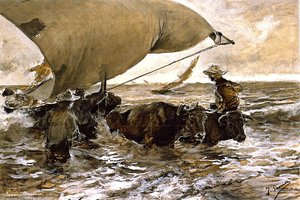
      • The Return from Fishing; Hauling the Boat (1894)

      Unde puteți admira astăzi operele sale

      Pentru cei care doresc să pășească prin spațiile care i-au modelat existența, Museo Sorolla din Madrid oferă o privire rară asupra lumii sale private. Acest muzeu dedicat unui singur artist este găzduit în fosta sa casă și atelier, păstrând intacta atmosfera în care a trăit și a creat. Între aceste pereți, se pot descoperi piese intime, precum Copiii mei, care oferă o perspectivă asupra legăturilor sale personale, departe de marile comenzi care i-au definit cariera.

      Influența sa se extinde mult dincolo de granițele Spaniei, ajungând în colecții internaționale de prestigiu. În New York, Hispanic Society Museum - Library adăpostește numeroase dintre lucrările sale, păstrând o parte semnificativă din creația sa pentru cei care călătoresc în Statele Unite. Prezența sa în Europa este la fel de palpabilă, în special în Paris, unde Musée d'Orsay păstrează capodopera Întoarcerea din pescuit; Trăgând barca.

      • Copiii mei, Museo Sorolla, Madrid
      • Întoarcerea din pescuit; Trăgând barca, Musée d'Orsay, Paris

      Toate cele 969 de lucrări ale lui Joaquín Sorolla →