Ателье — Бесплатная доставка по всему миру — Срок доставки: 2–6 недель
      Валентин Серов, 1865 – 1911

      100 самых известных картин Валентин Серов

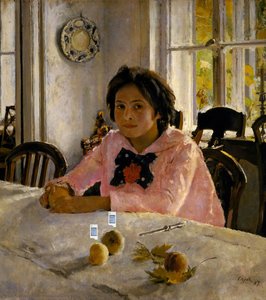
      Девочка с персиками (1887) — самая известная картина Валентин Серов; она находится в Государственная Третьяковская галерея, Москва. Portrait of Anton Chekhov (1903) и Portrait of Henrietta Girshman (1907) дополняют трио самых любимых полотен. В нашем каталоге представлено 289 работ Валентин Серов. Перед вами 100 самых известных произведений с указанием года создания, музея и истории каждого полотна.

      Рейтинг основан на нашем показателе популярности, который учитывает количество поисковых запросов, посещений и заказов для каждой работы. Обновлено Октябрь 2026. Каждую картину на этой странице можно заказать как масляную репродукцию, написанную вручную на льняном холсте, или как художественную печать, выполненную в выбранном вами размере.

      Портрет Валентин Серов
      Валентин Серов · 1865 – 1911
      Дата рождения · дата смерти
      1865 – 1911, Санкт-Петербург
      Направление
      Realism
      Работы в нашем каталоге
      289
      Самые известные
      Девочка с персиками (1887)
      Больше всего работ в
      Национальная галерея Армении

      Десять самых любимых картин Валентин Серов

      Девочка с персиками (1887) работы Валентин Серов
      1

      Девочка с персиками

      1887 · Масло на холсте · Государственная Третьяковская галерея, Москва

      В безмятежном свете 1887 года Валентин Серов запечатлел мимолетное мгновение детства в своей картине Девочка с персиками. В центре композиции — одиннадцатилетняя Вера Мамонтова, юная девочка, чье присутствие наполняет пространство ощущением покоя. Она сидит за столом, ее взгляд спокоен и задумчив, пока послеполуденное солнце просачивается сквозь комнату. Этот портрет — не просто сходство; это окно в конкретный, сокровенный полдень, проведенный в стенах усадьбы Абрамцево.

      Portrait of Henrietta Girshman (1907) работы Валентин Серов
      3

      Portrait of Henrietta Girshman

      1907 · Oil On Canvas

      Valentin Serov’s “Portrait of Henrietta Girshman,” painted in 1907, is more than just a likeness; it's a carefully constructed tableau that invites the viewer to step into a private moment. Executed with a masterful blend of realism and impressionistic techniques, the painting captures the quiet intimacy of a woman preparing herself – perhaps for an evening out, or simply lost in contemplation – within the luxurious confines of her dressing…

      Winter in Abramtsevo (1886) работы Валентин Серов
      4

      Winter in Abramtsevo

      1886 · Oil On Canvas

      We are looking at Winter in Abramtsevo, a landscape painting by Valentin Serov. Created in 1886, this work captures a quiet moment within the Russian countryside. The original title of the piece is Зима в Абрамцево. It remains a significant example of Serov's early engagement with the natural world and the specific atmosphere of the Abramtsevo area.

      Portrait of Pavel Tretyakov (1899) работы Валентин Серов
      8

      Portrait of Pavel Tretyakov

      Valentin Alexandrovich Serov presents Portrait of Pavel Tretyakov through a vertical composition that focuses on the subject from the waist up. Positioned slightly off-center, the middle-aged man is depicted with his arms crossed, a stance that establishes a sense of introspective stillness. The subject is set against a non-descript, washed background, which creates a shallow depth and pushes the figure toward the foreground.

      Валентин Серов: полотна с 11 по 100 в рейтинге

      A Breton woman. (1901) работы Валентин Серов
      #23

      A Breton woman.

      1901 · Национальный музей в Варшаве

      is an oil on canvas painting by the Russian artist Valentin Serov. Created in 1901, the work captures a solitary woman in a moment of quietude. The subject…

      Заказать этот холст →

      Что чаще всего писал Валентин Серов

      Четыре самых популярных сюжета на этих полотнах с их лучшими примерами.

      Где висят полотна Валентин Серов

      6 музеев, в которых находится большинство картин со страницы.

      Музей Город Работы Валентин Серов Картины из этого списка
      Национальная галерея Армении, ЕреванНациональная галерея Армении Ереван 3 Wife of Kostroma manifacture's director, The Grand Eagle Cup, Portrait of Maria Akimova
      Государственная Третьяковская галерея, МоскваГосударственная Третьяковская галерея Москва 11 Девочка с персиками, Portrait of Pavel Tretyakov
      Национальный музей в Варшаве, ВаршаваНациональный музей в Варшаве Варшава 4 Portrait of a woman, A Breton woman.
      National Art Museum of The Republic of Belarus, MinskNational Art Museum of The Republic of Belarus Minsk 1 Portrait of O. F. Tomara
      Kiev National Picture Gallery, KyivKiev National Picture Gallery Kyiv 1 Elizaveta Alexeevna Krasilshikova
      Finnish National Gallery, ХельсинкиFinnish National Gallery Хельсинки 1 Still Life

      Самое известное полотно Валентин Серов, признанное десятилетие за десятилетием

      1. 1870s
        Still Life (1879) работы Валентин Серов
        78 из 100

        Still Life

        Возраст 5 – 14 · Finnish National Gallery
      2. 1880s
        Девочка с персиками (1887) работы Валентин Серов
        1 из 100

        Девочка с персиками

        Возраст 15 – 24 · Государственная Третьяковская галерея

        В безмятежном свете 1887 года Валентин Серов запечатлел мимолетное мгновение детства в своей картине Девочка с персиками. В центре композиции — одиннадцатилетняя Вера Мамонтова, юная девочка, чье присутствие…

      3. 1890s
        Portrait of Pavel Tretyakov (1899) работы Валентин Серов
        Место в рейтинге: 8 из 100

        Portrait of Pavel Tretyakov

        Возраст 25 – 34 · Государственная Третьяковская галерея

        Valentin Alexandrovich Serov presents Portrait of Pavel Tretyakov through a vertical composition that focuses on the subject from the waist up. Positioned slightly off-center, the middle-aged man is…

      4. 1900s
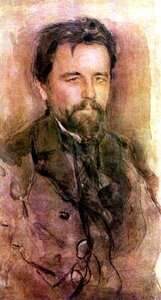
        Portrait of Anton Chekhov (1903) работы Валентин Серов
        2 из 100

        Portrait of Anton Chekhov

        Возраст 35 – 44

        is a work by the Russian artist Valentin Serov. Executed in 1903, the painting presents a focused study of the subject, a man characterized by a prominent beard.…

      5. 1910s
        Naked woman (1910) работы Валентин Серов
        Место в рейтинге: 41 из 100

        Naked woman

        Возраст 45 – 46

      Полотна Валентин Серов в вопросах и ответах

      Какая картина Валентин Серов оставила самый яркий след в истории?Прочитать ответ

      Девочка с персиками (1887), Государственная Третьяковская галерея, Москва. Далее следуют Portrait of Anton Chekhov (1903) и Portrait of Henrietta Girshman (1907).

      Девочка с персиками: сколько лет было Валентин Серов, когда была написана эта работа?Прочитать ответ

      Валентин Серов, родившийся в 1865, в возрасте 22 лет: Девочка с персиками датируется 1887 годом.

      Какие десять самых известных полотен у Валентин Серов?Прочитать ответ

      Девочка с персиками, Portrait of Anton Chekhov, Portrait of Henrietta Girshman, Winter in Abramtsevo, George the Victorious, Autumn evening. Domotkanovo, Bathing a Horse, Portrait of Pavel Tretyakov, Self-Portrait и Portrait of the Artist Pavel Tchistyakov. Каждое полотно в рейтинге выше содержит информацию о годе создания и музее.

      Сколько картин создал(а) Валентин Серов?Прочитать ответ

      В нашем каталоге представлено 289 работ Валентин Серов, датированных периодом с 1879 по 1911.

      В каких музеях сегодня хранятся самые известные полотна Валентин Серов?Прочитать ответ

      В основном в Национальная галерея Армении (Ереван), Государственная Третьяковская галерея (Москва) и Национальный музей в Варшаве (Варшава); в списке выше указаны названия музеев и их полотен.

      Когда Валентин Серов написал свои самые известные полотна?Прочитать ответ

      В 1900s, на долю которого пришлось 35 из 100 работ на этой странице, Portrait of Anton Chekhov из них.

      Какой знаменитый холст Валентин Серов был написан первым, а какой — последним?Прочитать ответ

      Самая ранняя работа здесь датирована Still Life (1879), а самая поздняя — Portrait of N.P. Lamanova (1911).

      Какие сюжеты чаще всего писал Валентин Серов?Прочитать ответ

      Famous people (50), Portraits (49) и Men (24) в 100 работах на этой странице.

      Какая техника чаще всего встречается в работах Валентин Серов?Прочитать ответ

      Oil On Canvas, использовано в 5 из 100 работ на этой странице.

      С каким направлением связан Валентин Серов?Прочитать ответ

      Realism и Impressionism, как показывают полотна на этой странице.

      Какие картины Валентин Серов находятся в коллекции Национальная галерея Армении?Прочитать ответ

      В Национальная галерея Армении, Ереван находится 3 работ со страницы, в том числе Wife of Kostroma manifacture's director, The Grand Eagle Cup и Portrait of Maria Akimova.

      Где я могу купить репродукцию картины Валентин Серов?Прочитать ответ

      Да. Каждую картину на этой странице можно заказать на ее собственной странице как масляную репродукцию ручной работы или как художественную печать в выбранном вами размере.

      Познакомьтесь с художником: Валентин Серов

      A Life Immersed in Art and Aristocracy

      Valentin Alexandrovich Serov, born into a world already resonating with artistic brilliance on January 19, 1865, in Saint Petersburg, was destined to become one of Russia’s most celebrated portraitists. His lineage itself spoke volumes – the son of composer Alexander Serov and Valentina Bergman, also a gifted musician, young Valentin grew up enveloped by creativity. This nurturing environment wasn't merely about exposure; it instilled within him a deep appreciation for harmony, form, and emotional expression—qualities that would profoundly shape his artistic vision. From an early age, he was encouraged to explore his talents, receiving initial instruction in Paris and Moscow under the watchful eye of Ilya Repin, a master of realist painting. This foundational training emphasized observation, meticulous detail, and a commitment to capturing the essence of human character. Later studies at the St. Petersburg Academy of Arts with Pavel Chistyakov further honed his technical skills, grounding him in classical principles while simultaneously fostering an emerging individuality. Serov’s upbringing wasn't solely artistic; it was also deeply intertwined with Russia’s elite circles, providing access to a world he would later immortalize on canvas.

      The Blossoming of a Portraitist: Early Works and Influences

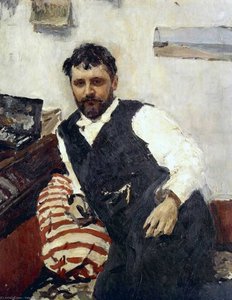
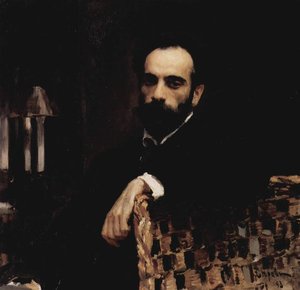
      Serov’s early period is marked by an extraordinary sensitivity to light and atmosphere, evident in works like *Girl with Peaches* (1887) and *Girl Covered by the Sun* (1888). These paintings, now iconic treasures of the Tretyakov Gallery, weren't simply portraits; they were studies in fleeting moments, capturing the ephemeral beauty of childhood. The loose brushwork and vibrant color palette hinted at an Impressionistic sensibility, yet remained firmly rooted in a realist tradition. He wasn’t merely depicting likenesses but conveying a sense of spontaneity and inner life. This ability to capture psychological depth became a hallmark of his style. He absorbed influences from the Old Masters during visits to European museums, studying Rembrandt, Velázquez, and Veronese, learning their techniques for rendering light, shadow, and texture. The artistic colony at Abramtsevo also played a crucial role in his development, exposing him to new ideas and fostering collaborations with fellow artists like Mikhail Vrubel and Konstantin Korovin. These interactions broadened his horizons and encouraged experimentation. His portraits of the 1890s – **Konstantin Korovin**, **Isaac Levitan**, and **Nikolai Leskov** – demonstrate a growing confidence in his ability to convey not just physical appearance but also the intellectual and emotional character of his subjects.

      Navigating Tradition and Modernity: A Shifting Style

      As Serov matured, his artistic style underwent a subtle yet significant transformation. While he continued to receive commissions from Russia’s aristocracy – portraits of Grand Duke Pavel Alexandrovich, S.M. Botkin, and Felix Yusupov attest to this – his approach became more nuanced and psychologically penetrating. He moved away from the purely descriptive towards a deeper exploration of character, often employing a restrained palette dominated by blacks, greys, and browns to emphasize mood and introspection. From 1900 onwards, Serov’s work began to reflect a growing engagement with modernism, though he never fully abandoned his commitment to realism. He became involved with the influential art association *Mir Iskusstva* (“World of Art”), which championed new artistic trends and challenged traditional conventions. This association exposed him to Art Nouveau aesthetics and encouraged experimentation with form and composition. His portrait of **Maxim Gorky** (1904) exemplifies this shift, presenting a powerful and unconventional depiction of the writer as a man of the people. He skillfully balanced his academic training with emerging artistic currents, creating a unique style that was both sophisticated and emotionally resonant.

      Major Achievements and Recognition

      Throughout his career, Valentin Serov achieved widespread recognition for his exceptional talent and distinctive style. He became a member of the St. Petersburg Academy of Arts in 1903, a testament to his growing influence within the Russian art establishment. His works were exhibited extensively both in Russia and abroad, garnering critical acclaim and attracting collectors from around the world. Serov’s portraits are particularly celebrated for their psychological depth, capturing not only the outward appearance but also the inner lives of his subjects. His ability to convey a sense of immediacy and emotion through his brushwork set him apart from many of his contemporaries. He was known for his meticulous attention to detail, his masterful use of light and color, and his profound understanding of human nature. His work is now considered a cornerstone of Russian portraiture, influencing generations of artists who followed in his footsteps.

      Legacy and Lasting Impact

      Valentin Serov’s untimely death on December 5, 1911, at the age of 46, cut short a brilliant career, but his legacy endures as one of Russia's most important portrait painters. He left behind a body of work that not only captured the likenesses of his contemporaries but also offered profound insights into Russian society and culture at a pivotal moment in history. His ability to combine technical mastery with psychological depth set him apart from his peers, and his paintings continue to captivate audiences today.
      • He bridged the gap between realism and modernism.
      • His portraits offer invaluable glimpses into the lives of Russia’s elite.
      • His influence can be seen in the work of subsequent generations of Russian artists.
      Serov's contribution extends beyond his paintings; he was also a dedicated teacher, shaping the artistic development of numerous students. His commitment to both tradition and innovation ensured that his influence would continue to resonate long after his passing. Exploring Serov’s work is not merely an exercise in art appreciation; it is a journey into the heart of Russian history and culture, offering a window into a world of elegance, intellect, and emotional complexity.

      Все 289 работ Валентин Серов →