Chiura Obata: A Life Bridging Worlds
Chiura Obata’s journey was one of remarkable resilience and artistic synthesis, a testament to the power of cultural exchange and the enduring spirit of creativity even in the face of adversity. Born Zoroku Sato in 1885 in Okayama Prefecture, Japan, his early life was steeped in tradition. At the age of seven, he was adopted by his older brother, Rokuichi, an artist himself, initiating a formal artistic education in the delicate art of sumi-e – Japanese ink painting. This foundational training instilled within him not just technical skill but also a deep reverence for nature and a philosophical approach to art that would permeate his entire career. Though initially steered towards a military path by his brother, Obata’s spirit yearned for artistic freedom, leading him at fourteen to leave home and pursue studies in Tokyo under masters like Tanryo Murata, Kogyo Terasaki, and Gaho Hashimoto. These years were crucial, exposing him not only to the nuances of Japanese aesthetics but also to burgeoning Western influences that would later shape his unique style. In 1903, a young Obata embarked on a new chapter, immigrating to the United States with aspirations of studying American art before continuing his journey in Europe – a path that ultimately led him to settle and flourish in San Francisco.Early Life and Artistic Foundations
Obata’s formative years were marked by a profound engagement with Japanese artistic traditions. From the age of five, he received instruction in sumi-e from Rokuichi Sato, his adoptive brother, establishing a lifelong connection to this revered technique—a cornerstone of Zen Buddhism and deeply rooted in observation and contemplation. This early training instilled within him not merely technical proficiency but also an unwavering appreciation for the natural world and its inherent beauty. Recognizing Obata’s innate talent, Rokuichi encouraged him to pursue formal artistic studies at Tokyo School of Art (later Nihon Bijutsuin), where he honed his skills under influential masters like Tanryo Murata, Kogyo Terasaki, and Gaho Hashimoto—artists who championed both Eastern and Western approaches to art. These mentors instilled in Obata a belief that art could illuminate the human condition and foster understanding across cultures.The Influence of Yosemite and Artistic Transformation
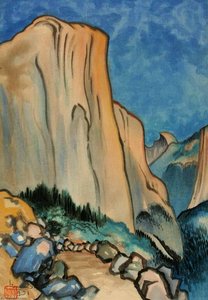
A pivotal moment arrived in 1927 when Obata undertook a sketching tour of Yosemite National Park—a journey that would irrevocably alter his artistic trajectory. The grandeur of the Sierra Nevada mountains captivated him, inspiring a lifelong devotion to capturing their majesty on canvas and woodblock. This experience profoundly impacted Obata’s worldview, fostering a conviction that art could serve as a conduit for experiencing the sublime—the awe-inspiring beauty of nature that transcends rational comprehension. He meticulously documented Yosemite's vistas in pencil, watercolor, and sumi ink, producing approximately one hundred works during his six-week expedition—a testament to his ability to synthesize Eastern artistic principles with Western observational techniques.The World Landscape Series: A Synthesis of Tradition and Innovation
Following the inspiration gleaned from Yosemite, Obata embarked on a monumental undertaking: the creation of the “World Landscape Series,” consisting of thirty-five exquisitely detailed colored woodblock prints depicting Californian landscapes—primarily Yosemite National Park. Collaborating with thirty-two skilled wood carvers and eighteen printers at Takamizawa Print Works over an eighteen-month period beginning in 1928, Obata achieved unparalleled levels of artistic precision—capturing the subtle nuances of light and shadow with astonishing fidelity. Each print embodies Obata’s belief that art could communicate profound truths about the natural world and human experience—a fusion of Japanese sumi ink painting techniques with Western color printing methods.Internment and Artistic Resilience During Wartime
The outbreak of World War II dramatically reshaped Obata’s life, triggering his involuntary relocation to Topaz Relocation Center in Utah—one of numerous camps established by the U.S. government for Japanese Americans during the conflict. Despite facing immense hardship and displacement, Obata demonstrated extraordinary fortitude—establishing an art school within the camp and instructing over ninety students weekly—a defiant assertion of cultural identity and artistic expression amidst oppressive circumstances. This unwavering commitment to teaching and creative endeavor underscored Obata’s conviction that art could sustain the human spirit even in times of crisis—leaving behind a legacy as both a celebrated artist and a beacon of resilience for generations to come.Вопросы и ответы
Откуда Чиура Обэта?
Чиура Обэта родился в Япония.
Где можно найти работы Чиура Обэта, сгруппированные по цветовой палитре?
Чтобы найти работы Чиура Обэта в определенной цветовой гамме, воспользуйтесь страницей художника По палитрам.
Можно ли найти работы Чиура Обэта по цветовой гамме?
Работы Чиура Обэта можно просмотреть по цвету на странице художника Спектральный индекс.