Atelje — Brezplačna svetovna dostava — Dostava v 2–6 tednih
      Cimabue, 1240 – 1302

      49 najbolj znanih slik umetnika Cimabue, razvrščeno po popularnosti

      Najbolj priljubljeno sliko avtorja Cimabue je Posmevanje Krista (1280), ki se nahaja v muzeju Louvre, Pariz. Nato sledeta Križ Cimabua (1287) in Sveti Frančišek Asiški (detajl) med platnami, ki jih bralci najbolje poznajo. Naš katalog vsebuje 52 del avtorja Cimabue: tukaj je 49 najbolj znanih del, od katerih vsako navaja leto nastanka, muzej in razlog za njihovo nepozabnost.

      Uvrščeno na podlagi naše ocene priljubljenosti, ki združuje število iskanj, obiskov in naročil za vsako delo. Posodobljeno november 2026. Vsako sliko na tej strani je mogoče naročiti kot ročno slikano oljno reprodukcijo na lanenem platnu ali kot umetniški natisk, izdelan v izbrani velikosti.

      Portret Cimabue
      Cimabue · 1240 – 1302
      Rodil se · umrl
      1240 – 1302, Firence
      Smer
      Protorenesansa
      Delo v našem katalogu
      52
      Najbolj znana
      Posmevanje Krista (1280)
      Največ del v
      Galleria degli Uffizi

      10 najboljjših slik umetnika Cimabue: platna, ki jih vsi poznajo

      Posmevanje Krista (1280) avtorja Cimabue
      1

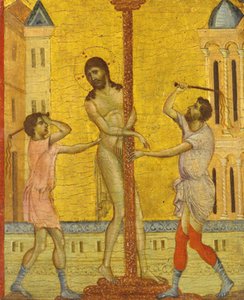
      Posmevanje Krista

      1280 · Tempera na leseni podlagi · Louvre, Pariz

      Zrak znotraj okvirja deluje težko, nasičen napetosti množice, ki pritiska navzavaj. V središču tega majega, lesenega sveta stoji Jezus, njegovo telo prekriva globoki modri plašč čez rdečo tuniko. Ne upira se. Njegovi roki visijo brezizrazno, njegova obrazna izrazitost pa ostaja neotepljena, tudi ko se oblike okoli njega valjajo v agresiji. Mož se iztrenja navzgor, njegovi prsti se močno stiskajo ob robu Kristovega aureole, v poskusu, da bi odtrgal samo znamenje…

      Ročno slikana oljna reprodukcija od $620 28 × 36 cm
      Križ Cimabua (1287) avtorja Cimabue
      2

      Križ Cimabua

      1287 · Tempera na leseni podlagi · Museo dell'Opera di Santa Croce, Firence

      Likmasterstvo bizantinskega vpliva Cimabuejev "Križ" stoji kot monumentalno del iz konca 13. stoletja, ki utelja prehod od bizantinske ikonografije do začetnega realizma renesančne umetnosti. Ustvarjen okoli leta 1287, ta velikostni križ je spomenik Cimabuejevega inovativnega pristopa, saj združuje tradicionalno religiozno simboliko z prihajajočimi umetniškimi tehnikami, ki so pavedale pot prihodnjim mojstrom, kot je Giotto. Motiv in kompozicija Umetnostni izdelek prikazuje razpeljanje Jezusa Krista, osrednjo temo v kristjanski umetnosti. Kompozicija sledi…

      Ročno slikana oljna reprodukcija od $220 30 × 33 cm
      Sveti Frančišek Asiški (detajl) avtorja Cimabue
      3

      Sveti Frančišek Asiški (detajl)

      Akril na platnu

      Cimabuejevo delo "Sveti Frančišek Asiški (detajl)" ni le prikaz religijske figure; je gančena povleka vzpostavljajočega humanizma, ki bo kmalu opredelil itališko renesanso. Naslikana okoli let 1285–1290, ta intimna scena zajema neželen trenutek – objem med svetim Frančiškom in mladim otrokom, ki izživa skoraj oprijemljivo spokojnost. Delo stoji kot ključen spomenik Cimabuejevi vlogi pri prehodu zapadne umetnosti iz rigidne formalnosti bizantinske ikonografije v bolj naravnostičen in čustveno odmevajoč slog. Gre za…

      Ročno slikana oljna reprodukcija od $195 23 × 43 cm
      Madonna v veličastvi (detajl) (1285) avtorja Cimabue
      4

      Madonna v veličastvi (detajl)

      1285 · Akril na platnu · Galleria degli Uffizi, Firene

      Pogled na Božansko Veličnost: Cimabueva *Madonna v veličastvu (detajl)* Ta izjemna podrobnost iz delovnega dela Cimabuove, *Madonna v veličastvu*, namalovana leta 1285., ponuja očarljiv vpogled v prehod med bizantinsko tradicijo in razvijajočo se renesanso v italijanski umetnosti. Ta fragment, velikosti 91 x 75 cm, je materializacija duhovnega žara in umetniške inovativnosti svoje časa. Bizantinske korenine in nastajanje realizma Cimabue (okoli leta 1240–1302), rojen Cenni di Pepo v Florensi, predstavlja ključno…

      Ročno slikana oljna reprodukcija od $220 29 × 35 cm Velikost kot pri originalu $410 75 × 91 cm Naročite v originalni velikosti →
      Madona v veličastnosti (detajl) (1285) avtorja Cimabue
      5

      Madona v veličastnosti (detajl)

      1285 · Tempera na leseni podlagi · Galleria degli Uffizi, Firene

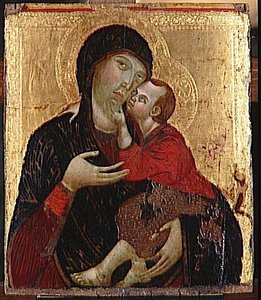
      Pogled v božansko veličastje: Cimabuejeva Maestà (podrobnost) Ta čudovita podrobnost Cimabuejeve Maestà, naslikana leta 1285, ponuja očarljiv okenek v obdobje prehodu med bizantno tradicijo in prihajajočo renesanso. Kljub majhnim dimenzijam, le 48 x 39 cm, ta plošča – ki jo trenutno čuva prestižna galerija Uffizi v Firenci – s svojo majhnostjo prikriva neizmerno umetniško moč in zgodovinsko pomembnost. Motiv in kompozicija Ta fragment se osredotoča na del širše kompozicije, ki…

      Ročno slikana oljna reprodukcija od $195 29 × 35 cm Velikost kot pri originalu $224 39 × 48 cm Naročite v originalni velikosti →
      Križ (1272) avtorja Cimabue
      6

      Križ

      1272 · Tempera na leseni podlagi

      The Crucifix by Cimabue emerges from the shadows of the late thirteenth century, a profound religious work that captures the central moment of the crucifixion of Jesus Christ. Painted about 1272, this piece exists as a powerful meditation on divine suffering. The figure of Christ hangs upon the cross, his body caught in a moment of profound agony. It is a scene that demands an immediate, visceral response from anyone…

      Ročno slikana oljna reprodukcija od $195 26 × 38 cm
      Crucifix (1268) avtorja Cimabue
      7

      Crucifix

      1268 · Tempera On Panel · San Domenico, Arezzo

      In the heart of Italian art history, Giovanni Cimabue stands as a monumental figure, a master who skillfully navigated the artistic currents flowing from the rigid grandeur of the Byzantine Empire toward the burgeoning innovations of the early Renaissance. His Crucifix is not merely a religious icon; it is a profound testament to a period of transformative change. Painted with an unwavering determination that earned him the nickname “bull-ed,” Cimabue…

      Ročno slikana oljna reprodukcija od $195 28 × 35 cm
      Apocalyptical Christ (detail) (1280) avtorja Cimabue
      8

      Apocalyptical Christ (detail)

      1280 · Fresco

      Three angels surge upward in a vertical composition, their forms appearing to burst from the wall. This detail, part of a larger fresco cycle, captures a moment of urgent divine announcement. The figures possess elongated limbs and stylized silhouettes, a hallmark of the transition from the rigid Byzantine tradition toward a more naturalistic approach. Their movement is directed heavenward, mirroring the spiritual aspiration of the viewer. Each angel carries a…

      Madonna Enthroned with the Child, St Francis and four Angels (detail) (1278) avtorja Cimabue
      9

      Madonna Enthroned with the Child, St Francis and four Angels (detail)

      1278 · Acrylic On Canvas

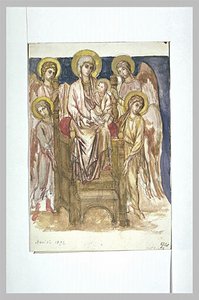
      Giovanni Cimabue's “Madonna Enthroned with the Child, St Francis and four Angels (detail)” – a captivating work from 1278 – isn’t merely a depiction of biblical figures; it’s a pivotal moment in the evolution of Western art. Born Cenni di Pepo in Florence, Cimabue was a courageous innovator who dared to subtly challenge the rigid conventions inherited from Byzantine iconography, laying the groundwork for the vibrant artistic revolution that would…

      Ročno slikana oljna reprodukcija od $195 29 × 35 cm Velikost kot pri originalu $306 60 × 73 cm Naročite v originalni velikosti →
      Crucifix (detail) (1268) avtorja Cimabue
      10

      Crucifix (detail)

      1268 · Acrylic On Canvas · San Domenico, Arezzo

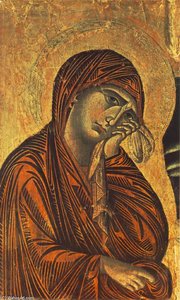
      A Glimpse into Divine Sorrow: Cimabue’s *Crucifix (detail)* This exquisite detail from Cimabue's larger *Crucifix* (circa 1268) offers a profoundly moving encounter with the Virgin Mary and infant Jesus. Painted during a pivotal moment in art history, this work transcends mere religious iconography to become a powerful expression of maternal grief and spiritual contemplation. It’s a piece that resonates across centuries, offering both artistic beauty and emotional depth. Historical Context…

      Ročno slikana oljna reprodukcija od $220 25 × 41 cm Velikost kot pri originalu $229 28 × 45 cm Naročite v originalni velikosti →

      Več platn, ki jih je ustvaril Cimabue, od 11 do 49

      St Luke (detail) (1280) avtorja Cimabue
      #17

      St Luke (detail)

      1280

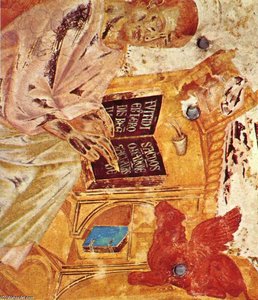
      This captivating detail from Cimabue's fresco of St. Luke offers a profound window into a pivotal moment in art. Painted around 1280, the fragment focuses on St. Luke,…

      Crucifix (1280) avtorja Cimabue
      #20

      Crucifix

      1280

      Cimabue's “Crucifix,” painted around 1283 in Florence, stands as a pivotal work not merely for its artistic merit but for its profound role in marking the transition from…

      Prinesite to svetlobo dom od $195 →
      Vision of the Throne (1277) avtorja Cimabue

      The composition of Vision of the Throne by Cimabue is organized through a hierarchical and symmetrical arrangement. At the center of the work, a luminous mandorla encloses a…

      Miracle of Saint Peter (1277) avtorja Cimabue

      The air within the Upper Basilica in Assisi feels heavy with the weight of centuries, yet the scene unfolding on the plaster remains startlingly immediate. In this late…

      Vault of the Evangelists (1277) avtorja Cimabue

      To look upward within the Upper Church of San Francesco in Assisi is to encounter a ceiling that breathes with the weight of the late thirteenth century. The…

      Dormition (1277) avtorja Cimabue
      #40

      Dormition

      1277

      The transept of the Upper Basilica of San Francesco in Assisi holds this fragmented fresco, a scene of profound solemnity. It captures the death of the Virgin Mary,…

      Peter heals a lame man (1277) avtorja Cimabue

      The religious fresco titled Peter heals a lame man was executed by the artist Cimabue. This work captures a moment of divine intervention, where the apostle reaches out…

      Plotna dela umetnika Cimabue, razdeljena po obdobjih

      Kaj je Cimabue naslikal največ

      Četiri teme, ki se najpogosteje pojavljajo na teh platnah, vsaka z svojim najbolj priljubljenim primerom.

      Kje so razpostavljena platna umetnika Cimabue

      8 muzejev, ki vsebujo največ slik na tej strani.

      Muzeji Mesto Sloga Cimabue Slike iz tega seznama
      Galleria degli Uffizi, FireneGalleria degli Uffizi Firene 5 Madonna v veličastvi (detajl), Madona v veličastnosti (detajl), The Madonna in Majesty (Maestà)
      San Domenico, ArezzoSan Domenico Arezzo 4 Crucifix, Crucifix (detail), Crucifix (detail)
      Louvre, ParizLouvre Pariz 2 Posmevanje Krista, Virgin Enthroned with Angels
      Museo dell'Opera di Santa Croce, FirenceMuseo dell'Opera di Santa Croce Firence 1 Križ Cimabua
      Museo dell'Opera del Duomo, PizaMuseo dell'Opera del Duomo Piza 1 Christ Enthroned between the Virgin and St John the Evangelist (detail)
      The Frick Collection, New York CityThe Frick Collection New York City 1 The Flagellation of Christ
      Santa Maria dei Servi, BolonjaSanta Maria dei Servi Bolonja 1 Madonna Enthroned with the Child and Two Angels
      National Gallery, LondonNational Gallery London 1 The Virgin and Child Enthroned with Two Angels

      Najljubše platno vsakega desetletja umetnika Cimabue

      1. 1260s
        Crucifix (1268) avtorja Cimabue
        Rangirano 7 od 49

        Crucifix

        Starost 20 – 29 · San Domenico

        In the heart of Italian art history, Giovanni Cimabue stands as a monumental figure, a master who skillfully navigated the artistic currents flowing from the rigid grandeur of…

      2. 1270s
        Križ (1272) avtorja Cimabue
        6 od 49

        Križ

        Starost 30 – 39

        The Crucifix by Cimabue emerges from the shadows of the late thirteenth century, a profound religious work that captures the central moment of the crucifixion of Jesus Christ.…

      3. 1280s
        Posmevanje Krista (1280) avtorja Cimabue
        1 od 49

        Posmevanje Krista

        Starost 40 – 49 · Louvre

        Zrak znotraj okvirja deluje težko, nasičen napetosti množice, ki pritiska navzavaj. V središču tega majega, lesenega sveta stoji Jezus, njegovo telo prekriva globoki modri plašč čez rdečo tuniko.…

      4. 1290s
        Virgin Enthroned with Angels (1290) avtorja Cimabue
        32 od 49

        Virgin Enthroned with Angels

        Starost 50 – 59 · Louvre

        A Dawn of Innovation: Cimabue’s Virgin Enthroned with Angels Giovanni Cimabue, born Cenni di Pepo around 1240 in Florence, represents a pivotal moment in the artistic landscape—a courageous…

      5. 1300s

      O platnah umetnika Cimabue: odgovori na vaša vprašanja

      Katero je najbolj znano sliko avtorja Cimabue?Preberite odgovor

      Posmevanje Krista (1280), Louvre, Pariz. sledita Križ Cimabua (1287) in Sveti Frančišek Asiški (detajl).

      Koliko je bil Cimabue let, ko je bilo naslikano delo Posmevanje Krista?Preberite odgovor

      Cimabue, rojen leta 1240, je imel 40 let: Posmevanje Krista datira iz leta 1280.

      Katera je 10 najbolj znanih slik umetnika Cimabue?Preberite odgovor

      Posmevanje Krista, Križ Cimabua, Sveti Frančišek Asiški (detajl), Madonna v veličastvi (detajl), Madona v veličastnosti (detajl), Križ, Crucifix, Apocalyptical Christ (detail), Madonna Enthroned with the Child, St Francis and four Angels (detail) in Crucifix (detail). Vsako platno v zgornji uvrstitvi vključuje leto nastanka in muzej.

      Koliko je vsehih del, ki jih je naslikal Cimabue?Preberite odgovor

      V našem katalogu je 52 del umetnika Cimabue, datiranih od 1268 do 1301.

      Kje lahko vidim najslavnejša platna umetnika Cimabue?Preberite odgovor

      Večinoma v Galleria degli Uffizi (Firene), San Domenico (Arezzo) in Louvre (Pariz); zgornji seznam navaja vsak muzej in njegova platna.

      Kdaj je Cimabue naslikal svoja najbolj priljubljena platna?Preberite odgovor

      V obdobju 1280s, ki je vključilo 20 od 49 del na tej strani, je med njimi tudi Posmevanje Krista.

      Kateri so najstarejši in najmlajši znani platni sliki umetnika Cimabue?Preberite odgovor

      Najstarejše platno tukaj je Crucifix (1268); najstarejše je Christ Enthroned between the Virgin and St John the Evangelist (detail) (1301).

      Kaj je Cimabue najpogosteje slikočil?Preberite odgovor

      Medieval art (13), Angels (13) in Virgin mary (11), na 49 delih na tej strani.

      S katero tehniko je Cimabue sliko najpogosteje sliko?Preberite odgovor

      Tempera On Panel, uporano v 10 od 49 del na tej strani.

      Kateri umetniški slog je del dela, ki ga je naslikal Cimabue?Preberite odgovor

      Protorenesansa, kot to pokažejo platna na tej strani.

      Katera platna umetnika Cimabue so razstavljena v muzeju Galleria degli Uffizi?Preberite odgovor

      Muzej Galleria degli Uffizi, Firene hrani 5 del z te strani, med katerimi so tudi Madonna v veličastvi (detajl), Madona v veličastnosti (detajl) in The Madonna in Majesty (Maestà).

      Ali lahko kupim reprodukcijo platna avtorja Cimabue?Preberite odgovor

      Da. Vsako sliko na tej strani lahko naročite na njeni lastni strani kot ročno naslikano oljno reprodukcijo ali kot umetniški natisk v izbrani velikosti.

      Cimabue: življenje v barvah

      The Life and Identity of Cimabue

      In the bustling streets of Florence, Italy, a man named Giovanni Cimabue began his life around 1240. He was known to many by the names Cenni di Pepo or Cenni di Pepi, names that belonged to a man destined to shape the visual language of his age. He was a painter and a designer of mosaics, a craftsman whose hands worked with both the delicate brush and the enduring stone. His spirit was said to be strong, perhaps even rebellious, earning him a nickname that suggested a bull-headed determination. This stubbornness was not a flaw, but rather the driving force that allowed him to look at the rigid traditions of the Byzantine style and seek something more human.

      His path was one of constant movement and evolving purpose. While his roots remained firmly planted in the Florentine tradition, his work carried him across the landscape of Tuscany. He did not merely replicate the icons of the past; he sought to breathe a sense of life into the figures he painted. This ambition led him to experiment with how light might fall upon a face or how a body might occupy space. He was a man caught between two worlds, honoring the spiritual formality of the old ways while reaching toward a new way of seeing the world through a more natural lens.

      The final years of his life took him away from the city of his birth, leading him toward the coast. He eventually passed away in Pisa in 1302. Though his life was marked by the quiet labor of the workshop and the grand scale of mosaic design, his presence left a permanent mark on the history of Italian art. He lived through a time of profound change, acting as a bridge for those who would follow in his footsteps.

      Early Life and Artistic Training

      Born in Florence, Italy, around 1240, the young man who would become known as Cimabue entered a world where the traditions of Byzantium still held a firm grip on the spirit of art. He was a child of the Florentine streets, growing up in a landscape where the heavy, golden formality of the East met a new, restless desire for something more human. While the exact details of his childhood remain veiled by the passage of centuries, his early years were clearly shaped by the rigorous discipline of the Florentine workshops. Here, he learned to command the delicate medium of egg tempera and the demanding art of mosaic design, skills that would define his long career as both a painter and a designer of mosaics.

      His training was not merely a matter of learning to apply pigment to wood, but a deep immersion into the sacred language of iconography. He absorbed the ways in which light was used to signify the divine, often through the application of shimmering gold leaf that seemed to radiate from the panel itself. Yet, even in these formative years, a certain strength of will began to emerge. There was a sense that he was not content to simply replicate the flat, symbolic figures of the past. Instead, he began to experiment with the way a body might occupy space, seeking to give his figures a sense of weight and presence that had been absent in the works of those who came before him. This early struggle to balance established religious tradition with a burgeoning interest in the natural world would become the defining characteristic of his hand.

      Artistic Technique and Evolving Style

      In the quiet labor of his workshop, Cimabue sought to breathe a new kind of life into the sacred figures of his age. He worked largely with egg tempera on wood panels, a medium that demanded a patient, disciplined hand. To achieve the celestial glow required for his religious subjects, he often applied this pigment over a background of shimmering gold leaf. In other instances, he utilized distemper with gold leaf to create a sense of divine light. His hands were equally adept at the grand scale of fresco and the intricate, enduring patterns of mosaic, showing a versatility that allowed him to move between the walls of a cathedral and the intimate size of a devotional panel.

      As his vision matured, a subtle change began to appear in the way he treated the human form. He moved away from the flat, two-dimensional silhouettes of the Byzantine tradition, seeking instead to capture the weight and presence of real flesh. He achieved this through a more sophisticated use of shading to suggest volume, allowing a face or a limb to appear rounded and three-dimensional rather than merely outlined. This growing interest in lifelike figural proportions meant that his saints and Madonnas possessed a physical reality that felt closer to the people who knelt before them. He was no longer content with mere symbols; he wanted to show the body as a vessel of actual weight and emotion.

      Major Commissions and Key Works

      The early years of his career reveal a man already wrestling with the weight of tradition. Around 1268, he produced a Crucifix, a work that would later be studied for its profound meditation on suffering. This was followed by the Crucifix at San Domenico in Arezzo, dating around 1270, where the body of Christ appears to buckle under the weight of his own agony. In that same period, he painted the Virgin and Child in Majesty surrounded by Six Angels, a work from 1270 that shows his hand working within the established patterns of the time. Even in these early efforts, one can sense a spirit seeking to move beyond the flat, distant figures of the past.

      As the decades passed, his brush grew more daring. By 1278, he had completed the Madonna Enthroned with the Child, St Francis and Four Angels, a composition that brought a new sense of presence to the sacred figures. This evolution continued into the next decade. Around 1280, he executed the Maestà, now held in the Louvre, and the Flagellation of Christ, a complex scene that suggests a growing interest in spatial relationships. He was a man of many hands, also working in the medium of mosaic, leaving his mark upon the very stones of the Baptistery of Florence.
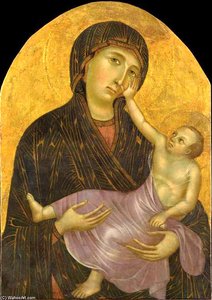
      His later works show a refined ability to suggest volume and human emotion. A detail from his Madonna in Majesty, painted in 1285, reveals a subtle use of shading that hints at the physical reality of the Virgin. Even in smaller, more intimate pieces like the 13th-century Mocking of Christ, his ability to capture a sense of human experience remains evident. His output was vast, spanning from large altarpieces to small, devotional panels.

      The Master and His Famous Pupil

      The legacy of Cimabue lived on through the hands of those who sat at his side in the Florentine workshops. Among his most significant pupils was Giotto di Bondone, who received crucial training under Cimabue's guidance. Their relationship was marked by a dynamic that pushed the boundaries of what a painter could achieve. It is said that during his apprenticeship, the young Giotto once playfully painted a fly upon a portrait Cimabue was working, a small prank that revealed a spirit as spirited as the master's own. While Giotto would eventually move toward a more radical naturalism, his foundation was built upon the lessons learned from Cimabue's evolving approach to form and expression.

      Beyond this famous connection, Cimabue's influence reached other talented hands that operated within his artistic orbit. One such figure is the artist known as the Master of Varlungo, who has been identified as a principal pupil of Cimabue. This painter worked during the same transformative period, absorbing the stylistic shifts that Cimabue helped initiate. Through these students, the transition from the rigid Byzantine traditions toward a more humanistic style was carried forward, ensuring that the innovations of the master would ripple through the generations of Italian painters.

      Where to See His Masterpieces Today

      To follow the path of his brush is to travel across the great cities of Europe and beyond. In Paris, the Musée du Louvre holds the Maestà, a work that once graced the church of San Francesco in Pisa. The museum also recently welcomed The Mocking of Christ, which was acquired in 2023. These works allow us to see how his hand moved through the halls of such grand institutions, bridging the distance between the sacred spaces of the past and the public galleries of the present.

      The spirit of his work remains deeply rooted in the Italian landscape. In Florence, the Galleria degli Uffizi preserves a detail of the Madonna in Majesty, offering a close look at his evolving hand. Nearby, the Museo dell'Opera del Duomo in Pisa keeps a detail of Christ Enthroned between the Virgin and St John the Evangelist. If one travels to Assisi, the Madonna with Child Enthroned, Four Angels and St Francis can still be found, while the Basilica of San Domenico in Arezzo holds the Crucifix that shows his departure from older traditions.

      His reach extended far across the seas, finding homes in collections far from his Florentine origins. The Frick Collection in New York preserves The Flagellation of Christ, and the National Gallery in London holds a detail of the Crucifix. These scattered treasures remind us of the many hands that have cared for his legacy through the centuries.