Atelje — Brezplačna svetovna dostava — Dostava v 2–6 tednih
      Tom Krøjer, 1942 – 2015

      Tom Krøjer: 2 najbolj znanih slik

      Med vsemi slikami umetnika Tom Krøjer je najbolj znana Fundamental Forms of the Bird's-Eye View (1976); razpolaga v muzeju Statens Museum For Kunst, Kopenhagen. Med 2 dela umetnika Tom Krøjer v našem katalogu so ta 2 najbolj znamenita, od katerih je vsaka prikazana z letom nastanka, muzejem in zgodbojo.

      Uvrščeno na podlagi naše ocene priljubljenosti, ki združuje število iskanj, obiskov in naročil za vsako delo. Posodobljeno november 2026.

      Portret Tom Krøjer
      Tom Krøjer · 1942 – 2015
      Rodil se · umrl
      1942 – 2015, Frederikssund
      Delo v našem katalogu
      2
      Najbolj znana
      Fundamental Forms of the Bird's-Eye View (1976)
      Največ del v
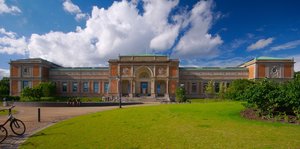
      Statens Museum For Kunst

      10 najbolj znamenitih slik umetnika Tom Krøjer

      Fundamental Forms of the Bird's-Eye View (1976) avtorja Tom Krøjer
      1

      Fundamental Forms of the Bird's-Eye View

      1976 · Oil On Canvas · Statens Museum For Kunst, Kopenhagen

      The canvas pulses with an energetic, restless life, presenting a dense mosaic of interlocking shapes that refuse to settle. There is no single point for the eye to rest; instead, a non-hierarchical rhythm carries the gaze across the entire surface. Primary yellows, blues, and reds collide with secondary purples, oranges, and greens, creating a complex visual puzzle that feels as though it is constantly shifting. Sharp, defined edges of polygons…

      Kje so razpostavljena platna umetnika Tom Krøjer

      1 muzejev, ki vsebujo največ slik na tej strani.

      Muzeji Mesto Sloga Tom Krøjer Slike iz tega seznama
      Statens Museum For Kunst, KopenhagenStatens Museum For Kunst Kopenhagen 2 Fundamental Forms of the Bird's-Eye View, Jess. Reflected Image from Paris

      Leto za letom: najslavnejša platna umetnika Tom Krøjer

      Od 1976 do 1980, skupaj 5 let, datirana platna umetnika Tom Krøjer pripovedajo kratko zgodbo: tukaj je, leto za letom.

      1. 1976
        Fundamental Forms of the Bird's-Eye View (1976) avtorja Tom Krøjer
        1 od 2

        Fundamental Forms of the Bird's-Eye View

        Starost: 34 let · Statens Museum For Kunst

        The canvas pulses with an energetic, restless life, presenting a dense mosaic of interlocking shapes that refuse to settle. There is no single point for the eye to…

      2. 1980

      Vaša vprašanja o slikah umetnika Tom Krøjer, answered

      Katero je najbolj znano sliko avtorja Tom Krøjer?Preberite odgovor

      Fundamental Forms of the Bird's-Eye View (1976)

      Koliko je bil Tom Krøjer star ob nastanku dela Fundamental Forms of the Bird's-Eye View?Preberite odgovor

      Tom Krøjer, rojen leta 1942, je imel 34 let: Fundamental Forms of the Bird's-Eye View datira iz leta 1976.

      Koliko je znanih slik avtorja Tom Krøjer?Preberite odgovor

      V našem katalogu je 2 del umetnika Tom Krøjer, datiranih od 1976 do 1980.

      V katerih muzejih so shranjena najbolj znana platna umetnika Tom Krøjer?Preberite odgovor

      Večinoma v Statens Museum For Kunst (Kopenhagen); zgornji seznam navaja vsak muzej in njegova platna.

      Kateri sta prva in zadnja znana platna umetnika Tom Krøjer?Preberite odgovor

      Najstarejše platno tukaj je Fundamental Forms of the Bird's-Eye View (1976); najstarejše je Jess. Reflected Image from Paris (1980).

      Kaj lahko vidim od Tom Krøjer v muzeju Statens Museum For Kunst?Preberite odgovor

      Muzej Statens Museum For Kunst, Kopenhagen hrani 2 del z te strani, med katerimi so tudi Fundamental Forms of the Bird's-Eye View in Jess. Reflected Image from Paris.

      Tom Krøjer: zgodba slikarja

      The Evolution of Form and Color

      The trajectory of Tom Krøjer begins far from the canvas, rooted in the physical labor of a mason. This foundation of manual craft provides a silent backdrop to his formal artistic training. He moves from the practicalities of construction to the experimental atmosphere of Eks-skolen in Copenhagen, eventually finding his way to the Kungliga Konsthögskolan in Stockholm. Under the guidance of Carl-Fredrik Reutersvärd, the years leading up to his 1967 graduation shape a sensibility that refuses to settle into a single mode of expression.

      The 1960s are a period of restless experimentation. He moves through the realms of film and happenings, testing the boundaries of what art can be. During these years, he finds himself at Drakabygget in Skåne, staying with Jens Jørgen Thorsen. This era is defined by the influence of Fluxus and the burgeoning energy of American pop art, a period where the artist explores the edges of performance and the ephemeral.

      A Shift Toward the Plane

      By the 1980s, a distinct visual language emerges. The chaotic energy of his earlier experiments settles into a focused exploration of the plane. His work becomes characterized by a specific tension: the mixing of figurative and abstract elements. He utilizes a light-filled color scale to depict everyday scenes, yet these scenes are filtered through a fabulating breakdown of form. The colors are strong and clear, stripping away the unnecessary to focus on the essential geometry of the subject.

      This stylistic development marks a departure from the purely experimental toward a more structured, yet still playful, approach. His paintings and drawings from this period reflect the influence of both pop art and system art, where the logic of the composition meets a sense of spontaneous invention. He becomes a member of the Grønningen artist group in 1983, a recognition of his established place within the Danish art scene.

      Legacy and Recognition

      His career is marked by specific milestones of institutional validation. In 1971, he receives a three-year stipend from Statens Kunstfond, a significant nod to his developing practice. His work, ranging from crayon drawings to large-scale paintings, captures a specific moment in Danish modernism where the boundaries between the high art of the academy and the subversive energy of the avant-garde began to blur.

      The technical precision of his later work remains rooted in that early training, even as he pushes toward abstraction. He leaves behind a body of work that navigates the space between the recognizable world and the pure expression of color and form.