Atelje — Brezplačna svetovna dostava — Dostava v 2–6 tednih
      Edgar Degas, 1834 – 1917

      Edgar Degas's 100 Most Famous Paintings

      The Absinthe Drinker (1876) is the painting Edgar Degas is best remembered for; it belongs to the Musée d'Orsay, Pariz. Ženska, ki se suši and Plesna ura (1873) complete the trio of best-loved canvases. Our catalogue counts 1,074 works by Edgar Degas. Here are the 100 most famous, with the year, the museum and the story of each canvas.

      Ranked by our popularity score, which combines the searches, visits and orders for each work. Updated oktober 2026. Each painting on this page can be ordered as an oil reproduction painted by hand on linen canvas, or as a fine art print, made to the size you choose.

      Portrait of Edgar Degas
      Edgar Degas · 1834 – 1917
      Born · died
      1834 – 1917, Pariz
      Movement
      Impresionizem
      Works in our catalogue
      1.074
      Most famous
      The Absinthe Drinker (1876)
      Most works at
      Metropolitanski muzej umetnosti

      The ten best-loved paintings by Edgar Degas

      The Absinthe Drinker (1876) by Edgar Degas
      1

      The Absinthe Drinker

      1876 · Olje na platnu · Musée d'Orsay, Pariz

      Édouard Manet’s “The Absinthe Drinker,” completed around 1859, stands as a pivotal work in his oeuvre and arguably the first truly significant painting born from his burgeoning artistic vision. Initially dismissed by critics who favored academic conventions, this deceptively simple composition—a Parisian café scene featuring two figures seated at a table—quickly cemented its place within the annals of Impressionism and continues to fascinate viewers today.

      Ženska, ki se suši by Edgar Degas
      2

      Ženska, ki se suši

      Akril na platnu · National Gallery, London

      S pojavom v Franciji v drugi polovici 19. stoletja je impressionizem izzival tradicionalne umetnostne konvencije. Umetniki, kot je Degas, so odstopili od zgodovinskih in mitoloških motivov in se namesto tega obrnili k scenam sodobnega življenja. Intimizem, podtok znotraj impressionizma, se je osredotočal predvsem na domačja notranja prostora in zasebne trenutke. Delo "Ženska, ki se suši" je popoln primer te usmeritve. Čeprav se je Degas upiral označevanju kot "impressionist", je njegovo…

      Plesna ura (1873) by Edgar Degas
      3

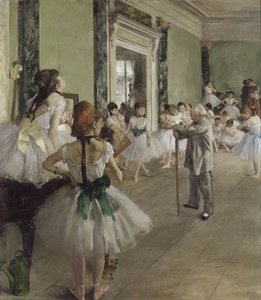
      Plesna ura

      1873 · Olje na platnu · Musée d'Orsay, Pariz

      Vstopiti v prostor Edgara Degasa in njegro “Plesno uro” pomeni premagovanje temporalnih meja in vstop v svetišče disciplinirane grace. To remekovito delo, naslikano okoli leta 1873, ne predstavlja zgolj scene baletne predprobe; ponudilo nam je intimen, skoraj voyeuristički pogled v tiho intenzivnost plesnega studia. Namesto grandioznih, režiranih spektaklov, ki so pogosto povezani z opero, Degas naš pogled usmerja k neobdelani realnosti vaje. Tukaj pričakovati lahko subtilno napetost raztegajočega se mišič,…

      The Bellelli Family by Edgar Degas
      4

      The Bellelli Family

      Oil On Canvas · Musée d'Orsay, Pariz

      In the quiet, shadowed corners of a Parisian room, Edgar Degas captures something far more profound than a mere family gathering. The Bellelli Family, painted between 1858 and 1867, stands as an exquisite masterwork that transcends the boundaries of traditional portraiture. It is not simply a record of faces, but a psychological landscape where every gaze and posture whispers of unspoken tensions and deep-seated emotions. As one gazes upon this…

      Interior (also known as The Rape) (1868) by Edgar Degas
      5

      Interior (also known as The Rape)

      1868 · Olje na platnu · Philadelphia Museum of Art, Filadelfija

      Edgar Degas’s “Interior,” often referred to as “The Rape,” is not merely a painting; it's an experience—a carefully constructed tableau of psychological tension and unspoken drama. Completed in 1868, this grisaille masterpiece resides within the Philadelphia Museum of Art, yet its power transcends its physical location, resonating with viewers long after they’ve turned away. It’s a work that invites speculation, prompting us to confront uncomfortable truths about human relationships and…

      Portraits in a New Orleans Cotton Office by Edgar Degas
      6

      Portraits in a New Orleans Cotton Office

      Portraits in a New Orleans Cotton Office Edgar Degas, one of the most celebrated artists of the Impressionist movement, gifted us Portraits in a New Orleans Cotton Office, an oil painting that encapsulates the very essence of his uncle’s cotton brokerage business during its calamitous bankruptcy. Completed in 1873, this masterpiece transcends mere visual representation; it stands as a testament to Degas' unparalleled skill and occupies a significant place within…

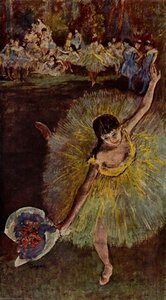
      Dancer z vrtnjem cvetja (Zvezda baleta) (1878) by Edgar Degas
      8

      Dancer z vrtnjem cvetja (Zvezda baleta)

      1878 · Akril na platnu

      Trenutek u zamrznjenem času: Privlačnost Degasove »Plesalke z buketom cvetja (Zvezde baleta)« Edgar Degasovo vrhunsko del iz leta 1878, »Plesalka z buketom cvetja (Zvezda baleta)«, ni le prikaz baletke; je povzetek trenutka, ki hitro mineva – vdar v dih, zadržan med trudom in eleganco. Slikovina nas vleče v živahni svet pariškega baleta, ne skozi grandiozne spektakle, temveč skozi intimen opazovalni pogled. Mlada plesalka, ustavljena sredi nastopa, močno stisne buket v…

      Miska Lola, v cirkusu Fernando, NG L (1879) by Edgar Degas
      9

      Miska Lola, v cirkusu Fernando, NG L

      1879 · Olje na platnu

      Miss Lola, au Cirque Fernando: Gibanica gibanja in sijaja Edgar Degasovo delo "Miss Lola, au Cirque Fernando" ni le poslikava cirkusanke; je dih jemljiv vpogled v življenje 19. stoletja, ki ga zaznamujejo dinamika, lepota in trenutna izguba časa. To impresonistično mojstrovino si lahko predstavljamo kot okno v svet pariškega Cirque Fernando leta 1879, kjer je mladostna akrobatka Miss Lola s svojo prisotnostjo očarala občinstvo. Degas ni le posnel trenutka; ustvaril…

      Plesalci pri tirnici 1 (1888) by Edgar Degas
      10

      Plesalci pri tirnici 1

      1888 · Olje na platnu · The Phillips Collection, Washington, D.C.

      Edgar Degas, eden izmed ključnih imen impresionizma, nas s svojim delom "Tankačice pri vrtežnici 1" (Dancers at the Barre 1) popelje v intimen in očarljiv svet baletnega treninga. To ni le prikaz dveh balerink, ki se ukvarjajo z vajami; je dih jemljiv trenutek ujet v času, posvečen lepoti gibanja, disciplini in subtilni eleganci. Delo iz leta 1888 je mojstrsko upodobitev človeške figure v plesu, pri čemer Degas s prefinjenostjo razkriva…

      Edgar Degas: canvases 11 to 100 of the ranking

      Sestra (1873) by Edgar Degas
      #13

      Sestra

      1873

      “Nura” – delo Edgara Degasa iz leta 1873, je več kot samo slika; to je osebna zgodba, zazetka trenutka. V tej neotesani podobi se nam prikazuje nora, ki…

      Have it painted by hand →
      V kavarni, zvano tudi by Edgar Degas
      #14

      V kavarni, zvano tudi

      Grand Palais

      Delo Hilaire-Germain-Edgar Degasa »V kavarni«, naslikano okoli leta 1876, ni le prikaz dveh oseb, ki uživata v pariškem večeru; je natančno opazovana študija človeškega stika in subtilnega jezika…

      Bring this light home →
      Dancerji (1898) by Edgar Degas
      #15

      Dancerji

      1898

      This captivating pastel work by Edgar Degas offers a rare and intimate look beyond the dazzling spectacle of the ballet stage. Created in 1898, *Dancers* isn't about grand…

      Have it painted by hand →
      Zadnji plesni trening (1874) by Edgar Degas
      #16

      Zadnji plesni trening

      1874 · Metropolitanski muzej umetnosti

      Edgar Degasovo delo "Razred plesa" (1874) je več kot le prikaz baletne vaje; je vpogled v svet discipline, lepote in truda, ki se skriva za sijajem odra. Ta…

      Order this canvas →
      Race Horses at Longchamp (1874) by Edgar Degas
      #17

      Race Horses at Longchamp

      1874 · Muzej fine arts

      Pogled v pariško uživanje: Razkodovanje Degasovega dela *Race Horses at Longchamp* Edgar Degasovo delo *Race Horses at Longchamp* (1874) ni le slika športnega dogodka; je živopisen posnetek pariškega…

      Bring this light home →
      Plesalka na odru (1880) by Edgar Degas
      #18

      Plesalka na odru

      1880 · Hamburger Kunsthalle

      Prehodna trenutek elegance: Raziskovanje Degasovega »Plesalca na odru« To očarljivo pastelno del Edgara Degasa nas popelje v samo srce parizkega sveta baleta leta 1880. Delo, ki se nahaja…

      Order this canvas →
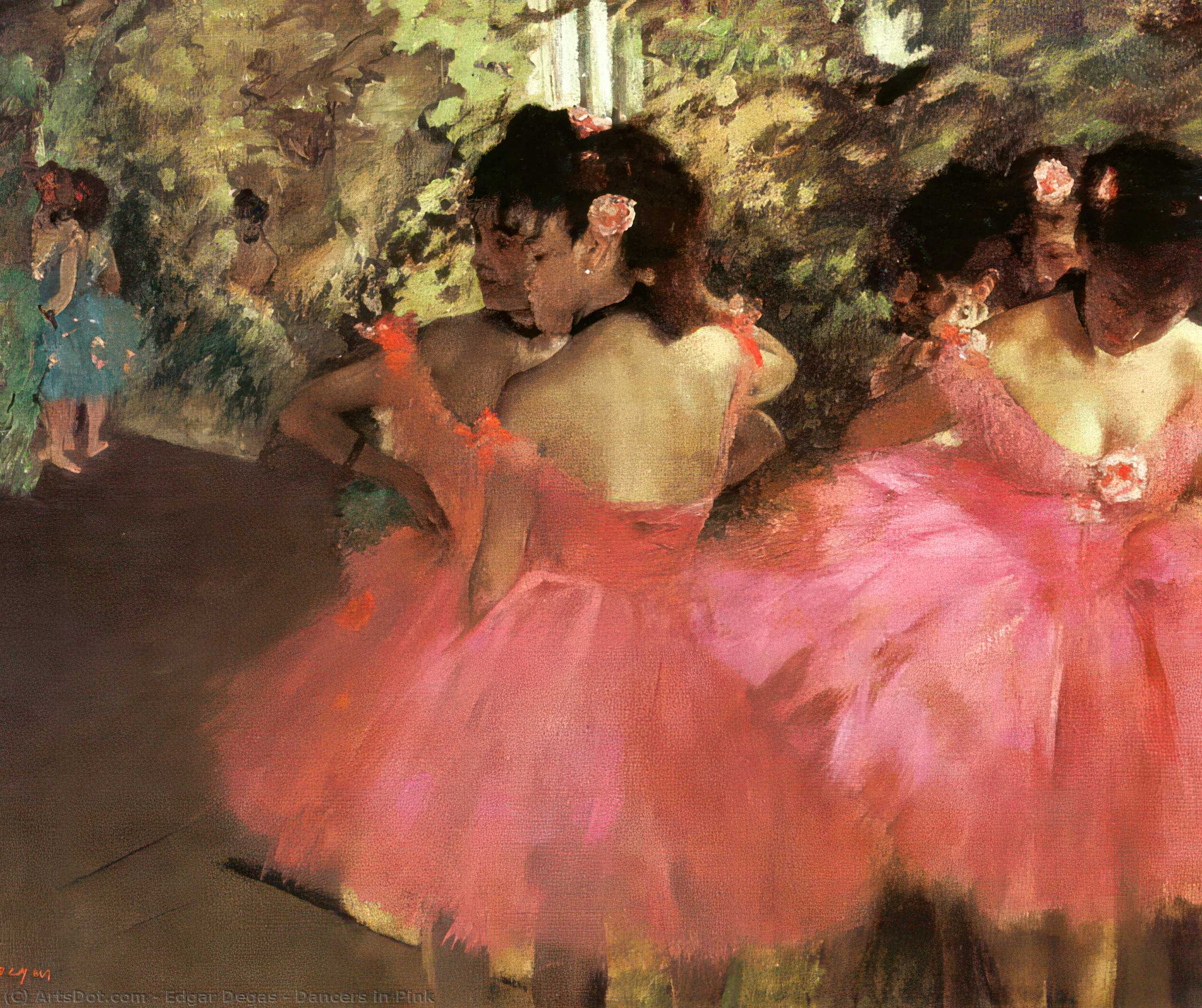
      The Star by Edgar Degas
      #20

      The Star

      Edgar Degas, a name synonymous with Impressionism, possessed a singular fascination that transcended mere artistic pursuit; he was utterly captivated by the world of ballet. Within his extensive…

      Order this canvas →
      Head of a Woman (1874) by Edgar Degas
      #24

      Head of a Woman

      1874 · National Gallery

      Step closer, and you might find yourself caught in the stillness of this moment. There is no grand theatricality here, only the presence of an unknown woman, perhaps…

      Have it painted by hand →
      Two harlequins (1886) by Edgar Degas
      #25

      Two harlequins

      1886

      Edgar Degas, a titan of French Impressionism, stands apart from his peers not merely for stylistic innovation but also for an unyielding dedication to capturing the quiet dramas…

      Order this canvas →
      Fan Mount: Ballet Girls (1879) by Edgar Degas
      #26

      Fan Mount: Ballet Girls

      1879 · Metropolitanski muzej umetnosti

      The edges of the fan curve softly, framing a world that feels as though it might dissolve if one breathes too heavily. Three figures rest along the lower…

      Have it painted by hand →
      Seda ženska, ki se česlja (1890) by Edgar Degas
      #27

      Seda ženska, ki se česlja

      1890 · Musée d'Orsay

      Degasovo del »Sedela ženska, ki se česlja«, dokončano okoli leta 1890, ni le prikaz domače dejavnosti; je globoka raziskava ženstvenosti, ranljivosti in prehodne lepote vsakdana — stebro impresionizma,…

      Order this canvas →
      Yellow Dancers (In the Wings) (1875) by Edgar Degas
      #28

      Yellow Dancers (In the Wings)

      1875 · Art Institute of Chicago

      Three female figures occupy the foreground, positioned in a diagonal arrangement that leads the eye from the upper middle toward the lower right. The composition focuses on a…

      Bring this light home →
      Café Singer (1879) by Edgar Degas
      #29

      Café Singer

      1879 · Art Institute of Chicago

      A female singer occupies the center of this oil on canvas composition, her upper torso and head captured in a tight crop. The figure is positioned against a…

      Bring this light home →
      The Milliners (1882) by Edgar Degas
      #30

      The Milliners

      1882 · J. Paul Getty Museum

      Two women sit at a worktable that cuts across the space at a sharp, unsettling angle. The room is crowded with the dark, rounded silhouettes of hat stands,…

      Bring this light home →
      Women Combing Their Hair (1876) by Edgar Degas
      #31

      Women Combing Their Hair

      1876 · The Phillips Collection

      Hilaire-Germain-Edgar Degas’s “Women Combing Their Hair,” painted circa 1876, is more than a simple depiction of domestic activity; it’s a profound meditation on movement, observation, and the fleeting…

      Have it painted by hand →
      A Roman Beggar Woman (1857) by Edgar Degas
      #33

      A Roman Beggar Woman

      1857 · Birmingham Museum and Art Gallery

      Edgar Degas’s “A Roman Beggar Woman,” painted in 1857, transcends mere visual representation; it embodies a profound meditation on urban poverty and the quiet dignity residing within an…

      Have it painted by hand →
      At the Ballet (1881) by Edgar Degas
      #34

      At the Ballet

      1881

      A Glimpse Behind the Curtain: Decoding Degas’s “At the Ballet” Edgar Degas's 1881 pastel work, *At the Ballet*, offers a captivating and unusually intimate view into the world…

      Have it painted by hand →
      The Blue Dancers by Edgar Degas
      #36

      The Blue Dancers

      A Glimpse Behind the Curtain: Degas’s “The Blue Dancers” Edgar Degas's “The Blue Dancers,” painted in 1897, is more than just a depiction of ballerinas; it’s an intimate…

      Order this canvas →
      Tancarka v svoji garderobi (1879) by Edgar Degas
      #38

      Tancarka v svoji garderobi

      1879 · Norton Simon Museum

      Edgar Degasov „Tancarka v svoji garderobi“, namalovano leta 1879, ni le prikaz tancarke; je globoka meditacija o minilosti lepote, samoti umetniškega stvaritelskega procesa in za kulisama življenja pariskanjskega…

      Order this canvas →
      Orchestra of the Opera (1869) by Edgar Degas
      #40

      Orchestra of the Opera

      1869

      Edgar Degas' "Orchestra of the Opera," painted in 1869, isn’t merely a depiction of musicians; it’s a meticulously observed slice of Parisian life, a backstage tableau brimming with…

      Order this canvas →
      The Bather (La Baigneuse) (1895) by Edgar Degas
      #41

      The Bather (La Baigneuse)

      1895 · Reading Public Museum

      The painting depicts a woman reclining on her side in a bathtub filled with water. She is positioned centrally within the frame, bathed in diffused natural light filtering…

      Have it painted by hand →
      Russian Dancers (1899) by Edgar Degas
      #42

      Russian Dancers

      1899

      A Glimpse into Movement and Modernity: Degas’s “Russian Dancers” Edgar Degas, a master of capturing fleeting moments and modern life, presents us with a captivating scene in “Russian…

      Bring this light home →
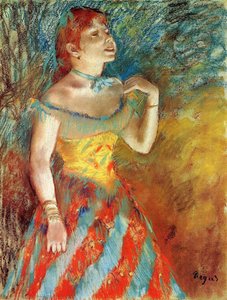
      Singer in Green (1884) by Edgar Degas
      #46

      Singer in Green

      1884 · Metropolitanski muzej umetnosti

      In the heart of 1884 Paris, amidst the gaslit glow of cabarets and the rhythmic pulse of urban nightlife, Edgar Degas captured a moment that transcends time. Singer…

      Order this canvas →
      Ženska Česanje Las (1894) by Edgar Degas
      #48

      Ženska Česanje Las

      1894 · Metropolitanski muzej umetnosti

      A Moment of Intimate Reflection: Degas’s *Woman Combing Her Hair* Edgar Degas's 1894 pastel, *Woman Combing Her Hair*, is a captivating study in quiet intimacy and the beauty…

      Bring this light home →
      Woman at a Window (1872) by Edgar Degas
      #51

      Woman at a Window

      1872 · Courtauld Gallery

      Edgar Degas's “Woman at a Window,” painted in 1872, is more than just a depiction of a figure observing the world outside; it’s a masterful exploration of light,…

      Order this canvas →
      Ballet Scene (1880) by Edgar Degas
      #52

      Ballet Scene

      1880 · Dixon Gallery and Gardens

      Ballet Scene is a painting by Edgar Degas. The composition focuses on a single female dancer positioned toward the front right of the stage. This figure is rendered…

      Order this canvas →
      Four Dancers (1902) by Edgar Degas
      #53

      Four Dancers

      1902

      To stand before Four Dancers is to step directly into a moment suspended in time—a breath held just before the music swells, or perhaps, the perfect echo after…

      Order this canvas →
      A Carriage at the Races (1872) by Edgar Degas
      #54

      A Carriage at the Races

      1872 · Muzej fine arts

      The painting depicts a horse-drawn carriage situated on a grassy field. Several horses are visible within the scene; some are positioned in the foreground while others are further…

      Have it painted by hand →
      Lady with a Parasol (1871) by Edgar Degas
      #55

      Lady with a Parasol

      1871 · Courtauld Gallery

      The scene unfolds through Lady with a Parasol, a work painted by Edgar Degas in 1871. This piece captures a fleeting moment of existence, frozen in time through…

      Order this canvas →
      Singer with a glove (1878) by Edgar Degas
      #57

      Singer with a glove

      1878

      To gaze upon Degas's depiction of "Singer with a glove" is to be instantly transported into the vibrant, yet fleeting, atmosphere of a Parisian cabaret in the late…

      Order this canvas →
      Mme Jacques Fourchy (1883) by Edgar Degas
      #58

      Mme Jacques Fourchy

      1883

      Edgar Degas's "Mme Jacques Fourchy," painted in 1883, isn’t merely a portrait; it’s a carefully constructed tableau vivant—a captured moment brimming with subtle observation and quiet intensity. This…

      Have it painted by hand →
      Field of Flax (1892) by Edgar Degas
      #59

      Field of Flax

      1892

      The artwork is a pastel depiction of a landscape featuring a field of flax. In the foreground, there are bright yellow flowers scattered throughout the scene. A diamond-shaped…

      Order this canvas →
      The Return of the Herd (1896) by Edgar Degas
      #60

      The Return of the Herd

      1896 · New Walk Museum - Art Gallery

      The painting depicts a rural scene featuring two horses positioned on a road in front of a house. One horse is situated toward the left side of the…

      Bring this light home →
      Ženska na kavču (1872) by Edgar Degas
      #61

      Ženska na kavču

      1872

      A Glimpse into Intimate Modern Life: Decoding Degas’ “Woman Seated on a Canape” Edgar Degas' 1872 oil on panel, *Woman Seated on a Canapé*, offers a captivating window…

      Bring this light home →
      Group of Dancers (1905) by Edgar Degas
      #64

      Group of Dancers

      1905

      The painting Group of Dancers is an oil on canvas that captures three women dancing together within a room. The scene is characterized by a sense of energy…

      Order this canvas →
      Conversation (1895) by Edgar Degas
      #67

      Conversation

      1895 · Yale University Art Gallery

      Edgar Degas's "Conversation," housed within the hallowed halls of the Yale University Art Gallery, isn’t merely a painting; it’s a meticulously crafted snapshot of Parisian social life at…

      Bring this light home →
      Two Dancers (1898) by Edgar Degas
      #69

      Two Dancers

      1898 · Staatliche KunstSammlungen Dresden

      The scene unfolds through the delicate, layered application of pastel and charcoal, capturing a fleeting moment of grace. In this work, titled Two Dancers, the artist Edgar Degas…

      Have it painted by hand →
      Spanish dance (2018) by Edgar Degas
      #70

      Spanish dance

      2018 · Asociación Española de Pintores y Escultores

      In this sculpture, titled Spanish dance, we encounter the quiet intensity of Edgar Degas. Created in France during the 1880s, the work captures a specific, fleeting moment of…

      On the Stage (1880) by Edgar Degas
      #71

      On the Stage

      1880

      The stage lights seem to flicker even now as the eye wanders across the cream laid paper. A young woman holds the center of the frame, her body…

      Have it painted by hand →
      Horses and Jockeys (1886) by Edgar Degas
      #72

      Horses and Jockeys

      1886

      To gaze upon this depiction of horses and jockeys is to witness time itself captured in a fleeting, exhilarating instant. It is more than just a sporting scene;…

      Order this canvas →
      The Dancers (1885) by Edgar Degas
      #73

      The Dancers

      1885 · Metropolitanski muzej umetnosti

      The air in the rehearsal space feels heavy with the scent of dust and tulle. In this 1885 pastel work, several ballerinas occupy a crowded, asymmetrical stage, caught…

      Bring this light home →
      Four dancers, ca National Galler (1899) by Edgar Degas
      #74

      Four dancers, ca National Galler

      1899 · National Gallery of Art

      To stand before this depiction of four dancers is to witness time suspended in a moment of pure, unbridled artistry. Hilaire-Germain-Edgar Degas captured not merely figures on pointe,…

      Order this canvas →
      Dancer Tilting (1883) by Edgar Degas
      #75

      Dancer Tilting

      1883

      Created in 1883, Dancer Tilting is a pastel drawing by Edgar Degas that captures a fleeting moment of movement. The composition centers on a young woman poised mid-leap,…

      Bring this light home →
      Ballet Scene by Edgar Degas
      #76

      Ballet Scene

      Dixon Gallery and Gardens

      In the quiet, focused moments before the curtain rises, there exists a unique tension—a blend of exhaustion and anticipation that Hilaire-Germain-Edgar Degas captured with unparalleled intimacy. Ballet Scene…

      Have it painted by hand →
      Maločutnost (1874) by Edgar Degas
      #77

      Maločutnost

      1874

      Edgar Degas, a name synonymous with Impressionism yet profoundly resistant to easy categorization, offers us in "Melancholy" (1874) a work that transcends simple portraiture. Housed within the esteemed…

      Order this canvas →
      Dancer's Dressing Room (1878) by Edgar Degas
      #78

      Dancer's Dressing Room

      1878

      Edgar Degas’ “Dancer’s Dressing Room,” created in 1878, offers an intimate and captivating glimpse into the world of ballet. This pastel work exemplifies the Impressionist movement's focus on…

      Bring this light home →
      Dancers Practicing at the Barre (1877) by Edgar Degas
      #81

      Dancers Practicing at the Barre

      1877 · Metropolitanski muzej umetnosti

      In the quiet, sun-drenched corners of a Parisian rehearsal studio, Edgar Degas captured something far more profound than a mere ballet rehearsal. “Dancers Practicing at the Barre,” painted…

      Order this canvas →
      Woman in a Café (1877) by Edgar Degas
      #82

      Woman in a Café

      1877

      In the heart of late 19th-century Paris, amidst the rhythmic pulse of urban life, Edgar Degas captured a scene that transcends the mere boundaries of a casual afternoon.…

      Order this canvas →
      Dancers (1895) by Edgar Degas
      #83

      Dancers

      1895

      Edgar Degas, a figure perpetually shadowed by the brilliance of Monet and Renoir yet undeniably pivotal to the Impressionist movement, possessed an artistic vision that defied easy categorization.…

      Bring this light home →
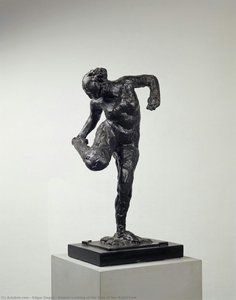
      Dancer Looking at the Sole of Her Right Foot (1921) by Edgar Degas
      #84

      Dancer Looking at the Sole of Her Right Foot

      1921 · Tel Aviv Museum of Art

      The quietude of a private moment settles over the bronze figure known as Dancer Looking at the Sole of Her Right Foot. Created by Edgar Degas, this work…

      Četrta pevka (1900) by Edgar Degas
      #87

      Četrta pevka

      1900 · National Gallery of Art

      Pogled v prehoden gib: Razkodovanje Degasovih *Četrih plesalk* Edgar Degasovo del Četrte plesalke, naslikano leta 1900, je več kot le prikaz balerin; gre za vrhunsko študijo giba, svetlobe…

      Order this canvas →
      The Tub (1889) by Edgar Degas
      #88

      The Tub

      1889

      Edgar Degas’ “The Ballet Class,” completed around 1874-1876, stands as a cornerstone of Impressionist art and a poignant glimpse into the world of ballet during its formative years.…

      Order this canvas →
      Woman with a Bandage (1873) by Edgar Degas
      #91

      Woman with a Bandage

      1873 · Detroit Institute of Arts

      A Moment of Quietude: Exploring Degas’ *Woman with a Bandage* Edgar Degas' *Woman with a Bandage*, painted in 1873, is more than just a portrait; it’s an intimate…

      Bring this light home →
      Dancers (8) (1900) by Edgar Degas
      #92

      Dancers (8)

      1900

      To stand before this depiction of Dancers (8) is to step directly into the vibrant, breathless atmosphere backstage—a moment suspended between performance and memory. Hilaire-Germain-Edgar Degas captured not…

      Have it painted by hand →
      Cafe-Concert Singer (1878) by Edgar Degas
      #93

      Cafe-Concert Singer

      1878

      To gaze upon Degas's Cafe-Concert Singer is to step directly into the smoky, vibrant heart of late nineteenth-century Paris. This painting captures more than just a moment; it…

      Have it painted by hand →
      The Rehearsal (1878) by Edgar Degas
      #94

      The Rehearsal

      1878 · Dumbarton Oaks

      To gaze upon The Rehearsal is to step directly into a moment suspended in time—a breath held just before the curtain rises, or perhaps, just after the applause…

      Have it painted by hand →
      Russian Dancer (1895) by Edgar Degas
      #96

      Russian Dancer

      1895

      In the delicate dance between light and shadow, Edgar Degas captures a moment of pure, unadulterated vitality in Russian Dancer. Created in 1895, this masterpiece serves as a…

      Order this canvas →
      View of Saint-Valery-sur-Somme (1898) by Edgar Degas
      #98

      View of Saint-Valery-sur-Somme

      1898 · Metropolitanski muzej umetnosti

      Edgar Degas, a renowned French Impressionist painter, captivated audiences with his evocative landscape View of Saint-Valéry-sur-Somme in 1898. Now residing within the esteemed collection at the Metropolitan Museum…

      Bring this light home →
      Leon Bonnat (1863) by Edgar Degas
      #99

      Leon Bonnat

      1863

      In 1863, Edgar Degas turns his gaze toward a man who shares his devotion to the craft of seeing. This half-length portrait captures Léon-Joseph-Florentin Bonnat, not as a…

      Bring this light home →

      Edgar Degas's canvases, period by period

      What Edgar Degas painted most

      The four subjects that return most often on these canvases, each with its best-loved example.

      Where Edgar Degas's canvases hang

      The 8 museums that hold the most of the paintings on this page.

      Museum City Works by Edgar Degas Paintings from this list
      Metropolitanski muzej umetnosti, New YorkMetropolitanski muzej umetnosti New York 52 Zadnji plesni trening, Fan Mount: Ballet Girls, Three Dancers Preparing for Class
      Musée d'Orsay, ParizMusée d'Orsay Pariz 55 The Absinthe Drinker, Plesna ura, The Bellelli Family
      National Gallery, LondonNational Gallery London 18 Ženska, ki se suši, Two Dancers in Their Dressing Room, Head of a Woman
      Norton Simon Museum, PasadenaNorton Simon Museum Pasadena 5 Tancarka v svoji garderobi, Danska vaja v studiju opere, Ženska Česanje Pred Oglišjem
      National Gallery of Art, WashingtonNational Gallery of Art Washington 28 Four dancers, ca National Galler, Četrta pevka
      Muzej fine arts, BostonMuzej fine arts Boston 10 Race Horses at Longchamp, A Carriage at the Races
      Art Institute of Chicago, ChicagoArt Institute of Chicago Chicago 8 Yellow Dancers (In the Wings), Café Singer
      Courtauld Gallery, LondonCourtauld Gallery London 7 Woman at a Window, Lady with a Parasol

      Edgar Degas's most famous canvas, decade after decade

      1. 1850s
        A Roman Beggar Woman (1857) by Edgar Degas
        Canvas 33 of 100

        A Roman Beggar Woman

        Age 16 – 25 · Birmingham Museum and Art Gallery

        Edgar Degas’s “A Roman Beggar Woman,” painted in 1857, transcends mere visual representation; it embodies a profound meditation on urban poverty and the quiet dignity residing within an…

      2. 1860s
        Interior (also known as The Rape) (1868) by Edgar Degas
        Canvas 5 of 100

        Interior (also known as The Rape)

        Age 26 – 35 · Philadelphia Museum of Art

        Edgar Degas’s “Interior,” often referred to as “The Rape,” is not merely a painting; it's an experience—a carefully constructed tableau of psychological tension and unspoken drama. Completed in…

      3. 1870s
        The Absinthe Drinker (1876) by Edgar Degas
        Ranked 1 of 100

        The Absinthe Drinker

        Age 36 – 45 · Musée d'Orsay

        Édouard Manet’s “The Absinthe Drinker,” completed around 1859, stands as a pivotal work in his oeuvre and arguably the first truly significant painting born from his burgeoning artistic…

      4. 1880s
      5. 1890s
        Ženska, ki se umiva v kadi (1892) by Edgar Degas
        12 of 100

        Ženska, ki se umiva v kadi

        Age 56 – 65

        “Ženska, ki se umiva v kadi” (1892) je mojster delo, ki nas popelje v srbe zasebnega trenutka – v intimni svet, kjer se prepletajo sproščanje in občutljivost. Edvard…

      6. 1900s
        Tri plesalke, modre rokavičke, rdeče golte (1903) by Edgar Degas
        Ranked 47 of 100

        Tri plesalke, modre rokavičke, rdeče golte

        Age 66 – 75

        Three Dancers, Blue Skirts, Red Blouses The world of art is replete with masterpieces that continue to inspire and awe us. One such masterpiece is Three Dancers, Blue…

      Edgar Degas's canvases, question by question

      Which canvas is Edgar Degas most remembered for?Read the answer

      The Absinthe Drinker (1876), Musée d'Orsay, Pariz. Ženska, ki se suši and Plesna ura (1873) follow.

      The Absinthe Drinker: how old was Edgar Degas when it was painted?Read the answer

      Edgar Degas, born in 1834, was 42 years old: The Absinthe Drinker dates from 1876.

      What are Edgar Degas's ten most famous canvases?Read the answer

      The Absinthe Drinker, Ženska, ki se suši, Plesna ura, The Bellelli Family, Interior (also known as The Rape), Portraits in a New Orleans Cotton Office, Dancerji v vijoličju, Dancer z vrtnjem cvetja (Zvezda baleta), Miska Lola, v cirkusu Fernando, NG L and Plesalci pri tirnici 1. Each canvas in the ranking above comes with its year and its museum.

      How many paintings did Edgar Degas create?Read the answer

      1,074 works by Edgar Degas are in our catalogue, dated 1857 to 1905.

      Where do Edgar Degas's most famous canvases hang today?Read the answer

      Mostly in Metropolitanski muzej umetnosti (New York), Musée d'Orsay (Pariz) and National Gallery (London); the list above names each museum and its canvases.

      When did Edgar Degas paint the most famous canvases?Read the answer

      In 1870s, which gave 40 of the 100 works on this page, The Absinthe Drinker among them.

      Which famous Edgar Degas canvas came first, and which came last?Read the answer

      The earliest canvas here is A Roman Beggar Woman (1857); the latest is Group of Dancers (1905).

      Which subjects did Edgar Degas paint most?Read the answer

      Ballet (16), Dance (14) and Dancers (11), across the 100 works on this page.

      Which medium appears most in Edgar Degas's paintings?Read the answer

      Oil On Canvas, used in 26 of the 100 works on this page.

      Which movement is Edgar Degas associated with?Read the answer

      Impresionizem, as the canvases on this page show.

      Which paintings by Edgar Degas are held by the Metropolitanski muzej umetnosti?Read the answer

      The Metropolitanski muzej umetnosti, New York holds 9 of the works on this page, among them Zadnji plesni trening, Fan Mount: Ballet Girls and Three Dancers Preparing for Class.

      Where can I buy a reproduction of a Edgar Degas painting?Read the answer

      Yes. Every painting on this page can be ordered from its own page as an oil reproduction painted by hand, or as a fine art print, in the size you choose.

      Meet the painter: Edgar Degas

      Življenje Edgara Degasa

      Pariz, leto 1834. V srednio bogato družino se rodi Hilaire-Germain-Edgar De Gas. Ime, ki ga bo kasneje poenostavil v Edgar Degas, označuje začetek življenja, ki ga je opredilole napetost med družbenimi pričakovanjmi in umetniško obsesijo. Odraja se v sofisticiranem vzdušju francenske prestolnice, v okolju, ki bo kasneje služilo kot ozadje za njegove opazovanja sodobnega življenja.

      Leti prehajajo v zamegljenosti študija in nenehno spreminjajočih se interesov. Od strukturiranega okolja svojega odrajanja se premika proti trdi realnosti mestnih delovnih prostorov. Ne išče svetlobe na prostem, temveč raje izvoli nadzorovano, umetno svetlobo ateljeja in gledališča. Njegov pogled se udomovijo plesalke, pralnice in pariški dirki, s čimer zajema fizične posledice truda in bežne gibanje na odri

      Konec nastopi v Parizu 27. septembra 1917. Za собой pusti obsežen opus, ki obsega več desetletij, vključno s temi deli:

      Mladost, družina in izobraževanje

      Pariz, leto 1834. Hilaire-Germain-Edgar De Gas, sin bankirja in Célestine Musson De Gas, kreolke iz Louisiane, New Orleans, vstopa v svet buržojske stabilnosti. Pri enih_najletih se vpiše v Lycée Louis-le-Grand. Akademska pot je že določena, vendar se mladikovo zanimanje smeri proti dvoranama Louvru. Do leta 1853, ko si pridobi maturo v literaturi, se odloči ignorirati očetove pričakvaje glede pravne kariere. Namesto tega se vpisuje v Louvre kot kopirist, kjer svoje ure preživlja z raztegovanju in sledenjem linij velikih mojstrov.

      Učenje se intenzivirira v pariškem École des Beaux-Arts. Skozi strogo klasično izobraževanje razvija natančnost, ki bo kasneje definirala njegovo umetniško delo. Leta 1855 se zgodi srečanje, ki bo trajno zaznamovalo njegov razvoj: sreča Jeana-Auguste-Dominiquea Ingresa. To srečanje utrdi njegovo spoštovanje do risarske veščine in pomen linije, čeprav se hkrati začne premikati v smeri sodobnih tem, ki bodo kasneje prinesle njegovo slavo.

      Tehnika in umetniški slog

      Edgar Degas zavrnil oznaki impresionista. Raje je izbral termin "realist", kar je odločitev, ki je diktirala njegov celoten pristop k platnu. Izogibati se je razlogičem razmerjem v naravi in otrezljivim, mrzličavim potebem, ki so jih raje sprejeli njegovi sodobniki. Namesto tega se je umaknil v nadzorovano okolje ateljeja. Tu je skozi rigorozno risanje osvajal človeško obliko. Je izjemljen risar, ki poseduje specifično, tehnično nadzorstvo nad prikazovanjem gibanja. Ne čaka, da sonce doseže motiv; svoje scene konstruira skozi skrbljivo študijo s svinčnikom ali pastelom. Ta priprava mu omogoča, da z anatomsko natančnostjo zamrzne bežni trenutek gibanja.

      Svetloba v Degasovi kompoziciji redko predstavlja naravno svetlobo. Uporablja umetno svetlobo, da poudari figure, s čimer ustvarja občutek teatralnosti in globine. Eden izmed izpostavljenih metod je contre-jour, kjer postavi svoj motiv v senco, medtem ko je ozadje močno osvetljeno. Ta tehnika izloči figuro in jo izdvigne iz okolice. Rezultat je napetost med motivom in prostorom, v katerem ta prebiva, kar pogosto razkriva fizično napreženost ali tiho, nepozirano realnost sodobnega življenja.

      Ključna dela in tematike

      Scena in stable prevladujejo v njegovem vizualnem svetu. Več kot polovica njegovega umetniškega izloženišča je posvečena plesalcem, ki jih je zajel v trenutkih vsehasovnih vaj in živahnih predstav. Njegov pogled se premikati med elegancijo piruete in fizičnim napetjem, ki ga vnaša plesna učilnica. Poleg gledališča pa svoj pogled usmerja tudi v hitrost dirališč, kjer dokumentira tečišča in jahače, ki jih vodijo. Te teme niso le dekorativne; so globoke študije napetosti in neustrejanega gibanja.

      Njegov umetniški dosežek sega vse do zasebnega in psihološkega podsobja. Ustvarja portrete, ki razkrivajo kompleksno notranjo življenje, pri čemer pogosto uporablja nekonvencionalne kotne ravni, da bi izpostavil svoje subjekte. Ta osredotočenost na človeško figuro ni omejena le na oljno barvo na platnu. Deluje skozi vrsto različnih medij, vključno s tiskom, risbo in voskovimi skulpturami. Njegova sposobnost oblikovanja človeške figure je očitna v številnih študijah žensk, kjer se pogosto osredotoča na telo v zasebnih, neopaženih trenutkih.

      • Plesalka, okoli 1874
      • Plesna učilnica, 1874
      • Baletna učilnica, 1874–1876
      • Notranji prostor, 1868–1869
      • Scena iz dirke: Padli jahač, 1866

      Dediščina in trajni vpliv

      Prelom v umetnosti konca 19. stoletja najde svojo osrednjo figuro v umetniku Edgar Degas. Čeprav se je upiral vsakemu označevanju, je njegova prisotnost pomagala postaviti temelje impresionizma. Odmaknil se je od strogih, zgodovinskih tem akademske umetnosti in se namesto tega odločil dokumentirati trdnost in eleganco sodobnega parižkega življenja. Ta odklon od tradicije je pavedil pot prihodnjim generacijam umetnikov, da raziskujejo neizkrivljeno resničnost človeške kondicije.

      Njegov vpliv sega daleč dlje od prvotnega kroga impresionistov. Strukturne inovacije in nekonvencionalne kompozicije, ki jih je razvil, so pustile neizbrisno marko na poti moderne umetnosti. Posebej njegov pristop k obliki in gibanju lahko opazimo v poznejših delih, ki jih je ustvaril Pablo Picasso in Henri Matisse. Učil je umetnostni svet, kako gledati na svet skozi asimetrične kotarje in nepričakovane izreze, s čimer je zasebne, bežne trenutke plesalke ali pralnice spremenil v trajne študije gibanja.

      • Plesalna učilnica
      • Baletna učilnica
      • Notranji prostor

      Kje videti njegova dela danes

      Sledi Degasovega natančnega opazovanja so razpršene po številnih svetovnih muzejskih institucijah, ohranjene v tihih dvoranah Pariza in zอรve. V Franciji Musée d'Orsay hrani pomembne zbirke njegovih del, ki zajemajo tisto dinamično gibanje, ki ga je umetnik celo življenje skrbno proučeval. Njegova umetnost se najde tudi v Louvru, medtem ko Bibliothèque Nationale de France v Parizu njegrova dela čuva v svojih arhivih. Te zbirke ponujajo neposreden vpogled v tehnično natančnost in študijo oblike, ki sta definirali njegovo umetniško pot.

      Prek Atlantika se dosežnost njegove vizije razširja tudi v Združene Amerike. Metropolitan Museum of Art v New Yorku hrani njegove slike, ki služijo kot okno v sodobno življenje, ki ga je slikal z tako globoko skrbnostjo. V Philadelphiji Philadelphia Museum of Art vsebuje njegova dela, s čimer zagotavlja, da je njegov vpliv dostopen svetovnemu občinstvu. Te lokacije delujejo kot fizična sidrišča njegove dediščine, kjer so linije in svetloba, ki jih je magistralno ovladal, še vedno vidni sodobnemu oku.

      All 1074 works by Edgar Degas →