Atelje — Brezplačna svetovna dostava — Dostava v 2–6 tednih
      Emanuel De Witte, 1617 – 1692

      Emanuel De Witte: 99 najbolj znanih slik

      Med vsemi slikami umetnika Emanuel De Witte je najbolj znana Portrait of a Family in an Interior (detail) (1678); razpolaga v muzeju Alte Pinakothek, München. Takoj za njima sta The Interior of a Dutch Church (1680) in Interior of the Nieuwe Kerk in Delft (1664). Med 99 dela umetnika Emanuel De Witte v našem katalogu so ta 99 najbolj znamenita, od katerih je vsaka prikazana z letom nastanka, muzejem in zgodbojo.

      Uvrščeno glede na naš skoraj priljubljenosti, ki združuje število iskanj, obiskov in naročil za vsako delo. Posodobljeno oktober 2026. Vsako sliko na tej strani je mogoče naročiti kot ročno slikano oljno reprodukcijo na lanenem platnu ali kot umetniški natisk, izdelan v izbrani velikosti.

      Portret Emanuel De Witte
      Emanuel De Witte · 1617 – 1692
      Rodil se · umrl
      1617 – 1692, Alkmaar
      Gibanje
      Dutch golden age
      Delo v našem katalogu
      99
      Najbolj znana
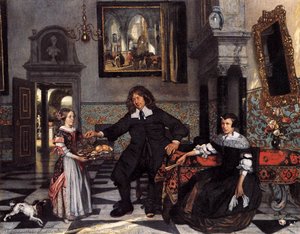
      Portrait of a Family in an Interior (detail) (1678)
      Največ del v
      Museum Boijmans Van Beuningen

      10 najbolj znamenitih slik umetnika Emanuel De Witte

      Portrait of a Family in an Interior (detail) (1678) avtorja Emanuel De Witte
      1

      Portrait of a Family in an Interior (detail)

      1678 · Oil On Canvas · Alte Pinakothek, München

      Emanuel de Witte's “Portrait of a Family in an Interior” (1678) isn’t merely a depiction of a wealthy household; it’s a carefully constructed tableau vivant, a frozen moment brimming with quiet dignity and subtle narrative. Painted during the height of the Dutch Golden Age, this oil on canvas offers a rare glimpse into the lives of a prosperous family within their richly appointed home—a space designed to project status, comfort,…

      Interior of the Nieuwe Kerk in Delft (1664) avtorja Emanuel De Witte
      3

      Interior of the Nieuwe Kerk in Delft

      1664 · Oil On Canvas · Residenzgalerie, Salzburg

      To stand before an interior scene like this depiction of the Nieuwe Kerk in Delft is to step across a threshold, leaving the clamor of the outside world behind. The artwork does not merely show us a church; it envelops us within its monumental silence. Emanuel de Witte masterfully captures that unique atmosphere found only in grand, aged sacred architecture—a place where history seems palpable in the very dust motes…

      The Interior of the Oude Kerk, Amsterdam, during a Sermon (1658) avtorja Emanuel De Witte
      5

      The Interior of the Oude Kerk, Amsterdam, during a Sermon

      1658 · Oil On Canvas · National Gallery, London

      To stand before this depiction of The Interior of the Oude Kerk in Amsterdam is to step across the threshold of time itself. This painting, executed in 1658 by Emanuel de Witte, is far more than a mere record of an architectural space; it is a meticulously crafted meditation on faith, community, and the sublime interplay between human life and divine structure. The high-angle perspective immediately envelops the viewer, drawing…

      Portrait of a woman (1648) avtorja Emanuel De Witte
      6

      Portrait of a woman

      1648 · Oil On Canvas · Museum Boijmans Van Beuningen, Rotterdam

      A single female figure occupies the center of this oval vignette, presented in a bust-length view. She wears a dark garment, accented by a prominent white collar with scalloped edges and a small black bow. The composition draws the eye directly to her face, where a calm and composed expression suggests a dignified emotional tone. Light originates from the upper left, casting gentle shadows across the right side of her…

      Portrait of a man (1648) avtorja Emanuel De Witte
      7

      Portrait of a man

      1648 · Oil · Museum Boijmans Van Beuningen, Rotterdam

      is an oil painting by the Dutch artist Emanuel de Witte. Executed about 1648, the work represents a significant example of the artist's early engagement with portraiture before his later specialization in church interiors. The sitter is presented in a bust-length composition, positioned slightly off-center to create a sense of depth and presence.

      Interior of a Protestant Gothic Church (1669) avtorja Emanuel De Witte
      8

      Interior of a Protestant Gothic Church

      1669 · Oil On Canvas · Rijksmuseum, Amsterdam

      Emanuel de Witte's "Interior of a Protestant Gothic Church," painted in 1669, isn’t merely a depiction of a sacred space; it’s an immersive experience. This remarkable work transcends the simple act of recording architecture, instead capturing the very *feeling* of being within a grand, dimly lit cathedral – a testament to de Witte's unique artistic vision. Unlike his contemporary Pieter Saenredam, who meticulously documented architectural details with photographic precision, de…

      Slike umetnika Emanuel De Witte na uvrstitvi od 11 do 99

      Interior of the Oude Kerk, Delft (1650) avtorja Emanuel De Witte
      #38

      Interior of the Oude Kerk, Delft

      1650 · Metropolitanski muzej umetnosti

      Despite its profusion of realistic details, de Witte’s interior view of Delft’s Oude Kerk (Old Church) takes considerable liberties with the actual architecture of the church—omitting, for example,…

      Naročite to platno →
      Old Church in Delft (1642) avtorja Emanuel De Witte
      #71

      Old Church in Delft

      1642 · Ermitaž

      In the quiet corners of the Dutch Golden Age, where light performs its most delicate dances, Emanuel de Witte captured something far more profound than mere architecture. His…

      Naročite to platno →
      Interior of the Oude Kerk, Delft (1650) avtorja Emanuel De Witte
      #73

      Interior of the Oude Kerk, Delft

      1650 · Metropolitanski muzej umetnosti

      Emanuel de Witte's “Interior of the Oude Kerk, Delft” isn’t merely a depiction of a church; it’s an immersive experience. Painted in 1650, this remarkable work transports us…

      Naročite to platno →
      Interior of a Gothic church avtorja Emanuel De Witte
      #86

      Interior of a Gothic church

      Museum Boijmans Van Beuningen

      The scene unfolds within the quiet, soaring reaches of an Interior of a Gothic church. This work, painted by Emanuel de Witte, captures a moment of stillness amidst…

      Naročite to platno →

      Kaj je Emanuel De Witte naslikal največ

      Četiri teme, ki se najpogosteje pojavljajo na teh platnah, vsaka z svojim najbolj priljubljenim primerom.

      Kje so razpostavljena platna umetnika Emanuel De Witte

      8 muzejev, ki vsebujo največ slik na tej strani.

      Muzej Mesto Sloga Emanuel De Witte Slike iz tega seznama
      Museum Boijmans Van Beuningen, RotterdamMuseum Boijmans Van Beuningen Rotterdam 11 Portrait of a woman, Portrait of a man, Vertumnus and Pomona
      Rijksmuseum, AmsterdamRijksmuseum Amsterdam 8 Interior of a Protestant Gothic Church, Interior of a Protestant Gothic Church, Interior of the Portuguese Synagogue in Amsterdam
      National Gallery, LondonNational Gallery London 4 The Interior of the Oude Kerk, Amsterdam, during a Sermon, The Interior of the Oude Kerk, Amsterdam, The Interior of the Oude Kerk, Amsterdam, during a Sermon
      Amsterdam Museum, AmsterdamAmsterdam Museum Amsterdam 3 Interior of the Oude Kerk in Amsterdam, Interior of the Oude Kerk in Amsterdam, Interior of the Oude Kerk in Amsterdam
      Gemäldegalerie, BerlinGemäldegalerie Berlin 3 Interior View of a Synagogue, Interior of a Gothic Church, Interior of the Nieuwe Kerk in Amsterdam
      Ermitaž, Sankt PeterburgErmitaž Sankt Peterburg 3 Square in front of the Palace in an Italian Town, Old Church in Delft, Interior of a Church
      Metropolitanski muzej umetnosti, New YorkMetropolitanski muzej umetnosti New York 3 Interior of the Oude Kerk, Delft, Interior of the Oude Kerk, Delft (detail), Interior of the Oude Kerk, Delft
      Detroit Institute of Arts, DetroitDetroit Institute of Arts Detroit 3 The Nieuwe Kerk at Delft with the Tomb of Willem the Silent, Interior of a Protestant Church, Interior of the Oude Kerk in Amsterdam

      Dekada za dekado: najboljja platna umetnika Emanuel De Witte

      1. 1640s
        Portrait of a woman (1648) avtorja Emanuel De Witte
        Platno 6 od 99

        Portrait of a woman

        Starost 23 – 32 · Museum Boijmans Van Beuningen

        A single female figure occupies the center of this oval vignette, presented in a bust-length view. She wears a dark garment, accented by a prominent white collar with…

      2. 1650s
        Rest During the Flight (1654) avtorja Emanuel De Witte
        Platno 4 od 99

        Rest During the Flight

        Starost 33 – 42 · Bavarske državne slikopisne zbirke

        The oil painting titled Rest During the Flight by Emanuel de Witte depicts a specific narrative from religious history. Created about 1654, the work presents a scene likely…

      3. 1660s
        Interior of the Nieuwe Kerk in Delft (1664) avtorja Emanuel De Witte
        3 od 99

        Interior of the Nieuwe Kerk in Delft

        Starost 43 – 52 · Residenzgalerie

        To stand before an interior scene like this depiction of the Nieuwe Kerk in Delft is to step across a threshold, leaving the clamor of the outside world…

      4. 1670s
        Portrait of a Family in an Interior (detail) (1678) avtorja Emanuel De Witte
        Rangirano 1 od 99

        Portrait of a Family in an Interior (detail)

        Starost 53 – 62 · Alte Pinakothek

        Emanuel de Witte's “Portrait of a Family in an Interior” (1678) isn’t merely a depiction of a wealthy household; it’s a carefully constructed tableau vivant, a frozen moment…

      5. 1680s
        The Interior of a Dutch Church (1680) avtorja Emanuel De Witte
        Platno 2 od 99

        The Interior of a Dutch Church

        Starost 63 – 72 · Scottish National Gallery

        The Interior of a Dutch Church is an oil on canvas by Emanuel de Witte. Created about 1680, the work reflects the artist's specialization in the architectural spaces…

      6. 1690s

      Vaša vprašanja o slikah umetnika Emanuel De Witte, answered

      Katero je najbolj znano sliko avtorja Emanuel De Witte?Preberite odgovor

      Portrait of a Family in an Interior (detail) (1678), Alte Pinakothek, München. sledita The Interior of a Dutch Church (1680) in Interior of the Nieuwe Kerk in Delft (1664).

      Koliko je bil Emanuel De Witte star ob nastanku dela Portrait of a Family in an Interior (detail)?Preberite odgovor

      Emanuel De Witte, rojen leta 1617, je imel 61 let: Portrait of a Family in an Interior (detail) datira iz leta 1678.

      Za katera deset slik je Emanuel De Witte najbolj znan?Preberite odgovor

      Portrait of a Family in an Interior (detail), The Interior of a Dutch Church, Interior of the Nieuwe Kerk in Delft, Rest During the Flight, The Interior of the Oude Kerk, Amsterdam, during a Sermon, Portrait of a woman, Portrait of a man, Interior of a Protestant Gothic Church, Danaë and the Shower of Gold in Vertumnus and Pomona. Vsako platno v zgornji uvrstitvi vključuje leto nastanka in muzej.

      Koliko je znanih slik avtorja Emanuel De Witte?Preberite odgovor

      V našem katalogu je 99 del umetnika Emanuel De Witte, datiranih od 1641 do 1692.

      V katerih muzejih so shranjena najbolj znana platna umetnika Emanuel De Witte?Preberite odgovor

      Večinoma v Museum Boijmans Van Beuningen (Rotterdam), Rijksmuseum (Amsterdam) in National Gallery (London); zgornji seznam navaja vsak muzej in njegova platna.

      V katerih letih je Emanuel De Witte naslikal svoja najbolj znamenita platna?Preberite odgovor

      V obdobju 1650s, ki je vključilo 27 od 99 del na tej strani, je med njimi tudi Rest During the Flight.

      Kateri sta prva in zadnja znana platna umetnika Emanuel De Witte?Preberite odgovor

      Najstarejše platno tukaj je Danaë and the Shower of Gold (1641); najstarejše je The Nieuwe Vismarkt (New Fish Market) in Amsterdam, Emanuel de Witte, 1655 - 1692 (1692).

      Katere teme se najpogosteje pojavljajo v naslikah umetnika Emanuel De Witte?Preberite odgovor

      Church interior (16), 17th century (10) in Architecture (10), na 99 delih na tej strani.

      S čim je Emanuel De Witte običajno slikoval?Preberite odgovor

      Oil On Canvas, uporano v 22 od 99 del na tej strani.

      Kateri umetniški slog pripada Emanuel De Witte?Preberite odgovor

      Dutch golden age in Baroque, kot to pokažejo platna na tej strani.

      Kaj lahko vidim od Emanuel De Witte v muzeju Museum Boijmans Van Beuningen?Preberite odgovor

      Muzej Museum Boijmans Van Beuningen, Rotterdam hrani 11 del z te strani, med katerimi so tudi Portrait of a woman, Portrait of a man in Vertumnus and Pomona.

      Ali lahko naročim ročno naslikano kopijo slike avtorja Emanuel De Witte?Preberite odgovor

      Da. Vsako sliko na tej strani lahko naročite na njeni lastni strani kot ročno naslikano oljno reprodukcijo ali kot umetniški natisk v izbrani velikosti.

      Emanuel De Witte: zgodba slikarja

      Življenje v perspektivi: Svet Emanuela de Witte

      Emanuel de Witte, ime, ki ni morda takoj prepoznavno kot neki njegovi sodobniki z Zlati bratovščino Nizozemske, pa kljub temu zapoveduje pomemben in fascinanten kot vlogo v panteonu majstorjev 17. stoletja. Rojen je v Alkmaarju leta 1617, življenjska pot de Witte je bila označena z izjemnim talentom in precejšnjo osebno nemirje – dualnostjo, ki se zdijo subtilno vpleti v sam vzdušje njegovih slik. Ni bil pogojen z natančno arhitekturno dokumentacijo kot Pieter Saenredam; namesto tega je morel zgrabeti čutitev prostora, kakovost svetlobe in subtilen dramatik, ki se razspopaja v svetičkih notranjih prostorih. Njegove platna niso le predstavitev cerkvišč; so imerzivno izkušnje, ki namenejo gledalci v svet tihe kontemplacije in duhovne rezonance.

      Od usposabljanja v Delft do objema Amsterodama

      De Witteje mladostni življenjski doživljaj je zagotovil črpan temelji za njegove umetniške ukrepe. Njegov oče, učitelj, mu je vzgojil spoštovanje do učenja in intelektualne radovednosti – lastnosti, ki so kasneje izrazile v njegovi premišljeni opazovanju perspektive in svetlobe. Formalno je v umetniško svet vstopil z pridobitvijo članstva v Gildijo sv. Luka v Alkmaarju leta 1636, vendar mu je bil še naprej usposabljanje pri Evertu van Aelstu v Delft bilo izjemno formativno. Van Aelst, znan namaljski slikar, je de Witteju prenesel ostra oko za podrobnosti in majstersko znanje svetlobe in bliskosti – veščine, ki so postale znaki njegove zrelega stila. Začetno je de Witte raziskoval različne žanre – portrete, mitološke scene, religijske narative – vendar pa je šele po preselitvi v Amsterdam leta 1651 našel resnično svojo voco. Bogatstvo čudovitih cerkvišč v mestu je ponudilo neizčrpno virilo inspiracije in začel je se specializirati na prikaz njihovih zahirujočih notranjih prostorov.

      Majstor atmosfere in domišljenih prostorov

      Amsterdam je bil ključnega pomena za umetniški razvoj de Witteja. Ni smetno replikiral obstoječih cerkvenih prostorov; namesto tega je spretno sinteziral elemente iz različnih zgradb, ustvarjajoč idealizirane notranje prostore, ki so se čutila hkrati znano in subtilno drugačno. Oude Kerk v Amsterdamu je postal pogost motiv, ki se je ponavljajoče pojavljal na njegovih platnakh iz različnih vidikov. Vendar to niso bili preprosti prikazi. De Witte je manipuliral perspektivo, igral s svetlobo in bliskostjo in prostore naselil z natančno razpostavljenimi figurami, da bi sprožil specifičen razpoložje ali vzdušje. Kot je opazoval Walter Liedtke, je njegov glavni interes ležal ne v samih arhitekturnih elementih, tem videti „sam v prostoru – njegovi svetlobi, barvi, čisti obsežnosti in razpoloženju“. Ta poudarek na atmosferskem učinku ga razlikuje od bolj rigidno topografskih slikarev te epoh. Ni ga zanemarjal natančnega namere; zanimalo ga je ustvarjanje čutitve veličastnosti, časti in duhovne globine.

      Življenje označeno s bliskostjo

      Kljub svojemu umetniškemu uspehu je osebno življenje de Witteja bilo zagoneto z težavami. Smrt njegove prve žene je prinesla globok žal, in kasnejše pravne težave, povezane z njegovo drugo ženo in dojilko, so namrščile dolga senca nad njegovimi kasnimi leti. Finančne težave so ga vodile v ponižujočo položaj iznajmljenega delavca za nakupovalca umetnina, Joris de Wijs, situacijo, ki jo je končno prekoračil, kar je povzročilo dodatne komplikacije. Sodobni zapiski namalovažujejo sliko nestabilnega razpoloženja – človeka, nagnjenega k vikanju na stranke in vključevanju v sporje. To notranje nemirje je morda prispevalo k neravnovesju njegovega kasnjega dela, vendar dodaja tudi še en drug sloj kompleksnosti v naše razumevanje umetnika in njegovih stvaritev. Tragično pa je življenje de Witteja doseglo katastrofalno potek na letu 1692, ko je poročeno poskušal samomorilstvo z vislanjem s mosta nad kanalom; žica se je prekotala in utopil. To je bilo mramorno zaključje za človeka, ki je svoje življenje posvetil zbiranju lepote in mirnosti svetiščnih prostorov.

      Nasledje in trajna vplivnost

      Emanuel de Witte stoji kot pomemben osebnost v zadnji fazi arhitekturnega slikarstva na Nizozemskem, ki zapolni zaznam med natančno dokumentacijo in atmosfersko interpretacijo. Njegova inovativna uporaba svetlobe in perspektive je vplivala na kasnejše generacije umetnikov, in njegove slike še naprej ponujajo dragocene vpoglede v nizozemsko religijsko življenje in družbene običaje 17. stoletja. Danes so dela de Witteje shranjena v prestižnih zbirkah po vsej sveti – na Metropolitan Museum of Art, National Gallery of Art in Rijksmuseum med spominski, kar svedočijo o njegovem trajném nasledju kot majstra perspektive, atmosfere in čustvene rezonance. Spominja nas, da ni umetnost le v tem, kaj vidimo, ampak kako čutimo, ko gledamo.

      Vsa dela avtorja Emanuel De Witte: 99 →
