Atelje — Brezplačna svetovna dostava — Dostava v 2–6 tednih
      Jackson Pollock, 1912 – 1956

      The 100 Most Famous Jackson Pollock Paintings, Ranked

      The best-loved painting by Jackson Pollock is Jutranji Ritem. Številka 30, 1950. Številka 1, 1949 (1950) and Convergenca come next among the canvases readers know best. Our catalogue holds 186 works by Jackson Pollock: here are the 100 most famous, each with its year, its museum and what makes it memorable.

      Ranked by our popularity score, which combines the searches, visits and orders for each work. Updated oktober 2026. Each painting on this page can be ordered as an oil reproduction painted by hand on linen canvas, or as a fine art print, made to the size you choose.

      Portrait of Jackson Pollock
      Jackson Pollock · 1912 – 1956
      Born · died
      1912 – 1956, Cody
      Movement
      Abstract expressionism
      Works in our catalogue
      186
      Most famous
      Jutranji Ritem. Številka 30, 1950
      Most works at
      MoMA - Muzej moderne umetnosti

      Top 10 Jackson Pollock paintings: the canvases everyone knows

      Jutranji Ritem. Številka 30, 1950 by Jackson Pollock
      1

      Jutranji Ritem. Številka 30, 1950

      Olje na platnu

      Jeseň in Ritem: Jackson Pollockovo Izrazito Delo "Autumn Rhythm. Number 30, 1950" je več kot le slika; je vizualni zapis energije, geste in globoke osebne povezanosti umetnika s procesom ustvarjanja. To monumentalno delo, ki ga nosi Jackson Pollock, predstavlja vrhunec njegovega prispevka k abstraktnem ekspresionizmu, gibanja, ki je za vedno spremenilo svet sodobne umetnosti. Predstavljajte si prostor, kjer se barve in linije prepletajo v dinamičnem ritmu, kjer ni tradicionalnih točk…

      Številka 1, 1949 (1950) by Jackson Pollock
      2

      Številka 1, 1949

      1950 · Olje na platnu · Private collection, New York City

      Ta očarljiva dela, ustvarjena leta 1950, uteleša revolucionarno duha abstraktega ekspresionizma in predstavlja izjemeren primer ikonične tehnike "kapljanja" Jacksona Pollocka. Z impresivnimi dimenzijami 240 x 120 cm zahteva pozornost ne le s svojo velikostjo, temveč tudi z energijo, ki seva iz njene kompleksne površine. Pogled na to delo je potovanje v notranjost umetnikove duše, kjer se čustva in gib prenašajo neposredno na platno.

      Convergenca by Jackson Pollock
      3

      Convergenca

      Olje na platnu

      Pollockova Convergence ni le slika; je videnostna izkušnja—monumentalen spomenik moči abstraktnega ekspresionizma in definitiivno del ameriške umetnosti po drugi svetovni vojni. Ustvarjeno v ključnem trenutku umetnostne zgodovine, to delo personificira inovativnost, izziva tradicionalne predstave in gledalca vabi v dinamičen svet barv in energije.

      Število 1A by Jackson Pollock
      4

      Število 1A

      Olje na platnu

      Bit znanstvenega izrazite Obraznega ekspresionizma Pollockovo "Število 1A" je bistveno primer abstraktnega ekspresionizma, gibanja, ki je sredi 20. stoletja na novo vrednotilo ameriško umetnost. To očarljivo delo v себе vključuje surovost energije in spontanost, po kateri je Pollock svetovno znan, zaradi česar predstavlja nepogrešljiv dragulj za vsako sodobno zbirko umetnosti ali moder notranji prostor. Ples kaosa in nadzora Umetniško del predstavlja abstraktno kompozicijo, ki jo zaznamajo kaotični, energični potege ter…

      White Light (1954) by Jackson Pollock
      5

      White Light

      1954 · Olje na platnu · MoMA - Muzej moderne umetnosti, New York City

      ‘White Light’ od Paul Jacksona Polloka nije samo slika; to je doživetje. U srcu pokretačkog dela modernog umetnosti, ovog dela iz 1954. godine, možemo da se upustimo u složen i intenzivan svet emocija i energije koje su definisale period koji je poznat kao Abstraktno ekspresionizam. Pollock, genijalni inovator, nije želeo da predstavlja realne objekte; umesto toga, on je želio da izrazi duboke, često neuhvatljive, unutrašnje stanice kroz sam proces stvaranja.

      One. Number 31, 1950 by Jackson Pollock
      6

      One. Number 31, 1950

      Painting

      In the pantheon of modern art, few works command the room with such raw, unbridled intensity as Paul Jackson Pollock’s “One: Number 31, 1950.” To stand before this canvas is to witness a moment of pure, unfiltered creation captured in time. As a cornerstone of the Abstract Expressionist movement, this painting transcends the boundaries of traditional composition, offering instead a dense, rhythmic web of energy that seems to pulse with…

      Number 5 (1948) by Jackson Pollock
      7

      Number 5

      1948 · Oil On Canvas

      A Universe Unfurled: Decoding Jackson Pollock’s No. 5, 1948 Jackson Pollock’s *No. 5, 1948* isn't simply a painting; it is an event frozen in time – a visual record of energy, gesture, and the very act of creation. This monumental work stands as perhaps the most iconic example of Abstract Expressionism, captivating viewers for decades with its complex layering and seemingly chaotic beauty. It’s a piece that demands attention, sparking…

      Mural (1943) by Jackson Pollock
      8

      Mural

      1943 · Acrylic On Canvas

      Jackson Pollock's "Mural," completed in 1943, isn't merely a painting; it’s an immersive experience, a visceral embodiment of the burgeoning abstract expressionist movement. Commissioned by Peggy Guggenheim as a centerpiece for her Manhattan townhouse, this monumental work – measuring a commanding 247 x 605 cm – immediately announces Pollock’s arrival as a revolutionary force in the art world. The sheer scale invites contemplation, drawing the viewer into a swirling vortex…

      Number 5 (1948) by Jackson Pollock
      9

      Number 5

      1948 · Oil On Canvas

      Jackson Pollock’s *No. 5*, created in 1948, stands as an emblem of Abstract Expressionism—a movement that irrevocably altered the landscape of modern art. More than just a painting; it's a visceral embodiment of emotion, intellect, and revolutionary technique, captivating viewers with its mesmerizing complexity and enduring legacy. This monumental canvas, measuring eight by four feet on fiberboard, transcends mere visual representation, inviting contemplation about the very nature of artistic expression…

      Alchemy (1947) by Jackson Pollock
      10

      Alchemy

      1947 · Acrylic On Canvas

      A Dance of Chaos and Transformation: Exploring Jackson Pollock’s Alchemy The Genesis of Spontaneity Decoding the Drip Technique Historical Resonance and Symbolic Weight A Legacy of Innovation Jackson Pollock’s *Alchemy*, a monumental work from 1947, isn't merely a painting; it’s an immersive experience, a visceral embodiment of the burgeoning Abstract Expressionist movement. Created during a pivotal moment in American art history, this piece captures the raw energy and revolutionary spirit…

      More Jackson Pollock canvases, 11 to 100

      Number 6 (1949) by Jackson Pollock
      #12

      Number 6

      1949

      Number 6 stands as a pivotal work within Jackson Pollock's oeuvre and the broader movement of Abstract Expressionism. Emerging in post-World War II America, this style rejected traditional…

      Order this canvas →
      Number 23, 1951 by Jackson Pollock
      #13

      Number 23, 1951

      Chrysler Museum of Art

      Paul Jackson Pollock's "Number 23, 1951" isn’t merely a painting; it’s an immersion. Created during a pivotal period of his artistic evolution – the “black pourings” – this…

      Have it painted by hand →
      Number 1 (1948) by Jackson Pollock
      #14

      Number 1

      1948 · MoMA - Muzej moderne umetnosti

      Jackson Pollock's "Number 1, 1948," housed within the hallowed halls of the Museum of Modern Art in New York, isn’t merely a painting; it’s an immersion. It’s a…

      Bring this light home →
      There Were Seven in Eight (1945) by Jackson Pollock
      #15

      There Were Seven in Eight

      1945 · MoMA - Muzej moderne umetnosti

      A Descent Into Chaotic Beauty The canvas of Jackson Pollock’s 1945 masterpiece, "There Were Seven in Eight," serves as a visceral gateway into the turbulent heart of Abstract…

      Have it painted by hand →
      Saint by Jackson Pollock
      #16

      Saint

      Jackson Pollock is widely regarded as one of the most influential artists of the 20th century, and his painting Saint is a quintessential example of his unique style.…

      Bring this light home →
      The She Wolf (1943) by Jackson Pollock
      #17

      The She Wolf

      1943

      Jackson Pollock's “The She Wolf,” completed in 1943, is more than just an abstract canvas; it’s a visceral plunge into the heart of early Abstract Expressionism and a…

      Have it painted by hand →
      Blue poles (Number 11) (1952) by Jackson Pollock
      #19

      Blue poles (Number 11)

      1952

      Jackson Pollock’s “Blue Poles (Number 11),” completed in 1952, isn’t merely a painting; it’s an explosion of controlled chaos, a visceral embodiment of the abstract expressionist movement. Measuring…

      Have it painted by hand →
      Yellow Islands by Jackson Pollock
      #21

      Yellow Islands

      A Symphony of Chaos: Exploring Jackson Pollock’s ‘Yellow Islands’ Jackson Pollock's ‘Yellow Islands’, painted in 1952, stands as a pivotal work within the Abstract Expressionist movement – a…

      Have it painted by hand →
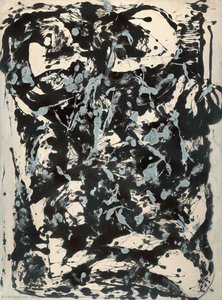
      Black Pouring over Color by Jackson Pollock
      #22

      Black Pouring over Color

      A Dance with Color: Jackson Pollock’s “Black Pouring over Color” Jackson Pollock's "Black Pouring over Color," created in 1950, isn’t merely a painting; it’s an immersive experience—a visceral…

      Bring this light home →
      The Flame (1938) by Jackson Pollock
      #23

      The Flame

      1938

      The painting The Flame consists of oil on fiberboard, measuring 51 x 76 cm. The surface features a central motif of an incandescent blaze that moves through an…

      Bring this light home →
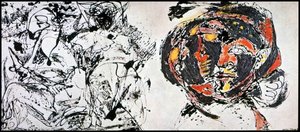
      Portrait and a Dream by Jackson Pollock
      #24

      Portrait and a Dream

      Jackson Pollock’s Portrait and a Dream (1953) isn’t merely a painting; it’s an immersion into the very heart of Abstract Expressionism, a visceral embodiment of the artist’s process…

      Have it painted by hand →
      Number 3 (1948) by Jackson Pollock
      #25

      Number 3

      1948

      Jackson Pollock: A Revolutionary in Abstract Expressionism Jackson Pollock (1912-1956) stands as a monumental figure within the abstract expressionist movement, forever altering the trajectory of modern art. His…

      Order this canvas →
      Ocean Greyness by Jackson Pollock
      #26

      Ocean Greyness

      Ocean Greyness is an oil painting created by Jackson Pollock in 1953. This work measures 229 x 146.7 cm and is currently held in the Solomon R. Guggenheim…

      Have it painted by hand →
      The Moon-Woman by Jackson Pollock
      #27

      The Moon-Woman

      To stand before Jackson Pollock’s "The Moon-Woman" is to enter a realm where the boundaries between reality and the subconscious begin to dissolve. At first glance, the viewer…

      Bring this light home →
      Lucifer (1947) by Jackson Pollock
      #28

      Lucifer

      1947

      Jackson Pollock’s “Lucifer,” painted in 1947, isn’t merely a painting; it’s an immersion. Measuring a substantial 268 x 104 cm, this work embodies the raw energy and profound…

      Have it painted by hand →
      Woman by Jackson Pollock
      #29

      Woman

      Jackson Pollock's “Woman,” completed in 1945 and currently residing within the hallowed halls of the Museum of Modern Art in New York City, isn’t merely a painting; it’s…

      Bring this light home →
      Untitled (Naked Man) by Jackson Pollock
      #30

      Untitled (Naked Man)

      A Figure Forged in Turmoil: Exploring Pollock’s ‘Untitled (Naked Man)’ This powerful painting by Jackson Pollock plunges the viewer into a vortex of emotion and raw energy. Depicting…

      Have it painted by hand →
      Lavender Mist_Number 1 by Jackson Pollock
      #31

      Lavender Mist_Number 1

      Jackson Pollock’s “Lavender Mist_Number 1” isn't merely a painting; it’s an immersion, a visceral experience captured on canvas. This seminal work from the late 1940s embodies the revolutionary…

      Have it painted by hand →
      Birth by Jackson Pollock
      #32

      Birth

      A Tempestuous Birth: Decoding Pollock’s Abstract Vision Jackson Pollock's *Birth* (1948-51) is a pivotal work within his mature “drip” period and a cornerstone of Abstract Expressionism. More than…

      Order this canvas →
      Blue (Moby Dick) by Jackson Pollock
      #33

      Blue (Moby Dick)

      Jackson Pollock's “Blue (Moby Dick),” painted in 1943, isn’t merely a canvas splashed with color; it’s an immersive experience, a visual embodiment of the anxieties and primal forces…

      Order this canvas →
      The key (1946) by Jackson Pollock
      #34

      The key

      1946 · Art Institute of Chicago

      A Dance Across Canvas: Exploring Jackson Pollock’s ‘The Key’ Subject Matter & Composition The artwork depicts a group of individuals engaged in various postures—seated on chairs, standing upright,…

      Bring this light home →
      Untitled II by Jackson Pollock
      #35

      Untitled II

      To stand before an Untitled II by Paul Jackson Pollock is not merely to observe paint on canvas; it is to witness an event. It is a raw,…

      Bring this light home →
      Cathedral by Jackson Pollock
      #36

      Cathedral

      Introduction to Jackson Pollock and Abstract Expressionism Paul Jackson Pollock, known professionally as Jackson Pollock, was an American painter and a major figure in the abstract expressionist movement.…

      Have it painted by hand →
      Number 27, 1950 by Jackson Pollock
      #38

      Number 27, 1950

      Jackson Pollock’s ‘Number 27, 1950’: A Symphony of Controlled Chaos Number 27, 1950 is a landmark achievement in the history of Abstract Expressionism, embodying the movement's radical departure…

      Have it painted by hand →
      Circumcision January (1946) by Jackson Pollock
      #40

      Circumcision January

      1946

      Jackson Pollock, a titan of 20th-century art, remains synonymous with abstract expressionism. His painting, Circumcision January, exemplifies his groundbreaking approach and continues to captivate viewers with its dynamic…

      Bring this light home →
      Sheet of Studies (1941) by Jackson Pollock
      #41

      Sheet of Studies

      1941

      A Window into Pollock’s Subconscious: “Sheet of Studies” (1941) This intensely energetic work on paper, created in 1941, offers a fascinating glimpse into the formative period of Jackson…

      Have it painted by hand →
      Number 12, 1949 by Jackson Pollock
      #42

      Number 12, 1949

      A Universe Within: Decoding Jackson Pollock’s “Number 12, 1949” Jackson Pollock's "Number 12, 1949" isn't simply a painting; it’s an event frozen in time – a visual record…

      Order this canvas →
      War by Jackson Pollock
      #43

      War

      War: A Descent into Chaos – Jackson Pollock’s Post-Traumatic Masterpiece Jackson Pollock's *War*, painted in 1947, isn’t merely a canvas splashed with color; it’s a visceral embodiment of…

      Bring this light home →
      Marrón y plata by Jackson Pollock
      #44

      Marrón y plata

      A Symphony of Shadow and Silver: Exploring Jackson Pollock’s “Marrón y plata” Jackson Pollock's "Marrón y plata" ("Brown and Silver") stands as a pivotal work within his celebrated…

      Bring this light home →
      Pattern (1945) by Jackson Pollock
      #45

      Pattern

      1945

      is a work by the American artist Paul Jackson Pollock. He painted this canvas in 1945, a year that marked his move from the streets of Manhattan to…

      Bring this light home →
      Number 10 (1949) by Jackson Pollock
      #46

      Number 10

      1949

      A Tempestuous Vision: Exploring Jackson Pollock’s ‘Number 10’ Number 10, created in 1949, stands as a monumental example of Jackson Pollock's revolutionary drip painting technique and the apex…

      Bring this light home →
      Untitled 28 by Jackson Pollock
      #47

      Untitled 28

      A Visceral Encounter: Decoding Jackson Pollock’s “Untitled 28” This intensely compelling work by Jackson Pollock, known simply as “Untitled 28,” offers a raw and unsettling glimpse into the…

      Bring this light home →
      Number 25 (1950) by Jackson Pollock
      #48

      Number 25

      1950

      To stand before Number 25 is to confront pure, unmediated action. This canvas does not merely depict an image; it records an event—a moment of intense physical and…

      Untitled (1939) by Jackson Pollock
      #49

      Untitled

      1939 · Art Institute of Chicago

      The canvas known as Untitled emerges from 1939, a moment when Jackson Pollock begins to navigate the turbulent currents of his own creative impulses. This abstract expressionist work…

      Order this canvas →
      Untitled 6 by Jackson Pollock
      #50

      Untitled 6

      A Tempest of Emotion: Exploring Jackson Pollock’s Untitled 6 This captivating work by Jackson Pollock plunges viewers into a dynamic world of abstract expressionism. *Untitled 6* is not…

      Have it painted by hand →
      Full Fathom Five by Jackson Pollock
      #51

      Full Fathom Five

      In the annals of American art history, few works capture the raw, unbridled energy of a movement quite like Paul Jackson Pollock’s Full Fathom Five. Painted in 1947,…

      Have it painted by hand →
      Cut out by Jackson Pollock
      #54

      Cut out

      Jackson Pollock, born on January 28, 1912, was an American painter who played a significant role in the abstract expressionist movement. He is renowned for his unique style…

      Have it painted by hand →
      Masked Image by Jackson Pollock
      #55

      Masked Image

      The canvas breathes with a restless energy, presenting a singular, stylized visage that seems to emerge from a thicket of overlapping shapes. This is not a portrait in…

      Bring this light home →
      Untitled by Jackson Pollock
      #56

      Untitled

      A Glimpse into Pollock’s Preparatory Process: An Early Study in Motion This captivating work on paper offers a rare look into Jackson Pollock's artistic development *before* his iconic…

      Order this canvas →
      Portrait of H.M by Jackson Pollock
      #57

      Portrait of H.M

      Paul Jackson Pollock's “Portrait of H.M.”, a work shrouded in mystery and brimming with raw energy, isn’t merely a painting; it’s an immersive experience. Created during a turbulent…

      Have it painted by hand →
      Summertime: Number 9A (1948) by Jackson Pollock
      #58

      Summertime: Number 9A

      1948 · Tate Modern

      Jackson Pollock’s “Summertime: Number 9A,” painted in 1948, isn't merely a canvas splashed with color; it’s an immersive experience, a visceral representation of the artist’s state of mind…

      Have it painted by hand →
      Untitled (1941) by Jackson Pollock
      #59

      Untitled

      1941

      A Moment Suspended: Exploring Jackson Pollock’s 1941 Untitled Work This striking work by Jackson Pollock, created in 1941, offers a fascinating glimpse into the artist's formative years –…

      Have it painted by hand →
      Untitled (Silkscreen I) by Jackson Pollock
      #60

      Untitled (Silkscreen I)

      In the realm of Abstract Expressionism, few works capture the raw, unbridled tension of human struggle as poignantly as Paul Jackson Pollock’s “Untitled (Silkscreen I).” This striking black…

      Order this canvas →
      Grayed Rainbow by Jackson Pollock
      #61

      Grayed Rainbow

      Art Institute of Chicago

      Jackson Pollock was a revolutionary figure in the abstract expressionist movement, reshaping artistic perception and challenging conventional notions of painting. His groundbreaking drip technique—characterized by pouring and splattering…

      Have it painted by hand →
      The Water Bull (1946) by Jackson Pollock
      #62

      The Water Bull

      1946 · Stedelijk Museum

      Subject and Composition This captivating abstract masterpiece immerses viewers in a whirlwind of vibrant colors and dynamic forms. While its subject remains open to interpretation, the energetic interplay…

      Bring this light home →
      Totem Lesson 2 (1945) by Jackson Pollock
      #63

      Totem Lesson 2

      1945

      Totem Lesson 2: An Exploration of Abstract Expressionism’s Chaotic Harmony Paul Jackson Pollock's "Totem Lesson 2," painted in 1945, stands as a cornerstone of Abstract Expressionism—a movement that…

      Have it painted by hand →
      Figure by Jackson Pollock
      #64

      Figure

      Jackson Pollock, a name synonymous with Abstract Expressionism and the revolutionary ‘drip’ technique, also harbored a period of intensely focused figuration that often goes unacknowledged. The work simply…

      Bring this light home →
      Untitled 9 by Jackson Pollock
      #65

      Untitled 9

      A Tempest of Emotion: Decoding Jackson Pollock’s “Untitled 9” This intensely evocative work by Jackson Pollock, designated “Untitled 9,” plunges the viewer into a swirling vortex of color…

      Have it painted by hand →
      Stenographic Figure (1942) by Jackson Pollock
      #66

      Stenographic Figure

      1942

      Jackson Pollock's 'Stenographic Figure,' painted in 1942, isn’t merely a depiction of a horse and rider; it’s a visceral embodiment of the anxieties and burgeoning freedom defining Abstract…

      Bring this light home →
      Number 3 (1949) by Jackson Pollock
      #67

      Number 3

      1949

      A Revolution in Paint: Exploring Jackson Pollock’s ‘Number 3’ Jackson Pollock's 'Number 3', created in 1949, stands as a monumental achievement within the Abstract Expressionist movement. Measuring 157…

      Order this canvas →
      Untitled 8 by Jackson Pollock
      #68

      Untitled 8

      The air feels heavy with the restless energy of Jackson Pollock as he confronts the vastness of "Untitled 8." This monumental painting emerges from a period of profound…

      Bring this light home →
      Number 8 by Jackson Pollock
      #69

      Number 8

      Jackson Pollock's "Number 8," created in 1949, stands as a pivotal work within the Abstract Expressionist movement. This piece exemplifies Pollock’s revolutionary “drip technique,” where paint was poured…

      Bring this light home →
      Head by Jackson Pollock
      #70

      Head

      A Visceral Exploration of the Human Condition Jackson Pollock’s *Head*, a work shrouded in some mystery due to its lack of definitive dating and detailed documentation, presents a…

      Have it painted by hand →
      Eyes in the Heat (1946) by Jackson Pollock
      #71

      Eyes in the Heat

      1946

      Eyes in the Heat Jackson Pollock's "Eyes in the Heat," created in 1946, is a seminal work that embodies the essence of Abstract Expressionism. This painting, measuring 137…

      Bring this light home →
      Circle (1941) by Jackson Pollock
      #72

      Circle

      1941

      Jackson Pollock’s Circle: A Dance of Color and Chaos Jackson Pollock's “Circle,” painted in 1941, isn’t merely a depiction of a circle; it’s an embodiment of the burgeoning…

      Order this canvas →
      Untitled 23 by Jackson Pollock
      #73

      Untitled 23

      A Chaotic Symphony in Black and White: Deconstructing Pollock’s “Untitled 23” Jackson Pollock's "Untitled 23" isn’t merely an ink drawing; it’s a visceral exploration of energy, anxiety, and…

      Order this canvas →
      Easter and the Totem (1953) by Jackson Pollock
      #74

      Easter and the Totem

      1953

      Unveiling Jackson Pollock’s “Easter and the Totem” A Masterpiece of Abstract Expressionism: Jackson Pollock's 1953 painting, Easter and the Totem, stands as a pivotal work within the Abstract…

      Bring this light home →
      Untitled 13 by Jackson Pollock
      #76

      Untitled 13

      In the pantheon of twentieth-century art, few names command as much visceral respect and intrigue as Jackson Pollock. His work Untitled 13 serves as a profound testament to…

      Have it painted by hand →
      Ritmo de otoño by Jackson Pollock
      #77

      Ritmo de otoño

      In the pantheon of twentieth-century art, few works possess the raw, kinetic energy found in Jackson Pollock’s Ritmo de otoño. Created in 1950, this masterpiece serves as a…

      Bring this light home →
      Male and Female (1942) by Jackson Pollock
      #78

      Male and Female

      1942

      Jackson Pollock: A Pioneer of Abstract Expressionism Jackson Pollock (1912–1956) stands as one of the most transformative figures in 20th-century art, irrevocably altering perceptions of painting and establishing…

      Order this canvas →
      Miners by Jackson Pollock
      #79

      Miners

      Paul Jackson Pollock: A Pioneer of Abstract Expressionism Paul Jackson Pollock (1912-1956) stands as one of the most influential figures in 20th-century art, irrevocably shaping the trajectory of…

      Order this canvas →
      GREETINGS by Jackson Pollock
      #80

      GREETINGS

      Paul Jackson Pollock's “Greetings” stands as a testament to the radical spirit of Abstract Expressionism, encapsulating the movement’s core tenets within a deceptively simple composition. This artwork, created…

      Have it painted by hand →
      Troubled Queen by Jackson Pollock
      #81

      Troubled Queen

      A Realm of Inner Turmoil: Exploring Jackson Pollock’s Abstract Vision This captivating work by Jackson Pollock invites viewers into a dynamic world of color and form, embodying the…

      Order this canvas →
      Number 23 (1948) by Jackson Pollock
      #82

      Number 23

      1948

      Jackson Pollock’s “Number 23,” completed in 1948, stands as an undeniable cornerstone of Abstract Expressionism—a movement that fundamentally challenged artistic conventions and prioritized emotional expression over representational accuracy.…

      Have it painted by hand →
      Untitled (Silkcreen no. VI) by Jackson Pollock
      #83

      Untitled (Silkcreen no. VI)

      A Dance of Chaos and Connection: Exploring Jackson Pollock’s “Untitled (Silkcreen no. VI)” Paul Jackson Pollock's "Untitled (Silkcreen no. VI)" stands as an emblem of Abstract Expressionism, a…

      Order this canvas →
      Untitled 27 by Jackson Pollock
      #84

      Untitled 27

      Jackson Pollock's “Untitled 27,” a monumental drip painting from 1950, stands as an emblem of Abstract Expressionism—a movement that irrevocably altered the course of twentieth-century art. More than…

      Order this canvas →
      Silver and Black I by Jackson Pollock
      #85

      Silver and Black I

      A Symphony of Chaos: Exploring Jackson Pollock’s “Silver and Black I” “Silver and Black I” is a powerful example of Jackson Pollock's revolutionary contribution to Abstract Expressionism, created…

      Bring this light home →
      Untitled 4 by Jackson Pollock
      #86

      Untitled 4

      In the realm of Abstract Expressionism, few works capture the raw, unbridled energy of the human psyche quite like Paul Jackson Pollock’s Untitled 4. This mesmerizing monochrome composition…

      Bring this light home →
      Shimmering Substance (1946) by Jackson Pollock
      #87

      Shimmering Substance

      1946

      Shimmering Substance: A Dance of Chaos and Control Jackson Pollock’s “Shimmering Substance,” completed in 1946, stands as a cornerstone of Abstract Expressionism—a movement that irrevocably altered the landscape…

      Order this canvas →
      Composition by Jackson Pollock
      #88

      Composition

      Jackson Pollock executed the painting titled Composition in 1949. This work emerged during a period when the artist was developing a specific approach to the canvas, moving away…

      Have it painted by hand →
      Gothic by Jackson Pollock
      #89

      Gothic

      The canvas known as Gothic emerges from the creative mind of Paul Jackson Pollock. Created in 1944, this work exists within the permanent collection of The Museum of…

      Have it painted by hand →
      Untitled (Cut-out) by Jackson Pollock
      #91

      Untitled (Cut-out)

      In the pantheon of Abstract Expressionism, few works capture the raw, visceral energy of the mid-century avant-garde quite like Paul Jackson Pollock’s "Untitled (Cut-out)." Created in 1954, a…

      Bring this light home →
      Going West (1935) by Jackson Pollock
      #92

      Going West

      1935

      Jackson Pollock's "Going West," painted in 1935, isn’t merely a depiction of a winter landscape; it’s a deeply personal narrative woven into the fabric of American pioneering spirit.…

      Order this canvas →
      Number 2 (1951) by Jackson Pollock
      #93

      Number 2

      1951

      A Symphony of Chaos and Color: Decoding Jackson Pollock’s “Number 2” Jackson Pollock's "Number 2," completed in 1951, stands as a cornerstone of Abstract Expressionism—a movement that irrevocably…

      Have it painted by hand →
      Number 3, 1950 by Jackson Pollock
      #94

      Number 3, 1950

      A Universe of Color: Exploring Jackson Pollock’s Number 3, 1950 Jackson Pollock's *Number 3, 1950* is arguably one of the most iconic and significant works of Abstract Expressionism.…

      Order this canvas →
      Untitled 1 by Jackson Pollock
      #95

      Untitled 1

      Paul Jackson Pollock (1912-1956), a titan of Abstract Expressionism, remains one of the most enigmatic figures in twentieth-century art. His monumental canvases—like “Untitled 1”—are not merely splashes of…

      Have it painted by hand →
      Echo by Jackson Pollock
      #96

      Echo

      Jackson Pollock’s “Echo,” Number 25, 1951, stands as a testament to the fervor of Abstract Expressionism—a movement that sought to liberate art from representational constraints and delve into…

      Order this canvas →
      Composition with Woman by Jackson Pollock
      #97

      Composition with Woman

      A Vortex of Emotion: Decoding Jackson Pollock’s Abstract Expressionism This captivating painting embodies the raw energy and emotional intensity that define Jackson Pollock's revolutionary contribution to 20th-century art.…

      Have it painted by hand →
      Untitled (1941) by Jackson Pollock
      #98

      Untitled

      1941

      Jackson Pollock's "Untitled," painted in 1941, stands as a cornerstone of Abstract Expressionism—a movement that fundamentally challenged artistic conventions and prioritized spontaneous gesture over meticulous representation. This monumental…

      Order this canvas →
      Orange Head by Jackson Pollock
      #99

      Orange Head

      Introduction to Abstract Expressionism Abstract Expressionism is a genre of art that emerged in the mid-20th century, characterized by intense subjectivity and rough handling of materials. This movement…

      Have it painted by hand →
      Untitled (13) (1943) by Jackson Pollock
      #100

      Untitled (13)

      1943

      Jackson Pollock: A Pioneer of Abstract Expressionism Jackson Pollock (1912-1956) stands as one of the most influential figures in 20th-century art, irrevocably altering the landscape of painting and…

      Have it painted by hand →

      Jackson Pollock's canvases, period by period

      What Jackson Pollock painted most

      The four subjects that return most often on these canvases, each with its best-loved example.

      Where Jackson Pollock's canvases hang

      The 6 museums that hold the most of the paintings on this page.

      Museum City Works by Jackson Pollock Paintings from this list
      MoMA - Muzej moderne umetnosti, New York CityMoMA - Muzej moderne umetnosti New York City 4 White Light, Number 1, There Were Seven in Eight
      Art Institute of Chicago, ChicagoArt Institute of Chicago Chicago 3 The key, Untitled, Grayed Rainbow
      Private collection, New York CityPrivate collection New York City 1 Številka 1, 1949
      Chrysler Museum of Art, NorfolkChrysler Museum of Art Norfolk 1 Number 23, 1951
      Tate Modern, LondonTate Modern London 1 Summertime: Number 9A
      Stedelijk Museum, AmsterdamStedelijk Museum Amsterdam 1 The Water Bull

      Jackson Pollock's best-loved canvas of each decade

      1. 1930s
        The Flame (1938) by Jackson Pollock
        Ranked 23 of 100

        The Flame

        Age 18 – 27

        The painting The Flame consists of oil on fiberboard, measuring 51 x 76 cm. The surface features a central motif of an incandescent blaze that moves through an…

      2. 1940s
        Number 5 (1948) by Jackson Pollock
        Ranked 7 of 100

        Number 5

        Age 28 – 37

        A Universe Unfurled: Decoding Jackson Pollock’s No. 5, 1948 Jackson Pollock’s *No. 5, 1948* isn't simply a painting; it is an event frozen in time – a visual…

      3. 1950s
        Številka 1, 1949 (1950) by Jackson Pollock
        Ranked 2 of 100

        Številka 1, 1949

        Age 38 – 44 · Private collection

        Ta očarljiva dela, ustvarjena leta 1950, uteleša revolucionarno duha abstraktega ekspresionizma in predstavlja izjemeren primer ikonične tehnike "kapljanja" Jacksona Pollocka. Z impresivnimi dimenzijami 240 x 120 cm zahteva…

      About Jackson Pollock's canvases: your questions answered

      What is the best-known painting by Jackson Pollock?Read the answer

      Jutranji Ritem. Številka 30, 1950, followed by Številka 1, 1949 (1950) and Convergenca.

      What are the 10 most famous paintings by Jackson Pollock?Read the answer

      Jutranji Ritem. Številka 30, 1950, Številka 1, 1949, Convergenca, Število 1A, White Light, One. Number 31, 1950, Number 5, Mural, Number 5 and Alchemy. Each canvas in the ranking above comes with its year and its museum.

      How many works did Jackson Pollock paint in all?Read the answer

      186 works by Jackson Pollock are in our catalogue, dated 1935 to 1954.

      Where can I see Jackson Pollock's most famous canvases?Read the answer

      Mostly in MoMA - Muzej moderne umetnosti (New York City), Art Institute of Chicago (Chicago) and Private collection (New York City); the list above names each museum and its canvases.

      When did Jackson Pollock paint the best-loved canvases?Read the answer

      In 1940s, which gave 29 of the 100 works on this page, Number 5 among them.

      Which are Jackson Pollock's earliest and latest famous canvases?Read the answer

      The earliest canvas here is Going West (1935); the latest is White Light (1954).

      What did Jackson Pollock paint most often?Read the answer

      Drip painting (40), Color field (34) and Chaos (27), across the 100 works on this page.

      Which medium did Jackson Pollock paint in most often?Read the answer

      Acrylic On Canvas, used in 39 of the 100 works on this page.

      Which movement is Jackson Pollock's painting part of?Read the answer

      Abstract expressionism, as the canvases on this page show.

      Which Jackson Pollock canvases hang at the MoMA - Muzej moderne umetnosti?Read the answer

      The MoMA - Muzej moderne umetnosti, New York City holds 3 of the works on this page, among them White Light, Number 1 and There Were Seven in Eight.

      Can I buy a reproduction of a Jackson Pollock canvas?Read the answer

      Yes. Every painting on this page can be ordered from its own page as an oil reproduction painted by hand, or as a fine art print, in the size you choose.

      Jackson Pollock: a life in paint

      Mladost, družina in izobraževanje

      Zgodba Paula Jacksona Pollocka se začne v neukrošeni naravi Codyja v Wyomingu, kjer je 28. januarja 1912 prišel na svet. Bil je najmlajši od petih bratov, born iz matčine Stella May McClure in očetovega LeRoyja Pollocka. Njegov oče je delal kot geodetski izmernik, poklic, ki je zahteval nenehno premikanje skozi prostore obsežnega ameriškega Zveznega držav. Ta nomadski način življenja je pomenil, da so mladikove zgodnje leta oblikovali pogosti selitve – nemir, ki se je zdal zrcaliti v nenehno spreminjajočih se obzorjih očetovega dela. Ta zgodnja potovanja skozi Divji zahod so mu prinesla neposreden, neposreden stik z naravnim svetom in duhovnim odmevom umetnosti domorodnih Američanov, vtisov, ki so se tiho ulegli v njegovo podzavest že dolgo preden je prvič včeraj v svoji roki zapolzil čopček.

      Ko je odrasel, ga je iskanje pripadnosti vodilo proti mestni energiji obale. Vpisal se je na srednjo šolo Manual Arts v Los Angelesu, kjer jeiskal formalno strukturo za svoje vzrastajoče impulze. Vendar pa se pravo oblikovanje njegove umetniške roke je zgodilo precej pozneje, ko se je preselil v New York. Prav tam, v Art Students League, se je začel njegovo dolgo in preobrazbno obdobje študija. Med letoma 1929 in 1942 je delal pod vodstvom umetnika, ki mu je bil Thomas Hart Benton. Medtem ko je Benton poudarjal ritmične kompozicije in narativno težo ameriškega življenja, se je mladi študent že takrat začel odhajati proti svojim lastnim, bolj abstraktnim, notranjim resnicam.

      Razvoj edinstvene tehnike

      Do leta 1947 se je v načinu, na katerega je obravnaval platno, zgodil globok premik. Odrekel se je tradicionalnemu slikarski stoju in namesto tega izbral, da svoje platna položi neposredno na tla. Ta sprememba mu je omogočila, da je stajal nad svojim delom, s čimer je postal integralni del samo ustvarjalnega akta. Barvne substance ni zgolj nanašal; barvo je kapljal, je razzalaval in jo je z zgoraj zganjal, saj je dopuščal, da tekočina pade v nepredvidljive vzorce. Ta metoda je dejanje slikanja spremenila v fizično izoblikovanje, kjer sta gravitacija in gesta dikirirali končno obliko.

      Njegovi pripomočki so bili tako nekonvencionalni kot tudi njegovi metodi. Za manipulacijo z tekočino je posegal po vejicah, nožičih, pa tudi injekcijkah. Včasih je uporabljal malce ali kapljajočo, razredčeno barvo, da bi dosegel specifične teksture. Pogosto je po površini drasnal ali uporabil nenavadne predmete, da bi zgradil debelo, skorostno plast barve, s čimer je delu dodal taktilno, kiparjenje kakovost. Ta proces ni bil povezan z nadzorovanim črtanjem čopičem, temveč z ritmičnim, skoraj prvinskim izlivanjem energije na površino.

      Ključna dela in umetniške izrazi

      Ko se je oddal od omejitev slikarske stege, so njegova platna začela odražati bolj visceralno povezanost z medijem. Leta 1943 je ustvaril Mural, masivno del dimenzij 2,4 x 6,1 m, ki je pokazal njegovo sposobnost vladanja nad obsežno površino. V tem obdobju so njegove raziskave podzavestnega in sam akt slikanja vodili do del, kot je Eyes in the Heat, ustvarjenega okoli leta 1946. Ta dela niso bila zgolj slike, temveč zapisi fizične prisotnosti, kjer je gib njegove celotne čitave oseba diktiral položaj vsake kapljice in globine barve.

      Čas, ki je sledil, je prinesel popolnoma razvrtih ritmične kompozicije, ki so mu prinesle nepozabno slavo. Iščil je občutek neskončnega prostora, kjer nobena posamezna točka ni imela prevladujočega položaja nad ostalimi. Ta pristop je razsodelen v delu Number 1, 1949, ki zajema surov izliv energije, in v delu Lavender Mist, Number 1, 1950, ki ostaja eno ključnih njegovih umetniških dosežkov. V teh delih interakcija med nadzorom in naključjem ustvarja nežno ravnovesje, kot da je bila barva izpuščena, rather än zgolj nanesena.

      Njegovi poznejši eksperimenti so še naprej premikali meje tega, kako lahko barvo manipuliramo na vodoravni površini. Pogosto je uporabljal čeprav nekonvencionalne pripomočke, kot so palice, noži ali celo pločevinke, da bi razpršili pigmante, kar je prineslo kompleksna mrežasta polja črt. Ta metoda je jasno vidna v delu Blue Poles, Number 11, 1952 in v energičnem delu Convergence. Skozi ta dela je dosegel stanje, v katerem se je zdel, da slika poseduje svoje življenje, ki izhaja iz globoke potopnosti v njegovi lastni imaginaciji.

      Zbiratelji, delavnica in naročila

      Pot njegove kariere je oblikovala tako javna potreba po delu kot nesebičnost nekaj ključnih podpornikov. Med letoma 1938 in 1942 je našel stabilno zaposlitev kot slikar v okviru Federalnega umetnostnega projekta WPA, obdobje, ki je njegovi razvijajoči se umetniški praksi dalo nujen ritam. Ta stabilnost se je kasneje pretopila v bolj osebno in transformativno zavezništvo, ko mu je Peggy Guggenheim julnika 1943 ponudila pogodbo za galerijo. Njena podpora se je izkazala za več kot le profesionalno pomoč; leta 1945 je prispevala 2.000 dolarjev kot predplačilo za nakup doma, kar je bil gest, ki je globoko preplelil njegovo osebno življenje z umetnično preživetjem.

      Njegovo ustvarjalno življenje je končno našlo svoje središče v East Hamptonu na New Yorku. Tam, v hiši in studiu Pollock-Krasner, je živel in delal skupaj s svojo wife, Lee Krasner. Studio je bil prostor intenzivnega fizičnega gibanja, kjer so se meje med umetnikom in platnom raztopile. Pogosto se je odklonil od tradicionalnega slikarskih stegel in raje položil platna na tla, da bi se s barvo soočil z vseh strani. Ta delovni prostor ni bil le prostor za produkcijo, temveč točišče globoke, nemirne energije, kjer so se odvijali njegovi najbolj radikalni eksperimenti.

      Pozne leta in smrt

      Umetnikova osebna življenja je bilo globoko prepleteno z njegovimi kreativnimi težavami. Leta 1945 se je porodil umetnici Lee Krasner, v zvezi, ki je v njegovih najbolj transformativnih letih predstavljala ključno prisotnost v njegovem življenju. Vendar pa je pod površino njegovega profesionalnega vzpona kljub vsemu ostala neprekinljiva senca. Skozi celo življenje se je boril z alkoholnim odvisnostjo, bitka, ki je pogosto zapogljevčala njegovo obstajanje in zmanjševala njegovo sposobnost, da bi se soočil z pritiskmi vse večje slavi.

      Ta notranja in zunanja turbulenca se je končala tragično v East Hamptonu v državi New York, v ZDA. 11. avgusta 1956 je bil v age 44 let njegova pot prekinjena v nenadni, nasilni nesreči. Med vožnjo je vključen v samostojno nesrečo avtomobila, ki je bila posledica alkohola. Cras je bil fatalen, za krogom pa je ostala dediščevo, ki je bilo tako nenehno in nepredvidljivo kot barve, ki jih je razzalival po svojih platnah.

      Dediščina in vpliv na sodobno umetnost

      Valovi njegovih radikalnih metod so se razlili daleč zdlajaj iz studijskih zidov East Hamptona. Z razbijanjem tradicionalne vezi med čopičem in slikarskim stežnjem je postal osrednja figura gibanja ekspresionizma, premik, ki je temeljito spremenil pot ameriške ustvarjalnosti. Njegova prisotnost je pomagala utrditi položaj New York Cityja kot svetovnega središča sodobne umetnosti, s čimer je srce avantgarde premaknila iz okrilja evropske dominacije. Bil je med prvimi ameriškimi slikarji, ki so prejeli priznanje kot ravnopravni partner velikim evropskim mestom 20. stoletja, s čimer je dokazal, da lahko iz ameriške zemlje izide nov, vizeralen jezik.

      Njegov vpliv je deloval kot katalizator za številna umetnostna gibanja, ki so sledila njegovim korakom. Način, na katerem je stopil v odnos s platnom — ko ga ni obravnaval le kot površine zazastavljanja, temveč kot areno za fizično dejanje — je odprl vrata številnim umetnikom, ki so želeli skozi gesto izraziti svoje podzavestno. Ta poudarek na samem procesu ustvarjanja je pustil trajno marko v zgodovini sodobne umetnosti in zagotovil, da bosta spontanost in nepredvidljivost za vedno ostala del umetnikovega orodjjavja.

      Kje si danes lahko ogledate njegova dela

      Da bi pričakovali fizične sledi njegovega gibanja, je treba potovati v velike institucije, ki so ohranile njegovo radikalno energijo. V New Yorku Museum of Modern Art hrani več njegovih platn, kar gledalcem omogoča, da stojijo pred razleginimi, neusmerjenimi kompozicjami, ki so opredelile njegovo dobo. Narodna galerija v Washingtonu D.C. prav tako vzdržuje njegova dela in nudi prostor za opazovanje zapletenih mrež barv, ki jih je dosegel s svojimi edinstvenimi metodami. Skozi Atlantik, v Londonu, Tate Gallery ohranja njegovo prisotnost v svojih zbirkah in zagotavlja, da njegov vpliv doseže daleč čez ameriške obale.

      Za tiste, ki iščejo bolj intimen stik z njegovim procesom, hiša in studio Pollock-Krasner v East Hamptonu ponujajo globok občutek prostora. To je lokacija, ki je velja za nacionalno zgodovinsko znamenitost, in predstavlja prostor, kjer so on in njegova žena, Lee Krasner, živeli ter delali. To posestva ostaja vitalna vez z njegovim življenjem, saj ohranja okolje, ki je spodbudilo njegovo prehod iz tradicionalnih oblik v spontane metode na tleh, ki so spremenile pot sodobnega slikarstva. Hoja skozi te prostore nudi občutek razsežnosti in fizične realnosti njegove ustvarjalne borbe.

      • Number 1, 1949
      • Blue Poles: Number 11, 1952
      • Mural (1943)
      • Convergence

      All 186 works by Jackson Pollock →