Atelje — Brezplačna svetovna dostava — Dostava v 2–6 tednih
      Paul Klee, 1879 – 1940

      Paul Klee: The 100 Best-Known Paintings

      Of all Paul Klee's paintings, Novi angel (1920) is the most famous; it hangs in the Izraelski muzej, Jeruzalem. Close behind come Twittering Machine and Na Parnas (1932). Among the 669 works by Paul Klee in our catalogue, these 100 are the most celebrated, each shown with its date, its museum and its story.

      Ranked by our popularity score, which combines the searches, visits and orders for each work. Updated oktober 2026. Each painting on this page can be ordered as an oil reproduction painted by hand on linen canvas, or as a fine art print, made to the size you choose.

      Portrait of Paul Klee
      Paul Klee · 1879 – 1940
      Born · died
      1879 – 1940, Münchenbuchsee
      Movement
      Ekspresionizem
      Works in our catalogue
      669
      Most famous
      Novi angel (1920)
      Most works at
      Metropolitanski muzej umetnosti

      Paul Klee's 10 most celebrated paintings

      Novi angel (1920) by Paul Klee
      1

      Novi angel

      1920 · Monotipija · Izraelski muzej, Jeruzalem

      Ustvarjeno leta 1920, del Novi angel avtorja Paula Kleeja nam ponuja vpogled v umetnikov edinstven vizionarski svet. To delo je monotipija, kar je izbira, ki odraža Kleejevo zanimanje za unikatne, neponovljive lastnosti enotnega odtisa. Gre za tiho delo, ki se za svojo prisotnost opira na drastno črno-belo paleto. Kompozicija se osredotoča na ptičjo glavo, motiv, ki se se je Klee pogosto vračal, postavljeno tako, kot bi z inteligentno radovednostjo opazovala…

      Twittering Machine by Paul Klee
      2

      Twittering Machine

      Tinta na papirju · MoMA - Muzej moderne umetnosti, New York City

      To očarljivo umetniško delo Paula Kleeja, ustvarjeno okoli leta 1922, utelovlja duh zgodnjega modernizma z zdrvжноdruženjem igrivih motivov in globoke simbolne dimenzije. Pod imenom “Twittering Machine” (Ptičje cik-cak) predstavlja ključni primer Kleejevega edinstvenega umetniškega jezika – jezika, ki povezuje abstraktnost, ekspresionizem in otroško občutje čudenosti.

      Na Parnas (1932) by Paul Klee
      3

      Na Parnas

      1932 · Akril na platnu · Kunstmuseum Bern, Bern

      Captivating Subject and Symbolism This striking artwork presents a vibrant and layered landscape that invites viewers into a world of imagination and contemplation. Central to the composition is a luminous orange circle, reminiscent of a sun or moon, symbolizing energy, enlightenment, and the passage of time. Beneath this celestial body, a prominent triangular shape suggests a mountain or pyramid, evoking stability, aspiration, and spiritual ascent. The inclusion of an archway…

      Legenda o Nilu (1937) by Paul Klee
      4

      Legenda o Nilu

      1937 · Olje na platnu · Kunstmuseum Bern, Bern

      Raziskovanje bogate tematik in kulturne simbolike Zatočite se v živoprisno tapiserijo kulturnega pripovedovanja in mitične simbolike z tem čarobnim umetniškim delom. Navdahnjen s legendarnim Nilom, sklad v tkanje pripoved o vodi, življenju in duhovnosti skozi abstraktne motive in simbolne oblike. Kompozicija nakazuje na tematike staroegiptskega Egipta, z simboli, ki pripominjajo na hieroglife, stilizirano rastlinje in vodenska bitja, ki vzbujajo nespremenljivo povezavo med reko Nil in kolezbo civilizacije. To umetniško del…

      Flora on sand (1927) by Paul Klee
      5

      Flora on sand

      1927 · Olje na platnu

      Flora on Sand: A Symphony of Color and Geometric Form Paul Klee, a Swiss-born German painter, was renowned for his unique blend of expressionism, cubism, and surrealism. His impact on modern art is evident in his theoretical writings, notably his 'Paul Klee Notebooks.' One of his notable works, Flora on Sand, created in 1927, exemplifies his abstract style and showcases his fascination with children's art. This painting isn’t merely a…

      Pejzáž z rumenimi ptici (1923) by Paul Klee
      6

      Pejzáž z rumenimi ptici

      1923 · Akril na platnu

      Pejzáž z rumenimi ptici Pejzáž z rumenimi ptici avtorja Paula Kleeja je bistven primer umetnikovega edinstvenega zlitja ekspresionizma in surrealizma. To umetniško delo, naslikano leta 1923, prikazuje Kleejevo inovativno pristop k barvi, obliki in kompoziciji. Umetniški kontekst Paul Klee je bil nemški umetnik švicarskega izvora, ki je igral ključno vlogo pri razvoju moderne umetnosti. Njegovo del je bilo pod vplivom različnih gibanj, vključno z ekspresionizmom, kubizmom in surrealizmom. Kleejeva umetniška…

      Slika rib (1925) by Paul Klee
      7

      Slika rib

      1925 · Akril na platnu

      Suspendiran svet: Razlaga Paul Kleejevega „Slika ribe“ (1925) Paul Kleejev „Slika ribe“, ustvarjena leta 1925, je več kot le prikaz akvtičnega življenja; to je očarljiva raziskoba gibanja, simbolike in liminalnega prostora med resnicom in sanjadanjem. Ta delikatna slika, dimenzijah 40 x 61 cm, predstavlja Kleejevo edinstveno umetniško glasovanje – glasovanje globoko zakorenjeno v ekspresionizmu, a subtilno vplivano s kubizmom in surrealizmom. Vzgledovnike sprošča v eterično podvodno kraljestvo, kjer se meje…

      With the eagle by Paul Klee
      8

      With the eagle

      Painting · Zentrum Paul Klee, Bern

      In the vast, kaleidoscopic landscape of twentieth-century modernism, few artists possess the ability to translate the invisible rhythms of the soul onto canvas as masterfully as Paul Klee. His work, With the Eagle, serves as a profound testament to this unique gift, acting not merely as a painting, but as a window into a psychological realm where color and form dance in a delicate, often mysterious, equilibrium. Created during the…

      In the Style of Kairouan (1914) by Paul Klee
      9

      In the Style of Kairouan

      1914

      In the annals of modern art, few moments are as transformative as Paul Klee’s 1914 masterpiece, "In the Style of Kairouan." This work serves as a profound declaration of independence from the constraints of representational art, marking Klee's pivotal transition toward an abstract expressionism that would redefine the twentieth century. The painting is not merely a composition of shapes; it is a visual manifestation of a spiritual and artistic epiphany.…

      Rožni vrt (1920) by Paul Klee
      10

      Rožni vrt

      1920 · Mešane tehnike · Lenbachhaus, München

      V tih köşih muzeja Lenbachhaus v Münih čaka Paul Kleejevo “Rožni vrt” (1920), ki ponuja vizualno izkušnjo, ki presega meje same slikarstva. Pogled na to vrhunsko delo je korak v svet, kjer se organsko in arhitekturno prepletata v popolnem, ritmičnem enostavju. Ustvarjeno v ključnem trenutku Kleejevega življenja — le kratko po njegovi službi v Prvi svetovni vojni in ob času, ko se je pridružil legendarni fakulteti Bauhaus — del služi…

      Paul Klee paintings ranked 11 to 100

      Šolska hiša (1920) by Paul Klee
      #11

      Šolska hiša

      1920 · Art Institute of Chicago

      Stopite bližje in opazujte, kako se prostor zdi, kot da se prepaja sam v sebe. V delu Šolska hiša se srečamo s svetom, ki ne sledi pravilom perspektive,…

      Order this canvas →
      Komikovo letalo (1938) by Paul Klee
      #12

      Komikovo letalo

      1938 · Metropolitanski muzej umetnosti

      Uvod v Paula Kleeja in skladko komikov Paul Klee, nemški slikar švicanskega izvaja (1879–1940), je bil slaven po svoji edinstveni zmesi ekspresionizma, kubizma in surrealizma. Kot mojster risanja…

      Have it painted by hand →
      May Picture (1925) by Paul Klee
      #13

      May Picture

      1925 · Metropolitanski muzej umetnosti

      May Picture: A Fragmented Landscape of Color and Rhythm Paul Klee’s “May Picture,” painted in 1925, stands as a testament to the artist's unwavering commitment to abstraction while…

      Bring this light home →
      Prestižidžator (Čarovniški trik) (1927) by Paul Klee
      #14

      Prestižidžator (Čarovniški trik)

      1927 · Philadelphia Museum of Art

      Platno objame skupino oblik, ki se zavzemajo za nemogoče umiritev. Temna, krožna globina težko ravna proti ozadju iz marmoriranega rdečega in rožnate barve, kot oko, ki nas opazuje…

      Order this canvas →
      Analiza različnih perverzij (1922) by Paul Klee
      #15

      Analiza različnih perverzij

      1922 · Centre Pompidou

      To umetniško delo predstavlja plastno razporeditev geometrijskih in organskih oblik na papirni površini, ki je montirana na desko. Paleta barv se opira na utihnene tonove, vključno s vijoličnim,…

      Have it painted by hand →
      Arktična rosa (1920) by Paul Klee
      #16

      Arktična rosa

      1920 · Sezon Museum of Modern Art

      V eteričnem svetu Kleejeve “Arktične rose” meje med reality in domišljijo se raztopijo v svetlobnem plesu barv in ritma. To očarljivo delo, ustvarjeno leta 1920, služi kot vprašanje…

      Bring this light home →
      Untitled (1914) by Paul Klee
      #17

      Untitled

      1914 · Metropolitanski muzej umetnosti

      There is a quiet, rhythmic pulse within this 1914 watercolor that suggests a world composed entirely of light and geometry. The piece presents an arrangement of overlapping rectangular…

      Bring this light home →
      Serpent (1926) by Paul Klee
      #18

      Serpent

      1926 · Muzej fine arts

      In the quiet, monochromatic realm of Paul Klee’s 1926 masterpiece, Serpent (also known as Schlangenbeute), a primal drama unfolds with breathtaking subtlety. This graphite drawing is far more…

      Bring this light home →
      Ognjišna večer (1929) by Paul Klee
      #19

      Ognjišna večer

      1929

      Ognjišna večer, ustvarjeno leta 1929, predstavlja očarjajoč primer abstraktne umetnosti, ki ga je ustvaril Paul Klee. Delo se izogne realistični predstavitvi in se namesto tega osredotoča na igro…

      Order this canvas →
      The messenger of autumn (1922) by Paul Klee
      #20

      The messenger of autumn

      1922

      The Messenger of Autumn Paul Klee’s “The Messenger of Autumn” stands as an emblem of artistic innovation—a painting that transcends mere representation to embody a profound exploration of…

      Have it painted by hand →
      La Kash-Ne (1933) by Paul Klee
      #21

      La Kash-Ne

      1933 · Metropolitanski muzej umetnosti

      Leta 1933, v obdobju, ki so ga zaznačale globoke politične premike in osebne iztrejenosti, je umetnik ustvaril La Kash-Ne. To delo obstaja kot monokromna študija, kjer odsotnost barv…

      Have it painted by hand →
      Wallflower by Paul Klee
      #23

      Wallflower

      In the quiet, contemplative realm of Paul Klee’s 1938 masterpiece, 'Wallflower,' we encounter a work that transcends mere botanical depiction to become a profound meditation on existence. At…

      Order this canvas →
      Flora na skalah Sonce (1940) by Paul Klee
      #24

      Flora na skalah Sonce

      1940 · Kunstsammlung Nordrhein-Westfalen

      In the twilight of his extraordinary career, Paul Klee gifted the art world with 'Flora on Rocks Sun', a 1940 masterpiece that serves as a profound meditation on…

      Bring this light home →
      Botanično gledališče (1934) by Paul Klee
      #25

      Botanično gledališče

      1934 · Lenbachhaus

      Sanjsko krajstvo flore in oblike V tihem, vzburjujočem svetu Kleejevega Botanical Theater meje med realnostjo in domišljijo se raztopijo v očarljivem plesu barv in linij. To vrhunsko delo,…

      Bring this light home →
      Woman in Peasant Dress (1940) by Paul Klee
      #26

      Woman in Peasant Dress

      1940

      Paul Klee, a Swiss-born German painter whose legacy extends far beyond his artistic output, remains an enigma to many. Born December 18, 1879, he defied categorization, forging a…

      Bring this light home →
      Zbirka figuric (1926) by Paul Klee
      #27

      Zbirka figuric

      1926 · Metropolitanski muzej umetnosti

      Uvod v Paula Kleeja in ekspresionizem Paul Klee, nemški slikar švicarskega izvora (1879–1940), je bil slavljen zaradi svoje edinstvene zmedave ekspresionizma, kubizma in surrealizma. Kot mojster risanja z…

      Have it painted by hand →
      Dancing Girl (1940) by Paul Klee
      #28

      Dancing Girl

      1940 · Art Institute of Chicago

      A single, dark figure moves across a textured field. This humanoid form, rendered with thick and gestural lines, suggests a skeletal grace. It is a stick-figure shape that…

      Have it painted by hand →
      Ženska pletiva (1915) by Paul Klee
      #29

      Ženska pletiva

      1915 · Boca Raton Museum of Art

      Ženska pletiva – Fragment geometrične harmonije Paul Kleeovo del "Ženska pletiva" stoji kot pretvarljivo preprosto, a globoko resonancoč raziskovanje domestike in abstrakcije, rojeno v krčevnem obdobju švicarske leta…

      Order this canvas →
      Black prince by Paul Klee
      #30

      Black prince

      A Fragmented Soul Emerging from the Void In the haunting depths of Paul Klee’s Black Prince, the viewer is not merely observing a portrait but witnessing a psychological…

      Order this canvas →
      Močan san (1929) by Paul Klee
      #31

      Močan san

      1929

      Okno v podsvest: Raziskovanje Kleejevega »Močan san« Kleejev »Močan san«, ustvarjen leta 1929, je očarljiv primer moderne umetnosti, ki globoko znotraj vstopa v svet san in človeško psiko.…

      Have it painted by hand →
      With the Egg (1917) by Paul Klee
      #32

      With the Egg

      1917

      Introduction to Paul Klee and His Artistic Style Paul Klee, a Swiss-born German painter (1879-1940), was celebrated for his unique blend of expressionism, cubism, and surrealism. A master…

      Have it painted by hand →
      Seventeen (1923) by Paul Klee
      #33

      Seventeen

      1923

      Paul Klee's “Seventeen,” created in 1927, stands as a cornerstone of Surrealist art—a testament to his singular ability to translate inner vision onto canvas. More than just an…

      Have it painted by hand →
      Astrological Fantasy Portrait (1924) by Paul Klee
      #34

      Astrological Fantasy Portrait

      1924 · Metropolitanski muzej umetnosti

      In the vast, silent expanse of 1924, Paul Klee birthed a vision that continues to haunt and enchant the modern imagination. Astrological Fantasy Portrait is not merely a…

      Bring this light home →
      Mask of Fear by Paul Klee
      #35

      Mask of Fear

      MoMA - Muzej moderne umetnosti

      Introduction to Paul Klee and Expressionism Paul Klee, a Swiss-born German painter (1879-1940), was celebrated for his unique blend of expressionism, cubism, and surrealism. A master draftsman with…

      Bring this light home →
      Hot Pursuit (1939) by Paul Klee
      #36

      Hot Pursuit

      1939 · Fogg Museum

      The canvas breathes with a primitive energy, as if we are witnessing a ritual frozen in a moment of frantic motion. Dark, heavy black lines slash across the…

      Order this canvas →
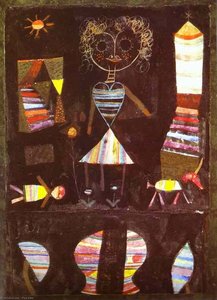
      Puppet theater (1923) by Paul Klee
      #37

      Puppet theater

      1923

      Puppet Theater: A Surrealist Dance of Forms by Paul Klee Paul Klee’s “Puppet Theater,” painted in 1923, isn't merely a depiction of theatrical imagery; it’s an embodiment of…

      Order this canvas →
      Temple Gardens (1920) by Paul Klee
      #38

      Temple Gardens

      1920 · Metropolitanski muzej umetnosti

      Paul Klee's “Three Panels,” painted circa 1920, isn’t merely a collection of landscapes; it’s a carefully constructed meditation on perception, memory, and the fractured nature of experience. Emerging…

      Have it painted by hand →
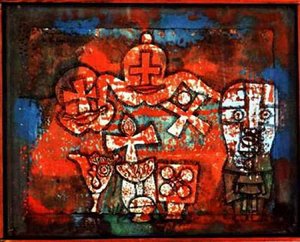
      Chinese porcelain (1940) by Paul Klee
      #39

      Chinese porcelain

      1940

      A Symphony of Geometric Abstraction In the twilight of his life, Paul Klee composed a visual masterpiece that transcends mere pigment on canvas. The Four Faces, painted in…

      Order this canvas →
      Egzotika (1939) by Paul Klee
      #40

      Egzotika

      1939 · Art Institute of Chicago

      Oko bledi skozi razpščen landšaft prepletenih oblik, kjer se globoka terakota in teravota srečujata z obznami slate blue in gorčično rumeno. Tu ni nobenega obzorja, le plaska, geometrična…

      Have it painted by hand →
      Remembrance of a Garden (1914) by Paul Klee
      #41

      Remembrance of a Garden

      1914

      A Visionary Landscape of MemoryIn Paul Klee’s 1914 masterpiece, Remembrance of a Garden, the viewer is not merely presented with a landscape, but invited into a profound meditation…

      Bring this light home →
      Srebrni pogled (1930) by Paul Klee
      #42

      Srebrni pogled

      1930 · Art Institute of Chicago

      V središču temnega, teksturiranega polja se razprostira ovalna oblika, ki skozi minimalistično geometrijo nakazuje obraz. Kompozicija se opira na sogotno paleto barv, ki jo tvorijo polnočnina modra, ogljena…

      Have it painted by hand →
      Boy in Fancy Dress (1931) by Paul Klee
      #43

      Boy in Fancy Dress

      1931 · Metropolitanski muzej umetnosti

      A single figure emerges from a dense, rhythmic grid of color, appearing less like a solid person and more like a delicate arrangement of tiny, rectangular patches. This…

      Bring this light home →
      The Pathos of Fertility (1921) by Paul Klee
      #44

      The Pathos of Fertility

      1921 · Metropolitanski muzej umetnosti

      The artwork consists of a centered, seated humanoid figure rendered through delicate black outlines on paper. The figure possesses a large, rounded belly that is decorated with organic…

      Bring this light home →
      Heroično igranje violine by Paul Klee
      #45

      Heroično igranje violine

      MoMA - Muzej moderne umetnosti

      Uvod: Paul Klee, nemški slikar švicarskega izvora (1879–1940), je bil slavljen zaradi svoje edinstvene zmedave ekspresionizma, kubizma in surrealizma. Kot mojster risanja z globokim razumevanjem teorije barv je…

      Order this canvas →
      Arab Song (1932) by Paul Klee
      #46

      Arab Song

      1932 · The Phillips Collection

      In 1932, Paul Klee composed a visual arrangement that translates the atmosphere of North Africa into a simplified, rhythmic language. The work utilizes oil on burlap to create…

      Bring this light home →
      Flower Family V. (1922) by Paul Klee
      #48

      Flower Family V.

      1922 · Solomon R. Guggenheim Museum

      Three stylized figures, possessing qualities of both human forms and botanical life, occupy a dark, textured space. A larger figure with an orange-toned body and a circular white…

      Order this canvas →
      Forgetful angel by Paul Klee
      #49

      Forgetful angel

      Paul Klee's “Forgetful Angel,” painted in 1939 amidst the gathering storm clouds of war, is not merely a depiction of an angel; it’s a profound meditation on memory,…

      Have it painted by hand →
      Singer of the Comic Opera (1927) by Paul Klee
      #50

      Singer of the Comic Opera

      1927 · Bavarske državne slikopisne zbirke

      Step closer to observe the way the light seems to emerge from within the figure itself. In Singer of the Comic Opera, we encounter a form that feels…

      Bring this light home →
      A Couple of Gods (1924) by Paul Klee
      #51

      A Couple of Gods

      1924 · Scharf-Gerstenberg Collection

      Step closer to observe these two figures. They emerge from a dark, textured void, appearing less like painted subjects and more like relics unearthed from a forgotten era.…

      Have it painted by hand →
      Walpurgis Night (1935) by Paul Klee
      #53

      Walpurgis Night

      1935

      The surface of Walpurgis Night consists of gouache applied to fabric stretched over plywood. A monochromatic blue palette dominates the visual field, ranging from deep navy and near-black…

      Bring this light home →
      Static-Dynamic Gradation by Paul Klee
      #54

      Static-Dynamic Gradation

      Metropolitanski muzej umetnosti

      # Introduction to Expressionism and Paul Klee Expressionism is an art movement that emerged in the early 20th century, characterized by its emphasis on emotional experience and individual…

      Bring this light home →
      Colorful Architecture (1917) by Paul Klee
      #55

      Colorful Architecture

      1917 · Metropolitanski muzej umetnosti

      A City Born of Dreams: Unveiling Paul Klee’s “Colorful Architecture” Paul Klee's 1917 watercolor, “Colorful Architecture,” is not a rendering of any identifiable place, but rather an evocation—a…

      Have it painted by hand →
      Possibilities at Sea (1932) by Paul Klee
      #56

      Possibilities at Sea

      1932 · Norton Simon Museum

      A white-outlined diamond holds red grid lines against a dark grey background. On the right, this structure dominates the space. A single, bright white arrow points toward a…

      Have it painted by hand →
      Rose Wind by Paul Klee
      #57

      Rose Wind

      A Symphony in Color: Exploring Paul Klee’s Rose Wind The moment one encounters Rose Wind, there is an immediate sense of being swept into a rhythmic, breathing landscape…

      Bring this light home →
      Angel in the Making by Paul Klee
      #59

      Angel in the Making

      Paul Klee's ‘Angel in the Making’, painted around an unspecified date, is not merely a visual composition; it’s a whispered meditation on potentiality, a glimpse into the nascent…

      Order this canvas →
      Dying Down (1940) by Paul Klee
      #60

      Dying Down

      1940 · Scharf-Gerstenberg Collection

      The composition presents an arrangement of calligraphic, black lines that weave through patches of saturated color. These thick, fluid strokes intersect with deep crimson, burnt sienna, and ochre,…

      Bring this light home →
      Tighter rhythms and freer by Paul Klee
      #61

      Tighter rhythms and freer

      In the vibrant realm of Expressionist abstraction, Paul Klee’s Tighter rhythms and freer stands as a captivating exploration of color and structure. The painting presents an intricate composition…

      Bring this light home →
      The rumors (1939) by Paul Klee
      #62

      The rumors

      1939 · Barnes Foundation

      In the quiet, evocative depths of Paul Klee’s 1939 watercolor masterpiece, "The Rumors," we encounter a visual language that speaks far more than words ever could. Created during…

      Bring this light home →
      Rose garden (1920) by Paul Klee
      #63

      Rose garden

      1920

      A Garden of Geometric Dreams: Unveiling Paul Klee’s ‘Rose Garden’ Paul Klee's *Rose Garden*, painted in 1920, is far more than a depiction of flowers; it’s a pivotal…

      Bring this light home →
      Ad marginem (1930) by Paul Klee
      #64

      Ad marginem

      1930 · Kunstmuseum Basel

      Step closer to observe the quiet tension held within this 1930 composition. At first glance, the eye is drawn to a central, deep terracotta red orb, a circular…

      Bring this light home →
      Untitled (Reconstruction) (1926) by Paul Klee
      #65

      Untitled (Reconstruction)

      1926 · KODE Art museums and composer homes

      A Labyrinth of Form Step closer to observe the density of this 1926 composition. There is no single point for the eye to rest; instead, one finds oneself…

      Have it painted by hand →
      Tree Nursery (1929) by Paul Klee
      #67

      Tree Nursery

      1929 · The Phillips Collection

      A rhythmic, horizontal composition defines this 1929 work, utilizing layered bands of pale blue, soft pink, light yellow, sage green, and earthy ochre. The surface is marked by…

      Order this canvas →
      Fire in the Evening (1929) by Paul Klee
      #68

      Fire in the Evening

      1929 · MoMA - Muzej moderne umetnosti

      To look closely at this small work is to encounter a quiet, structured energy. Created in 1929, the piece presents itself through an arrangement of horizontal bands and…

      Bring this light home →
      The rumors (1939) by Paul Klee
      #69

      The rumors

      1939

      In the quiet, evocative depths of Paul Klee’s 1939 masterpiece, “The Rumors,” we encounter a visual language that speaks far more than words ever could. Created during one…

      Bring this light home →
      Pogočen mestni vidik (1936) by Paul Klee
      #71

      Pogočen mestni vidik

      1936 · Metropolitanski muzej umetnosti

      Kompozicija predstavlja abstraktnost z močno teksturirano površino, ki nakazuje na fragmentiran, skeleten urbanistički okolje. Velika, solidna črna puščica se spušča iz zgornjega središča in usmerja pogled proti gostemu…

      Order this canvas →
      Ljudska stenska slika (1922) by Paul Klee
      #72

      Ljudska stenska slika

      1922 · Metropolitanski muzej umetnosti

      V središču papirja kraljuje samotna, izdoljena postava, katere prisotnost čutimo skozi nežno razporeditev oblik in črt. Njen pogled nas zajame z velikimi, mandlastejšimi očmi, ki v sebi nosijo…

      Have it painted by hand →
      Barve od dalečave (1932) by Paul Klee
      #76

      Barve od dalečave

      1932 · Izraelski muzej

      Kompozicija predstavlja gosto, nefigurativno mrežnico prepletenskih kvadratov in pravokotnikov. Po površini se širi mreža finih, temnih črt, ki ustvarjajo majhne, celičaste oblike, ki nakazujejo teksturo tkiva. Ta strukturirana…

      Bring this light home →
      View into the Fertile Country (1932) by Paul Klee
      #77

      View into the Fertile Country

      1932 · Städel Museum

      The Nile flows as a single, wavy line across the foreground. Behind this blue thread, geometric shapes rise like silent buildings. Rows of multicolored horizontal stripes stretch toward…

      Bring this light home →
      Polyphony (1932) by Paul Klee
      #78

      Polyphony

      1932 · Kunstmuseum Basel

      Small squares of deep blue, forest green, and ochre settle into a dense, rhythmic grid. Each rectangle rests against its neighbor like a note placed upon a staff.…

      Bring this light home →
      Bust of a Child by Paul Klee
      #80

      Bust of a Child

      Bust of a Child: An Expressionist Exploration by Paul Klee A Glimpse into Childhood Through Abstract Forms Paul Klee's "Bust of a Child" is a captivating artwork that…

      Order this canvas →
      The Lamb (1920) by Paul Klee
      #81

      The Lamb

      1920 · Städel Museum

      In the quiet, transformative landscape of early twentieth-century modernism, few works capture the intersection of spiritual devotion and geometric innovation as poignantly as Paul Klee’s “The Lamb,” completed…

      Bring this light home →
      Interior with the Clock (1913) by Paul Klee
      #82

      Interior with the Clock

      1913 · National Gallery of Art

      The paper holds a soft, ethereal world where shapes drift like clouds through an unseen room. Pale yellows and light blues mingle with lavender and dusty rose, creating…

      Have it painted by hand →
      Girl with Doll by Paul Klee
      #84

      Girl with Doll

      In the vast landscape of modern art, few works possess the intimate, rhythmic charm found in Paul Klee’s "Girl with Doll Carriage" (Mädchen mit Puppenwagen). Painted in 1923,…

      Bring this light home →
      Municipal Jewel (1917) by Paul Klee
      #85

      Municipal Jewel

      1917 · Metropolitanski muzej umetnosti

      The painting Municipal Jewel presents an intricate cityscape composed of various shapes and colors. The palette features a vibrant mix of red, blue, yellow, green, and purple. Within…

      Have it painted by hand →
      Diana in the Autumn Wind (1934) by Paul Klee
      #87

      Diana in the Autumn Wind

      1934

      Paul Klee's “Diana in the Autumn Wind,” painted in 1934, stands as a cornerstone of surrealist art—a mesmerizing exploration of form and color that transcends mere representation. Created…

      Order this canvas →
      Fruits on Red (1930) by Paul Klee
      #88

      Fruits on Red

      1930 · Lenbachhaus

      The composition presents a delicate network of thin stems and rounded geometric forms set against a warm copper-red ground. Rather than a traditional arrangement of harvested produce, the…

      Bring this light home →
      Vrata v vrtu (1926) by Paul Klee
      #89

      Vrata v vrtu

      1926 · Kunstmuseum Bern

      Deep within a dark, moody atmosphere, a rhythmic dance of texture begins to unfold. The eye is immediately drawn to the upper left, where a rectangular form pulses…

      Order this canvas →
      Captive (1940) by Paul Klee
      #91

      Captive

      1940

      A Portrait of Resilience: Paul Klee’s “Captive” Paul Klee's "Captive," painted in 1940 during the twilight years of his life and just months before his passing, is far…

      Bring this light home →
      Sunset (1930) by Paul Klee
      #92

      Sunset

      1930 · Art Institute of Chicago

      The oil on canvas, measuring 46.1 x 70.5 cm, presents an abstract arrangement of geometric and organic shapes. A neutral background is covered by a dense, layered pattern…

      Have it painted by hand →
      In Position (1939) by Paul Klee
      #93

      In Position

      1939

      Step closer to observe the delicate balance within this 1939 watercolor. There is a certain stillness here, an arrangement that feels both intentional and fragile. The composition rests…

      Order this canvas →
      Enclosure for Pachyderms (1940) by Paul Klee
      #94

      Enclosure for Pachyderms

      1940 · KODE Art museums and composer homes

      Created in 1940, this oil on canvas presents a structured network of thick, black, irregular lines that traverse the surface in a grid-like pattern. These dark strokes vary…

      Order this canvas →
      Crystal Gradation by Paul Klee
      #95

      Crystal Gradation

      Kunstmuseum Basel

      In the vast landscape of twentieth-century abstraction, few works possess the hypnotic, rhythmic quality found in Paul Klee’s "Crystal Gradation." Created during the artist's profound period in Murnau,…

      Order this canvas →
      El conquistador by Paul Klee
      #96

      El conquistador

      “The Great Bear,” painted in 1938 during Klee’s prolific period at Bauhaus Dessau, stands as a cornerstone of his artistic legacy. More than just a depiction of an…

      Order this canvas →
      Landscape with yellow church tower (1920) by Paul Klee
      #97

      Landscape with yellow church tower

      1920 · Bavarske državne slikopisne zbirke

      A complex, grid-like structure defines this 1920 landscape, utilizing a mosaic of geometric shapes to suggest a village setting. Horizontal lines traverse the canvas, establishing a rhythmic, layered…

      Have it painted by hand →
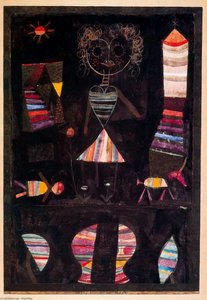
      Puppet Theatre by Paul Klee
      #98

      Puppet Theatre

      Paul Klee's "Puppet Theater" is far more than a mere depiction of figures; it serves as a profound invitation to delve into the realm of subconscious thought and…

      Have it painted by hand →

      Paul Klee's canvases, period by period

      What Paul Klee painted most

      The four subjects that return most often on these canvases, each with its best-loved example.

      Where Paul Klee's canvases hang

      The 8 museums that hold the most of the paintings on this page.

      Museum City Works by Paul Klee Paintings from this list
      Metropolitanski muzej umetnosti, New YorkMetropolitanski muzej umetnosti New York 56 Komikovo letalo, May Picture, Untitled
      Art Institute of Chicago, ChicagoArt Institute of Chicago Chicago 10 Šolska hiša, Dancing Girl, Egzotika
      MoMA - Muzej moderne umetnosti, New York CityMoMA - Muzej moderne umetnosti New York City 9 Twittering Machine, Mask of Fear, Heroično igranje violine
      Kunstmuseum Basel, BaselKunstmuseum Basel Basel 8 Ad marginem, Polyphony, Crystal Gradation
      Lenbachhaus, MünchenLenbachhaus München 6 Rožni vrt, Botanično gledališče, Fruits on Red
      Bavarske državne slikopisne zbirke, MünchenBavarske državne slikopisne zbirke München 20 Singer of the Comic Opera, Landscape with yellow church tower
      The Phillips Collection, Washington, D.C.The Phillips Collection Washington, D.C. 8 Arab Song, Tree Nursery
      Scharf-Gerstenberg Collection, BerlinScharf-Gerstenberg Collection Berlin 6 A Couple of Gods, Dying Down

      Decade by decade: Paul Klee's most celebrated canvas

      1. 1910s
        In the Style of Kairouan (1914) by Paul Klee
        9 of 100

        In the Style of Kairouan

        Age 31 – 40

        In the annals of modern art, few moments are as transformative as Paul Klee’s 1914 masterpiece, "In the Style of Kairouan." This work serves as a profound declaration…

      2. 1920s
        Novi angel (1920) by Paul Klee
        1 of 100

        Novi angel

        Age 41 – 50 · Izraelski muzej

        Ustvarjeno leta 1920, del Novi angel avtorja Paula Kleeja nam ponuja vpogled v umetnikov edinstven vizionarski svet. To delo je monotipija, kar je izbira, ki odraža Kleejevo zanimanje…

      3. 1930s
        Na Parnas (1932) by Paul Klee
        Ranked 3 of 100

        Na Parnas

        Age 51 – 60 · Kunstmuseum Bern

        Captivating Subject and Symbolism This striking artwork presents a vibrant and layered landscape that invites viewers into a world of imagination and contemplation. Central to the composition is…

      4. 1940s
        Flora na skalah Sonce (1940) by Paul Klee
        Ranked 24 of 100

        Flora na skalah Sonce

        Age 61 · Kunstsammlung Nordrhein-Westfalen

        In the twilight of his extraordinary career, Paul Klee gifted the art world with 'Flora on Rocks Sun', a 1940 masterpiece that serves as a profound meditation on…

      Your questions on Paul Klee's paintings, answered

      Which is the most celebrated painting by Paul Klee?Read the answer

      Novi angel (1920), Izraelski muzej, Jeruzalem. Twittering Machine and Na Parnas (1932) follow.

      How old was Paul Klee at the time of Novi angel?Read the answer

      Paul Klee, born in 1879, was 41 years old: Novi angel dates from 1920.

      Which ten paintings is Paul Klee most famous for?Read the answer

      Novi angel, Twittering Machine, Na Parnas, Legenda o Nilu, Flora on sand, Pejzáž z rumenimi ptici, Slika rib, With the eagle, In the Style of Kairouan and Rožni vrt. Each canvas in the ranking above comes with its year and its museum.

      How many paintings by Paul Klee are known?Read the answer

      669 works by Paul Klee are in our catalogue, dated 1910 to 1940.

      Which museums hold Paul Klee's best-known canvases?Read the answer

      Mostly in Metropolitanski muzej umetnosti (New York), Art Institute of Chicago (Chicago) and MoMA - Muzej moderne umetnosti (New York City); the list above names each museum and its canvases.

      In which years did Paul Klee paint the most celebrated canvases?Read the answer

      In 1920s, which gave 36 of the 100 works on this page, Novi angel among them.

      What are the first and the last of Paul Klee's famous canvases?Read the answer

      The earliest canvas here is Flower stand with watering can and bucket (1910); the latest is Flora na skalah Sonce (1940).

      Which subjects return most often in Paul Klee's paintings?Read the answer

      Geometric shapes (43), Geometrijske oblike (11) and Color theory (11), across the 100 works on this page.

      What did Paul Klee usually paint with?Read the answer

      Watercolor, used in 21 of the 100 works on this page.

      To which art movement does Paul Klee belong?Read the answer

      Ekspresionizem, as the canvases on this page show.

      What can I see by Paul Klee at the Metropolitanski muzej umetnosti?Read the answer

      The Metropolitanski muzej umetnosti, New York holds 17 of the works on this page, among them Komikovo letalo, May Picture and Untitled.

      Can I order a hand-painted copy of a painting by Paul Klee?Read the answer

      Yes. Every painting on this page can be ordered from its own page as an oil reproduction painted by hand, or as a fine art print, in the size you choose.

      Paul Klee: the painter's story

      Z early life of Paul Klee

      Paul Klee se je rodil 18. decembra 1879 v Münchenbuchseeju v bližini Berna v Švici, v domu, ki ga je definovala disciplina glasbe. Kot drugi otrok Hansa Wilhelma Kleeja, nemškega učitelja glasbe, in Ide Marie Klee, švicarske pevke, je odrasel v vzdušju, ki ga je oblikovala sonora umetnost. Zvoki starševskih profesij so verjetno oblikovali vzdušje njegovega otroštva in mu podali ritmično podlago, ki mu je spremljala tudi v kasnejjih letih. Že v age enajstih je Klee pokazal izjemen talent za violino, kar mu je prineslo povabilo do igranja v Bernski glasbeni družini.

      Kljub svojemu muzikalnemu talentu je sčasaj, ko je odrasel, začel čutiti privlačnost popolnoma druge poti. Leta 1898 se je presel v München, da bi začel študirati na Akademiji lepih umetnosti. Med letoma 1898 in 1901 je klasično izobraževanje opravljal pod mentorstvom Heinricha Knirra in Franza von Stucka. Ta zgodnja obdobja formalnega študija so bila obdobje intenzivnega učenja in težav. Čeprav je razkazoval naravno veščino risanja, je bila uporaba barv med tistimi prvimi hladnimi zimami v Münchnu za njega težavna ovira, ki jo je moral premagati.

      Pot proti abstraktnosti

      Pot do novega načina opazovanja ni bila ravna črta. V zgodnjih letih je Paul Klee potoval v Italijo od oktobra 1901 do maja 1902 skupaj z Hermannom Hallerjem. Čeprav je bila ta izkušnja pomembna, je pozneje opazil, da je borba z barvo ostala težka, dolgotrajna izziv. Znal se je uvrščati med klasične tradicije preteklosti in prihodajočo željo po iskanju bolj osebnega vizualnega jezika. Dolgo časa je bila njegova dela v veliki meri osredotočena na risanje in črno-belo kompozicijo, pogosto pa so se premikali v smeri groteske ali satiričnega izraza.

      Temovito premikanje se je zgodilo leta 1914 med potovanjem v Tunizijo skupaj z Augustom Mackejem in Louisom Moillietom. Čista, kristalna svetloba Severne Afrike mu je spremenila vse. V tej intenzivni sončni svetlobi je začel ločevati barvo od njene naloge, da opisuje fizične predmete. Namesto da bi barvo uporabljal za posnemanje sveta, jo je uporabil kot neodvisno, samostojno moč. Ta spoznanje mu je podalo impulz, ki ga je potreboval za prehod v abstraktnost. Do leta 1915 se je obrnil od narave in nikoli več ni slikal po modelu, namesto tega pa je izrazil svet skozi svoje lastne notranje simbole in domišljijo.

      • Hammamet s svojo džamijo (1914)

      Bauhaus in učetniški leti

      Leta 1920 se je začelo novo poglavje, ko je Walter Gropius povabil Paul Klee, da se pridruži strokovni ekipi na Bauhausu. Prvo desetletje je preživel v tej šoli, kjer je sodeloval z Wassily Kandinsky. To obdobje je bil verjetno njegov najbolj plodoviti čas, saj je skoraj polovica njegove celotne umetniške tvorbe nastala prav v teh desetih letih. Čas na Bauhausih mu je omogočil, da je raziskoval globoko vez med barvo in obliko z znanstveno natančnostjo, ki jo je obsežno dokumentiral v svojih zabeležnikih. Ti zapisi so postali ključni za vsakogar, kto je želel razumeti mehaniko moderne kompozicije.

      Stabilnost njegove učiteljske kariere je prekinila politična nihanja v Nemčiji. Leta 1933 je bil Paul Klee iz Vrhanja iz državne akademije likovnih umetnosti v Düsseldorfu zaradi vzpona nacionalcialističkega režima, ki je njegovo delo razvrščal v kategorijo »dekadentne« umetnosti. To ga je prisililo, da zapusti akademijo in se vrne v svoj rodni Bern. Sprememba okolja in vse veče politične neskladnosti so začeli spreminjati ton njegove umetnosti; njegova dela so se odmaknila od igrivosti zgodnjih let in se premaknila v smeri bolj sogičnega in težkega poudarka.

      Tehnika in umetniški slog

      Paul Klee je bil naravni risalec, ki je posedoval globoko, skoraj znanstveno razumevanje teorije barv. Njegov pristop k platnu redko je bil zamejen z preprosto imitacijo; namesto tega je svoje kompozicije gradil skozi izjemno individualen slog, ki so ga oblikovali ekspresionizem, kubizem in surrealizem. Pogosto je delal v majhnem obsegu in uporabljal nežne medije, kot je akvarel na gazi ali papir s krednim podlagom. To eksperimentiranje mu je omogočilo raziskovanje interakcije med svetlobo in pigmentom na načine, ki jih tradicionalno oljne slikarstvo ni moglo zajeti. Bil je tudi plodni grafičar, ki je z uporabo cinkovih etingov in litografij širil svoj vizualni jezik.

      V njegovi sliki je bila prisotna določena igrivost, ki je delovala hkr sofisticirano in preprosto. Svoje dela je pogosto preplaval s ponavljajočimi se motivi: majhnimi čički, visečimi ribami in måčnimi obrazi. Ti simboli so bile pogosto urejene v mrežah ali vzorceh, ki so delovali kot vizualna glasba. Njegova tehnična radovednost ga je vodila celo do nekonvencionalnih metod, kot je risanje z iglo po črnem steklu, tehniko, ki jo je uporabil za ustvarjanje petintidesetih ločenih del. Ta metoda je zahtevala mirno roko in natančno razumevanje tega, kako bo svetloba prečila skozi praskote na temni površini.

      Ključna dela in izpostavljene kompozicije

      Paul Klee je imel neobičajen dar, da je nevidno pretvoril v vidno, kar je morda najbolj razvidno v njegovih delih iz sredine umetniške poti. Leta 1915 je naslikal Woman Knitting, delo, ki zajema občutek tihe, ritmične gibavnosti. Ko se je njegova fascinacija z odnosom med barvo in obliko poglobljala, je leta 1925 ustvaril Fish Magic, skladbo, ki dokazuje njegovo sposobnost uporabe preprostih oblik za nakazovanje nečesa veliko bolj kompleksnega in misterioznega. Njegove kompozicije so se pogosto opirale na specifično vrsto vizualne glasbe, kjer so linije in barve delovale kot note na glasbeni notni zvezki.

      Do konca dvainastega desetletja so njegova dela dobila bolj strukturirano, skoraj arhitekturno kakovost. Delo Ships in the Dark, ustvarjeno leta 1927, prikazuje njegovo veščitost pri uravnoteženju svetlobe in senče za ustvarjanje občutka prostora. Ko se je politično vzdušje v Evropi ogrevalo, je njegova umetnost sledila tem trendom. Igrivost njegovih ranih let se je začela izbledljati in jo je zamenoval bolj sogičen ton. Ta premik je opazen v delu Comedians' Handbill iz leta 1938, kjer so linije postale debelejše, oblike pa bolj splošne. Tudi v zadnjih letih, ko se je njegovo zdravje slabšalo, je še zmajhanois naljezal načine za izražanje težave svojega okolja, kar vidimo v delu iz leta 1939, Angel Applicant.

      • Woman Knitting (1915)
      • Fish Magic (1925)
      • Ships in the Dark (1927)
      • Comedians' Handbill (1938)
      • Angel Applicant (1939)

      Pozni leta in smrt

      Politološki klimat v Evropi se je v tridesetih letih 20. stoletja začel močno temniti. Leta 1933 so nacaristi njegovo umetnost označili za "dekadentno", kar je bila odločitev, ki ga je prisilila v odstop iz katedre na Akademiji likovnih umetnosti v Düsseldorfu. Ta izgon je končal obdobje relativne stabilnosti in ga vrnil v rodno Bern. Kako so se razrastale sencave napovedi vojne in politični nemir, se je tudi njegovo del začelo spreminjati. Lahkost in igrivost njegovih ranih letih sta izbledela, njihova mesto pa je zavladala bolj sogična in melankolična perspektiva. Njegove linije so postale težke, pogosto se je preoblikovale v debele črne črte, oblike pa so postale bolj splošne in široke.

      Ta premik v njegovem slikarstvu je odražal vse večjo težo sveta, ki ga je obdajal. Priselnost, ki je nekoč definiral njegove kompozicije, se je podala pred občutkom težine in resnosti. Tudi ko se je njegovo zdravje poslabšalo, je še vedno ustvarjal dela, ki so zajemala napetost tistega obdobja. Njegova pozna dela so pogosto delovala bolj očiščena; uporabljal je preproste barve in bolj opombne oblike, da bi izrazil občutek izgube ali gravitacije. Umrl je 29. junja 1940 v Muraltu, v Švici.

      • Comedians' Handbill (1938)
      • Angel Applicant (1939)

      Kje si danes lahko ogledate njegova dela

      Če želite slediti posledicam njegove izjemno plodne umetniške poti, bi se morali podormaniti v Bern, v Švico. Tam se nahaja Zentrum Paul Klee, ki v svoji zbirki nosi dragocen del njegovega dediščeva in ponuja prostor za neposredno srečanje z vizualnim jezikom, ki ga je Paul Klee razvijal skozi celo življenje. V bližini se nahaja tudi Kunstmuseum Bern, ki ohranja fragmente njegove zgodovine, vključno z delami, kot je To Parnassus.

      Njegov vpliv seže daleč čez meje Švice. V New Yorku Metropolitan Museum of Art hrani obsežno zbirko, ki vključuje devetdeset del, ki so jih podaril Heinz Berggruen. Ta dela gledalcem omogočajo, da skozi specifično uporabo barv in oblik razumejo evolucijo njegove misli. V Londonu pa kolekcija Tate vadi nekaj njegovih kompozicij, med katerimi izstopa Walpurgis Night.

      • To Parnassus
      • Walpurgis Night

      All 669 works by Paul Klee →