Atelje — Brezplačna svetovna dostava — Dostava v 2–6 tednih
      William Hogarth, 1697 – 1764

      William Hogarth's 100 Most Famous Paintings

      Plakat ena iz Rakeove proge is the painting William Hogarth is best remembered for. Plate šest iz Časovnika Škorcova napredovanja and Gin Lane (1750) complete the trio of best-loved canvases. Our catalogue counts 307 works by William Hogarth. Here are the 100 most famous, with the year, the museum and the story of each canvas.

      Ranked by our popularity score, which combines the searches, visits and orders for each work. Updated oktober 2026. Each painting on this page can be ordered as an oil reproduction painted by hand on linen canvas, or as a fine art print, made to the size you choose.

      Portrait of William Hogarth
      William Hogarth · 1697 – 1764
      Born · died
      1697 – 1764, London
      Works in our catalogue
      307
      Most famous
      Plakat ena iz Rakeove proge
      Most works at
      Sir John Soane's Museum

      The ten best-loved paintings by William Hogarth

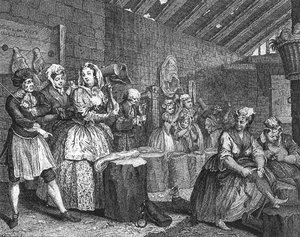
      Plakat ena iz Rakeove proge by William Hogarth
      1

      Plakat ena iz Rakeove proge

      Graviranje

      Scena: Pogled v kreativni kaos Prepustite se živahni energiji umetniškega ateljeja z આમom "Prva plošča iz zgodbe o razuznem". Ta zapleten gravir Vilijama Hogartha zajema živahno prizor, poln dejanja in podrobnosti. V središču pozornosti je moški v elegantni obleki, ki se posveča umetninam na slikarski stojelnici, obdan z osebami, ki si ob delu ali pogovoru posvečajo svojemu času. Kompozicija je bogata z plastmi interakcij, od umetnika za pisalno mizo do…

      Plate šest iz Časovnika Škorcova napredovanja by William Hogarth
      2

      Plate šest iz Časovnika Škorcova napredovanja

      Graviranje

      Pogled v satiro 18. stoletja Prepustite se živopremnemu kaosu tistega, čemur je namenjena "Šesta plata iz Časovnika Škorcovega napredovanja", mojstrovskega gravira Vilijama Hogartha. Ta zapletena črno-bela scena zajema frenetično energijo vročega gostilniškega druženja in ponuja živopisen posnetek družbenega življenja 18. stoletja ter globoko moralno kritiko. Kompozicija in slog Hogartov prepoznavni slog sije skozi to podrobno kompozicijo, kjer vsaka figura in vsak predmet pripoveduje svojo zgodbo. Monokromatska paleta povečuje kontrast in…

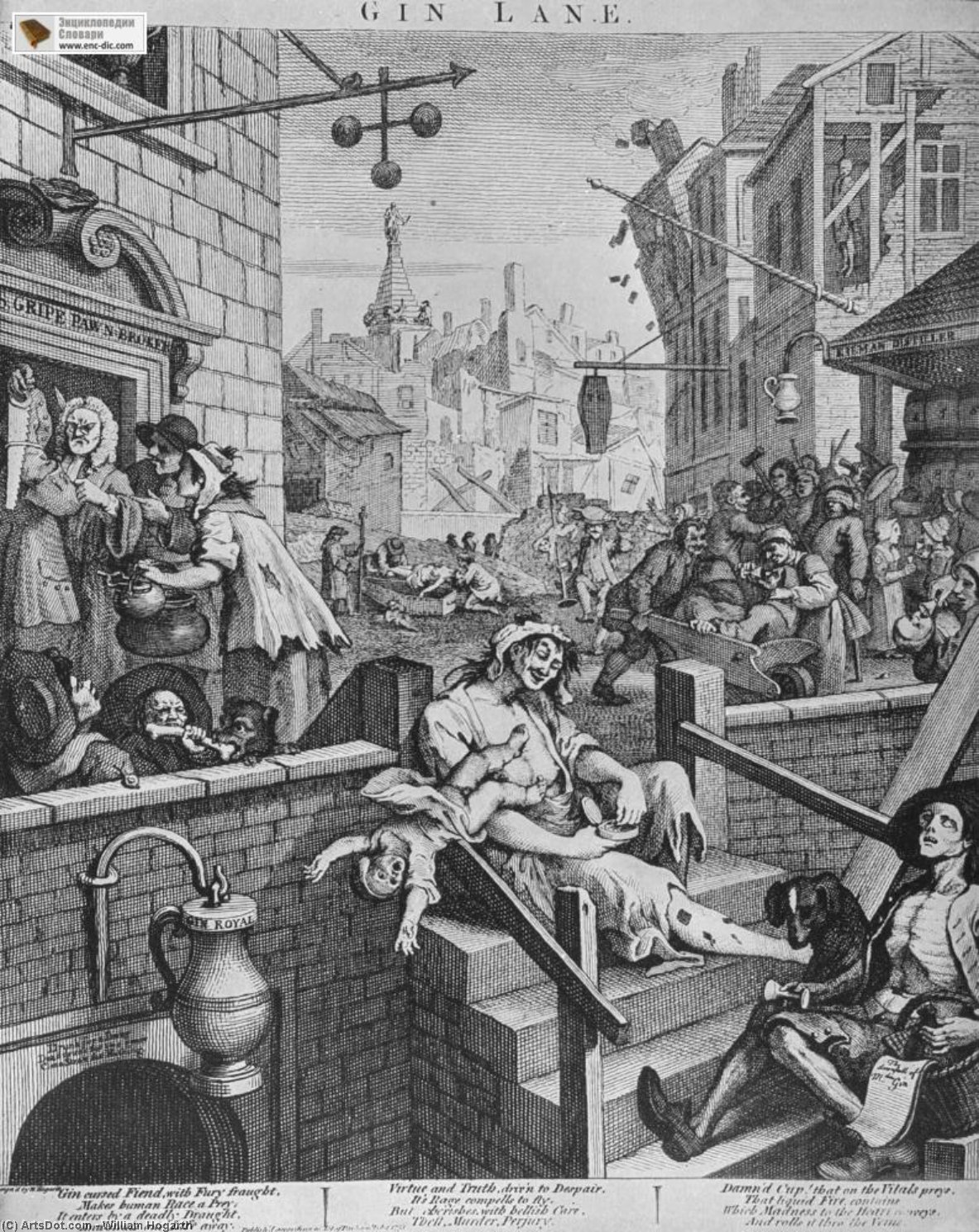
      Gin Lane (1750) by William Hogarth
      3

      Gin Lane

      1750 · Engraving

      In the heart of 18th-century London, amidst the swirling fog and the growing shadows of social upheaval, William Hogarth captured a moment of profound human tragedy that continues to haunt the viewer centuries later. His masterpiece, Gin Lane, is far more than a mere engraving; it is a visceral, breathing chronicle of a city in the throes of moral and physical decay. Completed in 1751, this work serves as a…

      The Marriage Contract (1745) by William Hogarth
      4

      The Marriage Contract

      1745 · Acrylic On Canvas

      A Window Into Georgian Society In the heart of 1745, William Hogarth captured more than a mere domestic arrangement; he froze a pivotal moment of social negotiation in "The Marriage Contract." This meticulously crafted tableau invites the viewer into a room thick with the palpable anxieties and lofty aspirations of Georgian England. As we gaze upon the central table where a man proposes to his prospective bride, we are not…

      Banket (1755) by William Hogarth
      5

      Banket

      1755 · Olje na platnu · Sir John Soane's Museum, London

      Slika prikazuje gibljivo banketno sceno, ki je polna likov v različnih dejavnostih – nekateri jedo, drugi pijejo, nekateri pa pred nami igrajjo glasbo, živahno se pogovarjajo in v splošnem uživajo v veselju. Verjetno gre za prikaz bogate družine ali družbenega kroga, ki uživa v prazničnem obroku. Sama številčnost posameznikov, tesno zapakiranih v kompozicijo, ustvarja občutek neprebožne dejavnosti in živahnega vključenosti. Čeprav specifična zgodba ni eksplicitno navedena, scena vzbudi občutek hvalovite…

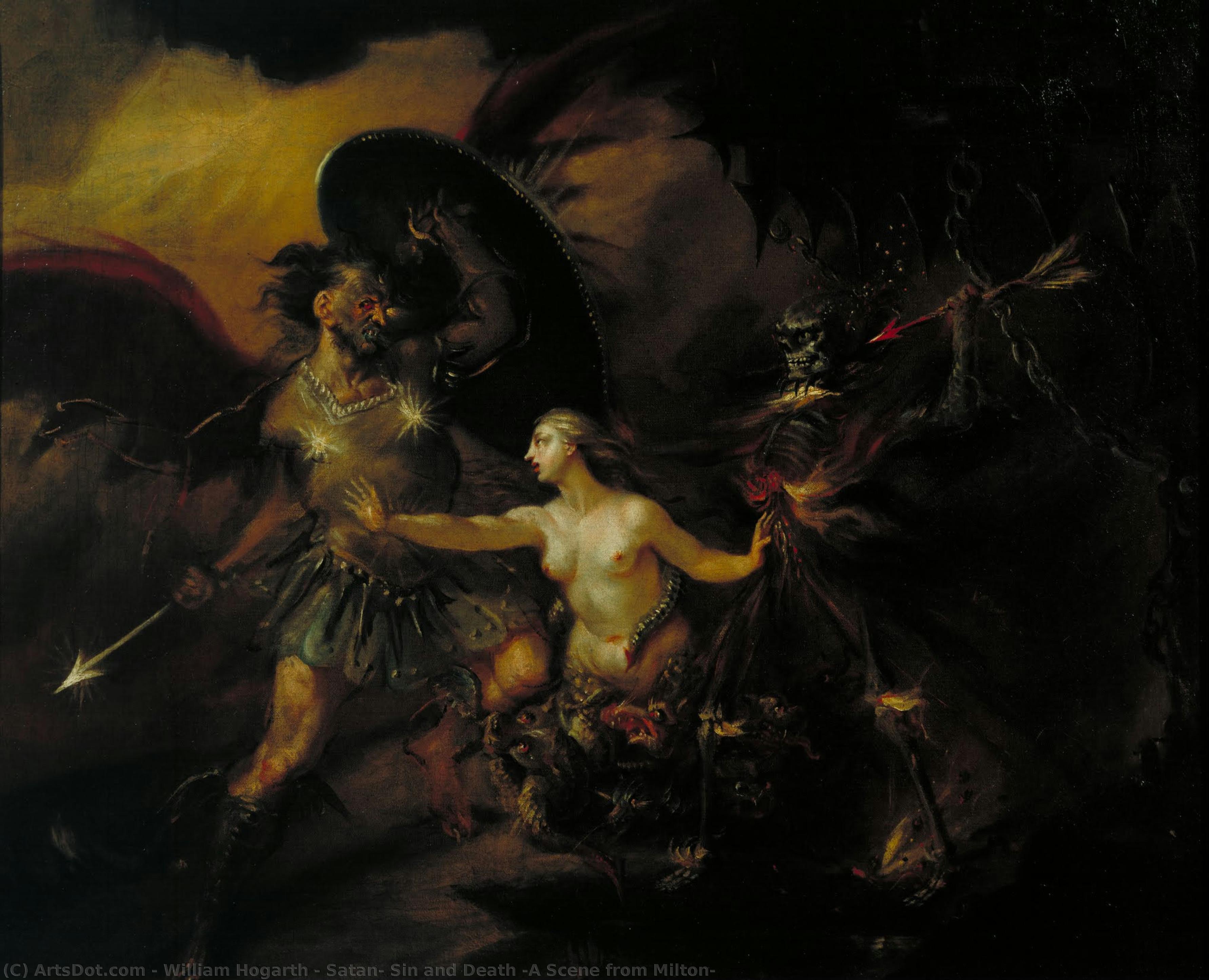
      Satan, greh in smrt (Scena iz Miltona) (1735) by William Hogarth
      6

      Satan, greh in smrt (Scena iz Miltona)

      1735 · Olje na platnu · Tate Britain, London

      Hogartovo delo »Satan, greh in smrt«, naslikano leta 1735, je precej več kot le ilustracija Miltonovega epskega poeme Izgubljeni raj; gre za skrbno zastavljeno moralno alegorijo, ki gledalca potopi v svet skušnje, posledic in večnega konflikta. Ta olje na platnu, ki trenutno stoji v galeriji Tate Britain v Londonu, meri 74 x eks 61 cm in ponuja izjemno intimen vpogled v Hogartovo globoko razumevanje Miltonovih tem –듯 zavajajočo moč greha,…

      The Painter and his Pug (1745) by William Hogarth
      7

      The Painter and his Pug

      1745 · Oil On Canvas · Tate Gallery, London

      A Portrait of Intimacy: William Hogarth’s ‘The Painter and his Pug’ Subject & Composition: This captivating 1745 portrait by William Hogarth offers a charmingly informal glimpse into the artist's personal life. It depicts Hogarth himself, seated and gazing directly at the viewer, accompanied by his beloved pug, Trump. The composition is remarkably balanced; Hogarth occupies the central space while Trump rests comfortably to his right, creating an intimate and relaxed…

      The Suicide of the Countess by William Hogarth
      8

      The Suicide of the Countess

      Oil On Canvas

      William Hogarth's "The Suicide of the Countess," part of his renowned series "Marriage A-la-Mode," offers a stark and poignant commentary on the societal ills of 18th-century England. Created between 1743 and 1745, this painting serves as a powerful culmination to a narrative exploring the destructive consequences of marriages based on financial gain rather than genuine affection.

      The Four Times of Day: Night (1738) by William Hogarth
      9

      The Four Times of Day: Night

      1738 · Acrylic On Canvas · Cleveland Museum of Art, Cleveland

      William Hogarth's "The Four Times of Day: Night," painted in 1738, isn’t merely a depiction of a London street scene; it’s a meticulously crafted window into the social and moral landscape of eighteenth-century England. This remarkable work, now immortalized through WahooArt’s hand-painted reproductions, captures a moment of revelry – or perhaps reckless abandon – with an unparalleled level of detail and satirical observation that defines Hogarth's unique artistic legacy. The…

      A Harlot's Progress: Quarrels with her Jewish Protector (1743) by William Hogarth
      10

      A Harlot's Progress: Quarrels with her Jewish Protector

      1743 · Oil On Canvas · Ascott House, Leighton Buzzard

      The room holds a sudden, sharp noise. A tea-table tilts, porcelain clatters, and the heavy weight of an argument settles over the fine fabrics. Mary, known as Moll Hackabout, moves with a violent intent, her arm a decisive line against the opulent interior. She kicks at the furniture to draw eyes away from the doorway, where a lover slips quietly into the shadows. A black serving boy stands near, a…

      William Hogarth: canvases 11 to 100 of the ranking

      Samoportret (1757) by William Hogarth
      #11

      Samoportret

      1757 · National Portrait Gallery

      Hogarthov Samoportret, naslikan leta 1757, ponuja čarobno okno v življenje in umetniško prakso enega najpomembnejših britanskih umetnikov. Ta olje na platnu (45 x 42 cm) je vrhunsko utemeljitev…

      Bring this light home →
      Soliciting Votes (1754) by William Hogarth
      #12

      Soliciting Votes

      1754 · Sir John Soane's Museum

      William Hogarth's "Soliciting Votes," completed in 1754, stands as a masterful distillation of Enlightenment satire and a poignant reflection on the burgeoning political landscape of London. More than…

      Bring this light home →
      The heir (1735) by William Hogarth
      #13

      The heir

      1735 · Sir John Soane's Museum

      William Hogarth’s “The Heir,” completed in 1735, is more than simply a depiction of a domestic scene; it’s a meticulously crafted social commentary rendered with the precision and…

      Bring this light home →
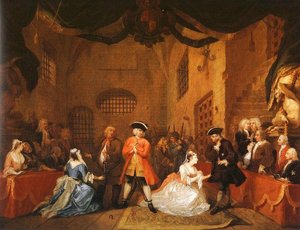
      A Scene from The Beggar's Opera (1729) by William Hogarth
      #14

      A Scene from The Beggar's Opera

      1729 · National Gallery of Art

      William Hogarth's "A Scene from The Beggar’s Opera," painted in 1729, isn’t merely a depiction of a theatrical performance; it’s a meticulously crafted snapshot of 18th-century London life…

      Have it painted by hand →
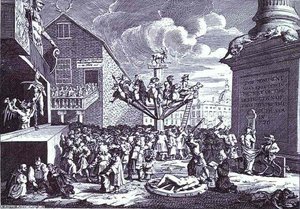
      South Sea Scheme by William Hogarth
      #15

      South Sea Scheme

      In the swirling currents of 1721 London, amidst a fever of unbridled greed and financial delirium, William Hogarth unleashed a visual critique that would forever etch itself into…

      Order this canvas →
      Poroka po modi (1743) by William Hogarth
      #16

      Poroka po modi

      1743 · National Gallery

      V veličastni tapiseriji britanske umetnosti eighteenth stoletja malo ki delo posreduje z tako prodornim duhom in narativno globino kot Marriage à la Mode Vilijama Hogartha. Ta izjemna serija,…

      Bring this light home →
      Hudibras by William Hogarth
      #19

      Hudibras

      William Hogarth's *Hudibras*, specifically the frontispiece and related engravings from Samuel Butler’s satirical poem, offers far more than a simple illustration; it’s a meticulously crafted social commentary frozen…

      Have it painted by hand →
      Obisk pri šarlatanu (1745) by William Hogarth
      #20

      Obisk pri šarlatanu

      1745

      V živahnem, a hkrati gričljivem svetu 18. stoletja v Londonu se Willliam Hogarthovo delo "Obisk pri šarlatanu" izpostavi kot globoka teatralna predstava, zajeta na platnu. To rokopletno delo…

      Order this canvas →
      The Times, plate 2 (1763) by William Hogarth
      #22

      The Times, plate 2

      1763

      The Pulse of an Era: London Unveiled In the year 1763, as the gears of the Industrial Revolution began to turn and the streets of London swelled with…

      Order this canvas →
      Samoportret (1745) by William Hogarth
      #24

      Samoportret

      1745

      Hogarthov samoportret iz leta 1745 ni le navadna podobizba; je skrbno izdelano okno v um enega izmed najprejtnih in najbolj satiričnih opazovalcev Engleske. To delo, naslikano v obdobju…

      Order this canvas →
      Miss Mary Edwards (1742) by William Hogarth
      #25

      Miss Mary Edwards

      1742 · The Frick Collection

      A Portrait of Privilege and Virtue: Examining William Hogarth’s Miss Mary Edwards William Hogarth's "Miss Mary Edwards," completed in 1742, stands as an emblem of Enlightenment England—a meticulously…

      Have it painted by hand →
      The Battle of the Pictures (1743) by William Hogarth
      #26

      The Battle of the Pictures

      1743

      William Hogarth's "The Battle of the Pictures," completed in 1743, isn’t merely an engraving; it’s a vibrant, chaotic microcosm of 18th-century London’s art world – a scene brimming…

      Order this canvas →
      Suicide of the Countess (1745) by William Hogarth
      #27

      Suicide of the Countess

      1745

      Georgian England was gripped by a fervor for moral reform following the Enlightenment. Writers like Jonathan Swift satirized aristocratic excesses and championed reason over superstition, influencing artists like…

      Bring this light home →
      Canvassing for Votes by William Hogarth
      #28

      Canvassing for Votes

      William Hogarth’s “Canvassing for Votes” isn't merely a painting; it’s a meticulously crafted social commentary, a vibrant snapshot of corruption and manipulation embedded within the seemingly convivial atmosphere…

      Have it painted by hand →
      The Countess's Morning Levee (1745) by William Hogarth
      #29

      The Countess's Morning Levee

      1745

      William Hogarth’s “The Countess’s Morning Levee,” completed around 1745, stands as a cornerstone of Rococo art and a masterful distillation of Enlightenment observation. More than just a depiction…

      Bring this light home →
      The Ball (1745) by William Hogarth
      #30

      The Ball

      1745

      To stand before William Hogarth's depiction of "The Ball" is to be instantly transported across the threshold of time, directly into the glittering heart of an 18th-century London…

      Order this canvas →
      The Bench (1758) by William Hogarth
      #31

      The Bench

      1758

      A Gathering of Characters: Decoding Hogarth’s ‘The Bench’ Subject & Narrative: William Hogarth's 1758 engraving, ‘The Bench’, presents a tightly composed group of six men, each meticulously rendered…

      Order this canvas →
      The Denunciation (1729) by William Hogarth
      #33

      The Denunciation

      1729

      A Scene of Accusation: Unveiling Hogarth’s ‘The Denunciation’ William Hogarth's *The Denunciation*, painted in 1729, is far more than a depiction of a social gathering; it’s a meticulously…

      Bring this light home →
      Self-Portrait by William Hogarth
      #36

      Self-Portrait

      National Gallery of Ireland

      A middle-aged man gazes directly from an oval vignette, his expression calm and steady. He wears a soft red cap and a patterned blue robe, the heavy silk…

      Have it painted by hand →
      The triumph of Representatives (1755) by William Hogarth
      #38

      The triumph of Representatives

      1755 · Sir John Soane's Museum

      A Window Into Georgian Society: Examining William Hogarth’s “The Triumph of Representatives” William Hogarth's "The Triumph of Representatives," completed in 1755, isn’t merely a depiction of an event;…

      Bring this light home →
      Second stage of cruelty (1751) by William Hogarth
      #42

      Second stage of cruelty

      1751

      This powerful engraving, created by William Hogarth in 1751, offers a chilling glimpse into the realities of 18th-century England. Far from idealized landscapes or flattering portraits, this work…

      Have it painted by hand →
      The Reward of Cruelty (1751) by William Hogarth
      #45

      The Reward of Cruelty

      1751

      The Reward of Cruelty William Hogarth’s “The Reward of Cruelty,” published in 1751 as part of his monumental *Four Stages of Cruelty*, stands as a chilling indictment of…

      Bring this light home →
      Simon, Lord Lovat by William Hogarth
      #46

      Simon, Lord Lovat

      William Hogarth’s “Simon Lord Lovat” stands as a remarkable testament to the artistic sensibilities of the mid-18th century, capturing not merely a likeness but also the essence of…

      Order this canvas →
      Scholars at a Lecture by William Hogarth
      #48

      Scholars at a Lecture

      A Window Into Enlightenment: Examining William Hogarth’s “Scholars at a Lecture” The etching by William Hogarth, "Scholars at a Lecture," transcends mere depiction; it's an exquisitely crafted snapshot…

      Have it painted by hand →
      Sarah Malcolm in Prison by William Hogarth
      #50

      Sarah Malcolm in Prison

      Sarah Malcolm in Prison: A Portrait of Crime and Vulnerability William Hogarth’s *Sarah Malcolm in Prison* stands as a chilling testament to the moral anxieties of Georgian England,…

      Bring this light home →
      Gin Lane (1751) by William Hogarth
      #52

      Gin Lane

      1751

      In the heart of 18th-century London, amidst the swirling fog and the growing shadows of social upheaval, William Hogarth captured a moment of profound human tragedy that continues…

      Have it painted by hand →
      The murder of the count (1745) by William Hogarth
      #53

      The murder of the count

      1745

      William Hogarth’s “The Murder of the Count,” completed in 1745, is not merely a depiction of violence; it’s a meticulously constructed moral fable, a searing indictment of societal…

      Bring this light home →
      The Enraged Musician (1741) by William Hogarth
      #54

      The Enraged Musician

      1741

      In the heart of 1741 London, amidst the burgeoning energy of the Enlightenment, William Hogarth captured a moment of pure, unadulterated sensory overload. The Enraged Musician is not…

      Bring this light home →
      The Bathos by William Hogarth
      #55

      The Bathos

      William Hogarth's *The Bathos*, a powerfully unsettling engraving created towards the end of his life, is not merely an artwork; it’s a visual lament—a darkly satirical reckoning with…

      Bring this light home →
      The Beggar's Opera (1729) by William Hogarth
      #59

      The Beggar's Opera

      1729 · Yale Center for British Art

      A Window Into Georgian Society: Exploring Hogarth's "The Beggar's Opera" William Hogarth’s “The Beggar’s Opera,” completed in 1729, transcends mere visual representation; it serves as a meticulously crafted…

      Order this canvas →
      Lame theater by William Hogarth
      #62

      Lame theater

      William Hogarth’s “Lame Theater,” completed around 1730, stands as a cornerstone of English Rococo satire and a remarkably astute observation of the social landscape of Georgian London. More…

      Order this canvas →
      Južnačka priredba by William Hogarth
      #63

      Južnačka priredba

      Step into the swirling, sensory overload of William Hogarth’s Southwark Fair, a masterpiece that serves as a vivid, unvarnished window into the heart of 1730s London. This is…

      Order this canvas →
      Self Portrait by William Hogarth
      #64

      Self Portrait

      In the quiet intimacy of his studio, William Hogarth presents us with more than just a likeness; he offers a profound window into the very essence of Enlightenment…

      Bring this light home →
      Tyburn Large by William Hogarth
      #72

      Tyburn Large

      “Tyburn Large,” painted by William Hogarth in 1746, isn't merely a depiction of an execution; it’s a meticulously rendered snapshot of 18th-century London life, brimming with social commentary…

      Order this canvas →
      The Mackinen Children (1747) by William Hogarth
      #77

      The Mackinen Children

      1747 · National Gallery of Ireland

      “The Mackinen Children,” painted by William Hogarth in 1747, stands as a cornerstone of British Rococo art and exemplifies the artist’s masterful command of classical principles. More than…

      Order this canvas →
      Engraving of John Wilkes by William Hogarth
      #78

      Engraving of John Wilkes

      A Portrait of Moral Decay: Examining Hogarth’s Engraving of John Wilkes William Hogarth's "Engraving of John Wilkes" stands as a cornerstone of 18th-century British art and satire, capturing…

      Bring this light home →
      Richard Mouteney (1746) by William Hogarth
      #83

      Richard Mouteney

      1746 · Bavarske državne slikopisne zbirke

      The Weight of Presence A man sits in the center of a dark void. He wears a heavy black robe that swallows the light, its folds thick and…

      Order this canvas →
      Times of the Day: Morning by William Hogarth
      #86

      Times of the Day: Morning

      William Hogarth’s “Times of the Day – Morning,” a cornerstone of his celebrated series, isn’t merely a depiction of a London street; it’s a meticulously crafted observation of…

      Order this canvas →
      Satire on False Perspective by William Hogarth
      #87

      Satire on False Perspective

      Satire on False Perspective William Hogarth’s *Satire on False Perspective*, created in 1754 for Joshua Kirby's pamphlet *Method of Perspective*, stands as a masterful demonstration of artistic critique…

      Order this canvas →
      Analisis of Beauty by William Hogarth
      #89

      Analisis of Beauty

      In the mid-18th century, as the intellectual currents of Europe began to shift from the ornate excesses of the Baroque toward a more structured Neoclassicism, one artist dared…

      Order this canvas →
      Thomas Pellett, M.D. (1737) by William Hogarth
      #93

      Thomas Pellett, M.D.

      1737

      An elderly gentleman, Thomas Pellett, M.D., occupies the center of this 1737 oil portrait. The composition utilizes a dark, oval vignette to focus attention on the subject's face…

      Bring this light home →
      Self-Portrait (1735) by William Hogarth
      #95

      Self-Portrait

      1735 · Yale Center for British Art

      In this 1735 self-portrait, we encounter the artist not as a distant figure, but in an intimate, eye-level encounter. The composition focuses on a bust-length view of a…

      Order this canvas →
      The Lottery by William Hogarth
      #96

      The Lottery

      The image is a black and white painting of a theater scene featuring a group of people gathered around a stage. The main focus of the painting is…

      Have it painted by hand →
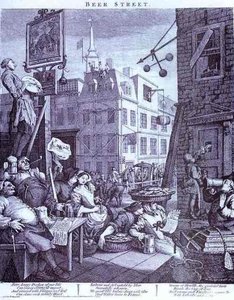
      Beer Street (1751) by William Hogarth
      #99

      Beer Street

      1751

      Beer Street, an iconic engraving created by William Hogarth in 1751, is a masterpiece that showcases the artist's ability to blend social commentary with artistic finesse. This work…

      Bring this light home →
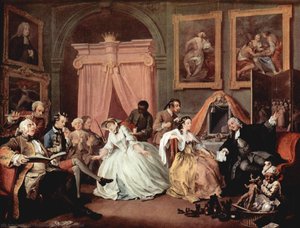
      Rake's Progress' The Gaming House (1735) by William Hogarth
      #100

      Rake's Progress' The Gaming House

      1735 · Sir John Soane's Museum

      A Window into Georgian Society: Examining Hogarth’s “Rake’s Progress” William Hogarth's "Rake's Progress," completed in 1735, stands as a cornerstone of British Baroque art and a searing indictment…

      Order this canvas →

      William Hogarth's canvases, period by period

      What William Hogarth painted most

      The four subjects that return most often on these canvases, each with its best-loved example.

      Where William Hogarth's canvases hang

      The 8 museums that hold the most of the paintings on this page.

      Museum City Works by William Hogarth Paintings from this list
      Sir John Soane's Museum, LondonSir John Soane's Museum London 14 Banket, Soliciting Votes, The heir
      Yale Center for British Art, New HavenYale Center for British Art New Haven 11 The Beggar's Opera, The Family of John, 2nd Duke of Montagu and an attendant, William Augustus, Duke of Cumberland
      National Gallery of Ireland, DublinNational Gallery of Ireland Dublin 7 Self-Portrait, The Mackinen Children
      Upton House, BanburyUpton House Banbury 3 The Four Times of Day: Night, Gerard Anne Edwards Hamilton (1732–1773) in his Cradle
      Ascott House, Leighton BuzzardAscott House Leighton Buzzard 2 A Harlot's Progress: Quarrels with her Jewish Protector, An Unknown Lady, possibly Miss Woodley, later Mrs Henry Vaughan (not Mrs Jane Hogarth)
      National Gallery of Art, WashingtonNational Gallery of Art Washington 2 A Scene from The Beggar's Opera, A Scene from the Beggar's Opera
      National Gallery, LondonNational Gallery London 9 Poroka po modi
      Fitzwilliam MuseumFitzwilliam Museum 9 A prisoner of the Fleet being examined before a committee of the House of Commons

      William Hogarth's most famous canvas, decade after decade

      1. 1720s
        A Scene from The Beggar's Opera (1729) by William Hogarth
        Canvas 14 of 100

        A Scene from The Beggar's Opera

        Age 23 – 32 · National Gallery of Art

        William Hogarth's "A Scene from The Beggar’s Opera," painted in 1729, isn’t merely a depiction of a theatrical performance; it’s a meticulously crafted snapshot of 18th-century London life…

      2. 1730s
        Satan, greh in smrt (Scena iz Miltona) (1735) by William Hogarth
        6 of 100

        Satan, greh in smrt (Scena iz Miltona)

        Age 33 – 42 · Tate Britain

        Hogartovo delo »Satan, greh in smrt«, naslikano leta 1735, je precej več kot le ilustracija Miltonovega epskega poeme Izgubljeni raj; gre za skrbno zastavljeno moralno alegorijo, ki gledalca…

      3. 1740s
        The Marriage Contract (1745) by William Hogarth
        Ranked 4 of 100

        The Marriage Contract

        Age 43 – 52

        A Window Into Georgian Society In the heart of 1745, William Hogarth captured more than a mere domestic arrangement; he froze a pivotal moment of social negotiation in…

      4. 1750s
        Gin Lane (1750) by William Hogarth
        Canvas 3 of 100

        Gin Lane

        Age 53 – 62

        In the heart of 18th-century London, amidst the swirling fog and the growing shadows of social upheaval, William Hogarth captured a moment of profound human tragedy that continues…

      5. 1760s
        The Times, plate 2 (1763) by William Hogarth
        22 of 100

        The Times, plate 2

        Age 63 – 67

        The Pulse of an Era: London Unveiled In the year 1763, as the gears of the Industrial Revolution began to turn and the streets of London swelled with…

      William Hogarth's canvases, question by question

      Which canvas is William Hogarth most remembered for?Read the answer

      Plakat ena iz Rakeove proge, followed by Plate šest iz Časovnika Škorcova napredovanja and Gin Lane (1750).

      What are William Hogarth's ten most famous canvases?Read the answer

      Plakat ena iz Rakeove proge, Plate šest iz Časovnika Škorcova napredovanja, Gin Lane, The Marriage Contract, Banket, Satan, greh in smrt (Scena iz Miltona), The Painter and his Pug, The Suicide of the Countess, The Four Times of Day: Night and A Harlot's Progress: Quarrels with her Jewish Protector. Each canvas in the ranking above comes with its year and its museum.

      How many paintings did William Hogarth create?Read the answer

      307 works by William Hogarth are in our catalogue, dated 1721 to 1763.

      Where do William Hogarth's most famous canvases hang today?Read the answer

      Mostly in Sir John Soane's Museum (London), Yale Center for British Art (New Haven) and National Gallery of Ireland (Dublin); the list above names each museum and its canvases.

      When did William Hogarth paint the most famous canvases?Read the answer

      In 1740s, which gave 18 of the 100 works on this page, The Marriage Contract among them.

      Which famous William Hogarth canvas came first, and which came last?Read the answer

      The earliest canvas here is Emblematical print of the South Sea Scheme (1721); the latest is The Times, plate 2 (1763).

      Which subjects did William Hogarth paint most?Read the answer

      18th century (27), Social commentary (27) and Satire (26), across the 100 works on this page.

      Which medium appears most in William Hogarth's paintings?Read the answer

      Acrylic On Canvas, used in 30 of the 100 works on this page.

      Which paintings by William Hogarth are held by the Sir John Soane's Museum?Read the answer

      The Sir John Soane's Museum, London holds 5 of the works on this page, among them Banket, Soliciting Votes and The heir.

      Where can I buy a reproduction of a William Hogarth painting?Read the answer

      Yes. Every painting on this page can be ordered from its own page as an oil reproduction painted by hand, or as a fine art print, in the size you choose.

      Meet the painter: William Hogarth

      Življenje Williama Hogartha

      London, leto 1697. Zrak v Bartholomew Close je preobladen z hrupom razvijajoče se metropole. Tukaj William Hogarth vstopa v svet nestabilnosti in negotovosti. Njegov oče, Richard Hogarth, se trdo bori za preživetje kot učitelj latinščine in avtor učebnic. družični finance nenehno nihajo; v nekem trenutku se Richard sooči z brutalno resnico zapetja zaradi dolgov v zaporu Fleet. Ta zgodnja izpostavljenost nestabilnosti mestnega življenja pusti neizbrisno sled. William Hogarth odrača v svetu, kjer opazuje razprazorčenost med družbenimi razredi, kar bo kasneje definiral njegovo kariero kot slikarja, gravirja, satiričarja, karikaturista in pisca.

      Otrokova pot ni cesta dediščine ali lahkega pokrbništva. Namesto tega gre za življenje, ki ga je oblikovala trdnost in neizbivnost mesta. Skozi ulice Londona se pomika in opazuje likove, ki zapolnjujejo kavarne in sejme. Njegova mama, Anne Gibbons, mu zagotavlja domačega čuvaka v življenju, ki so ga pogosto obeležile gospodarske nihanja obdobja. Ko začne nastopati na umetnostni sceni, je že človek mnogih disciplin, ki s črnilo in barvo razčišča in analizira samo tisto družbo, ki ga je vzgojala.

      • A Harlot's Progress (1731/1732)
      • A Rake's Progress (1735)
      • Marriage A-la-Mode (1743–1745)

      Mladost, družina in izobraževanje

      London, leto 1697. William, sin Richarda Hogartha, latinskega učitelja in občasnega pisca, odrača v svet, ki ga oblikujejo nenehne spremembe in neizvedena stabilnost človeka, ki se trudi vzdržati v neizprosni metropoli. Nestabilnost domačega okolja dobi vse bolj kritičen obem, ko je Richard zaradi neplačanih dolgov za pet let zaparlo v zapor Fleet. Ta obdobje trdnih preizkušenj, ki ga zaznamuje nestanovitnost družinskih financ, pusti neizbrisiv venčan pečat na mladem opazovalcu mestnega življenja.

      Do leta 1714 se fokus premakne v tehnološke podrobnosti zanata. Hogarth se pridruži podlearničkovem obdobju pri Ellisu Gamblu, zlatarju in srebrjarju, ki je deloval v Leicester Fieldsih. Tam se uči natančnosti, ki je bila potrebna za izdelavo oglasnih kartic in podobnih izdelkov, hkrati pa razvija temeljito obvladovanje bakrene plošče. Ta tehnična podlaga mu nudi orodja za kariero, ki se bo kasneje razvila daleč 넘어 preprostih komercialnih reprodukcij.

      Njegova življenjska pot se spremeni, ko se usmerja v urilno umetnostno študijo. Leta 1720 se vpiše v akademijo St Martin's Lane. Njegov razvoj se še dodatno širi pod mentorstvom Sir James Thornhill, kraljevega urnega slikarja Georgea I. Pod Thornhillom se težišče premakne iz drobnoobsežne natančnosti graviranja v širše kompleksnosti slikarstva in kompozicije. Tako se iz natančnega delo rokometnega mojstra prevesi v veličastno področje bele umetnosti.

      Tehnika in umetniški slog

      William Hogarth se premika med natančnostjo realistične portreture in hitro, sekvencialno energijo serij, ki podajo občutek podobnih stripom. On ne slika le slik; on gradi narrative. Ta pristop doseže svoj vrhunec v razvoju tistega, kar je imenoval »moderni moralni predmeti«, v metodi, kjer uporablja vizualno pripovedovanje za kritiko družbenega tkiva. Platno in bakrenna plošča sta za njega odral za razvijanje drame, kjer pogosto združuje humor in ostro satiro, da bi svoja sporočila vdelo v nepozabno moč.

      Tehnična podlaga njegovega dela leži v njegovem mojstrovstvu v gravirališkem veštini. Razume težo črte in moč tiska, ki lahko doseže široko massesko publiko. Leta 1753 se preusmerja od vizualnega k teoretičnemu z objavo svojega dela Analiza lepote. Tu se izide iz zgolj opazovanja in kodificira svoje estetske teorije, pri čemer posebej poudarja pomen »serpentskega linije« kot temeljnega načela lepote in gibanja.

      • A Harlot's Progress (1731/1732)
      • A Rake's Progress (1735)
      • Marriage A-la-Mode (1743–1745)

      Ključna dela in serije

      Narrativna moč Hogarthovega dela doseže svoj vrhunec v t.m. "modernih moralnih temah", seriji slik, zasnovanih tako, da delujejo kot vizualne novele. V letih 1731/1732

      A Harlot's Progress

      sledi tragičnemu padcu mlade ženske, ki pride v London, le da se ta hitro podda skušnjavam mesta. Ta vzor družbega degradacije se nadaljuje leta 1735 s delom

      A Rake's Progress

      , ki spremlja Toma Rakewella, ko ta porabi svojo dediščino za igre na srečo in razuzno življenje. Ta dela ne prikazujejo le posameznih scen; ona skozi drobnostno podrobnost in simbolične elemente kartirajo posledice moralnega razpada.

      Fokus se premakne iz individualne uničitve v čudovni trk družbenih razredov v seriji

      Marriage A-la-Mode

      , ustvarjeni med letoma 1743 in 1745. Tu umetnik s podreznim humorom kritizira katastrofalne posledice zakrojenih mariage in nenehno težnjo po statusu. Napetost med zapadlimi notranjostmi bogatih in skorodnimi realnostmi revnih postane ponavljajoča se tema. Tudi v svojih poznejših letih ostaja njegov komentar izjemno oster. Leta 1748

      O the Roast Beef of Old England

      preispituje narodno identiteto, medtem ko

      The March of the Guards to Finchley

      iz leta 1750 prikazuje kaotičen in hvalen pogled na vojaško življenje, kjer se disciplinirane vrste v daljavi kontrastirajo z neukrotivnim vedenjem vojakov v ozadju.

      • A Harlot's Progress (1731/1732)
      • A Rake's Progress (1735)
      • Marriage A-la-Mode (1743–1745)
      • O the Roast Beef of Old England (1748)
      • The March of the Guards to Finchley (1750)

      Dediščina in trajni vpliv

      XVIII stoletje je pričakalo nastop umetnosti, ki je bila izrazito britanska, pri čemer je k nastopu tega gibanja prisdelal William Hogarth s svojo zavrnitvijo kopiranja kontinentalnih vzorcev. Presegli je zmejo zgolj imitacije tujih slogov in vzpostavil vizualni jezik, globoko zakorenjen v ulicah Londona. Ta premik je bil izjemno pomemben; postal je najpomembnejši angleški umetnik svoje generacije. Njegov vpliv je bil tako razširjen, da se je v leksikon vključil izraz »hogarthovski«, ki opisuje njegovo specifično vrsto satiričnega opazovanja.

      Komercialna realnost njegovega uspeha je prinesla tudi novo vrsto konfliktov. Ko so njegove grafike pridobil ogromno popularnost, so privabile tudi val nepooblaščenih reprodukcij. Plagiatorstvo je postalo nenečna grožnja njegovemu preživelju. Ta napetost je prisilila do pravnega soočenja, ki je spremenilo celotno podobo intelektualne lastnine. William Hogarth je lobiral za Zakon o avtorskih pravicah iz leta 1735, kar je bil korak, ki je zagotovil pravice ustvarjalcev pred tistimi, ki bi iz njihovega truda iztrgovali brez dovoljenja.

      Njegova metoda pripovedovanja zgodb skozi zaporedne slike je postavila temelj za prihodne medije. Deluje kot neposredni predhodnik sodobne politične karikature in stripa. Z uporabo zaporedja slik za razlago družbenega vedenja je ponudil vzorec za vizualne narrative, ki temeljijo na branju, ne le na zgolj pogledu. Njegov vpliv se razprostira od satiričnih tiskov iz 1700-ih vse do samih temelj popularne kulture.

      Kje si danes lahko ogledate njegova dela

      Fizični sledi Hogarthovih družbenih kritik so še vedno razpršene po številnih prestižnih institucijah. V Londonu National Gallery čuva dela iz serije Marriage à la Mode, kjer je ohranjena vizualna narrativa družbega razpada. V bližini se v muzeju Tate Britain nahaja Satan, Sin and Death (A Scene from Milton), delo, ki izpostavlja njegovo sposobnost prevajanja kompleksnih literarnih tem v vizualno obliko. V mestu prisotna tudi Muzej Foundling, ki v svoji zbirki hrani The March of the Guards to Finchley, delo, ki zajema kaotično energijo vojaškega življenja XVIII stoletja.

      Doseg njegovih del sega dlje od Britanije. V New Yorku the Frick Collection ohranja Miss Mary Edwards, portret, ki odraža njegovo veščitost pri zajemanju individualnega lika. Te zbirke omogočajo neposreden srečanje z specifičnimi detajli njegovih gravir in slik v njihovem izvornem kontekstu. Obiskovalci lahko njegov vpliv zaznajo v načinu, kako te institucije usklajujejo napetost med visoko umetnostjo in popularno satiro.

      All 307 works by William Hogarth →