Atelje — Besplatna dostava širom sveta — Rok isporuke 2–6 nedelja
Slika iz fotografije Lista želja Korpa
Pregledaj u prostoruPregledaj u prostoru AR pregledAR pregled Pređi na štampu Pređi na štampuPrebacite na sliku Prebacite na sliku PošaljiPošalji
Detalji o deluDetalji o delu Dodaj u omiljene Dodaj u omiljene ПреузмиПреузми Slični predmetiSlični predmeti Rendgenski snimakRendgenski snimak SlajdoviSlajdovi

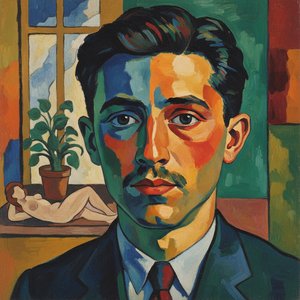
Vita somnium breve

Želećete umetničko dekorativno umetnost iz zlatnog doba Art Nouveau? Ova veličanstvena vitražska kompozicija Józefa Mehoffera prikazuje životnu filozofiju i lepota umetnosti! Zamolite ponudu danas!

Józef Mehoffer (1869-1946) was a leading Polish painter of the Young Poland movement, renowned for Art Nouveau stained glass, portraits & frescoes. Explore his diverse works in painting, graphic arts & applied design.

Ručno rađena uljana reprodukcija

Ručno oslikano uljanim bojama na platnu u dimenzijama i okviru po vašem izboru, izrađeno po porudžbini od strane naših umetnika. (Pređi na štampu Pređi na štampuPrebacite na sliku Prebacite na sliku)

P118B $10
P118H $10
P118W $10
P438Z $10
P508JH $12
P508YH $12
P805H $10
P805Z $10
P919BZ $10
P919G $10
P919XJ $10
P959ZH $10
P968JZ $12
W106C $8
W218G $10
W218JH $8
W218Y $10
W307PJ $10
W316G $10
W316PJ $8
W316Y $10
W398PJ $8
W4111J $10
W500HY $15
W500JH $15
W692G $12
W849H $8
W940BG $15
W953PJ $8

Standard
custom
CM
INCH

Izaberite jednu od naših unapred definisanih veličina koje odgovaraju originalnim proporcijama umetničkog dela.

širina
visina

Можете унети сопствене димензије како бисте прилагодили дело одређеном оквиру или простору. Ако одабрана величина не одговара пропорцијама оригинала, слика ће бити исечена или проширена додатним елементима који се ручно насликавају. Дигитални prikaz ће вам бити послат на одобрење пре почетка производње.
Имајте на уму да преглед на екрану не одражава стварно исецање или проширење. Само приказ (mockup) ће тачно приказати коначну композицију.
Иако су доступне прилагођене величине, препоручујемо да одаберете димензију из дефинисане листе како бисте сачували оригиналне пропорције.

Primeri onoga što se može promeniti: Zamena lica fotografijom kupca; Dodavanje ljubimca (npr. zamena mačke psom); Uključivanje skrivene poruke u pozadini; Promena pejzaža ili elemenata pozadine.
Nakon narudžbine, tim TopImpressionists.com će klijentu putem e-pošte poslati uputstva i dostaviti prikaz predloženog rešenja

Isporuka širom sveta () za 3/4 nedelje umesto uobičajenih 5 nedelja. (8 август). Bez kompromisa po pitanju kvaliteta.

why_choose_icon
Besplatna ekspresna dostava širom sveta
why_choose_icon
Visokokvalitetno laneno platno
why_choose_icon
Kompletno osiguranje transporta
why_choose_icon
Garancija povraćaja carine i uvoznih dažbina
why_choose_icon
Garancija vernosti boja
why_choose_icon
Politika povrata u roku od 60 dana (samo u slučaju nedostataka)
why_choose_icon
Garancija povrata novca od 100%
why_choose_icon
Popust pri grupnoj kupovini

Ukupna cena

$ 269

reproduction

Vita somnium breve

Tehnika reprodukcije

Dimenzije reprodukcije

-

Konačna cena

$ 269

Osnovne informacije

  • Artistic style: Symbolic painting
  • Influences: Henri Matisse
  • Location: National Museum, Kraków
  • Artist: Józef Mehoffer
  • Movement: Art Nouveau
  • Title: Vita somnium breve
  • Dimensions: 163 x 143 cm

Kviz o umetnosti

Svako pitanje ima samo jedan tačan odgovor.

Pitanje 1:
What artistic movement is Vita somnium breve primarily associated with?
Pitanje 2:
The stained glass window depicts a scene featuring what prominent element?
Pitanje 3:
Who founded the Kraków Stained Glass and Mosaic Workshop where Vita somnium breve was created?
Pitanje 4:
What year was Vita somnium breve completed?
Pitanje 5:
The image description highlights the use of vibrant colors. What is a key characteristic of Art Nouveau style that contributes to this effect?

Opis umetničkog dela

Vita Somnium Breve: A Window Into Polish Symbolism

Józef Mehoffer’s “Vita Somnium Breve” (Life is a Short Dream), completed in 1906, stands as a cornerstone of Art Nouveau stained glass artistry and embodies the spirit of Young Poland – a movement dedicated to reviving Polish national identity after centuries of partitions. Created by Krakowski Zakład Witrażów i Mozaiki S.G. Żeleński, established in 1902, this monumental window is housed within the National Museum in Kraków and represents more than just decorative splendor; it’s a profound visual meditation on mortality and remembrance. ### Artistic Style and Technique: The Fluid Embrace of Art Nouveau Mehoffer's approach to stained glass aligns perfectly with the tenets of Art Nouveau – a style characterized by organic forms, flowing lines, and intricate floral motifs. Unlike the rigid geometric patterns prevalent in earlier styles, “Vita Somnium Breve” revels in curvilinear shapes that mimic natural elements like branches and leaves, creating an atmosphere of serene beauty. The artist skillfully employs a technique known as *pointillé*, where tiny dots of color are meticulously applied to build up tonal variations—a masterful method for achieving luminous depth and capturing the ethereal quality of light filtering through the glass panes. This painstaking process demanded considerable skill and patience from the glaziers, ensuring that every nuance of Mehoffer’s vision was faithfully reproduced. ### Symbolism Rooted in Polish Folklore and Remembrance The imagery depicted within the window is laden with symbolism deeply rooted in Polish folklore and Christian iconography. Dominating the composition are figures representing women – likely symbolizing motherhood and purity – cradling children, suggesting themes of lineage and safeguarding heritage. Surrounding them are stylized trees bearing blossoms, representing life’s cyclical nature and hinting at rebirth after death. The central element is a dove carrying an olive branch—a universally recognized symbol of peace and reconciliation, reflecting Poland's aspirations for stability and unity during the turbulent period following World War I. Furthermore, the window’s placement within the museum underscores its purpose as a memorial to Polish culture and history. ### Historical Context: Young Poland and Artistic Expression Amidst Uncertainty “Vita Somnium Breve” emerged from the fervent artistic milieu of Young Poland (Młoda Polska), a nationalist movement striving to revitalize Polish language, literature, and art after the Austro-Hungarian partition of Poland. Artists like Mehoffer sought to express national identity through innovative mediums—stained glass being particularly favored for its ability to convey solemn beauty and evoke contemplation. The window’s creation coincided with a time of significant political upheaval and cultural revival, mirroring the movement's determination to preserve Polish traditions while embracing modern artistic sensibilities. It serves as a testament to the enduring power of art to communicate profound ideas and emotions across generations. ### Emotional Impact: A Reflection of Fragility and Hope Ultimately, “Vita Somnium Breve” transcends mere decoration; it communicates an emotional resonance that speaks to themes of vulnerability and resilience. The delicate floral forms juxtaposed with the solemn figures evoke a sense of melancholy yet simultaneously convey optimism—a recognition of life’s transient beauty alongside an unwavering belief in enduring values. Viewing this magnificent stained glass window is akin to embarking on a journey into contemplation, prompting viewers to reflect upon mortality, remembrance, and the importance of safeguarding cultural heritage. It remains a poignant reminder that even amidst darkness, light – symbolized by the dove and the olive branch – persists, offering solace and inspiring hope for the future.

Biografija umetnika

Henri Matisse: A Life Painted in Color

Henri Matisse, a name synonymous with vibrant color and fluid form, stands as one of the most pivotal figures in 20th-century art. Born in Le Cateau, France, in December 1869, his artistic journey began not with fervent ambition but with a surprising late interest – a revelation sparked by a box of paints gifted to him during convalescence. Initially drawn to the structured world of law, Matisse ultimately abandoned this path, embracing instead the intoxicating freedom of creative expression. His career spanned nearly six decades, witnessing and profoundly shaping the evolution of modern art, leaving behind an astonishingly diverse body of work that continues to captivate audiences worldwide.

Early Years and Artistic Foundations

Matisse’s early artistic training was decidedly conventional. He enrolled in the Académie Julian in Paris, studying under William-Adolphe Bouguereau, a master of academic realism. This period instilled in him a respect for traditional techniques and composition. However, Matisse quickly recognized that he sought something beyond mere imitation. He experimented with various styles – from Neo-Impressionism, influenced by Paul Signac’s pointillist approach, to Symbolism, absorbing the evocative moods of artists like Gustave Moreau. Crucially, his time in Paris exposed him to a vibrant artistic landscape, fostering an openness to new ideas and movements. It was during this period that he began to develop his distinctive palette and explore ways to convey emotion through color alone – a radical departure from prevailing artistic norms.

The Fauvist Revolution

Around 1905, Matisse’s artistic trajectory underwent a dramatic transformation. He joined forces with Paul Gauguin and André Derain in Collioure, on the French Riviera, where they collectively spearheaded what became known as the Fauvist movement – “Fauves” meaning “wild beasts.” This revolutionary style prioritized intense, non-naturalistic color, often applied in arbitrary and jarring combinations. Matisse’s paintings of this period, such as *Woman with a Hat* and *The Joy of Life*, exemplify this bold approach. He deliberately rejected the subtle gradations of tone favored by earlier artists, opting instead for flat planes of saturated hues that pulsed with energy and emotion. This deliberate disregard for realism was initially met with criticism, but it ultimately paved the way for future developments in modern art.

Mature Style and Artistic Evolution

Following the intensity of the Fauvist period, Matisse’s style evolved into a more refined and controlled aesthetic. He moved to Nice in 1917, seeking inspiration from the Mediterranean light and landscape. During this time, he developed a distinctive approach characterized by flattened forms, simplified shapes, and an economy of line – a deliberate move away from the illusionistic depth of earlier painting. His use of color remained central, but it was now employed with greater precision and restraint, creating a sense of harmony and balance. Works like *The Red Studio* (1913) demonstrate this shift towards geometric abstraction while retaining his signature vibrant palette. Later in his career, Matisse turned to the medium of paper cutouts – intricate designs created by cutting shapes from colored paper, a technique that allowed him to explore new forms of composition and spatial relationships.

Legacy and Historical Significance

Henri Matisse’s impact on the art world is immeasurable. He not only spearheaded the Fauvist movement but also profoundly influenced generations of artists who followed, including Pablo Picasso, André Derain, and many others. His emphasis on color as a primary means of expression revolutionized painting, demonstrating its power to evoke emotion and create visual experiences beyond mere representation. His work continues to be celebrated for its beauty, innovation, and enduring appeal. Matisse’s legacy extends far beyond the canvas; his approach to art—characterized by joy, spontaneity, and an unwavering belief in the transformative potential of color—remains a powerful inspiration today.

józef mehoffer

józef mehoffer

1869 - 1946

Osnovne informacije

  • Artistic Movement Or Style:
    • Fauvism
    • Modernism
  • Artists Or Movements Influenced By This Artist: ['Pablo Picasso']
  • Artists Who Influenced This Artist:
    • William-Adolphe Bouguereau
    • Paul Cézanne
  • Date Of Birth: December 31, 1869
  • Date Of Death: November 3, 1954
  • Full Name: Henri-Émile-Benoît Matisse
  • Nationality: French
  • Notable Artworks:
    • The Red Studio
    • Dance (Matisse)
    • Blue Nude
  • Place Of Birth: Le Cateau, Picardy, France
Istražite umetnička dela organizovana prema temama, stilovima i karakteristikama.
© TopImpressionists.com — Sva prava zadržana  ·  100% Ručno oslikano · Zagarantovano zadovoljstvo · Besplatna dostava širom sveta
VISA MASTERCARD