Atelje — Besplatna dostava širom sveta — Rok isporuke: 2–6 nedelja
      Рој Ликтенстајн, 1923 – 1997

      100 najpoznatijih dela umetnika Рој Ликтенстајн

      Vam! (1963) je slika po kojoj je Рој Ликтенстајн najpoznatiji. Pogledaj, Miki (1961) i Дингвонг Ирл (1963) upotpunjuju triju najomiljenijih platna. Naš katalog sadrži 382 dela umetnika Рој Ликтенстајн. Evo 100 najpoznatijih, sa godinom nastanka, muzejom i pričom o svakom platnu.

      Rangirano prema našem koeficijentu popularnosti, koji kombinuje pretrage, posete i porudžbine za svako delo. Ažurirano новембар 2026.

      Portret Рој Ликтенстајн
      Рој Ликтенстајн · 1923 – 1997
      Rođen · umro
      1923 – 1997, Менхетн
      Pokret
      Поп арт
      Radovi u našem katalogu
      382
      Najpoznatije dela
      Vam! (1963)
      Najviše dela u
      Art Institute of Chicago

      Deset najomiljenijih slika umetnika Рој Ликтенстајн

      Vam! (1963) čiji je autor Рој Ликтенстајн
      1

      Vam!

      1963 · Akril na platnu

      Roy Lichtensteinova godina 1963. je remek-delo, "Whaam!", više od pukog prikaza vazdušne borbe; to je snažan komentar na odmaknutu, stilizovanu reprezentaciju nasilja koja je bila prisutna u američkoj kulturi polovine 20. veka. Ova monumentalna kompozicija nije samo slika sukoba u vazduhu, već i produbljen pogled u način na koji mediji oblikuju naše percepcije i potencijalno nas anesteziraju od stvarnih posledica konflikata. Lichtenstein je uspeo da uhvati trenutak eksplozivne akcije, a…

      Pogledaj, Miki (1961) čiji je autor Рој Ликтенстајн
      2

      Pogledaj, Miki

      1961 · Ulje na platnu

      Scena se odvija 1961. godine kroz delo ulje na platnu pod naslovom Pogledaj, Miki autora Roju Liktenshtajna. Iznenadni, neočekivani trenutak zamrznut je u vremenu dok se Miki Maus i Donald Patak nalaze usred nezgode prilikom pecanja. Vazduh deluje gust od trenutnog šoka zbog ulova, hvatajući narativnu napetost koja kao da vibrira sa površine slike.

      Дингвонг Ирл (1963) čiji je autor Рој Ликтенстајн
      3

      Дингвонг Ирл

      1963 · Ulje na platnu

      Remek-delo melodrame Ikonično slikarstvo Roj Lihtenštajna iz 1963. godine, „Devojka koja se utaplja“, predstavlja suštinski rad Pop art pokreta koji verno beleži samu srž emocionalnog nemira i dramatičnog pripovedanja. Ovo vibrantno i dinamično delo trenutno privlači pažnju svojim odvažnim linijama, živopisnim bojama i ekspresivnom tematikom. Centralna figura dela je žena upečatljive plave kose, koja deluje kao da je u stanju duboke teskobe ili dubokog promišljanja. Njeno lice i gornji deo…

      Devojčica sa loptom (1961) čiji je autor Рој Ликтенстајн
      4

      Devojčica sa loptom

      1961 · Akril na platnu

      Delo Roj Lichtenštajna „Devojka sa loptom“ predstavlja kultni primer iz 1961. godine koji savršeno hvata suštinu američke pop kulture sredine 20. veka. Ovo živopisno i dinamično umetničko delo prikazuje ženu u odbojci, koja zrači energijom i pokretom. Njegov stilizovani i ekspresivni pristup čini ovo delo istaknutim draguljem u bilo kojoj kolekciji.

      Torpedo...LOS! (1963) čiji je autor Рој Ликтенстајн
      5

      Torpedo...LOS!

      1963 · Akril na platnu

      Roaj Lihstenštajn, jedan od najuticajnijih umetnika Pop Art pokreta, zauvek je promenio način na koji gledamo na umetnost i svakodnevni život. Njegovo delo "Torpedo...Los!", nastalo 1963. godine, nije samo slika; to je eksplozija boja, linija i narativa koja nas vodi u svet stripova, rata i američke kulture šezdesetih godina prošlog veka. Ova kompozicija, sa svojim dramatičnim prikazom kapetana podmornice koji se probija kroz periskop, uz oprezni naređenje "Torpedo...LOS!", odmah privlači…

      Roto Broil (1961) čiji je autor Рој Ликтенстајн
      6

      Roto Broil

      1961 · Akril na platnu

      U srcu umetnosti XX veka, Roy Fox Lichtenstein nije samo bio umetnik; on je bio revolucionar koji je preoblikovao način na koji gledamo svet oko nas. Njegova dela, često provocativna i punih ironije, nisu samo reprodukcije stvarnosti, već kritike društvenih vrednosti i potrošačke kulture. "Roto Broil" (1961), jedno od njegovih najpoznatijih delova, predstavlja maestralan primer ovog talenta – živopisnu i izuzetno zanimljivu reinterpretaciju običnog kućanskog predmeta koji je postao ikoničan…

      Блам (1962) čiji je autor Рој Ликтенстајн
      7

      Блам

      1962 · Akril na platnu

      Roy Lichtenstein’s ‘Blam’: Eksplozija Pop Art-a i Kritika Moderne Roy Lichtensteinova “Blam” nije samo slika; ona je eksplozija energije, kritika moderne i maestralno izvedena ilustracija pop art pokreta. Stvorena 1962. godine, ova radnja prikazuje dramatičan trenutak – pucanj iz oružja u sredini eksplozije, obasjan intenzivnim, gotovo neonovim bojama i prepoznatljivim Ben-Day dotovima. Kompozicija je dinamična, gotovo kao da vas uvlači u sam trenutak udara, a svaki element, od oštrih linija…

      Bez naslova Roy Lichtenstein ^ Gian Franco Gorgoni (1988) (1988) čiji je autor Рој Ликтенстајн
      8

      Bez naslova Roy Lichtenstein ^ Gian Franco Gorgoni (1988)

      1988 · Mešovita tehnika

      Subjekat i kompozicija Ovo očaravajuće umetničko delo majstorski dočarava usamljenog jahača na konju koji preseca miran morski pejzaž u sumrak. Silueta jahača i konja stoji u oštrom kontrastu sa živopisnim, vrtložnim nebom, stvarajući moćnu fokusnu tačku koja evocira osećaj kretanja i introspekcije. Prostrano morsko prostranstvo, sa svojim svetlucavim vodama i dalekom linijom horizonta, poziva posmatrače da razmišljaju o temama putovanja, slobode i neprestane veze između čoveka i prirode. Suptilno prisustvo…

      Hej ti - (2402193) čiji je autor Рој Ликтенстајн
      9

      Hej ti - (2402193)

      Akril na platnu

      Dynamic Subject and Iconic Gesture This striking artwork captures a universally recognizable gesture—a pointing hand—conveying immediacy, command, and engagement. The bold, graphic depiction emphasizes the power of simple gestures to communicate complex emotions and messages. Its confrontational stance invites viewers to reflect on themes of assertion, attention, and interaction, making it a compelling focal point in any space. Distinctive Style and Technique Created in the vibrant spirit of Pop Art,…

      ГОЛА СА ПЛАВОМ КОС de (1994) čiji je autor Рој Ликтенстајн
      10

      ГОЛА СА ПЛАВОМ КОС de

      1994 · Tuš na papiru

      Subjekat i kompozicija Ovo upečatljivo umetničko delo dočarava stilizovani portret žene očaravajuće plave kose, prikazane kroz smelu i grafičku estetiku. Direktni pogled subjekta i blago provokativan izraz lica izazivaju osećaj samopouzdanja i privlačnosti, uvodeći posmatrače u jedan intiman trenutak. Gest ruke i prozračna kosa dodaju dinamičan osećaj pokreta, uokvirujući njeno lice i naglašavajući njenu ličnost. Kompozicija je usredsređena na njeno lice, stvarajući privlačno fokusno mesto koje zahteva pažnju i budi…

      Рој Ликтенстајн: platna od 11 do 100 na rang listi

      M-Možda (1965) čiji je autor Рој Ликтенстајн
      #11

      M-Možda

      1965

      Delo Roj Lichtenštajna „M-Možda“, nastalo 1965. godine, predstavlja suštinski primer pokreta pop art-a, beležeći prolazni trenutak emocionalne ranjivosti unutar konteksta modernog urbanog života. Ovo slikarstvo ulje na platnu,…

      Polako smo se podizali (1964) čiji je autor Рој Ликтенстајн

      Roy Lichtenstein Godina: 1964 Tehnika: Ulje i Magna na platnu (dva panela) Dimenzije: 172 x 233 cm Trenutna lokacija: Museum für Moderne Kunst, Frankfurt am Main, Nemačka

      Žena u kupatilu (1963) čiji je autor Рој Ликтенстајн
      #13

      Žena u kupatilu

      1963

      A Pop Icon: Decoding Roy Lichtenstein’s ‘Woman in Bath’ Roy Fox Lichtenstein, rođen 27. oktobra 1923. godine u živopisnom gradu Novom Meksiku, ostavio je nezaboravno mesto u istoriji…

      Devojka sa vencem (1965) čiji je autor Рој Ликтенстајн

      Увод у Ему је Светом Уметности XX Века Рој Лихтенштајн био је истинита икона Поп Арта и критичар културне производње, човек који је преобразио обичне слике у уверљиве…

      У аутомобилу (1963) čiji je autor Рој Ликтенстајн

      Ova slika predstavlja izrezani prikaz muškarca i žene unutar automobila, zarobljenih u onome što deluje kao napeta razmena pogleda i emocija. Žena, čije je lice delimično zaklonjeno, gleda…

      Sunce koje zalazi (1964) čiji je autor Рој Ликтенстајн

      Roy Lichtenstein i njegovo delo Sunce koje zalazi, nastalo 1964. godine, nije samo prikaz zalaska sunca; to je pažljivo konstruisana meditacija o anksioznosti i vizuelnom jeziku plamtećeg Pop…

      Drowning Girl (1963) čiji je autor Рој Ликтенстајн
      #17

      Drowning Girl

      1963

      A Masterpiece of Melodrama: Decoding Roy Lichtenstein’s *Drowning Girl* Roy Fox Lichtenstein – Pionir Pop Art-a i Kritičar Kulturne Produkcije Roy Lichtenstein, rođen 27. oktobra 1923. godine u…

      Beznađe (1963) čiji je autor Рој Ликтенстајн
      #18

      Beznađe

      1963

      Delo „Beznađa“ (Hopeless), koje je Roj Lihtenštajn stvorio 1963. godine, predstavlja ključnu prekretnicu unutar pokreta Pop Art i ostaje fascinantna tema kako za ljubitelje umetnosti, tako i za…

      Sprej (1962) čiji je autor Рој Ликтенстајн
      #19

      Sprej

      1962

      Eksplozija urbane energije: Dekonstrukcija dela „Sprej” Roya Lichtensteina „Sprej”, koje je 1962. godine stvorila američka Pop art ikona Roy Lichtenstein, predstavlja dinamično i vizuelno upečatljivo delo koje sažima…

      Uplašena (1964) čiji je autor Рој Ликтенстајн
      #20

      Uplašena

      1964

      U živopisnom, često uzburkanom pejzažu Amerike sredine 1960-ih, malo je slika koje su tako dirljivo uhvatile psihološku tenziju tog doba kao „Prestrašena” (Frightened) Roja Lihtenštajna. Završeno 1964. godine,…

      Thinking of Him (1963) čiji je autor Рој Ликтенстајн
      #21

      Thinking of Him

      1963

      A Window Into Yearning: Roy Lichtenstein’s “Thinking of Him” Roy Fox Lichtenstein – Pionir Pop Art-a i Kritičar Kulturne Produkcije Roy Lichtenstein, rođen 27. oktobra 1923. godine u…

      Devojka u ogledalu (1964) čiji je autor Рој Ликтенстајн

      Delo Roja Lictenštajna pod nazivom „Devojka u ogledalu”, nastalo 1964. godine, nije samo običan portret; to je pažljivo konstruisana meditacija o anksioznosti i težnjama Amerike sredine 20. veka.…

      Devojčica sa loptom (1961) čiji je autor Рој Ликтенстајн

      Za kolekcionare umetnosti koji žele da svom fondu dodaju kamen-milenjum 20. veka, posedovanje reprodukcije dela Devojčica sa loptom predstavlja pristupačan ulazak u svet velike umetnosti. Dizajneri enterijera mogu…

      Stilski život sa zlatnim ribama (i slika golf loptice) (1972) čiji je autor Рој Ликтенстајн

      Pop Art Still Life: Dekonstrukcija Domastičnosti u Kompoziciji Lichtensteina iz 1972. godine Still Life with Goldfish (and Painting of Golf Ball) Roja Lichtensteina je esencijalan primer njegovog potpisanog…

      Devojka koja plače (1964) čiji je autor Рој Ликтенстајн

      Devojka koja plače: Istraživanje emocija u Pop Art-u Umetnik: Roy Lichtenstein Umetnički pravac: Pop Art Godina: 1964. Tehnika: Porcelanski emajl na čeličnoj podlozi Dimenzije: 116 x 116 cm…

      Alka Seltzer (1966) čiji je autor Рој Ликтенстајн
      #26

      Alka Seltzer

      1966

      Uvod u Pop art i Roja Liktenštajna Pop art predstavlja umetnički pokret koji se pojavio u Ujedinjenom Kraljevstvu i Sjedinjenim Američkim Državama sredinom, pa čak i do kasnih…

      Umetnikov studio - Ples (1974) čiji je autor Рој Ликтенстајн

      U živopisnom pejzažu umetnosti dvadesetog veka, malo je dela koje tako efikasno hvata igračku tenziju između visoke kulture i masovnih medija kao Roy Lichtenstein-ovo Umetnikov studio - Ples.…

      Смешњак (1961) čiji je autor Рој Ликтенстајн
      #28

      Смешњак

      1961

      A Whimsical Glimpse into Pop Art’s Genesis: Roy Lichtenstein's “Laughing Cat” Roy Lichtenstein’s 1961 painting, “Laughing Cat,” stands as a pivotal early work in the artist’s trajectory toward…

      Varoom (1963) čiji je autor Рој Ликтенстајн
      #29

      Varoom

      1963

      Roy Fox Lichtenstein’s Varoom stands as an undeniable cornerstone of the Pop Art movement, born in 1963 and instantly captivating audiences with its audacious blend of color, texture,…

      Figure sa zalascem sunca čiji je autor Рој Ликтенстајн

      Zlatni sumrak pop arta U očaravatelju sjaju dela Figure sa zalascem sunca, Roj Liktenštajn nas poziva u svet u kojem se granice između visoke umetnosti i masovnih medija…

      Ležeća kupka (1977) čiji je autor Рој Ликтенстајн
      #31

      Ležeća kupka

      1977

      Delo Roya Foxa Lichtensteina pod nazivom „Ležeća kupka”, završeno 1977. godine, stoji kao esencijalni simbol Pop Art pokreta—umetničkog pravca koji je namerno prkrio konvencije likovne umetnosti prihvatanjem vizuelnog…

      Pop (1966) čiji je autor Рој Ликтенстајн
      #32

      Pop

      1966

      Sredinom šezdesetih godina prošlog veka, umetnički svet je doživeo seizmičku promenu, udaljavajući se od teške, emocionalne introspekcije apstraktnog ekspresionizma ka nečem daleko neposrednijem i pristupačnijem. U samom srcu…

      Излазак сунца (1965) čiji je autor Рој Ликтенстајн

      Roy Fox Lichtenstein, born in Manhattan in 1923, wasn’t merely an artist; he was a provocateur, a cultural commentator who seized upon the burgeoning energy of post-war America…

      Vidim (1961) čiji je autor Рој Ликтенстајн
      #34

      Vidim

      1961

      Prozor u izolaciju: Dekodiranje Lichtensteinovog dela „Vidim” Lichtensteinovo slikarstvo iz 1961. godine, pod nazivom Vidim, predstavlja mnogo više od obične, upečatljive vizuelne izjave; to je dirljivo istraživanje posmatranja,…

      Forest scene (1980) čiji je autor Рој Ликтенстајн
      #35

      Forest scene

      1980

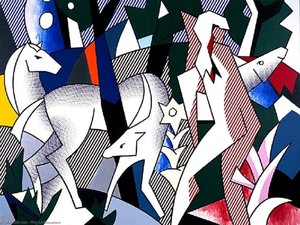
      In the vast landscape of twentieth-century art, few works capture the tension between commercial aesthetics and natural majesty quite like Roy Lichtenstein’s “Forest Scene.” Created in 1980, this…

      Bauhaus stairway (1989) čiji je autor Рој Ликтенстајн
      #36

      Bauhaus stairway

      1989

      The monumental Bauhaus stairway by Roy Lichtenstein emerges as a massive dialogue between two eras of design. Painted in 1989, this work does not exist in isolation but…

      Братта (1962) čiji je autor Рој Ликтенстајн
      #37

      Братта

      1962

      Roy Fox Lichtenstein, rođen 27. oktobra 1923. godine u živopisnom gradu Novom Meksiku, ostavio je nezaboravno mesto u istoriji umetnosti XX veka. Kao jedan od glavnih predstavnika Pop…

      Polovina Lica sa Košuljicom (1963) čiji je autor Рој Ликтенстајн

      A Bold Declaration in Red and White: Decoding Lichtenstein’s ‘Half Face with Collar’ Roy Lichtenstein-ova dela iz 1963. godine, *Polovina Lica sa Jaknom*, više je od samo portreta;…

      Coast Village (1987) čiji je autor Рој Ликтенстајн
      #39

      Coast Village

      1987

      In the vibrant tapestry of twentieth-century art, few works capture the intersection of mass media aesthetics and serene natural beauty as effectively as Roy Lichtenstein’s “Coast Village.” Created…

      Art (1962) čiji je autor Рој Ликтенстајн
      #40

      Art

      1962

      In the pantheon of twentieth-century masterpieces, few works possess the immediate, arresting power of Roy Lichtenstein’s 1962 creation, “Art.” At first glance, the piece presents a deceptively simple…

      Lić (zeleni nos) (1986) čiji je autor Рој Ликтенстајн

      A Bold Portrait of Modern Identity: Roy Lichtenstein’s *Face (green nose)* Roy Lichtenstein's 1986 oil on canvas, *Face (green nose)*, je izvanredan primjer zrelog stila umjetnika i njegove…

      Spavajuća Devojka (1964) čiji je autor Рој Ликтенстајн

      Platno iz 1964. godine, "Spavajuća Devojka" Rajoja Liktenštajna, više je od samo portreta mirovanja; predstavlja ključni trenutak u razvoju Pop Art pokreta i kompleksnu eksploraciju ženskosti, ranjivosti i…

      Collage for Landscape with Scholar's Rock čiji je autor Рој Ликтенстајн

      In the mid-1960s, the art world underwent a seismic shift, moving away from the heavy, introspective shadows of Abstract Expressionism toward the bright, unapologetic energy of Pop Art.…

      Ruševine (1965) čiji je autor Рој Ликтенстајн
      #44

      Ruševine

      1965

      U prostranom pejzažu umetnosti dvadesetog veka, malo koji rad tako dirljivo beleži tenziju između večnog i prolaznog kao što to čini "Ruševine" Roj Lichtenštajna, naslikane 1965. godine. Ovo…

      Jet pilot čiji je autor Рој Ликтенстајн
      #45

      Jet pilot

      Roy Lichtenstein's 1962 graphite pencil drawing, “Jet Pilot,” is more than just a depiction of an aviator; it’s a meticulously crafted distillation of the anxieties and aspirations surrounding…

      Cathedral -6 State II (1969) čiji je autor Рој Ликтенстајн

      In the vibrant landscape of 1969, Roy Lichtenstein unveiled Cathedral -6 State II, an arresting testament to the transformative power of Pop Art. This artwork is far more…

      Glass and lemon in a mirror (1974) čiji je autor Рој Ликтенстајн

      In the vibrant landscape of twentieth-century art, few works capture the playful intersection of everyday reality and graphic illusion as masterfully as Roy Lichtenstein’s “Glass and lemon in…

      The hero's return (1950) čiji je autor Рој Ликтенстајн

      The painting is a colorful and detailed depiction of a man holding a bow and arrow while standing next to two other people. The man with the bow…

      Landscape (1964) čiji je autor Рој Ликтенстајн
      #49

      Landscape

      1964

      The painting titled Landscape is a work by Roy Lichtenstein from 1964. The composition features a blue sky with white clouds, depicting a sunny day. In the foreground,…

      The kiss (1962) čiji je autor Рој Ликтенстајн
      #50

      The kiss

      1962

      Roy Lichtenstein's "The Kiss," painted in 1962, isn’t merely a depiction of romance; it’s a carefully constructed explosion of Pop Art sensibilities. This iconic work immediately grabs the…

      Stretcher Frame with Cross Bars III (1968) čiji je autor Рој Ликтенстајн

      In 1968, Roy Lichtenstein produced Stretcher Frame with Cross Bars III, a work that interrogates the very structure of the medium. The composition centers on a yellow square…

      Reflections Wonder Woman (1989) čiji je autor Рој Ликтенстајн

      Roy Lichtenstein's "Reflections Wonder Woman," painted in 1989, isn’t merely a depiction of the iconic superhero; it’s a masterful distillation of Pop Art principles—a deliberate provocation and celebration…

      Kiss čiji je autor Рој Ликтенстајн
      #53

      Kiss

      Рој Лихтенштајн и Симболика Обичне Кисе Рој Лихтенштајн, рођен 27. октобра 1923. године у живописном граду Новом Мексику, оставио је незаборавно место у историји umetности XX века. Као…

      Baked potato (1962) čiji je autor Рој Ликтенстајн
      #54

      Baked potato

      1962

      Roy Fox Lichtenstein's "Baked Potato," painted in 1962, isn’t merely a depiction of a simple culinary item; it’s a masterful distillation of Pop Art’s core tenets—boldness, irony, and…

      Mr. Bellamy (1961) čiji je autor Рој Ликтенстајн
      #55

      Mr. Bellamy

      1961

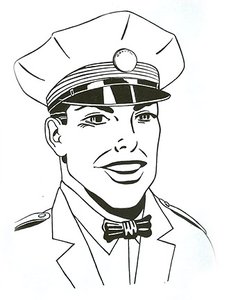
      Background and Description Mr. Bellamy, a seminal work by Roy Lichtenstein, embodies the quintessence of pop art, blending humor and satire with the familiar tropes of comic books.…

      Bathroom (1961) čiji je autor Рој Ликтенстајн
      #56

      Bathroom

      1961

      In the vast landscape of twentieth-century art, few works possess the immediate, graphic punch of Roy Lichtenstein’s 1961 masterpiece, "Bathroom." At first glance, the viewer is presented with…

      Silver Frame (1984) čiji je autor Рој Ликтенстајн
      #57

      Silver Frame

      1984

      In the mid-1980s, the art world found itself captivated by a resurgence of energy that looked backward to move forward, and at the heart of this movement stood…

      Полица - 7 (1970) čiji je autor Рој Ликтенстајн
      #58

      Полица - 7

      1970

      A Window into Pop Reflection: Decoding Roy Lichtenstein’s ‘Mirror - 7’ Roy Lichtenstein-ova “Mirror – 7”, nastala 1970. године, је више од само апстрактне композиције; то је играва…

      Bedroom at Arles (1992) čiji je autor Рој Ликтенстајн
      #60

      Bedroom at Arles

      1992

      In the vast tapestry of art history, few encounters are as intellectually stimulating as Roy Lichtenstein’s 1992 masterpiece, Bedroom at Arles. This work is far more than a…

      Refrigerator (1962) čiji je autor Рој Ликтенстајн
      #61

      Refrigerator

      1962

      A Quintessential Lichtenstein: Exploring “Refrigerator” (1962) “Refrigerator,” created in 1962 by Roy Lichtenstein, is a striking example of the artist’s pioneering contribution to the Pop Art movement. This…

      Modular Painting with Nine Panels (1968) čiji je autor Рој Ликтенстајн

      A Symphony of Structure: Deconstructing Lichtenstein’s ‘Modular Painting with Nine Panels’ Roy Lichtenstein's “Modular Painting with Nine Panels,” created in 1968, stands as a compelling testament to the…

      The Atom (1975) čiji je autor Рој Ликтенстајн
      #63

      The Atom

      1975

      Roy Lichtenstein’s “The Atom,” painted in 1975, is more than just a depiction of geometric shapes; it’s a carefully constructed explosion of Pop Art’s core tenets. This striking…

      House III (1997) čiji je autor Рој Ликтенстајн
      #64

      House III

      1997

      In the twilight of his illustrious career, Roy Lichtenstein turned his gaze toward one of the most enduring symbols of the American psyche: the suburban home. House III,…

      Bull Head III (1973) čiji je autor Рој Ликтенстајн
      #65

      Bull Head III

      1973

      In the vibrant landscape of twentieth-century art, few images command attention with such immediate, graphic authority as Roy Lichtenstein’s Bull Head III. At first glance, the viewer is…

      Donald Duck (1957) čiji je autor Рој Ликтенстајн
      #66

      Donald Duck

      1957

      The paper holds a sudden, frantic energy as Donald Duck stares out from a world of heavy, dark lines. There is no stillness here; instead, the charcoal moves…

      No - Nox (1962) čiji je autor Рој Ликтенстајн
      #67

      No - Nox

      1962

      Roy Lichtenstein's 1962 work, "No – Nox," isn’t a painting in the traditional sense; it’s a meticulously crafted graphic statement. Immediately arresting is its monochrome palette—a stark black…

      Washington crossing delaware (1951) čiji je autor Рој Ликтенстајн

      Washington Crossing Delaware: A Pop Art Reinterpretation of History Roy Lichtenstein’s *Washington Crossing Delaware* stands as a pivotal artwork, encapsulating the spirit of Pop Art while simultaneously interrogating…

      Crvena Slika (Šrafkastost) (1965) čiji je autor Рој Ликтенстајн

      A Deceptive Simplicity: Unveiling Roy Lichtenstein’s ‘Red Painting (Brushstroke)’ Roy Lichtensteinova ‘Crvena Slika (Šrafica)’ iz 1965. godine, na prvi pogled, predstavlja vežbu u jarkoj kromatskoj redukciji. Vibrantna crvena…

      Artist's Studio "Foot Medication" (1974) čiji je autor Рој Ликтенстајн
      #70

      Artist's Studio "Foot Medication"

      1974 · Art Institute of Chicago

      The eye enters a space that feels both expansive and strangely compressed, a large-scale interior where the walls are composed of overlapping rectangular planes. There is no traditional…

      Wimpy (Tweet) (1961) čiji je autor Рој Ликтенстајн
      #71

      Wimpy (Tweet)

      1961

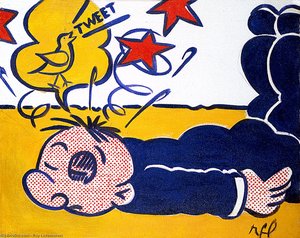
      In the annals of twentieth-century art, few images possess the jarring, immediate power of Roy Lichtenstein’s 1961 masterpiece, "Wimpy (Tweet)." At first glance, the viewer is confronted with…

      Mao (1971) čiji je autor Рој Ликтенстајн
      #72

      Mao

      1971

      Snažna izjava u monokromiji: Istraživanje Lichtensteinovog dela „Mao” Slika „Mao”, koju je Roy Lichtenstein izveo 1971. godine, stoji kao upečatljiv simbol angažmana Pop art pokreta prema popularnoj kulturi…

      Brattata (1962) čiji je autor Рој Ликтенстајн
      #73

      Brattata

      1962

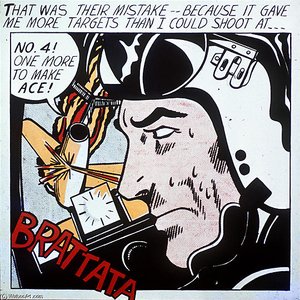
      The Electric Pulse of Pop Art: Reimagining Brattata Brattata, a 1962 masterpiece by the visionary Roy Lichtenstein, serves as a thunderous declaration of the power inherent in popular…

      2 jabuke (1981) čiji je autor Рој Ликтенстајн
      #74

      2 jabuke

      1981

      A Bite of Pop: Decoding Lichtenstein’s “2 Apples” Рој Лихтенштајн-ова "2 apples", креирана 1981. године, је децењиво једноставан рад који сакупља основне принципе његовом слављеном стилу Поп арт-а.…

      The Cowboy (Red) (1951) čiji je autor Рој Ликтенстајн
      #75

      The Cowboy (Red)

      1951

      Roy Lichtenstein’s “The Cowboy (Red)” isn't merely a painting; it’s an explosion of color, a deliberate provocation, and a masterful distillation of the Pop Art movement’s core tenets.…

      Glass (1977) čiji je autor Рој Ликтенстајн

      In his 1977 masterpiece, Glass, Roy Lichtenstein invites us to pause and reconsider the mundane objects that populate our daily lives. At first glance, the painting presents a…

      Live ammo (Ha! Ha! Ha!) (1962) čiji je autor Рој Ликтенстајн

      In the landscape of twentieth-century art, few works capture the electric pulse of mid-century Americana as vibrantly as Roy Lichtenstein’s Live Ammo (Ha! Ha! Ha!). Created in 1962,…

      Preparedness (1968) čiji je autor Рој Ликтенстајн
      #78

      Preparedness

      1968

      In the vast landscape of twentieth-century art, few works capture the tension between mechanical precision and cultural anxiety as poignantly as Roy Lichtenstein’s 1968 masterpiece, Preparedness. This painting…

      Crying Girl (1963) čiji je autor Рој Ликтенстајн
      #79

      Crying Girl

      1963

      The gaze of the woman in Crying Girl meets the viewer with an immediate, heavy sense of sorrow. Created by the artist Roy Lichtenstein, this work captures a…

      Sailboats (1985) čiji je autor Рој Ликтенстајн
      #80

      Sailboats

      1985

      In the grand tapestry of twentieth-century art, few works capture the sun-drenched optimism of the American spirit quite like Roy Lichtenstein’s “Sailboats.” Completed in 1985, this masterpiece serves…

      Live ammo (1962) čiji je autor Рој Ликтенстајн
      #81

      Live ammo

      1962

      A Burst of Action: Decoding Roy Lichtenstein’s “Live Ammo” “Live Ammo,” created in 1962 by Pop Art master Roy Lichtenstein, is a dynamic and visually arresting work that…

      Interior with mobile čiji je autor Рој Ликтенстајн

      A Sanctuary of Graphic Serenity In the quiet corners of Roy Lichtenstein’s Interior with Mobile, one finds a profound meditation on domestic peace. The painting invites the viewer…

      Despair (1979) čiji je autor Рој Ликтенстајн
      #83

      Despair

      1979

      In the pantheon of twentieth-century masterpieces, few works capture the intersection of mass media aesthetics and raw human vulnerability as poignantly as Roy Lichtenstein’s “Despair.” Created in 1979,…

      Magnifying glass (1963) čiji je autor Рој Ликтенстајн
      #84

      Magnifying glass

      1963

      In 1963, Roy Lichtenstein presented Magnifying glass, a still life that captures a single, silent object. The painting focuses on the stark silhouette of a magnifying glass. It…

      Two Green Apples (1980) čiji je autor Рој Ликтенстајн
      #85

      Two Green Apples

      1980

      A Pop Icon’s Subtle Still Life: Exploring Lichtenstein's "Two Green Apples" Roy Lichtenstein, a titan of the Pop Art movement, is overwhelmingly known for his bold, comic-inspired paintings.…

      That my ship was below them (1964) čiji je autor Рој Ликтенстајн

      A Burst of Action: Decoding Roy Lichtenstein’s “That my ship was below them…” “That my ship was below them…” (1964), is a quintessential example of Roy Lichtenstein's groundbreaking…

      Brustrokes (1970) čiji je autor Рој Ликтенстајн
      #87

      Brustrokes

      1970

      In the vibrant landscape of twentieth-century American art, few works capture the electric pulse of popular culture quite like Roy Lichtenstein’s “Brustrokes.” Completed in 1970, this painting serves…

      Telaviv mural (1989) čiji je autor Рој Ликтенстајн
      #88

      Telaviv mural

      1989

      In the vibrant tapestry of twentieth-century art, few works command attention with such playful yet profound intensity as Roy Lichtenstein’s "Tel Aviv Mural." Completed in 1989, this striking…

      Collage for Nude (1997) čiji je autor Рој Ликтенстајн
      #89

      Collage for Nude

      1997

      Roy Lichtenstein's "Collage for Nude," created in 1997, isn’t merely a painting; it’s a carefully constructed dialogue between the familiar and the unsettling. This work, rendered in oil…

      Modular painting with four panels, #1 (1969) čiji je autor Рој Ликтенстајн
      #90

      Modular painting with four panels, #1

      1969 · Museum Ludwig

      Sinfonija Kruga: Dekonstrukcija Pop Art-a sa "Modular Painting #1" Roja Lihtenštejna Roy Fox Lichtenstein, jedan od najznačajnijih umetnika 20. veka, svojim radom “Modular Painting #1” (1969) ostavio je…

      Small explosion (1965) čiji je autor Рој Ликтенстајн
      #91

      Small explosion

      1965

      Roy Lichtenstein’s “Small Explosion,” painted in 1965, is more than just a depiction of a red circle; it’s a meticulously crafted detonation of Pop Art principles. This deceptively…

      I Love Liberty (1982) čiji je autor Рој Ликтенстајн
      #92

      I Love Liberty

      1982

      A Pop Icon Reimagined: Roy Lichtenstein’s “I Love Liberty” “I Love Liberty,” created in 1982 by master of Pop Art, Roy Lichtenstein, is a striking and dynamic reinterpretation…

      Woman (1981) čiji je autor Рој Ликтенстајн
      #93

      Woman

      1981

      A Dynamic Embrace: Decoding Lichtenstein’s ‘Woman’ (1981) This vibrant artwork by Roy Lichtenstein, created in 1981, is a quintessential example of his enduring Pop Art style. It depicts…

      Collage for Woman with Mirror (1996) čiji je autor Рој Ликтенстајн

      In the vast landscape of twentieth-century art, few names command as much immediate recognition as Roy Lichtenstein. His 1996 masterpiece, Collage for Woman with Mirror, serves as a…

      Drawing for Seductive Girl (1996) čiji je autor Рој Ликтенстајн

      This artwork is a drawing of a woman lying on her back with one leg raised in the air. She is depicted wearing a dress and has long…

      Collage for Interior with Ajax (1997) čiji je autor Рој Ликтенстајн

      Collage for Interior with Ajax is a painting created in 1997. The composition features a woman holding a vase up to her face, appearing to examine its contents…

      Mirror - 2 (1970) čiji je autor Рој Ликтенстајн
      #97

      Mirror - 2

      1970

      A Reflection on Modernity: Decoding Roy Lichtenstein’s “Mirror - 2” Roy Lichtenstein's "Mirror – 2," created in 1970, is not merely an image *of* a mirror, but rather…

      Art Critic (1996) čiji je autor Рој Ликтенстајн
      #98

      Art Critic

      1996

      The Stark Beauty of Pop: Roy Lichtenstein’s “Art Critic” Roy Lichtenstein's "Art Critic," painted in 1996, isn’t merely a portrait; it’s an arresting collision of styles and ideas…

      Figures with sunset (1978) čiji je autor Рој Ликтенстајн

      “Figures with Sunset,” created in 1978 by Roy Lichtenstein, stands as a testament to the artist’s masterful fusion of two influential artistic movements: Cubist fragmentation and Impressionistic color…

      Unutrašnjost sa Žutom Stolicom (1993) čiji je autor Рој Ликтенстајн

      A Domestic Stage: Roy Lichtenstein’s ‘Interior with Yellow Chair’ Roy Lichtenstein's ‘Interior with Yellow Chair,’ dovršena 1993. godine, nudi fascinant uvid u kasnija istraživanja umetnika u dometu i…

      Platna umetnika Рој Ликтенстајн po periodima

      Šta je Рој Ликтенстајн najčešće slikao

      Četiri teme koje se najčešće pojavljuju na ovim platnima, svaka sa svojim najomiljenijim primerom.

      Gde se nalaze platna umetnika Рој Ликтенстајн

      2 muzeja u kojima se nalazi najviše slika sa ove stranice.

      Muzeji Grad Radovi umetnika Рој Ликтенстајн Slike iz ovog spiska
      Art Institute of Chicago, ČikagoArt Institute of Chicago Čikago 4 Artist's Studio "Foot Medication"
      Museum Ludwig, KelnuMuseum Ludwig Kelnu 1 Modular painting with four panels, #1

      Najpoznatije platno umetnika Рој Ликтенстајн, deceniju za decenijom

      1. 1950s
        The hero's return (1950) čiji je autor Рој Ликтенстајн
        48 od 100

        The hero's return

        Godine 27 – 36

        The painting is a colorful and detailed depiction of a man holding a bow and arrow while standing next to two other people. The man with the bow…

      2. 1960s
        Vam! (1963) čiji je autor Рој Ликтенстајн
        Platno 1 od 100

        Vam!

        Godine 37 – 46

        Roy Lichtensteinova godina 1963. je remek-delo, "Whaam!", više od pukog prikaza vazdušne borbe; to je snažan komentar na odmaknutu, stilizovanu reprezentaciju nasilja koja je bila prisutna u američkoj…

      3. 1970s
        Stilski život sa zlatnim ribama (i slika golf loptice) (1972) čiji je autor Рој Ликтенстајн
        24 od 100

        Stilski život sa zlatnim ribama (i slika golf loptice)

        Godine 47 – 56

        Pop Art Still Life: Dekonstrukcija Domastičnosti u Kompoziciji Lichtensteina iz 1972. godine Still Life with Goldfish (and Painting of Golf Ball) Roja Lichtensteina je esencijalan primer njegovog potpisanog…

      4. 1980s
        Bez naslova Roy Lichtenstein ^ Gian Franco Gorgoni (1988) (1988) čiji je autor Рој Ликтенстајн
        Rangiran/a 8 od 100

        Bez naslova Roy Lichtenstein ^ Gian Franco Gorgoni (1988)

        Godine 57 – 66

        Subjekat i kompozicija Ovo očaravajuće umetničko delo majstorski dočarava usamljenog jahača na konju koji preseca miran morski pejzaž u sumrak. Silueta jahača i konja stoji u oštrom kontrastu…

      5. 1990s
        ГОЛА СА ПЛАВОМ КОС de (1994) čiji je autor Рој Ликтенстајн
        10 od 100

        ГОЛА СА ПЛАВОМ КОС de

        Godine 67 – 74

        Subjekat i kompozicija Ovo upečatljivo umetničko delo dočarava stilizovani portret žene očaravajuće plave kose, prikazane kroz smelu i grafičku estetiku. Direktni pogled subjekta i blago provokativan izraz lica…

      Platna umetnika Рој Ликтенстајн, odgovor po odgovor

      Po kojem platnu je Рој Ликтенстајн najpoznatiji?Pročitajte odgovor

      Vam! (1963), a zatim Pogledaj, Miki (1961) i Дингвонг Ирл (1963).

      Vam!: koliko je godina imao/la Рој Ликтенстајн kada je ovo delo nastalo?Pročitajte odgovor

      Рој Ликтенстајн, rođen/a 1923, imao/la je 40 godina: Vam! datira iz 1963.

      Koja su deset najpoznatijih platna umetnika Рој Ликтенстајн?Pročitajte odgovor

      Vam!, Pogledaj, Miki, Дингвонг Ирл, Devojčica sa loptom, Torpedo...LOS!, Roto Broil, Блам, Bez naslova Roy Lichtenstein ^ Gian Franco Gorgoni (1988), Hej ti - (2402193) i ГОЛА СА ПЛАВОМ КОС de. Svako platno u gornjem rangiranju sadrži godinu nastanka i naziv muzeja.

      Koliko je slika stvorio/la Рој Ликтенстајн?Pročitajte odgovor

      U našem katalogu se nalazi 382 dela umetnika Рој Ликтенстајн, datiranih od 1950 do 1997.

      Gde se danas nalaze najpoznatija platna umetnika Рој Ликтенстајн?Pročitajte odgovor

      Većinom u Art Institute of Chicago (Čikago) i Museum Ludwig (Kelnu); gornja lista navodi svaki muzej i njegova platna.

      Kada je Рој Ликтенстајн naslikao svoje najpoznatije platna?Pročitajte odgovor

      U 1960s, koji obuhvata 54 od 100 dela na ovoj stranici, među njima je i Vam!.

      Koje je čuveno platno umetnika Рој Ликтенстајн nastalo prvo, a koje poslednje?Pročitajte odgovor

      Najstarije platno ovde je iz The hero's return (1950) godine; najnovije je iz House III (1997) godine.

      Koje je motive Рој Ликтенстајн najčešće slikao?Pročitajte odgovor

      Pop art (30), Ben-day dots (16) i Geometric shapes (13), kroz svih 100 dela na ovoj stranici.

      Koji se medij najčešće pojavljuje u delima umetnika Рој Ликтенстајн?Pročitajte odgovor

      Akril na platnu, korišćeno u 26 od 100 dela na ovoj stranici.

      Sa kojim umetničkim pravcem je Рој Ликтенстајн povezan/a?Pročitajte odgovor

      Поп арт, kao što pokazuju platna na ovoj stranici.

      Upoznajte umetnika: Рој Ликтенстајн

      The Life of Roy Lichtenstein

      Manhattan, New York City, October 27, 1923. Roy Lichtenstein enters the world as the son of Milton and Beatrice. The urban energy of the metropolis provides the backdrop for a life that will eventually challenge the boundaries of fine art. He grows up in an upper-middle-class Jewish family, absorbing the cultural rhythms of the city through museums and jazz music.

      The trajectory of his career shifts during the mid-twentieth century. He emerges as a leading figure of the Pop Art movement, a period defined by a radical departure from the heavy, emotional brushwork of Abstract Expressionism. Instead of looking inward, he looks outward at the glossy, mechanical surfaces of American mass culture. He finds his subject matter in the most overlooked corners of daily life: the dramatic panels of comic books and the stark, repetitive patterns of commercial advertising.

      His work transforms the ephemeral language of print into something monumental. By adopting the visual shorthand of the masses, he forces a confrontation between high-end gallery prestige and the everyday pulse of the street. His presence in the art world is marked by a deliberate detachment, using the very tools of industrial reproduction to redefine what a painting can be.

      Early Life, Family and Training

      Manhattan, 1923. The city provides the backdrop for Roy Fox Lichtenstein's arrival into an upper-middle-class Jewish family. His father, Milton, works as a real estate broker, while his mother, Beatrice, a trained pianist, introduces him to the cultural rhythms of New York. These early years are marked by a dual immersion in the visual and the auditory; he spends his childhood exploring museums and attending concerts, developing a deep appreciation for jazz music that persists throughout his life.

      The trajectory shifts toward formal discipline in 1939. He enters the Art Students League of New York, placing himself under the instruction of Reginald Marsh. Here, the focus remains on the fundamentals of drawing and painting. He moves from these early explorations toward higher education, enrolling at Ohio State University to pursue a degree in fine arts. This academic foundation provides the technical rigor that will eventually underpin his later, more radical departures from traditional representation.

      Military Service and Return to Study

      The trajectory of Lichtenstein's education shifts abruptly in 1943. The draft pulls him from the classroom and into the United States Army. For two years, the focus moves from the studio to the front lines of Europe. He serves in France, Belgium, and Germany, navigating the chaos of the war years between 1943 and 1945. During this period, he works as an orderly, a draftsman, and an artist, sketching the reality of his surroundings while the conflict reaches its peak.

      The war ends, but the transition back to civilian life is not immediate. After the cessation of hostilities in 1945, Lichtenstein remains in France for a time, intending to study at the Sorbonne. This plan dissolves when his father becomes gravely ill, forcing a return to the United States. He heads back to Ohio State University to finish what he started. By 1946, he completes his BFA, ready to re-enter the professional art world as a trained practitioner.

      Teaching Career and Early Works

      The post-war years find Lichtenstein navigating the academic landscape of the American Midwest and East Coast. He serves as an art instructor at Ohio State University, a position he holds on and off for a decade. During this period, his creative output shifts. He moves away from the heavy, emotional brushwork of Abstract Expressionism. Instead, he begins to experiment with Cubist interpretations and lyrical works inspired by the Bayeux Tapestry. He also explores Western themes, producing series of drawings and paintings that reflect a growing interest in stylized, printed imagery.

      The transition toward a more graphic language accelerates through his various academic appointments. In 1957, he moves to the State University of New York, Oswego, to teach industrial design. This role coincides with a period of intense experimentation. He begins to combine cartoon characters, such as Mickey Mouse and Donald Duck, with abstract backgrounds. This hybrid approach marks a departure from traditional fine art. He later serves as an assistant professor at Douglass College, Rutgers, State University of New Jersey, and as an assistant professor at SUNY Oswego. These academic environments provide the stability for him to refine a visual language that rejects the texture of traditional painting in favor of something more mechanical and detached.

      Technique and Signature Style

      The canvas becomes a site of mechanical precision. Lichtenstein strips away the visible brushstroke, replacing the artist's hand with the cold, calculated language of mass production. He adopts the aesthetics of comic books and advertising, utilizing bold, primary colors and heavy black outlines to define his subjects. The imagery feels detached, mimicking the flat, impersonal quality of a printed page rather than a hand-painted surface.

      Texture is achieved through a deliberate, systematic application of Ben-Day dots. These small, colored circles create shading and gradations, replicating the look of cheap commercial printing. He does not paint these dots individually. Instead, he uses stencils made of thin plastic or metal, sweeping a brush or rag across the surface to ensure a uniform, machine-made appearance. This technique turns the act of painting into a process of reproduction, blurring the line between fine art and industrial output.

      Key Works and Iconic Paintings

      The shift toward his signature style arrives in 1961 with Look Mickey. Here, the appropriation of a Disney character marks a departure from his earlier abstract experiments. He moves away from the heavy, emotional brushwork of the previous decade, opting instead for the mechanical clarity of the comic strip. The work functions as a bridge, translating the language of pulp fiction into a formal, large-scale composition.

      By 1963, the scale of his visual interrogation expands. Whaam! explodes across the canvas, utilizing the dramatic, fragmented panels of war comics to capture a moment of high-octane violence. Simultaneously, Drowning Girl presents a different kind of tension. It focuses on a woman submerged in water, her face marked by stylized tears and a speech bubble that expresses a sense of personal defiance. These works do not merely depict scenes; they freeze the melodrama of mass media into static, graphic objects.

      The 1964 painting Nurse continues this exploration of the romantic and the dramatic. It utilizes the same high-contrast outlines and Ben-Day dots that define his most recognized period. The subject, a nurse from a comic romance novel, is rendered with a detachment that emphasizes the artificiality of the source material. His output during this era remains focused on the intersection of human emotion and industrial reproduction.

      Later Years and Death

      The 1960s brought a shift in his personal life when he married Dorothy Herzka in 1968. This period saw him continuing to produce a vast body of work, expanding his reach through various mediums. His output remained prolific, spanning over five thousand works including paintings, sculptures, and murals. He moved beyond the initial shock of his comic-inspired style to explore more complex compositions, including series that referenced classical art and landscapes.

      The end came abruptly in the late 1990s. In August 1997, he contracted pneumonia. The illness proved too much for his system. He died from complications of the infection on September 29, 1997. He was 73 years old.

      Legacy and Lasting Impact

      The boundaries between high art and popular culture dissolve in the wake of his influence. By lifting the visual language of comic strips and advertising into the gallery, he forced a confrontation between fine art and the mass-produced imagery of everyday life. This shift did more than change the subject matter of painting; it challenged the very definition of artistic authorship and originality. His work remains a catalyst for critical dialogue regarding the intersection of art, culture, and commerce.

      His presence is felt in major museum collections worldwide. From the halls of the Tate in London to the Museum of Modern Art in New York, his aesthetic remains a fundamental part of the modern canon. The impact of his method extends into graphic design, illustration, and contemporary digital art, where the tension between the mechanical and the hand-painted continues to resonate. He did not merely participate in the Pop Art movement; he helped originate it, establishing a visual vocabulary that remains a primary reference point for how we consume images in a media-saturated age.