Atelje — Besplatna dostava širom sveta — Rok isporuke: 2–6 nedelja
      Emanuel De Witte, 1617 – 1692

      Emanuel De Witte: 99 najpoznatijih dela

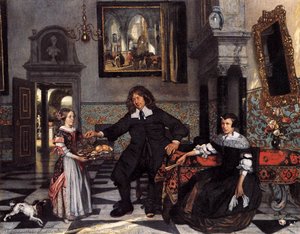
      Od svih slika umetnika Emanuel De Witte, Portrait of a Family in an Interior (detail) (1678) je najpoznatija; nalazi se u muzeju Alte Pinakothek, Minhen. Odmah za njima su The Interior of a Dutch Church (1680) i Interior of the Nieuwe Kerk in Delft (1664). Od 99 dela umetnika Emanuel De Witte u našem katalogu, ovih 99 su najpoznatija, a svako od njih prikazano je sa datumom nastanka, muzejom i pričom.

      Rangirano prema našem koeficijentu popularnosti, koji kombinuje pretrage, posete i porudžbine za svako delo. Ažurirano октобар 2026. Svaku sliku sa ove stranice možete naručiti kao ručno oslikano ulje na platnu od lana ili kao umetnički print, izrađen u dimenzijama koje sami odaberete.

      Portret Emanuel De Witte
      Emanuel De Witte · 1617 – 1692
      Rođen · umro
      1617 – 1692, Алкмар
      Pokret
      Dutch golden age
      Radovi u našem katalogu
      99
      Najpoznatije
      Portrait of a Family in an Interior (detail) (1678)
      Najviše dela u
      Museum Boijmans Van Beuningen

      10 najpoznatijih dela umetnika Emanuel De Witte

      Portrait of a Family in an Interior (detail) (1678) čiji je Emanuel De Witte
      1

      Portrait of a Family in an Interior (detail)

      1678 · Oil On Canvas · Alte Pinakothek, Minhen

      Emanuel de Witte's “Portrait of a Family in an Interior” (1678) isn’t merely a depiction of a wealthy household; it’s a carefully constructed tableau vivant, a frozen moment brimming with quiet dignity and subtle narrative. Painted during the height of the Dutch Golden Age, this oil on canvas offers a rare glimpse into the lives of a prosperous family within their richly appointed home—a space designed to project status, comfort,…

      The Interior of a Dutch Church (1680) čiji je Emanuel De Witte
      2

      The Interior of a Dutch Church

      1680 · Oil On Canvas · Scottish National Gallery, Edinburgh

      The Interior of a Dutch Church is an oil on canvas by Emanuel de Witte. Created about 1680, the work reflects the artist's specialization in the architectural spaces of the Netherlands. De Witte, who was born in Alkmaar, Netherlands, spent much of his career capturing the specific atmosphere and light within these sacred environments.

      Interior of the Nieuwe Kerk in Delft (1664) čiji je Emanuel De Witte
      3

      Interior of the Nieuwe Kerk in Delft

      1664 · Oil On Canvas · Residenzgalerie, Salzburg

      To stand before an interior scene like this depiction of the Nieuwe Kerk in Delft is to step across a threshold, leaving the clamor of the outside world behind. The artwork does not merely show us a church; it envelops us within its monumental silence. Emanuel de Witte masterfully captures that unique atmosphere found only in grand, aged sacred architecture—a place where history seems palpable in the very dust motes…

      The Interior of the Oude Kerk, Amsterdam, during a Sermon (1658) čiji je Emanuel De Witte
      5

      The Interior of the Oude Kerk, Amsterdam, during a Sermon

      1658 · Oil On Canvas · National Gallery, London

      To stand before this depiction of The Interior of the Oude Kerk in Amsterdam is to step across the threshold of time itself. This painting, executed in 1658 by Emanuel de Witte, is far more than a mere record of an architectural space; it is a meticulously crafted meditation on faith, community, and the sublime interplay between human life and divine structure. The high-angle perspective immediately envelops the viewer, drawing…

      Portrait of a woman (1648) čiji je Emanuel De Witte
      6

      Portrait of a woman

      1648 · Oil On Canvas · Museum Boijmans Van Beuningen, Rotterdam

      A single female figure occupies the center of this oval vignette, presented in a bust-length view. She wears a dark garment, accented by a prominent white collar with scalloped edges and a small black bow. The composition draws the eye directly to her face, where a calm and composed expression suggests a dignified emotional tone. Light originates from the upper left, casting gentle shadows across the right side of her…

      Portrait of a man (1648) čiji je Emanuel De Witte
      7

      Portrait of a man

      1648 · Oil · Museum Boijmans Van Beuningen, Rotterdam

      is an oil painting by the Dutch artist Emanuel de Witte. Executed about 1648, the work represents a significant example of the artist's early engagement with portraiture before his later specialization in church interiors. The sitter is presented in a bust-length composition, positioned slightly off-center to create a sense of depth and presence.

      Interior of a Protestant Gothic Church (1669) čiji je Emanuel De Witte
      8

      Interior of a Protestant Gothic Church

      1669 · Oil On Canvas · Rijksmuseum, Amsterdam

      Emanuel de Witte's "Interior of a Protestant Gothic Church," painted in 1669, isn’t merely a depiction of a sacred space; it’s an immersive experience. This remarkable work transcends the simple act of recording architecture, instead capturing the very *feeling* of being within a grand, dimly lit cathedral – a testament to de Witte's unique artistic vision. Unlike his contemporary Pieter Saenredam, who meticulously documented architectural details with photographic precision, de…

      Slika Emanuel De Witte rangirane od 11 do 99

      Interior of the Oude Kerk, Delft (1650) čiji je Emanuel De Witte
      #38

      Interior of the Oude Kerk, Delft

      1650 · Metropoliten музеј у Њујорку

      Despite its profusion of realistic details, de Witte’s interior view of Delft’s Oude Kerk (Old Church) takes considerable liberties with the actual architecture of the church—omitting, for example,…

      Naručite ovo platno →
      Old Church in Delft (1642) čiji je Emanuel De Witte
      #71

      Old Church in Delft

      1642 · Ermitaž

      In the quiet corners of the Dutch Golden Age, where light performs its most delicate dances, Emanuel de Witte captured something far more profound than mere architecture. His…

      Naručite ovo platno →
      Interior of the Oude Kerk, Delft (1650) čiji je Emanuel De Witte
      #73

      Interior of the Oude Kerk, Delft

      1650 · Metropoliten музеј у Њујорку

      Emanuel de Witte's “Interior of the Oude Kerk, Delft” isn’t merely a depiction of a church; it’s an immersive experience. Painted in 1650, this remarkable work transports us…

      Naručite ovo platno →
      Interior of a Church (1660) čiji je Emanuel De Witte
      #81

      Interior of a Church

      1660 · Ermitaž

      Emanuel de Witte's "Interior of a Church," painted around 1669, isn’t merely a depiction of a sacred space; it’s an immersive experience, a carefully constructed invitation to contemplate…

      Naručite ručno oslikano →
      Interior of a Gothic church čiji je Emanuel De Witte
      #86

      Interior of a Gothic church

      Museum Boijmans Van Beuningen

      The scene unfolds within the quiet, soaring reaches of an Interior of a Gothic church. This work, painted by Emanuel de Witte, captures a moment of stillness amidst…

      Naručite ovo platno →

      Šta je Emanuel De Witte najčešće slikao

      Četiri teme koje se najčešće pojavljuju na ovim platnima, svaka sa svojim najomiljenijim primerom.

      Gde se nalaze platna umetnika Emanuel De Witte

      8 muzeja u kojima se nalazi najviše slika sa ove stranice.

      Muzej Grad Radovi umetnika Emanuel De Witte Slike iz ovog spiska
      Museum Boijmans Van Beuningen, RotterdamMuseum Boijmans Van Beuningen Rotterdam 11 Portrait of a woman, Portrait of a man, Vertumnus and Pomona
      Rijksmuseum, AmsterdamRijksmuseum Amsterdam 8 Interior of a Protestant Gothic Church, Interior of a Protestant Gothic Church, Interior of the Portuguese Synagogue in Amsterdam
      National Gallery, LondonNational Gallery London 4 The Interior of the Oude Kerk, Amsterdam, during a Sermon, The Interior of the Oude Kerk, Amsterdam, The Interior of the Oude Kerk, Amsterdam, during a Sermon
      Amsterdam Museum, AmsterdamAmsterdam Museum Amsterdam 3 Interior of the Oude Kerk in Amsterdam, Interior of the Oude Kerk in Amsterdam, Interior of the Oude Kerk in Amsterdam
      Gemäldegalerie, BerlinGemäldegalerie Berlin 3 Interior View of a Synagogue, Interior of a Gothic Church, Interior of the Nieuwe Kerk in Amsterdam
      Ermitaž, Sankt PeterburgErmitaž Sankt Peterburg 3 Square in front of the Palace in an Italian Town, Old Church in Delft, Interior of a Church
      Metropoliten музеј у Њујорку, ЊујоркMetropoliten музеј у Њујорку Њујорк 3 Interior of the Oude Kerk, Delft, Interior of the Oude Kerk, Delft (detail), Interior of the Oude Kerk, Delft
      Detroit Institute of Arts, DetroitDetroit Institute of Arts Detroit 3 The Nieuwe Kerk at Delft with the Tomb of Willem the Silent, Interior of a Protestant Church, Interior of the Oude Kerk in Amsterdam

      Deceniju po deceniju: najpoznatije platno umetnika Emanuel De Witte

      1. 1640s
        Portrait of a woman (1648) čiji je Emanuel De Witte
        Platno 6 od 99

        Portrait of a woman

        Godine 23 – 32 · Museum Boijmans Van Beuningen

        A single female figure occupies the center of this oval vignette, presented in a bust-length view. She wears a dark garment, accented by a prominent white collar with…

      2. 1650s
        Rest During the Flight (1654) čiji je Emanuel De Witte
        Platno 4 od 99

        Rest During the Flight

        Godine 33 – 42 · Bavarske državne slikopisne kolekcije

        The oil painting titled Rest During the Flight by Emanuel de Witte depicts a specific narrative from religious history. Created about 1654, the work presents a scene likely…

      3. 1660s
        Interior of the Nieuwe Kerk in Delft (1664) čiji je Emanuel De Witte
        3 od 99

        Interior of the Nieuwe Kerk in Delft

        Godine 43 – 52 · Residenzgalerie

        To stand before an interior scene like this depiction of the Nieuwe Kerk in Delft is to step across a threshold, leaving the clamor of the outside world…

      4. 1670s
        Portrait of a Family in an Interior (detail) (1678) čiji je Emanuel De Witte
        Rangiran/a 1 od 99

        Portrait of a Family in an Interior (detail)

        Godine 53 – 62 · Alte Pinakothek

        Emanuel de Witte's “Portrait of a Family in an Interior” (1678) isn’t merely a depiction of a wealthy household; it’s a carefully constructed tableau vivant, a frozen moment…

      5. 1680s
        The Interior of a Dutch Church (1680) čiji je Emanuel De Witte
        Platno 2 od 99

        The Interior of a Dutch Church

        Godine 63 – 72 · Scottish National Gallery

        The Interior of a Dutch Church is an oil on canvas by Emanuel de Witte. Created about 1680, the work reflects the artist's specialization in the architectural spaces…

      6. 1690s

      Vaša pitanja o slikama umetnika Emanuel De Witte, odgovorena

      Koje je najpoznatije delo umetnika Emanuel De Witte?Pročitajte odgovor

      Portrait of a Family in an Interior (detail) (1678), Alte Pinakothek, Minhen. Prate ih The Interior of a Dutch Church (1680) i Interior of the Nieuwe Kerk in Delft (1664).

      Koliko je godina imao/la Emanuel De Witte u vreme nastanka dela Portrait of a Family in an Interior (detail)?Pročitajte odgovor

      Emanuel De Witte, rođen/a 1617, imao/la je 61 godina: Portrait of a Family in an Interior (detail) datira iz 1678.

      Po kojim deset slika je Emanuel De Witte najpoznatiji/a?Pročitajte odgovor

      Portrait of a Family in an Interior (detail), The Interior of a Dutch Church, Interior of the Nieuwe Kerk in Delft, Rest During the Flight, The Interior of the Oude Kerk, Amsterdam, during a Sermon, Portrait of a woman, Portrait of a man, Interior of a Protestant Gothic Church, Danaë and the Shower of Gold i Vertumnus and Pomona. Svako platno u gornjem rangiranju sadrži godinu nastanka i naziv muzeja.

      Koliko je poznato slika umetnika Emanuel De Witte?Pročitajte odgovor

      U našem katalogu se nalazi 99 dela umetnika Emanuel De Witte, datiranih od 1641 do 1692.

      U kojim muzejima se čuvaju najpoznatija platna umetnika Emanuel De Witte?Pročitajte odgovor

      Većinom u Museum Boijmans Van Beuningen (Rotterdam), Rijksmuseum (Amsterdam) i National Gallery (London); gornja lista navodi svaki muzej i njegova platna.

      U kojim godinama je Emanuel De Witte naslikao svoje najpoznatije platna?Pročitajte odgovor

      U 1650s, koji obuhvata 27 od 99 dela na ovoj stranici, među njima je i Rest During the Flight.

      Koja su prva i poslednja poznata platna umetnika Emanuel De Witte?Pročitajte odgovor

      Najstarije platno ovde je iz Danaë and the Shower of Gold (1641) godine; najnovije je iz The Nieuwe Vismarkt (New Fish Market) in Amsterdam, Emanuel de Witte, 1655 - 1692 (1692) godine.

      Koji se motivi najčešće pojavljuju u slikama umetnika Emanuel De Witte?Pročitajte odgovor

      Church interior (16), 17th century (10) i Architecture (10), kroz svih 99 dela na ovoj stranici.

      Čime je Emanuel De Witte obično slikao?Pročitajte odgovor

      Oil On Canvas, korišćeno u 22 od 99 dela na ovoj stranici.

      Kojem umetničkom pravcu pripada Emanuel De Witte?Pročitajte odgovor

      Dutch golden age i Baroque, kao što pokazuju platna na ovoj stranici.

      Šta mogu da vidim od dela Emanuel De Witte u muzeju Museum Boijmans Van Beuningen?Pročitajte odgovor

      Muzej Museum Boijmans Van Beuningen, Rotterdam čuva 11 dela sa ove stranice, među kojima su i Portrait of a woman, Portrait of a man i Vertumnus and Pomona.

      Mogu li da naručim ručno oslikanu kopiju slike autora Emanuel De Witte?Pročitajte odgovor

      Da. Svaku sliku sa ove stranice možete naručiti sa njene posebne stranice kao ručno oslikano ulje na platnu ili kao umetnički print, u veličini koju odaberete.

      Emanuel De Witte: priča o umetniku

      Život u perspektivi: Svet Emanuela de Vitia

      Emanuel de Witte, ime možda manje trenutno prepoznatljivo od nekih njegovih savremenika iz holandskog Zlatnog doba, ipak zauzima značajnu i fascinantnu nišu unutar panteona majstora 17. veka. Rođen u Alkmaru 1617. godine, De Vitov umetnički put bio je obeležen kako izvanrednim talentom, tako i značajnim ličnim nemirima – dualitet koji se suptilno utapa u samu atmosferu njegovih slika. Njegom umetnošću nije upravljala pedantna arhitektonska dokumentacija poput one koju je sprovodio Pieter Saenredam; umesto toga, on je težio da dočara osećaj prostora, kvalitet svetlosti i suptilnu dramu koja se odvija unutar svetih enterijera. Njegova platna nisu samo prikazi crkava; ona su proživljena iskustva koja gledaoce pozivaju u svet tihe kontemplacije i duhovnog odjeka.

      Od delfske obuke do zagrljaja Amsterdama

      De Vitov rani život postavio je čvrste temelje za njegove umetničke težnje. Njegov otac, učitelj, u njemu je usadio poštovanje prema učenju i intelektualnu radoznalost – vrline koje će se kasnije manifestovati u njegovom pažljivom posmatrananju perspektive i svetlosti. U zvanični umetnički svet ušao je pridruživanjem eskadriji Svetog Luke u Alkmaru 1636. godine, ali je njegovo naknadno učenje kod Everta van Aelsta u Delftu bilo posebno presudno za njegov razvoj. Van Aelst, čuveni majstor mrtve prirode, preneo je na De Vitija oštro oko za detalje i vrhunsko vladanje svetlošću i senkom – veštine koje će postati zaštitni znak njegovog zrelog stila. U početku je De Witte istraživao različite žanrove—portrete, mitološke scene, religiozne narative—ali tek je preseljenjem u Amsterdam 1651. godine zaista pronašao svoju svrhu. Bogatstvo veličanstvenih crkava ovog grada pružilo je neiscrpan izvor inspiracije, te je on počeo da se specijalizuje za prikazivanje njihovih zastrašujućih i veličanstvenih enterijera.

      Majstor atmosfere i imaginarnih prostora

      Amsterdam je bio ključan za De Vitov umetnički razvoj. On nije jednostavno replikao postojeće crkvene prostore; umesto toga, vešto je sintetizovao elemente iz različitih građevina, stvarajući idealizovane enterijere koji su delovali istovremeno poznato i suptilno vanzemaljski. Oude Kerk u Amsterdamu postala je česta tema, pojavljujući se više puta na njegovim platnama iz različitih uglova posmatranja. Ali to nisu bili puki prikazi. De Witte je manipulisao perspektivom, igrao se svetlom i senkom i naseljavao prostore pažljivo postavljenim figurama kako bi izazvao specifično raspoloženje ili atmosferu. Kako je Walter Liedtke primetio, njegovo primarno interesovanje nije ležalo u samoj arhitekturi, već u „samom prostoru – njegovoj svetlosti, boji, čistoj veličini i raspoloženju“. Ovaj naglasak na atmosferskom efektu izdvaja ga od rigidnijih topografskih slikara tog doba. On nije bio zabrinut za preciznu tačnost; bio je zainteresovan za stvaranje osećaja veličine, poštovanja i duhovne dubine.

      Život obeležen senkama

      Uprkos umetničkom uspehu, De Vitov privatni život bio je opterećen nedaćama. Smrt njegove prve žene donela je duboku tugu, a kasniji pravni problemi koji su uključivali njegovu drugu ženu i ćerku bacili su dugačku senku na njegove poslednje godine. Finansijske poteškoće dovele su ga do ponižavajuće pozicije u službi kod trgovca umetninama, Jorisa de Wijsa, što je bila situacija koju je na kraju prekršio, što je dovelo do daljih komplikacija. Savremeni zapisi oslikavaju sliku nestabilnog temperamenta – čoveka sklonog vikanju klijentima i upadanju u sporove. Ovaj unutrašnji nemir je možda doprineo neravnomernosti njegovog kasnijeg rada, ali takođe dodaje još jedan sloj složenosti našem razumevanju umetnika i njegovih dela. Tragično, De Vitov život je dočekao razorno pitanje 1692. godine, kada je prema izveštajima pokušao samoubistvo viseći se na mostu preko kanala; uže je puklo i on se utopio. Bio je to mračan kraj za čoveka koji je posvetio svoj život hvatanju lepote i spokojstva svetih prostora.

      Nasleđe i trajni uticaj

      Emanuel de Witte stoji kao važna figura u poslednjoj fazi arhitektonskog slikarstva u Holandiji, premošćujući jaz između pedantne dokumentacije i atmosferske interpretacije. Njegova inovativna upotreba svetlosti i perspektive uticala je na buduće generacije umetnika, a njegove slike nastavljaju da nude dragocene uvide u holandski religiozni život i društvene običaje 17. veka. Danas se dela De Vitija čuvaju u prestižnim kolekcijama širom sveta – u Metropolitan Museum of Art, National Gallery of Art i Rijksmuseumu, između ostalih – svedočeći o njegovom trajnom nasleđu kao majstora perspektive, atmosfere i emocionalnog odjeka. On nas podseća da umetnost nije samo ono što vidimo, već kako se osećamo dok gledamo.

      Sva 99 dela umetnika Emanuel De Witte →
