Atelje — Besplatna dostava širom sveta — Rok isporuke: 2–6 nedelja
      Паул Кле, 1879 – 1940

      Паул Кле: The 100 Best-Known Paintings

      Of all Паул Кле's paintings, Novi anđeo (1920) is the most famous; it hangs in the Izraelski muzej, Jerusalem. Close behind come Твитеринг Машина and Ka Parsnasu (1932). Among the 669 works by Паул Кле in our catalogue, these 100 are the most celebrated, each shown with its date, its museum and its story.

      Ranked by our popularity score, which combines the searches, visits and orders for each work. Updated октобар 2026. Each painting on this page can be ordered as an oil reproduction painted by hand on linen canvas, or as a fine art print, made to the size you choose.

      Portrait of Паул Кле
      Паул Кле · 1879 – 1940
      Born · died
      1879 – 1940, Münchenbuchsee
      Movement
      Ekspresionizam
      Works in our catalogue
      669
      Most famous
      Novi anđeo (1920)
      Most works at
      Metropoliten музеј у Њујорку

      Паул Кле's 10 most celebrated paintings

      Novi anđeo (1920) by Паул Кле
      1

      Novi anđeo

      1920 · Монотипија · Izraelski muzej, Jerusalem

      Stvoren 1920. godine, Novi anđeo autora Paula Kleea nudi uvid u umetnikovu jedinstvenu viziju. Ovo delo predstavlja monotipiju, izbor koji odražava Kleejevo interesovanje za jedinstvene, neponovljive kvalitete pojedinačnog otiska. To je tiho delo, koje se oslanja na ošaru crno-belu paletu kako bi uspostavilo svoje prisustvo. Kompozicija je fokusirana na glavu ptice, motiv na koji se Klee često vraćao, pozicioniranu kao da posmatra gledaoca sa izrazom inteligentne radoznalosti.

      Твитеринг Машина by Паул Кле
      2

      Твитеринг Машина

      Tuš na papiru · MoMA - Muzej moderne umetnosti, New York City

      Paul Klee’s “Twittering Machine,” created in 1922, stands as an emblem of early modernist experimentation—a captivating fusion of organic forms and mechanical devices that continues to intrigue viewers decades later. More than just a depiction of birds, it's a profound meditation on humanity’s ambition to replicate nature through technology, rendered with Klee’s signature delicate watercolor and ink technique.

      Ka Parsnasu (1932) by Паул Кле
      3

      Ka Parsnasu

      1932 · Akril na platnu · Kunstmuseum Bern, Bern

      Captivating Subject and Symbolism This striking artwork presents a vibrant and layered landscape that invites viewers into a world of imagination and contemplation. Central to the composition is a luminous orange circle, reminiscent of a sun or moon, symbolizing energy, enlightenment, and the passage of time. Beneath this celestial body, a prominent triangular shape suggests a mountain or pyramid, evoking stability, aspiration, and spiritual ascent. The inclusion of an archway…

      Legenda Nila (1937) by Паул Кле
      4

      Legenda Nila

      1937 · Ulje na platnu · Kunstmuseum Bern, Bern

      Istraživanje bogate tematik i kulturnog simbolizma Zaronite u živopisnu tapiseriju kulturnog pripovedanja i mitskog simbolizma uz ovo očaravajuće umetničko delo. Inspirisano legendarnim Nilom, ovo delo tka narativ o vodi, životu i duhovnosti kroz apstraktne motive i simbolične forme. Kompozicija nagoveštava teme starog Egipta, sa simbolima nalik hijeroglifima, stilizovanim biljem i vodenim stvorenjima koji prizivaju vanvremensku vezu između reke Nil i kolevke civilizacije. Ovo umetničko delo poziva posmatrače da interpretiraju njegov…

      Flora on sand (1927) by Паул Кле
      5

      Flora on sand

      1927 · Ulje na platnu

      Flora on Sand: A Symphony of Color and Geometric Form Paul Klee, a Swiss-born German painter, was renowned for his unique blend of expressionism, cubism, and surrealism. His impact on modern art is evident in his theoretical writings, notably his 'Paul Klee Notebooks.' One of his notable works, Flora on Sand, created in 1927, exemplifies his abstract style and showcases his fascination with children's art. This painting isn’t merely a…

      Pejzaž sa žutim pticama (1923) by Паул Кле
      6

      Pejzaž sa žutim pticama

      1923 · Akril na platnu

      Pejzaž sa žutim pticama Pejzaž sa žutim pticama Pola Klīa predstavlja suštinski primer umetnikovog jedinstvenog spoja ekspresionizma i nadrealizma. Naslikano 1923. godine, ovo delo prikazuje Klīev inovativni pristup boji, formi i kompoziciji, stvarajući vizuelni jezik koji prevazilazi puki prikaz stvarnosti. Umetnički kontekst Pol Klī je bio nemački umetnik švajcarskog porekla koji je odigrao ključnu ulogu u razvoju moderne umetnosti. Njegov rad bio je pod uticajem različitih pravaca, uključujući ekspresionizam, kubizam…

      Slika ribe (1925) by Паул Кле
      7

      Slika ribe

      1925 · Akril na platnu

      Suspendovani Svet: Dekodiranje Paulovog Kleejevog „Slika Ribe“ (1925) Paul Kleejeva „Slika Ribe“, kreirana 1925. godine, više nije samo prikaz akvatične faune; to je očaravajući istraživački rad o pokretu, simbolici i liminalnom prostoru između stvarnosti i sna. Dimenzijama od 40 x 61 cm, ova nežna slika savršeno ilustruje Kleejev jedinstven umetnički glas – glas duboko ukorenjen u Ekspresionizmu, a ipak suptilno utičan Kubizmom i Surrealizmom. Ona poziva posmatrače u eterično podvodno…

      With the eagle by Паул Кле
      8

      With the eagle

      Painting · Zentrum Paul Klee, Bern

      In the vast, kaleidoscopic landscape of twentieth-century modernism, few artists possess the ability to translate the invisible rhythms of the soul onto canvas as masterfully as Paul Klee. His work, With the Eagle, serves as a profound testament to this unique gift, acting not merely as a painting, but as a window into a psychological realm where color and form dance in a delicate, often mysterious, equilibrium. Created during the…

      In the Style of Kairouan (1914) by Паул Кле
      9

      In the Style of Kairouan

      1914

      In the annals of modern art, few moments are as transformative as Paul Klee’s 1914 masterpiece, "In the Style of Kairouan." This work serves as a profound declaration of independence from the constraints of representational art, marking Klee's pivotal transition toward an abstract expressionism that would redefine the twentieth century. The painting is not merely a composition of shapes; it is a visual manifestation of a spiritual and artistic epiphany.…

      Bašta ruža (1920) by Паул Кле
      10

      Bašta ruža

      1920 · Mešovita tehnika · Lenbachhaus, Minhen

      U tihim kutcima muzeja Lenbachhaus u Minhenu, Paul Kleeovo „Ružino dvorište” (1920) strpljivo čeka posmatrače, nudeći vizuelno iskustvo koje prevazilazi granice običnog slikarstva. Zagledati se u ovo remek-delo znači zakoračiti u svet u kojem organsko i arhitektonsko plešu u savršenom, ritmičnom unisonu. Stvoreno tokom ključnog trenutka u Kleeovom životu — neposredno nakon služenja u Prvom svetskom ratu i oko vremena kada se pridružio legendarnom fakultetu Bauhaus — ovo delo služi…

      Паул Кле paintings ranked 11 to 100

      Školska učionica (1920) by Паул Кле
      #11

      Školska učionica

      1920 · Art Institute of Chicago

      Priđite bliže i posmatrajte kako se prostor poput da preklapa sam u sebe. U delu Školska učionica, susrećemo svet koji ne prati pravila perspektive na koja smo navikli.…

      Order this canvas →
      Komedičarski letak (1938) by Паул Кле
      #12

      Komedičarski letak

      1938 · Metropoliten музеј у Њујорку

      Uvod u Pola Klīa i delo „Comedians' Handbill” Paul Klee, nemački slikar švajcarskog porekla (1879–1940), ostao je upamćen po svom jedinstvenom spoju ekspresionizma, kubizma i nadrealizma. Kao majstor…

      Have it painted by hand →
      May Picture (1925) by Паул Кле
      #13

      May Picture

      1925 · Metropoliten музеј у Њујорку

      May Picture: A Fragmented Landscape of Color and Rhythm Paul Klee’s “May Picture,” painted in 1925, stands as a testament to the artist's unwavering commitment to abstraction while…

      Bring this light home →
      Analiza različitih perverzija (1922) by Паул Кле
      #15

      Analiza različitih perverzija

      1922 · Centre Pompidou

      Ovo umetničko delo predstavlja slojeviti raspored geometrijskih i organskih oblika na papirnoj podlozi montiranoj na tablu. Paleta se sastoji od prigušenih tonova, uključujući ljubičastu, magentu, tamnoplavu i boju…

      Have it painted by hand →
      Arktička rosa (1920) by Паул Кле
      #16

      Arktička rosa

      1920 · Sezon Museum of Modern Art

      U eteričnom carstvu Paulovog dela „Arktička rosa”, granice između stvarnosti i mašte rastvaraju se u svetlucavom plesu boja i ritma. Stvoreno 1920. godine, ovo očaravajuće delo služi kao…

      Bring this light home →
      Untitled (1914) by Паул Кле
      #17

      Untitled

      1914 · Metropoliten музеј у Њујорку

      There is a quiet, rhythmic pulse within this 1914 watercolor that suggests a world composed entirely of light and geometry. The piece presents an arrangement of overlapping rectangular…

      Bring this light home →
      Serpent (1926) by Паул Кле
      #18

      Serpent

      1926 · Muzej finih umetnosti u Bostonu

      In the quiet, monochromatic realm of Paul Klee’s 1926 masterpiece, Serpent (also known as Schlangenbeute), a primal drama unfolds with breathtaking subtlety. This graphite drawing is far more…

      Bring this light home →
      Vatreno veče (1929) by Паул Кле
      #19

      Vatreno veče

      1929

      Paul Klee je 1929. godine stvorio „Vatreno veče”, delo koje predstavlja očaravajući primer apstraktne umetnosti. Umesto doslovne reprezentacije, ovo remek-delo se fokusira na preplitanje geometrijskih oblika – prvenstveno…

      Order this canvas →
      The messenger of autumn (1922) by Паул Кле
      #20

      The messenger of autumn

      1922

      The Messenger of Autumn Paul Klee’s “The Messenger of Autumn” stands as an emblem of artistic innovation—a painting that transcends mere representation to embody a profound exploration of…

      Have it painted by hand →
      La Kash-Ne (1933) by Паул Кле
      #21

      La Kash-Ne

      1933 · Metropoliten музеј у Њујорку

      Godine 1933, u periodu koji su obeležile duboke političke promene i lično raseljavanje, umetnik je stvorio delo La Kash-Ne. Ovo delo postoji kao studija u monohromiji, gde odsustvo…

      Have it painted by hand →
      Wallflower by Паул Кле
      #23

      Wallflower

      In the quiet, contemplative realm of Paul Klee’s 1938 masterpiece, 'Wallflower,' we encounter a work that transcends mere botanical depiction to become a profound meditation on existence. At…

      Order this canvas →
      Flora na stenama Sunce (1940) by Паул Кле
      #24

      Flora na stenama Sunce

      1940 · Kunstsammlung Nordrhein-Westfalen

      U sumrak svoje izvanredne karijere, Pol Kli je umetničkom svetu podario 'Flora na stenama Sunce', remek-delo iz 1940. godine koje služi kao duboka meditacija o preseku organskog i…

      Bring this light home →
      Botaničko pozorište (1934) by Паул Кле
      #25

      Botaničko pozorište

      1934 · Lenbachhaus

      Sanjoviti pejzaž flore i forme U tihom, evokativnom carstvu Paul Kleeovog Botanical Theater, granice između stvarnosti i mašte rastvaraju se u očaravajućem plesu boja i linija. Naslikano 193ast…

      Bring this light home →
      Woman in Peasant Dress (1940) by Паул Кле
      #26

      Woman in Peasant Dress

      1940

      Paul Klee, a Swiss-born German painter whose legacy extends far beyond his artistic output, remains an enigma to many. Born December 18, 1879, he defied categorization, forging a…

      Bring this light home →
      Kolekcija figurica (1926) by Паул Кле
      #27

      Kolekcija figurica

      1926 · Metropoliten музеј у Њујорку

      Uvod u Pola Klīa i ekspresionizam Pol Klī, nemački slikar švajcarskog porekla (1879–1940), ostao je upamćen po svom jedinstvenom spoju ekspresionizma, kubizma i nadrealizma. Kao majstor crteža sa…

      Have it painted by hand →
      Dancing Girl (1940) by Паул Кле
      #28

      Dancing Girl

      1940 · Art Institute of Chicago

      A single, dark figure moves across a textured field. This humanoid form, rendered with thick and gestural lines, suggests a skeletal grace. It is a stick-figure shape that…

      Have it painted by hand →
      Žena koja plete (1915) by Паул Кле
      #29

      Žena koja plete

      1915 · Boca Raton Museum of Art

      Žena koja plete – Fragment geometrijske harmonije Paul Kleov rad „Žena koja plete“ stoji kao obmanjivo jednostavna, ali duboko rezonantna istraživanja domaćinstva i apstrakcije, rođena u vrelini Švajcarske…

      Order this canvas →
      Black prince by Паул Кле
      #30

      Black prince

      A Fragmented Soul Emerging from the Void In the haunting depths of Paul Klee’s Black Prince, the viewer is not merely observing a portrait but witnessing a psychological…

      Order this canvas →
      Snažan san (1929) by Паул Кле
      #31

      Snažan san

      1929

      Prozor u podsvesno: Istraživanje Kliovog dela „Snažan san” „Snažan san”, nastalo 1929. godine, predstavlja očaravajući primer moderne umetnosti koji prodire duboko u carstvo snova i ljudske psihe. Ova…

      Have it painted by hand →
      With the Egg (1917) by Паул Кле
      #32

      With the Egg

      1917

      Introduction to Paul Klee and His Artistic Style Paul Klee, a Swiss-born German painter (1879-1940), was celebrated for his unique blend of expressionism, cubism, and surrealism. A master…

      Have it painted by hand →
      Seventeen (1923) by Паул Кле
      #33

      Seventeen

      1923

      Paul Klee's “Seventeen,” created in 1927, stands as a cornerstone of Surrealist art—a testament to his singular ability to translate inner vision onto canvas. More than just an…

      Have it painted by hand →
      Astrological Fantasy Portrait (1924) by Паул Кле
      #34

      Astrological Fantasy Portrait

      1924 · Metropoliten музеј у Њујорку

      In the vast, silent expanse of 1924, Paul Klee birthed a vision that continues to haunt and enchant the modern imagination. Astrological Fantasy Portrait is not merely a…

      Bring this light home →
      Mask of Fear by Паул Кле
      #35

      Mask of Fear

      MoMA - Muzej moderne umetnosti

      Introduction to Paul Klee and Expressionism Paul Klee, a Swiss-born German painter (1879-1940), was celebrated for his unique blend of expressionism, cubism, and surrealism. A master draftsman with…

      Bring this light home →
      Hot Pursuit (1939) by Паул Кле
      #36

      Hot Pursuit

      1939 · Fogg Museum

      The canvas breathes with a primitive energy, as if we are witnessing a ritual frozen in a moment of frantic motion. Dark, heavy black lines slash across the…

      Order this canvas →
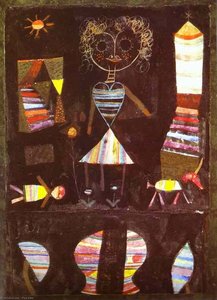
      Puppet theater (1923) by Паул Кле
      #37

      Puppet theater

      1923

      Puppet Theater: A Surrealist Dance of Forms by Paul Klee Paul Klee’s “Puppet Theater,” painted in 1923, isn't merely a depiction of theatrical imagery; it’s an embodiment of…

      Order this canvas →
      Temple Gardens (1920) by Паул Кле
      #38

      Temple Gardens

      1920 · Metropoliten музеј у Њујорку

      Paul Klee's “Three Panels,” painted circa 1920, isn’t merely a collection of landscapes; it’s a carefully constructed meditation on perception, memory, and the fractured nature of experience. Emerging…

      Have it painted by hand →
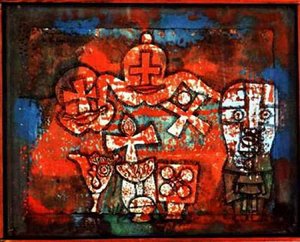
      Chinese porcelain (1940) by Паул Кле
      #39

      Chinese porcelain

      1940

      A Symphony of Geometric Abstraction In the twilight of his life, Paul Klee composed a visual masterpiece that transcends mere pigment on canvas. The Four Faces, painted in…

      Order this canvas →
      Egzotično (1939) by Паул Кле
      #40

      Egzotično

      1939 · Art Institute of Chicago

      Oko luta kroz pejzaž isprepletenih oblika, gde se duboka terakota i spozna (burnt sienna) sudaraju sa mrljama škrija plave i senf žute boje. Ovde ne postoji horizont, već…

      Have it painted by hand →
      Remembrance of a Garden (1914) by Паул Кле
      #41

      Remembrance of a Garden

      1914

      A Visionary Landscape of MemoryIn Paul Klee’s 1914 masterpiece, Remembrance of a Garden, the viewer is not merely presented with a landscape, but invited into a profound meditation…

      Bring this light home →
      Čudan pogled (1930) by Паул Кле
      #42

      Čudan pogled

      1930 · Art Institute of Chicago

      U samoj sredini tamnog, teksturiranog polja prostire se ovalni oblik koji, kroz minimalističku geometriju, sugeriše ljudsko lice. Kompozicija se oslanja na prigušenu paletu boja, dominiranu ponoćno plavom, ugljenom…

      Have it painted by hand →
      Boy in Fancy Dress (1931) by Паул Кле
      #43

      Boy in Fancy Dress

      1931 · Metropoliten музеј у Њујорку

      A single figure emerges from a dense, rhythmic grid of color, appearing less like a solid person and more like a delicate arrangement of tiny, rectangular patches. This…

      Bring this light home →
      The Pathos of Fertility (1921) by Паул Кле
      #44

      The Pathos of Fertility

      1921 · Metropoliten музеј у Њујорку

      The artwork consists of a centered, seated humanoid figure rendered through delicate black outlines on paper. The figure possesses a large, rounded belly that is decorated with organic…

      Bring this light home →
      Herojno sviranje violine by Паул Кле
      #45

      Herojno sviranje violine

      MoMA - Muzej moderne umetnosti

      Uvod: Paul Klee, nemački slikar švajcarskog porekla (1879–1940), ostao je upamćen po svom jedinstvenom spoju ekspresionizma, kubizma i nadrealizma. Kao majstor crteža sa dubokim razumevanjem teorije boja, Klijev…

      Order this canvas →
      Arab Song (1932) by Паул Кле
      #46

      Arab Song

      1932 · The Phillips Collection

      In 1932, Paul Klee composed a visual arrangement that translates the atmosphere of North Africa into a simplified, rhythmic language. The work utilizes oil on burlap to create…

      Bring this light home →
      Flower Family V. (1922) by Паул Кле
      #48

      Flower Family V.

      1922 · Solomon R. Guggenheim Museum

      Three stylized figures, possessing qualities of both human forms and botanical life, occupy a dark, textured space. A larger figure with an orange-toned body and a circular white…

      Order this canvas →
      Forgetful angel by Паул Кле
      #49

      Forgetful angel

      Paul Klee's “Forgetful Angel,” painted in 1939 amidst the gathering storm clouds of war, is not merely a depiction of an angel; it’s a profound meditation on memory,…

      Have it painted by hand →
      Singer of the Comic Opera (1927) by Паул Кле
      #50

      Singer of the Comic Opera

      1927 · Bavarske državne slikopisne kolekcije

      Step closer to observe the way the light seems to emerge from within the figure itself. In Singer of the Comic Opera, we encounter a form that feels…

      Bring this light home →
      A Couple of Gods (1924) by Паул Кле
      #51

      A Couple of Gods

      1924 · Scharf-Gerstenberg Collection

      Step closer to observe these two figures. They emerge from a dark, textured void, appearing less like painted subjects and more like relics unearthed from a forgotten era.…

      Have it painted by hand →
      Walpurgis Night (1935) by Паул Кле
      #53

      Walpurgis Night

      1935

      The surface of Walpurgis Night consists of gouache applied to fabric stretched over plywood. A monochromatic blue palette dominates the visual field, ranging from deep navy and near-black…

      Bring this light home →
      Static-Dynamic Gradation by Паул Кле
      #54

      Static-Dynamic Gradation

      Metropoliten музеј у Њујорку

      # Introduction to Expressionism and Paul Klee Expressionism is an art movement that emerged in the early 20th century, characterized by its emphasis on emotional experience and individual…

      Bring this light home →
      Colorful Architecture (1917) by Паул Кле
      #55

      Colorful Architecture

      1917 · Metropoliten музеј у Њујорку

      A City Born of Dreams: Unveiling Paul Klee’s “Colorful Architecture” Paul Klee's 1917 watercolor, “Colorful Architecture,” is not a rendering of any identifiable place, but rather an evocation—a…

      Have it painted by hand →
      Possibilities at Sea (1932) by Паул Кле
      #56

      Possibilities at Sea

      1932 · Norton Simon Museum

      A white-outlined diamond holds red grid lines against a dark grey background. On the right, this structure dominates the space. A single, bright white arrow points toward a…

      Have it painted by hand →
      Rose Wind by Паул Кле
      #57

      Rose Wind

      A Symphony in Color: Exploring Paul Klee’s Rose Wind The moment one encounters Rose Wind, there is an immediate sense of being swept into a rhythmic, breathing landscape…

      Bring this light home →
      Angel in the Making by Паул Кле
      #59

      Angel in the Making

      Paul Klee's ‘Angel in the Making’, painted around an unspecified date, is not merely a visual composition; it’s a whispered meditation on potentiality, a glimpse into the nascent…

      Order this canvas →
      Dying Down (1940) by Паул Кле
      #60

      Dying Down

      1940 · Scharf-Gerstenberg Collection

      The composition presents an arrangement of calligraphic, black lines that weave through patches of saturated color. These thick, fluid strokes intersect with deep crimson, burnt sienna, and ochre,…

      Bring this light home →
      Tighter rhythms and freer by Паул Кле
      #61

      Tighter rhythms and freer

      In the vibrant realm of Expressionist abstraction, Paul Klee’s Tighter rhythms and freer stands as a captivating exploration of color and structure. The painting presents an intricate composition…

      Bring this light home →
      The rumors (1939) by Паул Кле
      #62

      The rumors

      1939 · Barnes Foundation

      In the quiet, evocative depths of Paul Klee’s 1939 watercolor masterpiece, "The Rumors," we encounter a visual language that speaks far more than words ever could. Created during…

      Bring this light home →
      Rose garden (1920) by Паул Кле
      #63

      Rose garden

      1920

      A Garden of Geometric Dreams: Unveiling Paul Klee’s ‘Rose Garden’ Paul Klee's *Rose Garden*, painted in 1920, is far more than a depiction of flowers; it’s a pivotal…

      Bring this light home →
      Ad marginem (1930) by Паул Кле
      #64

      Ad marginem

      1930 · Kunstmuseum Basel

      Step closer to observe the quiet tension held within this 1930 composition. At first glance, the eye is drawn to a central, deep terracotta red orb, a circular…

      Bring this light home →
      Untitled (Reconstruction) (1926) by Паул Кле
      #65

      Untitled (Reconstruction)

      1926 · KODE Art museums and composer homes

      A Labyrinth of Form Step closer to observe the density of this 1926 composition. There is no single point for the eye to rest; instead, one finds oneself…

      Have it painted by hand →
      Tree Nursery (1929) by Паул Кле
      #67

      Tree Nursery

      1929 · The Phillips Collection

      A rhythmic, horizontal composition defines this 1929 work, utilizing layered bands of pale blue, soft pink, light yellow, sage green, and earthy ochre. The surface is marked by…

      Order this canvas →
      Fire in the Evening (1929) by Паул Кле
      #68

      Fire in the Evening

      1929 · MoMA - Muzej moderne umetnosti

      To look closely at this small work is to encounter a quiet, structured energy. Created in 1929, the piece presents itself through an arrangement of horizontal bands and…

      Bring this light home →
      The rumors (1939) by Паул Кле
      #69

      The rumors

      1939

      In the quiet, evocative depths of Paul Klee’s 1939 masterpiece, “The Rumors,” we encounter a visual language that speaks far more than words ever could. Created during one…

      Bring this light home →
      Pogođena grad (1936) by Паул Кле
      #71

      Pogođena grad

      1936 · Metropoliten музеј у Њујорку

      Kompozicija predstavlja apstraktnu, snažno teksturiranu površinu koja sugeriše fragmentiran, skeletni urbani ambijent. Velika, masivna crna strelica spušta se sa gornjeg centra, usmeravajući fokus ka gustoj mreži finih linija…

      Order this canvas →
      Narodna zidna slika (1922) by Паул Кле
      #72

      Narodna zidna slika

      1922 · Metropoliten музеј у Њујорку

      U samom centru papira prostire se usamljena, izdužena figura, čije prisustvo dočarava nežni raspored oblika i linija. Ona gleda ka nama velikim, bademastim očima koje kao da zadržavaju…

      Have it painted by hand →
      Crvenozeleni i ljubičasto-žuti ritmovi (1920) by Паул Кле
      #73

      Crvenozeleni i ljubičasto-žuti ritmovi

      1920 · Metropoliten музеј у Њујорку

      Paul Klee, stvarajući svoj rad „Crvenozeleni i ljubičasto-žuti ritmovi” 1920. godine, kreirao je nešto što prevazilazi okvire obične slike; to je duboko istraživanje teorije boja, geometrijske apstrakcije i…

      Have it painted by hand →
      Boje iz daljine (1932) by Паул Кле
      #76

      Boje iz daljine

      1932 · Izraelski muzej

      Ova kompozicija predstavlja gustu, nefigurativnu mrežu preklapajućih kvadrata i pravougaonika. Mreža finih, tamnih linija preseca površinu, stvarajući male, ćelijaste oblike koji sugerišu teksturu tkanine. Ovaj strukturirani raspored oslanja…

      Bring this light home →
      View into the Fertile Country (1932) by Паул Кле
      #77

      View into the Fertile Country

      1932 · Städel Museum

      The Nile flows as a single, wavy line across the foreground. Behind this blue thread, geometric shapes rise like silent buildings. Rows of multicolored horizontal stripes stretch toward…

      Bring this light home →
      Polyphony (1932) by Паул Кле
      #78

      Polyphony

      1932 · Kunstmuseum Basel

      Small squares of deep blue, forest green, and ochre settle into a dense, rhythmic grid. Each rectangle rests against its neighbor like a note placed upon a staff.…

      Bring this light home →
      Bust of a Child by Паул Кле
      #80

      Bust of a Child

      Bust of a Child: An Expressionist Exploration by Paul Klee A Glimpse into Childhood Through Abstract Forms Paul Klee's "Bust of a Child" is a captivating artwork that…

      Order this canvas →
      The Lamb (1920) by Паул Кле
      #81

      The Lamb

      1920 · Städel Museum

      In the quiet, transformative landscape of early twentieth-century modernism, few works capture the intersection of spiritual devotion and geometric innovation as poignantly as Paul Klee’s “The Lamb,” completed…

      Bring this light home →
      Interior with the Clock (1913) by Паул Кле
      #82

      Interior with the Clock

      1913 · National Gallery of Art

      The paper holds a soft, ethereal world where shapes drift like clouds through an unseen room. Pale yellows and light blues mingle with lavender and dusty rose, creating…

      Have it painted by hand →
      Girl with Doll by Паул Кле
      #84

      Girl with Doll

      In the vast landscape of modern art, few works possess the intimate, rhythmic charm found in Paul Klee’s "Girl with Doll Carriage" (Mädchen mit Puppenwagen). Painted in 1923,…

      Bring this light home →
      Municipal Jewel (1917) by Паул Кле
      #85

      Municipal Jewel

      1917 · Metropoliten музеј у Њујорку

      The painting Municipal Jewel presents an intricate cityscape composed of various shapes and colors. The palette features a vibrant mix of red, blue, yellow, green, and purple. Within…

      Have it painted by hand →
      Diana in the Autumn Wind (1934) by Паул Кле
      #87

      Diana in the Autumn Wind

      1934

      Paul Klee's “Diana in the Autumn Wind,” painted in 1934, stands as a cornerstone of surrealist art—a mesmerizing exploration of form and color that transcends mere representation. Created…

      Order this canvas →
      Fruits on Red (1930) by Паул Кле
      #88

      Fruits on Red

      1930 · Lenbachhaus

      The composition presents a delicate network of thin stems and rounded geometric forms set against a warm copper-red ground. Rather than a traditional arrangement of harvested produce, the…

      Bring this light home →
      Kapija u bašti (1926) by Паул Кле
      #89

      Kapija u bašti

      1926 · Kunstmuseum Bern

      Duboko unutar mračne, melanholične atmosfere, počinje se odmotavati ritmički ples tekstura. Oko je odmah privučeno ka gornjem levom uglu, gde pravougaoni oblik pulsira koncentričnim narandžastim i crvenim linijama.…

      Order this canvas →
      Captive (1940) by Паул Кле
      #91

      Captive

      1940

      A Portrait of Resilience: Paul Klee’s “Captive” Paul Klee's "Captive," painted in 1940 during the twilight years of his life and just months before his passing, is far…

      Bring this light home →
      Sunset (1930) by Паул Кле
      #92

      Sunset

      1930 · Art Institute of Chicago

      The oil on canvas, measuring 46.1 x 70.5 cm, presents an abstract arrangement of geometric and organic shapes. A neutral background is covered by a dense, layered pattern…

      Have it painted by hand →
      In Position (1939) by Паул Кле
      #93

      In Position

      1939

      Step closer to observe the delicate balance within this 1939 watercolor. There is a certain stillness here, an arrangement that feels both intentional and fragile. The composition rests…

      Order this canvas →
      Enclosure for Pachyderms (1940) by Паул Кле
      #94

      Enclosure for Pachyderms

      1940 · KODE Art museums and composer homes

      Created in 1940, this oil on canvas presents a structured network of thick, black, irregular lines that traverse the surface in a grid-like pattern. These dark strokes vary…

      Order this canvas →
      Crystal Gradation by Паул Кле
      #95

      Crystal Gradation

      Kunstmuseum Basel

      In the vast landscape of twentieth-century abstraction, few works possess the hypnotic, rhythmic quality found in Paul Klee’s "Crystal Gradation." Created during the artist's profound period in Murnau,…

      Order this canvas →
      El conquistador by Паул Кле
      #96

      El conquistador

      “The Great Bear,” painted in 1938 during Klee’s prolific period at Bauhaus Dessau, stands as a cornerstone of his artistic legacy. More than just a depiction of an…

      Order this canvas →
      Landscape with yellow church tower (1920) by Паул Кле
      #97

      Landscape with yellow church tower

      1920 · Bavarske državne slikopisne kolekcije

      A complex, grid-like structure defines this 1920 landscape, utilizing a mosaic of geometric shapes to suggest a village setting. Horizontal lines traverse the canvas, establishing a rhythmic, layered…

      Have it painted by hand →
      Puppet Theatre by Паул Кле
      #98

      Puppet Theatre

      Paul Klee's "Puppet Theater" is far more than a mere depiction of figures; it serves as a profound invitation to delve into the realm of subconscious thought and…

      Have it painted by hand →
      Episode Before an Arab Town (1923) by Паул Кле
      #100

      Episode Before an Arab Town

      1923 · Metropoliten музеј у Њујорку

      The horizon sits low, a thin line dividing an expansive sky from a textured ground. Earthy tones of terracotta, ochre, and dusty rose settle over the paper like…

      Have it painted by hand →

      Паул Кле's canvases, period by period

      What Паул Кле painted most

      The four subjects that return most often on these canvases, each with its best-loved example.

      Where Паул Кле's canvases hang

      The 8 museums that hold the most of the paintings on this page.

      Museum City Works by Паул Кле Paintings from this list
      Metropoliten музеј у Њујорку, ЊујоркMetropoliten музеј у Њујорку Њујорк 56 Komedičarski letak, May Picture, Untitled
      Art Institute of Chicago, ČikagoArt Institute of Chicago Čikago 10 Školska učionica, Dancing Girl, Egzotično
      MoMA - Muzej moderne umetnosti, New York CityMoMA - Muzej moderne umetnosti New York City 9 Твитеринг Машина, Mask of Fear, Herojno sviranje violine
      Kunstmuseum Basel, BaselKunstmuseum Basel Basel 8 Ad marginem, Polyphony, Crystal Gradation
      Lenbachhaus, MinhenLenbachhaus Minhen 6 Bašta ruža, Botaničko pozorište, Fruits on Red
      Bavarske državne slikopisne kolekcije, MinhenBavarske državne slikopisne kolekcije Minhen 20 Singer of the Comic Opera, Landscape with yellow church tower
      The Phillips Collection, Vašington, D.C.The Phillips Collection Vašington, D.C. 8 Arab Song, Tree Nursery
      Scharf-Gerstenberg Collection, BerlinScharf-Gerstenberg Collection Berlin 6 A Couple of Gods, Dying Down

      Decade by decade: Паул Кле's most celebrated canvas

      1. 1910s
        In the Style of Kairouan (1914) by Паул Кле
        9 of 100

        In the Style of Kairouan

        Age 31 – 40

        In the annals of modern art, few moments are as transformative as Paul Klee’s 1914 masterpiece, "In the Style of Kairouan." This work serves as a profound declaration…

      2. 1920s
        Novi anđeo (1920) by Паул Кле
        1 of 100

        Novi anđeo

        Age 41 – 50 · Izraelski muzej

        Stvoren 1920. godine, Novi anđeo autora Paula Kleea nudi uvid u umetnikovu jedinstvenu viziju. Ovo delo predstavlja monotipiju, izbor koji odražava Kleejevo interesovanje za jedinstvene, neponovljive kvalitete pojedinačnog…

      3. 1930s
        Ka Parsnasu (1932) by Паул Кле
        Ranked 3 of 100

        Ka Parsnasu

        Age 51 – 60 · Kunstmuseum Bern

        Captivating Subject and Symbolism This striking artwork presents a vibrant and layered landscape that invites viewers into a world of imagination and contemplation. Central to the composition is…

      4. 1940s
        Flora na stenama Sunce (1940) by Паул Кле
        Ranked 24 of 100

        Flora na stenama Sunce

        Age 61 · Kunstsammlung Nordrhein-Westfalen

        U sumrak svoje izvanredne karijere, Pol Kli je umetničkom svetu podario 'Flora na stenama Sunce', remek-delo iz 1940. godine koje služi kao duboka meditacija o preseku organskog i…

      Your questions on Паул Кле's paintings, answered

      Which is the most celebrated painting by Паул Кле?Read the answer

      Novi anđeo (1920), Izraelski muzej, Jerusalem. Твитеринг Машина and Ka Parsnasu (1932) follow.

      How old was Паул Кле at the time of Novi anđeo?Read the answer

      Паул Кле, born in 1879, was 41 years old: Novi anđeo dates from 1920.

      Which ten paintings is Паул Кле most famous for?Read the answer

      Novi anđeo, Твитеринг Машина, Ka Parsnasu, Legenda Nila, Flora on sand, Pejzaž sa žutim pticama, Slika ribe, With the eagle, In the Style of Kairouan and Bašta ruža. Each canvas in the ranking above comes with its year and its museum.

      How many paintings by Паул Кле are known?Read the answer

      669 works by Паул Кле are in our catalogue, dated 1910 to 1940.

      Which museums hold Паул Кле's best-known canvases?Read the answer

      Mostly in Metropoliten музеј у Њујорку (Њујорк), Art Institute of Chicago (Čikago) and MoMA - Muzej moderne umetnosti (New York City); the list above names each museum and its canvases.

      In which years did Паул Кле paint the most celebrated canvases?Read the answer

      In 1920s, which gave 36 of the 100 works on this page, Novi anđeo among them.

      What are the first and the last of Паул Кле's famous canvases?Read the answer

      The earliest canvas here is Flower stand with watering can and bucket (1910); the latest is Flora na stenama Sunce (1940).

      Which subjects return most often in Паул Кле's paintings?Read the answer

      Geometric shapes (43), Geometrijski oblici (13) and Color theory (11), across the 100 works on this page.

      What did Паул Кле usually paint with?Read the answer

      Watercolor, used in 21 of the 100 works on this page.

      To which art movement does Паул Кле belong?Read the answer

      Ekspresionizam, as the canvases on this page show.

      What can I see by Паул Кле at the Metropoliten музеј у Њујорку?Read the answer

      The Metropoliten музеј у Њујорку, Њујорк holds 17 of the works on this page, among them Komedičarski letak, May Picture and Untitled.

      Can I order a hand-painted copy of a painting by Паул Кле?Read the answer

      Yes. Every painting on this page can be ordered from its own page as an oil reproduction painted by hand, or as a fine art print, in the size you choose.

      Паул Кле: the painter's story

      Rani život Paula Kleea

      Rođen 18. decembra 1879. godine u Münchenbuchseeu, u blizini Berna u Švajcarskoj, Paul Klee je odrastao u domu koji je definišala disciplina muzike. Bio je drugo dete Hansa Wilhelma Kleea, nemačkog nastavnika muzike, i Ide Marie Klee, švajcarske pevačice. Zvuci roditeljskih profesija verovatno su oblikovali atmosferu njegovog detinjstva, pružajući ritmičku osnovu koja će ga pratiti u kasnijim godinama. Sa jedanaest godina, Klee je već pokazivao značajan talenat za violinu, što mu je donelo poziv za sviranje sa Muzičkim udruženjem Berna.

      Uprkos svom muzičkom daru, kako je odrastao, počeo ga je privlačiti potpuno drugačiji put. Godine 1898. preselio je se u Minhen kako bi započeo studije na Akademiji likovnih umetnosti. Između 1898. i 1901. godine, usavršavao se pod mentorstvom Heinricha Knirra i Franca von Stucka. Ove rane godine formalnog obrazovanja bile su period intenzivnog učenja i borbe. Iako je pokazivao prirodnu veštinu crtanja, često je smatrao da je upotreba boje teška prepreka koju treba savladati tokom tih prvih hladnih zima u Minhenu.

      Put ka apstrakciji

      Put ka novom načinu gledanja nije bio prava linija. U ranim godinama, Paul Klee je putovao u Italiju od oktobra 1901. do maja 1902. godine sa Hermannom Hallerom. Iako je to iskustvo bilo značajno, kasnije je primetio da je borba sa bojom ostala težak, dugotrajni izazov. Našao se zaglavljen između klasičnih tradicija prošlosti i rastuće želje da pronađe ličniji vizuelni jezik. Dugo vremena, njegov rad je ostao uglavnom fokusiran na crtež i crno-bele kompozicije, često naginjući ka groteski ili satiričnom.

      Duboka promena dogodila se 1914. godine tokom putovanja u Tunis sa Augustom Mackeom i Louisom Moillietom. Bistra svetlost Severne Afrike promenila je sve za njega. U tom intenzivnom sunčanom sjaju, počeo je da oslobađa boju od njene dužnosti da opisuje fizičke predmete. Umesto da koristi boju kako bi imitirao svet, koristio ju je kao nezavisnu silu. Ovo saznanje pružilo mu je podsticaj koji mu je bio potreban da krene ka apstrakciji. Do 1915. godine, okrenuo je leđa prirodi i više nikada nije slikao prema modelu, birajući umesto toga da svet izrazi kroz sopstvene unutrašnje simbole i maštu.

      • Hammamet sa džamijom (1914)

      Bauhaus i proleće pedagoške misli

      Godine 1920. započelo je potpuno novo poglavlje u njegovom životu kada je Walter Gropius pozvao Paul Klee da postane deo nastavnog kadra Bauhausa. Provedavši narednu deceniju u ovoj revolucionarnoj školi, radio je rame uz rame sa Wassily Kandinsky, stvarajući sinergiju koja će promeniti tok moderne umetnosti. To je verovatno bio njegov najplodniji period, vreme u kojem je nastalo skoro polovina njegovog ukupnog umetničkog opusa. Boravak u Bauhausu omogućio mu je da istražuje složenu vezu između boje i forme sa gotovo naučnom preciznošću, o čemu je detaljno pisao u svojim intrikatnim beležnicama. Ti zapisi postali su neprocenjivi temelj za svakoga ko pokušava da razume duboku mehaniku moderne kompozicije.

      Međutim, stabilnost njegove pedagoške karijere prekinuta je olupom političkih prevrata u Nemačkoj. Godine 1933, Paul Klee je primoran da napusti svoje mesto na Akademiji likovnih umetnosti u Diseldorfu zbog uspona nacionalisockog režima, koji je njegov rad klasifikovao kao „dekadentni“. Ovaj surov preokret primorao ga je da napusti akademiju i vrati se u rodni Bern. Promena okruženja i rastući politički nemir počeli su da prodiru u samu srž njegovog stvaralaštva, polako menjajući ton njegovih dela; on se udaljavao od vedre i igrive prirode svojih ranih godina, naginjući ka mračnijoj, težoj i duboko introspektivnoj perspektivi.

      Tehnika i umetnički stil

      Paul Klee je bio prirodni crtač koji je posedovao duboko, gotovo naučno razumevanje teorije boja. Njegov pristup platnu retko je bio puka imitacija stvarnosti; umesto toga, on je gradio svoje kompozicije kroz izuzetno individualan stil pod snažnim uticajem ekspresionizma, kubizma i nadrealizma. Često je radio u malom formatu, koristeći delikatne medije poput akvarela na gazi ili papira sa kredom, čime je istraživao interakciju svetlosti i pigmenta na načine koje tradicionalno ulje na platnu nije moglo da zabeleži. Bio je i plodni grafičar, koristeći bakrene i cinkove litografije i etsinge kako bi proširio svoj specifični vizuelni jezik.

      U njegovim slikama prepoznatljiv je bio određeni senzualni poigravanje koje je delovalo istovremeno sofisticirano i prosto. Njegova dela često su bila ispunjena ponavljajućim motivima: malim, štapićastim figuralnim oblicima, lebdećim ribama i licima meseca. Ovi simboli su se često nalazili raspoređeni u mrežama ili šarama koje su podsećale na vizuelnu muziku. Njegova tehnička radoznalost vodila ga je čak i ka nekonvencionalnim metodama, kao što je crtanje iglom po zglavljenom staklu, tehniku kojom je stvorio pedeset sedam autentičnih dela. Ovakav pristup zahtevao je izuzetno steady ruku i precizno razumevanje načina na koji će svetlost proći kroz ogrebotine na tamnoj površini.

      Ključna dela i značajne kompozicije

      Paul Klee-ova sposobnost da nevidljivo pretvori u nešto opipljivo najjasnije se ogleda u njegovim delima iz srednje umetničke faze. Godine 1915. naslikao je Woman Knitting, delo koje hvata osećaj tišine i ritmičnog pokreta. Kako se njegova fascinacija odnosom između boje i forme produbljivala, tako je 1925. godine stvorio Fish Magic, rad koji demonstrira njegovu sposobnost da pomoću jednostavnih oblika sugeriše nešto mnogo složenije i misterioznije. Njegove kompozicije često su se oslanjale na specifičnu vrstu vizuelne muzike, gde su linije i boje delovale poput nota na muzičkoj podlozi.

      Do kasnih dvadesetih godina, njegov rad je dobio strukturiraniju, gotovo arhitektonsku kvalitetu. Ships in the Dark, nastavljeno 1927. godine, pokazuje njegovu veštinu u balansiranju svetlosti i senke kako bi stvorio osećaj prostora. Kako je politička klima u Evropi postajala težakija, njegova umetnost je pratila taj trend. Igrivost ranijih godina počela je da bledi, zamenjena ozbiljnijim i melanholičnijim tonom. Ova promena je vidljiva u delu Comedians' Handbill iz 1938. godine, gde linije postaju deblje, a oblici uopšteniji. Čak i u poslednjim godinama, dok mu se zdravlje pogoršavalo, nastavljao je da pronalazi načine da izrazi težinu okruženja u kojem se nalazi, što se najbolje vidi u delu iz 1939. godine, Angel Applicant.

      • Woman Knitting (1915)
      • Fish Magic (1925)
      • Ships in the Dark (1927)
      • Comedians' Handbill (1938)
      • Angel Applicant (1939)

      Kasne godine i smrt

      Politička atmosfera u Evropi počela je značajno da se mrači tokom tridesetih godina prošlog veka. Godine 1933, Nacionalistički socijalisti su proglasili njegovu umetnost „dekadentnom“, što je bila odluka koja ga je primorila da napusti profesorsko mesto na Akademiji likovnih umetnosti u Diseldorfu. Ovo otpuštenje okončalo je period relativne stabilnosti i vratilo ga u rodni Bern. Kako su se senke rata i političkih previranja produbljavale, njegov rad je počeo da se menja. Vedrina njegovih ranih godina izbledela je, zamenjena mračnijom i melankoličnijom perspektivom. Njegove linije su postale teže, često se pretvarajući u debele crne trake, dok su forme postale opštije i šire.

      Ova promena u njegovom slikarstvu odražavala je sve veći težinski položaj sveta koji ga je okruživao. Igrivost koja je nekada definisala njegove kompozicije ustupila je mesto osećaju težine i ozbiljnosti. Čak i dok mu se sopstveno zdravlje pogoršavalo, nastavio je da stvara dela koja su hvatala napetost tog doba. Njegova kasnija dela često su delovala minimalistički, koristeći jednostavnije boje i masivnije oblike kako bi izrazio osećaj gubitka ili težine. Preminuo je 29. juna 1940. godine u Muraltu, u Švajcarskoj.

      • Comedians' Handbill (1938)
      • Angel Applicant (1939)

      Gde danas možete posetiti njegova dela

      Da biste pronašli tragove njegovog izuzetno plodnog stvaralaštva, put vas može voditi u Bern u Švajcarskoj. Zentrum Paul Klee čuva značajan deo njegovog nasleđa, nudeći prostor u kojem možete se lično susresti sa vizuelnim jezikom koji je Paul Klee razvijao tokom celog svog života. U blizini se nalazi i Kunstmuseum Bern, koji takođe čuva delove njegove istorije, uključujući remete kao što je To Parnassus.

      Njegov uticaj se proteže daleko izvan granica Švajcarske. U Njujorku, Metropolitan Museum of Art poseduje obimnu kolekciju, koja uključuje devedeset dela poklonjenih od strane Heinz Bergruena. Ova dela omogućavaju posmatračima da kroz specifičnu upotrebu boje i forme prate evoluciju njegove misli. U Londonu, kolekcija Tate čuva nekoliko njegovih kompozicija, kao što je Walpurgis Night.

      • To Parnassus
      • Walpurgis Night

      All 669 works by Паул Кле →