Atelje — Besplatna dostava širom sveta — Rok isporuke: 2–6 nedelja
      Pol Neš, 1889 – 1946

      100 najpoznatijih dela umetnika Pol Neš prema popularnosti

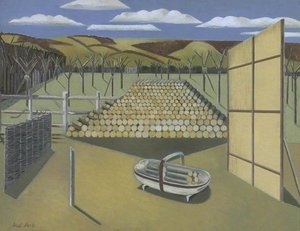
      Najomiljenije delo umetnika Pol Neš je The Separation of Light from Darkness (1924). The Stackyard (1925) i Sunflower and sun (1942) su sledeći na listi najpoznatijih platana koje čitaoci najbolje poznaju. Naš katalog sadrži 111 dela umetnika Pol Neš: evo 100 najpoznatijih, od kojih svako nosi godinu nastanka, naziv muzeja i opis onoga što ga čini nezaborotljivim.

      Rangirano prema našem koeficijentu popularnosti, koji kombinuje pretrage, posete i porudžbine za svako delo. Ažurirano октобар 2026. Svaku sliku sa ove stranice možete naručiti kao ručno oslikano ulje na platnu od lana ili kao umetnički print, izrađen u dimenzijama koje sami odaberete.

      Portret Pol Neš
      Pol Neš · 1889 – 1946
      Rođen · umro
      1889 – 1946, Kennington
      Pokret
      Surrealism
      Radovi u našem katalogu
      111
      Najpoznatije
      The Separation of Light from Darkness (1924)
      Najviše dela u
      Nacionalna galerija Kanade

      Top 10 slika umetnika Pol Neš: platna koja svi poznaju

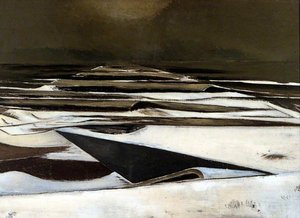
      The Separation of Light from Darkness (1924) čiji je Pol Neš
      1

      The Separation of Light from Darkness

      1924 · Woodcut

      We are looking at The Separation of Light from Darkness, a work created by Paul Nash in 1924. This piece emerged during a significant period in the artist's development, following his formative years in the United Kingdom. Nash was born in Kensington, United Kingdom, in 1889, and his perspective was shaped by the landscapes and environments of his home country.

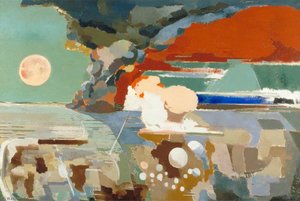
      Landscape of the Moon's Last Phase (1944) čiji je Pol Neš
      4

      Landscape of the Moon's Last Phase

      1944 · Oil On Canvas · Walker Art Gallery, Liverpud

      Paul Nash’s Landscape of the Moon's Last Phase transports the viewer to a moment suspended between night and dawn, a breathtaking tableau dominated by the soft, yet profound, luminescence of a waning moon. This painting is more than a mere depiction of nature; it is an atmospheric meditation on cycles—the ebb and flow of light, life, and time itself. The composition draws the eye across a sweeping vista where foreground…

      Circle of the Monoliths (1938) čiji je Pol Neš
      5

      Circle of the Monoliths

      1938 · Oil On Canvas · Leeds Art Gallery, Lids

      Paul Nash's “Circle of the Monoliths,” painted in 1938, isn’t merely a landscape; it’s a meticulously constructed dreamscape, a potent distillation of memory, myth, and the unsettling beauty of the British countryside. This remarkable work, housed at Leeds Museums and Galleries, invites viewers into a realm where familiar forms are fractured, perspectives shift, and an ancient, almost primeval energy permeates every detail. Nash, deeply influenced by William Blake’s visionary poetry…

      The Creation of the Firmament (1924) čiji je Pol Neš
      6

      The Creation of the Firmament

      1924 · Woodcut

      In this 1924 woodcut, we witness a moment of profound, almost violent transition. The work, part of a series of illustrations for the book Genesis, moves away from the figurative to explore the very mechanics of existence. It is a stark, monochromatic vision where the separation of light from darkness is rendered not as a gentle dawn, but as a rhythmic, angular tension. The composition is dominated by a series…

      The Creation of Land (1924) čiji je Pol Neš
      7

      The Creation of Land

      1924 · Woodcut

      The Creation of Land emerges from the shadows of a profound transformation. Created by Paul Nash in 1924, this work exists as a singular moment within a larger, rhythmic sequence. It belongs to a series of woodcuts that draw their strength from the biblical Genesis, capturing the very instant when the world begins to take shape through a jerky, frightening cataclysm. The landscape does not merely appear; it erupts.

      Oxford During the War (1942) čiji je Pol Neš
      8

      Oxford During the War

      1942 · Oil On Canvas · Worcester College, Oksford

      Paul Nash’s "Oxford During the War," painted in 1942, is far more than a mere depiction of an English landscape; it is a profound meditation on endurance. The canvas captures a scene steeped in the palpable tension of wartime, yet simultaneously breathes with an almost defiant tranquility. One gazes upon the foreground, drawn immediately to the imposing presence of the parked tank—a stark emblem of military reality—which anchors the composition.…

      The Diving Stage (1928) čiji je Pol Neš
      9

      The Diving Stage

      1928 · Oil On Canvas · British Council Collection, London

      The Haunting Stillness of “The Diving Stage” Paul Nash’s “The Diving Stage,” painted in 1928, isn't merely a depiction of a seaside structure; it’s a meticulously crafted tableau of isolation, anticipation, and the unsettling beauty of suspended time. Emerging from the British Council Collection, this work transcends its subject matter to become a profound meditation on human presence within a vast, indifferent landscape. The painting immediately commands attention with its…

      The Creation of the Starry Firmament (1924) čiji je Pol Neš
      10

      The Creation of the Starry Firmament

      1924 · Woodcut

      The Creation of the Starry Firmament is a significant woodcut by the British artist Paul Nash. Created in 1924, this work emerged from a period of intense creative development for the artist. It was produced as part of a series of illustrations for the book Genesis, a project that sought to visualize the biblical narrative through a modern, abstracted lens. The piece captures a moment of cosmic emergence, translating the…

      Još Pol Neš platna, od 11 do 100

      Coronilla (recto) (1929) čiji je Pol Neš
      #12

      Coronilla (recto)

      1929 · Fitzwilliam College

      A Realm of Silent Geometry: Paul Nash’s “Coronilla (recto)” Paul Nash's "Coronilla (recto)," painted in 1929, isn’t merely a depiction of a landscape; it’s an immersion into a…

      Unesite ovu svetlost u svoj dom →
      November Moon (1942) čiji je Pol Neš
      #88

      November Moon

      1942 · Fitzwilliam College

      In the quietude of 1942, amidst a world gripped by the profound tensions of global conflict, Paul Nash captured a moment of profound stillness in his evocative masterpiece,…

      Naručite ovo platno →
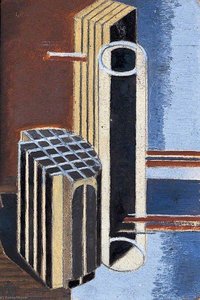
      Telecommunications (1934) čiji je Pol Neš
      #89

      Telecommunications

      1934 · Walker Art Gallery

      Paul Nash’s 1934 painting, “Telecommunications,” isn’t merely a still life; it’s a carefully constructed visual argument about the burgeoning anxieties and promises of modernity. Rendered in a restrained…

      Naručite ručno oslikano →
      Druid Landscape (1938) čiji je Pol Neš
      #91

      Druid Landscape

      1938 · British Council Collection

      Paul Nash’s Druid Landscape, painted in 1938, isn't merely a depiction of a landscape; it’s an immersion into a carefully constructed dreamscape. Created during a period of profound…

      Naručite ručno oslikano →
      Dymchurch Steps čiji je Pol Neš
      #93

      Dymchurch Steps

      Nacionalna galerija Kanade

      The oil on canvas titled Dymchurch Steps is a work by the British artist Paul Nash. This piece was painted and re-worked between 1924 and 1944. It measures…

      Naručite ovo platno →
      Chestnut Waters čiji je Pol Neš
      #94

      Chestnut Waters

      Nacionalna galerija Kanade

      Paul Nash presents Chestnut Waters, an oil on canvas that captures a specific, quiet moment in the English landscape. The work originated in 1923 and was later reworked…

      Naručite ručno oslikano →
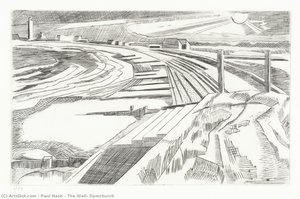
      The Wall, Dymchurch (1923) čiji je Pol Neš
      #95

      The Wall, Dymchurch

      1923 · Tate Britain

      Paul Nash’s “The Wall, Dymchurch”: A Monument to Isolation in Geometric Precision Paul Nash's "The Wall, Dymchurch," created in 1923, stands as a quintessential example of British Modernism—a…

      Unesite ovu svetlost u svoj dom →
      Landscape (verso) čiji je Pol Neš
      #100

      Landscape (verso)

      Fitzwilliam College

      In the quiet corners of art history, few works capture the delicate equilibrium between the tangible world and the ethereal spirit quite like Paul Nash’s Landscape (verso). This…

      Naručite ovo platno →

      Platna umetnika Pol Neš po periodima

      Šta je Pol Neš najčešće slikao

      Četiri teme koje se najčešće pojavljuju na ovim platnima, svaka sa svojim najomiljenijim primerom.

      Gde se nalaze platna umetnika Pol Neš

      8 muzeja u kojima se nalazi najviše slika sa ove stranice.

      Muzej Grad Radovi umetnika Pol Neš Slike iz ovog spiska
      Nacionalna galerija Kanade, OtavaNacionalna galerija Kanade Otava 9 A Night Bombardment, Void, Night Fighter
      Government Art Collection, LondonGovernment Art Collection London 5 Pink Hyacinth, Riviera Window, Cros de Cagnes, Landscape
      British Council Collection, LondonBritish Council Collection London 4 The Diving Stage, Eclipse of the Sunflower, Druid Landscape
      Leeds Art Gallery, LidsLeeds Art Gallery Lids 3 Circle of the Monoliths, Still Life with Bog Cotton, The Shore
      Fitzwilliam College, CambridgeFitzwilliam College Cambridge 3 Coronilla (recto), November Moon, Landscape (verso)
      Imperial War Museum, LondonImperial War Museum London 6 Follow the Fuhrer Above the Clouds, Battle of Germany
      Art Gallery of New South Wales, SidnejArt Gallery of New South Wales Sidnej 2 Sunflower and sun, Mimosa Wood
      Walker Art Gallery, LiverpudWalker Art Gallery Liverpud 2 Landscape of the Moon's Last Phase, Telecommunications

      Najomiljenije platno umetnika Pol Neš iz svakog decenije

      1. 1910s
      2. 1920s
        The Separation of Light from Darkness (1924) čiji je Pol Neš
        Platno 1 od 100

        The Separation of Light from Darkness

        Godine 31 – 40

        We are looking at The Separation of Light from Darkness, a work created by Paul Nash in 1924. This piece emerged during a significant period in the artist's…

      3. 1930s
        Circle of the Monoliths (1938) čiji je Pol Neš
        5 od 100

        Circle of the Monoliths

        Godine 41 – 50 · Leeds Art Gallery

        Paul Nash's “Circle of the Monoliths,” painted in 1938, isn’t merely a landscape; it’s a meticulously constructed dreamscape, a potent distillation of memory, myth, and the unsettling beauty…

      4. 1940s
        Sunflower and sun (1942) čiji je Pol Neš
        Platno 3 od 100

        Sunflower and sun

        Godine 51 – 57 · Art Gallery of New South Wales

      O platnima Pol Neš: odgovori na vaša pitanja

      Koje je najpoznatije delo umetnika Pol Neš?Pročitajte odgovor

      The Separation of Light from Darkness (1924), a zatim The Stackyard (1925) i Sunflower and sun (1942).

      Koliko je godina imao/la Pol Neš kada je slika The Separation of Light from Darkness nastala?Pročitajte odgovor

      Pol Neš, rođen/a 1889, imao/la je 35 godina: The Separation of Light from Darkness datira iz 1924.

      Koja su 10 najpoznatijih dela Pol Neš?Pročitajte odgovor

      The Separation of Light from Darkness, The Stackyard, Sunflower and sun, Landscape of the Moon's Last Phase, Circle of the Monoliths, The Creation of the Firmament, The Creation of Land, Oxford During the War, The Diving Stage i The Creation of the Starry Firmament. Svako platno u gornjem rangiranju sadrži godinu nastanka i naziv muzeja.

      Koliko je ukupno dela naslikao Pol Neš?Pročitajte odgovor

      U našem katalogu se nalazi 111 dela umetnika Pol Neš, datiranih od 1914 do 1945.

      Gde mogu da vidim najpoznatija platna umetnika Pol Neš?Pročitajte odgovor

      Većinom u Nacionalna galerija Kanade (Otava), Government Art Collection (London) i British Council Collection (London); gornja lista navodi svaki muzej i njegova platna.

      Kada je Pol Neš naslikao svoje najomiljenije platna?Pročitajte odgovor

      U 1920s, koji obuhvata 35 od 100 dela na ovoj stranici, među njima je i The Separation of Light from Darkness.

      Koja su najranija i najkasnija čuvena platna umetnika Pol Neš?Pročitajte odgovor

      Najstarije platno ovde je iz The Orchard (1914) godine; najnovije je iz Solstice of the Sunflower (1945) godine.

      Šta je Pol Neš najčešće slikao?Pročitajte odgovor

      Landscape (20), Geometric shapes (8) i British art (8), kroz svih 100 dela na ovoj stranici.

      U kojoj je tehnici Pol Neš najčešće slikao/la?Pročitajte odgovor

      Oil On Canvas, korišćeno u 8 od 100 dela na ovoj stranici.

      Kojoj umetničkom pravcu pripada delo Pol Neš?Pročitajte odgovor

      Surrealism, kao što pokazuju platna na ovoj stranici.

      Čija se dela Pol Neš nalaze u Nacionalna galerija Kanade?Pročitajte odgovor

      Muzej Nacionalna galerija Kanade, Otava čuva 9 dela sa ove stranice, među kojima su i A Night Bombardment, Void i Night Fighter.

      Mogu li da kupim reprodukciju platna od Pol Neš?Pročitajte odgovor

      Da. Svaku sliku sa ove stranice možete naručiti sa njene posebne stranice kao ručno oslikano ulje na platnu ili kao umetnički print, u veličini koju odaberete.

      Pol Neš: život u bojama

      Rani život i uticaji

      • Rođen: Kensington, Ujedinjeno Kraljevstvo (1889)
      • Preminuo: 1946.
      • Pol Nash je rođen 11. maja 1889. godine u Londonu. Njegov otac, William Harry Nash, bio je advokat, dok su kod njegove majke, Caroline Maude, od rane mladosti primećeni znaci mentalne bolesti. Porodica se preselila u Iver Heath u Buckinghamshire-u dok je Pol bio mlad, u pokušaju da se poboljša zdravstveno stanje njegove majke.
      • Obrazovanje: Pohađao je Parsons School of Art, a kasnije i Slade School of Fine Art. Iako je bio izuzetan u pejzažnom slikarstvu, mučio se sa crtanjem figura.
      • Rani uticaji: Na Nashova rana dela snažno su uticali William Blake i J.M.W. Turner. Inspiraciju je crpeo i iz pejzaža koji sadrže drevne istorijske elemente, poput grobnih tumula i brdskih utvrđenja iz gvozdenog doba.

      Umetnički stil i razvoj

      • Stil: Stil Pola Nasha predstavljao je spoj modernizma i tradicionalnih tehnika. Korišćenjem hrabrih boja, geometrijskih oblika i apstraktnih formi, uspeo je da se jasno izdvoji od svojih savremenika.
      • Surrealističke težnje: Iako nije bio striktni pripadnik nadrealizma, Nash je bio pod snažnim uticajem ovog pokreta, naročito nakon posete izložbi Giorgia de Chirico 1928. godine. Njegov rad je uključivao simbolične pejzaže prožete svakodnevnim predmetima.
      • Ratna umetnost: Tokom Prvog i Drugog svetskog rata, Nash je služio kao zvanični ratni umetnik. Njegovi prikazi bojnih polja postali su poznati po svojoj jezivoj lepoti i istraživanju uticaja sukoba na samu prirodu. Jedno od njegovih najznačajnijih dela je "The Menin Road".
      • "Vazdušna bića": Serija nastala tokom Drugog svetskog rata, koja sadrži antropomorfne prikaze aviona srušenih u pejzažima, demonstrirajući njegov evoluirajući stil i bogat simbolizam.

      Glavna dostignuća i priznanja

      • Pionir britanskog modernizma: Nash je odigrao ključnu ulogu u oblikovanju britanske moderne umetnosti, povezujući tradicionalno slikarstvo pejzaža sa modernističkom estetikom.
      • Nasleđe ratne umetnosti: Njegova ratna slika se smatra ikoničnim prikazom uticaja sukoba kako na vojnike, tako i na samu okolinu.
      • Grupa "Unit One": Godine 1933. suosnivač je grupe Unit One, zajedno sa Benom Nicholsonom i Barbarom Hepworth, što je bio značajan trenutak unutar britanske umetničke scene.
      • Pisac i dizajner: Pored slikarstva, Nash je bio cenjeni pisac o umetnosti, ali je ostavio trag i u primenjenoj umetnosti, dizajnirajući scenografiju, tkanine i postere.

      Uticaji i nasleđe

      • Uticaj na buduće umetnike: Jedinstveni stil i način korišćenja boje ostavili su neizbrisiv trag na generacije umetnika koji su došli nakon njega.
      • Veza sa romantizmom: Njegov rad se često povezuje sa engleskom romantičarskom tradicijom, prvenstveno kroz vezu sa Billiam Blakeom i J.M.W. Turnerom.
      • Istraživanje odnosa čoveka i prirode:な Ponavljajuća tema u Nashovim kasnijim delima bila je relacija između čovečanstva i prirode, istraživana kroz bogatu simboličku sliku.
      • Kontinuirana relevantnost: Njegova dela se i danas slave zbog svoje lepote, simbolizma i istorijskog značaja, ostajući duboko relevantna savremenoj publici.

      Izložbe i kolekcije

      • Ruskin Gallery: Nashova dela su izlagana u Ruskin Gallery u Ujedinjenom Kraljevstvu.
      • Tate Britain: Njegovi radovi se mogu pronaći u prestižnoj kolekciji Tate Britain.
      • Imperial War Museum: Više njegovih ratnih dela čuva se u Imperial War Museumu.
      • York Art Gallery: Njegov rad je takođe deo kolekcije York Art Gallery.
      • Government Art Collection: Odabrani delovi Nashove umetnosti izloženi su i u državnoj umetničkoj kolekciji (Government Art Collection).

      Sva 111 dela umetnika Pol Neš →