Atelje — Besplatna dostava širom sveta — Rok isporuke: 2–6 nedelja
      Вилијам Тарнер, 1775 – 1851

      Вилијам Тарнер: The 100 Best-Known Paintings

      Of all Вилијам Тарнер's paintings, Borbeni 'Temerair' vučen u svoje poslednje pristanište da bude raspadnut (1838) is the most famous; it hangs in the National Gallery, London. Close behind come Brod robova and Великобританија и Велика западна железница. Among the 870 works by Вилијам Тарнер in our catalogue, these 100 are the most celebrated, each shown with its date, its museum and its story.

      Ranked by our popularity score, which combines the searches, visits and orders for each work. Updated октобар 2026. Each painting on this page can be ordered as an oil reproduction painted by hand on linen canvas, or as a fine art print, made to the size you choose.

      Portrait of Вилијам Тарнер
      Вилијам Тарнер · 1775 – 1851
      Born · died
      1775 – 1851, Ковент Гарден
      Movement
      Romantizam
      Works in our catalogue
      870
      Most famous
      Borbeni 'Temerair' vučen u svoje poslednje pristanište da bude raspadnut (1838)
      Most works at
      Tate Gallery

      Вилијам Тарнер's 10 most celebrated paintings

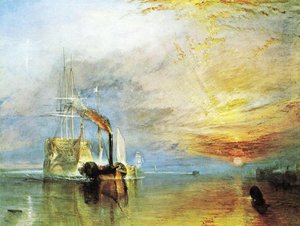
      Borbeni 'Temerair' vučen u svoje poslednje pristanište da bude raspadnut (1838) by Вилијам Тарнер
      1

      Borbeni 'Temerair' vučen u svoje poslednje pristanište da bude raspadnut

      1838 · Ulje na platnu · National Gallery, London

      „Borbeni 'Temerair' vučen u svoje poslednje pristanište da bude raspadnut” Vilijama Turnera nije samo slika; to je dirljiva elegija za jednu epohu. Završeno 1838. godine, ovo monumentalno platno beleži duboko dremčivu scenu – poslednje putovanje HMS *Temeraire*, veteranog ratnog broda koji se hrabro borio u Trafalgeru, prema njegovom neizbežnom rastavljanju. Slika odjekuje dubokim osećajem gubitka i tranzicije, odražavajući ne samo opadanje mornaričke moći pokretane jedrima, već i šire zabrinutosti koje…

      Brod robova by Вилијам Тарнер
      2

      Brod robova

      Ulje na platnu · Muzej finih umetnosti u Bostonu, Boston

      Delo koje imamo pred sobom nosi naziv Brod robova, a reč je o uljanom platnu autora J. M. W. Turnera. Iako se često pominje pod ovim kraćim imenom, puno ime dela je Trgovci robljem bacaju mrtve i umiruće preko mga, dolazi tifun. Prvi put je izloženo u Kraljevskoj akademiji 1840. godine. Ovo delo dimenzija je 90,8 cm X 122,6 cm (35,7 in X 48,3 in).

      Великобританија и Велика западна железница by Вилијам Тарнер
      3

      Великобританија и Велика западна железница

      Ulje na platnu · National Gallery, London

      Delo J.M.W. Turnera, "Kiša, para i brzina – Velika zapadna železnica", predstavlja zadivljujuću fuziju prirode i industrijske moći, beležeći uzbudljiv tempo viktorijanske ere. Ova kultna slika, nastala oko 1844. godine, oličuje Turnerov genije u spajanju romantizma sa naglo razvijenim tehnološkim dostignućima njegovog vremena.

      Steam-Boat off a Harbour's Mouth by Вилијам Тарнер
      4

      Steam-Boat off a Harbour's Mouth

      Oil On Canvas · Tate Britain, London

      Joseph Mallord William Turner's “Steam-Boat off a Harbour’s Mouth” isn’t merely a depiction of a vessel navigating turbulent waters; it’s an immersive experience, a visceral encounter with the raw power and sublime beauty of nature. Painted in 1842, this iconic work exemplifies Turner’s revolutionary Romantic approach to landscape painting, prioritizing atmosphere and emotion over precise representation. The scene unfolds as a dramatic interplay of light, color, and movement, capturing a…

      Snow Storm, Hannibal and his Army Crossing the Alps (1812) by Вилијам Тарнер
      5

      Snow Storm, Hannibal and his Army Crossing the Alps

      1812 · Oil On Canvas · Tate Gallery, London

      Joseph Mallord William Turner’s “Snow Storm: Hannibal and his Army Crossing the Alps” isn't merely a depiction of a historical event; it’s an immersive experience, a visceral rendering of struggle against nature’s raw power. Painted in 1812, this monumental canvas transports us to the treacherous slopes of the Maritime Alps, where Hannibal Barca and his Carthaginian legions battled not only the elements but also the formidable local tribes defending their…

      The Battle of Trafalgar by Вилијам Тарнер
      6

      The Battle of Trafalgar

      Oil On Canvas · National Maritime Museum, London

      In his monumental oil on canvas, Joseph Mallord William Turner captures the turbulent and chaotic essence of the Battle of Trafalgar. This massive history painting serves as a breathtaking window into a moment of profound maritime drama, where the sea itself seems to pulse with the intensity of combat. The composition is a masterful tapestry of simultaneous events, weaving together different moments from the battle into a single, cohesive vision…

      Дидо гради Карфаген (такđe poznat kao Uspon Kartадским царством) (1815) by Вилијам Тарнер
      7

      Дидо гради Карфаген (такđe poznat kao Uspon Kartадским царством)

      1815 · Ulje na platnu · National Gallery, London

      „Dido gradnja Kartadžine“, koje je naslikao Joseph Mallord William Turner 1815. godine, nije samo prikaz drevnog grada; to je duboka meditacija o ambiciji, sudbini i prolaznoj prirodi moći. Ovaj monumentalni uljani na platnu, koji sada stoji u svetim hodnicima Nacionalne galerije u Londonu, nadilazi svoju istorijsku temu da bi postao večito istraživanje ljudske aspiracije na pozadini dramatičnog pejzaža. Turner, majstor hvatanja svetlosti i atmosfere, ne nudi jednostavan prikaz, već intenzivno…

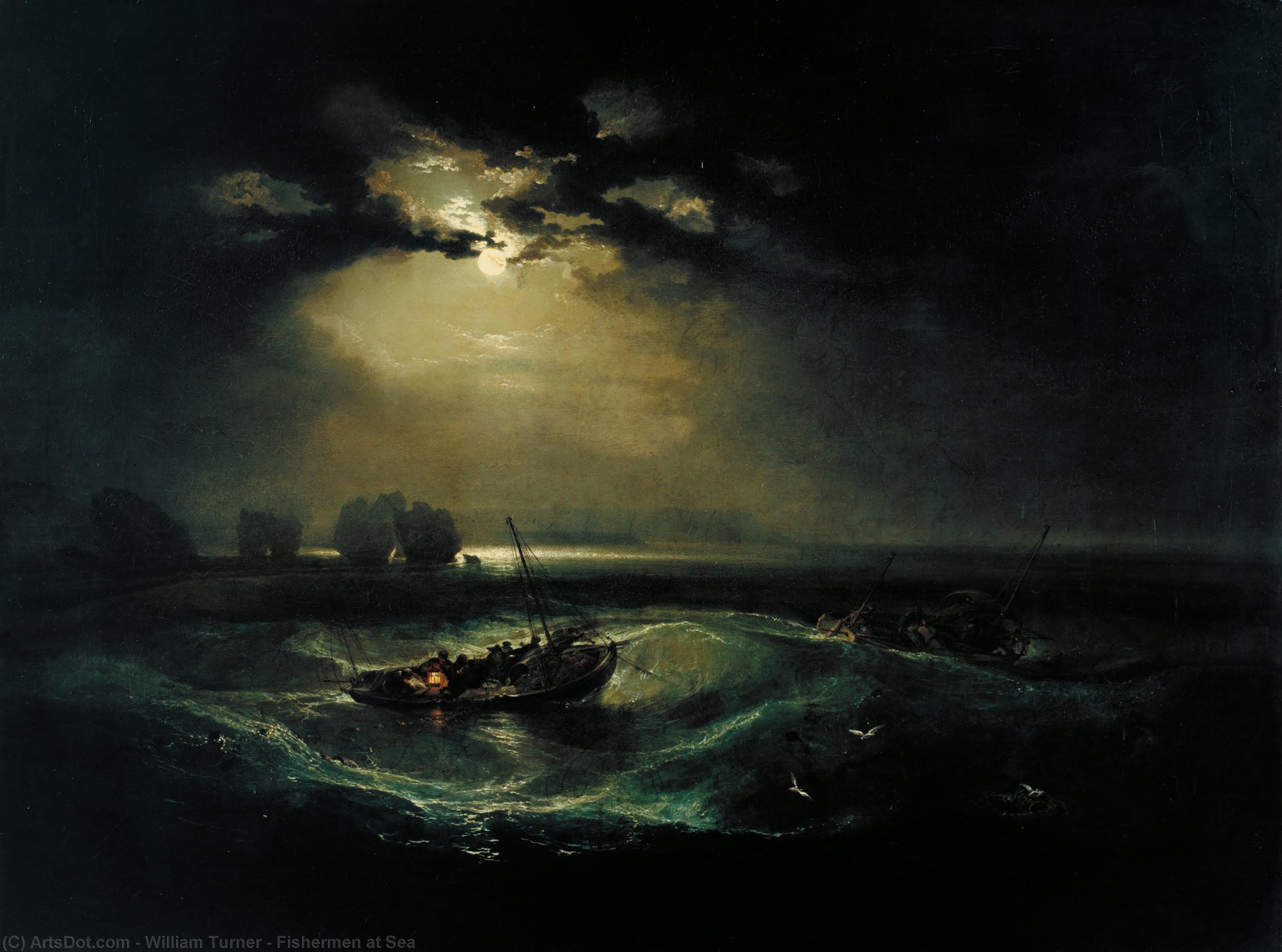
      Ribari na moru (1796) by Вилијам Тарнер
      8

      Ribari na moru

      1796 · Ulje na platnu · Tate Gallery, London

      Remek-delo svetlosti i senke Ribari na moru, naslikani 1796. godine, jedno je od najranijih uljanih dela koje je izložio čuveni engleski umetnik Joseph Mallord William Turner. Ovo očaravajuće delo, koje se čuva u Tate Galeriji u Londonu, predstavlja vrhunac Turnerovog vladanja svetlošću i senkom, postavljajući temelj za njegove buduće umetničke podvige. Umetnički kontekst Turner je bio duboko inspirisan tradicijom noćnih motiva koju su popularizovali umetnici poput Horaca Verneta, Filipa Džejmsa…

      Бојта Темераир вучена у последњи дом за разбијање by Вилијам Тарнер
      9

      Бојта Темераир вучена у последњи дом за разбијање

      Ulje na platnu

      Још један плакат који препушта место уметности је дивљи и емоционалан комад Јозефа Малорда Вилијама Тернера, рођеног 1775. године у Ковент Гардену, Лондону, који се одликује сигурним плажетом светске сличности и препушта место уметности другим уметницима. Као што је рекао критичар Јонатан Ноулт: „Један мери се утицајем којег је уметност имала на публику, а не само на други уметнике. Ако је уметност претходног века још увек путања у уметности, то…

      Бојна темераир by Вилијам Тарнер
      10

      Бојна темераир

      Ulje na platnu

      Slikovno delo Džozefa Malorda Vilijama Turnera iz 1838. godine, „Borbeni Temerir“, mnogo je više od pitopisnog prikaza starog ratnog broda. To je duboko dirljiva meditacija o vremenu, gubitku i neumoljivom maršu progresa – vizuelna elegija koja nastavlja da očarava posetioce svojom lepotom i emocionalnom dubinom.

      Вилијам Тарнер paintings ranked 11 to 100

      Izgorevanje Zgrada Parlamenta (1835) by Вилијам Тарнер
      #11

      Izgorevanje Zgrada Parlamenta

      1835

      Један Диван Сценарио: ‘Изгоревање Дома Парламента’ од Џозефа Турнера Овај диван рад, ‘Изгоревање Дома Парламента’, је више од обичног сликања; то је моћна емоционална и визуелна искуства која…

      Order this canvas →
      Fishermen at Sea (1796) by Вилијам Тарнер
      #14

      Fishermen at Sea

      1796

      William Turner's “Fishermen at Sea,” painted in 1796, is more than just a depiction of sailors battling the elements; it’s a profound meditation on humanity’s relationship with nature’s…

      Have it painted by hand →
      The Shipwreck (1805) by Вилијам Тарнер
      #15

      The Shipwreck

      1805 · Tate Gallery

      William Turner’s "The Shipwreck," created in 1805, stands as a quintessential representation of the Romantic movement in art. This oil on canvas masterpiece, measuring 171 x 240 cm…

      Bring this light home →
      Chichester Canal (1828) by Вилијам Тарнер
      #16

      Chichester Canal

      1828 · Tate Gallery

      Joseph Mallord William Turner's “Chichester Canal,” painted circa 1828, isn’t merely a depiction of a waterway; it’s a shimmering meditation on light, water, and the quiet drama of…

      Bring this light home →
      Велики канал, Венеција (1835) by Вилијам Тарнер
      #17

      Велики канал, Венеција

      1835 · Metropoliten музеј у Њујорку

      „Veliki kanal, Venecija“ Džozefa Malorda Vilijama Turnera nije samo prikaz gradskog pejzaža; to je prožimajuće iskustvo, treptaj oka zarobljen u uljanim bojama koji vibrira energijom svetlosti i vode.…

      Order this canvas →
      Ulysses Deriding Polyphemus (1848) by Вилијам Тарнер
      #20

      Ulysses Deriding Polyphemus

      1848 · National Gallery

      In the vast, turbulent theater of Joseph Mallord William Turner’s Ulysses Deriding Polyphemus, the boundaries between myth and reality dissolve into a breathtaking spectacle of light and shadow.…

      Bring this light home →
      Mercury and Argus (1840) by Вилијам Тарнер
      #22

      Mercury and Argus

      1840 · Nacionalna galerija Kanade

      The artwork presents a romantic landscape scene with figures in the foreground and a distant cityscape. A central stream or river leads the eye towards a hazy, distant…

      Have it painted by hand →
      Dutch Fishing Boats in a Storm (1801) by Вилијам Тарнер
      #23

      Dutch Fishing Boats in a Storm

      1801 · National Gallery

      Joseph Mallord William Turner’s “Dutch Fishing Boats in a Storm,” painted in 1801, stands as an unparalleled testament to the Romantic movement's fascination with untamed nature and its…

      Order this canvas →
      Louth, Lincolnshire (1827) by Вилијам Тарнер
      #26

      Louth, Lincolnshire

      1827 · British Museum

      William Turner's "Louth, Lincolnshire," painted in 1827, isn’t merely a depiction of a provincial English town; it’s a shimmering distillation of light, atmosphere, and the very essence of…

      Order this canvas →
      Rim: Koloseum (1820) by Вилијам Тарнер
      #29

      Rim: Koloseum

      1820 · British Museum

      Turnerova akvarel slika Kolosejuma u Rimu nije samo prikaz drevnog spomenika; to je visceralno iskustvo, uhvaćen prolazni trenutak u kojem se svetlost i atmosfera stiču kako bi izazvali…

      Order this canvas →
      Modern Rome-Campo Vaccino (1839) by Вилијам Тарнер
      #31

      Modern Rome-Campo Vaccino

      1839 · J. Paul Getty Museum

      A Dreamscape of Rome: Turner’s “Modern Rome – Campo Vaccino” Joseph Mallord William Turner's "Modern Rome – Campo Vaccino," painted in 1839, isn’t merely a depiction of a…

      Have it painted by hand →
      Norham Castle, Sunrise (1845) by Вилијам Тарнер
      #34

      Norham Castle, Sunrise

      1845 · Tate Gallery

      Joseph Mallord William Turner's “Norham Castle, Sunrise,” completed around 1845, stands as a quintessential embodiment of Romantic landscape painting and arguably one of the artist’s most luminous achievements.…

      Order this canvas →
      Self-Portrait (1799) by Вилијам Тарнер
      #36

      Self-Portrait

      1799 · Tate Gallery

      Joseph Mallord William Turner's 1799 self-portrait is not merely a likeness; it’s a carefully constructed window into the mind of a visionary artist grappling with his own identity…

      Bring this light home →
      Death on a pale horse (1825) by Вилијам Тарнер
      #37

      Death on a pale horse

      1825 · Tate Britain

      To stand before this depiction of Death on a pale horse is to confront not merely a painting, but an elemental force—the very breath of final judgment. J.M.W.…

      Bring this light home →
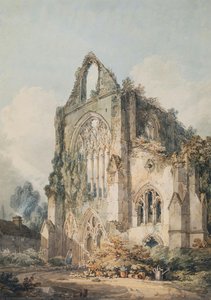
      Ruins of Tintern Abbey (1794) by Вилијам Тарнер
      #38

      Ruins of Tintern Abbey

      1794 · Музей имени Гулбенкяна

      Joseph Mallord William Turner's watercolor, “Ruins of Tintern Abbey,” painted in 1794, isn’t merely a depiction of crumbling stone; it’s an immersion into the heart of Romanticism –…

      Order this canvas →
      Вече Дождения (1843) by Вилијам Тарнер
      #39

      Вече Дождения

      1843 · National Gallery of Art

      Joseph Mallord William Turner: A Vision of Sublime Darkness Turner’s “Shade and Darkness – The Evening of the Deluge,” completed in 1843, stands as a cornerstone of Romantic…

      Bring this light home →
      Quillebeuf, at the Mouth of Seine (1833) by Вилијам Тарнер
      #40

      Quillebeuf, at the Mouth of Seine

      1833 · Музей имени Гулбенкяна

      Joseph Mallord William Turner’s “Quillebeuf, at the Mouth of Seine,” painted in 1833, isn't merely a depiction of a coastal scene; it’s an immersive experience. This large oil…

      Order this canvas →
      Peace - Burial at Sea (1842) by Вилијам Тарнер
      #41

      Peace - Burial at Sea

      1842 · Tate Gallery

      In the vast, churning expanse of J.M.W. Turner’s "Peace – Burial at Sea," we are not merely observers of a maritime event, but witnesses to a profound elemental…

      Order this canvas →
      Tivoli, the Cascatelle (1827) by Вилијам Тарнер
      #43

      Tivoli, the Cascatelle

      1827 · Tate Britain

      A Symphony of Light and Shadow: Turner’s “Tivoli, the Cascatelle” Joseph Mallord William Turner's "Tivoli, the Cascatelle," painted around 1827-8, isn’t merely a depiction of a picturesque Italian…

      Bring this light home →
      Campo Santo, Venice (1842) by Вилијам Тарнер
      #44

      Campo Santo, Venice

      1842

      William Turner’s “Campo Santo, Venice,” painted in 1842, is more than just a depiction of a Venetian scene; it's an immersive experience, a testament to the Romantic artist’s…

      Bring this light home →
      A mountain scene, Val d (1845) by Вилијам Тарнер
      #45

      A mountain scene, Val d

      1845 · Nacionalna galerija Viktorije

      Painted in 1845, “A Mountain Scene, Val d’Aosta” reflects Turner's fascination with geological formations and his belief that art should strive to evoke profound emotional responses. He famously…

      Bring this light home →
      San Giorgio Maggiore at Dawn (1819) by Вилијам Тарнер
      #49

      San Giorgio Maggiore at Dawn

      1819 · Tate Gallery

      Joseph Mallord William Turner’s “San Giorgio Maggiore at Dawn,” completed in 1819, stands as a cornerstone of Romantic landscape painting—a testament to the artist's unwavering belief that art…

      Order this canvas →
      Landscape (1850) by Вилијам Тарнер
      #52

      Landscape

      1850 · Ermitaž

      The scene unfolds in a work titled Landscape, a piece that carries the unmistakable hand of J. M. W. Turner. This landscape painting captures a moment of quietude…

      Bring this light home →
      Edinburgh from Calton Hill (1819) by Вилијам Тарнер
      #53

      Edinburgh from Calton Hill

      1819 · Scottish National Gallery

      To gaze upon this depiction of Edinburgh from Calton Hill is to step directly into the evocative atmosphere of early nineteenth-century romanticism. J.M.W. Turner, ever the master of…

      Order this canvas →
      Landscape (1850) by Вилијам Тарнер
      #55

      Landscape

      1850 · Walker Art Gallery

      A Visionary Landscape: Turner's Atmospheric Masterpiece This captivating artwork, titled "Landscape," offers a glimpse into the innovative spirit of J.M.W. William Turner, one of Britain’s most celebrated Romantic…

      Bring this light home →
      Melrose (1831) by Вилијам Тарнер
      #59

      Melrose

      1831 · Scottish National Gallery

      J.M.W. Turner’s “Melrose,” painted in 1831, isn't merely a depiction of a Scottish landscape; it’s an immersive experience—a fleeting moment captured on canvas where light, atmosphere, and the…

      Order this canvas →
      Europa and the Bull (1845) by Вилијам Тарнер
      #60

      Europa and the Bull

      1845 · Taft Museum of Art

      To gaze upon this depiction of Europa and the Bull is to step directly into the luminous embrace of classical mythology, filtered through the breathtaking vision of J.M.W.…

      Bring this light home →
      The Red Rigi (1842) by Вилијам Тарнер
      #61

      The Red Rigi

      1842 · Nacionalna galerija Viktorije

      Joseph Mallord William Turner's "The Red Rigi," painted in 1842, isn’t merely a depiction of a Swiss mountain; it’s an immersive experience. This watercolor, one of four stunning…

      Order this canvas →
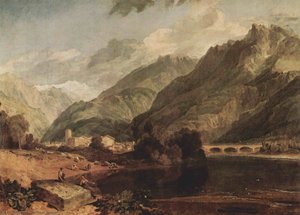
      Bonneville, Savoy (1812) by Вилијам Тарнер
      #65

      Bonneville, Savoy

      1812 · Philadelphia Museum of Art

      In this sweeping landscape, we find ourselves before a dramatic mountain scene that captures the sheer scale of the Savoy region. The composition is dominated by rugged, massive…

      Have it painted by hand →
      Walton Reach (1805) by Вилијам Тарнер
      #67

      Walton Reach

      1805 · Tate Britain

      To gaze upon J.M.W. Turner's "Walton Reach" is to step directly into the breath of early nineteenth-century England, where the sublime power of nature met the burgeoning spirit…

      Order this canvas →
      Fishermen at Sea (1801) by Вилијам Тарнер
      #71

      Fishermen at Sea

      1801 · Tate Britain

      A Moonlit Dance of Vulnerability: Exploring Turner’s ‘Fishermen at Sea’ Joseph Mallord William Turner – arguably Britain's greatest Romantic painter – didn’t merely depict the sea; he wrestled…

      Bring this light home →
      The Wreck of a Transport Ship (1810) by Вилијам Тарнер
      #74

      The Wreck of a Transport Ship

      1810

      A Tempestuous Vision: Exploring Turner’s “The Wreck of a Transport Ship” Turner's "The Wreck of a Transport Ship," completed in 1810, isn’t merely a depiction of maritime disaster;…

      Order this canvas →
      Dawn after the wreck by Вилијам Тарнер
      #76

      Dawn after the wreck

      William Turner's "Dawn after the Wreck" is not merely a depiction of a coastal scene; it’s an immersion into raw emotion, a testament to the Romantic spirit’s obsession…

      Bring this light home →
      Venice with the Salute (1840) by Вилијам Тарнер
      #77

      Venice with the Salute

      1840 · Tate Britain

      In this work, titled Venice with the Salute, the artist J. M. W. Turner turns his attention to the lower end of Venice’s Grand Canal. Created around 1840-5,…

      Bring this light home →
      Heriot's Hospital, Edinburgh (1819) by Вилијам Тарнер
      #78

      Heriot's Hospital, Edinburgh

      1819 · Nacionalna galerija Škotske

      Joseph Mallord William Turner's “Heriot’s Hospital, Edinburgh,” painted in 1819, isn’t merely a depiction of a street scene; it’s a vibrant snapshot of urban life, imbued with the…

      Have it painted by hand →
      Ivy bridge devonshire by Вилијам Тарнер
      #81

      Ivy bridge devonshire

      J.M.W. Turner’s “Ivy Bridge Devonshire” is more than just a depiction of a picturesque English scene; it's an immersive experience, a testament to the Romantic artist’s profound connection…

      Bring this light home →
      Bell Rock Lighthouse (1819) by Вилијам Тарнер
      #82

      Bell Rock Lighthouse

      1819 · Scottish National Gallery

      J.M.W. Turner's “Bell Rock Lighthouse,” painted in 1819, isn’t merely a depiction of a lighthouse; it’s an immersive experience—a visceral plunge into the heart of a raging storm.…

      Have it painted by hand →
      Morning amongst the Coniston Fells (1798) by Вилијам Тарнер
      #86

      Morning amongst the Coniston Fells

      1798 · Tate Gallery

      Joseph Mallord William Turner's “Morning amongst the Coniston Fells, Cumberland” isn’t merely a landscape painting; it’s an immersive experience of light and atmosphere, a fleeting moment captured with…

      Bring this light home →
      Mortlake Terrace: Early Summer Morning (1826) by Вилијам Тарнер
      #87

      Mortlake Terrace: Early Summer Morning

      1826 · The Frick Collection

      Joseph Mallord William Turner's "Mortlake Terrace: Early Summer Morning," painted in 1826, isn’t merely a depiction of a riverside estate; it’s an immersive experience of light, atmosphere, and…

      Order this canvas →
      Flint Castle (1838) by Вилијам Тарнер
      #88

      Flint Castle

      1838

      The scene unfolds at Flint Castle, a structure resting upon the edge of the Dee Estuary in North Wales. J. M. W. Turner captures this coastal landscape through…

      Order this canvas →
      Rocky Bay with Figures (1830) by Вилијам Тарнер
      #91

      Rocky Bay with Figures

      1830 · National Gallery

      William Turner's *Rocky Bay with Figures*, painted in 1830, isn’t merely a depiction of a coastal scene; it’s an immersive experience. This oil on canvas transports the viewer…

      Order this canvas →
      Crossing the Brook (1815) by Вилијам Тарнер
      #92

      Crossing the Brook

      1815 · Tate Gallery

      J.M.W. Turner's *Crossing the Brook*, painted in 1815, isn’t merely a landscape; it’s an immersion into a fleeting moment of sublime beauty and quiet contemplation. This iconic work,…

      Order this canvas →
      Landscape with Water (1840) by Вилијам Тарнер
      #93

      Landscape with Water

      1840 · Tate Britain

      In the ethereal realm of J.M.W. Turner’s late works, boundaries between the physical world and the atmospheric spirit begin to dissolve, and Landscape with Water stands as a…

      Order this canvas →
      Peace - Burial at Sea (1842) by Вилијам Тарнер
      #94

      Peace - Burial at Sea

      1842 · Tate Gallery

      A Tempestuous Vision of Loss and Transcendence: Exploring Turner’s ‘Peace - Burial at Sea’ Joseph Mallord William Turner's “Peace – Burial at Sea,” exhibited in 1842, transcends mere…

      Order this canvas →
      Lake of Thun (1851) by Вилијам Тарнер
      #95

      Lake of Thun

      1851 · Taft Museum of Art

      The watercolor titled Lake of Thun was produced by J. M. W. Turner in 1851. This work is a depiction of a landscape located on the shores of…

      Bring this light home →
      Mortlake terrace by Вилијам Тарнер
      #98

      Mortlake terrace

      National Gallery of Art

      Mortlake Terrace: A Symphony of Light by William Turner Subject Matter: "Mortlake Terrace," painted circa 1826 by the visionary William Turner, is more than just a depiction of…

      Bring this light home →
      Jedburgh Abbey (1832) by Вилијам Тарнер
      #99

      Jedburgh Abbey

      1832 · Taft Museum of Art

      In the delicate, translucent layers of J.M.W. Turner’s 1832 watercolor, Jedburgh Abbey, we are invited to step through a window of time into a bygone era of English…

      Bring this light home →
      A Single Figure by Вилијам Тарнер
      #100

      A Single Figure

      Tate Britain

      Joseph Mallord William Turner's “A Single Figure,” painted circa 1840, isn’t merely a depiction of a lone individual; it’s an immersion into the very heart of Romantic introspection.…

      Have it painted by hand →

      Вилијам Тарнер's canvases, period by period

      What Вилијам Тарнер painted most

      The four subjects that return most often on these canvases, each with its best-loved example.

      Where Вилијам Тарнер's canvases hang

      The 8 museums that hold the most of the paintings on this page.

      Museum City Works by Вилијам Тарнер Paintings from this list
      Tate Gallery, LondonTate Gallery London 24 Snow Storm, Hannibal and his Army Crossing the Alps, Ribari na moru, The Shipwreck
      Tate Britain, LondonTate Britain London 51 Steam-Boat off a Harbour's Mouth, Death on a pale horse, The Battle of Trafalgar, as Seen from the Mizen Starboard Shrouds of the Victory
      National Gallery, LondonNational Gallery London 19 Borbeni 'Temerair' vučen u svoje poslednje pristanište da bude raspadnut, Великобританија и Велика западна железница, Дидо гради Карфаген (такđe poznat kao Uspon Kartадским царством)
      National Gallery of Art, WashingtonNational Gallery of Art Washington 11 Venecija: Dogana i San Đorđo Đordžo, Вече Дождения, Keelmen Heaving in Coals by Night
      Scottish National Gallery, EdinburghScottish National Gallery Edinburgh 8 Edinburgh from Calton Hill, Melrose, Bell Rock Lighthouse
      British Museum, LondonBritish Museum London 5 Louth, Lincolnshire, Rim: Koloseum, Venice, San Giorgio from the Dogana: Sunrise
      Taft Museum of Art, SinsinatiTaft Museum of Art Sinsinati 5 Europa and the Bull, Lake of Thun, Jedburgh Abbey
      Muzej finih umetnosti u Bostonu, BostonMuzej finih umetnosti u Bostonu Boston 4 Brod robova, Slavers Throwing Overboard the Dead and Dying - Typhon Coming on

      Decade by decade: Вилијам Тарнер's most celebrated canvas

      1. 1790s
        Ribari na moru (1796) by Вилијам Тарнер
        Ranked 8 of 100

        Ribari na moru

        Age 15 – 24 · Tate Gallery

        Remek-delo svetlosti i senke Ribari na moru, naslikani 1796. godine, jedno je od najranijih uljanih dela koje je izložio čuveni engleski umetnik Joseph Mallord William Turner. Ovo očaravajuće…

      2. 1800s
        The Shipwreck (1805) by Вилијам Тарнер
        Ranked 15 of 100

        The Shipwreck

        Age 25 – 34 · Tate Gallery

        William Turner’s "The Shipwreck," created in 1805, stands as a quintessential representation of the Romantic movement in art. This oil on canvas masterpiece, measuring 171 x 240 cm…

      3. 1810s
        Snow Storm, Hannibal and his Army Crossing the Alps (1812) by Вилијам Тарнер
        Canvas 5 of 100

        Snow Storm, Hannibal and his Army Crossing the Alps

        Age 35 – 44 · Tate Gallery

        Joseph Mallord William Turner’s “Snow Storm: Hannibal and his Army Crossing the Alps” isn't merely a depiction of a historical event; it’s an immersive experience, a visceral rendering…

      4. 1820s
        Chichester Canal (1828) by Вилијам Тарнер
        Ranked 16 of 100

        Chichester Canal

        Age 45 – 54 · Tate Gallery

        Joseph Mallord William Turner's “Chichester Canal,” painted circa 1828, isn’t merely a depiction of a waterway; it’s a shimmering meditation on light, water, and the quiet drama of…

      5. 1830s
      6. 1840s
        Ulysses Deriding Polyphemus (1848) by Вилијам Тарнер
        Ranked 20 of 100

        Ulysses Deriding Polyphemus

        Age 65 – 74 · National Gallery

        In the vast, turbulent theater of Joseph Mallord William Turner’s Ulysses Deriding Polyphemus, the boundaries between myth and reality dissolve into a breathtaking spectacle of light and shadow.…

      7. 1850s
        Landscape (1850) by Вилијам Тарнер
        Ranked 52 of 100

        Landscape

        Age 75 – 76 · Ermitaž

        The scene unfolds in a work titled Landscape, a piece that carries the unmistakable hand of J. M. W. Turner. This landscape painting captures a moment of quietude…

      Your questions on Вилијам Тарнер's paintings, answered

      Which is the most celebrated painting by Вилијам Тарнер?Read the answer

      Borbeni 'Temerair' vučen u svoje poslednje pristanište da bude raspadnut (1838), National Gallery, London. Brod robova and Великобританија и Велика западна железница follow.

      How old was Вилијам Тарнер at the time of Borbeni 'Temerair' vučen u svoje poslednje pristanište da bude raspadnut?Read the answer

      Вилијам Тарнер, born in 1775, was 63 years old: Borbeni 'Temerair' vučen u svoje poslednje pristanište da bude raspadnut dates from 1838.

      Which ten paintings is Вилијам Тарнер most famous for?Read the answer

      Borbeni 'Temerair' vučen u svoje poslednje pristanište da bude raspadnut, Brod robova, Великобританија и Велика западна железница, Steam-Boat off a Harbour's Mouth, Snow Storm, Hannibal and his Army Crossing the Alps, The Battle of Trafalgar, Дидо гради Карфаген (такđe poznat kao Uspon Kartадским царством), Ribari na moru, Бојта Темераир вучена у последњи дом за разбијање and Бојна темераир. Each canvas in the ranking above comes with its year and its museum.

      How many paintings by Вилијам Тарнер are known?Read the answer

      870 works by Вилијам Тарнер are in our catalogue, dated 1792 to 1851.

      Which museums hold Вилијам Тарнер's best-known canvases?Read the answer

      Mostly in Tate Gallery (London), Tate Britain (London) and National Gallery (London); the list above names each museum and its canvases.

      In which years did Вилијам Тарнер paint the most celebrated canvases?Read the answer

      In 1840s, which gave 21 of the 100 works on this page, Ulysses Deriding Polyphemus among them.

      What are the first and the last of Вилијам Тарнер's famous canvases?Read the answer

      The earliest canvas here is The Pantheon, the Morning after the Fire (1792); the latest is Lake of Thun (1851).

      Which subjects return most often in Вилијам Тарнер's paintings?Read the answer

      Landscape (32), Turner (17) and Mountains (10), across the 100 works on this page.

      What did Вилијам Тарнер usually paint with?Read the answer

      Oil On Canvas, used in 47 of the 100 works on this page.

      To which art movement does Вилијам Тарнер belong?Read the answer

      Romantizam, as the canvases on this page show.

      What can I see by Вилијам Тарнер at the Tate Gallery?Read the answer

      The Tate Gallery, London holds 17 of the works on this page, among them Snow Storm, Hannibal and his Army Crossing the Alps, Ribari na moru and The Shipwreck.

      Can I order a hand-painted copy of a painting by Вилијам Тарнер?Read the answer

      Yes. Every painting on this page can be ordered from its own page as an oil reproduction painted by hand, or as a fine art print, in the size you choose.

      Вилијам Тарнер: the painter's story

      Early Life, Family and Training

      In a house on Maiden Lane, within the busy Covent Garden district of London, Joseph Mallord William Turner entered the world. His beginnings were rooted in the practical trades of the city; his father, William Turner, worked as a barber and wigmaker. This domestic setting was also a place of commerce, as William served as an art dealer, providing a young boy with an early, unforced proximity to the world of visual works. The boy’s talent was evident early on, and his father even displayed the child's drawings in the shop window to catch the eyes of passing customers.

      By the age of fourteen, the boy's ambition led him to the Royal Academy Schools in 1789. This formal entry into the academic world provided the technical discipline required to transform raw talent into professional skill. Before and during these formative years, he sought practical experience by working for various architects, including Thomas Hardwick, James Wyatt, and Joseph Bonomi the Elder. These roles required a keen eye for structure and perspective, grounding his developing vision in the physical realities of the built environment.

      His education was further shaped by the guidance of the topographical draughtsman Thomas Malton. Through this study, he learned to render the specific details of landscapes and architecture with precision. This period of his life was a careful balance of formal instruction and the necessity of working for hire, as he moved from the meticulous demands of architectural drawing toward the more expressive possibilities of the natural world.

      Technique and Artistic Style

      In his early years, he followed the path of the eighteenth-century topographical tradition, producing precise renderings of architecture and landscapes. These early efforts showed a disciplined hand, yet a restless spirit was already beginning to stir beneath the surface of his technical proficiency. As he matured, his focus shifted from the mere documentation of places to a profound fascination with the raw power of the natural world. He sought to capture the very essence of storms, the sudden fury of seascapes, the massive presence of mountains, and the fleeting brilliance of a sunset. This pursuit led him to become a painter of light, a man who used color as his primary language to describe the atmosphere.

      His method was one of constant experimentation across various media, including oils, watercolours, and engravings. He moved away from rigid forms, preferring instead to use bold color and expressive renditions of light to convey the feeling of a moment. He did not merely paint a scene; he painted the air between the eye and the object. This approach allowed him to translate the turbulence of the elements into something deeply felt. His brushwork became a tool for capturing movement, dissolving the boundaries between the sea and the sky through a masterful command of light and shadow.

      Key Works and Subjects

      His early years saw him mastering the elements of the sea and the self. In 1796, he produced Fishermen at Sea, an oil work that demonstrated his early command over the interplay of light and shadow. By 1799, he turned his gaze inward with a Self-Portrait, rendered in oil on canvas. These early endeavors were but a fraction of a staggering output that eventually included over 550 oil paintings and nearly 20,000 drawings and sketches.

      As his vision expanded, he moved from the meticulous details of topography toward the vastness of the natural world. He found profound inspiration in the changing light of the English landscape, such as the watercolor of Louth, Lincolnshire from 1827. His brushwork grew more expressive, often capturing the turbulent energy of storms and the shifting moods of the sky. He was drawn to the drama of the ocean, often depicting the raw power of waves and the vulnerability of those caught within them.

      In his later years, the artist found himself fascinated by the rapid changes of the industrial age. He turned his attention to the machines of progress, capturing the movement and steam of a new era. This interest in contemporary technology is evident in works such as The Fighting Temeraire and Rain, Steam and Speed, where the force of human invention meets the vastness of the atmosphere.

      Patrons and Commercial Success

      The seeds of his professional life were sown in the modest setting of his father's shop. There, the young artist's sketches were displayed in the window, inviting passersby to purchase his early efforts for a single shilling. This early exposure to the marketplace provided a practical understanding of art as a trade. As he matured, he secured a steady and reliable income by meeting the high demand for topographical and architectural watercolours, a pursuit that allowed him to establish himself firmly within the London art world.

      His growing reputation eventually drew the attention of men of significant means and influence. He found patronage among figures such as William Beckford, Francis Egerton, the 3rd Duke of Bridgewater, and George Wyndham, the 3rd Earl of Egremont. These connections were marked by substantial transactions that reflected the rising value of his vision. In 1799, he sold The Fifth Plague of Egypt to William Beckford for 150 guineas. A few years later, in 1801, Dutch Boats in a Gale was acquired by Francis Egerton for 250 guineas.

      Legacy and Influence

      The ripples of his vision reached far beyond the shores of Britain, touching the very foundations of how painters perceived the world. His restless pursuit of light and his expressive use of color acted as a precursor to the Impressionist movement, leaving a profound mark on artists like Monet and Pissarro. He did not merely paint the landscape; he sought to dissolve the boundaries of form, a pursuit that helped pave the way for modern abstraction. This willingness to prioritize atmosphere over rigid detail allowed his influence to travel through the centuries, eventually reaching the abstract expressionists like Mark Rothko.

      His ascent to widespread acclaim was aided by a significant turning point in 1840, when a prominent critic became his great champion. This support helped the public grasp the depth of his experimentation at a time when his free treatment of subjects was often met with confusion or criticism. While many found his swirling compositions difficult to interpret, his ability to capture the feeling of a place ensured his place in the history of art. He transformed the landscape from a static subject into a medium for profound emotional expression.

      Where to See the Works Today

      To witness the legacy of this painter, one must travel to London, where the great majority of his paintings are held. The Tate Britain houses much of his life's work, allowing a viewer to trace his development through the decades. Within these halls, one can find The Fighting Temeraire Tugged to Her Last Berth to Be Broken Up, a work that captures a sense of profound transition. Nearby, the Tate Collection also preserves The Evening of the Deluge, a piece that reflects his preoccupation with the overwhelming forces of nature.

      His reach extends far beyond the shores of England, finding homes in various corners of the globe. In Lisboa, Portugal, the Calouste Gulbenkian Museum holds Ruins of Tintern Abbey, a watercolor that demonstrates his command over light and atmosphere. Across the Atlantic, the Museum of Fine Arts in Boston, Massachusetts, preserves Slavers Throwing Overboard the Dead and Dying—Typhon Coming on, a painting that speaks to the darker, more turbulent aspects of his vision.

      All 870 works by Вилијам Тарнер →