Atelje — Besplatna dostava širom sveta — Rok isporuke: 2–6 nedelja
      Вилијам Хогарт, 1697 – 1764

      Вилијам Хогарт's 100 Most Famous Paintings

      Plate one, from A Rake's Progress - Jedna ploča iz „Progresa raskošja“ is the painting Вилијам Хогарт is best remembered for. Plate šest iz Dela Hogartha and Gin Lane (1750) complete the trio of best-loved canvases. Our catalogue counts 307 works by Вилијам Хогарт. Here are the 100 most famous, with the year, the museum and the story of each canvas.

      Ranked by our popularity score, which combines the searches, visits and orders for each work. Updated октобар 2026. Each painting on this page can be ordered as an oil reproduction painted by hand on linen canvas, or as a fine art print, made to the size you choose.

      Portrait of Вилијам Хогарт
      Вилијам Хогарт · 1697 – 1764
      Born · died
      1697 – 1764, Лондон
      Works in our catalogue
      307
      Most famous
      Plate one, from A Rake's Progress - Jedna ploča iz „Progresa raskošja“
      Most works at
      Sir John Soane's Museum

      The ten best-loved paintings by Вилијам Хогарт

      Plate one, from A Rake's Progress - Jedna ploča iz „Progresa raskošja“ by Вилијам Хогарт
      1

      Plate one, from A Rake's Progress - Jedna ploča iz „Progresa raskošja“

      Engraving

      Scena: Pogled u kreativni haos Prepustite se živopisnoj energiji umetničkog ateljea uz „Prvu ploču iz Progresa raskošja“. Ova zamršena gravura Vilijama Hogartha beleži užurbano scenu prepunu aktivnosti i detalja. U samom centru, muškarac u elegantnoj odeći posvećen je radu na umetničkom delu na slikarskom slikalu, okružen likovima koji marljivo rade ili razgovaraju. Kompozicija je bogata slojevima interakcije, od umetnika za svojim stolom do žena koje diskutuju o umetninama, stvarajući dinamičan…

      Plate šest iz Dela Hogartha by Вилијам Хогарт
      2

      Plate šest iz Dela Hogartha

      Engraving

      Pogled u satiru 18. veka Prepustite se živopisnom haosu dela „Šesta litografija iz Prolaska razglaćenog“, majstorskog gravira Vilijama Hogartha. Ova zamršena crno-bela scena hvata frenetičnu energiju prepunog domaćanstva, nudeći živopisan trenutak društvenog života 1ra veka i oštru moralnu kritiku. Kompozicija i stil Hogartov prepoznatljiv stil blistavo se ispoljava u ovoj detaljnoj kompoziciji, gde svaka figura i svaki predmet pripovetaju sopstvenu priču. Monohromatska paleta pojačava kontrast i dubinu, uvlačeći posmatrače direktno…

      Gin Lane (1750) by Вилијам Хогарт
      3

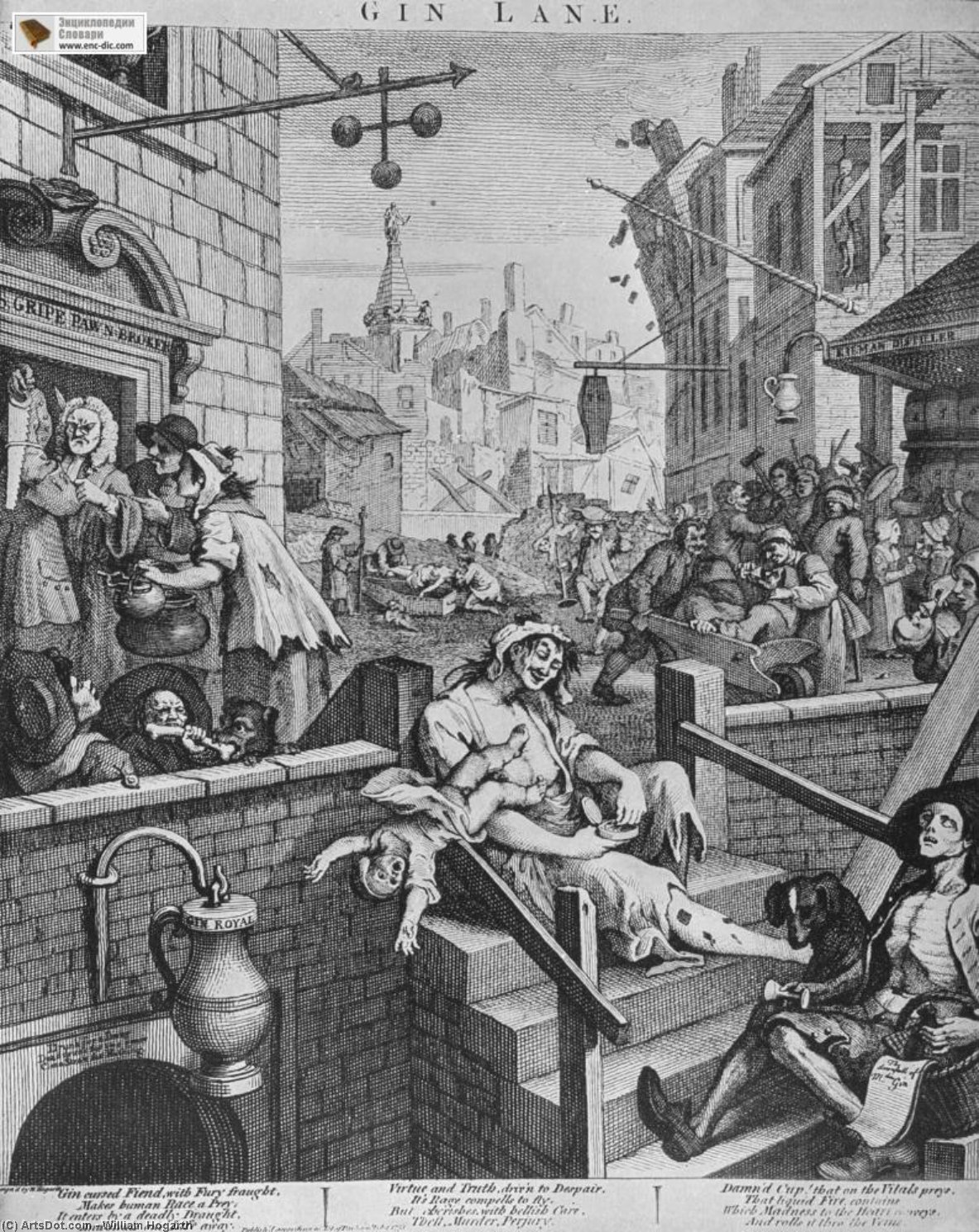
      Gin Lane

      1750 · Engraving

      In the heart of 18th-century London, amidst the swirling fog and the growing shadows of social upheaval, William Hogarth captured a moment of profound human tragedy that continues to haunt the viewer centuries later. His masterpiece, Gin Lane, is far more than a mere engraving; it is a visceral, breathing chronicle of a city in the throes of moral and physical decay. Completed in 1751, this work serves as a…

      The Marriage Contract (1745) by Вилијам Хогарт
      4

      The Marriage Contract

      1745 · Acrylic On Canvas

      A Window Into Georgian Society In the heart of 1745, William Hogarth captured more than a mere domestic arrangement; he froze a pivotal moment of social negotiation in "The Marriage Contract." This meticulously crafted tableau invites the viewer into a room thick with the palpable anxieties and lofty aspirations of Georgian England. As we gaze upon the central table where a man proposes to his prospective bride, we are not…

      Banket (1755) by Вилијам Хогарт
      5

      Banket

      1755 · Ulje na platnu · Sir John Soane's Museum, London

      Živopisna scena iz 18. veka: Analiza Hogartovog dela „Banket” (1755) William Hogarth’s *The Banquet*, naslikan 1755. godine, predstavlja vibrantno i prepuno života ulje na platnu delo koje nudi fascinantan uvid u običaje društva georgijanske Engleske. Sa dimenzijama od 101 x 127 cm, ovo monumentalno delo nije samo puki prikaz gozbe; to je pažljivo konstruisana komentarišica o društvu, uživanju i često haotičnoj prirodi ljudske interakcije. Tema i narativ Slika prikazuje užurbano…

      Satana, Greh i Smrt (Scena iz Miltona (1735) by Вилијам Хогарт
      6

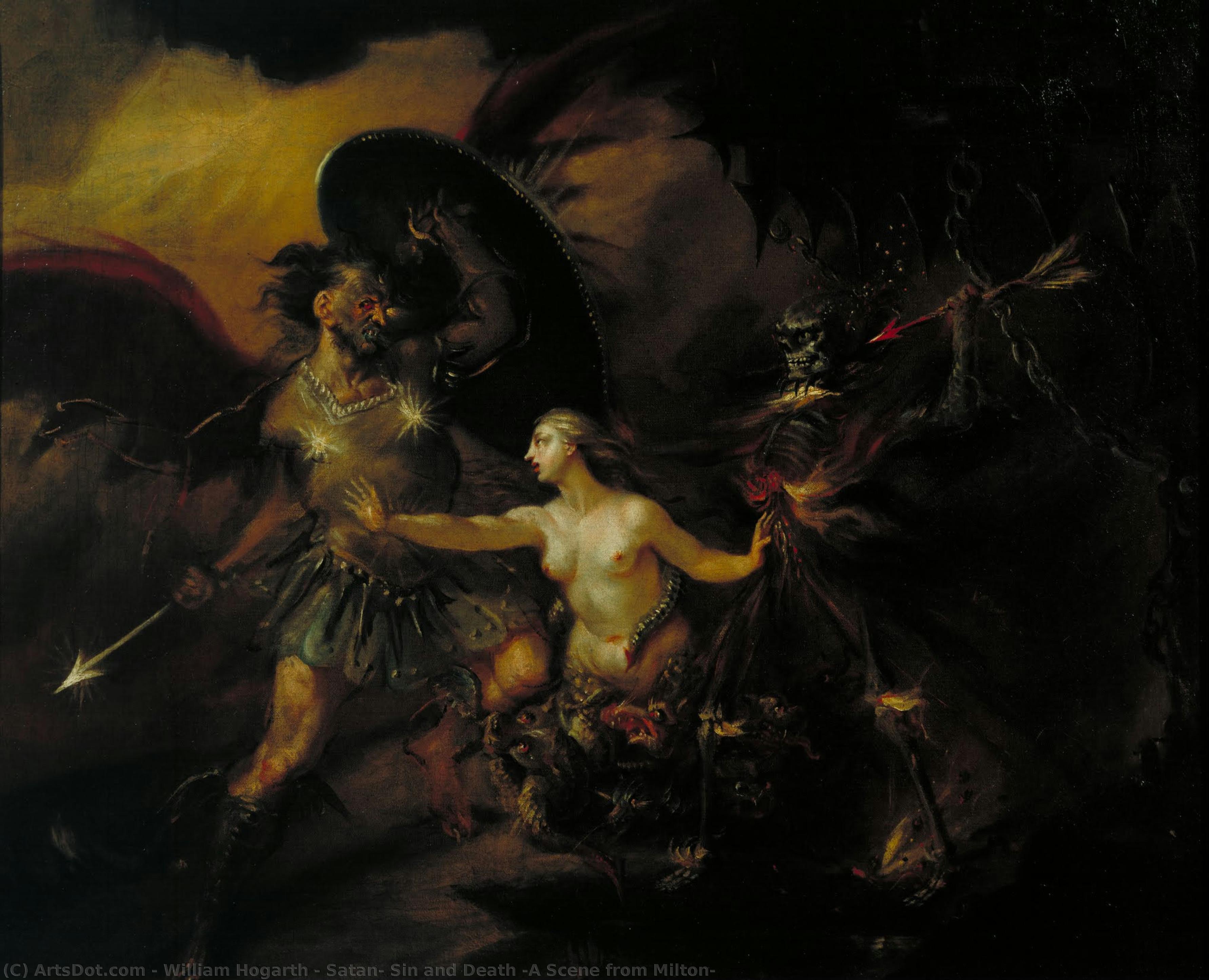
      Satana, Greh i Smrt (Scena iz Miltona

      1735 · Ulje na platnu · Tate Britain, London

      Delo Vilijama Hogartha, „Satana, Greh i Smrt“, nastalo 1735. godine, predstavlja mnogo više od obične ilustracije Miltonovog epskog poem „Izgubljeni raj“; to je pedantno izrađena moralna alegorija koja posmatrača uranja u svet iskušenja, posledica i večnog sukoba. Ovo ulje na platnu, koje se trenutno čuva u Tate Britaniji u Londonu, dimenzija je 74 x 61 cm i nudi izuzetno intiman uvid u Hogarthovo duboko razumevanje Miltonovih tema – zavodljivu moć…

      The Painter and his Pug (1745) by Вилијам Хогарт
      7

      The Painter and his Pug

      1745 · Oil On Canvas · Tate Gallery, London

      A Portrait of Intimacy: William Hogarth’s ‘The Painter and his Pug’ Subject & Composition: This captivating 1745 portrait by William Hogarth offers a charmingly informal glimpse into the artist's personal life. It depicts Hogarth himself, seated and gazing directly at the viewer, accompanied by his beloved pug, Trump. The composition is remarkably balanced; Hogarth occupies the central space while Trump rests comfortably to his right, creating an intimate and relaxed…

      The Suicide of the Countess by Вилијам Хогарт
      8

      The Suicide of the Countess

      Oil On Canvas

      William Hogarth's "The Suicide of the Countess," part of his renowned series "Marriage A-la-Mode," offers a stark and poignant commentary on the societal ills of 18th-century England. Created between 1743 and 1745, this painting serves as a powerful culmination to a narrative exploring the destructive consequences of marriages based on financial gain rather than genuine affection.

      The Four Times of Day: Night (1738) by Вилијам Хогарт
      9

      The Four Times of Day: Night

      1738 · Acrylic On Canvas · Cleveland Museum of Art, Klivlend

      William Hogarth's "The Four Times of Day: Night," painted in 1738, isn’t merely a depiction of a London street scene; it’s a meticulously crafted window into the social and moral landscape of eighteenth-century England. This remarkable work, now immortalized through WahooArt’s hand-painted reproductions, captures a moment of revelry – or perhaps reckless abandon – with an unparalleled level of detail and satirical observation that defines Hogarth's unique artistic legacy. The…

      A Harlot's Progress: Quarrels with her Jewish Protector (1743) by Вилијам Хогарт
      10

      A Harlot's Progress: Quarrels with her Jewish Protector

      1743 · Oil On Canvas · Ascott House, Leighton Buzzard

      The room holds a sudden, sharp noise. A tea-table tilts, porcelain clatters, and the heavy weight of an argument settles over the fine fabrics. Mary, known as Moll Hackabout, moves with a violent intent, her arm a decisive line against the opulent interior. She kicks at the furniture to draw eyes away from the doorway, where a lover slips quietly into the shadows. A black serving boy stands near, a…

      Вилијам Хогарт: canvases 11 to 100 of the ranking

      Autoportret (1757) by Вилијам Хогарт
      #11

      Autoportret

      1757 · National Portrait Gallery

      Hogarthov Autoportret, naslikan 1757. godine, nudi očaravajući prozor u život i umetničku praksu jednog od najznačajnijih britanskih umetnika. Ovo ulje na platnu (45 x 42 cm) oličuje klasicizam,…

      Bring this light home →
      Soliciting Votes (1754) by Вилијам Хогарт
      #12

      Soliciting Votes

      1754 · Sir John Soane's Museum

      William Hogarth's "Soliciting Votes," completed in 1754, stands as a masterful distillation of Enlightenment satire and a poignant reflection on the burgeoning political landscape of London. More than…

      Bring this light home →
      The heir (1735) by Вилијам Хогарт
      #13

      The heir

      1735 · Sir John Soane's Museum

      William Hogarth’s “The Heir,” completed in 1735, is more than simply a depiction of a domestic scene; it’s a meticulously crafted social commentary rendered with the precision and…

      Bring this light home →
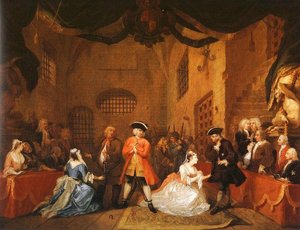
      A Scene from The Beggar's Opera (1729) by Вилијам Хогарт
      #14

      A Scene from The Beggar's Opera

      1729 · National Gallery of Art

      William Hogarth's "A Scene from The Beggar’s Opera," painted in 1729, isn’t merely a depiction of a theatrical performance; it’s a meticulously crafted snapshot of 18th-century London life…

      Have it painted by hand →
      South Sea Scheme by Вилијам Хогарт
      #15

      South Sea Scheme

      In the swirling currents of 1721 London, amidst a fever of unbridled greed and financial delirium, William Hogarth unleashed a visual critique that would forever etch itself into…

      Order this canvas →
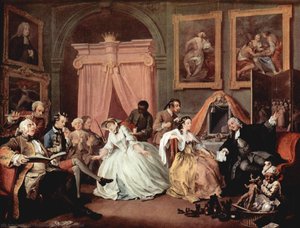
      Marriage à la Mode (1743) by Вилијам Хогарт
      #16

      Marriage à la Mode

      1743 · National Gallery

      U veličanstvenom tapiseriji britanske umetnosti osamnaestog veka, malo je dela koje poseduje oštru duhovitost i narativnu dubinu kao Marriage à la Mode Vilijama Hogartha. Završena 1743. godine, ova…

      Bring this light home →
      Hudibras by Вилијам Хогарт
      #19

      Hudibras

      William Hogarth's *Hudibras*, specifically the frontispiece and related engravings from Samuel Butler’s satirical poem, offers far more than a simple illustration; it’s a meticulously crafted social commentary frozen…

      Have it painted by hand →
      Poseta šarlatanu (1745) by Вилијам Хогарт
      #20

      Poseta šarlatanu

      1745

      U živopisnom, ali oštrom svetu Londona 18. veka, delo Vilijama Hogartha „Poseta šarlatanu” izdvaja se kao duboka teatralna izvedba zarobljena u boji. Naslikano oko 1745. godine, ovo remek-delo…

      Order this canvas →
      The Times, plate 2 (1763) by Вилијам Хогарт
      #22

      The Times, plate 2

      1763

      The Pulse of an Era: London Unveiled In the year 1763, as the gears of the Industrial Revolution began to turn and the streets of London swelled with…

      Order this canvas →
      Autoportret (1745) by Вилијам Хогарт
      #24

      Autoportret

      1745

      William Hogarth’s 1745 self-portrait isn’t merely a likeness; it’s a meticulously crafted window into the mind of one of England’s most astute and satirical observers. Painted during a…

      Order this canvas →
      Miss Mary Edwards (1742) by Вилијам Хогарт
      #25

      Miss Mary Edwards

      1742 · The Frick Collection

      A Portrait of Privilege and Virtue: Examining William Hogarth’s Miss Mary Edwards William Hogarth's "Miss Mary Edwards," completed in 1742, stands as an emblem of Enlightenment England—a meticulously…

      Have it painted by hand →
      The Battle of the Pictures (1743) by Вилијам Хогарт
      #26

      The Battle of the Pictures

      1743

      William Hogarth's "The Battle of the Pictures," completed in 1743, isn’t merely an engraving; it’s a vibrant, chaotic microcosm of 18th-century London’s art world – a scene brimming…

      Order this canvas →
      Suicide of the Countess (1745) by Вилијам Хогарт
      #27

      Suicide of the Countess

      1745

      Georgian England was gripped by a fervor for moral reform following the Enlightenment. Writers like Jonathan Swift satirized aristocratic excesses and championed reason over superstition, influencing artists like…

      Bring this light home →
      Canvassing for Votes by Вилијам Хогарт
      #28

      Canvassing for Votes

      William Hogarth’s “Canvassing for Votes” isn't merely a painting; it’s a meticulously crafted social commentary, a vibrant snapshot of corruption and manipulation embedded within the seemingly convivial atmosphere…

      Have it painted by hand →
      The Countess's Morning Levee (1745) by Вилијам Хогарт
      #29

      The Countess's Morning Levee

      1745

      William Hogarth’s “The Countess’s Morning Levee,” completed around 1745, stands as a cornerstone of Rococo art and a masterful distillation of Enlightenment observation. More than just a depiction…

      Bring this light home →
      The Ball (1745) by Вилијам Хогарт
      #30

      The Ball

      1745

      To stand before William Hogarth's depiction of "The Ball" is to be instantly transported across the threshold of time, directly into the glittering heart of an 18th-century London…

      Order this canvas →
      The Bench (1758) by Вилијам Хогарт
      #31

      The Bench

      1758

      A Gathering of Characters: Decoding Hogarth’s ‘The Bench’ Subject & Narrative: William Hogarth's 1758 engraving, ‘The Bench’, presents a tightly composed group of six men, each meticulously rendered…

      Order this canvas →
      The Denunciation (1729) by Вилијам Хогарт
      #33

      The Denunciation

      1729

      A Scene of Accusation: Unveiling Hogarth’s ‘The Denunciation’ William Hogarth's *The Denunciation*, painted in 1729, is far more than a depiction of a social gathering; it’s a meticulously…

      Bring this light home →
      Self-Portrait by Вилијам Хогарт
      #36

      Self-Portrait

      National Gallery of Ireland

      A middle-aged man gazes directly from an oval vignette, his expression calm and steady. He wears a soft red cap and a patterned blue robe, the heavy silk…

      Have it painted by hand →
      The triumph of Representatives (1755) by Вилијам Хогарт
      #38

      The triumph of Representatives

      1755 · Sir John Soane's Museum

      A Window Into Georgian Society: Examining William Hogarth’s “The Triumph of Representatives” William Hogarth's "The Triumph of Representatives," completed in 1755, isn’t merely a depiction of an event;…

      Bring this light home →
      Second stage of cruelty (1751) by Вилијам Хогарт
      #42

      Second stage of cruelty

      1751

      This powerful engraving, created by William Hogarth in 1751, offers a chilling glimpse into the realities of 18th-century England. Far from idealized landscapes or flattering portraits, this work…

      Have it painted by hand →
      The Reward of Cruelty (1751) by Вилијам Хогарт
      #45

      The Reward of Cruelty

      1751

      The Reward of Cruelty William Hogarth’s “The Reward of Cruelty,” published in 1751 as part of his monumental *Four Stages of Cruelty*, stands as a chilling indictment of…

      Bring this light home →
      Simon, Lord Lovat by Вилијам Хогарт
      #46

      Simon, Lord Lovat

      William Hogarth’s “Simon Lord Lovat” stands as a remarkable testament to the artistic sensibilities of the mid-18th century, capturing not merely a likeness but also the essence of…

      Order this canvas →
      Scholars at a Lecture by Вилијам Хогарт
      #48

      Scholars at a Lecture

      A Window Into Enlightenment: Examining William Hogarth’s “Scholars at a Lecture” The etching by William Hogarth, "Scholars at a Lecture," transcends mere depiction; it's an exquisitely crafted snapshot…

      Have it painted by hand →
      Sarah Malcolm in Prison by Вилијам Хогарт
      #50

      Sarah Malcolm in Prison

      Sarah Malcolm in Prison: A Portrait of Crime and Vulnerability William Hogarth’s *Sarah Malcolm in Prison* stands as a chilling testament to the moral anxieties of Georgian England,…

      Bring this light home →
      Gin Lane (1751) by Вилијам Хогарт
      #52

      Gin Lane

      1751

      In the heart of 18th-century London, amidst the swirling fog and the growing shadows of social upheaval, William Hogarth captured a moment of profound human tragedy that continues…

      Have it painted by hand →
      The murder of the count (1745) by Вилијам Хогарт
      #53

      The murder of the count

      1745

      William Hogarth’s “The Murder of the Count,” completed in 1745, is not merely a depiction of violence; it’s a meticulously constructed moral fable, a searing indictment of societal…

      Bring this light home →
      The Enraged Musician (1741) by Вилијам Хогарт
      #54

      The Enraged Musician

      1741

      In the heart of 1741 London, amidst the burgeoning energy of the Enlightenment, William Hogarth captured a moment of pure, unadulterated sensory overload. The Enraged Musician is not…

      Bring this light home →
      The Bathos by Вилијам Хогарт
      #55

      The Bathos

      William Hogarth's *The Bathos*, a powerfully unsettling engraving created towards the end of his life, is not merely an artwork; it’s a visual lament—a darkly satirical reckoning with…

      Bring this light home →
      The Beggar's Opera (1729) by Вилијам Хогарт
      #59

      The Beggar's Opera

      1729 · Yale Center for British Art

      A Window Into Georgian Society: Exploring Hogarth's "The Beggar's Opera" William Hogarth’s “The Beggar’s Opera,” completed in 1729, transcends mere visual representation; it serves as a meticulously crafted…

      Order this canvas →
      Lame theater by Вилијам Хогарт
      #62

      Lame theater

      William Hogarth’s “Lame Theater,” completed around 1730, stands as a cornerstone of English Rococo satire and a remarkably astute observation of the social landscape of Georgian London. More…

      Order this canvas →
      Southwark Fair by Вилијам Хогарт
      #63

      Southwark Fair

      Step into the swirling, sensory overload of William Hogarth’s Southwark Fair, a masterpiece that serves as a vivid, unvarnished window into the heart of 1730s London. This is…

      Order this canvas →
      Self Portrait by Вилијам Хогарт
      #64

      Self Portrait

      In the quiet intimacy of his studio, William Hogarth presents us with more than just a likeness; he offers a profound window into the very essence of Enlightenment…

      Bring this light home →
      Tyburn Large by Вилијам Хогарт
      #72

      Tyburn Large

      “Tyburn Large,” painted by William Hogarth in 1746, isn't merely a depiction of an execution; it’s a meticulously rendered snapshot of 18th-century London life, brimming with social commentary…

      Order this canvas →
      The Mackinen Children (1747) by Вилијам Хогарт
      #77

      The Mackinen Children

      1747 · National Gallery of Ireland

      “The Mackinen Children,” painted by William Hogarth in 1747, stands as a cornerstone of British Rococo art and exemplifies the artist’s masterful command of classical principles. More than…

      Order this canvas →
      Engraving of John Wilkes by Вилијам Хогарт
      #78

      Engraving of John Wilkes

      A Portrait of Moral Decay: Examining Hogarth’s Engraving of John Wilkes William Hogarth's "Engraving of John Wilkes" stands as a cornerstone of 18th-century British art and satire, capturing…

      Bring this light home →
      Richard Mouteney (1746) by Вилијам Хогарт
      #83

      Richard Mouteney

      1746 · Bavarske državne slikopisne kolekcije

      The Weight of Presence A man sits in the center of a dark void. He wears a heavy black robe that swallows the light, its folds thick and…

      Order this canvas →
      Times of the Day: Morning by Вилијам Хогарт
      #86

      Times of the Day: Morning

      William Hogarth’s “Times of the Day – Morning,” a cornerstone of his celebrated series, isn’t merely a depiction of a London street; it’s a meticulously crafted observation of…

      Order this canvas →
      Satire on False Perspective by Вилијам Хогарт
      #87

      Satire on False Perspective

      Satire on False Perspective William Hogarth’s *Satire on False Perspective*, created in 1754 for Joshua Kirby's pamphlet *Method of Perspective*, stands as a masterful demonstration of artistic critique…

      Order this canvas →
      Analisis of Beauty by Вилијам Хогарт
      #89

      Analisis of Beauty

      In the mid-18th century, as the intellectual currents of Europe began to shift from the ornate excesses of the Baroque toward a more structured Neoclassicism, one artist dared…

      Order this canvas →
      Thomas Pellett, M.D. (1737) by Вилијам Хогарт
      #93

      Thomas Pellett, M.D.

      1737

      An elderly gentleman, Thomas Pellett, M.D., occupies the center of this 1737 oil portrait. The composition utilizes a dark, oval vignette to focus attention on the subject's face…

      Bring this light home →
      Self-Portrait (1735) by Вилијам Хогарт
      #95

      Self-Portrait

      1735 · Yale Center for British Art

      In this 1735 self-portrait, we encounter the artist not as a distant figure, but in an intimate, eye-level encounter. The composition focuses on a bust-length view of a…

      Order this canvas →
      The Lottery by Вилијам Хогарт
      #96

      The Lottery

      The image is a black and white painting of a theater scene featuring a group of people gathered around a stage. The main focus of the painting is…

      Have it painted by hand →
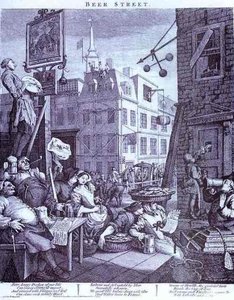
      Beer Street (1751) by Вилијам Хогарт
      #99

      Beer Street

      1751

      Beer Street, an iconic engraving created by William Hogarth in 1751, is a masterpiece that showcases the artist's ability to blend social commentary with artistic finesse. This work…

      Bring this light home →
      Rake's Progress' The Gaming House (1735) by Вилијам Хогарт
      #100

      Rake's Progress' The Gaming House

      1735 · Sir John Soane's Museum

      A Window into Georgian Society: Examining Hogarth’s “Rake’s Progress” William Hogarth's "Rake's Progress," completed in 1735, stands as a cornerstone of British Baroque art and a searing indictment…

      Order this canvas →

      Вилијам Хогарт's canvases, period by period

      What Вилијам Хогарт painted most

      The four subjects that return most often on these canvases, each with its best-loved example.

      Where Вилијам Хогарт's canvases hang

      The 8 museums that hold the most of the paintings on this page.

      Museum City Works by Вилијам Хогарт Paintings from this list
      Sir John Soane's Museum, LondonSir John Soane's Museum London 14 Banket, Soliciting Votes, The heir
      Yale Center for British Art, New HavenYale Center for British Art New Haven 11 The Beggar's Opera, The Family of John, 2nd Duke of Montagu and an attendant, William Augustus, Duke of Cumberland
      National Gallery of Ireland, DublinNational Gallery of Ireland Dublin 7 Self-Portrait, The Mackinen Children
      Upton House, BanburyUpton House Banbury 3 The Four Times of Day: Night, Gerard Anne Edwards Hamilton (1732–1773) in his Cradle
      Ascott House, Leighton BuzzardAscott House Leighton Buzzard 2 A Harlot's Progress: Quarrels with her Jewish Protector, An Unknown Lady, possibly Miss Woodley, later Mrs Henry Vaughan (not Mrs Jane Hogarth)
      National Gallery of Art, WashingtonNational Gallery of Art Washington 2 A Scene from The Beggar's Opera, A Scene from the Beggar's Opera
      National Gallery, LondonNational Gallery London 9 Marriage à la Mode
      Fitzwilliam MuseumFitzwilliam Museum 9 A prisoner of the Fleet being examined before a committee of the House of Commons

      Вилијам Хогарт's most famous canvas, decade after decade

      1. 1720s
        A Scene from The Beggar's Opera (1729) by Вилијам Хогарт
        Canvas 14 of 100

        A Scene from The Beggar's Opera

        Age 23 – 32 · National Gallery of Art

        William Hogarth's "A Scene from The Beggar’s Opera," painted in 1729, isn’t merely a depiction of a theatrical performance; it’s a meticulously crafted snapshot of 18th-century London life…

      2. 1730s
        Satana, Greh i Smrt (Scena iz Miltona (1735) by Вилијам Хогарт
        6 of 100

        Satana, Greh i Smrt (Scena iz Miltona

        Age 33 – 42 · Tate Britain

        Delo Vilijama Hogartha, „Satana, Greh i Smrt“, nastalo 1735. godine, predstavlja mnogo više od obične ilustracije Miltonovog epskog poem „Izgubljeni raj“; to je pedantno izrađena moralna alegorija koja…

      3. 1740s
        The Marriage Contract (1745) by Вилијам Хогарт
        Ranked 4 of 100

        The Marriage Contract

        Age 43 – 52

        A Window Into Georgian Society In the heart of 1745, William Hogarth captured more than a mere domestic arrangement; he froze a pivotal moment of social negotiation in…

      4. 1750s
        Gin Lane (1750) by Вилијам Хогарт
        Canvas 3 of 100

        Gin Lane

        Age 53 – 62

        In the heart of 18th-century London, amidst the swirling fog and the growing shadows of social upheaval, William Hogarth captured a moment of profound human tragedy that continues…

      5. 1760s
        The Times, plate 2 (1763) by Вилијам Хогарт
        22 of 100

        The Times, plate 2

        Age 63 – 67

        The Pulse of an Era: London Unveiled In the year 1763, as the gears of the Industrial Revolution began to turn and the streets of London swelled with…

      Вилијам Хогарт's canvases, question by question

      Which canvas is Вилијам Хогарт most remembered for?Read the answer

      Plate one, from A Rake's Progress - Jedna ploča iz „Progresa raskošja“, followed by Plate šest iz Dela Hogartha and Gin Lane (1750).

      What are Вилијам Хогарт's ten most famous canvases?Read the answer

      Plate one, from A Rake's Progress - Jedna ploča iz „Progresa raskošja“, Plate šest iz Dela Hogartha, Gin Lane, The Marriage Contract, Banket, Satana, Greh i Smrt (Scena iz Miltona, The Painter and his Pug, The Suicide of the Countess, The Four Times of Day: Night and A Harlot's Progress: Quarrels with her Jewish Protector. Each canvas in the ranking above comes with its year and its museum.

      How many paintings did Вилијам Хогарт create?Read the answer

      307 works by Вилијам Хогарт are in our catalogue, dated 1721 to 1763.

      Where do Вилијам Хогарт's most famous canvases hang today?Read the answer

      Mostly in Sir John Soane's Museum (London), Yale Center for British Art (New Haven) and National Gallery of Ireland (Dublin); the list above names each museum and its canvases.

      When did Вилијам Хогарт paint the most famous canvases?Read the answer

      In 1740s, which gave 18 of the 100 works on this page, The Marriage Contract among them.

      Which famous Вилијам Хогарт canvas came first, and which came last?Read the answer

      The earliest canvas here is Emblematical print of the South Sea Scheme (1721); the latest is The Times, plate 2 (1763).

      Which subjects did Вилијам Хогарт paint most?Read the answer

      Social commentary (27), 18th century (26) and Satire (25), across the 100 works on this page.

      Which medium appears most in Вилијам Хогарт's paintings?Read the answer

      Acrylic On Canvas, used in 30 of the 100 works on this page.

      Which paintings by Вилијам Хогарт are held by the Sir John Soane's Museum?Read the answer

      The Sir John Soane's Museum, London holds 5 of the works on this page, among them Banket, Soliciting Votes and The heir.

      Where can I buy a reproduction of a Вилијам Хогарт painting?Read the answer

      Yes. Every painting on this page can be ordered from its own page as an oil reproduction painted by hand, or as a fine art print, in the size you choose.

      Meet the painter: Вилијам Хогарт

      Život Вилијама Хогарша

      London, 1697. Vazduh u Bartholomew Close-u je gust od zvukova rastuće metropole. Ovde, Вилијам Хогарш ulazi u svet nestabilnog postojanja. Njegov otac, Richard Hogarth, bori se da izdržava porodicu radeći kao nastavnik latinskog i pisac udžbenika. Porodične finansije variraju; u jednom trenutku, Richard se suočava sa surovom realnošću zatvora zbog dugova u Fleet Prison-u. Ovo rano izlaganje nestabilnosti urbanog života ostavlja dubok trag. Вилијам Хогарш odrasta posmatrajući jaz između društvenih klasa, što će na kraju definisati njegovu karijeru kao slikara, гравёра, satiričara, karikaturiste i pisca.

      Put ovog dečaka nije put nasleđenog bogatstva ili lakog pokroviteljstva. Umesto toga, to je život oblikovan grubošću grada. On prolazi kroz ulice Londona, posmatrajući likove koji naseljavaju kafićima i vašarišta. Njegova majka, Anne Gibbons, pruža porodični oslonac životu koji su često obeleile ekonomske promene tog doba. Do trenutka kada počne da ostavlja svoj trag, on je već čovek mnogih disciplina, koristeći mastilo i boju da dešifruje upravo to društvo koje ga je wychovalilo.

      • A Harlot's Progress (1731/1732)
      • A Rake's Progress (1735)
      • Marriage A-la-Mode (1743–1745)

      Rani život, porodica i obuka

      London, 1697. Kao sin Richarda Hogartha, latinskog učitelja i povremenog pisca, Вилијам Хогарш odrasta usred nestabilnih sudbina čoveka koji se borio da zadrži položaj u metropoli. Nestabilnost domaćinstva dobija oštar preokret kada Richard, zbog neizmirenih dugova, dobije petogodišnju kaznu zatvora u Fleet zatvoru. Ovaj period oskudice, obeležen krhkost porodičnih finansija, ostavlja neizbrisiv trag na mladog posmatrača velikog grada.

      Do 1714. godine, fokus se pomera na tehničke aspekte zanata. Hogarth ulazi u period učenja kod Ellisa Gamblea, zlatara i srebarčara koji je radio u Leicester Fields-u. On savladava preciznost neophodnu za izradu reklamnih kartica i sličnih proizvoda, razvijajući osnovnu kontrolu nad bakarnom pločom. Ovo tehničko temeljiranje pruža mu alate za karijeru koja će se na kraju izdvojiti daleko iznad puke komercijalne reprodukcije.

      Tok toka njegovog života menja se kako se on približava formalnom umetničkom studiju. Godine 1720. on se upisuje u akademiju St Martin's Lane. Njegova obuka se dodatno širi pod mentorstvom Sir James Thornhill, glavnog slikara kralja Georgea I. Pod Thornhillovim vođstvom, fokus se pomera sa preciznosti gravure malih razmera na šire složenosti slikarstva i kompozicije. On polako prelazi put od pedantnog rada zanatlije ka uzvišenom svetu fine umetnosti.

      Tehnika i umetnički stil

      Вилијам Хогарш se kreće između preciznosti realističkog portreta i brze, sekvencijalne energije serija koje podsećaju na stripove. On ne slika puku sliku; on konstruiše narative. Ovaj pristup doseže svoj vrhunac u razvoju njegovih „modernih moralnih tema“, metode u kojoj koristi vizuelno pripovedanje kako bi kritikovao društveno tkivo. Platno i bakrena ploča za njega postaju scene na kojima se odvija drama, često koristeći spoj humora i oštre satire kako bi svoje poruke učinio neodoljivim i jasnim.

      Tehnička osnova njegovog rada leži u njegovom majstorstvu u gravuri. On razume težinu linije i moć printa koji može dosegnuti masovnu publiku. Godine 1753. on prelazi sa vizuelnog na teorijski polje objavljivanjem svog dela Analiza lepote. Ovde on ide dalje od samog posmatranja kako bi kodifikovao svoje estetičke teorije, posebno naglašavajući važnost „serpentinske linije“ kao fundamentalnog principa lepote i pokreta.

      • Napredak kurvalice (1731/1732)
      • Napredak razvratnika (1735)
      • Venčanje u modi (1743–1745)

      Ključna dela i serije

      Narativna snaga njegovog stvaralaštva doseže svoj vrhunac u „modernim moralnim temama“, seriji slika osmišljenih da funkcionišu poput vizuelnih romana. Godine 1731/1732, Napredak kurirke prati tragični pad mlade žene koja stiže u London, само да би на крају skapala pod iskušenjima grada. Ovaj obrazac društvenog ponora nastavlja se 1735. godine kroz Napredak razvratnika, koji prati Toma Rakvela dok on rasipolast nasleđe na kockanje i razvrat. Ova dela ne prikazuju samo scene; ona kroz pedantne detalje i simboličke elemente mapiraju posledice moralnog propadanja.

      Fokus se pomera sa individualnog uništenja na sudar društvenih klasa u seriji Venčanje à la mode, nastojanjem stvorenoj između 1743. i 1745. godine. Ovde umetnik oštro kritikuje katastrofalne posledice dogovornih brakova i neumoljivu potragu za statusom. Napetost između raskošnih enterijera bogataša i bedrnog života siromašnih postaje tema koja se stalno vraća. Čak i u svojim kasnijim godinama, njegova kritika ostaje oštra. Godine 1748, O, pečenje od goveđeg mesa stare Engleske bavi se nacionalnim identitetom, dok 1750. godine Marš straže u Finčli predstavlja haotičan i bučan prikaz vojničkog života, kontrastirajući disciplinovane redove u daljini sa razuzdanim ponašanjem vojnika u prvom planu.

      • Napredak kurirke (1731/1732)
      • Napredak razvratnika (1735)
      • Venčanje à la mode (1743–1745)
      • O, pečenje od goveđeg mesa stare Engleske (1748)
      • Marš straže u Finčli (1750)

      Nasleđe i trajni uticaj

      XVIII vek svedočio je rađanju autentične britanske škole umetnosti, pokreta koji je dodatno podstakao Хогарш-ov odlučan otpor oslanjanju na kontinentalne modele. On je prevazišao puku imitaciju stranih stilova kako bi uspostavio vizuelni jezik duboko ukorenjen u ulicama Londona. Ovaj preokret je bio od suštinskog značaja; он је postao najvažniji engleski umetnik svoje generacije. Njegov uticaj je toliko sveobuhvatan da je sam termin „hogartovski“ ušao u leksikon kako bi opisao njegov specifičan stil satiričnog posmatranja.

      Komercijalna realnost njegovog uspeha donela je i novu vrstu konflikta. Kako su njegove grafike dobijale ogromnu popularnost, one su privlačile i talas neovlašćenih reprodukcija. Plagijat je postao neprestana pretnja njegovom egzistenciji. Ta napetost je iznudila pravni sukob koji je zauvek promenio pejzaž intelektualne svojine. Он je lobirao za Zakon o autorskim pravima iz 1735. godine, potez koji je osigurao prava stvaralaca u odnosu na one koji bi profitirali od njihovog rada bez dozvole.

      Njegov metod pripovedanja putem sekvencijalnih slika stvorio je nacrt za buduće medije. Он deluje kao direktni prethodnik modernog političkog karikatura i stripa. Koristeći seriju slika za analizu društvenog ponašanja, on je pružio temelj za vizuelne narative koji se oslanjaju na čitanje, a ne samo na puki pogled. Njegov uticaj se proteže od satiričkih printova 1700-ih pa sve do samih temelja popularne kulture.

      Gde danas možete posetiti njegova dela

      Fizički tragovi Hogarševih društvenih kritika i danas su rasuti po vodećim svetskim institucijama. U Londonu, National Gallery čuva delove iz serije Marriage à la Mode, gde je očuvan vizuelni narativ društvenog propadanja. U blizini, Tate Britain poseduje remek-delo Satan, Sin and Death (A Scene from Milton, rad koji naglašava njegovu sposobnost da složene književne teme prevede u vizuelni oblik. Fondacijski muzej (The Foundling Museum) takođe zadržava svoje prisustvo u gradu, čuvajući The March of the Guards to Finchley, delo koje hvata haotičnu energiju vojnog života 18. veka.

      Doseg njegovog rada proteže se daleko izvan Ujedinjenog Kraljevstva. U Njujorku, the Frick Collection čuva Miss Mary Edwards, portret koji odražava njegovu veštinu u hvatanju individualnog karaktera. Ove kolekcije nude priliku da se susretnete sa specifičnim detaljima njegovih гравюра i slika u njihovom izvornom kontekstu. Posetioci mogu osetiti njegov uticaj u načinu na koji ove institucije upravljaju napetost između visoke umetnosti i popularne satire.

      All 307 works by Вилијам Хогарт →