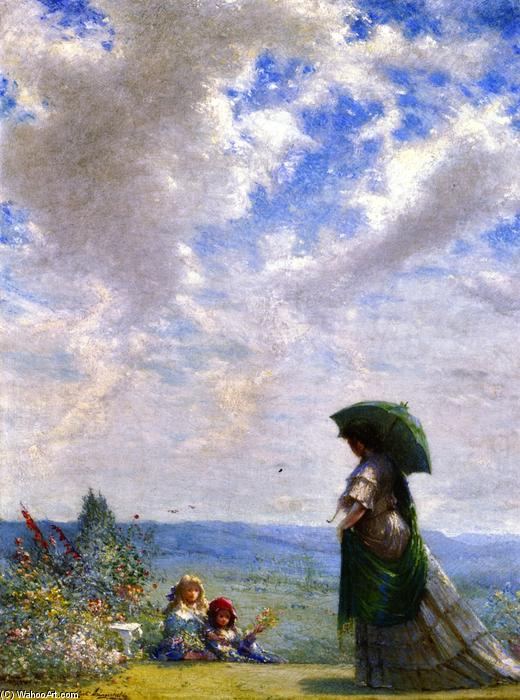

Den mest älskade målningen av Elliott Dangerfield är High Noon (1908). Monk Smelling a Bottle of Wine (1880) och A Wet Day (1890) följer därefter bland de dukar som läsarna känner bäst till. Vår katalog innehåller 29 verk av Elliott Dangerfield: här är de 23 mest kända, var och en med sitt årtal, sitt museum och vad som gör dem minnesvärda.
Rankade efter vår popularitetspoäng, som kombinerar sökningar, besök och beställningar för varje verk. Uppdaterad oktober 2026. Varje målning på denna sida kan beställas som en handmålad oljereproduktion på linnecanvas, eller som ett konsttryck i den storlek du väljer.


De fyra motiv som oftast återkommer på dessa dukar, var och en med sitt mest älskade exempel.
Museet som innehar flest av målningarna på denna sida.
| Museum | Stad | Verk av Elliott Dangerfield | Målningar från denna lista |
|---|---|---|---|
 Reynolda House Museum of American Art |
Winston-Salem | 1 | The Spirit of the Storm |


High Noon (1908), följt av Monk Smelling a Bottle of Wine (1880) och A Wet Day (1890).
Elliott Dangerfield, född 1859, var 49 år gammal: High Noon är från 1908.
High Noon, Monk Smelling a Bottle of Wine, A Wet Day, Return at Twilight, Self-Portrait, The Mystic Brim, Still Life (also known as Rhododendron and Brass Pot), Landscape with Green Mountain, Grandfather Mountain och Night of the Titanic. Varje duk i rankningen ovan anges med sitt årtal och sitt museum.
29 verk av Elliott Dangerfield finns i vår katalog, daterade 1880 till 1930.
Främst i Reynolda House Museum of American Art (Winston-Salem); listan ovan listar varje museum och dess målningar.
Under 1910s, som utgör 10 av de 23 verk som finns på denna sida, varav Grandfather Mountain av dem.
Den tidigaste duken här är Monk Smelling a Bottle of Wine (1880); den senaste är Near St. Petersburg, Florida (1930).
Landscape (4), Mountains (3) och Night (2), fördelat på 23 verk på denna sida.
Ja. Varje målning på denna sida kan beställas från sin egen sida som en handmålad oljereproduktion, eller som ett konsttryck i den storlek du väljer.
In the quiet, mist-shrouded valleys of West Virginia, a profound artistic vision was forged during the late nineteenth century. Elliott Dangerfield (1859–1932) emerged from this rugged landscape not merely as a chronicler of scenery, but as a poet of light and atmosphere. Born in Fayetteville, his early years were steeped in the natural grandeur of the American wilderness, an environment that would later serve as the primary heartbeat of his creative output. While many of his contemporaries sought the frantic energy of urban expansion, Dangerfield turned his gaze inward toward the enduring tranquility of the Appalachian mountains, finding a spiritual resonance in the subtle shifts of color and the soft, encroaching shadows of the rural landscape.
Dangerfield’s journey from a provincial upbringing to the prestigious artistic circles of New York City represents a classic narrative of American artistic development. His formal training began under the guidance of Walter Satterlee at the National Academy of Design, where he mastered the foundational principles of tonal realism. This period of rigorous study provided him with the technical vocabulary necessary to translate the complexities of nature onto canvas. However, it was his exposure to the burgeoning American Impressionist movement that truly liberated his brush. By blending the precision of academic training with a more fluid, emotive approach to light, he began to develop a style that felt both grounded in reality and elevated by a dreamlike, nostalgic quality.
The true essence of Dangerfield’s work lies in his sophisticated use of tonalism—a movement that sought to evoke mood and emotion through a limited palette and atmospheric effects. Unlike the high-contrast drama of some landscape painters, Dangerfield preferred the nuanced gradations of dusk, dawn, and moonlight. His canvases often feature a delicate interplay of golden light and melancholic shadows, creating a sense of "Appalachian Serenity" that invites the viewer into a state of quiet contemplation. He possessed a remarkable ability to manipulate pigments to achieve a palpable sense of humidity, mist, and warmth, making the air within his paintings feel almost tangible.
His influences were as profound as the landscapes he painted. Drawing inspiration from luminaries such as Frederic Church and George Inness, Dangerfield embraced the idea that a landscape could serve as a vessel for the human spirit. His technique often utilized subtle impasto textures to catch the light, particularly in works like Moonlit Landscape (1915), where the interplay of silver moonlight and deep earth tones creates a dramatic yet serene nocturnal scene. Whether depicting a sun-drenched field in High Noon or the brooding tension of The Spirit of the Storm, his work remains anchored by a profound respect for the inherent dignity of the natural world.
Throughout his prolific career, Dangerfield remained a steadfast observer of the American countryside. While he achieved recognition within the competitive New York art scene, his heart never strayed far from the mountains of his youth. This dedication to his roots allowed him to capture a specific era of American life—a period of transition where the wild frontier was beginning to settle into the pastoral beauty of the early twentieth century. His paintings serve as vital historical documents, preserving the light and atmosphere of a landscape that has since been irrevocly changed by time.
The legacy of Elliott Dangerfield is found in the emotional resonance of his compositions. He did not seek to overwhelm the viewer with grand, sweeping spectacles; instead, he mastered the art of the intimate moment. His contributions to American landscape art are characterized by:
Today, Dangerfield’s work continues to captivate collectors and historians alike, standing as a testament to the power of observation and the enduring beauty of the American landscape.


