Ateljé — Fri frakt i hela världen — Leveranstid 2–6 veckor
      Aztekriket, 1300 – 1521

      Aztekrikets 70 mest kända målningar

      Mosaic of a Double-headed Serpent (1521) är det målning som Aztekriket är mest känd för; den finns i British Museum, London. Head from a Figure, Xochipilli Macuilxochitl (1521) och Figure (1521) fullbordar trion av de mest älskade målningarna. Vår katalog innehåller 70 verk av Aztekriket. Här är de 70 mest kända, med årtal, museum och historien bakom varje duk.

      Rankade efter vår popularitetspoäng, som kombinerar sökningar, besök och beställningar för varje verk. Uppdaterad oktober 2026. Varje målning på denna sida kan beställas som en handmålad oljereproduktion på linnecanvas, eller som ett konsttryck i den storlek du väljer.

      Porträtt av Aztekriket
      Aztekriket · 1300 – 1521
      Född · död
      1300 – 1521, Tenochtitlan
      Verk i vår katalog
      70
      Mest kända
      Mosaic of a Double-headed Serpent (1521)
      Flest verk på
      Metropolitan Museum of Art

      De tio mest älskade målningarna av Aztekriket

      Mosaic of a Double-headed Serpent (1521) av Aztekriket
      1

      Mosaic of a Double-headed Serpent

      1521 · Mosaic · British Museum, London

      To gaze upon this mosaic of a double-headed serpent is to step directly into the vibrant, myth-laden heart of the Aztec Empire. It is not merely an object of decoration; it is a captured echo of profound belief, a testament to a civilization whose artistry wove the sacred into the very fabric of daily existence. The serpentine form dominates the composition, its sinuous body rendered in breathtaking detail across countless…

      Head from a Figure, Xochipilli Macuilxochitl (1521) av Aztekriket
      2

      Head from a Figure, Xochipilli Macuilxochitl

      1521 · Sculpture · Metropolitan Museum of Art, New York

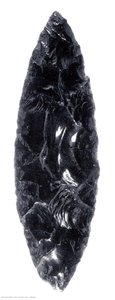
      The obsidian head before us—a dark, almost brooding presence—isn’t merely a sculpture; it's a portal into the vibrant and complex world of the Aztec Empire. Carved in the early 16th century, just decades before the arrival of the Spanish conquistadors, this intimate portrait of Xochipilli Macuilxochitl offers a rare and compelling glimpse into the beliefs, artistry, and ultimately, the fleeting beauty of a vanished civilization. The piece speaks not only…

      Figure (1521) av Aztekriket
      3

      Figure

      1521 · Stone · Metropolitan Museum of Art, New York

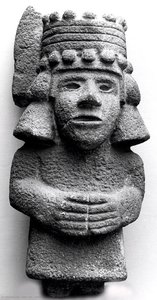
      Before you stands an echo from a civilization whose very name whispers tales of empire and profound spiritual depth: the magnificent "Figure" sculpture. Carved from enduring stone, this piece is not merely an object of antiquity; it is a frozen moment of sacred contemplation. The overall impression is one of solemn power, a tangible connection to the sophisticated worldview of the Aztec people who flourished in the heart of Mesoamerica.…

      Kneeling Male Figure (1521) av Aztekriket
      4

      Kneeling Male Figure

      1521 · Stone · Metropolitan Museum of Art, New York

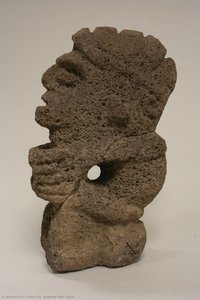
      To gaze upon this fragment is to reach across the vast chasm of five centuries, touching the solemn breath of an empire long dissolved into myth and archaeological wonder. This kneeling male figure, carved from a dark, porous stone—perhaps basalt itself—is more than mere sculpture; it is a captured moment of profound spiritual engagement. The very texture of the material speaks of time, bearing the patina of ritual smoke and…

      Serpent Labret med Articulerad Tand av Aztekriket
      5

      Serpent Labret med Articulerad Tand

      Akryl på duk · Metropolitan Museum of Art, New York

      För att förstå den djupa betydelsen av Serpent Labret med Articulerad Tand är det nödvändigt att resa tillbaka till hjärtat av den aztekiska världen, ett samhälle präglat av komplexa ritualer och en extraordinär konstnärlig förmåga. Detta föremål, nu ett av de få överlevande exemplen på högkvalitativ aztekisk guldkonst från XVI århundrade, är mer än bara ett dekorativt objekt; det är ett visuellt uttryck för kulturella värderingar och religiösa övertygelser som…

      Pendent in the Shape of a Warrior (1350) av Aztekriket
      6

      Pendent in the Shape of a Warrior

      1350 · Metalwork · Cleveland Museum of Art, Cleveland

      To hold this piece in your mind is to encounter the quiet strength of the Post-classic period. This small, metallic figure, likely worn close to the body, captures a warrior in a moment of poised readiness. The figure is rendered with a striking sense of presence, characterized by a prominent nose, wide eyes, and a slightly protruding mouth that gives the face a distinct, human character. There is a certain…

      Figure (1521) av Aztekriket
      7

      Figure

      1521 · Stone · Metropolitan Museum of Art, New York

      This monochrome photograph captures an ancient Aztec sculpture titled Figure. The piece presents a stylized representation of a human figure, likely a deity or important individual within the Aztec culture. Set against a dark background that emphasizes its intricate details, the sculpture is positioned slightly off-center towards the right of the frame.

      Vulture Vessel (1521) av Aztekriket
      8

      Vulture Vessel

      1521 · Ceramic · Metropolitan Museum of Art, New York

      This ceramic vessel, produced around 1521 by Aztec artists, takes the shape of a stylized vulture. The object is constructed from earthenware with a robust, cylindrical body. Four curved legs support the structure, positioned to suggest a sense of movement or a bird prepared to perch. The surface is primarily covered in a reddish-brown hue, likely derived from iron oxide pigments. Black glaze defines specific areas, creating bands that outline…

      Standard Bearer (1521) av Aztekriket
      9

      Standard Bearer

      1521 · Stone · Metropolitan Museum of Art, New York

      The Aztec sculpture titled "Standard Bearer," a remarkable testament to the artistry and symbolic depth of the pre-Columbian civilization, stands as more than just a carved stone figure. It’s a window into a complex society—a warrior, a leader, a conduit between the earthly realm and the divine. Dating back to approximately 1450-1521 CE, this piece, originating from the region of Veracruz, offers a tangible connection to a world both familiar…

      Crested Figure (Macuilxochitl) (1521) av Aztekriket
      10

      Crested Figure (Macuilxochitl)

      1521 · Metropolitan Museum of Art, New York

      Crested Figure (Macuilxochitl): Echoes of Aztec Cosmology The photograph presents a striking depiction of an Aztec sculpture titled “Crested Figure (Macuilxochitl),” originating from the 15th–early 16th century during the height of the Mexica Empire. This artwork embodies the artistic spirit of Mesoamerica, reflecting profound religious beliefs and political authority—a testament to the enduring legacy of a civilization that captivated imaginations for centuries. Overall Impression: The image captures a sculpture crafted…

      Aztekriket: dukar 11 till 70 på rankingen

      Seated Male Deity (1521) av Aztekriket
      #12

      Seated Male Deity

      1521 · Metropolitan Museum of Art

      In the quiet presence of the Seated Male Deity, one does not merely observe a sculpture; one encounters a profound fragment of a lost cosmos. Carved during the…

      Kneeling Female Figure (1521) av Aztekriket
      #13

      Kneeling Female Figure

      1521 · Metropolitan Museum of Art

      In the quiet halls of art history, few objects command as much silent reverence as the Kneeling Female Figure. Carved from the dark, enduring strength of basalt, this…

      Labret, Eagle Head (1521) av Aztekriket
      #14

      Labret, Eagle Head

      1521 · Metropolitan Museum of Art

      To gaze upon this artifact is to be transported across the vast expanse of time, directly into the heart of the mighty Aztec Empire. This exquisite labret, fashioned…

      Ta hem detta ljus →
      Miniature Bowl (1521) av Aztekriket
      #15

      Miniature Bowl

      1521 · Metropolitan Museum of Art

      To gaze upon this miniature bowl is to hold a fragment of deep time in one's hands. It is not merely an object, but a tangible whisper from…

      Fragment of An Anthropomorphic Brazier (1300) av Aztekriket
      #16

      Fragment of An Anthropomorphic Brazier

      1300

      This ceramic fragment presents a vertical arrangement of human-like faces. The central feature is a large, sculpted head, upon which smaller faces are positioned in a stacked, layered…

      Riutal Stone (Pulidor) (1521) av Aztekriket
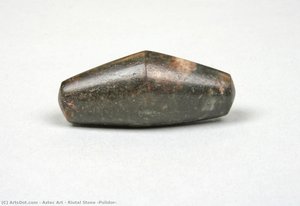
      #17

      Riutal Stone (Pulidor)

      1521 · Metropolitan Museum of Art

      To gaze upon this Riutal Stone (Pulidor) is not merely to observe an artifact; it is to touch the deep, resonant silence of a vanished civilization. This piece,…

      Låt det målas för hand →
      Ear Spool (1521) av Aztekriket
      #18

      Ear Spool

      1521 · Metropolitan Museum of Art

      Before us lies a fragment of a vanished world, a tangible link to the ingenuity and ritualistic practices of the Aztec Empire. This meticulously crafted ear spool, fashioned…

      Låt det målas för hand →
      Seated Female Deity (1521) av Aztekriket
      #19

      Seated Female Deity

      1521 · Metropolitan Museum of Art

      In the quiet shadows of history, certain objects possess the power to bridge the gap between the mortal realm and the eternal. The Seated Female Deity, a profound…

      Aztec Sun Stone (Calendar Stone) (1427) av Aztekriket
      #20

      Aztec Sun Stone (Calendar Stone)

      1427

      The Aztec Sun Stone (Calendar Stone) is a significant work attributed to the Aztec Empire. Carved by the Mexica at the end of the Mesoamerican Postclassic Period, this…

      Mictlantecuhtl (1480) av Aztekriket
      #21

      Mictlantecuhtl

      1480

      A weathered, pale-grey statue of a child figure emerges from a void of absolute black. The surface is heavily eroded, marked by deep cracks and fissures that trace…

      Eagle Warrior (1469) av Aztekriket
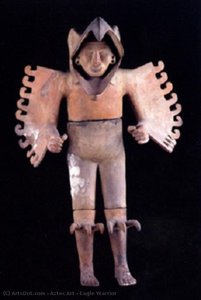
      #22

      Eagle Warrior

      1469

      The artwork titled Eagle Warrior is a terracotta sculpture created by the Aztec Empire. This piece dates to about 1469. The subject of the work is an Aztec…

      Coyote (1500) av Aztekriket
      #23

      Coyote

      1500

      This work, titled Coyote, is a significant piece attributed to the Aztec Empire. It represents a stylized depiction of the coyote, a figure deeply embedded in the mythology…

      Warrior's Teponaztli (1500) av Aztekriket
      #24

      Warrior's Teponaztli

      1500

      The object is a carved wooden instrument, a slit drum known as a teponaztli, dating to 1500. It is composed of a hollowed hardwood log, presenting an elongated…

      Macuilxochitl Teponaztli Votive (1500) av Aztekriket
      #25

      Macuilxochitl Teponaztli Votive

      1500

      The Macuilxochitl Teponaztli Votive is a stone artifact created by the Aztec Empire. This object emerged around 1500, a period when the Mexica people shaped the spiritual landscape…

      Xiuhmolpilli (1 Death) (1500) av Aztekriket
      #26

      Xiuhmolpilli (1 Death)

      1500

      The stone feels heavy with the gravity of an era long gone. A cylindrical form, carved from volcanic rock, rests in the dim light, its surface a landscape…

      Hunchback (1500) av Aztekriket
      #27

      Hunchback

      1500

      The sculpture titled Hunchback is an artifact attributed to the Aztec Empire. Created about 1500, this terracotta work captures a single human figure frozen in a moment of…

      Dead Warrior Brazier (1500) av Aztekriket
      #28

      Dead Warrior Brazier

      1500

      The Dead Warrior Brazier is a cylindrical ceramic sculpture dating to approximately 1500. The object features a stylized human figure positioned in a seated or kneeling posture with…

      Seated Male Deity (1521) av Aztekriket
      #31

      Seated Male Deity

      1521 · Metropolitan Museum of Art

      Before us stands a testament to the profound artistry and spiritual depth of the Aztec Empire – a weathered stone sculpture known as the “Seated Male Deity,” or…

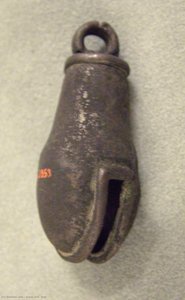
      Bell (1521) av Aztekriket
      #32

      Bell

      1521 · Metropolitan Museum of Art

      Imagine holding a piece of history – not just an artifact, but a tangible echo of a vanished empire. This bronze bell, unearthed from the ruins of Tenochtitlan…

      Ta hem detta ljus →
      Spider Monkey (1521) av Aztekriket
      #33

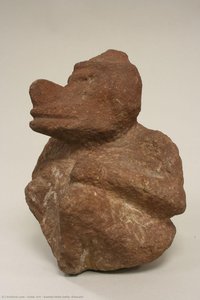
      Spider Monkey

      1521 · Rhode Island School of Design Museum of Art

      This exceptional hand-painted reproduction captures a pivotal moment in Aztec artistic expression – the creation of a remarkably detailed sculpture depicting a spider monkey, dating back to 1521.…

      Cihuateotl (1521) av Aztekriket
      #34

      Cihuateotl

      1521 · Metropolitan Museum of Art

      The stone sculpture known as “Cihuateotl,” a formidable figure emerging from the heart of the Aztec Empire, offers more than just a visual representation; it’s a window into…

      Låt det målas för hand →
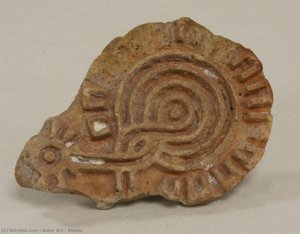
      Stamp (1521) av Aztekriket
      #35

      Stamp

      1521 · Metropolitan Museum of Art

      Before us lies a terracotta fragment, not merely an artifact but a window into the heart of the Aztec Empire. Designated simply as “Stamp,” this weathered ceramic seal…

      Ta hem detta ljus →
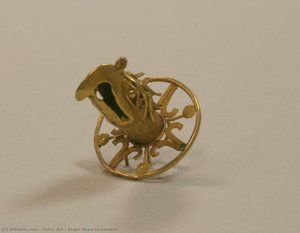
      Feathered Serpent Ornament (1521) av Aztekriket
      #36

      Feathered Serpent Ornament

      1521 · Metropolitan Museum of Art

      In the quiet, hallowed halls of the Metropolitan Museum of Art, there exists a treasure that transcends the boundaries of time and geography. The Feathered Serpent Ornament is…

      Relief (1521) av Aztekriket
      #37

      Relief

      1521 · Metropolitan Museum of Art

      “Relief,” a meticulously crafted stone carving from the heart of the Aztec Empire, stands as more than just an artistic object; it's a window into a vanished world.…

      Ta hem detta ljus →
      Eagle Head Ornament av Aztekriket
      #38

      Eagle Head Ornament

      Metropolitan Museum of Art

      Before us lies a captivating artifact – an Aztec Eagle Head Ornament, a tangible link to one of Mesoamerica's most formidable empires. More than just a decorative object,…

      Ta hem detta ljus →
      Skull Pendant av Aztekriket
      #39

      Skull Pendant

      Metropolitan Museum of Art

      Gazing upon this black and white photograph, one is immediately drawn to the stark simplicity and profound symbolism of the Aztec skull pendant. More than a mere decorative…

      Beställ denna canvas →
      Stamp (1521) av Aztekriket
      #40

      Stamp

      1521 · Metropolitan Museum of Art

      Within the realm of ancient Mesoamerica lies a deceptively simple object – a terracotta stamp, often referred to as a “stamp” in modern parlance. Yet, this unassuming artifact…

      Beställ denna canvas →
      Female Deity av Aztekriket
      #41

      Female Deity

      Metropolitan Museum of Art

      The photograph before you offers an arresting window into the heart of Aztec spirituality – a sculpted representation of a female deity, rendered with a profound sense of…

      Låt det målas för hand →
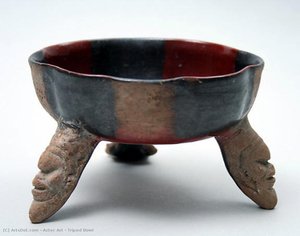
      Tripod Bowl av Aztekriket
      #42

      Tripod Bowl

      Metropolitan Museum of Art

      To gaze upon this Tripod Bowl is to reach across the vast expanse of time, directly into the vibrant heart of the Aztec Empire. It is not merely…

      Maize Deity (Chicomecoatl) av Aztekriket
      #43

      Maize Deity (Chicomecoatl)

      Metropolitan Museum of Art

      Carved from basalt, this sculpture represents Chicomecoatl, the Mexica goddess of maize. The figure is rendered in a frontal, upright posture with arms raised in a gesture of…

      Seated Female Deity av Aztekriket
      #44

      Seated Female Deity

      Metropolitan Museum of Art

      Seated Female Deity: A Reflection of Aztec Spirituality The image presents a grayscale photograph of an Aztec sculpture depicting a seated female deity. The sculpture is rendered in…

      Kneeling Male Figure av Aztekriket
      #45

      Kneeling Male Figure

      Metropolitan Museum of Art

      To gaze upon the Kneeling Male Figure is to reach across the vast chasm of five centuries, touching the solemn breath of an empire long dissolved into myth…

      Seated Male av Aztekriket
      #46

      Seated Male

      Metropolitan Museum of Art

      is a stone sculpture created by the Aztec Empire. Originating from Mexico, Mesoamerica, the work belongs to the Mexica (Aztec) culture. It dates to the 15th–early 16th century.

      Ritualsten (pulidor) (1521) av Aztekriket
      #47

      Ritualsten (pulidor)

      1521 · Metropolitan Museum of Art

      The “Ritual Stone,” or *pulidor*, stands as a poignant testament to the artistic prowess and spiritual beliefs of the Aztec Empire—a civilization that flourished between 1300 and 1521…

      Beställ denna canvas →
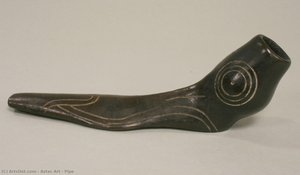
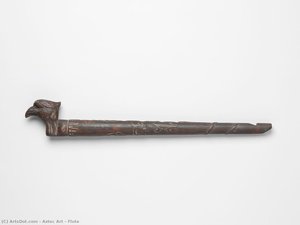
      Pipe (1521) av Aztekriket
      #50

      Pipe

      1521 · Metropolitan Museum of Art
      Seated Male Deity av Aztekriket
      #51

      Seated Male Deity

      Metropolitan Museum of Art

      The Aztec Empire, a civilization that flourished in Mesoamerica for centuries, left behind a legacy of breathtaking artistry and profound spiritual belief. Among its most compelling creations stands…

      Låt det målas för hand →
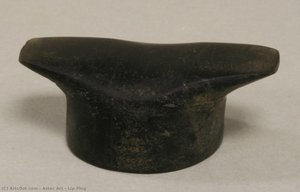
      Lip Plug av Aztekriket
      #52

      Lip Plug

      Metropolitan Museum of Art

      To gaze upon this artifact is to reach across the vast expanse of time, touching the cool, dark permanence of an ancient civilization. This piece, an Aztec Lip…

      Låt det målas för hand →
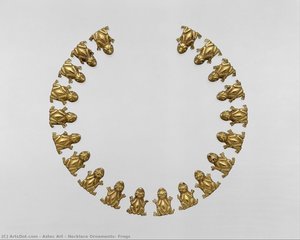
      Necklace Ornaments, Frogs av Aztekriket
      #53

      Necklace Ornaments, Frogs

      Metropolitan Museum of Art

      To gaze upon these meticulously crafted golden frog ornaments is to step directly into the vibrant heart of the ancient Aztec world. They are not merely decorative beads;…

      Ta hem detta ljus →
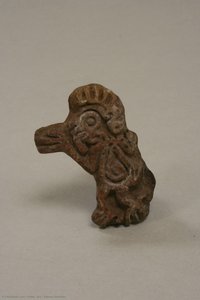
      Uilacapitztli (Pottery Flute) av Aztekriket
      #54

      Uilacapitztli (Pottery Flute)

      Metropolitan Museum of Art

      To gaze upon the Uilacapitztli is not merely to observe an artifact; it is to reach across the vast expanse of centuries and touch the very breath of…

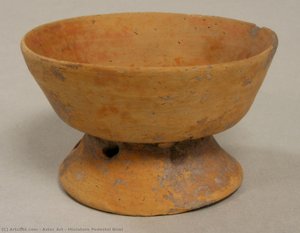
      Miniature Pedestal Bowl av Aztekriket
      #55

      Miniature Pedestal Bowl

      Metropolitan Museum of Art

      To gaze upon this miniature pedestal bowl is to reach across the vast expanse of time, to hold in one's hands a tangible whisper from the heart of…

      Standard-Bearer (1519) av Aztekriket
      #57

      Standard-Bearer

      1519

      This stark figure displays the minimalism and monumentality of Aztec stone sculpture. The rigid pose resembles the block of stone from which it was carved. In contrast, the…

      Låt det målas för hand →
      Drum (Teponaztli) av Aztekriket
      #58

      Drum (Teponaztli)

      Metropolitan Museum of Art

      To gaze upon this representation of an Aztec Teponaztli is not merely to observe an artifact; it is to listen for a silence that holds echoes. This magnificent…

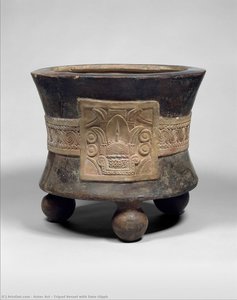
      Tripod Vessel with Date Glyph av Aztekriket
      #59

      Tripod Vessel with Date Glyph

      Metropolitan Museum of Art

      The image before us presents more than just a ceramic object; it’s a tangible fragment of the Aztec Empire, a silent chronicle etched in clay and imbued with…

      Bowl av Aztekriket
      #60

      Bowl

      Metropolitan Museum of Art

      Gazing upon this meticulously rendered reproduction of an Aztec bowl is akin to stepping back in time, directly into the heart of Tenochtitlan, the magnificent capital city of…

      Beställ denna canvas →
      Maize Deity (Chicomecoatl) av Aztekriket
      #61

      Maize Deity (Chicomecoatl)

      Metropolitan Museum of Art

      Standing before this weathered stone sculpture, one is immediately transported to the heart of ancient Mexico – a realm where the divine intertwined seamlessly with the rhythms of…

      Stamp, Butterfly av Aztekriket
      #62

      Stamp, Butterfly

      Metropolitan Museum of Art

      Stamp, Butterfly - A Fragment of Aztec Cosmology The image presents a captivating glimpse into the artistic heritage of the Aztec Empire—specifically, a ceramic stamp depicting a butterfly…

      Ta hem detta ljus →
      Flute av Aztekriket
      #63

      Flute

      Metropolitan Museum of Art

      Within the vast tapestry of Aztec artistry lies a deceptively simple instrument – the flute, often referred to as *uilacapitztli* (meaning “flute-head”). More than just a musical device,…

      Beställ denna canvas →
      Miniature Pedestal Bowl av Aztekriket
      #64

      Miniature Pedestal Bowl

      Metropolitan Museum of Art

      Gazing upon this exquisite miniature pedestal bowl offers more than just an appreciation of its delicate form; it’s a portal into the heart of the Aztec Empire, a…

      Ear Ornament av Aztekriket
      #65

      Ear Ornament

      Metropolitan Museum of Art

      To hold an object from the heart of the Aztec Empire is to touch the very pulse of Mesoamerican history. This exquisite ear ornament, a masterwork of the…

      Miniature Tripod Vase av Aztekriket
      #66

      Miniature Tripod Vase

      Metropolitan Museum of Art

      The world of ancient Mesoamerica pulses with an undeniable energy – a vibrant blend of ritual, conquest, and breathtaking artistry. Within this rich tapestry, the miniature tripod vase…

      Låt det målas för hand →
      Stamp, Monkey av Aztekriket
      #67

      Stamp, Monkey

      Metropolitan Museum of Art

      Imagine holding a tangible piece of history – a small, unassuming ceramic stamp from the heart of the Aztec Empire. This particular artifact, depicting a stylized monkey in…

      Ta hem detta ljus →
      Bowl av Aztekriket
      #68

      Bowl

      Metropolitan Museum of Art

      In the quiet presence of this ancient Aztec bowl, one can almost hear the rhythmic pulse of a civilization that once commanded the heart of Mesoamerica. This ceramic…

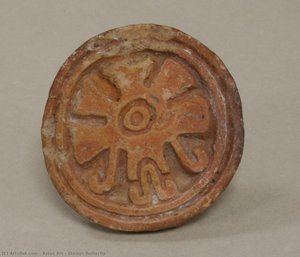
      Flat Stamp with Geometric Flower av Aztekriket
      #69

      Flat Stamp with Geometric Flower

      Metropolitan Museum of Art

      This striking ceramic stamp, a relic of the Aztec Empire, isn’t merely an artifact; it's a portal to a civilization brimming with intricate symbolism and profound artistic skill.…

      Aztekrikets dukar, period för period

      Mest målat av Aztekriket

      De fyra motiv som oftast återkommer på dessa dukar, var och en med sitt mest älskade exempel.

      Där Aztekrikets dukar hänger

      De 5 museer som innehar flest av målningarna på denna sida.

      Museum Stad Verk av Aztekriket Målningar från denna lista
      Metropolitan Museum of Art, New YorkMetropolitan Museum of Art New York 51 Head from a Figure, Xochipilli Macuilxochitl, Figure, Kneeling Male Figure
      British Museum, LondonBritish Museum London 1 Mosaic of a Double-headed Serpent
      Cleveland Museum of Art, ClevelandCleveland Museum of Art Cleveland 1 Pendent in the Shape of a Warrior
      Rhode Island School of Design Museum of Art, ProvidenceRhode Island School of Design Museum of Art Providence 1 Spider Monkey
      Dumbarton Oaks Research Library and Collection, Washington, D.C.Dumbarton Oaks Research Library and Collection Washington, D.C. 1 Tlazolteotl (Birthing Figure)

      Aztekrikets mest kända duk, decennium efter decennium

      1. 1350s
        Pendent in the Shape of a Warrior (1350) av Aztekriket
        Rankad 6 av 70

        Pendent in the Shape of a Warrior

        Ålder 50 – 59 · Cleveland Museum of Art

        To hold this piece in your mind is to encounter the quiet strength of the Post-classic period. This small, metallic figure, likely worn close to the body, captures…

      2. 1420s
        Aztec Sun Stone (Calendar Stone) (1427) av Aztekriket
        Rankad 20 av 70

        Aztec Sun Stone (Calendar Stone)

        Ålder 120 – 129

        The Aztec Sun Stone (Calendar Stone) is a significant work attributed to the Aztec Empire. Carved by the Mexica at the end of the Mesoamerican Postclassic Period, this…

      3. 1460s
        Eagle Warrior (1469) av Aztekriket
        22 av 70

        Eagle Warrior

        Ålder 160 – 169

        The artwork titled Eagle Warrior is a terracotta sculpture created by the Aztec Empire. This piece dates to about 1469. The subject of the work is an Aztec…

      4. 1480s
        Mictlantecuhtl (1480) av Aztekriket
        21 av 70

        Mictlantecuhtl

        Ålder 180 – 189

        A weathered, pale-grey statue of a child figure emerges from a void of absolute black. The surface is heavily eroded, marked by deep cracks and fissures that trace…

      5. 1500s
        Coyote (1500) av Aztekriket
        Duk 23 av 70

        Coyote

        Ålder 200 – 209

        This work, titled Coyote, is a significant piece attributed to the Aztec Empire. It represents a stylized depiction of the coyote, a figure deeply embedded in the mythology…

      6. 1510s
        Standard-Bearer (1519) av Aztekriket
        Duk 57 av 70

        Standard-Bearer

        Ålder 210 – 219

        This stark figure displays the minimalism and monumentality of Aztec stone sculpture. The rigid pose resembles the block of stone from which it was carved. In contrast, the…

      7. 1520s
        Mosaic of a Double-headed Serpent (1521) av Aztekriket
        Rankad 1 av 70

        Mosaic of a Double-headed Serpent

        Ålder 220 – 221 · British Museum

        To gaze upon this mosaic of a double-headed serpent is to step directly into the vibrant, myth-laden heart of the Aztec Empire. It is not merely an object…

      Aztekrikets dukar, fråga för fråga

      Vilken målning är Aztekriket mest känd för?Läs svaret

      Mosaic of a Double-headed Serpent (1521), British Museum, London. Head from a Figure, Xochipilli Macuilxochitl (1521) och Figure (1521) följer.

      Mosaic of a Double-headed Serpent: hur gammal var Aztekriket när verket målades?Läs svaret

      Aztekriket, född 1300, var 221 år gammal: Mosaic of a Double-headed Serpent är från 1521.

      Vilka är Aztekrikets tio mest kända målningar?Läs svaret

      Mosaic of a Double-headed Serpent, Head from a Figure, Xochipilli Macuilxochitl, Figure, Kneeling Male Figure, Serpent Labret med Articulerad Tand, Pendent in the Shape of a Warrior, Figure, Vulture Vessel, Standard Bearer och Crested Figure (Macuilxochitl). Varje duk i rankningen ovan anges med sitt årtal och sitt museum.

      Hur många målningar skapade Aztekriket?Läs svaret

      70 verk av Aztekriket finns i vår katalog, daterade 1350 till 1521.

      Var hänger Aztekrikets mest kända dukar idag?Läs svaret

      Främst i Metropolitan Museum of Art (New York), British Museum (London) och Cleveland Museum of Art (Cleveland); listan ovan listar varje museum och dess målningar.

      När målade Aztekriket sina mest kända verk?Läs svaret

      Under 1520s, som utgör 29 av de 70 verk som finns på denna sida, varav Mosaic of a Double-headed Serpent av dem.

      Vilken av de kända Aztekriket-målningarna kom först, och vilken kom sist?Läs svaret

      Den tidigaste duken här är Pendent in the Shape of a Warrior (1350); den senaste är Mosaic of a Double-headed Serpent (1521).

      Vilka motiv målade Aztekriket mest av?Läs svaret

      Mesoamerica (20), Aztec (16) och Sculpture (16), fördelat på 70 verk på denna sida.

      Vilket medium förekommer mest i Aztekrikets målningar?Läs svaret

      Stone, som används i 18 av de 70 verk som finns på denna sida.

      Vilka målningar av Aztekriket finns i Metropolitan Museum of Arts samlingar?Läs svaret

      Metropolitan Museum of Art, New York har 51 av verken på denna sida, bland annat Head from a Figure, Xochipilli Macuilxochitl, Figure och Kneeling Male Figure.

      Var kan jag köpa en reproduktion av en Aztekriket-målning?Läs svaret

      Ja. Varje målning på denna sida kan beställas från sin egen sida som en handmålad oljereproduktion, eller som ett konsttryck i den storlek du väljer.

      Möt konstnären: Aztekriket

      Stenens ekon: En utforskning av Aztekrikets konst och arv

      Namnet ”Aztek” – härlett från det nahuatlska ordet ātl-ce-tlācati–tlān, som betyder ”folket av många former” – frammanar bilder av ett vidsträckt och komplext imperium som dominerade Mesoamerika under århundraden. Mer än bara krigare och erövrare var aztekerna djupt konstnärliga individer som vävde in en intrikat skönhet i varje aspekt av sina liv – från monumental arkitektur till delikat fjäderkonst, från heliga ritualer till vardagliga föremål. Deras konst var inte enbart dekorativ; den utgjorde ett levande språk som kommunicerade religiös tro, politisk makt, historiska berättelser och sociala hierarkier inom ett samhälle som var både strikt strukturerat och anmärkningsvärt innovativt.

      De aztekiska konsttraditionerna föddes i början av 1400-talet i Tenochtitlan, Aztekrikets hjärta, och var djupt rotade i arvet från tidigare mesoamerikanska civilisationer. Olmekerna, med sina kolossala huvuden och sofistikerade kalendersystem, Teotihuacán-folket, kända för sina massiva pyramider och stadsplanering, samt toltékerna, mästare inom metallarbete och skulptur, bidrog alla till den rika konstnärliga väv som aztekerna ärvde. Aztekerna var dock inte bara efterföljare; de syntetiserade dessa influenser med sin egen unika estetiska känsla och utvecklade en särpräglad stil kännetecknad av djärva färger, intrikata geometriska mönster och symboliska representationer.

      Maktens palett: Material och tekniker

      Aztekisk konst var anmärkningsvärt mångsidig och använde en häpnadsväckande variation av material och tekniker. Stenhuggarkonsten intog en framträdande plats, exemplifierad av monumentala skulpturer som föreställde gudomar, härskare och mytiska varelser. Den massiva Solstenen (Kalenderstenen), som upptäcktes 1946, står som ett bevis på deras mästerskap inom detta medium – ett komplext, skiktat stenrelief som förenade kalendarisk information med kosmologisk symbolism. Skickliga hantverkare arbetade även med trä, lera, fjädrar – särskilt de vibrerande quetzal-fjädrarna – jade, turkos, obsidian och guld, vilket återspeglade både rikedom och status.

      Fjäderkonsten var kanske den mest visuellt slående aspekten av aztekisk konst. Intrikat utformade huvudbonader, mantlar, sköldar och andra dekorativa föremål skapades med tusentals noggrant arrangerade fjädrar – en process som krävde enorm skicklighet och tålamod. Dessa föremål var inte bara vackra; de fungerade som kraftfulla symboler för auktoritet, religiös hängivenhet och social rang. Färgerna i sig bar på specifika betydelser: blått representerade himlen, grönt symboliserade fertilitet, rött betydde krigföring och gult representerade solen.

      Vidare var de aztekiska konstnärerna mästare på mosaikarbete, där de skapade fantastiska dekorativa paneler med hjälp av små, precist tillskurna stenplattor. Dessa mosaiker prydde tempel, palats och privata bostäder och tillförde ett lager av visuell rikedom till den byggda miljön. Deras keramik var lika imponerande, med intrikata geometriska mönster och avbildningar av djur och gudomar.

      Symbolernas språk: Teman och motiv

      Aztekisk konst är genomdränkt av symbolism, där varje bild bär på lager av mening som krävde noggrann tolkning av präster, skrivare och härskare. Den centrala gudomen, Huitzilopochtli, krigets och solens gud, avbildades ofta i praktfulla huvudbonader prydda med fjädrar och ädelstenar. Quetzalcoatl, den befjädrade ormguden förknippad med kunskap, visdom och skapelse, intog en framstående plats i deras panteon och förekom i otaliga konstnärliga representationer.

      Kalendersystemet – en anmärkningsvärt sofistikerad kombination av sol- och rituella cykler – var ett annat återkommande motiv. Bilder av kalendrar, glyfer och astronomiska symboler integrerades i skulpturer, mosaiker och codices (illustrerade böcker), vilket återspeglade aztekernas djupa förståelse för tid och kosmologi. Framställningar av majs, basfödan i deras kost, symboliserade näring och fertilitet. Djurmotiv – särskom jaguarer, örnar, ormar och kolibrier – bar på en symbolisk betydelse kopplad till makt, mod och gudomlighet.

      Ett arv i fragment: Konst och historisk betydelse

      Aztekrikets plötsliga kollaps under de spanska conquistadorernas händer år 1521 innebar en förödande förlust för den mesoamerikanska kulturen. Tragiskt nog förstördes mycket av deras konstnärliga arv under erövringen – tempel jämnades med marken, skulpturer krossades och codices brändes. Men trots dessa förluster lever fragment av aztekisk konst kvar än idag och erbjuder ovärderliga inblickar i denna anmärkningsvärda civilisation.

      Bland de mest betydelsefulla exemplen finns Solstenen, en monumental skulptur som visar upp aztekernas avancerade kunskaper inom astronomi och matematik; intrikata huvudbonader och mantlar av fjädrar som bevarats på museer runt om i världen; samt överlevande codices – handskrivna böcker som innehåller historiska redogörelser, religiös tro och kalendarisk information. Colección Andrés Blaisten i Mexiko hyser en betydande samling latinamerikansk konst, inklusive exempel som belyser de aztekiska konsttraditionerna.

      Inflytandet från Aztekrikets konstnärliga arv kan fortfarande ses idag och inspirerar både samtida konstnärer och designers. Deras innovativa tekniker, symboliska bildspråk och djupa koppling till naturen fortsätter att resonera med en publik över hela världen. Att utforska aztekernas konst är inte bara en övning i historisk uppskattning; det är en resa in i hjärtat av en komplex och fängslande civilisation – ett vittnesbörd om mänsklig kreativitet, uppfinningsrikedom och andligt djup.

      För att utforska fler konstverk från Aztekriket och andra framstående konstnärer, besök TopImpressionists.com.

      Alla 70 verk av Aztekriket →