Ateljé — Fri frakt i hela världen — Leveranstid 2–6 veckor
      Fernando Botero, 1932 – 2023

      The 100 Most Famous Fernando Botero Paintings, Ranked

      The best-loved painting by Fernando Botero is The President and First Lady. la collectionneuse and Dancing in Colombia (1980) come next among the canvases readers know best. Our catalogue holds 279 works by Fernando Botero: here are the 100 most famous, each with its year, its museum and what makes it memorable.

      Rankade efter vår popularitetspoäng, som kombinerar sökningar, besök och beställningar för varje verk. Uppdaterad oktober 2026.

      Porträtt av Fernando Botero
      Fernando Botero · 1932 – 2023
      Född · död
      1932 – 2023, Medellín
      Rörelse
      Boterismo
      Verk i vår katalog
      279
      Mest kända
      The President and First Lady
      Flest verk på
      National Museum of Colombia

      Top 10 Fernando Botero paintings: the canvases everyone knows

      The President and First Lady av Fernando Botero
      1

      The President and First Lady

      Oil On Canvas

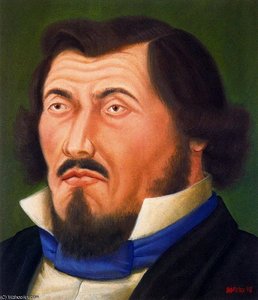
      To stand before a work by Fernando Botero is not merely to observe paint on canvas; it is to encounter a celebration of form itself. His signature style, often termed Boterismo, immediately arrests the viewer with its magnificent exaggeration. Here, in "The President and First Lady," this characteristic volume takes center stage. The figures—the woman poised elegantly upon the horse, the attendant figures flanking the scene—are rendered with a delightful,…

      la collectionneuse av Fernando Botero
      2

      la collectionneuse

      Oil On Canvas

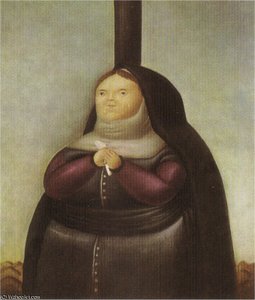
      The gaze of the viewer meets the presence of la collectionneuse, a work that carries the unmistakable weight and volume of its creator. Fernando Botero, born in Medellín, Colombia, on April 19, 1932, breathes life into this scene through his singular way of seeing the world. The canvas holds a quiet, heavy energy that feels as though it has always existed in this specific, rounded state.

      Dancing in Colombia (1980) av Fernando Botero
      3

      Dancing in Colombia

      1980 · Oil On Canvas · Metropolitan Museum of Art, New York

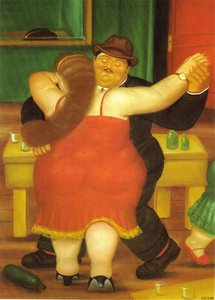
      In the vibrant tapestry of twentieth-century Latin American art, few works capture the exuberant pulse of a nation quite like Fernando Botero’s Dancing in Colombia. Completed in 1980, this masterful oil painting serves as a window into a world where movement and mass coexist in a joyful, rhythmic embrace. At first glance, the viewer is swept up in a scene of delightful disorder; a crowded café or social gathering teems…

      la famille av Fernando Botero
      4

      la famille

      Oil On Canvas

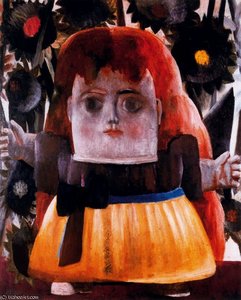
      To stand before Fernando Botero’s depiction of la famille is to be enveloped in an atmosphere of profound, almost monumental warmth. This painting transcends a mere portrait; it is a celebration of connection, a visual ode to the enduring bond that ties generations together. The composition centers on a family unit—a mother seated between her two children, all gathered beneath the sheltering canopy of a tree. Botero masterfully captures not…

      scene de famille av Fernando Botero
      5

      scene de famille

      Oil On Canvas

      To gaze upon Fernando Botero’s Scene de Famille is to be enveloped in an atmosphere of profound, yet utterly comfortable, domesticity. This painting transcends a mere depiction; it captures the very essence of togetherness—the quiet moments shared between loved ones that form the bedrock of human experience. The composition centers around a family unit of four—a man, a woman, and two children—all settled into a tableau of relaxed intimacy. Botero’s…

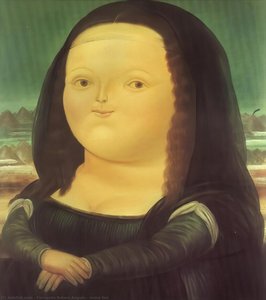
      mona lisa av Fernando Botero
      6

      mona lisa

      Oil On Canvas

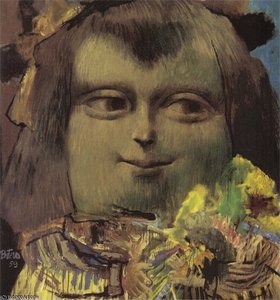
      Introduction to the Artist and his Style Fernando Botero Angulo, a renowned Colombian figurative artist, is celebrated for his unique style characterized by voluminous, exaggerated forms. His work has been exhibited worldwide and can be found in prestigious museums such as the Metropolitan Museum of Art in New York City and the Museo de Arte Moderno in Bogotá. At AllPaintingsStore.com, we offer handmade oil paintings reproductions of famous artwork, including…

      Frank Lloyd et sa famille à paradise island av Fernando Botero
      7

      Frank Lloyd et sa famille à paradise island

      Oil On Canvas

      In this scene, we find ourselves on a tropical shore, observing a quiet moment shared by a family of four. Two adults and two children are positioned amidst the soft sands of paradise island, their presence anchored to the landscape. There is a certain weight to the figures; they do not merely occupy the beach but seem to emerge from it, their rounded silhouettes mirroring the organic curves of the…

      les musiciens av Fernando Botero
      8

      les musiciens

      Oil On Canvas

      The scene unfolds through les musiciens, a work that carries the unmistakable presence of its creator, Fernando Botero. Created in 1986, this piece captures a moment of quiet musicality. The artist, who was born in Medellín, Colombia, in 1932, brings a specific sense of weight and volume to the figures within the frame. Every shape feels substantial, as if the air in the room has a physical density that holds…

      Dog Turning a Corner (1980) av Fernando Botero
      9

      Dog Turning a Corner

      1980 · Oil On Canvas

      In the masterful hands of Fernando Botero, a simple street corner is transformed into a theatrical stage where life unfolds with exaggerated grace and exuberant color. Dog Turning a Corner invites the viewer into a sun-drenched village scene, captured with the unmistakable warmth that defines the Colombian master's vision. The painting presents a bustling tableau of small-town life, where yellow buildings glow under an unseen sun, casting a nostalgic radiance…

      Walk in the hills (1977) av Fernando Botero
      10

      Walk in the hills

      1977 · Oil On Canvas

      In the vast landscape of twentieth-century Latin American art, few figures command attention with as much whimsical gravity as Fernando Botero. His 1977 masterpiece, Walk in the hills, serves as a profound window into the artist's signature aesthetic, often referred to as "Boterismo." At first glance, the painting presents a scene of quietude: a solitary figure, draped in heavy, dark garments and crowned with a black hat, stands amidst the…

      More Fernando Botero canvases, 11 to 100

      July 20th (1984) av Fernando Botero
      #11

      July 20th

      1984 · National Museum of Colombia

      Fernando Botero’s “July 20th,” painted in 1984, isn't merely a depiction of two figures on a street; it’s a carefully constructed tableau brimming with quiet drama and subtle…

      Quatre Musiciens av Fernando Botero
      #12

      Quatre Musiciens

      Fernando Botero Angulo's "Quatre Musiciens" is a captivating oil painting that exemplifies the artist’s signature style – a harmonious blend of bold colors, exaggerated forms, and a playful…

      couple dansant av Fernando Botero
      #13

      couple dansant

      is an oil painting by the Colombian artist Fernando Botero. The work captures a couple lost in the rhythm of dance, presenting a scene of movement and intimacy.…

      monna lisa av Fernando Botero
      #14

      monna lisa

      The gaze of the woman in monna lisa by Fernando Botero holds a quiet, heavy presence. She sits before us, draped in a black dress that anchors her…

      danse en colombie av Fernando Botero
      #15

      danse en colombie

      The painting "Danse en Colombie" by Fernando Botero Angulo is a captivating representation of the rich cultural heritage of Colombia. This vibrant artwork, available as a handmade oil…

      tablao flamenco av Fernando Botero
      #16

      tablao flamenco

      In the painting tablao flamenco by Fernando Botero, the scene captures a lively performance taking place within a club setting. At the center of the activity is a…

      le chasseur av Fernando Botero
      #17

      le chasseur

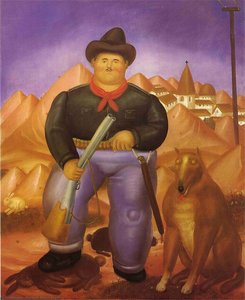
      The work before us is titled le chasseur, a painting by the Colombian artist Fernando Botero. Born in Medellín, Colombia, in 1932, Botero developed a singular visual language…

      pastèques et oranges av Fernando Botero
      #18

      pastèques et oranges

      To stand before a piece evoking the spirit of Fernando Botero’s still life compositions is to encounter an immediate sense of opulent, almost monumental presence. This painting, featuring…

      tête de christ av Fernando Botero
      #20

      tête de christ

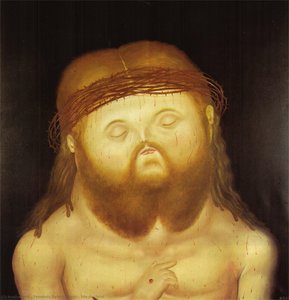
      The work before us is titled tête de christ, a painting by the Colombian artist Fernando Botero. Born in 1932 in Medellín, Colombia, Botero developed a singular visual…

      oranges av Fernando Botero
      #21

      oranges

      In the vibrant world of Fernando Botero, even the simplest objects undergo a profound transformation. His painting, oranges, invites the viewer into a tactile universe where volume and…

      nature morte à la soupe verte av Fernando Botero
      #22

      nature morte à la soupe verte

      To stand before Nature Morte à la Soupe Verte is to be enveloped in the warm, generous embrace of Colombian artistry. Fernando Botero Angulo’s vision here transcends a…

      les soeurs av Fernando Botero
      #23

      les soeurs

      In the captivating realm of Fernando Botero’s les soeurs, the viewer is immediately enveloped by a sense of profound intimacy and exaggerated grace. The painting presents a tender…

      The Widower (1968) av Fernando Botero
      #30

      The Widower

      1968

      “The Widower,” painted in 1968 by Colombian artist Fernando Botero, is a striking oil painting depicting a poignant family portrait set within the confines of a domestic interior.…

      jeune fille sur l'ane av Fernando Botero
      #46

      jeune fille sur l'ane

      jeune fille sur l'ane is an oil painting by Fernando Botero. The artist was born in 1932 in Medellín, Colombia, and maintained a presence in international art hubs…

      nature morte de fruits av Fernando Botero
      #73

      nature morte de fruits

      Fernando Botero Angulo's “nature morte de fruits” is more than just a depiction of fruit; it’s an embodiment of the artist’s singular vision, a testament to his mastery…

      The Prima Donna (1967) av Fernando Botero
      #78

      The Prima Donna

      1967 · Koninklijk Museum voor Schone Kunsten Antwerpen
      Guitar Lesson (1960) av Fernando Botero
      #81

      Guitar Lesson

      1960 · National Museum of Colombia

      Fernando Botero’s “Guitar Lesson,” painted in 1960, isn’t merely a depiction of a musical scene; it’s an embodiment of the artist’s signature style – what he himself termed…

      hommage à Bonnard av Fernando Botero
      #83

      hommage à Bonnard

      The painting Hommage à Bonnard by Fernando Botero Angulo is a unique and fascinating work of art that pays tribute to the French painter Pierre Bonnard. As a…

      rubens et sa femme av Fernando Botero
      #84

      rubens et sa femme

      In the captivating realm of Fernando Botero, reality is not merely observed but reimagined through a lens of magnificent abundance. His work, rubens et sa femme, serves as…

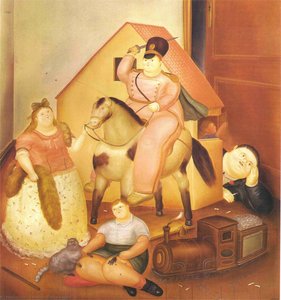
      chambre avec jeux d'enfants av Fernando Botero
      #85

      chambre avec jeux d'enfants

      In the captivating realm of Fernando Botero, reality is not merely observed but reimagined through a lens of magnificent abundance. The painting chambre avec jeux d'enfants invites the…

      le bain des évêques dans un fleuve av Fernando Botero
      #86

      le bain des évêques dans un fleuve

      A Moment of Leisure: "Le Bain des Évêques dans un Fleuve" by Fernando Botero Angulo This captivating painting, “Le Bain des Évêques dans un Fleuve” (The Bathing of…

      l'étude de vermeer av Fernando Botero
      #87

      l'étude de vermeer

      The painting l'étude de vermeer emerges from the year 1964, a moment when Fernando Botero captures a singular presence on canvas. This work presents a portrait of a…

      What Fernando Botero painted most

      The four subjects that return most often on these canvases, each with its best-loved example.

      Where Fernando Botero's canvases hang

      De 6 museer som innehar flest av målningarna på denna sida.

      Museum Stad Verk av Fernando Botero Målningar från denna lista
      National Museum of Colombia, BogotaNational Museum of Colombia Bogota 2 July 20th, Guitar Lesson
      Bavarian State Painting Collections, MünchenBavarian State Painting Collections München 2 The First Lady, El Presidente
      Metropolitan Museum of Art, New YorkMetropolitan Museum of Art New York 1 Dancing in Colombia
      Museum of Latin American Art, Long BeachMuseum of Latin American Art Long Beach 1 Title translation: The Family
      Tucson Museum of Art, TucsonTucson Museum of Art Tucson 1 Sailor Boy
      Koninklijk Museum voor Schone Kunsten Antwerpen, AntwerpenKoninklijk Museum voor Schone Kunsten Antwerpen Antwerpen 1 The Prima Donna

      Fernando Botero's best-loved canvas of each decade

      1. 1950s
      2. 1960s
      3. 1970s
        Walk in the hills (1977) av Fernando Botero
        10 of 100

        Walk in the hills

        Ålder 38 – 47

        In the vast landscape of twentieth-century Latin American art, few figures command attention with as much whimsical gravity as Fernando Botero. His 1977 masterpiece, Walk in the hills,…

      4. 1980s
        Dancing in Colombia (1980) av Fernando Botero
        Ranked 3 of 100

        Dancing in Colombia

        Ålder 48 – 57 · Metropolitan Museum of Art

        In the vibrant tapestry of twentieth-century Latin American art, few works capture the exuberant pulse of a nation quite like Fernando Botero’s Dancing in Colombia. Completed in 1980,…

      5. 1990s

      About Fernando Botero's canvases: your questions answered

      What is the best-known painting by Fernando Botero?Read the answer

      The President and First Lady, followed by la collectionneuse and Dancing in Colombia (1980).

      What are the 10 most famous paintings by Fernando Botero?Read the answer

      The President and First Lady, la collectionneuse, Dancing in Colombia, la famille, scene de famille, mona lisa, Frank Lloyd et sa famille à paradise island, les musiciens, Dog Turning a Corner och Walk in the hills. Each canvas in the ranking above comes with its year and its museum.

      How many works did Fernando Botero paint in all?Read the answer

      279 works by Fernando Botero are in our catalogue, dated 1959 to 1992.

      Where can I see Fernando Botero's most famous canvases?Read the answer

      Mostly in National Museum of Colombia (Bogota), Bavarian State Painting Collections (München) och Metropolitan Museum of Art (New York); the list above names each museum and its canvases.

      When did Fernando Botero paint the best-loved canvases?Read the answer

      In 1960s, which gave 10 of the 100 works on this page, Camera degli Sposi (Homage to Mantegna) II among them.

      Which are Fernando Botero's earliest and latest famous canvases?Read the answer

      The earliest canvas here is Mona Lisa, Age Twelve (1959); the latest is Title translation: The Family (1992).

      What did Fernando Botero paint most often?Read the answer

      Woman (14), Portrait (9) och Volume (8), across the 100 works on this page.

      Which medium did Fernando Botero paint in most often?Read the answer

      Oil On Canvas, used in 22 of the 100 works on this page.

      Which movement is Fernando Botero's painting part of?Read the answer

      Boterismo, as the canvases on this page show.

      Which Fernando Botero canvases hang at the National Museum of Colombia?Read the answer

      The National Museum of Colombia, Bogota holds 2 of the works on this page, among them July 20th och Guitar Lesson.

      Fernando Botero: a life in paint

      Tidiga år, familj och utbildning

      Fernando Botero föddes den 19 april 1932 i Medellín, Colombia. Hans tidiga år formades av de lugna, stadiga rytmerna i ett hushåll som kämpade för att få ekonomin att gå ihop. Hans far, David Botero, försörjde familjen som försäljare och färdades ofta till häst för att nå sina kunder. Hans mor, Flora Angulo, arbetade som sömmerska och utgjorde den nödvändiga tryggheten för familjen. Denna tidiga miljö gav honom en djup känsla för sin hemort, en förankring som skulle följa honom långt efter att han lämnat staden.

      Under sin ungdom tillbringade Fernando Botero flera år vid en skola för matadorer. Han tränades i tjurfäktningens rörelser och traditioner, men hans intressen drog honom så småningom bort från arenan. Vid 16 års ålder hade hans fokus skiftat mot teckning och skissande. År 1948 publicerades hans första illustrationer i söndagsbilagan av El Colombiano, vilket markerade början på hans offentliga närvaro genom hans visuella arbete.

      Konstnärlig skolning och europeiska resor

      År 1952 använde Botero de pengar han tjänat på sina galleriförsäljningar för att segla mot Europa. Hans första stopp blev Barcelona, men han rörde sig snart vidare mot Madrid. Det var i Spanien som han påbörjade sina studier vid Academia de San Fernando. Han tillbringade tid i Prado-museet, där han satt och kopierade verk av Goya och Velázquez. Denna vana att studera de gamla mästarna kom att bli en ständig del av hans konstnärliga utövande.

      Hans studier förde honom slutligen till Florens, där han studerade vid Academia de San Marcos. Vid 1953 hade han flyttat till Paris. Han tillbringade mycket av sin tid i Louvren, där han iakttog hur ljuset och formen vilade över gestalterna i museets salar. Dessa år i Europa präglades av ett ständigt pendlande mellan städer som Madrid, Florens och Paris, medan han i sin tystnad absorberade den tyngd och närvaro som den klassiska konsten besitter.

      Boterismens framväxt och stilens utveckling

      Former i hans verk bär på en helt särskild tyngd. Detta tillvägagångssätt, som ofta kallas för Boterismo, fokuserar på människor och figurer som framställs i stora, överdrivna volymer. Istället för att förlita sig på tunna linjer ligger tyngdpunkten på runda, korpulenta former som ockuperar rummet med en massiv närvaro. Dessa figurer besitter en viss massa som känns fysisk, som om själva färgen i sig har fått tyngd. Han använder ofta klara färger och djärva konturer för att definiera dessa former, vilket gör att motiven framträder med kraft mot sina bakgrunder.

      Runt 1964 rörde sig detta intresse för volym från duken in i tre dimensioner. Han började skapa skulpturer, där han översatte samma känsla av expansion till brons och andra material. Den rundhet som återfanns i hans målningar fick nytt liv i dessa solida former, vilket gjorde det möjligt för de överdrivna proportionerna att existera i det offentliga rummet. Verken förblir djupt rotade i motivets rena fysikalitet, oavsett om det rör sig om en mänsklig gestalt eller ett djur.

      Centrala verk och konstnärliga teman

      Hans konst kretsar ofta kring den mänskliga formens tyngd och den tysta spänningen som uppstår i sociala miljöer. I Mona Lisa, Age Twelve (1959) framställs motivet med en specifik, rundad närvaro som bryter med traditionella proportioner. Detta fokus på volym kom att bli ett sätt att utforska mer komplexa sociala strukturer. I The Presidential Family (1967) erbjuder figurernas överdrivna former en subtil blick på de politiska eliterna, där massivitet används för att kommentera de människor som innehar makten. Han använde dessa former för att adressera både livets glädje och konfliktens tyngd.

      Tematiken skiftar ofta mellan festlig firande och våldets verklighet. Dancing in Colombia (1980) fångar en livlig scen med musiker och dansare, där tjocka lager av färg ger figurerna en taktil och tung kvalitet. I kontrast till detta konfronterade hans senare verk ofta de mörkare aspekterna av hans hemland. The Death of Pablo Escobar (1999/2006) och hans olika serier som behandlar övergreppen i Abu Ghraib visar en vilja att använda hans signaturstil för att möta svåra sanningar. Även hans senare verk, som La paloma de la paz (2016), bär på en känsla av monumental tyngd, oavsett om motivet är en människa, ett djur eller en symbol för fred.

      • Mona Lisa, Age Twelve (1959)
      • The Presidential Family (1967)
      • Dancing in Colombia (1980)
      • The Death of Pablo Escobar (1999/2006)
      • La paloma de la paz (2016)

      De sista åren och bortgången

      De sista decennierna av hans liv tillbringades med att röra sig mellan flera internationella knutpunkter. Han upprätthöll residens i New York, Paris och Monte Carlo, men återvände ofta till Medellín för att förbli förankrad i sina rötter. Hans närvaro i det offentliga rummet växte i takt med att hans bronsskulpturer placerades i parker och på torg över flera kontinenter. Även i livets höst fortsatte hans verk att behandla tunga ämnen, såsom de sociala och politiska spänningarna i Colombia och händelserna i Abu Ghraib-fängelset.

      Under sina sista år levde han i furstendömet Monaco. Han gick bort där den 15 september 2023, vid 91 års ålder. Dödsorsaken var komplikationer till följd av lunginflammation. Hans bortgång markerade slutet på en lång karriär ägnad åt att betrakta den mänskliga formen och det sociala livets komplexitet genom hans unika lins av volym och proportion.

      Arv och inflytande

      Hans närvaro i det offentliga rummet var konstant. I New York City tar hans skulpturer plats på platser som Park Avenue, där de tunga, rundade formerna existerar sida vid sida med stadens arkitektur. I Colombia blev han en nationell skatt, en gestalt vars verk vävdes in i landets dagliga liv. Under sin livstid var han den mest erkända och citerade konstnären från Latinamerika, ett faktum som återspeglas i hur hans figurer blev bekanta för människor över många gränser.

      Hans engagemang för sitt hemland var tydligt genom hans storskaliga donationer. År 2000 skänkte han 208 konstverk till Bank of the Republic, en handling som bidrog till att forma det kulturella landskapet i Bogotá. Han delade även med sig av stora delar av sin personliga samling genom att donera 123 verk respektive 85 verk till Museo Botero. Dessa bidrag säkerställde att hans unika sätt att se på världen förblev tillgängligt för de generationer som följde efter honom.

      • La paloma de la paz
      • The Death of Pablo Escobar
      • Mona Lisa, Age Twelve

      Var man kan uppleva hans verk idag

      Hans närvaro kan förnimmas i Bogotás lugna vrår, särskilt inom det historiska La Candelaria-distriktet. Museo Botero rymmer en betydande del av hans livsverk, en samling som växte fram ur hans egen beslutsamhet att donera många av sina verk till nationen. I Medellín bevarar även Museo de Antioquia ett stort antal av hans skapelser, vilket upprätthåller en levande koppling till hans rötter. Dessa platser erbjuder möjligheten till en eftertänksam betraktelse av hur han bemästrade volym och gav sina motiv en påtaglig tyngd.

      Utöver Colombias gränser kan hans målningar återfinnas på Metropolitan Museum of Art i New York. Där får hans figurers skala en helt ny karaktär mot fonden av en global institution. Hans bronsskulpturer har också funnit permanenta hem i det offentliga rummet, där de bjuder in förbipasserande att vandra runt dem i Florens och Medellíns gator. Dessa massiva, rundade former existerar i det fria, ständigt påverkade av det skiftande ljuset och stadens eviga rörelse.

      • Dancing in Colombia (1980)
      • July 20th (1984)
      • Mona Lisa (omkring 1959)
      • The Death of Pablo Escobar (omkring 1999)

      Alla 279 verk av Fernando Botero →