Ateljé — Fri frakt i hela världen — Leveranstid 2–6 veckor
      Jackson Pollock, 1912 – 1956

      The 100 Most Famous Jackson Pollock Paintings, Ranked

      The best-loved painting by Jackson Pollock is Eftermiddagsrytm Nr 30. Nummer 1, 1949 (1950) and Konvergens come next among the canvases readers know best. Our catalogue holds 186 works by Jackson Pollock: here are the 100 most famous, each with its year, its museum and what makes it memorable.

      Rankade efter vår popularitetspoäng, som kombinerar sökningar, besök och beställningar för varje verk. Uppdaterad oktober 2026. Each painting on this page can be ordered as an oil reproduction painted by hand on linen canvas, or as a fine art print, made to the size you choose.

      Porträtt av Jackson Pollock
      Jackson Pollock · 1912 – 1956
      Född · död
      1912 – 1956, Cody
      Rörelse
      Abstract expressionism
      Verk i vår katalog
      186
      Mest kända
      Eftermiddagsrytm Nr 30
      Flest verk på
      MoMA - Museum of Modern Art

      Top 10 Jackson Pollock paintings: the canvases everyone knows

      Eftermiddagsrytm Nr 30 av Jackson Pollock
      1

      Eftermiddagsrytm Nr 30

      Olja på duk

      ”Autumn Rhythm. Number 30, 1950” står som ett centralt verk inom Jackson Pollocks banbrytande bidrag till den abstrakta expressionismen. Denna storskaliga duk är inte bara en målning; det är en omslutande upplevelse – ett visuellt register över energi, gestik och konstnärens djupt personliga engagemang i den kreativa processen.

      Nummer 1, 1949 (1950) av Jackson Pollock
      2

      Nummer 1, 1949

      1950 · Olja på duk · Private collection, New York

      Skapad år 1950 står detta fängslande verk som en lysande representation av den revolutionära andan inom abstrakt expressionism och utgör ett tydligt exempel på Jackson Pollocks ikoniska “dripping”-teknik. Med sina imponerande dimensioner – 240 x 120 cm – fångar det inte bara uppmärksamheten genom sin storlek utan också genom den rena energin som strålar från dess komplexa yta. Det är en målning som kräver betraktarens fulla närvaro, ett verk som…

      Konvergens av Jackson Pollock
      3

      Konvergens

      Olja på duk

      En Visuell Explosion: Jackson Pollocks “Convergence” Jackson Pollock’s “Convergence” är inte bara en målning; det är en upplevelse, ett monument över abstrakt expressionism och en avgörande del av amerikansk konst efter andra världskriget. Skapad under en kritisk period i konstepokens historia, fångar denna verk en revolutionär anda, utmanar traditionella idéer om representation och inbjuder betraktaren till en dynamisk värld av färg och energi. Det är som att titta in i…

      Número 1A av Jackson Pollock
      4

      Número 1A

      Olja på duk

      Abstrakt expressionisms essens Jackson Pollocks "Number 1A" är ett typexempel på abstrakt expressionism, en rörelse som omdefinierade amerikansk konst under mitten av 1900-talet. Detta fängslande verk förkroppsligar den råa energi och spontanitet som Pollock är berömd för, vilket gör det till ett oumbärligt tillskott för varje samtida konstsamling eller modern inredning. En dans av kaos och kontroll Konstverket presenterar en abstrakt komposition som kännetecknas av kaotiska, energiska penseldrag och en…

      Vit Ljus (1954) av Jackson Pollock
      5

      Vit Ljus

      1954 · Olja på duk · MoMA - Museum of Modern Art, New York

      Jackson Pollocks “White Light” är inte bara en målning; det är ett inlevelsefullt porträtt av den mänskliga psyken, fångat i en intensiv dans av färg och rörelse. Skapad 1954 under höjdpunkten av abstrakt expressionism, representerar detta verk en revolution inom amerikansk konst – en flykt från traditionell representation och ett djupt engagemang med känslor och kroppens fysiska uttryck. Det är en målning som omedelbart drar in betraktaren i en värld…

      One. Number 31, 1950 av Jackson Pollock
      6

      One. Number 31, 1950

      Painting

      In the pantheon of modern art, few works command the room with such raw, unbridled intensity as Paul Jackson Pollock’s “One: Number 31, 1950.” To stand before this canvas is to witness a moment of pure, unfiltered creation captured in time. As a cornerstone of the Abstract Expressionist movement, this painting transcends the boundaries of traditional composition, offering instead a dense, rhythmic web of energy that seems to pulse with…

      Number 5 (1948) av Jackson Pollock
      7

      Number 5

      1948 · Oil On Canvas

      A Universe Unfurled: Decoding Jackson Pollock’s No. 5, 1948 Jackson Pollock’s *No. 5, 1948* isn't simply a painting; it is an event frozen in time – a visual record of energy, gesture, and the very act of creation. This monumental work stands as perhaps the most iconic example of Abstract Expressionism, captivating viewers for decades with its complex layering and seemingly chaotic beauty. It’s a piece that demands attention, sparking…

      Mural (1943) av Jackson Pollock
      8

      Mural

      1943 · Acrylic On Canvas

      Jackson Pollock's "Mural," completed in 1943, isn't merely a painting; it’s an immersive experience, a visceral embodiment of the burgeoning abstract expressionist movement. Commissioned by Peggy Guggenheim as a centerpiece for her Manhattan townhouse, this monumental work – measuring a commanding 247 x 605 cm – immediately announces Pollock’s arrival as a revolutionary force in the art world. The sheer scale invites contemplation, drawing the viewer into a swirling vortex…

      Number 5 (1948) av Jackson Pollock
      9

      Number 5

      1948 · Oil On Canvas

      Jackson Pollock’s *No. 5*, created in 1948, stands as an emblem of Abstract Expressionism—a movement that irrevocably altered the landscape of modern art. More than just a painting; it's a visceral embodiment of emotion, intellect, and revolutionary technique, captivating viewers with its mesmerizing complexity and enduring legacy. This monumental canvas, measuring eight by four feet on fiberboard, transcends mere visual representation, inviting contemplation about the very nature of artistic expression…

      Alchemy (1947) av Jackson Pollock
      10

      Alchemy

      1947 · Acrylic On Canvas

      A Dance of Chaos and Transformation: Exploring Jackson Pollock’s Alchemy The Genesis of Spontaneity Decoding the Drip Technique Historical Resonance and Symbolic Weight A Legacy of Innovation Jackson Pollock’s *Alchemy*, a monumental work from 1947, isn't merely a painting; it’s an immersive experience, a visceral embodiment of the burgeoning Abstract Expressionist movement. Created during a pivotal moment in American art history, this piece captures the raw energy and revolutionary spirit…

      More Jackson Pollock canvases, 11 to 100

      Number 6 (1949) av Jackson Pollock
      #12

      Number 6

      1949

      Number 6 stands as a pivotal work within Jackson Pollock's oeuvre and the broader movement of Abstract Expressionism. Emerging in post-World War II America, this style rejected traditional…

      Order this canvas →
      Number 23, 1951 av Jackson Pollock
      #13

      Number 23, 1951

      Chrysler Museum of Art

      Paul Jackson Pollock's "Number 23, 1951" isn’t merely a painting; it’s an immersion. Created during a pivotal period of his artistic evolution – the “black pourings” – this…

      Have it painted by hand →
      Number 1 (1948) av Jackson Pollock
      #14

      Number 1

      1948 · MoMA - Museum of Modern Art

      Jackson Pollock's "Number 1, 1948," housed within the hallowed halls of the Museum of Modern Art in New York, isn’t merely a painting; it’s an immersion. It’s a…

      Bring this light home →
      There Were Seven in Eight (1945) av Jackson Pollock
      #15

      There Were Seven in Eight

      1945 · MoMA - Museum of Modern Art

      A Descent Into Chaotic Beauty The canvas of Jackson Pollock’s 1945 masterpiece, "There Were Seven in Eight," serves as a visceral gateway into the turbulent heart of Abstract…

      Have it painted by hand →
      Saint av Jackson Pollock
      #16

      Saint

      Jackson Pollock is widely regarded as one of the most influential artists of the 20th century, and his painting Saint is a quintessential example of his unique style.…

      Bring this light home →
      The She Wolf (1943) av Jackson Pollock
      #17

      The She Wolf

      1943

      Jackson Pollock's “The She Wolf,” completed in 1943, is more than just an abstract canvas; it’s a visceral plunge into the heart of early Abstract Expressionism and a…

      Have it painted by hand →
      Blue poles (Number 11) (1952) av Jackson Pollock
      #19

      Blue poles (Number 11)

      1952

      Jackson Pollock’s “Blue Poles (Number 11),” completed in 1952, isn’t merely a painting; it’s an explosion of controlled chaos, a visceral embodiment of the abstract expressionist movement. Measuring…

      Have it painted by hand →
      Yellow Islands av Jackson Pollock
      #21

      Yellow Islands

      A Symphony of Chaos: Exploring Jackson Pollock’s ‘Yellow Islands’ Jackson Pollock's ‘Yellow Islands’, painted in 1952, stands as a pivotal work within the Abstract Expressionist movement – a…

      Have it painted by hand →
      Black Pouring over Color av Jackson Pollock
      #22

      Black Pouring over Color

      A Dance with Color: Jackson Pollock’s “Black Pouring over Color” Jackson Pollock's "Black Pouring over Color," created in 1950, isn’t merely a painting; it’s an immersive experience—a visceral…

      Bring this light home →
      The Flame (1938) av Jackson Pollock
      #23

      The Flame

      1938

      The painting The Flame consists of oil on fiberboard, measuring 51 x 76 cm. The surface features a central motif of an incandescent blaze that moves through an…

      Bring this light home →
      Portrait and a Dream av Jackson Pollock
      #24

      Portrait and a Dream

      Jackson Pollock’s Portrait and a Dream (1953) isn’t merely a painting; it’s an immersion into the very heart of Abstract Expressionism, a visceral embodiment of the artist’s process…

      Have it painted by hand →
      Number 3 (1948) av Jackson Pollock
      #25

      Number 3

      1948

      Jackson Pollock: A Revolutionary in Abstract Expressionism Jackson Pollock (1912-1956) stands as a monumental figure within the abstract expressionist movement, forever altering the trajectory of modern art. His…

      Order this canvas →
      Ocean Greyness av Jackson Pollock
      #26

      Ocean Greyness

      Ocean Greyness is an oil painting created by Jackson Pollock in 1953. This work measures 229 x 146.7 cm and is currently held in the Solomon R. Guggenheim…

      Have it painted by hand →
      The Moon-Woman av Jackson Pollock
      #27

      The Moon-Woman

      To stand before Jackson Pollock’s "The Moon-Woman" is to enter a realm where the boundaries between reality and the subconscious begin to dissolve. At first glance, the viewer…

      Bring this light home →
      Lucifer (1947) av Jackson Pollock
      #28

      Lucifer

      1947

      Jackson Pollock’s “Lucifer,” painted in 1947, isn’t merely a painting; it’s an immersion. Measuring a substantial 268 x 104 cm, this work embodies the raw energy and profound…

      Have it painted by hand →
      Woman av Jackson Pollock
      #29

      Woman

      Jackson Pollock's “Woman,” completed in 1945 and currently residing within the hallowed halls of the Museum of Modern Art in New York City, isn’t merely a painting; it’s…

      Bring this light home →
      Untitled (Naked Man) av Jackson Pollock
      #30

      Untitled (Naked Man)

      A Figure Forged in Turmoil: Exploring Pollock’s ‘Untitled (Naked Man)’ This powerful painting by Jackson Pollock plunges the viewer into a vortex of emotion and raw energy. Depicting…

      Have it painted by hand →
      Lavender Mist_Number 1 av Jackson Pollock
      #31

      Lavender Mist_Number 1

      Jackson Pollock’s “Lavender Mist_Number 1” isn't merely a painting; it’s an immersion, a visceral experience captured on canvas. This seminal work from the late 1940s embodies the revolutionary…

      Have it painted by hand →
      Birth av Jackson Pollock
      #32

      Birth

      A Tempestuous Birth: Decoding Pollock’s Abstract Vision Jackson Pollock's *Birth* (1948-51) is a pivotal work within his mature “drip” period and a cornerstone of Abstract Expressionism. More than…

      Order this canvas →
      Blue (Moby Dick) av Jackson Pollock
      #33

      Blue (Moby Dick)

      Jackson Pollock's “Blue (Moby Dick),” painted in 1943, isn’t merely a canvas splashed with color; it’s an immersive experience, a visual embodiment of the anxieties and primal forces…

      Order this canvas →
      The key (1946) av Jackson Pollock
      #34

      The key

      1946 · Art Institute of Chicago

      A Dance Across Canvas: Exploring Jackson Pollock’s ‘The Key’ Subject Matter & Composition The artwork depicts a group of individuals engaged in various postures—seated on chairs, standing upright,…

      Bring this light home →
      Untitled II av Jackson Pollock
      #35

      Untitled II

      To stand before an Untitled II by Paul Jackson Pollock is not merely to observe paint on canvas; it is to witness an event. It is a raw,…

      Bring this light home →
      Cathedral av Jackson Pollock
      #36

      Cathedral

      Introduction to Jackson Pollock and Abstract Expressionism Paul Jackson Pollock, known professionally as Jackson Pollock, was an American painter and a major figure in the abstract expressionist movement.…

      Have it painted by hand →
      Number 27, 1950 av Jackson Pollock
      #38

      Number 27, 1950

      Jackson Pollock’s ‘Number 27, 1950’: A Symphony of Controlled Chaos Number 27, 1950 is a landmark achievement in the history of Abstract Expressionism, embodying the movement's radical departure…

      Have it painted by hand →
      Circumcision January (1946) av Jackson Pollock
      #40

      Circumcision January

      1946

      Jackson Pollock, a titan of 20th-century art, remains synonymous with abstract expressionism. His painting, Circumcision January, exemplifies his groundbreaking approach and continues to captivate viewers with its dynamic…

      Bring this light home →
      Sheet of Studies (1941) av Jackson Pollock
      #41

      Sheet of Studies

      1941

      A Window into Pollock’s Subconscious: “Sheet of Studies” (1941) This intensely energetic work on paper, created in 1941, offers a fascinating glimpse into the formative period of Jackson…

      Have it painted by hand →
      Number 12, 1949 av Jackson Pollock
      #42

      Number 12, 1949

      A Universe Within: Decoding Jackson Pollock’s “Number 12, 1949” Jackson Pollock's "Number 12, 1949" isn't simply a painting; it’s an event frozen in time – a visual record…

      Order this canvas →
      War av Jackson Pollock
      #43

      War

      War: A Descent into Chaos – Jackson Pollock’s Post-Traumatic Masterpiece Jackson Pollock's *War*, painted in 1947, isn’t merely a canvas splashed with color; it’s a visceral embodiment of…

      Bring this light home →
      Marrón y plata av Jackson Pollock
      #44

      Marrón y plata

      A Symphony of Shadow and Silver: Exploring Jackson Pollock’s “Marrón y plata” Jackson Pollock's "Marrón y plata" ("Brown and Silver") stands as a pivotal work within his celebrated…

      Bring this light home →
      Pattern (1945) av Jackson Pollock
      #45

      Pattern

      1945

      is a work by the American artist Paul Jackson Pollock. He painted this canvas in 1945, a year that marked his move from the streets of Manhattan to…

      Bring this light home →
      Number 10 (1949) av Jackson Pollock
      #46

      Number 10

      1949

      A Tempestuous Vision: Exploring Jackson Pollock’s ‘Number 10’ Number 10, created in 1949, stands as a monumental example of Jackson Pollock's revolutionary drip painting technique and the apex…

      Bring this light home →
      Untitled 28 av Jackson Pollock
      #47

      Untitled 28

      A Visceral Encounter: Decoding Jackson Pollock’s “Untitled 28” This intensely compelling work by Jackson Pollock, known simply as “Untitled 28,” offers a raw and unsettling glimpse into the…

      Bring this light home →
      Number 25 (1950) av Jackson Pollock
      #48

      Number 25

      1950

      To stand before Number 25 is to confront pure, unmediated action. This canvas does not merely depict an image; it records an event—a moment of intense physical and…

      Untitled (1939) av Jackson Pollock
      #49

      Untitled

      1939 · Art Institute of Chicago

      The canvas known as Untitled emerges from 1939, a moment when Jackson Pollock begins to navigate the turbulent currents of his own creative impulses. This abstract expressionist work…

      Order this canvas →
      Untitled 6 av Jackson Pollock
      #50

      Untitled 6

      A Tempest of Emotion: Exploring Jackson Pollock’s Untitled 6 This captivating work by Jackson Pollock plunges viewers into a dynamic world of abstract expressionism. *Untitled 6* is not…

      Have it painted by hand →
      Full Fathom Five av Jackson Pollock
      #51

      Full Fathom Five

      In the annals of American art history, few works capture the raw, unbridled energy of a movement quite like Paul Jackson Pollock’s Full Fathom Five. Painted in 1947,…

      Have it painted by hand →
      Cut out av Jackson Pollock
      #54

      Cut out

      Jackson Pollock, born on January 28, 1912, was an American painter who played a significant role in the abstract expressionist movement. He is renowned for his unique style…

      Have it painted by hand →
      Masked Image av Jackson Pollock
      #55

      Masked Image

      The canvas breathes with a restless energy, presenting a singular, stylized visage that seems to emerge from a thicket of overlapping shapes. This is not a portrait in…

      Bring this light home →
      Untitled av Jackson Pollock
      #56

      Untitled

      A Glimpse into Pollock’s Preparatory Process: An Early Study in Motion This captivating work on paper offers a rare look into Jackson Pollock's artistic development *before* his iconic…

      Order this canvas →
      Portrait of H.M av Jackson Pollock
      #57

      Portrait of H.M

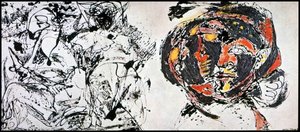
      Paul Jackson Pollock's “Portrait of H.M.”, a work shrouded in mystery and brimming with raw energy, isn’t merely a painting; it’s an immersive experience. Created during a turbulent…

      Have it painted by hand →
      Summertime: Number 9A (1948) av Jackson Pollock
      #58

      Summertime: Number 9A

      1948 · Tate Modern

      Jackson Pollock’s “Summertime: Number 9A,” painted in 1948, isn't merely a canvas splashed with color; it’s an immersive experience, a visceral representation of the artist’s state of mind…

      Have it painted by hand →
      Untitled (1941) av Jackson Pollock
      #59

      Untitled

      1941

      A Moment Suspended: Exploring Jackson Pollock’s 1941 Untitled Work This striking work by Jackson Pollock, created in 1941, offers a fascinating glimpse into the artist's formative years –…

      Have it painted by hand →
      Untitled (Silkscreen I) av Jackson Pollock
      #60

      Untitled (Silkscreen I)

      In the realm of Abstract Expressionism, few works capture the raw, unbridled tension of human struggle as poignantly as Paul Jackson Pollock’s “Untitled (Silkscreen I).” This striking black…

      Order this canvas →
      Grayed Rainbow av Jackson Pollock
      #61

      Grayed Rainbow

      Art Institute of Chicago

      Jackson Pollock was a revolutionary figure in the abstract expressionist movement, reshaping artistic perception and challenging conventional notions of painting. His groundbreaking drip technique—characterized by pouring and splattering…

      Have it painted by hand →
      The Water Bull (1946) av Jackson Pollock
      #62

      The Water Bull

      1946 · Stedelijk Museum

      Subject and Composition This captivating abstract masterpiece immerses viewers in a whirlwind of vibrant colors and dynamic forms. While its subject remains open to interpretation, the energetic interplay…

      Bring this light home →
      Totem Lesson 2 (1945) av Jackson Pollock
      #63

      Totem Lesson 2

      1945

      Totem Lesson 2: An Exploration of Abstract Expressionism’s Chaotic Harmony Paul Jackson Pollock's "Totem Lesson 2," painted in 1945, stands as a cornerstone of Abstract Expressionism—a movement that…

      Have it painted by hand →
      Figure av Jackson Pollock
      #64

      Figure

      Jackson Pollock, a name synonymous with Abstract Expressionism and the revolutionary ‘drip’ technique, also harbored a period of intensely focused figuration that often goes unacknowledged. The work simply…

      Bring this light home →
      Untitled 9 av Jackson Pollock
      #65

      Untitled 9

      A Tempest of Emotion: Decoding Jackson Pollock’s “Untitled 9” This intensely evocative work by Jackson Pollock, designated “Untitled 9,” plunges the viewer into a swirling vortex of color…

      Have it painted by hand →
      Stenographic Figure (1942) av Jackson Pollock
      #66

      Stenographic Figure

      1942

      Jackson Pollock's 'Stenographic Figure,' painted in 1942, isn’t merely a depiction of a horse and rider; it’s a visceral embodiment of the anxieties and burgeoning freedom defining Abstract…

      Bring this light home →
      Number 3 (1949) av Jackson Pollock
      #67

      Number 3

      1949

      A Revolution in Paint: Exploring Jackson Pollock’s ‘Number 3’ Jackson Pollock's 'Number 3', created in 1949, stands as a monumental achievement within the Abstract Expressionist movement. Measuring 157…

      Order this canvas →
      Untitled 8 av Jackson Pollock
      #68

      Untitled 8

      The air feels heavy with the restless energy of Jackson Pollock as he confronts the vastness of "Untitled 8." This monumental painting emerges from a period of profound…

      Bring this light home →
      Number 8 av Jackson Pollock
      #69

      Number 8

      Jackson Pollock's "Number 8," created in 1949, stands as a pivotal work within the Abstract Expressionist movement. This piece exemplifies Pollock’s revolutionary “drip technique,” where paint was poured…

      Bring this light home →
      Head av Jackson Pollock
      #70

      Head

      A Visceral Exploration of the Human Condition Jackson Pollock’s *Head*, a work shrouded in some mystery due to its lack of definitive dating and detailed documentation, presents a…

      Have it painted by hand →
      Eyes in the Heat (1946) av Jackson Pollock
      #71

      Eyes in the Heat

      1946

      Eyes in the Heat Jackson Pollock's "Eyes in the Heat," created in 1946, is a seminal work that embodies the essence of Abstract Expressionism. This painting, measuring 137…

      Bring this light home →
      Circle (1941) av Jackson Pollock
      #72

      Circle

      1941

      Jackson Pollock’s Circle: A Dance of Color and Chaos Jackson Pollock's “Circle,” painted in 1941, isn’t merely a depiction of a circle; it’s an embodiment of the burgeoning…

      Order this canvas →
      Untitled 23 av Jackson Pollock
      #73

      Untitled 23

      A Chaotic Symphony in Black and White: Deconstructing Pollock’s “Untitled 23” Jackson Pollock's "Untitled 23" isn’t merely an ink drawing; it’s a visceral exploration of energy, anxiety, and…

      Order this canvas →
      Easter and the Totem (1953) av Jackson Pollock
      #74

      Easter and the Totem

      1953

      Unveiling Jackson Pollock’s “Easter and the Totem” A Masterpiece of Abstract Expressionism: Jackson Pollock's 1953 painting, Easter and the Totem, stands as a pivotal work within the Abstract…

      Bring this light home →
      Untitled 13 av Jackson Pollock
      #76

      Untitled 13

      In the pantheon of twentieth-century art, few names command as much visceral respect and intrigue as Jackson Pollock. His work Untitled 13 serves as a profound testament to…

      Have it painted by hand →
      Ritmo de otoño av Jackson Pollock
      #77

      Ritmo de otoño

      In the pantheon of twentieth-century art, few works possess the raw, kinetic energy found in Jackson Pollock’s Ritmo de otoño. Created in 1950, this masterpiece serves as a…

      Bring this light home →
      Male and Female (1942) av Jackson Pollock
      #78

      Male and Female

      1942

      Jackson Pollock: A Pioneer of Abstract Expressionism Jackson Pollock (1912–1956) stands as one of the most transformative figures in 20th-century art, irrevocably altering perceptions of painting and establishing…

      Order this canvas →
      Miners av Jackson Pollock
      #79

      Miners

      Paul Jackson Pollock: A Pioneer of Abstract Expressionism Paul Jackson Pollock (1912-1956) stands as one of the most influential figures in 20th-century art, irrevocably shaping the trajectory of…

      Order this canvas →
      GREETINGS av Jackson Pollock
      #80

      GREETINGS

      Paul Jackson Pollock's “Greetings” stands as a testament to the radical spirit of Abstract Expressionism, encapsulating the movement’s core tenets within a deceptively simple composition. This artwork, created…

      Have it painted by hand →
      Troubled Queen av Jackson Pollock
      #81

      Troubled Queen

      A Realm of Inner Turmoil: Exploring Jackson Pollock’s Abstract Vision Jackson Pollock's "Troubled Queen," completed in 1945, stands as a cornerstone of Abstract Expressionism—a movement that irrevocably shifted…

      Order this canvas →
      Number 23 (1948) av Jackson Pollock
      #82

      Number 23

      1948

      Jackson Pollock’s “Number 23,” completed in 1948, stands as an undeniable cornerstone of Abstract Expressionism—a movement that fundamentally challenged artistic conventions and prioritized emotional expression over representational accuracy.…

      Have it painted by hand →
      Untitled (Silkcreen no. VI) av Jackson Pollock
      #83

      Untitled (Silkcreen no. VI)

      A Dance of Chaos and Connection: Exploring Jackson Pollock’s “Untitled (Silkcreen no. VI)” Paul Jackson Pollock's "Untitled (Silkcreen no. VI)" stands as an emblem of Abstract Expressionism, a…

      Order this canvas →
      Untitled 27 av Jackson Pollock
      #84

      Untitled 27

      Jackson Pollock's “Untitled 27,” a monumental drip painting from 1950, stands as an emblem of Abstract Expressionism—a movement that irrevocably altered the course of twentieth-century art. More than…

      Order this canvas →
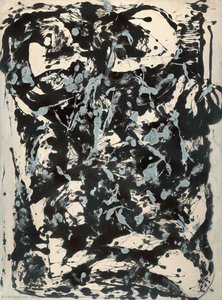
      Silver and Black I av Jackson Pollock
      #85

      Silver and Black I

      A Symphony of Chaos: Exploring Jackson Pollock’s “Silver and Black I” “Silver and Black I” is a powerful example of Jackson Pollock's revolutionary contribution to Abstract Expressionism, created…

      Bring this light home →
      Untitled 4 av Jackson Pollock
      #86

      Untitled 4

      In the realm of Abstract Expressionism, few works capture the raw, unbridled energy of the human psyche quite like Paul Jackson Pollock’s Untitled 4. This mesmerizing monochrome composition…

      Bring this light home →
      Shimmering Substance (1946) av Jackson Pollock
      #87

      Shimmering Substance

      1946

      Shimmering Substance: A Dance of Chaos and Control Jackson Pollock’s “Shimmering Substance,” completed in 1946, stands as a cornerstone of Abstract Expressionism—a movement that irrevocably altered the landscape…

      Order this canvas →
      Composition av Jackson Pollock
      #88

      Composition

      Jackson Pollock executed the painting titled Composition in 1949. This work emerged during a period when the artist was developing a specific approach to the canvas, moving away…

      Have it painted by hand →
      Gothic av Jackson Pollock
      #89

      Gothic

      The canvas known as Gothic emerges from the creative mind of Paul Jackson Pollock. Created in 1944, this work exists within the permanent collection of The Museum of…

      Have it painted by hand →
      Untitled (Cut-out) av Jackson Pollock
      #91

      Untitled (Cut-out)

      In the pantheon of Abstract Expressionism, few works capture the raw, visceral energy of the mid-century avant-garde quite like Paul Jackson Pollock’s "Untitled (Cut-out)." Created in 1954, a…

      Bring this light home →
      Going West (1935) av Jackson Pollock
      #92

      Going West

      1935

      Jackson Pollock's "Going West," painted in 1935, isn’t merely a depiction of a winter landscape; it’s a deeply personal narrative woven into the fabric of American pioneering spirit.…

      Order this canvas →
      Number 2 (1951) av Jackson Pollock
      #93

      Number 2

      1951

      A Symphony of Chaos and Color: Decoding Jackson Pollock’s “Number 2” Jackson Pollock's "Number 2," completed in 1951, stands as a cornerstone of Abstract Expressionism—a movement that irrevocably…

      Have it painted by hand →
      Number 3, 1950 av Jackson Pollock
      #94

      Number 3, 1950

      A Universe of Color: Exploring Jackson Pollock’s Number 3, 1950 Jackson Pollock's *Number 3, 1950* is arguably one of the most iconic and significant works of Abstract Expressionism.…

      Order this canvas →
      Untitled 1 av Jackson Pollock
      #95

      Untitled 1

      Paul Jackson Pollock (1912-1956), a titan of Abstract Expressionism, remains one of the most enigmatic figures in twentieth-century art. His monumental canvases—like “Untitled 1”—are not merely splashes of…

      Have it painted by hand →
      Echo av Jackson Pollock
      #96

      Echo

      Jackson Pollock’s “Echo,” Number 25, 1951, stands as a testament to the fervor of Abstract Expressionism—a movement that sought to liberate art from representational constraints and delve into…

      Order this canvas →
      Composition with Woman av Jackson Pollock
      #97

      Composition with Woman

      A Vortex of Emotion: Decoding Jackson Pollock’s Abstract Expressionism This captivating painting embodies the raw energy and emotional intensity that define Jackson Pollock's revolutionary contribution to 20th-century art.…

      Have it painted by hand →
      Untitled (1941) av Jackson Pollock
      #98

      Untitled

      1941

      Jackson Pollock's "Untitled," painted in 1941, stands as a cornerstone of Abstract Expressionism—a movement that fundamentally challenged artistic conventions and prioritized spontaneous gesture over meticulous representation. This monumental…

      Order this canvas →
      Orange Head av Jackson Pollock
      #99

      Orange Head

      Jackson Pollock, en av 20:a århundradets mest inflytelserika konstnärer, är känd för sin unika och ofta kontroversiella stil. ’Orange Head’ – ett verk som utspills sig i explosioner…

      Have it painted by hand →
      Untitled (13) (1943) av Jackson Pollock
      #100

      Untitled (13)

      1943

      Jackson Pollock: A Pioneer of Abstract Expressionism Jackson Pollock (1912-1956) stands as one of the most influential figures in 20th-century art, irrevocably altering the landscape of painting and…

      Have it painted by hand →

      Jackson Pollock's canvases, period by period

      What Jackson Pollock painted most

      The four subjects that return most often on these canvases, each with its best-loved example.

      Where Jackson Pollock's canvases hang

      De 6 museer som innehar flest av målningarna på denna sida.

      Museum Stad Verk av Jackson Pollock Målningar från denna lista
      MoMA - Museum of Modern Art, New YorkMoMA - Museum of Modern Art New York 4 Vit Ljus, Number 1, There Were Seven in Eight
      Art Institute of Chicago, ChicagoArt Institute of Chicago Chicago 3 The key, Untitled, Grayed Rainbow
      Private collection, New YorkPrivate collection New York 1 Nummer 1, 1949
      Chrysler Museum of Art, NorfolkChrysler Museum of Art Norfolk 1 Number 23, 1951
      Tate Modern, LondonTate Modern London 1 Summertime: Number 9A
      Stedelijk Museum, AmsterdamStedelijk Museum Amsterdam 1 The Water Bull

      Jackson Pollock's best-loved canvas of each decade

      1. 1930s
        The Flame (1938) av Jackson Pollock
        Ranked 23 of 100

        The Flame

        Ålder 18 – 27

        The painting The Flame consists of oil on fiberboard, measuring 51 x 76 cm. The surface features a central motif of an incandescent blaze that moves through an…

      2. 1940s
        Number 5 (1948) av Jackson Pollock
        Ranked 7 of 100

        Number 5

        Ålder 28 – 37

        A Universe Unfurled: Decoding Jackson Pollock’s No. 5, 1948 Jackson Pollock’s *No. 5, 1948* isn't simply a painting; it is an event frozen in time – a visual…

      3. 1950s
        Nummer 1, 1949 (1950) av Jackson Pollock
        Ranked 2 of 100

        Nummer 1, 1949

        Ålder 38 – 44 · Private collection

        Skapad år 1950 står detta fängslande verk som en lysande representation av den revolutionära andan inom abstrakt expressionism och utgör ett tydligt exempel på Jackson Pollocks ikoniska “dripping”-teknik.…

      About Jackson Pollock's canvases: your questions answered

      What is the best-known painting by Jackson Pollock?Read the answer

      Eftermiddagsrytm Nr 30, followed by Nummer 1, 1949 (1950) and Konvergens.

      What are the 10 most famous paintings by Jackson Pollock?Read the answer

      Eftermiddagsrytm Nr 30, Nummer 1, 1949, Konvergens, Número 1A, Vit Ljus, One. Number 31, 1950, Number 5, Mural, Number 5 och Alchemy. Each canvas in the ranking above comes with its year and its museum.

      How many works did Jackson Pollock paint in all?Read the answer

      186 works by Jackson Pollock are in our catalogue, dated 1935 to 1954.

      Where can I see Jackson Pollock's most famous canvases?Read the answer

      Mostly in MoMA - Museum of Modern Art (New York), Art Institute of Chicago (Chicago) och Private collection (New York); the list above names each museum and its canvases.

      When did Jackson Pollock paint the best-loved canvases?Read the answer

      In 1940s, which gave 29 of the 100 works on this page, Number 5 among them.

      Which are Jackson Pollock's earliest and latest famous canvases?Read the answer

      The earliest canvas here is Going West (1935); the latest is Vit Ljus (1954).

      What did Jackson Pollock paint most often?Read the answer

      Drip painting (45), Color field (32) och Chaos (26), across the 100 works on this page.

      Which medium did Jackson Pollock paint in most often?Read the answer

      Acrylic On Canvas, used in 39 of the 100 works on this page.

      Which movement is Jackson Pollock's painting part of?Read the answer

      Abstract expressionism, as the canvases on this page show.

      Which Jackson Pollock canvases hang at the MoMA - Museum of Modern Art?Read the answer

      The MoMA - Museum of Modern Art, New York holds 3 of the works on this page, among them Vit Ljus, Number 1 och There Were Seven in Eight.

      Can I buy a reproduction of a Jackson Pollock canvas?Read the answer

      Yes. Every painting on this page can be ordered from its own page as an oil reproduction painted by hand, or as a fine art print, in the size you choose.

      Jackson Pollock: a life in paint

      Tidigt liv, familj och utbildning

      Berättelsen om Paul Jackson Pollock tar sin början i det karga landskapet i Cody, Wyoming, där han föddes den 28 januari 1912. Som den yngsta av fem bröder, född av Stella May McClure och LeRoy Pollock, präglades hans uppväxt av en ständig rörelse. Hans far arbetade som lantmätare, ett yrke som krävde en ständig vandring genom det vidsträckta amerikanska västern. Denna nomadiska tillvaro innebar att den unge pojkens tidiga år definierades av frekventa flyttar – en rastlöshet som tycktes spegla de ständigt skiftande horisonterna i faderns arbete. Dessa tidiga resor genom västern gav honom ett direkt och omedelbart möte med den naturliga världen och den andliga resonansen i ursprungsbefolkningens konst, intryck som skulle lägga sig som en tyst grund i hans undermedvetna långt innan han någonsin greppade en pensel.

      I takt med att han växte, ledde sökandet efter en känsla av tillhörighet honom mot kustens urbana energi. Han började på Manual Arts High School i Los Angeles i ett försök att finna en formell struktur för sina spirande impulser. Men den verkliga formningen av hans konstnärliga hand skedde först långt senare, när han flyttade till New York City. Det var där, vid Art Students League, som han inledde en lång och transformativ studieperiod. Från 1929 till 1942 arbetade han under ledning av Thomas Hart Benton. Medan Benton betonade rytmisk komposition och det narrativa djupet i det amerikanska livet, var den unge studenten redan på väg att driva mot sina egna, mer abstrakta och inre sanningar.

      Utvecklingen av en unik teknik

      Vid 1947 hade ett genomgripande skifte infunnit sig i hur han närmade sig duken. Han lämnade det traditionella staffliet bakom sig och valde istället att lägga sina dukar direkt på golvet. Denna förändring gjorde det möjligt för honom att stå över sitt verk och därmed bli en del av själva den kreativa akten. Han applicerade inte bara färg; han droppade, stänkte och kastade den från ovan, och lät den flytande substansen falla i oförutsägbara mönster. Denna metod förvandlade måleriet till en fysisk prestation, en performance där gravitationen och gesten dikterade den slutgiltiga formen.

      Hans verktyg var lika okonventionella som hans metoder. Han använde pinnar, knivar och till och med sprutor för att manipulera det flytande mediet. Ibland använde han spackel eller rinnande färg för att uppnå specifika texturer. Han skrapade ofta i ytan eller använde främmande föremål för att bygga upp ett tjockt lager av färg, vilket tillförde verket en taktil och skulptural kvalitet. Denna process handlade mindre om kontrollerat penselarbete och mer om ett rytmiskt, nästan ursprungligt utsläpp av energi på ytan.

      Centrala verk och konstnärliga uttryck

      I takt med att han rörde sig bort från staffliets begränsningar började hans dukar spegla ett mer visceralt engagemang med mediet. År 1943 skapade han Mural, ett massivt verk som mätte 2,4 av 6,1 meter, vilket demonstrerade hans förmåga att bemästra en enorm yta. Under denna period ledde hans utforskningar av det undermedvetna och själva målarakten till verk som Eyes in the Heat, skapat omkring 1946. Dessa stycken var inte enbart bilder, utan snarare dokumentationer av en fysisk närvaro, där hela kroppens rörelse dikterade placeringen av varje färgstänk och varje färgpöl.

      De efterföljande åren präglades av att han förfinade de rytmiska "all-over"-kompositionerna som skulle komma att definiera hans rykte. Han strävade efter att skapa en känsla av gränslöst rum, där ingen enskild punkt dominerade över de andra. Detta tillvägagångssätt är tydligt i Number 1, 1949, ett verk som fångar ett rått utflöde av energi, och i Lavender Mist, Number 1, 1950, som förblir ett betydelsefullt verk i hans produktion. I dessa verk skapar samspelet mellan kontroll och slump en delikat balans, som om färgen vore utsläppt snarare än applicerad.

      Hans senare experiment fortsatte att tänja på gränserna för hur färg kunde manipuleras på en horisontell yta. Han använde ofta pinnar, knivar eller till och med själva färgburkarna för att kasta pigmentet, vilket resulterade i komplexa nätverk av linjer. Denna metod är tydligt synlig i Blue Poles, Number 11, 1952 och i det energiska Convergence. Genom dessa verk uppnådde Jackson Pollock ett tillstånd där målningen tycktes besitta ett eget liv, framsprungen ur en djup nedsänkning i hans egen fantasi.

      Mecenater, ateljé och uppdrag

      Karriärens väg formades av både samhälleliga behov och generositeten från ett fåtal livsviktiga förespråkare. Mellan 1938 och 1942 fann han ett stadig arbete som målare för WPA Federal Art Project, en period som gav en nödvändig rytm åt hans framväxande konstnärskap. Denna stabilitet fick ge vika för en mer personlig och transformativ allians när Peggy Guggenheim erbjöd honom ett gallerikontrakt i juli 1943. Hennes stöd visade sig vara mer än bara professionellt; år 1945 tillhandahöll hon en handpenning på 2 000 dollar för att hjälpa honom att säkra ett hem, en gest som djupt sammanflätade hans personliga liv med hans konstnärliga överlevnad.

      Hans kreativa liv fann slutligen sin mittpunkt i East Hampton, New York. Där, i Pollock-Krasner House and Studio, levde och arbetade han sida vid sida med sin hustru, Lee Krasner. Ateljén var en plats för intensiv fysisk rörelse, där gränserna mellan konstnären och duken upplöstes. Han rörde sig ofta bort från det traditionella staffliet och föredrog att lägga sina dukar direkt på golvet för att kunna möta färgen från alla sidor. Denna arbetsplats var inte bara ett rum för produktion, utan en plats för en djup, rastlös energi där hans mest radikala experiment ägde rum.

      De sista åren och döden

      Konstnärens personliga liv var djupt sammanflätat med hans kreativa kamp. År 1945 gifte han sig med konstnären Lee Krasner, en förening som utgjorde en betydelsefull närvaro i hans liv under hans mest transformativa år. Men under ytan av hans professionella framgångar vilade en ihållande skugga. Han kämpade med ett alkoholberoende under hela sitt liv, en kamp som ofta komplicerade hans tillvaro och hans förmåga att hantera pressen från sin växande berömmelse.

      Denna interna och externa turbulens fick ett tragiskt slut i East Hampton, New York, USA. Den 11 augusti 1956, vid 44 års ålder, fick han sitt liv avbrutet i en plötslig och våldsam olycka. Under körning var han involverad i en ensidig bilolycka orsakad av alkohol. Krocken blev dödlig och lämnade efter sig ett arv som var lika stormigt som den färg han kastade över sina dukar.

      Arv och inflytande på den moderna konsten

      Ringarna på vattnet från hans radikala metoder sträckte sig långt bortom ateljémurarna i East Hampton. Genom att bryta det traditionella bandet mellan penseln och staffliet blev Jackson Pollock en central gestalt inom den abstrakta expressionismen, ett skifte som i grunden förändrade den amerikanska kreativitetens bana. Hans närvaro bidrog till att befästa New York City:s position som ett globalt centrum för modern konst, och flyttade avantgardets hjärta bort från det europeiska dominansområdet. Han var bland de första amerikanska målarna som erkändes som en jämlike till 1900-talets stora europeiska mästare, och bevisade att ett nytt, visceralt språk kunde växa fram ur den amerikanska myllan.

      Hans inflytande fungerade som en katalysator för många efterföljande konstnärliga rörelser som följde i hans fotspår. Det sätt på vilket han engagerade sig i duken – genom att betrakta den som en arena för fysisk handling snarare än enbart en yta för avbildning – öppnade dörrar för många som strävade efter att uttrycka det undermedvetna genom gester. Denna betoning på själva skapandeprocessen lämnade ett bestående avtryck i den moderna konsthistorien och säkerställde att det spontana och det oplanerade för alltid skulle ha en plats i konstnärens verktygslåda.

      Var man kan se hans verk idag

      För att bevittna de fysiska spåren av hans rörelse måste man resa till de stora institutioner som bevarat hans radikala energi. I New York City hyser Museum of Modern Art flera av hans dukar, vilket ger betraktaren möjlighet att stå inför de vidsträckta, okoncentrerade kompositioner som definierade hans era. National Gallery of Art i Washington D.C. förvaltar också hans verk och erbjuder ett rum för att iaktta de intrikata nätverk av färg som han uppnådde genom sina unika metoder. På andra sidan Atlanten håller Tate Gallery i London hans närvaro levande i sina samlingar, vilket säkerställer att hans inflytande sträcker sig långt bortom Amerikas kuster.

      För dem som söker en mer intim koppling till hans arbetsprocess erbjuder Pollock-Krasner House and Studio i East Hampton en djup känsla av plats. Denna plats, som är ett nationellt historiskt landmärke, var den miljö där han och hans fru, Lee Krasner, levde och verkade. Fastigheten förblir en livsviktig länk till hans liv och bevarar den omgivning som främjade hans övergång från traditionella former till de spontana, golvbaserade metoderna som förändrade den moderna måleriets kurs. Att vandra genom dessa rum ger en förnimmelse av omfattningen och den fysiska verkligheten i hans konstnärliga kamp.

      • Number 1, 1949
      • Blue Poles: Number 11, 1952
      • Mural (1943)
      • Convergence

      Alla 186 verk av Jackson Pollock →