Ateljé — Fri frakt i hela världen — Leveranstid 2–6 veckor
      Zanobi Strozzi, 1412 – 1468

      De 25 mest kända Zanobi Strozzi-målningarna, rankade

      Zanobi Strozzis mest älskade målning är Madonna and Child with Angels (1434), som hänger på Convento di San Marco i Florens. Camaldolese Friars in Choir (1450) och The Annunciation (1442) följer därefter bland de dukar som läsarna känner bäst till. Vår katalog innehåller 26 verk av Zanobi Strozzi: här är de 25 mest kända, var och en med sitt årtal, sitt museum och vad som gör dem minnesvärda.

      Rankade efter vår popularitetspoäng, som kombinerar sökningar, besök och beställningar för varje verk. Uppdaterad november 2026. Varje målning på denna sida kan beställas som en handmålad oljereproduktion på linnecanvas, eller som ett konsttryck i den storlek du väljer.

      Porträtt av Zanobi Strozzi
      Zanobi Strozzi · 1412 – 1468
      Född · död
      1412 – 1468, Florens
      Rörelse
      Early renaissance
      Verk i vår katalog
      26
      Mest kända
      Madonna and Child with Angels (1434)
      Flest verk på
      National Gallery

      Topp 10 Zanobi Strozzi-målningar: de dukar som alla känner till

      Madonna and Child with Angels (1434) av Zanobi Strozzi
      1

      Madonna and Child with Angels

      1434 · Oil On Canvas · Convento di San Marco, Florens

      A Vision of Divine Grace: Zanobi Strozzi's Madonna and Child with Angels To gaze upon this masterpiece by Zanobi Strozzi is to step directly into the luminous heart of the Early Renaissance. The scene unfolds with an almost palpable sense of sacred tranquility, centering on the Virgin Mary cradling the divine presence of the Christ Child. It is more than a mere portrait; it is a profound meditation on motherhood,…

      Handmålad oljereproduktion från $195 30 × 34 cm Samma storlek som originalet $730 127 × 138 cm Beställ i originalstorlek →
      Camaldolese Friars in Choir (1450) av Zanobi Strozzi
      2

      Camaldolese Friars in Choir

      1450 · Tempera On Panel

      In this 1450 composition, we find ourselves drawn into a quiet, sacred space where time seems to have slowed. A group of Camaldolese friars is gathered in a choir, their figures arranged with a sense of rhythmic unity. Some monks stand at the forefront, while others recede into the background, creating a subtle depth within the square format. They are dressed in heavy robes that signal their religious devotion, their…

      Handmålad oljereproduktion från $195 32 × 32 cm
      The Annunciation (1442) av Zanobi Strozzi
      3

      The Annunciation

      1442 · Tempera On Panel · National Gallery, London

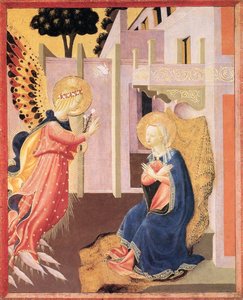
      The Annunciation by Zanobi Strozzi captures a suspended moment of divine interruption. Created about 1440-5, the painting depicts the Archangel Gabriel arriving to deliver a celestial message to the Virgin Mary. A single dove, representing the Holy Ghost, descends with a gilded halo above the angel's head. The scene is framed by the quiet weight of classical columns, separating the celestial messenger from the woman receiving the news.

      Handmålad oljereproduktion från $220 37 × 27 cm Samma storlek som originalet $668 142 × 105 cm Beställ i originalstorlek →
      Virgin and Child with Four Angels and the Redeemer (1450) av Zanobi Strozzi
      4

      Virgin and Child with Four Angels and the Redeemer

      1450 · Tempera On Panel · Brooklyn Museum, Brooklyn

      The air within the sacred space feels heavy with the scent of old wood and the silent weight of devotion. At the center of this celestial assembly, the Virgin Mary sits with a quiet, solemn grace, her presence anchoring the entire composition. She holds the Christ Child, whose small form is framed by the deep, ultramarine blue of her mantle and the rich crimson of her tunic. Around them, four…

      Handmålad oljereproduktion från $345 25 × 40 cm Samma storlek som originalet $445 51 × 79 cm Beställ i originalstorlek →
      Scenes from the Story of Susanna: Susanna and the Elders (1450) av Zanobi Strozzi
      5

      Scenes from the Story of Susanna: Susanna and the Elders

      1450 · Tempera On Panel · Musée du Petit Palais, Avignon

      The panel stretches wide, a long horizontal sequence of moments captured in tempera. It unfolds like a silent play, divided into three distinct stages of a biblical drama. On the far left, the heavy lines of an interior architectural setting frame the beginning of the tension. The center shifts to an outdoor garden, where a circular structure anchors the composition. Finally, the eye moves to the right, toward a landscape…

      Handmålad oljereproduktion från $770 55 × 18 cm Samma storlek som originalet $976 170 × 43 cm Beställ i originalstorlek →
      Saints Zenobius, Francis and Anthony of Padua (1450) av Zanobi Strozzi
      6

      Saints Zenobius, Francis and Anthony of Padua

      1450 · Tempera On Panel · Yale University Art Gallery, New Haven

      This Renaissance-era religious panel painting presents three saints arranged side-by-side in a vertical, frontal composition. The figures occupy a shallow space against a background of patterned gold leaf, which creates a flat, celestial setting. On the left, a figure is dressed in episcopal regalia, including a mitre, and holds a book. The central figure is depicted in a brown monastic habit with hands clasped in prayer. To the right, the…

      Handmålad oljereproduktion från $245 25 × 40 cm Samma storlek som originalet $330 47 × 77 cm Beställ i originalstorlek →
      Altarpiece of Saint Jerome (1460) av Zanobi Strozzi
      7

      Altarpiece of Saint Jerome

      1460 · Tempera On Panel · Musée du Petit Palais, Avignon

      The Altarpiece of Saint Jerome is a significant work by the Florentine painter Zanobi Strozzi. Created about 1460, this large-scale panel was originally commissioned for the convent of San Girolamo in Fiesole. The commission for this religious work was awarded by the Medici, reflecting the close ties between the artist and the influential family during the Quattrocento.

      Handmålad oljereproduktion från $520 34 × 29 cm Samma storlek som originalet $1576 217 × 156 cm Beställ i originalstorlek →
      The Last Judgement (1456) av Zanobi Strozzi
      8

      The Last Judgement

      1456 · Tempera On Panel · Gemäldegalerie, Berlin

      The Last Judgement, also known as Das Jüngste Gericht, is a work by Zanobi Strozzi. Created in 1456, the painting emerged from the hands of Zanobi di Benedetto di Caroccio degli Strozzi. This Florentine artist, born in Florence, Italy, brought a specific precision to the panel. The wood of the support is poplar.

      Handmålad oljereproduktion från $1520 37 × 27 cm
      The Annunciation (1453) av Zanobi Strozzi
      9

      The Annunciation

      1453 · Tempera On Panel · Philadelphia Museum of Art, Philadelphia

      The artwork depicts the Annunciation scene, a sacred moment of divine communication. The composition centers on two figures: an angel presenting lilies to Mary, who is seated in a state of prayer and sudden awareness. The angel's pink gown features the gold-lettered greeting "Ave Maria" within its folds. Mary is characterized by the deep blue of her mantle and a posture of stillness. A single dove, representing the Holy Spirit,…

      Handmålad oljereproduktion från $220 28 × 35 cm Samma storlek som originalet $224 30 × 37 cm Beställ i originalstorlek →
      The Nativity (1436) av Zanobi Strozzi
      10

      The Nativity

      1436 · Tempera On Panel · Metropolitan Museum of Art, New York

      The Nativity is a painting by Zanobi Strozzi, an artist born in 1412 in Florence, Italy. He remained in Florence until his death in 1468. This specific work is attributed to Strozzi and is also identified by the alternative title, Adoration of the Child.

      Handmålad oljereproduktion från $245 27 × 36 cm

      Fler canvasmålningar av Zanobi Strozzi, 11 till 25

      St Agnes (1448) av Zanobi Strozzi
      #17

      St Agnes

      1448 · Convento di San Marco

      The tempera panel painting, “St Agnes,” attributed to Zanobi Strozzi and completed in 1448, is more than simply a depiction of a saint; it's a meticulously crafted window…

      Ta hem detta ljus från $195 →
      The Nativity (1433) av Zanobi Strozzi
      #22

      The Nativity

      1433 · Metropolitan Museum of Art

      The Nativity is a painting by Zanobi Strozzi. This work, also identified by the alternative title Adoration of the Child, captures a quiet moment of devotion. The artist…

      Beställ denna canvas från $195 →

      Zanobi Strozzis dukar, period för period

      Mest målat av Zanobi Strozzi

      De fyra motiv som oftast återkommer på dessa dukar, var och en med sitt mest älskade exempel.

      Där Zanobi Strozzis dukar hänger

      De 8 museer som innehar flest av målningarna på denna sida.

      Museum Stad Verk av Zanobi Strozzi Målningar från denna lista
      National Gallery, LondonNational Gallery London 3 The Annunciation, The Adoration of the Magi, The Abduction of Helen
      Metropolitan Museum of Art, New YorkMetropolitan Museum of Art New York 3 The Nativity, Initial B with David in Prayer, The Nativity
      Convento di San Marco, FlorensConvento di San Marco Florens 2 Madonna and Child with Angels, St Agnes
      Musée du Petit Palais, AvignonMusée du Petit Palais Avignon 2 Scenes from the Story of Susanna: Susanna and the Elders, Altarpiece of Saint Jerome
      Walters Art Museum, BaltimoreWalters Art Museum Baltimore 2 Book of Hours for the Use of Rome (Folios 169v-170r), Book of Hours for the Use of Rome (Folios 14v-15r)
      Brooklyn Museum, BrooklynBrooklyn Museum Brooklyn 1 Virgin and Child with Four Angels and the Redeemer
      Yale University Art Gallery, New HavenYale University Art Gallery New Haven 1 Saints Zenobius, Francis and Anthony of Padua
      Gemäldegalerie, BerlinGemäldegalerie Berlin 1 The Last Judgement

      Zanobi Strozzis mest älskade dukar för varje decennium

      1. 1430s
        Madonna and Child with Angels (1434) av Zanobi Strozzi
        Rankad 1 av 25

        Madonna and Child with Angels

        Ålder 18 – 27 · Convento di San Marco

        A Vision of Divine Grace: Zanobi Strozzi's Madonna and Child with Angels To gaze upon this masterpiece by Zanobi Strozzi is to step directly into the luminous heart…

      2. 1440s
        The Annunciation (1442) av Zanobi Strozzi
        Rankad 3 av 25

        The Annunciation

        Ålder 28 – 37 · National Gallery

        The Annunciation by Zanobi Strozzi captures a suspended moment of divine interruption. Created about 1440-5, the painting depicts the Archangel Gabriel arriving to deliver a celestial message to…

      3. 1450s
        Camaldolese Friars in Choir (1450) av Zanobi Strozzi
        Duk 2 av 25

        Camaldolese Friars in Choir

        Ålder 38 – 47

        In this 1450 composition, we find ourselves drawn into a quiet, sacred space where time seems to have slowed. A group of Camaldolese friars is gathered in a…

      4. 1460s
        Altarpiece of Saint Jerome (1460) av Zanobi Strozzi
        Rankad 7 av 25

        Altarpiece of Saint Jerome

        Ålder 48 – 56 · Musée du Petit Palais

        The Altarpiece of Saint Jerome is a significant work by the Florentine painter Zanobi Strozzi. Created about 1460, this large-scale panel was originally commissioned for the convent of…

      Om Zanobi Strozzis dukar: dina frågor besvarade

      Vilken är den mest kända målningen av Zanobi Strozzi?Läs svaret

      Madonna and Child with Angels (1434), Convento di San Marco, Florens. Camaldolese Friars in Choir (1450) och The Annunciation (1442) följer.

      Hur gammal var Zanobi Strozzi när Madonna and Child with Angels målades?Läs svaret

      Zanobi Strozzi, född 1412, var 22 år gammal: Madonna and Child with Angels är från 1434.

      Vilka är de 10 mest kända målningarna av Zanobi Strozzi?Läs svaret

      Madonna and Child with Angels, Camaldolese Friars in Choir, The Annunciation, Virgin and Child with Four Angels and the Redeemer, Scenes from the Story of Susanna: Susanna and the Elders, Saints Zenobius, Francis and Anthony of Padua, Altarpiece of Saint Jerome, The Last Judgement, The Annunciation och The Nativity. Varje duk i rankningen ovan anges med sitt årtal och sitt museum.

      Hur många verk målade Zanobi Strozzi totalt?Läs svaret

      26 verk av Zanobi Strozzi finns i vår katalog, daterade 1433 till 1463.

      Var kan jag se Zanobi Strozzis mest kända målningar?Läs svaret

      Främst i National Gallery (London), Metropolitan Museum of Art (New York) och Convento di San Marco (Florens); listan ovan listar varje museum och dess målningar.

      När målade Zanobi Strozzi sina mest älskade dukar?Läs svaret

      Under 1450s, som utgör 9 av de 25 verk som finns på denna sida, varav Camaldolese Friars in Choir av dem.

      Vilka är Zanobi Strozzis tidigaste och senaste kända målningar?Läs svaret

      Den tidigaste duken här är The Nativity (1433); den senaste är Book of Hours for the Use of Rome (1463).

      Vad målade Zanobi Strozzi oftast?Läs svaret

      Woman (10), People (7) och Angels (6), fördelat på 25 verk på denna sida.

      Vilket medium målade Zanobi Strozzi oftast i?Läs svaret

      Tempera On Panel, som används i 19 av de 25 verk som finns på denna sida.

      Vilken konstinriktning tillhör Zanobi Strozzis målning?Läs svaret

      Early renaissance, som dukarna på denna sida visar.

      Vilka av Zanobi Strozzis dukar hänger på National Gallery?Läs svaret

      National Gallery, London har 3 av verken på denna sida, bland annat The Annunciation, The Adoration of the Magi och The Abduction of Helen.

      Kan jag köpa en reproduktion av en Zanobi Strozzi på duk?Läs svaret

      Ja. Varje målning på denna sida kan beställas från sin egen sida som en handmålad oljereproduktion, eller som ett konsttryck i den storlek du väljer.

      Zanobi Strozzi: ett liv i färg

      Den florentinska visionären: Zanobi Strozzi – liv och arv

      Under den florentinska renässansens guldålder, en tid då ljus och skugga började dansa med en nyfunnen humanistisk djupdimension, framträdde namnet Zanobi Strozzi som en livsviktig tråd i stadens konstnärliga väv. Zanobi föddes 1412 in i den illustra Strozzi-familjen, och hans tidiga liv formades av de djupgående politiska skiftena i Florens. Trots att hans härkomst knöt honom till adeln, drev faderns förtidiga död – när Zanobi bara var femton år gammal – honom mot en annan sorts öde. Denna period av personlig förlust ledde honom in i den förvandlande omfamningen av en lärlingsutbildning under Battista di Biagio Sanguigni, ett mentorskap som slutligen skulle förfina hans hand och ingjuta den tekniska precision som krävdes för att bemästra den delikata konsten med manuskriptillumination och panelmåleri.

      Strozzis konstnärliga utveckling var djupt sammanflätad med sin tids andliga och estetiska strömningar. Hans mest betydelsefulla koppling var dock relationen till den vördade Fra Angelico. Som elev inom denna inflytelserika krets nöjde sig Strozzi inte med att bara efterlikna mästaren; han absorberade en djup känsla av hängivenhet och ett lysande förhållningssätt till färg som skulle bli kännetecken för hans egen stil. Detta samspel möjliggjorde en vacker stilistisk konvergens, där det eteriska, gudomliga ljuset som var karakteristiskt för Fra Angelico mötte Strozzi noggranna öga för detaljer. Hans verk överbryggade ofta klyftan mellan de intima, miniatyriserade världarna i illuminerade manuskript och den storslagna, känslosamma närvaron i religiösa altartavlor.

      Mästerskap i detalj och andlig skönhet

      Omfånget av Strozzis talang blir som tydligast i hans förmåga att navigera mellan olika medier med lika stor elegans. Han var en mästret av tempera på panel, ett medium som krävde enormt tålamod och en stadig hand för att uppnå de vibrerande, juvellika toner som syns i hans religiösa verk. Hans repertoar inkluderade flera betydelsefulla altartavlor och gripande skildringar av Jungfrun och barnet, stycken utformade för att väcka djup andlig reflektion hos betraktaren. I dessa verk använde Strozzi den florentinska tidiga renässansstilen för att väva samman berättelser om tro, där mjuka övergångar och intrikata mönster gav liv åt de heliga gestalterna.

      Utöver de större panelerna uppnådde Strozzi legendarisk status genom sina bidrag till manuskriptillumination. Hans förmåga att bemästra små ytor gjorde det möjligt för honom att skapa miniatyrvärldar av en svindlande komplexitet. Några av hans mest framstående konstnärliga prestationer inkluderar:

      • Sankt Cosmas och Damian räddade från drunkningsdöden: Ett mästerverk från 1435 som fångar ett gripande ögonblick av gudomligt ingripande, och som visar hans skicklighet i att skildra gemensam tro och dramatisk rörelse.
      • Sankta Agnes: Skapad 1448, detta verk exemplifierar hans förmåga att framställa fridfulla profilporträtt mot bakgrund av virvlande, dekorativa mönster som lyfter fram periodens elegans.
      • Tideboken för användning i Rom: Ett bevis på hans skicklighet som illuminatör, där varje folio fungerar som ett fönster in i det noggranna hantverket i det florentinska skriptoriet.

      Ett bestående avtryck på renässansen

      Zanobi Strozzis historiska betydelse ligger i hans roll som en bro mellan den medeltida traditionen av dekorativ illumination och renässansens framväxande fokus på mänsklig känsla och naturalism. Även om mycket av hans arbete var avsett för privat andakt inom Florens storslagna residens, spreds hans inflytande genom stadens verkstäder. Han hjälpte till att sprida en specifik form av florentinsk skönhet – en som var både intellektuellt rigorös och känslomässigt tillgänglig. Genom hans händer framställdes helgonens och Jungfru Marias heliga berättelser med en klarhet och livfullhet som fångade själva essensen av Quattrocento-andan.

      Trots att han gick bort 1468 och lämnade efter sig ett arv etsat i bladguld och tempera, förblir Strozzi en symbol för konstnärens förmåga att finna djup mening i det lilla. Hans liv, präglat av resan från en adlig föräldralös till en hyllad mästare, speglar Florens egen förvandling: en resa från det förflutnas strukturerade traditioner mot renässansens lysande, människocentrerade briljans.