


 Переглянути в інтер'єрі
 Надіслати
 Поділитися
 Деталі
 Посібник

 Завантажити
 Схожі предмети колекціонування
 Рентгенівське дослідження
 Слайд-шоу
 Статистика переглядів
Еліяху
 Акрил на полотні
- Настінне мистецтво
- Bezalel School Style
 1916
1916 90.0 x 91.0 cm
 Музей Ізраїлю
Еліяху від Wolf Rawicki (Ravitzki) – розкішна вишивка у стилі Бецалельської школи, Яерушалем. Символ юдейської традиції та національного відродження Ізраїлю. Купити репродукцію онлайн!
 Читати далі
Wolf Rawicki (Ze’ev Raban): Israeli painter & designer of the Bezalel School. Known for decorative art, industrial design & iconic works like the Capitoline Wolf.
Мистецький твір, представлений на цій сторінці, захищений законом про авторське право, що унеможливлює легальне створення або продаж його ідентичної репродукції. Цей захист забезпечується відповідно до міжнародних угод, таких як Бернська конвенція та національним законодавством, зокрема положеннями, що викладені в Законодавство США про авторське право — Розділ 17. Всі права захищені. Будь-яке використання без дозволу заборонено.
Як шанобливу та законну альтернативу, ми пропонуємо унікальні картини ручної роботи, створені натхненням від оригіналу. Наші досвідчені професійні художники ретельно вивчають стиль, настрій та художню сутність оригіналу, щоб створити новий, неповторний твір, який викликає ті ж почуття, — залишаючись при цьому самобутнім творінням.
Цей метод повністю відповідає нормам авторського права, оскільки він не передбачає копіювання чи дублювання захищеного твору мистецтва. Натомість це творче переосмислення — створення нового малюнка під впливом оригіналу, який не є його точним відтворенням.
Олійная репродукція ручної роботи
Написана вручну олією на полотні у вашому розмірі та рамі, виготовлена на замовлення нашими художниками. ( Перейти до друку Перейти до цифрових зображень)




P118B ₴10

P118H ₴10

P118W ₴10

P438Z ₴10

P508JH ₴12

P508YH ₴12

P805H ₴10

P805Z ₴10

P919BZ ₴10

P919G ₴10

P919XJ ₴10

P959ZH ₴10

P968JZ ₴12

W106C ₴8

W218G ₴10

W218JH ₴8

W218Y ₴10

W307PJ ₴10

W316G ₴10

W316PJ ₴8

W316Y ₴10

W398PJ ₴8

W4111J ₴10

W500HY ₴15

W500JH ₴15

W692G ₴12

W849H ₴8

W940BG ₴15

W953PJ ₴8




Стандартний розмір
на замовлення
CM
INCH
Обирайте з наших стандартних розмірів, що відповідають оригінальним пропорціям твору мистецтва.
Loading sizes...

ширина
висота
Введіть необхідну ширину та висоту, щоб картина підійшла до вашої рами або стіни. Оскільки це ручний розпис, для розміру іншої форми художник може написати трохи більше навколо картини або трохи обрізати її — вибір за вами. Перед початком роботи ми надішлемо вам цифровий макет для затвердження. Зображення, показане на цій сторінці, не є реальним результатом — лише макет відображає майбутній вигляд.
Приклади можливих змін: замінити обличчя на фото клієнта; додати домашню тварину (наприклад, замінити кота на собаку); додати приховане повідомлення на фоні; змінити ландшафт або елементи фону.
Після оформлення замовлення команда TopImpressionists.com зв'яжеться з клієнтом електронною поштою для отримання інструкцій та надасть попередній макет
Після оформлення замовлення команда TopImpressionists.com зв'яжеться з клієнтом електронною поштою для отримання інструкцій та надасть попередній макет
Доставка по всьому світу () за 3–4 тижні замість стандартних 5 тижнів. (24 Жовтень). Без жодних компромісів у якості.

Безкоштовна експрес-доставка по всьому світу

Високоякісне лляне полотно

Повне страхове покриття доставки

Гарантія повернення митних зборів

Гарантія точного відтворення кольорів

Політика повернення протягом 100 днів (лише у разі виявлення дефектів)

Гарантія повернення 100% коштів

Знижка на оптові замовлення
 Скляний варіант доступний лише для розмірів до 110 см

Еліяху
Техніка репродукції
Розмір репродукції
-


Загальна вартість
₴ 12093
Еліяху – Шедевр Бецалельской Школы и Символ Еврейской Духовности
Еліяху, картина Вольфа Равицкого (Равитски), созданная в 1916 году, является одним из самых значительных произведений искусства начала XX века и выдающимся примером стиля Бецалельской школы. Эта работа представляет собой не только великолепное декоративное искусство, но и глубокое отражение еврейской культуры и религиозных традиций эпохи Золотого Века Цionista. Картина была приобретена через щедрый дар Йосси Беняминоффа из Нью-Йорка и теперь находится в коллекции Израильского музея в Иерусалиме.- Художник: Вольф Равицкий (Равитски) был одним из основателей израильской художественной школы и признанным мастером декоративного искусства и промышленного дизайна. Его творчество оказало огромное влияние на формирование эстетического языка Золотого Века Цionista.
- Год создания: 1916 – Эта дата символизирует начало новой эры в истории еврейской культуры и искусства, когда художники стремились выразить национальное самосознание через использование религиозных и исторических мотивов.
- Размеры: Картина имеет размеры 90 х 91 см и является крупным произведением искусства, демонстрирующим мастерство Бецалельской школы в создании масштабных декоративных объектов.
- Материалы: Основной материал работы – дерево, инкрустированное золотом и другими драгоценными металлами, что подчеркивает роскошь и богатство стиля Бецалельской школы.
Описание Картины и Стиль Бецалельской Школы
Картина изображает Элияху – пророка еврейской традиции, который считается защитником каждого крещения и является символом веры и надежды для еврейского народа. Композиция выполнена в стиле Бецалельской школы, характеризующимся использованием классических мотивов из Библии и еврейской истории. Художники стремились создать эстетический язык, который бы вдохновлял национальное самосознание и передавал духовное наследие предыдущих поколений. Особое внимание уделено деталям изображения Элияху и окружающему его пространству, что создает ощущение глубины и реалистичности.- Стиль: Бецалельская школа сочетает в себе элементы классической живописи и декоративного искусства, создавая уникальный художественный язык.
- Техника: Картина выполнена методом инкрустации дерева и использованием различных техник резьбы и росписи для создания сложной и детализированной композиции.
- Цветовая палитра: Преобладают теплые оттенки коричневого и бежевого цвета, которые подчеркивают благородство материала и создают атмосферу спокойствия и гармонии. Акценты золота и бронзы добавляют картине роскошь и торжественность.
Символизм Картины и Его Значение для Еврейской Культуры
Элияху в изображении Равицкого является символом еврейской веры и надежды, а также связью между прошлым и настоящим еврейской историей. Использование библейских сцен и эмблем древних племен подчеркивает важность религиозных традиций и укрепляет национальное самосознание. Картина отражает идею Бецалельской школы о необходимости сохранения культурного наследия и передачи его следующим поколениям художников. Она является прекрасным примером искусства Золотого Века Цionista и вдохновляет зрителей на размышления о духовных ценностях и истории еврейского народа. Картина Элияху – это не просто произведение искусства, но и свидетельство богатой культуры и традиций еврейской цивилизации.Рекомендации по Декору и Использованию Репродукции
Картина Элияху идеально дополнит интерьер в стиле модерн или классический стиль, создавая атмосферу элегантности и благородства. Высококачественная репродукция позволит сохранить красоту оригинала и привнести элементы еврейской культуры в ваш дом. Она станет прекрасным подарком для любителей искусства и истории и подчеркнет вашу любовь к традициям и культуре Израиля.Запитання та відповіді
Який рівень контрасту має «Еліяху» Wolf Rawicki (Ravitzki)?
Рівень контрасту твору «Еліяху» Wolf Rawicki (Ravitzki) становить Заява.
Який основний відтінок пронизує «Еліяху» Wolf Rawicki (Ravitzki)?
«Еліяху» має відтінок, що схиляється до Теплі відтінки заходу сонця.
Коли та з яких матеріалів було створено «Еліяху»?
Техніка виконання «Еліяху» Wolf Rawicki (Ravitzki) — Акрил на полотні, а дата створення твору — 1916.
Біографія митця
The Pioneering Vision of Ze’ev Raban: From Rawicki to the Soul of Israeli Art
Ze’ev Raban, born Wolf Rawicki in Kaunas, Russia, in 1890, stands as a monumental figure in the genesis of Israeli art. His journey wasn't merely that of an artist finding his voice; it was the forging of a new aesthetic identity for a nation yearning to express itself. Rawicki’s early life, steeped in the cultural currents of Eastern Europe, laid the foundation for a career dedicated to synthesizing tradition and modernity, culminating in works that became iconic symbols of a burgeoning national consciousness. He wasn't simply *a* painter; he was an architect of visual culture, deeply involved in shaping the artistic landscape of the nascent State of Israel.
Early Formation & The Bezalel School
Rawicki’s formal training took him across Europe – Munich, Paris, and Brussels – exposing him to the prevailing styles of the early 20th century. He absorbed the lessons of Jugendstil, Symbolism, and Art Nouveau, but these influences were never adopted wholesale. A crucial turning point came with his arrival at Bezalel Academy in Jerusalem in 1906. Bezalel, founded by Boris Schatz, was more than an art school; it was a crucible for creating a distinctly “Hebrew style.” This wasn’t about replicating historical forms but rather excavating the spirit of Jewish culture and translating it into contemporary artistic expression. Raban quickly became a central figure in this endeavor, embracing the challenge of defining what that aesthetic might look like.
A Synthesis of Tradition & Modernity
Raban's work is characterized by a remarkable ability to blend diverse influences. He sought inspiration not only from European art movements but also from traditional Jewish crafts, Islamic motifs, and the archaeological discoveries unfolding in Palestine. This fusion manifested in his decorative arts – silver Hanukkah lamps, ceremonial objects, furniture—where intricate carvings and stylized forms evoked ancient patterns while remaining firmly rooted in a modern sensibility. He believed that true Hebrew art wasn’t about imitation but about *interpretation* – distilling the essence of Jewish heritage into new artistic languages. His designs weren't merely beautiful; they were imbued with symbolic meaning, reflecting a deep connection to history and faith.
Major Achievements & The Capitoline Wolf
While Raban excelled in numerous mediums, his impact extended beyond individual artworks. He was instrumental in establishing the aesthetic principles of early Israeli design, influencing everything from typography to public monuments. Perhaps his most enduring legacy is the “Capitoline Wolf,” a silver menorah created for the Hebrew University on Mount Scopus in 1926. This piece, inspired by the Roman wolf that suckled Romulus and Remus, became a powerful symbol of Jewish resilience and national aspiration. It wasn’t simply a religious object; it was a statement about reclaiming heritage and forging a new future. The menorah's design, incorporating stylized Hebrew letters and motifs, resonated deeply with the Zionist movement and solidified Raban’s position as a leading artistic voice.
Historical Significance & Lasting Influence
Ze’ev Raban died in 1970, leaving behind a body of work that continues to inspire. He wasn't just an artist; he was a cultural pioneer who helped define the visual identity of Israel. His commitment to synthesizing tradition and modernity, his dedication to creating a distinctly Hebrew aesthetic, and his ability to imbue objects with profound symbolic meaning cemented his place as one of the most important figures in Israeli art history. His influence can be seen in the work of subsequent generations of artists and designers, who continue to grapple with the challenges of balancing cultural heritage with contemporary expression. Raban’s legacy is a testament to the power of art to shape national identity and inspire a sense of belonging.

Wolf Rawicki (Ravitzki)
1890 - 1970 , Russia
Довідкова інформація
- Full Name: Ze'ev Raban
- Nationality: Israeli
- Date Of Birth: 1890
- Date Of Death: 1970
- Place Of Birth: Kaunas, Russia
- Notable Artworks:
- Elijah
- Standing Hanukkah Lamp
- Capitoline Wolf
- Artistic Movement Or Style: Bezalel School Style
Схожі статті

The Barbizon School: The Soulful Origins of Impressionism's Natural Light and Atmospheric Mastery
Discover the profound influence of the Barbizon School on Impressionism. Explore how these masters captured natural light and atmospheric beauty through plein air painting, paving the way for Monet and Renoir. A journey into the soulful origins of landscape art history.

Capturing the Light: A Journey Through the Soul of American Impressionism and the Hudson River School
Explore the luminous beauty of American Impressionism and the Hudson River School. Discover a curated journey through light, landscape, and history, celebrating the enduring legacy of masters through exquisite, hand-painted oil reproductions for the discerning art lover.
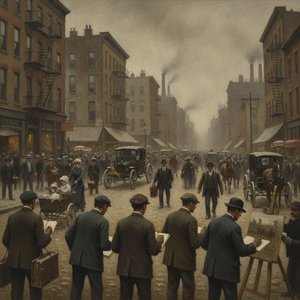
The Ashcan School: Capturing the Raw, Unfiltered Soul of Urban Life through American Realism
Discover the raw beauty of the Ashcan School. Explore how masters like Bellows and Henri captured the gritty, vibrant soul of early 20th-century New York through profound American Realism and evocative urban landscapes.
Досліджуйте твори мистецтва, впорядковані за темами, стилями та характеристиками.
