

1
Domorganist i Roskilde, professor Hans Matthison-Hansen,kunstnerens svigerfader
Копія олією ручної роботи від $195 28 × 35 cm
Розмір як у оригіналу $365 71 × 88 cm Замовити в оригінальному розмірі →
Domorganist i Roskilde, professor Hans Matthison-Hansen,kunstnerens svigerfader (1872) — це картина, у якій найкраще втіджен талант August Jerndorff; вона зберігається в Statens Museum For Kunst, Копенгаген. Flora Elisabeth Sophie Hellesen, f. Top (1874) та Studie af en ung pige (1876) доповнюють трійку найулюбленіших полотен. Наш каталог налічує 24 робіт August Jerndorff. Ось 24 найвідоміших із них із зазначенням року, музею та історії кожного полотна.
Рейтинг сформовано на основі нашого показника популярності, що поєднує кількість пошукових запитів, переглядів та замовлень для кожної роботи. Оновлено Листопад 2026. Кожну картину на цій сторінці можна замовити як олійну репродукцію, написану вручну на лляному полотні, або як художній принт, виготовлений за обраним вами розміром.


3 музеїв, у яких зберігається більшість картин із цього списку.
| Музей | Місто | Твори August Jerndorff | Картини зі цього списку |
|---|---|---|---|
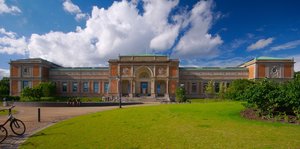 Statens Museum For Kunst |
Копенгаген | 10 | Domorganist i Roskilde, professor Hans Matthison-Hansen,kunstnerens svigerfader, Flora Elisabeth Sophie Hellesen, f. Top, Studie af en ung pige |
 Національний музей мистецтва, архітектури та дизайну |
Осло | 7 | "Og dybere bøjede Heksen sig ned over den hvide hals...", "da saa' jeg op paa ham, han ned paa mig...", Illustrasjon til Holger Drachmanns "Elverkongen" i "Troldtøj", København 1889-1890 |
 The Museum of National History at Frederiksborg Castle |
Гіллеред | 2 | Portrait of the Danish brewer J. C. Jacobsen, founder of the Carlsberg breweries., Painting of General Olaf Rye |


Domorganist i Roskilde, professor Hans Matthison-Hansen,kunstnerens svigerfader (1872), Statens Museum For Kunst, Копенгаген. Далі — Flora Elisabeth Sophie Hellesen, f. Top (1874) та Studie af en ung pige (1876).
August Jerndorff, народився у 1846, мав 26 років: Domorganist i Roskilde, professor Hans Matthison-Hansen,kunstnerens svigerfader датована 1872 роком.
Domorganist i Roskilde, professor Hans Matthison-Hansen,kunstnerens svigerfader, Flora Elisabeth Sophie Hellesen, f. Top, Studie af en ung pige, "Og dybere bøjede Heksen sig ned over den hvide hals...", "da saa' jeg op paa ham, han ned paa mig...", Fru Johanne Andersen, f. Schumacher, Arkitekten Thorvald Bindesbøll i en granskov på Kullen, Kunstnerens datter Margrethe, Portrait of the Danish brewer J. C. Jacobsen, founder of the Carlsberg breweries. та Painting of General Olaf Rye. Кожне полотно в рейтингу вище має зазначений рік створення та музей.
У нашому каталозі представлено 24 робіт автора August Jerndorff, датованих періодом з 1869 по 1895.
Переважно в Statens Museum For Kunst (Копенгаген), Національний музей мистецтва, архітектури та дизайну (Осло) та The Museum of National History at Frederiksborg Castle (Гіллеред); у списку вище наведено назву кожного музею та його полотна.
У 1890s, що охоплює 9 із 24 робіт на цій сторінці, серед них — "da saa' jeg op paa ham, han ned paa mig...".
Найдавніший холст тут датований Coastal scene from Marselisborg (1869), а найновіший — Painting of General Olaf Rye (1895).
У Statens Museum For Kunst, Копенгаген зберігається 10 творів із цієї сторінки, серед яких Domorganist i Roskilde, professor Hans Matthison-Hansen,kunstnerens svigerfader, Flora Elisabeth Sophie Hellesen, f. Top та Studie af en ung pige.
Так. Кожну картину на цій сторінці можна замовити на її окремій сторінці як рукописну олійну репродукцію або як художній принт у обраному вами розмірі.
Born in the historic atmosphere of Oldenburg, Lower Saxony, in 1846, August Andreas Jerndorff was destined for a life steeped in the fine arts. As the son of Just Ulrik Jerndorff, a painter to the Oldenburg Court, the language of color and form was his first inheritance. This early immersion in an artistic lineage provided him with a profound foundation, yet it was his journey toward the Royal Danish Academy of Fine Arts that would truly define his creative spirit. Between 1863 and 1868, Jerndorff refined his technical prowess under the guidance of masters like P. C. Skovgaard, beginning his career not as the portraitist he would become, but as a sensitive observer of the natural world through landscape painting.
The evolution of Jerndorff’s artistry is a captivating study in transition and refinement. While his early works captured the quiet majesty of the Danish countryside, a deeper yearning for human narrative soon drew him toward the complexities of the human face and the weight of spiritual themes. His travels to Italy between 1875 and 1878 acted as a transformative crucible; amidst the sun-drenched cityscapes and classical echoes of the Italian landscape, his brushwork gained a new dimension of depth. Though he remained largely untouched by the sweeping tides of European Realism, he possessed a unique ability to infuse his subjects with a psychological presence that felt both timeless and intensely personal.
Jerndorff’s contribution to the Danish art canon is most vibrantly felt in his monumental portraiture and his profound religious compositions. He possessed an uncanny ability to capture the dignity of his subjects, creating works that were not merely likenesses but windows into the character of the era. His portraits, many of which were commissioned for the prestigious Danish Museum of National History at Frederiksborg Castle, stand as enduring testaments to his skill in rendering texture, light, and emotion. Beyond the secular realm, Jerndorff’s devotion to Biblical subjects allowed him to explore the sublime. His religious works, such as the 12 Apostles for Jesus Church in Copenhagen and various altar pieces, demonstrate a masterful command of sacred iconography, blending classical reverence with a palpable sense of human drama.
His artistic reach extended far beyond the canvas, touching the very fabric of Danish decorative culture. In the mid-1880s, Jerndorff engaged in a spirited collaboration with other notable figures like Thorvald Bindesbøll and Joakim Skovgaard, working with ceramics to bridge the gap between fine art and functional beauty. This period of experimentation contributed to the foundation of the Dekorationsforeningen society, reflecting his belief that art should permeate all aspects of life.
The historical significance of August Jerndorff lies not only in his individual masterpieces but also in his role as a pillar of the Danish artistic community. He was a man of institutional influence, co-founding an alternative painting academy at Søkvæsthuset—a vital precursor to the Kunstnernes Frie Studieskoler—which challenged the rigid, outdated views of the established Academy. His ascent within the Royal Academy of Fine Arts, culminating in his appointment as a professor in 1891, ensured that his dedication to technical excellence and narrative depth would influence generations of subsequent painters.
As we reflect on his life, we see an artist who successfully navigated the tension between tradition and innovation. His legacy is preserved through:
Though he passed away in 1906, the quiet intensity of Jerndorff’s gaze remains etched in the history of Northern European art, reminding us of a time when the brush could capture both the majesty of the divine and the intimate truth of the human soul.


