Ательє — Безкоштовна доставка по всьому світу — Доставка: 2–6 тижнів
      Чімабуе, 1240 – 1302

      49 найвідоміших картин Чімабуе за рейтингом

      Найвідоміший витвір Чімабуе — це Насмішка над Христом (1280), який експонується в Лувр, Париж. Наступними серед полотен, які найкраще знають читачі, є Розп'яття (1287) та Святий Франциск Ассизький (деталь). Наш каталог містить 52 робіт Чімабуе: перед вами 49 найвідоміших, з указанням року створення, музею та особливостей, що роблять кожну з них незабутньою.

      Рейтинг сформовано на основі нашого показника популярності, що поєднує кількість пошукових запитів, переглядів та замовлень для кожної роботи. Оновлено Листопад 2026. Кожну картину на цій сторінці можна замовити як олійну репродукцію, написану вручну на лляному полотні, або як художній принт, виготовлений за обраним вами розміром.

      Портрет Чімабуе
      Чімабуе · 1240 – 1302
      Народився · помер
      1240 – 1302, Флоренція
      Рух
      Проторенесанс
      Роботи в нашому каталозі
      52
      Найвідоміші
      Насмішка над Христом (1280)
      Найбільше робіт у
      Галерея Уффіці

      10 найкращих картин Чімабуе: полотна, які знають усі

      Насмішка над Христом (1280) авторства Чімабуе
      1

      Насмішка над Христом

      1280 · Яєчна темпера на дерев'яній панелі · Лувр, Париж

      Повітря в межах картини здається важким, густим від напруги натовпу, що тисне з усіх боків. У центрі цього маленького дерев'яного світу стоїть Ісус, його тіло оповите глибокою синьою накидкою поверх червоної туніки. Він не чинить опору. Його руки безпорадно опущені, а вираз обличчя залишається незворушним, навіть коли постаті навколо нього сповнені агресії. Чоловік тягнеться вгору, намагаючись схопити край німба Христа, прагнучи позбавити його самого символу божественності. Навколо цієї центральної постаті…

      Копія олією ручної роботи від $620 28 × 36 cm
      Розп'яття (1287) авторства Чімабуе
      2

      Розп'яття

      1287 · Яєчна темпера на дерев'яній панелі · Museo dell'Opera di Santa Croce, Флоренція

      У серці Флоренції, у Basilica di Santa Croce, зберігається шедевр середньовісної іконографії – "Кружіль" (Crucifix) Кімбаче, створений близько 1287 року. Це не просто картина; це – вікно в епоху, коли традиційні форми християнського мистецтва поступово поступалися місцем новаторським ідеям раннього Ренесансу. Робота Кімбаче є свідченням його витонченого підходу до створення, що поєднує багату спадщину візантійської живопису з першими кроками на шляху до реалістичного зображення та емоційної глибини.

      Копія олією ручної роботи від $220 30 × 33 cm
      Святий Франциск Ассизький (деталь) авторства Чімабуе
      3

      Святий Франциск Ассизький (деталь)

      Акрил на полотні

      «Святий Франциск Ассизький (деталь)» роботи Чімабуе — це не просто зображення релігійної постаті; це пронизливе втілення зарождающегося гуманізму, який незабаром визначить епоху італійського Відродження. Написана приблизно у 1285–1290 роках, ця інтимна сцена закарбовує ніжний момент — обійми між Святим Франциском і маленькою дитиною, що випромінюють майже відчутну безтурботність. Твір слугує важливим свідченням ролі Чімабуе у переході західного мистецтва від жорсткої формальності візантійської іконографії до більш натуралістичного та емоційно насиченого стилю.…

      Копія олією ручної роботи від $195 23 × 43 cm
      Мадонна у величі (деталь) (1285) авторства Чімабуе
      4

      Мадонна у величі (деталь)

      1285 · Акрил на полотні · Галерея Уффіці, Флоренція

      Погляд Божественної Величі: Деталі «Мадонни у величі» Цімабуе Цей вишуканий фрагмент з «Мадонни у величі» Цімабуе, написаний у 1285 році, пропонує захоплююче вікно у період переходу від візантійської традиції до розквіту Відродження в італійському мистецтві. Маючи розміри 91 x 75 см, цей фрагмент уособлює духовний запал та художні інновації своєї епохи. Візантійське коріння та виникнення реалізму Цімабуе (бл. 1240–1302), народжений Ченні ді Пепо у Флоренції, є ключова фігура. Він відіграв…

      Копія олією ручної роботи від $220 29 × 35 cm Розмір як у оригіналу $410 75 × 91 cm Замовити в оригінальному розмірі →
      Мадонна в Величі (1285) авторства Чімабуе
      5

      Мадонна в Величі

      1285 · Яєчна темпера на дерев'яній панелі · Галерея Уффіці, Флоренція

      Уявіть собі момент, коли час зупиняється, а перед вами відкривається вікно у світ середньовіччя – епоху, що перетворювала духовне на мистецтво. Це – "Мадонна в Величі" (деталь) від генія Цімбуе, створена у 1285 році, і зараз зберігається в галереї Уффіці у Флоренції. Цей невеликий фрагмент, лише 48 на 39 сантиметрів, криє в собі величезну силу та історичну значущість – він є свідченням переходу від суворої, бізонтійської традиції до народження Відродження.…

      Копія олією ручної роботи від $195 29 × 35 cm Розмір як у оригіналу $224 39 × 48 cm Замовити в оригінальному розмірі →
      Розп'яття (1272) авторства Чімабуе
      6

      Розп'яття

      1272 · Яєчна темпера на дерев'яній панелі

      Розп'яття кимобуе виринає з тіней пізнього тринадцятого століття — глибокий релігійний твір, що закарбовує центральний момент розп'яття Ісуса Христа. Написана приблизно у 1272 році, ця композиція постає як могутня медитація на божественні страждання. Фігура Христа звисає на хресті, його тіло застигло в моменті глибокої агонії. Це сцена, що вимагає миттєвої, вісцеральної реакції від кожного, хто на неї дивиться.

      Копія олією ручної роботи від $195 26 × 38 cm
      Crucifix (1268) авторства Чімабуе
      7

      Crucifix

      1268 · Tempera On Panel · San Domenico, Арецо

      In the heart of Italian art history, Giovanni Cimabue stands as a monumental figure, a master who skillfully navigated the artistic currents flowing from the rigid grandeur of the Byzantine Empire toward the burgeoning innovations of the early Renaissance. His Crucifix is not merely a religious icon; it is a profound testament to a period of transformative change. Painted with an unwavering determination that earned him the nickname “bull-ed,” Cimabue…

      Копія олією ручної роботи від $195 28 × 35 cm
      Apocalyptical Christ (detail) (1280) авторства Чімабуе
      8

      Apocalyptical Christ (detail)

      1280 · Фреска

      Three angels surge upward in a vertical composition, their forms appearing to burst from the wall. This detail, part of a larger fresco cycle, captures a moment of urgent divine announcement. The figures possess elongated limbs and stylized silhouettes, a hallmark of the transition from the rigid Byzantine tradition toward a more naturalistic approach. Their movement is directed heavenward, mirroring the spiritual aspiration of the viewer. Each angel carries a…

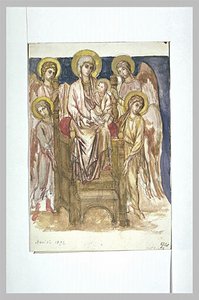
      Madonna Enthroned with the Child, St Francis and four Angels (detail) (1278) авторства Чімабуе
      9

      Madonna Enthroned with the Child, St Francis and four Angels (detail)

      1278 · Acrylic On Canvas

      Giovanni Cimabue's “Madonna Enthroned with the Child, St Francis and four Angels (detail)” – a captivating work from 1278 – isn’t merely a depiction of biblical figures; it’s a pivotal moment in the evolution of Western art. Born Cenni di Pepo in Florence, Cimabue was a courageous innovator who dared to subtly challenge the rigid conventions inherited from Byzantine iconography, laying the groundwork for the vibrant artistic revolution that would…

      Копія олією ручної роботи від $195 29 × 35 cm Розмір як у оригіналу $306 60 × 73 cm Замовити в оригінальному розмірі →
      Crucifix (detail) (1268) авторства Чімабуе
      10

      Crucifix (detail)

      1268 · Акрил на полотні · San Domenico, Арецо

      A Glimpse into Divine Sorrow: Cimabue’s *Crucifix (detail)* This exquisite detail from Cimabue's larger *Crucifix* (circa 1268) offers a profoundly moving encounter with the Virgin Mary and infant Jesus. Painted during a pivotal moment in art history, this work transcends mere religious iconography to become a powerful expression of maternal grief and spiritual contemplation. It’s a piece that resonates across centuries, offering both artistic beauty and emotional depth. Historical Context…

      Копія олією ручної роботи від $220 25 × 41 cm Розмір як у оригіналу $229 28 × 45 cm Замовити в оригінальному розмірі →

      Більше полотен Чімабуе, від 11 до 49

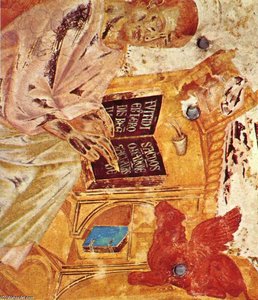
      St Luke (detail) (1280) авторства Чімабуе
      #17

      St Luke (detail)

      1280

      This captivating detail from Cimabue's fresco of St. Luke offers a profound window into a pivotal moment in art. Painted around 1280, the fragment focuses on St. Luke,…

      Vision of the Throne (1277) авторства Чімабуе

      The composition of Vision of the Throne by Cimabue is organized through a hierarchical and symmetrical arrangement. At the center of the work, a luminous mandorla encloses a…

      Miracle of Saint Peter (1277) авторства Чімабуе

      The air within the Upper Basilica in Assisi feels heavy with the weight of centuries, yet the scene unfolding on the plaster remains startlingly immediate. In this late…

      Vault of the Evangelists (1277) авторства Чімабуе

      To look upward within the Upper Church of San Francesco in Assisi is to encounter a ceiling that breathes with the weight of the late thirteenth century. The…

      Dormition (1277) авторства Чімабуе
      #40

      Dormition

      1277

      The transept of the Upper Basilica of San Francesco in Assisi holds this fragmented fresco, a scene of profound solemnity. It captures the death of the Virgin Mary,…

      Peter heals a lame man (1277) авторства Чімабуе

      The religious fresco titled Peter heals a lame man was executed by the artist Cimabue. This work captures a moment of divine intervention, where the apostle reaches out…

      Полотно Чімабуе за періодами творчості

      Florentine Dawn

      1280 – 1284 · 3 робіт у цьому списку

      Найпопулярніші роботи Чімабуе

      Чотири найпопулярніші сюжети на цих полотнах, кожен із найкращими зразками.

      Де виставляються полотна Чімабуе

      8 музеїв, у яких зберігається найбільша кількість картин із цього списку.

      Музей Місто Твори Чімабуе Картини зі цього списку
      Галерея Уффіці, ФлоренціяГалерея Уффіці Флоренція 5 Мадонна у величі (деталь), Мадонна в Величі, The Madonna in Majesty (Maestà)
      San Domenico, АрецоSan Domenico Арецо 4 Crucifix, Crucifix (detail), Crucifix (detail)
      Лувр, ПарижЛувр Париж 2 Насмішка над Христом, Virgin Enthroned with Angels
      Museo dell'Opera di Santa Croce, ФлоренціяMuseo dell'Opera di Santa Croce Флоренція 1 Розп'яття
      Muso dell'Opera del Duomo, ПізаMuso dell'Opera del Duomo Піза 1 Christ Enthroned between the Virgin and St John the Evangelist (detail)
      The Frick Collection, Нью-ЙоркThe Frick Collection Нью-Йорк 1 The Flagellation of Christ
      Santa Maria dei Servi, БолоньяSanta Maria dei Servi Болонья 1 Madonna Enthroned with the Child and Two Angels
      Національна галерея, ЛондонНаціональна галерея Лондон 1 The Virgin and Child Enthroned with Two Angels

      Найулюбленіші полотна Чімабуе кожної десятиліття

      1. 1260s
        Crucifix (1268) авторства Чімабуе
        Місце в рейтингу: 7 із 49

        Crucifix

        Вік 20 – 29 років · San Domenico

        In the heart of Italian art history, Giovanni Cimabue stands as a monumental figure, a master who skillfully navigated the artistic currents flowing from the rigid grandeur of…

      2. 1270s
        Розп'яття (1272) авторства Чімабуе
        6 з 49

        Розп'яття

        Вік 30 – 39 років

        Розп'яття кимобуе виринає з тіней пізнього тринадцятого століття — глибокий релігійний твір, що закарбовує центральний момент розп'яття Ісуса Христа. Написана приблизно у 1272 році, ця композиція постає як…

      3. 1280s
        Насмішка над Христом (1280) авторства Чімабуе
        1 з 49

        Насмішка над Христом

        Вік 40 – 49 років · Лувр

        Повітря в межах картини здається важким, густим від напруги натовпу, що тисне з усіх боків. У центрі цього маленького дерев'яного світу стоїть Ісус, його тіло оповите глибокою синьою…

      4. 1290s
        Virgin Enthroned with Angels (1290) авторства Чімабуе
        32 з 49

        Virgin Enthroned with Angels

        Вік 50 – 59 років · Лувр

        A Dawn of Innovation: Cimabue’s Virgin Enthroned with Angels Giovanni Cimabue, born Cenni di Pepo around 1240 in Florence, represents a pivotal moment in the artistic landscape—a courageous…

      5. 1300s
        Christ Enthroned between the Virgin and St John the Evangelist (detail) (1301) авторства Чімабуе
        Місце в рейтингу: 11 із 49

        Christ Enthroned between the Virgin and St John the Evangelist (detail)

        Вік 60 – 62 років · Muso dell'Opera del Duomo

        Giovanni Cimabue (c. 1240 – 1302), born Cenni di Pepo in Florence, stands as a monumental figure—a bridge between the established artistic traditions of the Byzantine world and…

      Про полотна Чімабуе: відповіді на ваші запитання

      Яка найвідоміша картина Чімабуе?Прочитати відповідь

      Насмішка над Христом (1280), Лувр, Париж. Далі — Розп'яття (1287) та Святий Франциск Ассизький (деталь).

      Скільки років було Чімабуе, коли було написано Насмішка над Христом?Прочитати відповідь

      Чімабуе, народився у 1240, мав 40 років: Насмішка над Христом датована 1280 роком.

      Які 10 найвідоміших картин Чімабуе?Прочитати відповідь

      Насмішка над Христом, Розп'яття, Святий Франциск Ассизький (деталь), Мадонна у величі (деталь), Мадонна в Величі, Розп'яття, Crucifix, Apocalyptical Christ (detail), Madonna Enthroned with the Child, St Francis and four Angels (detail) та Crucifix (detail). Кожне полотно в рейтингу вище має зазначений рік створення та музей.

      Скільки всього робіт написав Чімабуе?Прочитати відповідь

      У нашому каталозі представлено 52 робіт автора Чімабуе, датованих періодом з 1268 по 1301.

      Де я можу побачити найвідоміші полотна Чімабуе?Прочитати відповідь

      Переважно в Галерея Уффіці (Флоренція), San Domenico (Арецо) та Лувр (Париж); у списку вище наведено назву кожного музею та його полотна.

      Коли Чімабуе написав свої найвідоміші полотна?Прочитати відповідь

      У 1280s, що охоплює 20 із 49 робіт на цій сторінці, серед них — Насмішка над Христом.

      Які найранніші та найпізніші відомі полотна Чімабуе?Прочитати відповідь

      Найдавніший холст тут датований Crucifix (1268), а найновіший — Christ Enthroned between the Virgin and St John the Evangelist (detail) (1301).

      Що найчастіше писав Чімабуе?Прочитати відповідь

      Medieval art (11), Angels (11) та Religious iconography (10), у 49 роботах на цій сторінці.

      Якою технікою найчастіше користувався Чімабуе?Прочитати відповідь

      Tempera On Panel, використано у 9 з 49 робіт на цій сторінці.

      До якого напряму належить картина Чімабуе?Прочитати відповідь

      Проторенесанс, як свідчать полотна на цій сторінці.

      Які полотна Чімабуе виставлені в Галерея Уффіці?Прочитати відповідь

      У Галерея Уффіці, Флоренція зберігається 5 творів із цієї сторінки, серед яких Мадонна у величі (деталь), Мадонна в Величі та The Madonna in Majesty (Maestà).

      Чи можу я купити репродукцію полотна Чімабуе?Прочитати відповідь

      Так. Кожну картину на цій сторінці можна замовити на її окремій сторінці як рукописну олійну репродукцію або як художній принт у обраному вами розмірі.

      Чімабуе: життя у фарбах

      The Life and Identity of Cimabue

      In the bustling streets of Florence, Italy, a man named Giovanni Cimabue began his life around 1240. He was known to many by the names Cenni di Pepo or Cenni di Pepi, names that belonged to a man destined to shape the visual language of his age. He was a painter and a designer of mosaics, a craftsman whose hands worked with both the delicate brush and the enduring stone. His spirit was said to be strong, perhaps even rebellious, earning him a nickname that suggested a bull-headed determination. This stubbornness was not a flaw, but rather the driving force that allowed him to look at the rigid traditions of the Byzantine style and seek something more human.

      His path was one of constant movement and evolving purpose. While his roots remained firmly planted in the Florentine tradition, his work carried him across the landscape of Tuscany. He did not merely replicate the icons of the past; he sought to breathe a sense of life into the figures he painted. This ambition led him to experiment with how light might fall upon a face or how a body might occupy space. He was a man caught between two worlds, honoring the spiritual formality of the old ways while reaching toward a new way of seeing the world through a more natural lens.

      The final years of his life took him away from the city of his birth, leading him toward the coast. He eventually passed away in Pisa in 1302. Though his life was marked by the quiet labor of the workshop and the grand scale of mosaic design, his presence left a permanent mark on the history of Italian art. He lived through a time of profound change, acting as a bridge for those who would follow in his footsteps.

      Early Life and Artistic Training

      Born in Florence, Italy, around 1240, the young man who would become known as Cimabue entered a world where the traditions of Byzantium still held a firm grip on the spirit of art. He was a child of the Florentine streets, growing up in a landscape where the heavy, golden formality of the East met a new, restless desire for something more human. While the exact details of his childhood remain veiled by the passage of centuries, his early years were clearly shaped by the rigorous discipline of the Florentine workshops. Here, he learned to command the delicate medium of egg tempera and the demanding art of mosaic design, skills that would define his long career as both a painter and a designer of mosaics.

      His training was not merely a matter of learning to apply pigment to wood, but a deep immersion into the sacred language of iconography. He absorbed the ways in which light was used to signify the divine, often through the application of shimmering gold leaf that seemed to radiate from the panel itself. Yet, even in these formative years, a certain strength of will began to emerge. There was a sense that he was not content to simply replicate the flat, symbolic figures of the past. Instead, he began to experiment with the way a body might occupy space, seeking to give his figures a sense of weight and presence that had been absent in the works of those who came before him. This early struggle to balance established religious tradition with a burgeoning interest in the natural world would become the defining characteristic of his hand.

      Artistic Technique and Evolving Style

      In the quiet labor of his workshop, Cimabue sought to breathe a new kind of life into the sacred figures of his age. He worked largely with egg tempera on wood panels, a medium that demanded a patient, disciplined hand. To achieve the celestial glow required for his religious subjects, he often applied this pigment over a background of shimmering gold leaf. In other instances, he utilized distemper with gold leaf to create a sense of divine light. His hands were equally adept at the grand scale of fresco and the intricate, enduring patterns of mosaic, showing a versatility that allowed him to move between the walls of a cathedral and the intimate size of a devotional panel.

      As his vision matured, a subtle change began to appear in the way he treated the human form. He moved away from the flat, two-dimensional silhouettes of the Byzantine tradition, seeking instead to capture the weight and presence of real flesh. He achieved this through a more sophisticated use of shading to suggest volume, allowing a face or a limb to appear rounded and three-dimensional rather than merely outlined. This growing interest in lifelike figural proportions meant that his saints and Madonnas possessed a physical reality that felt closer to the people who knelt before them. He was no longer content with mere symbols; he wanted to show the body as a vessel of actual weight and emotion.

      Major Commissions and Key Works

      The early years of his career reveal a man already wrestling with the weight of tradition. Around 1268, he produced a Crucifix, a work that would later be studied for its profound meditation on suffering. This was followed by the Crucifix at San Domenico in Arezzo, dating around 1270, where the body of Christ appears to buckle under the weight of his own agony. In that same period, he painted the Virgin and Child in Majesty surrounded by Six Angels, a work from 1270 that shows his hand working within the established patterns of the time. Even in these early efforts, one can sense a spirit seeking to move beyond the flat, distant figures of the past.

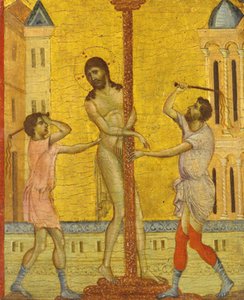
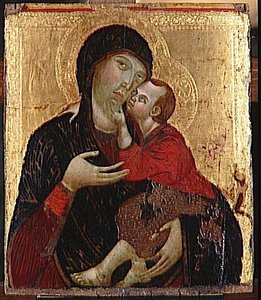
      As the decades passed, his brush grew more daring. By 1278, he had completed the Madonna Enthroned with the Child, St Francis and Four Angels, a composition that brought a new sense of presence to the sacred figures. This evolution continued into the next decade. Around 1280, he executed the Maestà, now held in the Louvre, and the Flagellation of Christ, a complex scene that suggests a growing interest in spatial relationships. He was a man of many hands, also working in the medium of mosaic, leaving his mark upon the very stones of the Baptistery of Florence.
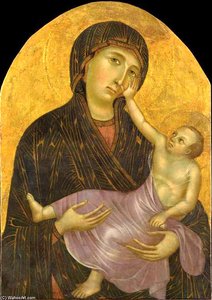
      His later works show a refined ability to suggest volume and human emotion. A detail from his Madonna in Majesty, painted in 1285, reveals a subtle use of shading that hints at the physical reality of the Virgin. Even in smaller, more intimate pieces like the 13th-century Mocking of Christ, his ability to capture a sense of human experience remains evident. His output was vast, spanning from large altarpieces to small, devotional panels.

      The Master and His Famous Pupil

      The legacy of Cimabue lived on through the hands of those who sat at his side in the Florentine workshops. Among his most significant pupils was Giotto di Bondone, who received crucial training under Cimabue's guidance. Their relationship was marked by a dynamic that pushed the boundaries of what a painter could achieve. It is said that during his apprenticeship, the young Giotto once playfully painted a fly upon a portrait Cimabue was working, a small prank that revealed a spirit as spirited as the master's own. While Giotto would eventually move toward a more radical naturalism, his foundation was built upon the lessons learned from Cimabue's evolving approach to form and expression.

      Beyond this famous connection, Cimabue's influence reached other talented hands that operated within his artistic orbit. One such figure is the artist known as the Master of Varlungo, who has been identified as a principal pupil of Cimabue. This painter worked during the same transformative period, absorbing the stylistic shifts that Cimabue helped initiate. Through these students, the transition from the rigid Byzantine traditions toward a more humanistic style was carried forward, ensuring that the innovations of the master would ripple through the generations of Italian painters.

      Where to See His Masterpieces Today

      To follow the path of his brush is to travel across the great cities of Europe and beyond. In Paris, the Musée du Louvre holds the Maestà, a work that once graced the church of San Francesco in Pisa. The museum also recently welcomed The Mocking of Christ, which was acquired in 2023. These works allow us to see how his hand moved through the halls of such grand institutions, bridging the distance between the sacred spaces of the past and the public galleries of the present.

      The spirit of his work remains deeply rooted in the Italian landscape. In Florence, the Galleria degli Uffizi preserves a detail of the Madonna in Majesty, offering a close look at his evolving hand. Nearby, the Museo dell'Opera del Duomo in Pisa keeps a detail of Christ Enthroned between the Virgin and St John the Evangelist. If one travels to Assisi, the Madonna with Child Enthroned, Four Angels and St Francis can still be found, while the Basilica of San Domenico in Arezzo holds the Crucifix that shows his departure from older traditions.

      His reach extended far across the seas, finding homes in collections far from his Florentine origins. The Frick Collection in New York preserves The Flagellation of Christ, and the National Gallery in London holds a detail of the Crucifix. These scattered treasures remind us of the many hands that have cared for his legacy through the centuries.