Ательє — Безкоштовна доставка по всьому світу — Доставка: 2–6 тижнів
      Андре Дерен, 1880 – 1954

      Андре Дерен: The 100 Best-Known Paintings

      Of all Андре Дерен's paintings, bathers (1907) is the most famous. Close behind come London Bridge (1906) and Charing Cross from sw (1906). Among the 354 works by Андре Дерен in our catalogue, these 100 are the most celebrated, each shown with its date, its museum and its story.

      Ranked by our popularity score, which combines the searches, visits and orders for each work. Updated Жовтень 2026. Each painting on this page can be ordered as an oil reproduction painted by hand on linen canvas, or as a fine art print, made to the size you choose.

      Portrait of Андре Дерен
      Андре Дерен · 1880 – 1954
      Born · died
      1880 – 1954, Шату
      Movement
      Fauvist expressionism
      Works in our catalogue
      354
      Most famous
      bathers (1907)
      Most works at
      Statens Museum For Kunst

      Андре Дерен's 10 most celebrated paintings

      bathers (1907) by Андре Дерен
      1

      bathers

      1907 · Oil On Canvas

      To stand before André Derain's Bathers is to step directly into the exhilarating heart of the early twentieth century art revolution. This painting, executed in 1907, is not merely a depiction of figures by water; it is a pure explosion of color and emotion rendered through the lens of Fauvism. The very air around the canvas seems charged with the energy of bold pigment. Derain, a key figure alongside Henri…

      London Bridge (1906) by Андре Дерен
      2

      London Bridge

      1906 · Олія на полотні · Музей сучасного мистецтва (MoMA), Нью-Йорк

      In the heart of 1906, a revolution was unfolding on canvas, and André Derain was one of its most daring architects. His masterpiece, London Bridge, is far more than a mere architectural study; it is a visceral explosion of emotion captured through the lens of Fauvism. While the London fog is traditionally associated with muted greys and somber tones, Derain defies the atmospheric reality of the Thames to present a…

      Charing Cross from sw (1906) by Андре Дерен
      3

      Charing Cross from sw

      1906 · Олія на полотні · Національна галерея мистецтв, Вашингтон

      Charing Cross from SW: A Fauvist Symphony of London André Derain’s “Charing Cross from SW” isn't merely a depiction of a London landmark; it’s an explosion of feeling, a vibrant declaration of the Fauvist movement at its peak. Painted in 1906, this artwork captures a bustling scene along the Thames, dominated by the iconic Charing Cross bridge, yet rendered through a lens entirely unique to Derain's revolutionary approach to color…

      Landscape at L'Estaque (1906) by Андре Дерен
      4

      Landscape at L'Estaque

      1906 · Олія на полотні

      To stand before André Derain’s Landscape at L'Estaque is not merely to observe a scene; it is to be enveloped by a burst of pure, unadulterated chromatic energy. Painted in 1906, this oil on canvas stands as a vibrant manifesto of the Fauvist movement—a style that dared to liberate color from the shackles of mere description. Here, the natural world of L'Estaque is rendered not with photographic accuracy, but with…

      Hyde Park (1906) by Андре Дерен
      5

      Hyde Park

      1906 · Oil On Panel · Musee d'Art Moderne de Troyes, Troyes

      To gaze upon André Derain's Hyde Park is to step directly into the effervescent heart of early 20th-century Parisian life. This painting, executed in 1906, is far more than a mere depiction of an afternoon stroll; it is a vibrant celebration of modern leisure captured through the revolutionary lens of Fauvism. The scene unfolds with an almost palpable energy—a tapestry woven from bold color and dynamic movement. We see figures…

      Cypresses (1907) by Андре Дерен
      7

      Cypresses

      1907 · Олія на панелі

      To stand before André Derain’s "Cypresses" is to step directly into the vibrant heart of early twentieth-century French modernism. This captivating oil-on-panel, dating from 1907, is far more than a mere depiction of a landscape; it is an explosion of color and emotion captured by an artist at the zenith of his revolutionary period. The scene unfolds with a profound sense of natural grandeur: a field dotted with resilient pine…

      Portrait of Madame Paul Guillaume with a large hat (1928) by Андре Дерен
      8

      Portrait of Madame Paul Guillaume with a large hat

      1928 · Oil On Canvas

      To stand before André Derain’s Portrait of Madame Paul Guillaume with a large hat is to step directly into the vibrant, charged atmosphere of an early twentieth-century artist's studio. This painting is far more than a mere likeness; it is a meditation on creativity itself. The subject, seated amidst the beautiful chaos of artistic tools—canvases leaning against unseen supports, palettes bearing the ghosts of color—commands our attention with a serene…

      Drying the Sails (1905) by Андре Дерен
      9

      Drying the Sails

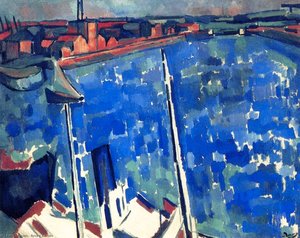
      André Derain’s “Drying the Sails,” painted in 1905, isn't merely a depiction of a harbor scene; it’s an explosion of color and emotion—a quintessential embodiment of the Fauvist movement. Born from a confluence of artistic influences and a desire to break free from traditional representation, this painting captures a fleeting moment on the French coast, imbued with a raw energy that continues to resonate with viewers today. Derain, alongside Henri…

      Mountains at Collioure by Андре Дерен
      10

      Mountains at Collioure

      Олія на полотні

      In the annals of modern art, few moments capture the raw, unbridled energy of a revolution quite like André Derain’s Mountains at Collioure. Painted during the feverish summer of 1905, this masterpiece serves as a vibrant manifesto of the Fauvist movement, a period when color was liberated from the shackles of reality to serve the needs of pure emotion. As one gazes upon this canvas, the eye is immediately swept…

      Андре Дерен paintings ranked 11 to 100

      Harbour of Collioure (1905) by Андре Дерен
      #13

      Harbour of Collioure

      1905 · Staatsgalerie Stuttgart

      In this oil on canvas, André Derain presents Harbour of Collioure, a work from 1905. The painting captures a Mediterranean port, focusing on the specific light and atmosphere…

      Have it painted by hand →
      Black Scarf (1935) by Андре Дерен
      #14

      Black Scarf

      1935

      To stand before André Derain's "Black Scarf" is to step directly into the effervescent, color-drenched heart of early 20th-century Paris. Painted in 1935, this oil on canvas transcends…

      Order this canvas →
      Landscape (Blue) (1906) by Андре Дерен
      #16

      Landscape (Blue)

      1906

      To stand before André Derain’s Landscape (Blue) is to step directly into the exhilarating heart of early twentieth-century modernism. This painting, executed in 1906, is not merely a…

      Have it painted by hand →
      Landscape near Chatou (1904) by Андре Дерен
      #17

      Landscape near Chatou

      1904

      In the annals of early twentieth-century modernism, few moments capture the raw, unbridled energy of artistic revolution quite like André Derain’s Landscape near Chatou. Painted in 1904, this…

      Have it painted by hand →
      Landscape at Collioure (1905) by Андре Дерен
      #18

      Landscape at Collioure

      1905

      To stand before André Derain’s Landscape at Collioure is to witness the moment when the traditional boundaries of nature were dissolved by a sudden, brilliant explosion of light…

      Bring this light home →
      The Dance (1906) by Андре Дерен
      #19

      The Dance

      1906

      In the annals of modern art, few moments capture the raw, unbridled spirit of rebellion quite like the emergence of Fauvism, and few works embody this revolution as…

      Have it painted by hand →
      Знатність із фруктами (1940) by Андре Дерен
      #20

      Знатність із фруктами

      1940 · Harris Museum - Art Gallery

      André Derain (1880 – 1954), французький художник, що став одним із ключових фігур у розвитку фівізму – художнього напрямку початку XX століття. Його творчість характеризується яскравими кольорами та…

      Have it painted by hand →
      Cassis by Андре Дерен
      #21

      Cassis

      The artwork titled Cassis, also known as Landscape at Cassis, is an oil on canvas painting. This work was executed by the French artist André Derain in 1907.…

      Bring this light home →
      Music (1904) by Андре Дерен
      #23

      Music

      1904

      The early 20th century was a transformative period for modern art, with the emergence of various movements that challenged traditional techniques and aesthetics. One such movement was Fauvism,…

      Order this canvas →
      Head of a Young Woman (1923) by Андре Дерен
      #25

      Head of a Young Woman

      1923 · Statens Museum For Kunst

      A soulful portrait emerges from a palette of ochre, sienna, and cream. The subject is positioned in a close-up, centered composition that forces an intimate encounter between the…

      Bring this light home →
      Sorrowful Landscape (1946) by Андре Дерен
      #26

      Sorrowful Landscape

      1946

      The Sorrowful Landscape by André Derain is a masterpiece that embodies the essence of Expressionism, a style characterized by its emphasis on conveying intense emotions and inner experiences.…

      Order this canvas →
      Collioure (1905) by Андре Дерен
      #28

      Collioure

      1905

      The early 20th century was a transformative period for modern art, with the emergence of various movements that challenged traditional techniques and aesthetics. One such movement was Fauvism,…

      Bring this light home →
      Martigues (1908) by Андре Дерен
      #30

      Martigues

      1908

      The painting Martigues by André Derain is a quintessential example of the Fauvist art movement. Created in 1908, this oil on canvas work embodies the essence of Fauvism,…

      Bring this light home →
      Harlequin (1923) by Андре Дерен
      #31

      Harlequin

      1923 · Statens Museum For Kunst

      This 1923 oil painting on canvas presents a solitary figure dressed as a Harlequin, captured in a moment of quiet introspection. The subject is seated and holds a…

      Have it painted by hand →
      Boy's Head (1914) by Андре Дерен
      #33

      Boy's Head

      1914 · Statens Museum For Kunst

      In Boy's Head by André Derain, the composition centers on a close-up study of a single human figure. The subject's face is positioned slightly turned to the left,…

      Bring this light home →
      The beautiful model (1923) by Андре Дерен
      #37

      The beautiful model

      1923

      The painting The Beautiful Model by André Derain is a stunning example of Fauvism, a style characterized by vivid colors and emotive brushstrokes. Created in 1923, this oil…

      Order this canvas →
      Fishing Boats, Colioure (1905) by Андре Дерен
      #38

      Fishing Boats, Colioure

      1905 · Метрополітен-музей

      Introduction to the Painting Fishing Boats, Colioure, painted in 1905 by André Derain, is a quintessential example of the Fauvist art movement. This vibrant oil on canvas painting…

      Order this canvas →
      Boats at Colliure by Андре Дерен
      #41

      Boats at Colliure

      André Derain, a French artist and co-founder of the Fauvist movement, created a captivating piece titled Boats at Colliure. This painting is a quintessential representation of the Fauvist…

      Bring this light home →
      The Lighthouse at Collioure (1905) by Андре Дерен
      #42

      The Lighthouse at Collioure

      1905 · Музей сучасного мистецтва міста Парижа

      André Derain’s “The Lighthouse at Collioure,” painted in 1905, isn't merely a depiction of a coastal scene; it’s an immersive experience—a vibrant explosion of color and movement that…

      Bring this light home →
      Nude with Folded Arms (1924) by Андре Дерен
      #43

      Nude with Folded Arms

      1924 · Statens Museum For Kunst

      The oil on canvas work titled Nude with Folded Arms was executed by the artist André Derain. This specific painting dates to 1924. It is currently held within…

      Have it painted by hand →
      Golden age (1940) by Андре Дерен
      #44

      Golden age

      1940

      In the sweeping expanse of André Derain’s "Golden Age," viewers are transported into a primordial realm where the boundaries between humanity and nature dissolve into a dramatic, cinematic…

      Bring this light home →
      Fishing Boats, Collioure (1905) by Андре Дерен
      #56

      Fishing Boats, Collioure

      1905 · Музей сучасного мистецтва (MoMA)

      Introduction to the Painting Fishing Boats, Collioure, painted in 1905 by André Derain, is a quintessential example of Fauvism, an art movement characterized by bold and vivid colors.…

      Have it painted by hand →
      Landscape (1907) by Андре Дерен
      #57

      Landscape

      1907

      In this mesmerizing 1907 masterpiece, titled Landscape, André Derain invites the viewer into a world where reality is reimagined through the fractured lens of early modernism. The canvas…

      Have it painted by hand →
      Still Life with Pipe (1911) by Андре Дерен
      #58

      Still Life with Pipe

      1911 · Statens Museum For Kunst

      In the 1911 work Still Life with Pipe by André Derain, the composition is centered on a wooden table or ledge. The arrangement consists of a tall reddish-brown…

      Bring this light home →
      Pinewood near Sausset-les-Pins (1913) by Андре Дерен
      #59

      Pinewood near Sausset-les-Pins

      1913 · Statens Museum For Kunst

      The landscape unfolds through a series of leaning, organic forms that define a grove of pine trees. Thick, sweeping brushstrokes trace the bark of the trunks, creating a…

      Order this canvas →
      Le Phare de Collioure by Андре Дерен
      #60

      Le Phare de Collioure

      In the annals of modern art history, few movements captured the raw, unbridled energy of light and emotion quite like Fauvism. At the heart of this revolution stands…

      Order this canvas →
      The Last Supper (1911) by Андре Дерен
      #61

      The Last Supper

      1911 · Art Institute of Chicago

      A Moment of Sacred Tension The air in the room feels heavy, thick with the weight of a final meal. In this 1911 oil on canvas, the scene…

      Order this canvas →
      The road (1932) by Андре Дерен
      #65

      The road

      1932

      To gaze upon André Derain’s The Road is to step into a moment suspended in the golden haze of memory. This oil on canvas, dating from 1932, captures…

      Bring this light home →
      Bacchus dance (1906) by Андре Дерен
      #66

      Bacchus dance

      1906

      Bacchus Dance: A Fauvist Celebration of Movement The early 20th century witnessed a seismic shift in art, marked by movements that boldly challenged established norms. Among these was…

      Have it painted by hand →
      L'Estaque (1906) by Андре Дерен
      #72

      L'Estaque

      1906

      The painting L'Estaque by André Derain is a quintessential example of Fauvism, a style characterized by the use of bold, vibrant colors and energetic brushstrokes. Created in 1906,…

      Bring this light home →
      Boats at Collioure (1905) by Андре Дерен
      #73

      Boats at Collioure

      1905

      Gazing upon André Derain's "Boats at Collioure," one is immediately transported to the sun-drenched shores of the French Riviera. This painting captures more than just a seascape; it…

      Order this canvas →
      Харликін і Пієро (1924) by Андре Дерен
      #75

      Харликін і Пієро

      1924 · Musée de l'Orangerie

      Harlequin and Pierrot – André Derain: A Fauvist Echo of Melancholy André Derain’s “Harlequin and Pierrot” stands as an arresting testament to the fervor of Fauvism, a movement…

      Bring this light home →
      Portrait of Alice Derain (1921) by Андре Дерен
      #78

      Portrait of Alice Derain

      1921

      To gaze upon André Derain’s Portrait of Alice Derain is to step through a painted portal into a moment suspended in time—a quiet afternoon imbued with the warmth…

      Order this canvas →

      Андре Дерен's canvases, period by period

      What Андре Дерен painted most

      The four subjects that return most often on these canvases, each with its best-loved example.

      Where Андре Дерен's canvases hang

      The 8 museums that hold the most of the paintings on this page.

      Museum City Works by Андре Дерен Paintings from this list
      Statens Museum For Kunst, КопенгагенStatens Museum For Kunst Копенгаген 17 Head of a Young Woman, Harlequin, Sitting Female Model, Semi-Nude
      Метрополітен-музей, Нью-ЙоркМетрополітен-музей Нью-Йорк 4 Houses of Parliament at Night, London, Fishing Boats, Colioure, Lucien Gilbert
      Музей сучасного мистецтва міста Парижа, ПарижМузей сучасного мистецтва міста Парижа Париж 7 The Lighthouse at Collioure, The Gypsy
      Музей сучасного мистецтва (MoMA), Нью-ЙоркМузей сучасного мистецтва (MoMA) Нью-Йорк 4 London Bridge, Fishing Boats, Collioure
      Art Institute of Chicago, ЧикагоArt Institute of Chicago Чикаго 3 The Last Supper, Cagnes
      Національна галерея мистецтв, ВашингтонНаціональна галерея мистецтв Вашингтон 2 Charing Cross from sw
      Musee d'Art Moderne de Troyes, TroyesMusee d'Art Moderne de Troyes Troyes 2 Hyde Park
      Державний музей образотворчого мистецтва імені А.С. Пушкіна, МоскваДержавний музей образотворчого мистецтва імені А.С. Пушкіна Москва 2 Drying the Sails

      Decade by decade: Андре Дерен's most celebrated canvas

      1. 1890s
      2. 1900s
        bathers (1907) by Андре Дерен
        Canvas 1 of 100

        bathers

        Age 20 – 29

        To stand before André Derain's Bathers is to step directly into the exhilarating heart of the early twentieth century art revolution. This painting, executed in 1907, is not…

      3. 1910s
      4. 1920s
        Portrait of Madame Paul Guillaume with a large hat (1928) by Андре Дерен
        Ranked 8 of 100

        Portrait of Madame Paul Guillaume with a large hat

        Age 40 – 49

        To stand before André Derain’s Portrait of Madame Paul Guillaume with a large hat is to step directly into the vibrant, charged atmosphere of an early twentieth-century artist's…

      5. 1930s
        Black Scarf (1935) by Андре Дерен
        14 of 100

        Black Scarf

        Age 50 – 59

        To stand before André Derain's "Black Scarf" is to step directly into the effervescent, color-drenched heart of early 20th-century Paris. Painted in 1935, this oil on canvas transcends…

      6. 1940s
        Знатність із фруктами (1940) by Андре Дерен
        Canvas 20 of 100

        Знатність із фруктами

        Age 60 – 69 · Harris Museum - Art Gallery

        André Derain (1880 – 1954), французький художник, що став одним із ключових фігур у розвитку фівізму – художнього напрямку початку XX століття. Його творчість характеризується яскравими кольорами та…

      Your questions on Андре Дерен's paintings, answered

      Which is the most celebrated painting by Андре Дерен?Read the answer

      bathers (1907), followed by London Bridge (1906) and Charing Cross from sw (1906).

      How old was Андре Дерен at the time of bathers?Read the answer

      Андре Дерен, born in 1880, was 27 years old: bathers dates from 1907.

      Which ten paintings is Андре Дерен most famous for?Read the answer

      bathers, London Bridge, Charing Cross from sw, Landscape at L'Estaque, Hyde Park, The Turning Road, L'Estaque - (129.5x195), Cypresses, Portrait of Madame Paul Guillaume with a large hat, Drying the Sails and Mountains at Collioure. Each canvas in the ranking above comes with its year and its museum.

      How many paintings by Андре Дерен are known?Read the answer

      354 works by Андре Дерен are in our catalogue, dated 1899 to 1946.

      Which museums hold Андре Дерен's best-known canvases?Read the answer

      Mostly in Statens Museum For Kunst (Копенгаген), Метрополітен-музей (Нью-Йорк) and Музей сучасного мистецтва міста Парижа (Париж); the list above names each museum and its canvases.

      In which years did Андре Дерен paint the most celebrated canvases?Read the answer

      In 1900s, which gave 45 of the 100 works on this page, bathers among them.

      What are the first and the last of Андре Дерен's famous canvases?Read the answer

      The earliest canvas here is Funeral (1899); the latest is Sorrowful Landscape (1946).

      Which subjects return most often in Андре Дерен's paintings?Read the answer

      Woman (5), Trees (4) and Landscape (4), across the 100 works on this page.

      What did Андре Дерен usually paint with?Read the answer

      Олія на полотні, used in 25 of the 100 works on this page.

      To which art movement does Андре Дерен belong?Read the answer

      Fauvist expressionism, as the canvases on this page show.

      What can I see by Андре Дерен at the Statens Museum For Kunst?Read the answer

      The Statens Museum For Kunst, Копенгаген holds 10 of the works on this page, among them Head of a Young Woman, Harlequin and Sitting Female Model, Semi-Nude.

      Can I order a hand-painted copy of a painting by Андре Дерен?Read the answer

      Yes. Every painting on this page can be ordered from its own page as an oil reproduction painted by hand, or as a fine art print, in the size you choose.

      Андре Дерен: the painter's story

      Ранні роки, родина та навчання

      У 1880 році в Шату, затишному містечку в регіоні Іль-де-Франс, на світ з'явився Андре Дерен. Його дитинство було нерозривно пов'язане з безтурботними пейзажами цієї французької провінції, де природна цікавість до навколишнього світу поступово переростала в глибоке сприйняття природи. Вже до 1895 року він почав самостійно досліджувати мистецтво, намагаючись осягнути візуальну реальність власними очима, не покладаючись на суворі академічні канони. Цей період самостійного пошуку став надзвичайно важливим, адже він дозволив художнику сформувати свій унікальний погляд на світ ще до того, як академічна дисципліна змогла б накласти на нього свої жорсткі рамки.

      Проте шлях живописця не був єдиним, що його цікавило. У 1898 році він вирішив здобути більш структуровану освіту, на короткий час присвятивши себе навчанню на інженера в Академії Камілло. Саме в цих академічних стінах його життя здійснило вирішальний поворот: він відвідував уроки живопису під керівництвом Ежена Каррієра, де зустрів Анрі Матіса. Ця зустріч докорінно змінила його долю, відволіктиши від математичної точності інженерії до безмежних експресивних можливостей полотна. Попри сильні амбіції, його творчий шлях був тимчасово перерваний обов'язками громадянина. З вересня 1901 по 1904 рік він проходив військову службу в Коммерсі — період розлуки з мистецтвом, що на деякий час призупинив його стрімкий художній розвиток.

      Фувістська революція та Коліур

      Літо 1905 року принесло раптову, яскраву зміну в життя Андре Дерена та Анрі Матісса. Вони вирушили у спільну подорож до рибальського містечка Коліур — місця, де саме світло, здавалося, вимагало зовсім іншого способу сприйняття. У цьому прибережному оточенні художник почав відходити від традиційних правил репрезентації. Його роботи періоду 1905–1906 років визначалися буйним колористизмом, що шокував тих, хто звик до більш стриманих тонів. Він використовував спрощені лінії та експресивне застосування кольору, щоб вловити саму суть пейзажу, віддаючи перевагу інтенсивним, незмішаним відтінкам замість натуралістичних барв реального світу.

      Такий радикальний підхід до живопису викликав бурхливу реакцію з боку публіки та преси. Твори художників викликали настільки сильне здивування, що їх прозвали Les Fauves, або «дикими звірами». Це прізвисько, хоча й мало на меті висміяти їхню м'яку відсутність дисципліни, було з гордістю прийняте самим гуртом. Полотно Андре Дерена в ці роки не намагалося відтворити краєвид з точністю фотографії; натомість він використовував колір як прямий вираз почуттів. Сміливі мазки та приголомшливі палітри ознаменували рішучий розрив із усім, що існувало в мистецтві до того.

      Лондонські картини та замовлення

      У березні 1906 року арт-дилер Амбріз Воллард побачив новий вектор розвитку для художника і відправив його до Лондона. Це не була просто чергова подорож, а цілеспрямоване замовлення — спроба зафіксувати саму суть міста, яке вже давно надихало багатьох митців. Прибувши до англійської столиці, Андре Дерен почав сприймати міський пейзаж крізь призму інтенсивного кольору, віддаляючись від спокійного панорамного споглядання французького замішстя. Він прагнув перетворити енергію мегаполісу на щось емоційне, що відчувається серцем, а не просто фіксується оком.

      Протягом цього періоду художник створив серію з тридцяти полотен, присвятивши свою увагу Темзі та монументальній архітектурі міста. Він не намагався відтворити сірі тумани, які зазвичай асоціюються з цією річкою; натомість він використовував сміливі відтінки, щоб передати рух води та силуети мостів. Його бачення міста стало радикальним відходом від атмосферних досліджень попередників. Андре Дерен зосередився на структурній масивності визначних пам'яток та мінливому світлі урбаністичного середовища.

      Ці твори стали одними з найпопулярніших у його творчому спадку, адже вони запропонували свіжий погляд на вже добре відомий ландшафт. Зосередившись на Темзі та Тауерському мосту, він вловив відчуття модерності та невгамовної динаміки. Густий мазок фарби та нетрадиційна палітра дозволили йому зобразити місто як живу, дихаючу стихію світла та тіні.

      Еволюція до класицизму та готичного стилю

      З роками дикі імпульси його юності почали вщухати. Близько 1907 року в його руці та погляді відбулися зміни, і роботи Андре Дерена стали більш суворими. Нестримні кольори, які колись визначали його полотна, поступилися місцем більш дисциплінованому підходу. Цей перехід не був раптовим розривом, а скоріше поступовим рухом до структури та форми. Він шукав іншого роду істини — тієї, що криється у спокійній силі композиції, а не у шокуючій експресії кольору.

      У період з 1911 по 1914 рік він увійшов у фазу, яку багато хто називає його готичним періодом. У цей час його інтерес до старих майстрів та класичних форм став більш вираженим. Він відійшов від гучних, незмішаних пігментів своїх ранніх років, шукаючи натомість більш контрольований та інтелектуально виважений спосіб бачення. Це був час пошуків, коли він звертався до самих основ мистецтва, щоб віднайти новий шлях у майбутнє.

      Велика війна ще раз змінила ландшафт його життя та мистецтва. Після завершення конфлікту він постав як лідер руху, відомого як «Повернення до порядку». Цей новий класицизм прагнув стабільності та ясності в епоху глибоких потрясінь. Андре Дерен став центральною фігурою цього відродження, допомагаючи спрямувати вектор мистецтва до більш структурованої та традиційної естетики. Його роботи відображали це прагнення до порядку, охоплюючи відчуття незмінності, якого так бракувало в його більш експериментальні роки.

      Пізні роки та смерть

      З роками інтереси митця виходили за межі полотна, переносячись у театральний простір. У 1919 році він спрямував свій творчий погляд на сцену, створивши декорації до балету La Boutique Fantasque для «Ballets Russes». Цей вихід у світ сценографії та дизайну костюмів виявив особливе відчуття ритму та видовищності, що ідеально доповнювало його еволюціонуючу естетику. Здатність Андре Дерена приковувати увагу через форму та колір продовжувала визнаватися колегами, що зрештою привело до того, що у 1928 році він став лауреатом премії Карнегі.

      Останні десятиліття його життя пройшли під знаком невпинного пошуку нового класицизму — відходу від нестримних імпульсів юності. Він залишався активним у мистецькому світі, навіть коли політичний ландшафт Європи стрімко змінювався навколо нього. Андре Дерен пішов із життя 8 вересня 1954 року, залишивши по собі величезний спадок — творчий шлях, що охопив безліч різноманітних способів художнього вираження.

      Спадщина та вплив

      Відлуння фувістського руху, який Андре Дерен допомагав закладати пліч-о-пліч із Анрі Матісом, простягнулося набагато далі, ніж первинний шок від їхнього вибору кольорів. Зламавши традиційні зв'язки між кольором та фізичним світом, він проклав шлях для структурних інновацій кубізму та емоційної інтенсивності, притаманної модерному експресіонізму. Його невпинний пошук нової візуальної мови означав, що уроки, засвоєні в залитих сонцем пейзажах Коліура, зрештою подорожували на північ, впливаючи на розвиток німецького експресіонізму. Він не просто малював; він допоміг переосмислити саму суть мазка пензля.

      Його вплив залишався незмінним для наступних поколінь художників, які прагнули знайти баланс між первісною енергією його ранніх років та структурованою дисципліною пізніших робіт. Навіть коли його власний стиль змістився у бік більш суворого та класичного підходу, радикальний дух його юності продовжував відгукуватися в мистецтві. Він довів, що митець може переходити від диких, незмішаних відтінків своєї молодості до більш контрольованої, інтелектуальної суворості, не втрачаючи при цьому своєї творчої істини. Ця здатність до адаптації гарантувала, що його присутність в історії сучасного мистецтва залишиться незаперечною, навіть коли рухи, які він допоміг породити, еволюціонували у зовсім нові форми.

      • Charing Cross Bridge, London
      • Harlequin and Pierrot
      • The Last Supper of Jesus

      All 354 works by Андре Дерен →