Ательє — Безкоштовна доставка по всьому світу — Доставка: 2–6 тижнів
      Жан Фредерік Базиль, 1841 – 1870

      88 найвідоміших картин Жан Фредерік Базиль за рейтингом

      Найвідоміший витвір Жан Фредерік Базиль — це Басейни (Літня сцена) (1869), який експонується в Fogg Art Museum, Кембридж. Наступними серед полотен, які найкраще знають читачі, є Сімейна зустріч (1867) та The Pink Dress (1864). Наш каталог містить 88 робіт Жан Фредерік Базиль: перед вами 88 найвідоміших, з указанням року створення, музею та особливостей, що роблять кожну з них незабутньою.

      Рейтинг сформовано на основі нашого показника популярності, що поєднує кількість пошукових запитів, переглядів та замовлень для кожної роботи. Оновлено Жовтень 2026. Кожну картину на цій сторінці можна замовити як олійну репродукцію, написану вручну на лляному полотні, або як художній принт, виготовлений за обраним вами розміром.

      Портрет Жан Фредерік Базиль
      Жан Фредерік Базиль · 1841 – 1870
      Народився · помер
      1841 – 1870, Монпельє
      Рух
      Impressionist landscape
      Роботи в нашому каталозі
      88
      Найвідоміші
      Басейни (Літня сцена) (1869)
      Найбільше робіт у
      Музей Фабра

      10 найкращих картин Жан Фредерік Базиль: полотна, які знають усі

      Басейни (Літня сцена) (1869) роботи Жан Фредерік Базиль
      1

      Басейни (Літня сцена)

      1869 · Олія на полотні · Fogg Art Museum, Кембридж

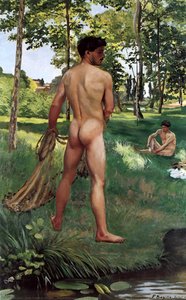
      Jean Frédéric Bazille’s “Bathers (Summer Scene)” – A Celebration of Youthful Vitality Jean Frédéric Bazille’s “Bathers (Summer Scene),” painted in 1869, stands as a cornerstone of Impressionism and embodies the movement's audacious embrace of modern life. More than just a picturesque depiction of a woodland pool, this artwork represents a profound artistic statement – a bold challenge to academic conventions and an unwavering devotion to capturing fleeting moments of beauty.…

      Сімейна зустріч (1867) роботи Жан Фредерік Базиль
      2

      Сімейна зустріч

      1867 · Олія на полотні · Музей д’Орсе, Париж

      “Family Reunion” by Jean Frédéric Bazille is more than just a painting; it's a vibrant snapshot of a bygone era, a testament to the burgeoning Impressionist movement and a poignant reflection on family bonds. Created in 1867, this artwork transports us to a sun-drenched terrace near Montpellier, where a group of individuals – likely members of Bazille’s own family – gather for an afternoon of conversation and leisurely enjoyment. The…

      The Pink Dress (1864) роботи Жан Фредерік Базиль
      3

      The Pink Dress

      1864 · Acrylic On Canvas · Музей д’Орсе, Париж

      Marilyn Monroe’s “Pink Dress,” designed by William Travilla for Howard Hawks’ 1953 film *Gentlemen Prefer Blondes*, transcends mere costume; it embodies an enduring symbol of glamour, ambition, and the seductive allure of Hollywood. The dress itself—a shocking pink silk satin gown adorned with black satin lining and a large bow—represents more than just fabric and embellishments; it encapsulates a pivotal moment in cinematic history and continues to fascinate audiences today.

      La Toilette (1870) роботи Жан Фредерік Базиль
      4

      La Toilette

      1870 · Акрил на полотні · Музей Фабра, Монпельє

      The Painting's Significance and Context La Toilette, an oil-on-canvas painting by Jean Frédéric Bazille, is a remarkable work of art that showcases the artist's skill in capturing intimate moments. Created in 1869-1870, this painting is one of Bazille's last works before his untimely death in the Franco-Prussian War. Composition and Symbolism The painting depicts three women in a room, with one woman lying on a bed while the other two…

      Landscape on the Shore of Lez (1870) роботи Жан Фредерік Базиль
      5

      Landscape on the Shore of Lez

      1870 · Oil

      Landscape on the Shore of Lez is a significant work by Frédéric Bazille, an artist whose life was marked by a brief but intense period of creativity. Born in 1841, Bazille’s career was tragically cut short when he died in 1870. This particular painting, completed in June 1870, represents one of his final artistic statements. It is a large landscape that the artist himself described as an eclogue, a term…

      The Family Gathering (1867) роботи Жан Фредерік Базиль
      6

      The Family Gathering

      1867 · Oil On Canvas · Музей д’Орсе, Париж

      To stand before The Family Gathering is to step directly into a sun-dappled afternoon of pure, unscripted joy. This painting by Jean Frédéric Bazille captures more than just a social assembly; it arrests the very essence of conviviality. One feels the gentle warmth emanating from the canvas, as if the viewer has stumbled upon this private moment in time. The composition is masterfully arranged beneath the generous canopy of a…

      Portrait of an Unknown Sitter as a Troubadour (1875) роботи Жан Фредерік Базиль
      10

      Portrait of an Unknown Sitter as a Troubadour

      1875 · Oil On Canvas · Далласский музей искусств, Остін

      In this intimate oil portrait, we find ourselves drawn into a quiet, private moment with a young man. The composition is a close-up, bust-length study that pushes the subject toward the viewer through a dramatic use of chiaroscuro. A deep, nearly black background provides a void from which the sitter emerges, illuminated by a highly directional light source. This light catches the contours of his face, leaving the other side…

      Більше полотен Жан Фредерік Базиль, від 11 до 88

      Reclining Nude (1864) роботи Жан Фредерік Базиль
      #23

      Reclining Nude

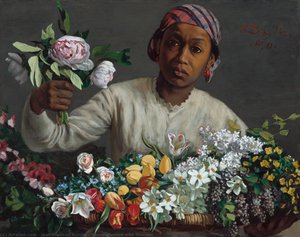
      1864 · Музей Фабра

      Jean Frédéric Bazille's 'Reclining Nude,' painted in 1864, is more than just a depiction of the human form; it’s a carefully constructed evocation of serenity and sensual grace,…

      Замовити це полотно →
      Portrait of Edouard Blau (1866) роботи Жан Фредерік Базиль
      #25

      Portrait of Edouard Blau

      1866 · Національна галерея мистецтв

      “Portrait of Édouard Blau,” painted by Jean Frédéric Bazille in 1866, stands as a testament to the burgeoning Impressionist movement's fascination with capturing fleeting moments of light and…

      Замовити це полотно →
      Self-Portrait (1867) роботи Жан Фредерік Базиль
      #28

      Self-Portrait

      1867 · Minneapolis Institute of Art

      Self-Portrait is an oil on canvas painting by the artist Frédéric Bazille. Created in France, this work belongs to the Impressionism movement. The subject of the painting is…

      Замовити це полотно →
      Toilet (1870) роботи Жан Фредерік Базиль
      #70

      Toilet

      1870 · Музей Фабра

      Painted in 1870, tragically just months before Jean Frédéric Bazille's untimely death at the age of twenty-nine, *Toilet* (La Toilette) is a pivotal work within the burgeoning Impressionist…

      Замовити ручний живопис →
      Edouard Blau (1869) роботи Жан Фредерік Базиль
      #83

      Edouard Blau

      1869 · Національна галерея мистецтв

      This oil on canvas work, titled Edouard Blau, was executed by the French artist Frédéric Bazille. It offers a quiet study of the sitter, a French dramatist, critic,…

      Замовити ручний живопис →

      Полотно Жан Фредерік Базиль за періодами творчості

      Найпопулярніші роботи Жан Фредерік Базиль

      Чотири найпопулярніші сюжети на цих полотнах, кожен із найкращими зразками.

      Де виставляються полотна Жан Фредерік Базиль

      8 музеїв, у яких зберігається найбільша кількість картин із цього списку.

      Музеї Місто Твори Жан Фредерік Базиль Картини з цього списку
      Музей Фабра, МонпельєМузей Фабра Монпельє 23 La Toilette, The Scoter, Petite Italienne chanteuse des rues
      Музей д’Орсе, ПарижМузей д’Орсе Париж 8 Сімейна зустріч, The Pink Dress, The Family Gathering
      Національна галерея мистецтв, ВашингтонНаціональна галерея мистецтв Вашингтон 6 Portrait of Edmond Maitre, Portrait of Edouard Blau, Edmond Maître
      Minneapolis Institute of Art, МінеаполісMinneapolis Institute of Art Мінеаполіс 2 Self-Portrait, The Banks of the Lez
      Art Institute of Chicago, ЧикагоArt Institute of Chicago Чикаго 2 Landscape at Chailly, Self Portrait with Palette
      Fogg Art Museum, КембриджFogg Art Museum Кембридж 1 Басейни (Літня сцена)
      Музей витончених мистецтв, Х'юстонМузей витончених мистецтв Х'юстон 1 Le petit jardinier, ca Museum of Fine Arts,
      Далласский музей искусств, ОстінДалласский музей искусств Остін 1 Portrait of an Unknown Sitter as a Troubadour

      Найулюбленіші полотна Жан Фредерік Базиль кожної десятиліття

      1. 1850s
      2. 1860s
        Басейни (Літня сцена) (1869) роботи Жан Фредерік Базиль
        1 з 88

        Басейни (Літня сцена)

        Вік 19 – 28 років · Fogg Art Museum

        Jean Frédéric Bazille’s “Bathers (Summer Scene)” – A Celebration of Youthful Vitality Jean Frédéric Bazille’s “Bathers (Summer Scene),” painted in 1869, stands as a cornerstone of Impressionism and…

      3. 1870s
        La Toilette (1870) роботи Жан Фредерік Базиль
        Полотно 4 із 88

        La Toilette

        Вік 29 · Музей Фабра

        The Painting's Significance and Context La Toilette, an oil-on-canvas painting by Jean Frédéric Bazille, is a remarkable work of art that showcases the artist's skill in capturing intimate…

      Про полотна Жан Фредерік Базиль: відповіді на ваші запитання

      Яка найвідоміша картина Жан Фредерік Базиль?Прочитати відповідь

      Басейни (Літня сцена) (1869), Fogg Art Museum, Кембридж. Далі — Сімейна зустріч (1867) та The Pink Dress (1864).

      Скільки років було Жан Фредерік Базиль, коли було написано Басейни (Літня сцена)?Прочитати відповідь

      Жан Фредерік Базиль, народився у 1841, мав 28 років: Басейни (Літня сцена) датована 1869 роком.

      Які 10 найвідоміших картин Жан Фредерік Базиль?Прочитати відповідь

      Басейни (Літня сцена), Сімейна зустріч, The Pink Dress, La Toilette, Landscape on the Shore of Lez, The Family Gathering, The Scoter, Le petit jardinier, ca Museum of Fine Arts,, Saint-Saveur та Portrait of an Unknown Sitter as a Troubadour. Кожне полотно в рейтингу вище має зазначений рік створення та музей.

      Скільки всього робіт написав Жан Фредерік Базиль?Прочитати відповідь

      У нашому каталозі представлено 88 робіт автора Жан Фредерік Базиль, датованих періодом з 1859 по 1870.

      Де я можу побачити найвідоміші полотна Жан Фредерік Базиль?Прочитати відповідь

      Переважно в Музей Фабра (Монпельє), Музей д’Орсе (Париж) та Національна галерея мистецтв (Вашингтон); у списку вище наведено назву кожного музею та його полотна.

      Коли Жан Фредерік Базиль написав свої найвідоміші полотна?Прочитати відповідь

      У 1860s, що охоплює 54 із 88 робіт на цій сторінці, серед них — Басейни (Літня сцена).

      Які найранніші та найпізніші відомі полотна Жан Фредерік Базиль?Прочитати відповідь

      Найдавніший холст тут датований Mystic marriage of Saint Catherine (1859), а найновіший — La Toilette (1870).

      Що найчастіше писав Жан Фредерік Базиль?Прочитати відповідь

      Portraits (6), Man (5) та Flowers (5), у 88 роботах на цій сторінці.

      Якою технікою найчастіше користувався Жан Фредерік Базиль?Прочитати відповідь

      Oil On Canvas, використано у 20 з 88 робіт на цій сторінці.

      До якого напряму належить картина Жан Фредерік Базиль?Прочитати відповідь

      Impressionist landscape, як свідчать полотна на цій сторінці.

      Які полотна Жан Фредерік Базиль виставлені в Музей Фабра?Прочитати відповідь

      У Музей Фабра, Монпельє зберігається 23 творів із цієї сторінки, серед яких La Toilette, The Scoter та Petite Italienne chanteuse des rues.

      Чи можу я купити репродукцію полотна Жан Фредерік Базиль?Прочитати відповідь

      Так. Кожну картину на цій сторінці можна замовити на її окремій сторінці як рукописну олійну репродукцію або як художній принт у обраному вами розмірі.

      Жан Фредерік Базиль: життя у фарбах

      Jean Frédéric Bazille: A Fleeting Radiance of Impressionism

      Jean Frédéric Bazille’s life, though tragically short, casts a remarkable glow upon the early days of Impressionism. Born in Montpellier, France, on December 6, 1841, into a family deeply rooted in the region's prosperous wine trade – a lineage stretching back generations – he initially seemed destined for a path far removed from the vibrant world of art. His parents, recognizing his artistic inclinations alongside his medical studies (a compromise reflecting the societal norms of the time), sought to balance his passions, hoping to secure both intellectual and financial stability. This duality shaped his formative years, dividing his attention between the meticulous dissection of anatomy and the irresistible allure of capturing fleeting moments of light and color – a fundamental shift that would ultimately define his artistic legacy.

      The Crucible of Paris: Friendship and Artistic Awakening

      Paris in the 1860s was a magnetic force for young artists seeking to break free from the constraints of academic tradition. It was here, amidst the bustling studios and fervent debates, that Bazille’s artistic journey truly ignited. He quickly found himself immersed in a circle of kindred spirits – Claude Monet, Pierre-Auguste Renoir, Alfred Sisley, and others – all united by a shared desire to revolutionize painting. Studying under Charles Gleyre provided him with the foundational skills of formal training, but it was the unbridled camaraderie and radical ideas exchanged amongst these friends that truly fueled his artistic vision. Bazille’s family's financial security, a fortunate contrast to the often precarious existence of his companions, allowed him to generously support them, providing studio space, materials, and unwavering encouragement – a testament to their deep bond and mutual belief in their collective potential. He became a central hub for this burgeoning movement, fostering an environment of experimentation, innovation, and fearless exploration. Early works like *The Pink Dress* (c. 1864), housed today at the Musée d'Orsay, already reveal his keen eye for capturing ephemeral light and atmosphere – hallmarks that would become synonymous with Impressionism.

      A Distinctive Style: Light, Color, and Human Connection

      Bazille’s artistic style, while firmly rooted in the principles of Impressionism, possessed a unique character that distinguished him from his contemporaries. He embraced *plein air* painting – working directly outdoors to capture the nuances of natural light – yet his compositions often retained a more structured quality than Monet's or Renoir's sometimes seemingly spontaneous approach. Frequently blending figure painting with landscape, he masterfully placed his subjects within their environment, creating scenes that resonated with both visual beauty and emotional depth. *Family Reunion* (1867-1868), a masterpiece showcasing this skill, is not merely a depiction of a familial gathering; it’s an evocative exploration of light filtering through the trees, animating the scene with warmth and intimacy – a testament to Bazille's ability to imbue his paintings with profound emotional resonance. He was profoundly influenced by Eugène Delacroix, whose vibrant use of color and dramatic compositions resonated deeply within him, yet he skillfully transcended academic conventions, forging a distinctly modern sensibility.

      A Tragic Interruption: War and Legacy

      The blossoming career of Jean Frédéric Bazille was tragically cut short by the Franco-Prussian War in 1870. Driven by a deep sense of patriotic duty, he enlisted in a Zouave regiment just months before the conflict erupted. On November 28th, 1870, near Beaune-la-Rolande, he fell in action at the young age of 28 – a devastating loss that robbed the art world of a brilliant talent and a generous friend. His premature death cast a long shadow over his contemporaries, leaving many works unfinished and his artistic recognition delayed. Despite this, Bazille’s legacy has experienced a remarkable resurgence in recent decades. Today, his paintings are celebrated in prestigious museums across Europe and beyond, and reproductions allow art lovers worldwide to appreciate the beauty and innovation of his vision. More than just an artist, Bazille embodies the spirit of youthful idealism, unwavering dedication, and the enduring power of friendship – qualities that continue to resonate with audiences today.

      The Family Roots: A Foundation for Artistic Pursuit

      Bazille’s upbringing within a prominent Protestant family in Montpellier profoundly shaped his artistic sensibilities. Born into a lineage steeped in tradition and prosperity—his parents were involved in the wine trade, tracing their roots back centuries—he benefited from a privileged environment that fostered both intellectual curiosity and an appreciation for beauty. The Bazilles' influence extended beyond their immediate family; they were intertwined with numerous other influential families in Montpellier, creating a rich social network that provided opportunities for cultural enrichment and artistic inspiration. This familial connection instilled in him a sense of belonging and a deep understanding of the region’s history and culture – elements that would later inform his artistic choices and subject matter. The legacy of his father, Gaston Bazille, an agronomist and senator, further emphasized the importance of civic engagement and social responsibility—values that likely contributed to Bazille's own commitment to supporting his fellow artists.

      Key Works

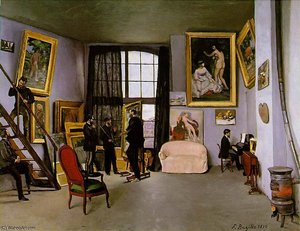
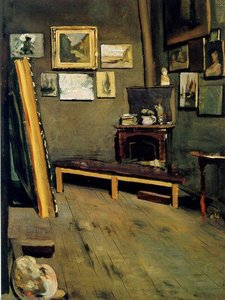
      * **The Pink Dress (c. 1864):** A quintessential Impressionistic work showcasing Bazille’s mastery of capturing fleeting light and atmosphere. * **Family Reunion (1867-1868):** Demonstrates his ability to integrate figure painting with landscape, creating scenes imbued with warmth and intimacy. * **Studio in Rue de Furstenberg (c. 1867):** A glimpse into the vibrant social life of Parisian artists, capturing a moment of camaraderie and shared passion.

      Усі 88 робіт Жан Фредерік Базиль →